Optimize Your Construction Site: Cut Expenses Through Excavation Equipment Rentals
By Editorial Team
Updated on November 8, 2023
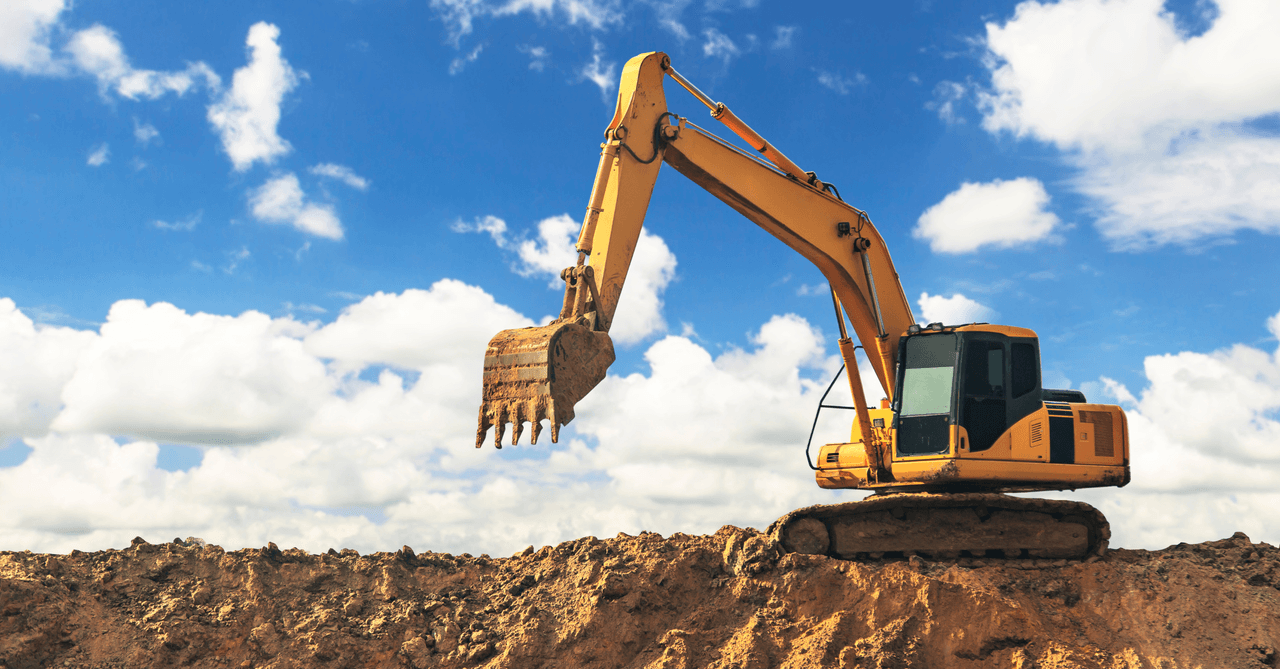
Renting excavation equipment is the best way to carry out construction work without having to purchase machinery. Especially considering that a rental service company will give you access to machinery you wouldn’t necessarily need on a regular basis, not to mention purchasing equipment is expensive. Here’s a deep dive into the matter to give you an idea of the costs involved in renting or purchasing heavy machinery. We’ll let you be the judge and jury of your potential savings.
Benefits of Renting Excavation Equipment and Machinery

Source: Canva
1. No substantial investments
Establishing a construction company requires a significant financial investment if one is looking to purchase all the required materials and machinery.
When it comes to clearing, transporting, and excavating land and rubble, here’s a list of the basic excavation equipment needed:
Mini excavator: $10,500
Excavator: $240,000
Bulldozer: $800,000
Jumping jack: $4,000
Compaction plate: $2,600
Dump truck: $205,000
Wheel loader: $245,000
The initial investment to purchase the above-mentioned equipment, which mainly features secondhand prices, amounts to $1,507,100 CAD.
Although it’s relatively hard to define the average revenue made by an excavation company, we were able to narrow it down courtesy of U.S. market numbers.
In fact, the excavation market value accounts for 81 billion US dollars, the market is divided amongst 49,584 companies, and the average revenue is $1,633,591.
Therefore, the annual profit amounts to 10%, meaning $163,359, or $219,712 CAD. That being the case, it would take an excavation company roughly 7 years to pay off material and machinery investments.
One hiccup: Over those 7 years, the machinery will have racked up quite a bit of maintenance expenses, as any and all excavation projects wear out the equipment and expose heavy machinery to potential damages.
2. No maintenance
For a dozer, a single tilt blade costs at least $2,700; the same goes for an excavator.
Albeit we’re simply stating the most obvious parts, heavy machinery also includes:
electrical systems;
motor;
hydraulic and brake systems;
air conditioning;
hydrostatic;
etc.
There are as many circuits as there are parts that may need to be repaired, or at the very least, maintained.
Still, rental equipment may be broken or damaged too. However, as Éric Senécal, of Location d’Outils MS, explained, malfunctioning or damaged equipment is dealt with on a case-by-case basis; the client never has to pay for faulty or damaged equipment.
Even though it’s something to think about, assurance can cover some of the repair costs.
3. No storage fees
When detailing a business plan, budgetary constraints are often overlooked, yet storage fees are especially important to consider in construction work.
Heavy machinery, especially those needed to carry out excavation work, require a decent amount of space. To store said equipment, you have two choices:
lease or;
purchase a lot.
Should you lease a plot of land, note that the rent due amounts to 6% of its market value. Should you purchase the lot, you can pay between $2/sq.ft. (North Shore) and $25/sq.ft. (Montréal), excluding GST (HST), QST, and administrative fees.
Consequently, it can be difficult for a company to pay back such significant investments. As such, at the very beginning, it may be best to resort to excavation equipment rentals.
Machinery You Can Rent
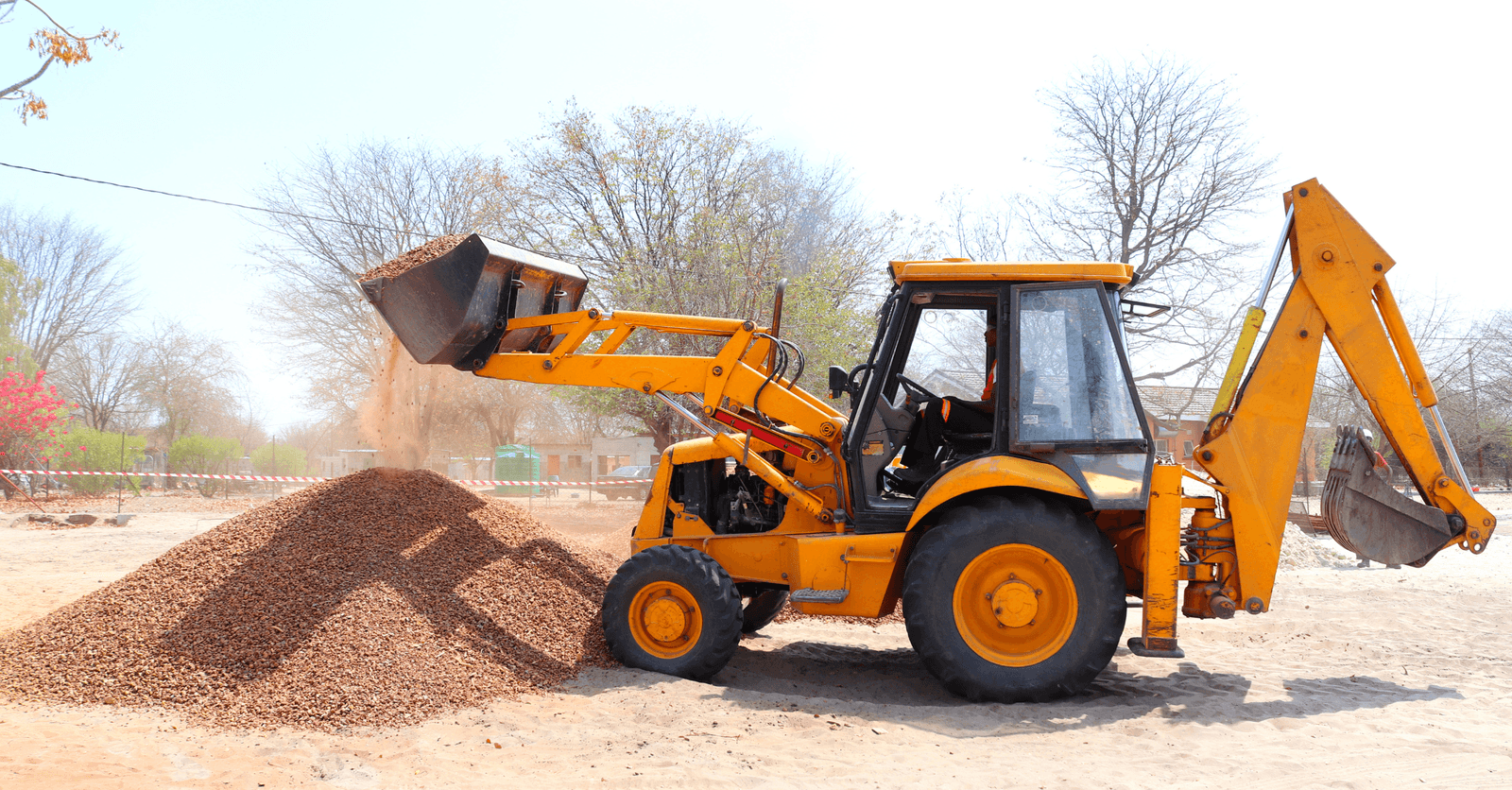
Source: Canva
Excavator
An excavator is the ideal tool to efficiently dig up dirt. The quality of the work done by such machinery far exceeds that of the result obtained with a backhoe, for example.
However, the former isn’t a necessity on all construction sites. Hence the reason why renting excavation equipment is a worthwhile option compared to purchasing.
Moreover, to be fully operational, the excavator must be fitted with the right accessories. The cost of the latter further inflates the bill.
Other Heavy Machinery
As mentioned in the first part of this article, to excavate, other machinery is required, like a mini excavator, compactor plate, and dumper truck.
Such equipment is much less expensive than a dozer or excavator and, therefore doesn’t necessitate such a substantial down payment.
However, before making a significant financial commitment, you first must establish your company within the construction industry. Doing so allows for the following:
establishing a reputation amongst clients;
highlighting areas of expertise;
assessing your needs.
You might never need a mini excavator but may need an excavator on a regular basis. However, on the flip side, the use of a dump truck would be rendered useless if a smaller machine could do the job just fine.
Equipment Rental Costs
Source: Canva
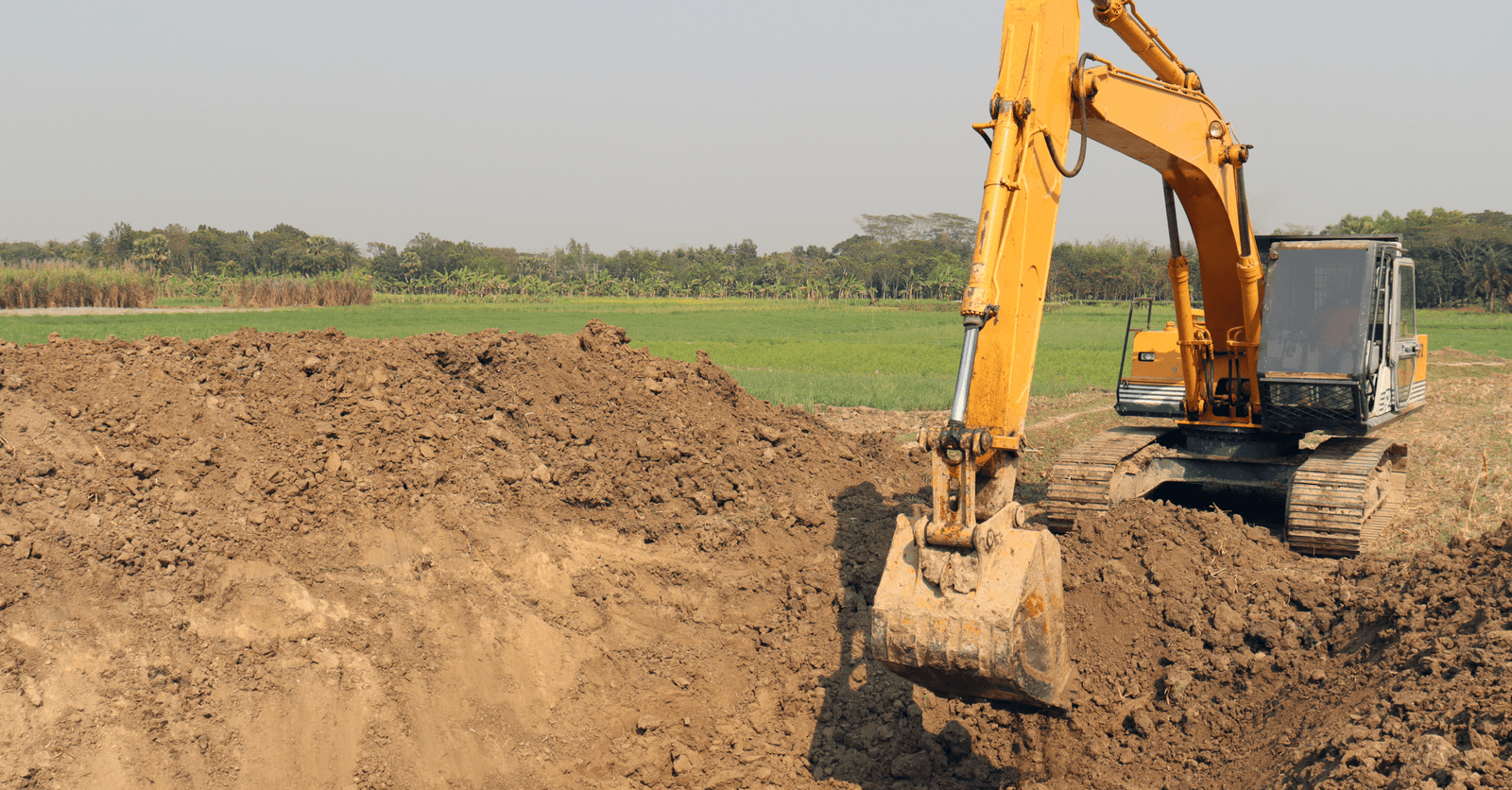
Éric Senécal, of Location d’Outils MS, further stated that “the cost of renting [a mini excavator, Ed.], amounts to about $500/day,” and renting periods typically range from:
1 day
7 days
28 days
However, he emphasized, “Rental costs are determined by several factors, such as size, transportation, diesel, insurance, initial purchase, and most importantly, the client’s specific requirements.”
Next up: type of machinery. As Éric Senécal mentioned, “There are several types of excavation equipment that can be rented, like a tracked excavator and wheel loader,” knowing that “the tracked excavator is the most commonly used excavation equipment.”
Therefore, to learn more about the exact rental costs, the best way to do so is to request a quote while detailing to the rental company exactly what you’ll need.
Here are other excavation-related articles that might be of interest:
Quel est l'impact des conditions du sol sur l'excavation des fondations ?
Les normes de sécurité à respecter pour des travaux d'excavation
Get new contracts for your construction or renovation company
RenoQuotes.com can help you get new contracts. We get new project proposals from clients seeking top-rated and trustworthy renovation professionals like yourself. To get started, simply fill in the form on our homepage (it only takes a few minutes) and receive information regarding potential clients by way of our services.
Dial 1-844 828-1588 to speak with one of our customer service representatives.
Looking for something else?
Related articles
The latest industry news, interviews, technologies, and resources.
Editorial Team
•18 Aug 2025
Québec homes are built and insulated to retain heat during the winter and cool air during the summer. The downside of this setup is that stale air remains longer inside the home. To breathe fresh air indoors, natural ventilation has given way to mechanical ventilation.
Cynthia Pigeon
•12 May 2026
Replacing a bathtub with a shower in Canada is a strategic renovation that generally costs between $5,000 and $12,000, depending on the materials, the existing plumbing, and the complexity of the work. This upgrade can improve the functionality, comfort, and perceived value of a home, especially when it supports accessibility, aging in place, or a more modern bathroom layout. Given that this type of project may involve plumbing, drainage, waterproofing, ventilation, and sometimes floor preparation, it is important to plan carefully. Depending on the province or municipality, plumbing work may need to be completed by a licensed plumber or qualified contractor. In many bathtub-to-shower conversions, the existing drain may also need to be assessed or upgraded to meet the requirements of the new shower installation.

Editorial Team
•28 Jan 2026
A front door serves as a home’s focal architectural feature; its unique identity, one that most likely bears your address and mailbox or mail slot.

Editorial Team
•11 Oct 2024
Lacking in the idea department when it comes to choosing tiles for your tiny bathroom? If you manage to do it right, it could look a lot more spacious than it actually is. How can you go about choosing the perfect, size-appropriate tile for a bathroom? What colours and patterns can make a room appear bigger? Every decision must be guided by the room’s square footage to maximize comfort and aesthetics.
Amanda Harvey
•04 Jun 2025
Having a wrought iron staircase on the exterior of any home is lucky. Wrought iron staircases are beautiful pieces that add to the resale value of the property as a highly sought-after item. This type of staircase is forever, with limitless design options. They do not show dust and are easy to clean and to maintain.