What Is the Cost of Residential Window Caulking in Quebec in 2026?
By Cynthia Pigeon
Updated on June 9, 2026
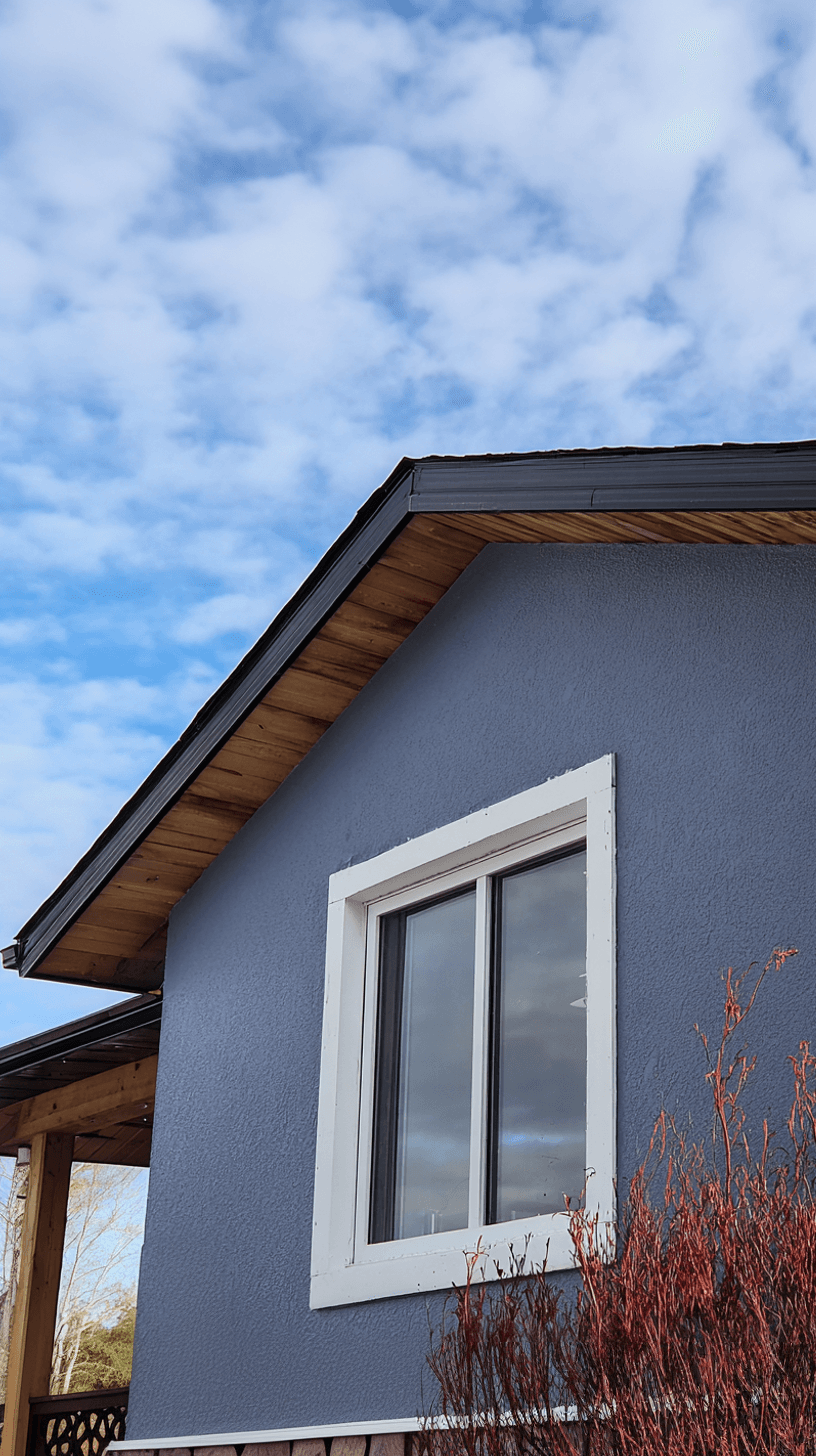
In Quebec, maintaining a single-family home, semi-detached house, or condo requires special attention to the building envelope. Given the harshness of our climate, marked by particularly cold winters, humid summers, and constant freeze-thaw cycles, exterior sealing is your first line of defence against the elements. With economic changes and the rising cost of materials observed in 2026, planning renovation work requires clear and transparent pricing data.
Window caulking is not simply an aesthetic detail. It is an essential technical operation that helps block air and water infiltration, which could otherwise damage your home’s structure. If you notice drafts near your casement or sliding windows, or if your current sealants are cracked, it is time to act.
To help you plan your renovation budget this year, this complete guide breaks down Quebec market rates, the factors that influence your quote, and the long-term profitability of this work on your energy bill.
2026 Pricing Guide: How Much Does Window Caulking Cost per Window or per Linear Foot?
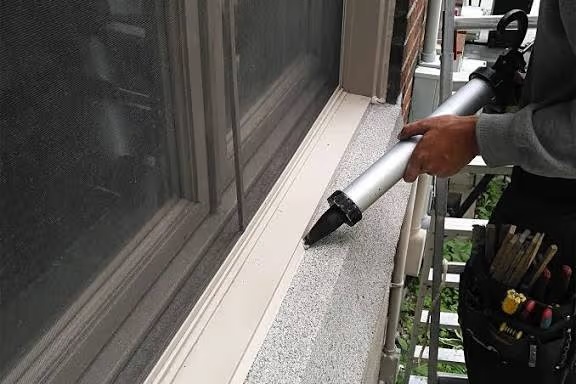
Source: Construction&Restauration inc
Professional companies generally use two complementary methods to prepare a quote: pricing by linear foot or pricing by opening, such as a window or patio door. This approach makes it possible to adapt the estimate precisely to the geometry of each building.
Rates observed in Quebec vary depending on the region, access, and condition of the joints. The ranges below provide a general benchmark for 2026.
Cost per linear foot: Generally around $6 to $12, with higher costs for difficult access or major removal of old sealants.
Cost per standard window: Often between $60 and $120, depending on size, access, and the condition of the existing joint.
Cost for a patio door: Generally between $150 and $300, sometimes more for oversized or complex openings.
Average Cost for Caulking an Entire House
To get an overall idea of the budget required, it is useful to assess the total cost for a typical single-family property. The size of the house, the number of storeys, and the number of windows to be treated will determine the final amount.
Small property/bungalow, about 10 to 12 openings: The budget may range from $1,000 to $2,000, depending on access and the preparation required.
Standard two-storey single-family home, 15 to 20 openings: Expect approximately $2,000 to $3,000, depending on the complexity of the job.
Large residence or older home, more than 20 openings with complex shapes: Costs may exceed $3,000 and increase further if access is difficult or if the joints are severely deteriorated.
To get an accurate idea of the investment required for your property, it is strongly recommended to request a free quote for your windows, allowing you to compare local offers with no obligation.
Cost Breakdown: Labour vs Materials
When you receive a quote, the total amount includes two main components: qualified labour and the supply of materials. Contrary to what one might think, the cost of sealant tubes represents only a minor portion of the invoice.
Labour, about 70% to 80% of the total price: Professional caulking is precision work. The time required to scrape off the old sealant, degrease the surfaces, install a backer rod, and apply the new product evenly forms the core of the pricing.
Materials and equipment, about 20% to 30% of the total price: This includes professional sealants, cleaning products, finishing tools, and the required equipment.
What Factors Influence the Price of Your Caulking Quote?
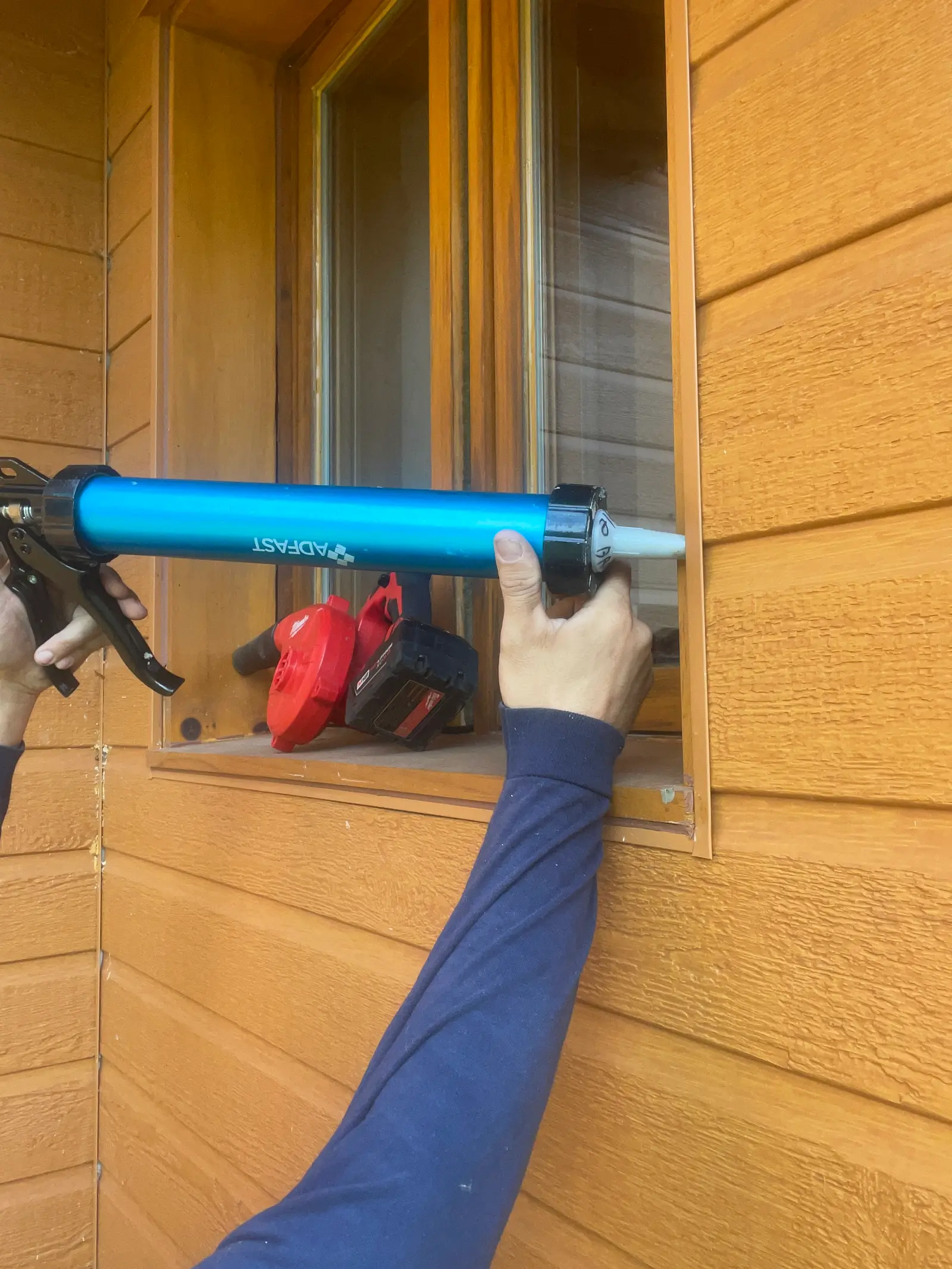
Source: Rénov-Action D.R INC
Every property has its own architectural features. That is why a professional caulking company will almost always carry out a technical visit or request detailed photos before setting a final price. Several major variables can cause your bill to vary significantly.
Removal of the Old Sealant
The most common mistake in residential renovation is applying a new bead over an old, dried-out sealant. Durable work requires removing most of the old sealant and properly preparing the surface to ensure good adhesion.
If your home has old, hardened joints made of low-quality silicone or dried construction mastic, the mechanical scraping time will be longer. Technicians must use specialized knives and appropriate solvents to clean the substrate thoroughly without damaging the hardware or window covering. The more labour-intensive this step is, the more the cost per linear foot will tend toward the higher range, between $12 and $15.
Accessibility of Openings and Work at Height
The configuration of your lot and the architecture of your home play a determining role. Working on the ground floor of a cottage is fast and safe. On the other hand, if you have windows on the second or third floor, above a sunroom, or on a steeply sloped lot, the complexity increases.
Ladders, harnesses, and other safety measures may be required depending on the jobsite configuration and applicable rules. The risk factor and the time required to handle safety equipment are directly reflected in labour costs.
Choosing the Right Type of Sealant: Impact on Durability and Cost
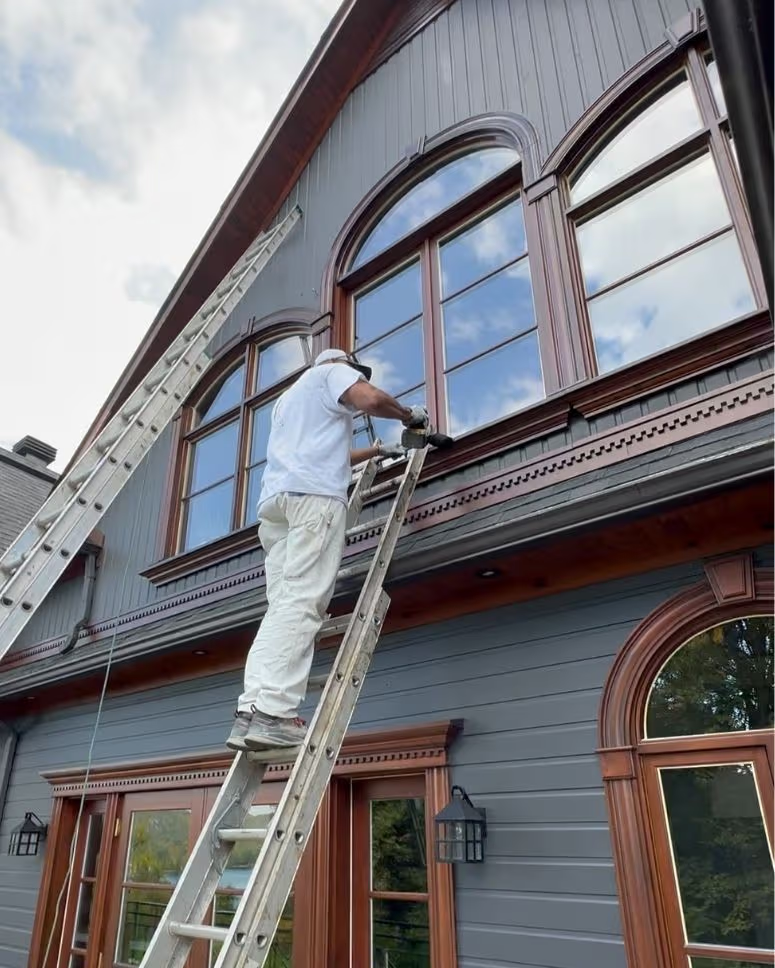
Source: Les Grands Peintres Inc
The choice of material is crucial to ensure the watertightness and durability of the joints. Improved thermal insulation is mainly an indirect benefit. When shopping around, you will come across different product categories whose prices and physical properties vary greatly.
Type of Sealant | Recommended Use | Estimated Durability | Performance in Quebec’s Climate |
Premium silicone / polyurethane | Exterior, building envelope | Often about 8 to 15 years, depending on exposure and quality of application | Excellent flexibility, from -30°C to +30°C, UV-resistant and freeze-resistant |
Latex / acrylic | Interior only, such as mouldings and baseboards | Limited outdoors. Some modified acrylics may be suitable for certain exterior uses, but they remain less durable than products designed for the building envelope. | Poor resistance to temperature variations; hardens and cracks in freezing conditions |
Polyurethane or Premium Silicone Sealant for Exterior Use
For exterior sealing around your openings, it is important to choose sealants designed for the building envelope, often silicone- or polyurethane-based, depending on the substrate and exposure conditions. These products offer exceptional elasticity, often reaching 25% to 50% elongation, allowing the joint to follow the contraction and expansion movements of the house as seasons change.
Although these industrial-grade sealant tubes are more expensive to purchase, they provide an airtight and watertight barrier against air and water infiltration for a period of up to 20 years when installed by certified contractors.
Latex Sealant: Economical but Limited to Interior Use
Latex or acrylic sealant is affordable and easy to smooth with water, but its technical properties make it unsuitable for exterior conditions. Under the intense freezing temperatures of Quebec winters and the UV rays of summer, standard latex or acrylic is less suited to movement and outdoor exposure. It may harden and crack more quickly than exterior-grade products. Its use should be strictly limited to interior finishing, such as around frames or baseboards, before painting.
Why Hire an RBQ-Certified Expert?
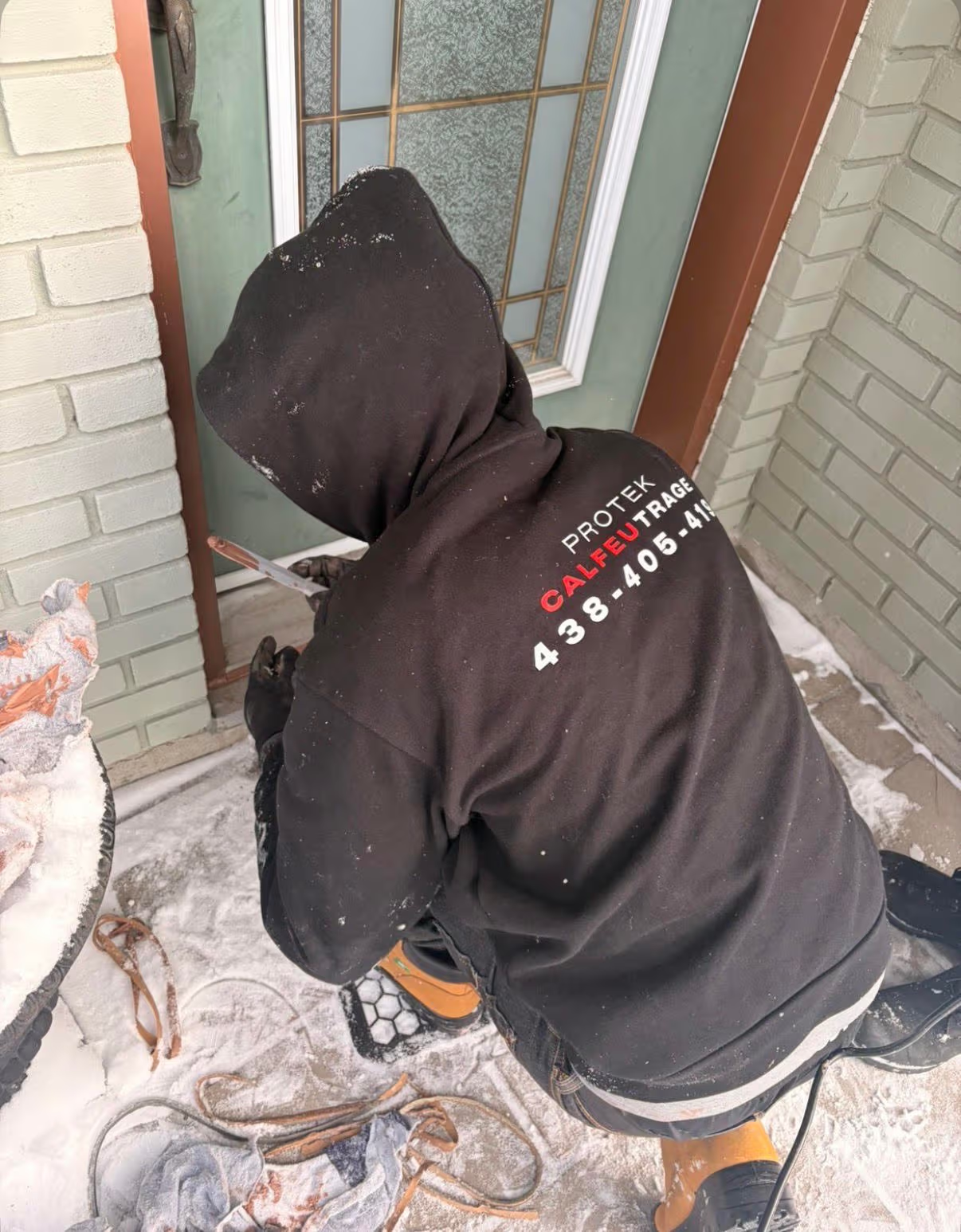
Source: Groupe Protek Calfeutrage INC.
Exterior caulking is an integral part of the building envelope. In Quebec, whether an RBQ licence is required depends on the nature of the work and the context in which it is carried out. The applicable licence category should be verified before hiring a contractor.
Hiring an uncertified worker or having the work done “under the table” over the weekend to save a few hundred dollars carries major financial and legal risks.
Loss of legal recourse: In the event of poor workmanship, your recourse may depend on the contract, the contractor’s licence, and the context. The absence of a licence can complicate the situation, but does not automatically eliminate all recourse.
Insurance claim refusal: Insurer requirements vary. Some claims may be contested if the work was poorly executed or non-compliant.
No warranty: Only an official company can offer a written warranty, often 5 to 10 years, on labour and materials.
Take the time to compare contractor prices carefully, making sure their RBQ licence number is clearly visible on their website and quote form.
Profitability: Save on Heating Bills with Hydro-Québec
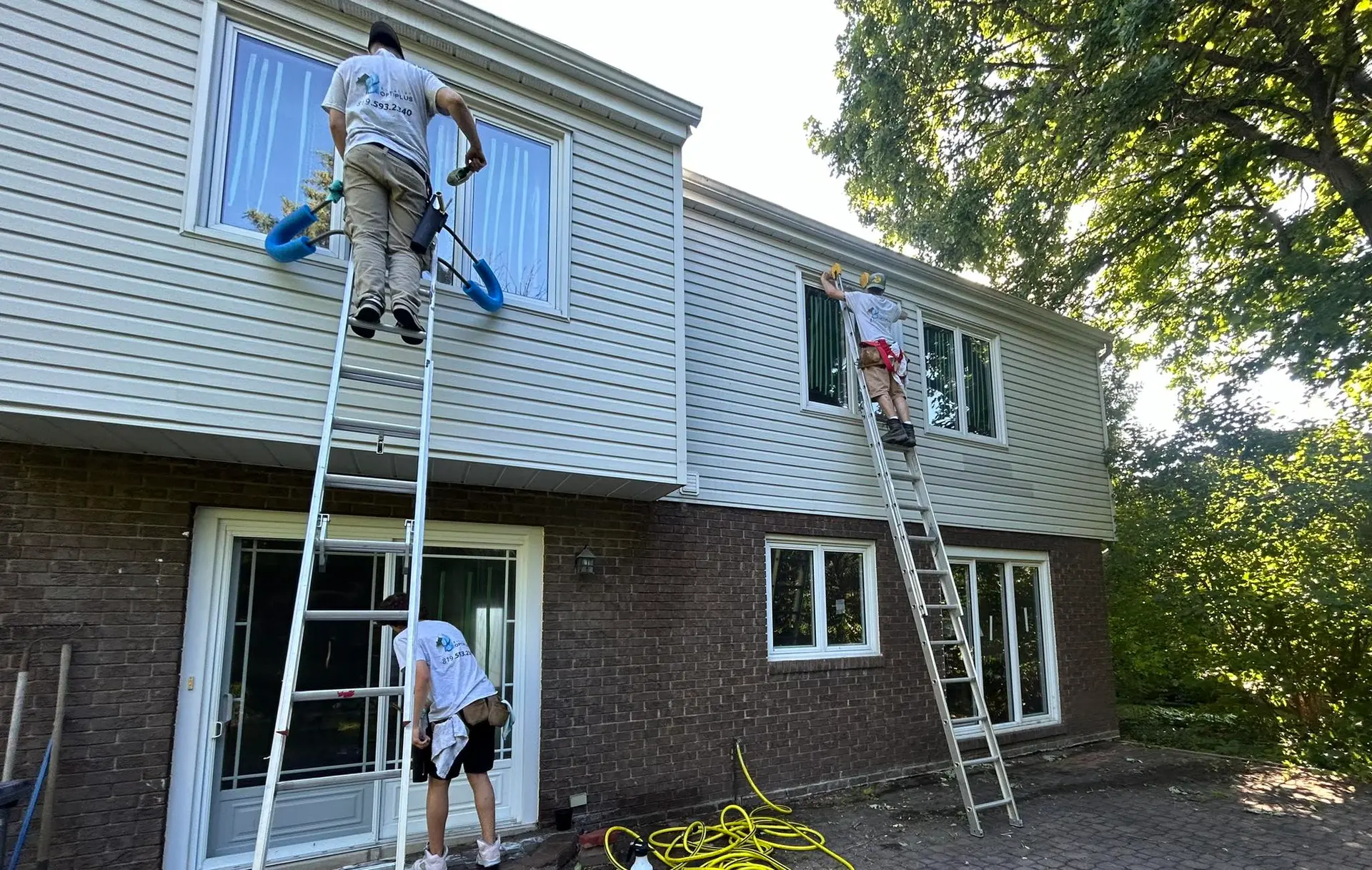
Source: Entretien Optiplus
Investing in home caulking should not be seen as a simple expense, but rather as a highly profitable energy-efficiency upgrade. Air leaks around windows and doors represent a major source of heat loss in a single-family home.
According to Hydro-Québec’s advice, defective joints can contribute to energy losses, but the exact impact varies depending on the overall condition of the building. When cold air infiltrates the home, your electric baseboards or heat pump must run continuously to maintain a comfortable indoor temperature.
By having your sealing joints professionally redone, you can expect:
Direct savings: A lower bill is possible, but the amount depends heavily on the existing insulation, heating system, and actual air leaks.
Improved comfort: Elimination of cold zones and unpleasant drafts near casement windows or sliding bays.
Reduced wear on heating systems: By limiting energy demand, you extend the lifespan of your air conditioning and heating equipment.
Based on an average cost of $2,000 for caulking and air-sealing work, the payback period can vary widely, often between 5 and 10 years, depending on the building.
Looking for something else?
Related articles
The latest industry news, interviews, technologies, and resources.

Editorial Team
•27 Jan 2026
Have you thought about adding a dedicated space to store garden tools, outdoor equipment, or all those extra items that clutter your home? Maybe you’re dreaming of a backyard playroom, craft area, or hobby space for your kids. A garden shed can be a practical and cost-effective solution, giving you extra space while enhancing the functionality and appeal of your outdoor area.
Amanda Harvey
•08 Nov 2023
The kitchen is one of the most important rooms of the home, a place for the family to congregate after a long day of work and play, to cook a meal and to enjoy time together. There are plenty of moving parts that go into the construction and operation of your kitchen, and for things to run smoothly everything has to be laid out in a functional way. For this reason, it is important to update the surfaces, appliances and layout of your kitchen to suit the needs of yourself and your family.

Editorial Team
•17 May 2024
Many homeowners, as well as those aspiring to become homeowners, may dream of finding their way out of the city and living a life beyond societal confines. This could mean living in an alternative home. For some, this may be a home off-grid, with no dependence on a power grid, or the rules and regulations that come with living in an urban area.
Editorial Team
•11 May 2026
Insulating a log house is a key step to guaranteeing year-round thermal comfort. Not only does it contribute to maintaining a comfortable indoor temperature, but it also aids in cutting energy costs significantly. This article will cover insulation methods suited to log houses or cabins, as well as the best insulation materials, the notion of R-value, and the specific challenges associated with this type of construction.

Christine Simard
•08 Nov 2023
Are you one of those people who tend to be nostalgic for past eras and not too fond of modern decors? If polka dots, bright colours and geometric forms are all things you like, maybe it's time to give your home a little retro makeover! Here are some examples that could inspire you!