Decorative Panels as Wall Covering Materials
By Editorial Team
Updated on October 2, 2024
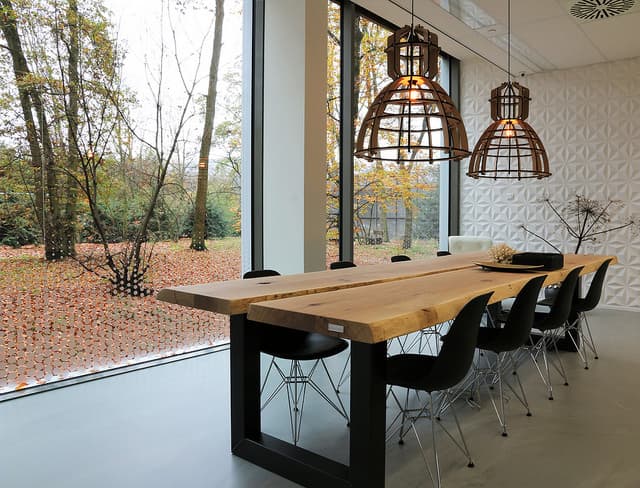
Decorative panels are great in that they serve both practical and decorative purposes. These characteristics surely play a part in their sudden surge in popularity. Here are a few things you should know about this type of wall covering:
If you're looking to add style to your interior home design, decorative panels can be a great option. Usually, they work as statement pieces, only covering one or two walls in a room.
Rarely will you find a room where every wall is covered up using this type of material. Many different styles of decorative panels are available. From 3D effect to thermoplastic or even transparent resin, you’re likely to find at least one type of panel that suits your taste.
One major perk is the fact that they can be customized, so you can adapt them to your interior design. Some panels look more like a design accessory than a wall covering. 3D decorative panels are most easy to customize.
They can be painted or covered with decorative adhesives which match your interior design. You can also choose to highlight them by selecting a vibrant colour to contrast with the rest of the room. It’s all up to you!

Pros and cons of decorative panels for walls
Decorative panels are considered to be a type of interior wall covering that is versatile, in addition to being generally easy to install and simple in terms of maintenance. That being said, the specific characteristics of said panels depend on the type of material from which they are made. Indeed, a decorative panel that is made of wood will not necessarily have the same pros and cons as a panel that is made of aluminum.
When purchasing materials, it is important to learn about and compare the different options to see which type is best for the room and the aesthetic preferences of the home's occupants.
The different materials that are used for decorative panels
Decorative panels are available in a plethora of different materials plastic, wood, aluminum, copper, steel and bamboo. Before you choose which type of panel you want, be sure that the material you choose is well suited for the room where it will be installed.
For example, don’t put a giant decorative wood panel in your bathroom: chances are that the humidity will ruin it. Thankfully, most decorative panels are very resistant and durable.

The cost of decorative panels
Installation tends to be simple and on a day-to-day basis, they are easy to clean. One of the main drawbacks of decorative panels is that they tend to be more expensive than other types of wall coverings, costing anywhere between $24 and $120 per panel. Before the panels are installed, the surface underneath has to be well prepared, especially if the panel is made of wood.
Here are a few examples of prices for decorative panels:
Prefinished panel (8 ft x 4 ft. 1/8 inch) - approximately $40 (sold by unit)
Imitation concrete wall panel (48" x 96") - approximately $60 (sold by unit)
Brick effect wall panel (48" x 96") - approximately $78 (sold by unit)
PVC wall panel (20,89 sq.ft.) - approximately $105 (sold by unit)
Preparation steps will depend on the type of material you choose. When buying your decorative panels, be sure to inquire about the steps you will need to follow for the installation process. Also, know that certain types of panels might not be adapted to your home.

Installing decorative panels in the bathroom: yes or no?
The idea of installing decorative panels in your bathroom is something you would like? Before purchasing the materials and completing the installation, you must make sure that your room is well-suited to accommodate these materials.
Indeed, to be certain that the conditions are ideal for the installation of decorative panels, please make sure that the bathroom is well ventilated. Also, note that the panels should be installed away from the bath and shower.
Here are other articles about wall coverings, to give you ideas and help you better know the different materials available on the market:
Get 3 renovation quotes for your wall panel installation project
RenoQuotes.com can help you get quotes for your wall panel installation. If you submit your project to us, we’ll put you in contact with the most suitable contractors for your project. Fill in the form on our homepage (it only takes a few minutes), and you will receive quotes from companies that specialize in wall coverings.
Dial 1-844 828-1588 to speak with one of our customer service representatives
Looking for something else?
Related articles
The latest industry news, interviews, technologies, and resources.
Cynthia Pigeon
•04 Sep 2024
Made for cleansing or for relaxing, the bathtub is a staple in any bathroom. Having a bathtub is especially useful when you have children to bathe every night, but also just as practical when you are in dire need of some R&R after a hard day of work.

Editorial Team
•08 Nov 2023
Whether you’re going about your business quietly or sleeping peacefully. It’s pretty natural to want to feel safe at home. For some of us, this sense of security comes with the need to have an alarm system installed.

Editorial Team
•22 Jun 2026
Patios are no longer just extensions of our homes. They’ve evolved into cozy places that combine functionality, aesthetics, and comfort. Many homeowners are in search of ways to make their outdoor zones as comfortable as their interiors. Moreover, they wish to create a stylish, eco-conscious, and versatile place. Here are some must-have features for patios in 2026.
Editorial Team
•10 Sep 2024
Looking to upgrade your kitchen cabinets and revamp one of the most used areas of your home? All you need to do is head to your nearest hardware store to realize that options aren’t lacking!

Editorial Team
•08 Nov 2023
When it comes to a septic system, the tank is usually the one thing that comes to mind. Yet, the leaching field, which is out of sight, out of mind… is nonetheless a vital component of this installation. Its proper functioning is primordial, with regard to you and your family and the surrounding community and environment.