Freestanding Bathtubs: Styles, Installation and Buying Guide
By Cynthia Pigeon
Updated on October 24, 2026
Freestanding bathtubs have become a popular choice for homeowners looking to create a stylish and comfortable bathroom. Available in everything from traditional clawfoot designs to sleek contemporary models, these bathtubs can complement a wide range of interiors. But before choosing one, it's important to consider the available space, plumbing requirements, installation process, and different styles. Here's everything you need to know about freestanding bathtubs.
How to Install a Freestanding Bathtub
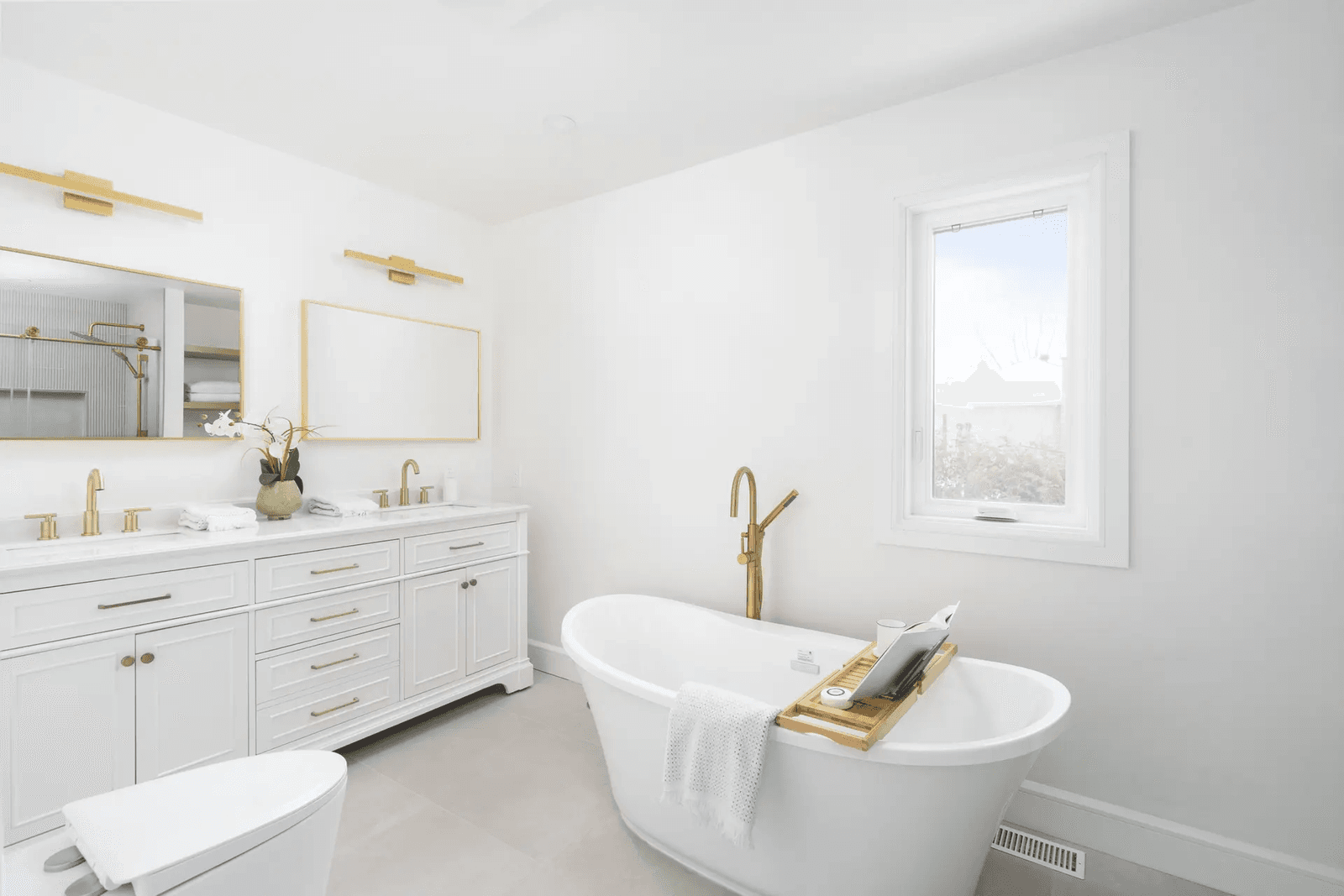
Source: Ora construction design inc
Although installing a freestanding bathtub is relatively straightforward, several factors should be considered before making a purchase. Make sure your chosen model is compatible with your flooring, existing plumbing, and available space. Proper positioning and levelling are also essential for stability and drainage. Depending on the model, installation may involve adjusting the feet or levelling the base according to the manufacturer's instructions.
Here are the main features to consider when purchasing a freestanding bathtub:
Dimensions
Colour
Materials (acrylic, composite, enamelled steel, cast iron, copper, stone)
Drain type
Drain location (right, left, centre)
Overflow location
Depth and water capacity (litres)
Weight
Shape (oval, rectangular, egg-shaped, etc.)
Style (single-ended, double-ended, raised backrest, etc.)
General Guidelines for Installation
Make sure your floor and home can support the bathtub's weight. If necessary, consult a structural specialist.
Make sure you have enough space. You might think your bathroom is large enough and that you have sufficient floor space for a freestanding bathtub. However, you should also check that your stairs, hallways, and doorways are wide enough to move the bathtub through your home without damaging either the tub or your walls.
Check that your new bathtub complies with applicable local, provincial, and national building codes.
Thoroughly clean the area beneath the bathtub to prevent dirt and debris from becoming trapped underneath.
Positioning the Freestanding Bathtub
Install all plumbing and the drainpipe before securing the bathtub in place. Hiring a qualified plumber is your best bet for a job well done.
Is your floor completely level? If so, proceed to the next step. Otherwise, make the necessary adjustments to ensure the floor is level and properly supported.
Unpack and inspect your freestanding bathtub to make sure it's in good condition.
Install the adjustable feet beneath the bathtub and adjust them until the tub is level, allowing water to drain properly.
Once the bathtub is positioned, test the drainage. Fill the tub with approximately one inch of water and let it drain. If water remains at the bottom, make adjustments until the tub drains completely.
Plumbing
Install the drain and overflow pipes on the bathtub.
Next, install the water supply and drainage pipes according to your region's plumbing codes. Drill the necessary holes using the appropriate equipment, then connect the pipes to the bathtub.
Before completing the installation, make sure the plumbing is watertight. Fill the bathtub to the overflow level and let it drain completely while checking for leaks.
Finally, apply a silicone seal beneath the bathtub's base or feet, as required by the manufacturer, and allow it to dry completely before using your new bathtub.
How Much Does It Cost to Install a Freestanding Bathtub in Canada?
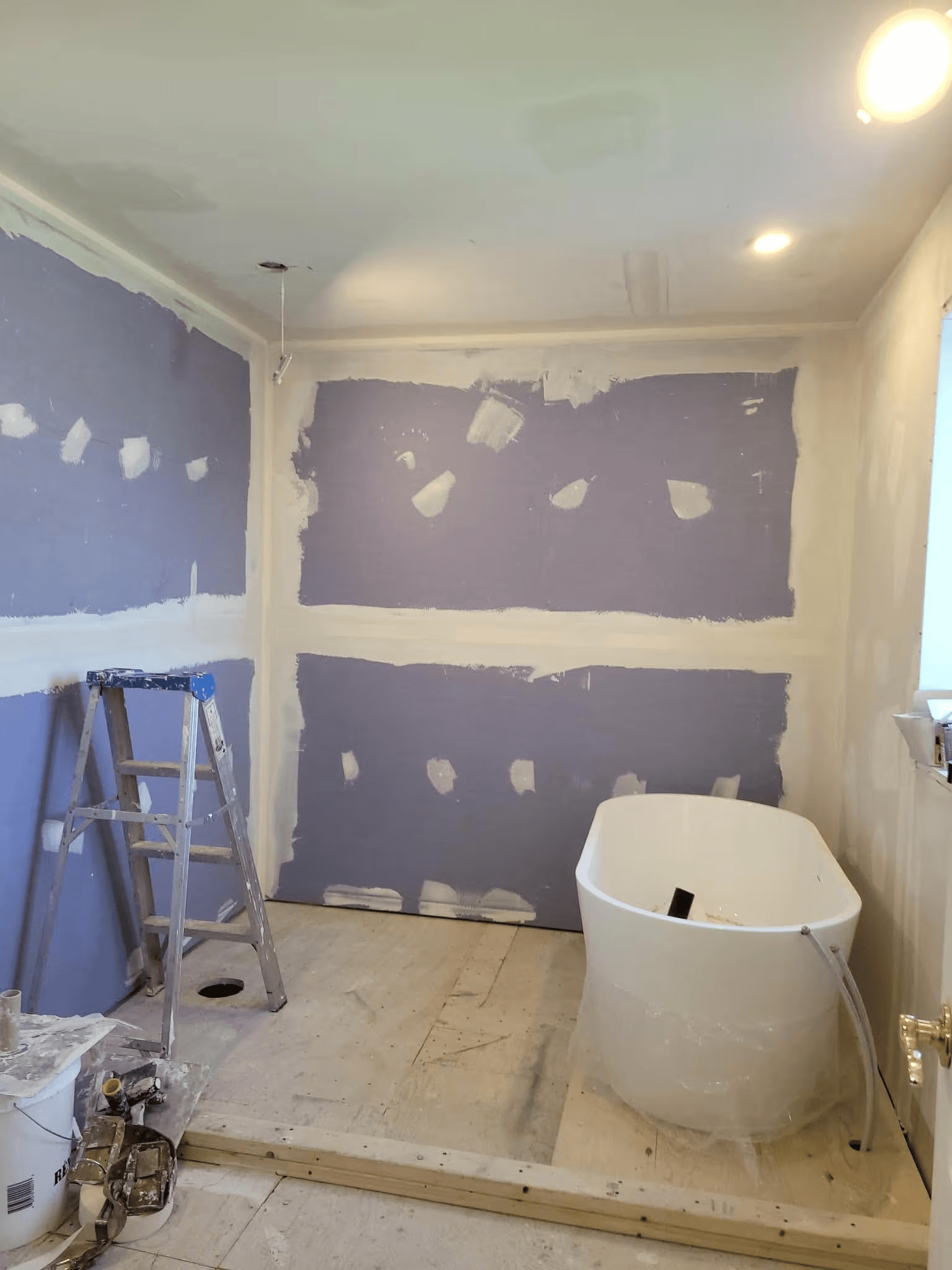
Source: Groupe Thibault Construction Inc.
In Canada, installing a freestanding bathtub typically costs between $3,000 and $8,000, including the bathtub, labour, and basic plumbing connections. The final price depends on the bathtub's material, size, weight, and the complexity of the installation. High-end models or projects requiring extensive plumbing modifications can cost considerably more.
Here's a breakdown of the typical costs:
Expense | Estimated Cost (CAD) |
Freestanding bathtub | $500 – $6,000 |
Installation labour | $1,000 – $3,500 |
Plumbing modifications | $500 – $2,000+ |
Removal of existing bathtub | $300 – $800 |
Typical total installed cost | $3,000 – $8,000 |
These price ranges are for reference purposes only. Individual expenses are not necessarily included in every project, and major modifications can increase the total beyond the typical range.
Several factors can affect the installation cost. Acrylic bathtubs are generally more affordable and easier to handle, while cast iron, copper, and stone models tend to be heavier and more expensive. Relocating the drain, installing a floor-mounted faucet, or reinforcing the floor can also increase labour costs.
Prices may also vary between cities such as Montréal, Toronto, Vancouver, Calgary, and Ottawa due to differences in labour rates and local market conditions.
Before purchasing a freestanding bathtub, consider requesting quotes from qualified contractors to determine the total installation cost based on your bathroom's layout and existing plumbing.
Freestanding Bathtubs: Typical Styles
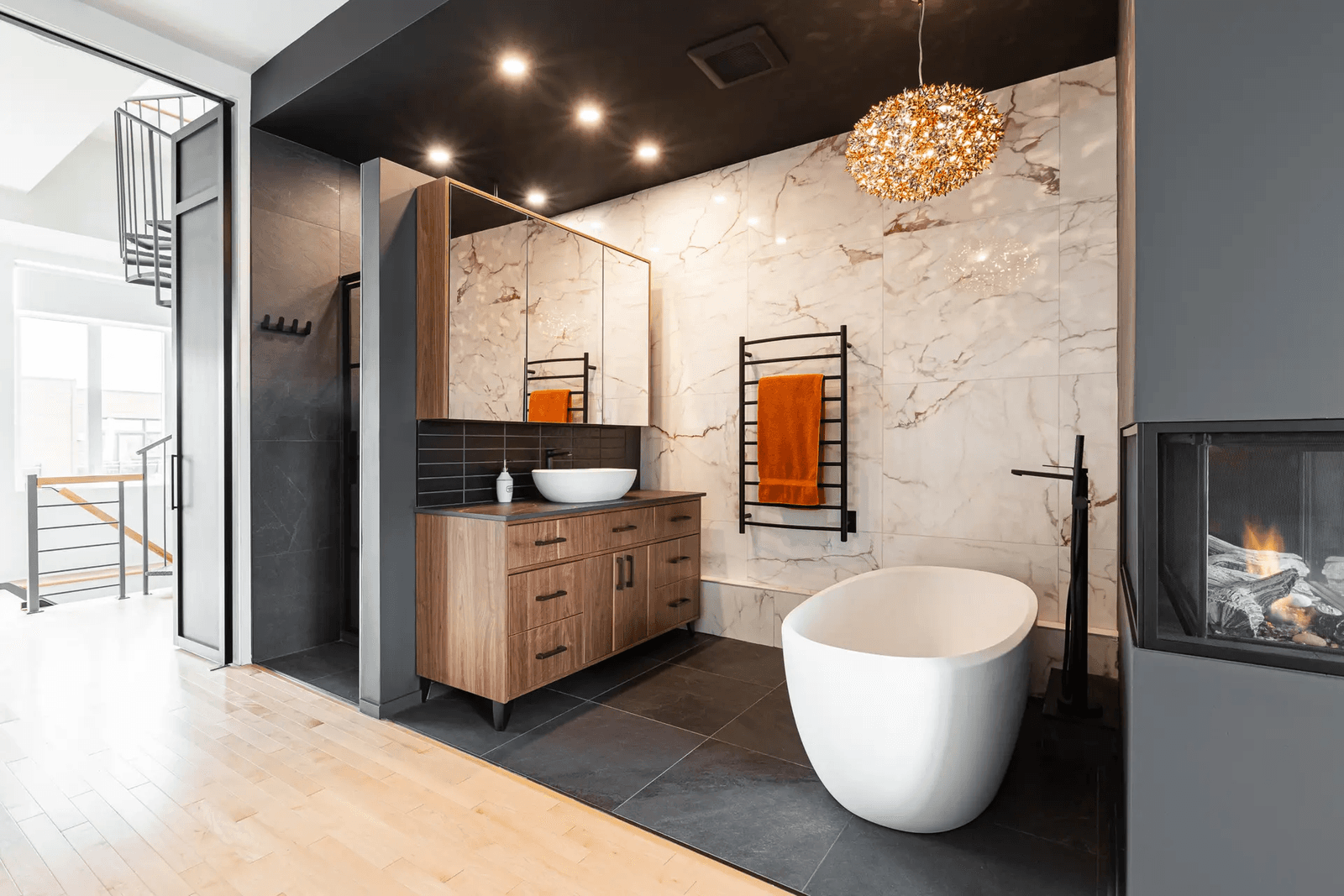
Source: Les Réalisations P.O.P. Design Inc.
One of the best features of freestanding bathtubs is the wide variety of models and shapes available. Whatever look you're trying to achieve, you're sure to find a model that complements the room's vibe and style. Some are designed for practicality, others for comfort, and some primarily for their distinctive appearance.
Single-Ended Freestanding Bathtub
This timeless, classic design is one of the most common styles found in traditional homes. It features one rounded, sloped end for reclining, while the other end accommodates the faucet and drain.
Single-Ended Freestanding Bathtub with a Raised Backrest
Similar to the standard single-ended design, these bathtubs feature a raised end that provides better back support and greater comfort.
Double-Ended Freestanding Bathtub
Double-ended bathtubs feature two rounded, slightly sloped ends. They allow you to bathe comfortably from either side and, depending on the bathtub's size, can accommodate two people. This style generally features a centre-positioned drain and faucet. Double-ended bathtubs are available in several sizes and shapes, including oval and rectangular models.
Double-Ended Freestanding Bathtub with Raised Backrests
Following the same principle as the previous model, this design provides additional comfort by allowing bathers to recline more comfortably at either end.
Clawfoot Freestanding Bathtub
Clawfoot bathtubs have been sold since the 1800s and remain very popular today. They're ideal for replacing an older clawfoot bathtub with something more elegant while preserving your bathroom's traditional appearance. These bathtubs are generally available in single-ended and double-ended designs, with or without raised backrests, and in a wide range of sizes and shapes.
Pedestal Freestanding Bathtub
Pedestal bathtubs rest on a flat base rather than individual feet. Like clawfoot bathtubs, they're available in a variety of styles. They create a luxurious appearance while remaining practical and versatile. They're also easy to clean.
Back-to-Wall Freestanding Bathtub
The long side of this type of freestanding bathtub sits against a wall. It's an excellent option for homeowners who want the look of a freestanding tub but lack the available space. Since it sits against the wall, this design is also suitable for homeowners who cannot relocate their existing plumbing.
Corner Freestanding Bathtub
Like the back-to-wall model, this type of bathtub is an excellent option for small spaces. As its name suggests, it fits into a corner while giving your bathroom a contemporary appearance.
Freestanding vs. Built-In Bathtubs: Which Is Better?
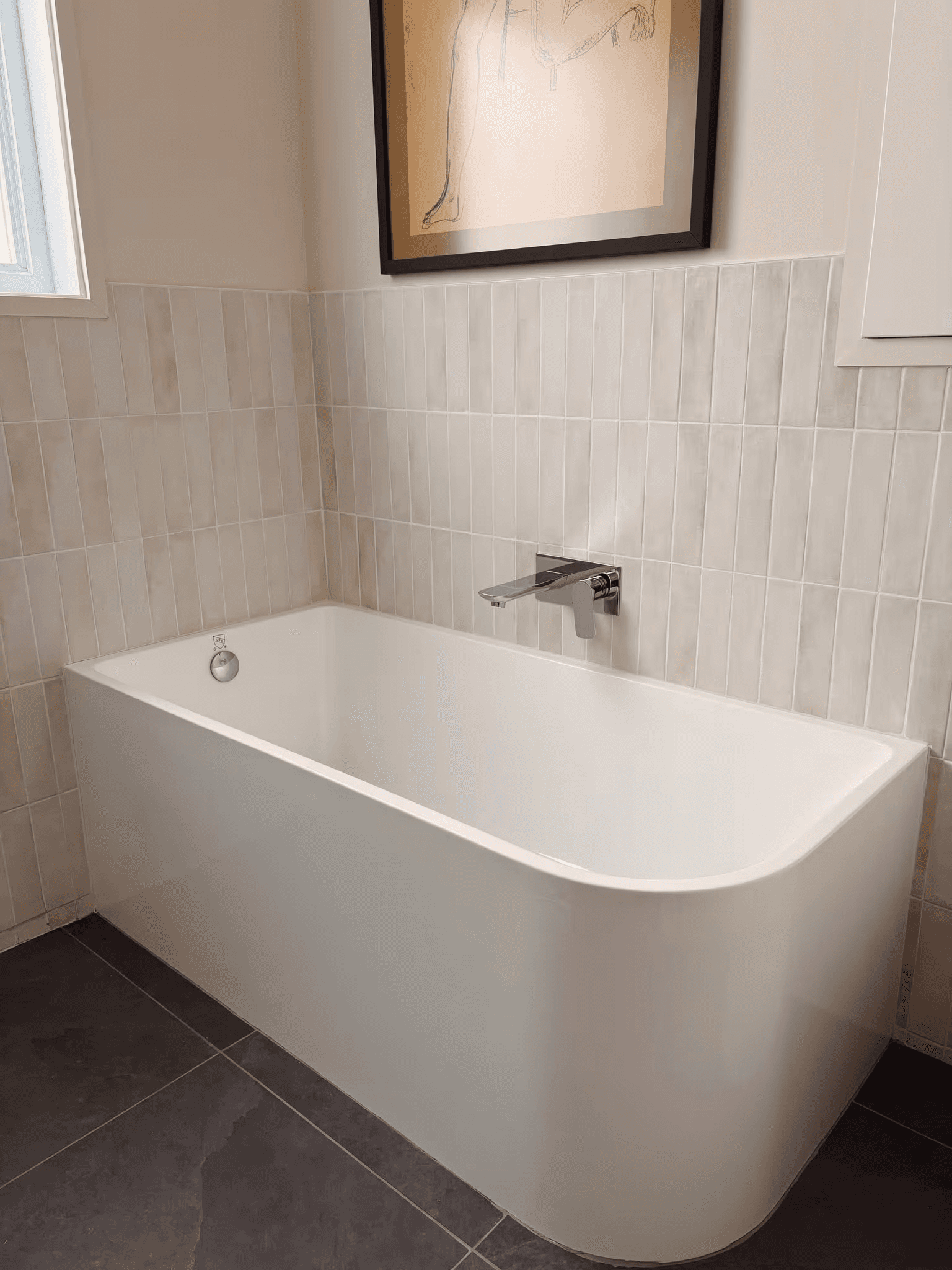
Source: Groupe MAJ inc.
Choosing between a freestanding and a built-in bathtub depends on your bathroom's size, budget, and design preferences. Freestanding bathtubs offer a luxurious, contemporary appearance, while built-in models are generally more practical and affordable, especially in smaller bathrooms.
Here's how the two options compare:
Feature | Freestanding Bathtub | Built-In Bathtub |
Appearance | Elegant, modern, or vintage | Traditional and versatile |
Space requirements | Generally requires more floor space | Ideal for smaller bathrooms |
Installation | May require plumbing modifications | Often easier with existing plumbing |
Cost | Generally more expensive | Usually more affordable |
Cleaning | May be difficult to clean around | Easier to maintain around enclosed sides |
Shower compatibility | Requires a compatible shower setup | Easily combined with a shower |
Which should you choose? A freestanding bathtub is ideal if you have a spacious bathroom and want to create a striking focal point. However, if you're working with limited space or a tighter budget, a built-in bathtub may be the better choice. Both options can provide excellent comfort and functionality when properly installed.
FAQ About Freestanding Bathtubs
What accessories can I add to my freestanding bathtub?
Adding accessories is an important part of any renovation project. You can personalize your freestanding bathtub with items such as:
Wooden bath caddy or bottle holder
Wall-mounted soap and shampoo dispensers
Plant stands
Shower curtains
Glass shelves
Heated towel racks
Will a freestanding bathtub shift around the bathroom floor?
A properly installed freestanding bathtub should remain stable during normal use. Depending on the model, it may be secured using mounting brackets, silicone, or another manufacturer-approved method. If your bathtub moves, have the installation inspected to identify and correct the issue.
Do you need to install tiles around a freestanding bathtub?
Although tiling around a freestanding bathtub isn't always necessary, you'll need to protect the surrounding surfaces from water damage if the bathtub is positioned against a wall. Glass blocks and mould-resistant paint can help protect these surfaces, although areas exposed to direct splashing may require additional waterproofing.
Looking for something else?
Related articles
The latest industry news, interviews, technologies, and resources.
Editorial Team
•26 Jul 2024
During those summer months when the weather is extremely hot, we try to spend most of our time outside. If we’re lucky, our homes come equipped with a backyard or some green space where we can relax. There are endless ways to enhance outdoor spaces, including certain installations that require plumbing.
Editorial Team
•02 Jul 2024
We’ve said it once, and we’ll say it again: The simplest or most subtle details will often be the ones that most impact your decor. Little touch-ups here and there like painting over walls and kitchen cabinets, or adding shelves are practical tips for those who’d rather avoid extensive renovation projects.

Editorial Team
•27 Jan 2026
Have you thought about adding a dedicated space to store garden tools, outdoor equipment, or all those extra items that clutter your home? Maybe you’re dreaming of a backyard playroom, craft area, or hobby space for your kids. A garden shed can be a practical and cost-effective solution, giving you extra space while enhancing the functionality and appeal of your outdoor area.

Editorial Team
•19 Feb 2026
Coordinating a home improvement project is crucial for a smooth process and reduced stress. Careful planning ensures effective teamwork, avoids delays, and controls costs.
Cynthia Pigeon
•19 Jun 2026
Faced with the housing crisis and the growing need for gentler density, many homeowners across Canada are looking at ways to make better use of their residential lots. Building an accessory dwelling unit (ADU), also known as a garden suite, laneway suite, backyard suite or secondary detached dwelling, can be an effective way to house an aging relative, give a young adult more independence or generate stable rental income.