Construction Coordination: How to Ensure Effective Construction Projects
By Editorial Team
Updated on February 19, 2026

Coordinating a home improvement project is crucial for a smooth process and reduced stress. Careful planning ensures effective teamwork, avoids delays, and controls costs.
Join Our Network and Receive Real Leads!
Do you want to start getting some real leads with serious customers?
What are the essential steps for organizing a renovation ahead of the busy renovation season? How do you handle surprises, resolve conflicts, and communicate clearly with all involved — while positioning yourself to secure early spring projects before competition increases? Which tools help track progress and manage documents efficiently so you can stay organized, respond quickly to incoming leads, and book projects before your calendar fills up?
Learn the best practices for managing your renovation project with less stress — and for preparing your marketing and lead generation early to get organized and secure work before the seasonal rush begins.
How to Effectively Coordinate a Renovation Jobsite: 8 Factors to Consider

Source: Menuiserie CJV
1. Meticulous Planning: A Pillar of Success
Anticipating potential hurdles, avoiding delays, and clearly outlining expectations are all part of a successful renovation jobsite — especially when you’re planning ahead for the busy renovation season. Detailed preparation ensures hired construction professionals know what’s expected, helping you secure projects early and meet your high-reaching goals before the spring rush.
To keep the scope clear, lean into strategic project planning: define task delegation, time management expectations, and a practical scheduling rhythm (who does what, by when, and what “done” looks like). Even a simple written plan that lists priorities, constraints (access, noise, pets, working hours), and dependencies between trades can prevent avoidable bottlenecks — and keeps you organized to book early-season projects before competition increases.
Before work begins, align on:
the project scope and finish level (materials, fixtures, tolerances)
the decision-making process (who approves what, and how fast)
a change process (how changes are priced, approved, and documented)
a communication cadence (weekly check-ins plus quick updates as needed)
To build a culture of continuous improvement from the start, add one more habit: plan short “checkpoints” where the team reviews what’s working and what isn’t (for example, after demolition, after rough-ins, and before finishes). Those quick project debriefs make it easier to adapt early, refine processes, and keep standards rising as the job progresses.
If your renovation is complex, digital planning tools—and even building information modeling (BIM) with basic clash coordination—can help surface conflicts early before they become costly change orders. For example, BIM (or a simple 3D model) can help you:
spot “trade collisions” (ducts, plumbing, and framing competing for the same space)
confirm clearances for doors, appliances, and cabinetry installs
align fixture locations with electrical runs and waterproofing zones
reduce rework by validating layout decisions before materials are cut or ordered
2. Hiring Experts: Quality Above All Else
When it comes to hiring construction professionals to execute your project, prioritizing quality above all else is paramount.
Opt for contractors and artisans who reap a solid reputation and verifiable references. Take some time to carefully review concrete examples of their past projects and thoroughly discuss your specific needs. The quality of the work executed will directly impact the overall renovation project standard.
Beyond technical skills, look for top talent who also demonstrates soft skills: integrity, transparency, cooperation, and the ability to explain trade-offs without defensiveness. An organized and tech-savvy approach often signals higher standards—clean documentation, consistent follow-ups, and attention to detail that protects your budget and timeline. It’s also worth clarifying who will act as the general contractor (or construction manager), who coordinates subcontractors day-to-day, and how suppliers and deliveries will be handled.
To reinforce excellence, ask how they support personal and professional growth within their team (apprenticeship, ongoing training, safety refreshers, or mentorship). Renovations move faster when people are empowered to solve problems—not just follow instructions—so favour teams that welcome new ideas, learn from mistakes, and share lessons learned across projects. If they use construction management software, it also helps to ask who on the team supports software training and keeps the digital workflow tidy (naming conventions, file versioning, and where decisions get recorded).
When interviewing, ask how they:
prevent rework (quality checks, walkthroughs, punch lists)
handle problems (examples of problem-solving under pressure)
keep clients informed (communication platforms and documented updates)
work with other trades respectfully (collaboration and ethical behaviour)
Consider publishing job offers on our platform to streamline your research for qualified construction professionals. Job search websites, such as Jooble, are also great for sharing construction job offers in Canada. That way, you can find profiles tailored to your expectations to ensure the right outcome for your project.
3. Effective Communication: Boost Collaboration
Source: Menuiserie CJV
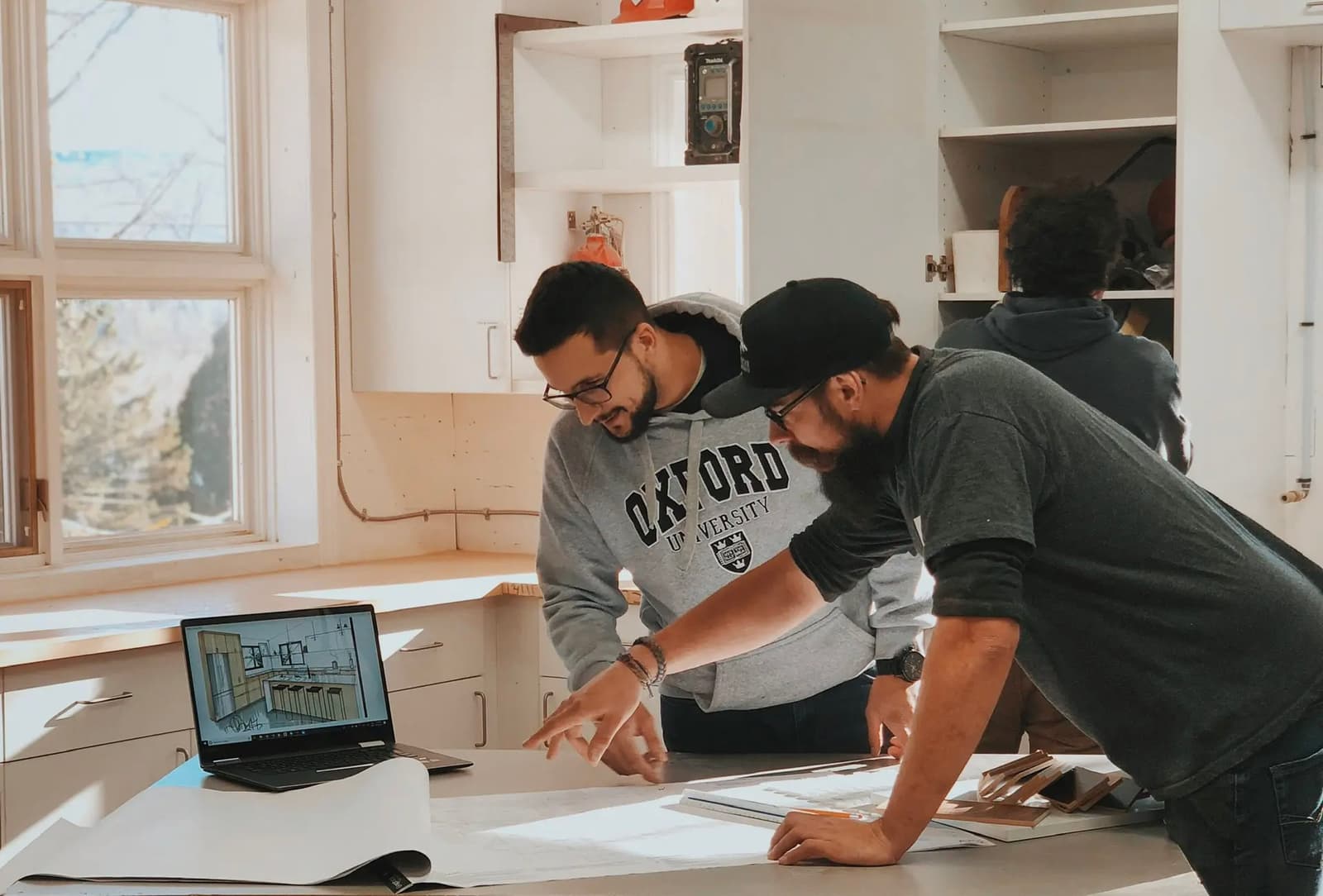
Open lines of communication and regular follow-ups are fundamental parts of streamlining efficient coordination between the different construction professionals involved.
Establish clear lines of communication and encourage all parties to share their ideas and concerns freely. Make sure all stakeholders are notified of updates and potential changes in a timely manner. That way, you’re fostering a harmonious work environment, one that helps you achieve your end goals.
To make communication actually work on a busy jobsite, choose a “single source of truth” (a group chat, a project management app, or a cloud-based platform) and define what goes where: quick questions in chat, decisions in a weekly summary, and files/photos in centralized document storage. Good document collaboration matters—when everyone is looking at the same drawings, selections, and notes, fewer things get misbuilt.
Soft skills are the difference between “people are informed” and “people are aligned.” Encourage empathy (assume good intent), speak in specifics (what, where, when), and keep a calm tone even under stress. Pair transparency with boundaries: share updates early, but keep instructions clear and concise so the team can stay productive. A simple way to invite continuous improvement is to ask one question at the end of check-ins: “What should we do differently next week?”—and then actually act on the best suggestions.
Technology can support (not replace) clear communication. For example:
mobile apps can standardize updates (daily logs, photos, and quick progress notes)
task workflows can assign owners, track status, and notify the assignee (and anyone following the task) when something changes
“RFIs” or question threads can keep decisions documented and searchable
version control in cloud-based platforms helps prevent someone building from an outdated plan
When friction happens, prioritize face-to-face communication first to reduce misunderstandings, then move into persuasive negotiations focused on solutions (options, costs, timeline impacts). If needed, use mediation with neutral third parties to protect working relationships—especially when multiple stakeholders are involved and schedule pressure is high.
4. Budget Management: Avoid Unpleasant Surprises
Establishing a realistic budget is essential to avoid unexpected financial setbacks. Don’t forget to account for unforeseen expenses and familiarize yourself with the cost breakdown associated with every phase of the project. By managing your budget responsibly, you can control your expenses and ensure project success.
Build your budget around categories (labour, materials, permits, contingencies) and track it in a way that makes decisions easier, not harder. A small contingency is typically what keeps the project calm when surprises show up (hidden water damage, framing issues, discontinued materials). Also, tie money to milestones: knowing what’s paid, what’s committed, and what’s pending approval reduces stress for everyone.
To stay sharp, use construction management software or simple tools that support ai expense tracking (or automated categorization) so overages don’t sneak up on you. Equally important is systematic contract organization: approvals, allowances, receipts, and change requests should be documented the same way every time. That consistency supports transparency and prevents “he said / she said” budget disputes.
For innovation and excellence, treat the budget as a feedback tool, too: after each phase, review what ran over (or under) and why. Those “lessons learned” can refine estimating, improve scheduling, and set higher standards on the next project.
5. Regular Follow-Ups: Set the Bar High from Start to Finish
Following up on the jobsite’s progress regularly is indispensable to guarantee quality and meet project-specific requirements. Plan recurring meetings with different parties involved to:
go over progress
fix potential problems
make the necesary changes
Such rigorous monitoring allows you to spot and fix problems right off the bat before they get any worse. To keep meetings efficient, show up with a short agenda: completed work, upcoming work, blockers, decisions needed, and risks. End each follow-up with clear next steps, owners, and due dates.
This is also where quality stays consistent. Short walkthroughs (with photos) help catch issues early: alignment, finishes, gaps, and anything that could be hard to correct later. Using project management apps (with centralized document storage) makes it easier to log decisions, assign tasks, and keep document collaboration clean—especially when subcontractors rotate in and out.
To raise standards over time, add a quick debrief rhythm: a 10-minute “retro” after key milestones (rough-ins, drywall, cabinetry, final). Capture what went well, what caused delays, and what you’ll do differently next time—then store it in the same platform so it’s easy to reuse.
Digital workflows can also make follow-ups more actionable:
assign tasks in-app (owner + due date + photo/reference), rather than “verbal to-dos”
close the loop with notifications when work is completed
track inspections (permit milestones, rough-in sign-offs, final) so nothing gets missed
run a quick punch-list process where every item is documented, prioritised, and verified.
6. Managing the Unexpected: Expect Eurdles

Source: Reno Quotes
Renovation jobsites aren’t exempt from unforeseen circumstances and delays. The trick is to anticipate such challenges and have a backup plan in place. Plan for some wiggle room in your budget to deal with unforeseen expenses or others, and discuss with your partners or subcontractors how they plan on managing last-minute changes. Strategic planning allows you to face challenges head-on, with peace of mind.
Set expectations upfront that surprises happen—and that what matters is how the team responds. A practical approach is to define a quick “triage” workflow: identify the issue, pause only the affected area (not the whole jobsite), propose options, price/time each option, then approve and document the decision. This keeps momentum while protecting quality.
This is also where dispute resolution matters most. Define how disagreements will be handled (and escalated) before they happen, including who makes the final call on scope and cost. Clear contractual clauses for change orders, timelines, approvals, and payment triggers can prevent small issues from turning into standstills—especially when suppliers, subcontractors, and general contractors are all impacted. If conflict persists, mediation with neutral third parties can bring the focus back to the project outcome.
7. Style Consistency: Create Visual Harmony
When numerous construction professionals collaborate on a project, it’s essential to ensure a fusion between the respective styles. Make sure design choices fit the rest of the project. The right visual harmony will guarantee an aesthetically pleasing and coherent finish, promoting a well-balanced living experience for homeowners.
Style consistency isn’t just aesthetics—it reduces rework. When finishes, colours, and details are clearly defined, trades can execute confidently without constant re-clarification. Collect your selections in one place (paint codes, tile SKUs, grout colour, hardware, lighting temperatures), and add photos or quick sketches so the intent is unmistakable.
If you want an extra edge, consider innovative technologies that support accuracy and client expectations—like quick augmented reality (AR) systems to preview placements (sconces, cabinetry, built-ins), or a shared visual board stored in a cloud-based platform so everyone is working from the same references. In practice, AR can help you sanity-check heights and spacing (for lighting, mirrors, towel bars, or feature walls) before anything gets drilled or tiled.
A practical, real-world quality trick many strong teams use is a “mock-up” mindset: test a small area first (tile layout, paint swatch wall, trim profile) and get sign-off before full installation. It’s a simple, cost-effective way to prevent aesthetic surprises and protect timelines.
8. Meeting Deadlines: Avoid Useless Delays
Meeting established deadlines is crucial to avoid delays that might negatively impact your renovation project. From the outset, establish a realistic calendar and ensure every hired construction professional is aware of timeline requirements. Effective schedule coordination ensures the project evolves as it should, based on the pre-established plan.
A reliable schedule is built on dependencies and realistic buffers. Confirm lead times early (windows, cabinetry, specialty tile, custom doors) and lock in dates with suppliers so the site isn’t waiting on materials. Use a simple look-ahead plan: what’s happening this week, what’s next week, and what decisions need to be made now to keep things moving.
Support your schedule with technology where it genuinely saves time:
automation tools can assign tasks, track progress, and send notifications when tasks are updated (so handoffs between trades don’t stall)
digital approvals can speed up change orders and selection sign-offs (especially when homeowners are busy)
mobile updates keep everyone aligned on daily priorities and access constraints
shared calendars reduce missed deliveries and mismatched subcontractor arrivals
For real-time monitoring and better visibility, consider tools that provide up-to-date information without adding a lot of admin work:
IoT sensors can monitor site conditions like temperature and humidity (helpful for drywall, paint, flooring, and curing/drying times), and can alert the team when conditions drift out of range
connected wearables and smart safety devices can support safety by enabling real-time monitoring and alerts when safety thresholds are breached
drones (where practical and permitted) can capture aerial imagery for site mapping, progress documentation, and safer inspections of roofs or hard-to-reach exterior areas
Leadership (whether it’s the homeowner, the general contractor, or a construction manager) is what turns a schedule into results. Leaders set expectations, champion smart ideas, and keep the team focused on solutions—not blame—when things get tight. This is where soft skills show up again: calm direction, respectful coordination, and consistent follow-through that motivates everyone to meet higher standards instead of doing the bare minimum.
A Key Driver of Project Success
The key driver to a renovation project’s success is well-established coordination between the different hired construction professionals. With meticulous planning, open communication, responsible budgetary management, and respectful conflict resolution, you can achieve results that exceed your expectations.
To sustain innovation and excellence, build a culture of continuous improvement: stay open-minded, invite feedback from all stakeholders, run quick debriefs at key milestones, and apply lessons learned to the next phase (or the next project). When leadership commits to raising standards—and when top talent is supported through growth, transparency, and an organized, tech-savvy approach—your renovation is more likely to finish on time, within your budget, and at the highest level of quality.
Looking for something else?
Related articles
The latest industry news, interviews, technologies, and resources.

Editorial Team
•10 Jul 2026
In construction, summer can be a busy season, but it can also bring slower decision-making as clients, suppliers, and team members take time off. For contractors, this makes it important to secure fall projects before the summer break, maintain a steady lead flow, and keep revenue consistent while competitors may be less active.

Editorial Team
•26 Aug 2025
In the construction industry, sharing knowledge and mentoring new talent are essential to ensure a wave of succession and to promote the industry. Given this perspective, virtual mentorships prove to be a promising solution. On account of technological breakthroughs and the onset of custom platforms, you can now benefit from remote expert advice.

Cynthia Pigeon
•03 Sep 2026
Dealing with harsh Canadian winters requires a heating system that is efficient, comfortable, and economical. When temperatures drop below -20°C, few things compare with the comfort of a warm floor underfoot. From bathroom renovations to new single-family home construction, underfloor heating has become a popular comfort upgrade in Quebec.

Editorial Team
•08 Nov 2023
Whether preparing for or washing up after a meal, filling a cup of water or a vase with fresh flowers, your kitchen sink is a fairly integral piece of the puzzle. A sink comes up against plenty of wear and tear, and thus, the possibility of it becoming worn before other parts of the room is plausible.

Editorial Team
•08 Nov 2023
Is a new floor on your to-do list for future renovation projects? A hickory hardwood floor may be the perfect choice for your next project!