Epoxy or Polyurethane Injection: Which Method Should You Choose for a Foundation Crack?
By Cynthia Pigeon
Updated on September 23, 2026
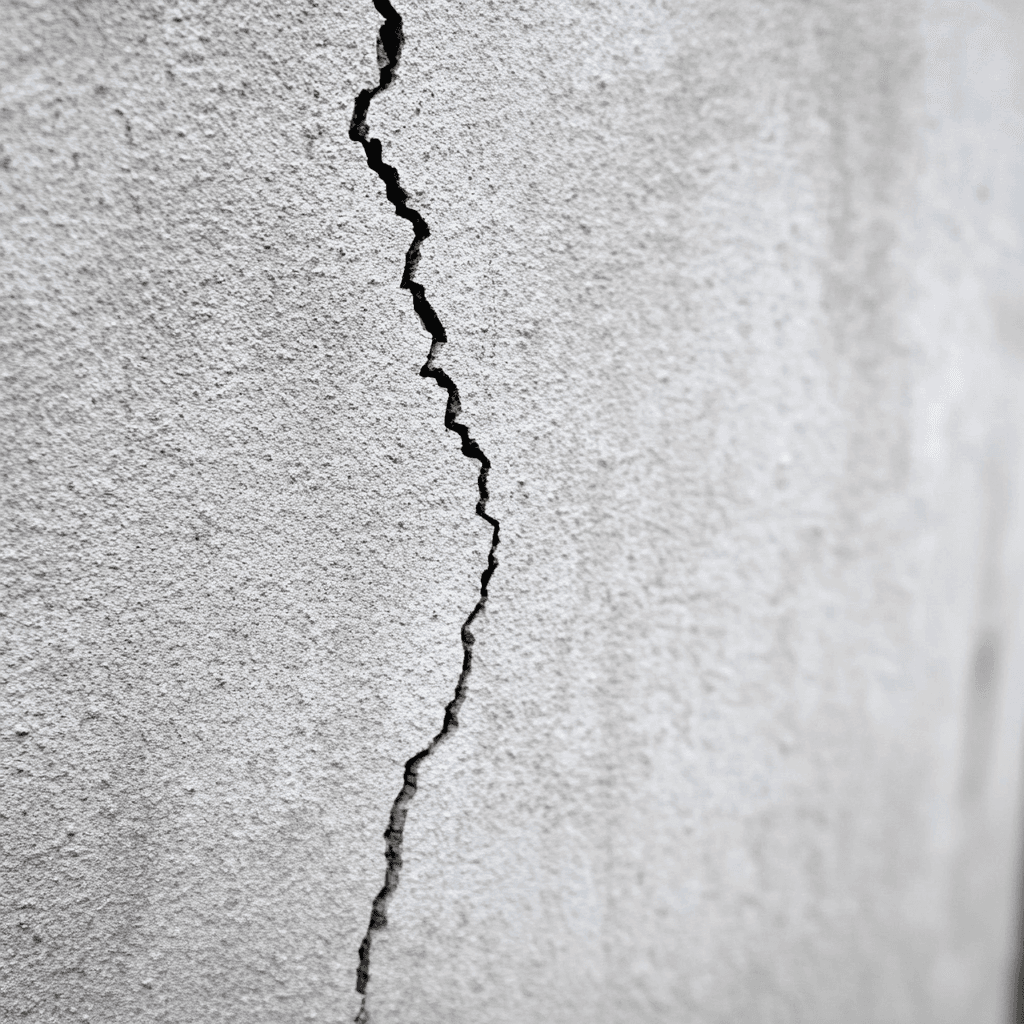
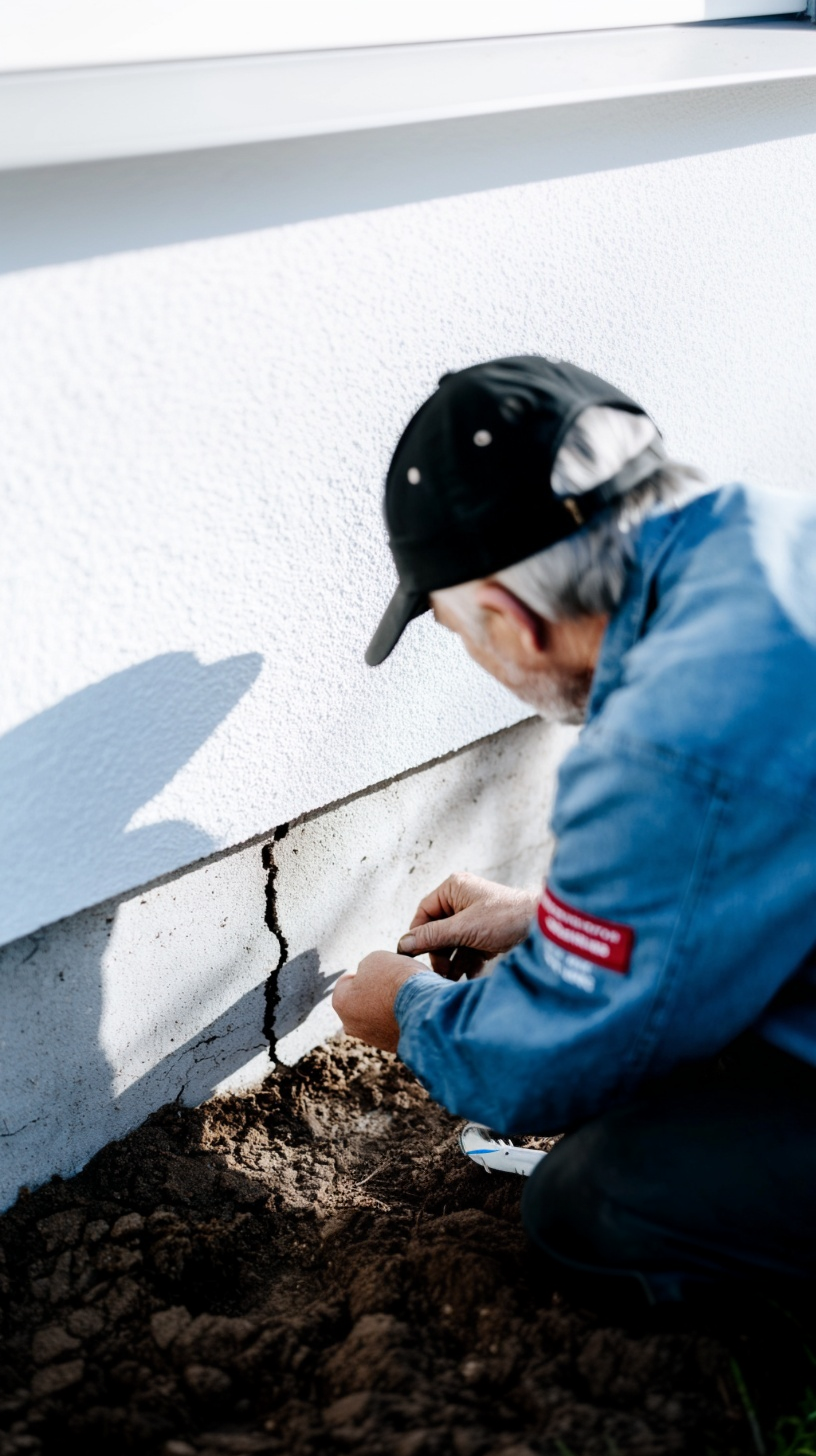
A cracked concrete foundation can allow water and moisture to seep in and, in some cases, point to a more serious problem. When repairing a crack that is accessible from the inside, two products are commonly used: epoxy resin and polyurethane.
Both methods involve injecting material into the crack, but they do not serve exactly the same purpose.
As a general rule, polyurethane is mainly used to waterproof a crack, especially when the crack is damp or subject to slight movement. Epoxy is more rigid and can be used to bond both sides of a stable crack in concrete when conditions are suitable for a structural injection repair.
However, choosing a resin is only part of the process. The first step is to determine why the foundation cracked and whether the crack is still active.
Epoxy vs. Polyurethane: The Main Differences
Source: RenoQuotes
Criterion | Epoxy Injection | Polyurethane Injection |
Primary purpose | Rigid bonding of concrete and filling stable cracks | Waterproofing and stopping water infiltration |
Flexibility | Low | High, depending on the product |
Damp crack | Some products may allow it, but application conditions must be verified | Often well suited to damp cracks |
Water infiltration | Not its main advantage | Particularly well suited |
Slight crack movement | Less tolerant | Generally more tolerant |
Structural repair | Possible for some stable cracks | Structural polyurethanes exist, but not all formulations are designed for this purpose |
Excavation required | Generally no | Generally no |
Typical application | Dry, stable crack | Damp or leaking crack |
The choice should therefore be based on the type of crack, its condition, and whether water is present, rather than on which material is considered “better.”
How Does Epoxy Injection Work?

Source: RenoQuotes
Epoxy is a resin that hardens into a very rigid material with a strong grip on concrete.
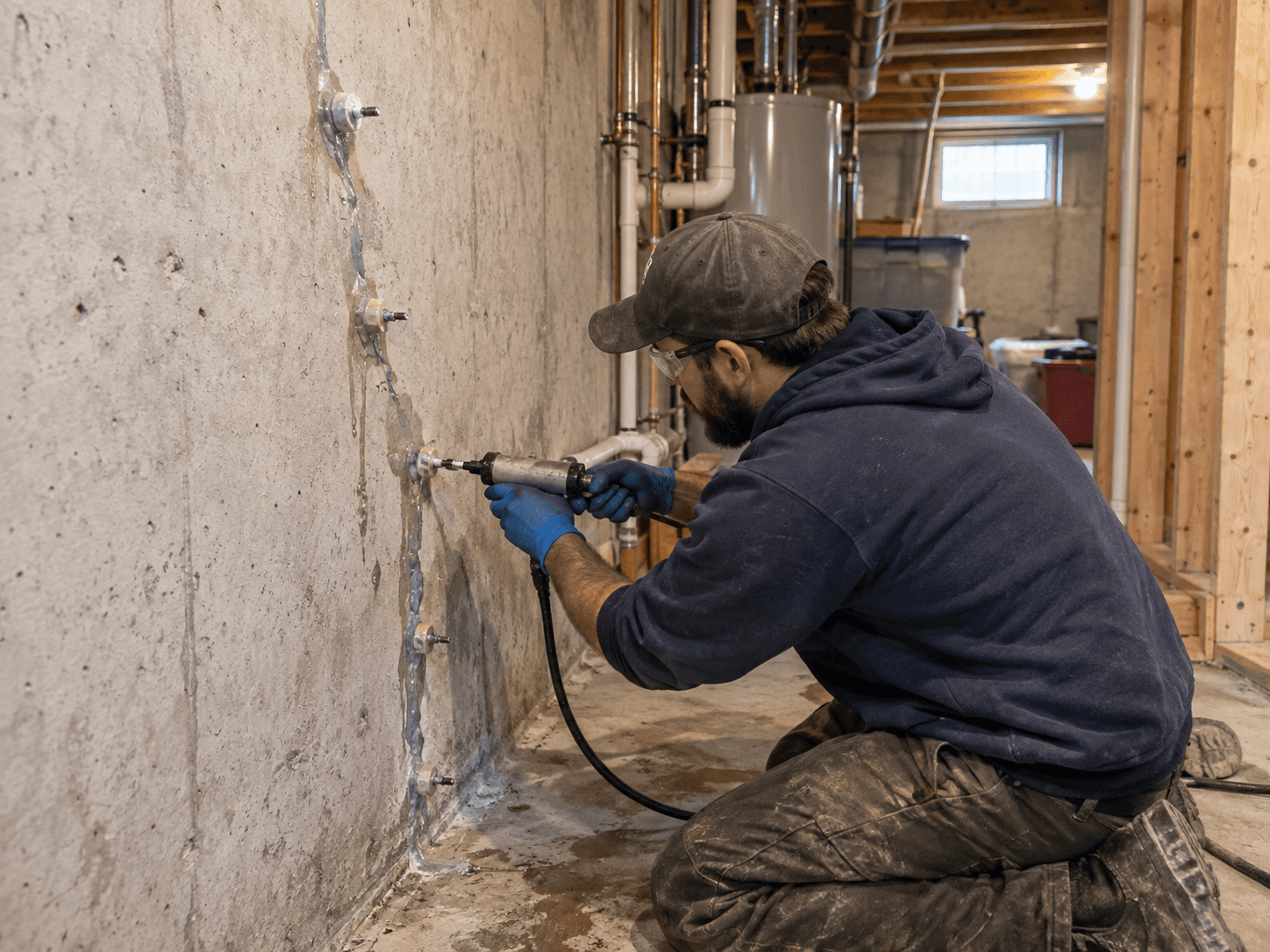
During a repair, injection ports are installed along the crack. The crack is generally sealed at the surface, and the resin is then injected to fill the void inside the concrete.
The goal is to bond both sides of a stable crack together.
The American Concrete Institute also has a procedure specifically dedicated to repairing structural cracks through epoxy resin injection.
When Is Epoxy Typically Used?
Epoxy injection may be considered when:
The crack is considered stable
There is no significant movement in the wall
A rigid crack fill is desired
The repair is part of a structural intervention determined by a professional
Diagnosis is still essential. Injecting epoxy into a crack that is continuing to move will not correct the cause of that movement.
What Are the Advantages of Epoxy?
Its main advantage is its rigidity after curing. Unlike a resin designed primarily to remain flexible and block water, an appropriate epoxy formulation can create a rigid bond within the crack.
It can also penetrate small cracks when its viscosity and the application conditions are suitable.
What Are Its Limitations?
The rigidity that makes epoxy effective can also become its main weakness.
If both sides of the crack continue to move because of soil settlement, lateral pressure, or another foundation issue, the repair may not address the underlying problem.
Moisture must also be taken into account. Requirements vary by formulation, so it is important to follow the specifications of the product being used rather than assume that all epoxy resins can be applied under the same conditions.
How Does Polyurethane Injection Work?
Source: Déneigement Gendron inc
The term “polyurethane” includes several types of resins with different properties.
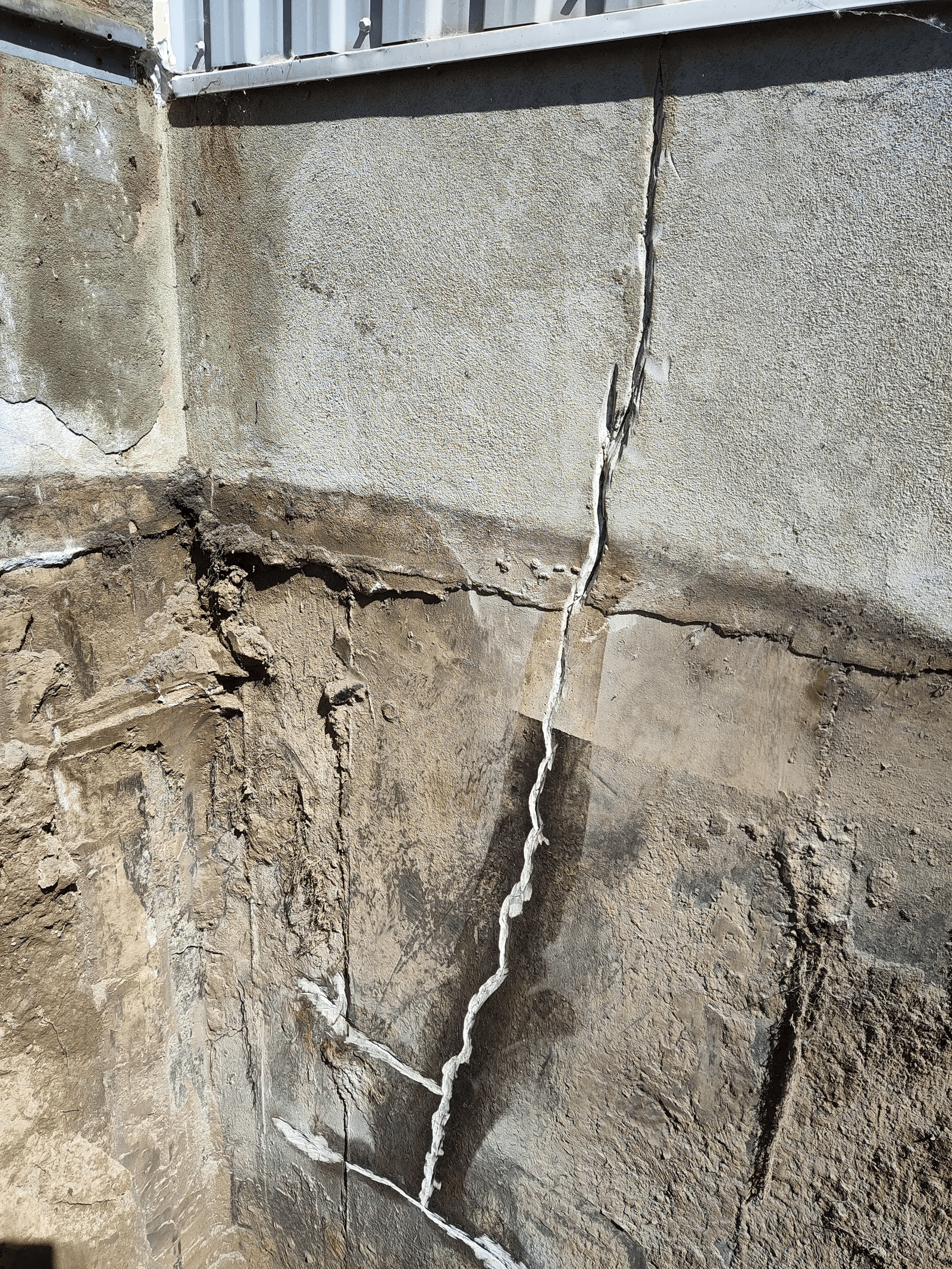
Some formulations used for foundation cracks react with moisture and expand to fill voids. Others form an elastic resin designed to create a watertight barrier while retaining some flexibility.
Sika Canada, for example, offers polyurethane products designed to repair and waterproof foundation cracks. Its SikaFix system uses a hydrophobic resin that reacts with moisture and forms a flexible material inside the crack.
When Is Polyurethane Typically Used?
Polyurethane is particularly relevant when the goal is to:
Stop water infiltration
Repair a damp crack
Effectively fill an irregular crack
Retain some flexibility after the repair
Complete an interior repair without excavation when conditions allow
Some polyurethane resins designed for waterproofing can remain highly elastic. For example, Sika reports an elongation at break of approximately 220% for one of its flexible injection resins intended for permanent waterproofing.
Why Is Polyurethane Often Used Against Water Infiltration?
Some polyurethane foams are specifically designed to react on contact with water and rapidly expand inside cracks and cavities.
This behaviour allows the product to follow the irregular contours of a crack and fill spaces that may be difficult to reach with a rigid material.
However, it is important to note that not all polyurethanes are expanding foams, and they do not all have the same properties. Flexible polyurethane resins and structural polyurethanes also exist.
Crack With Water Infiltration: Epoxy or Polyurethane?
Source: RenoQuotes
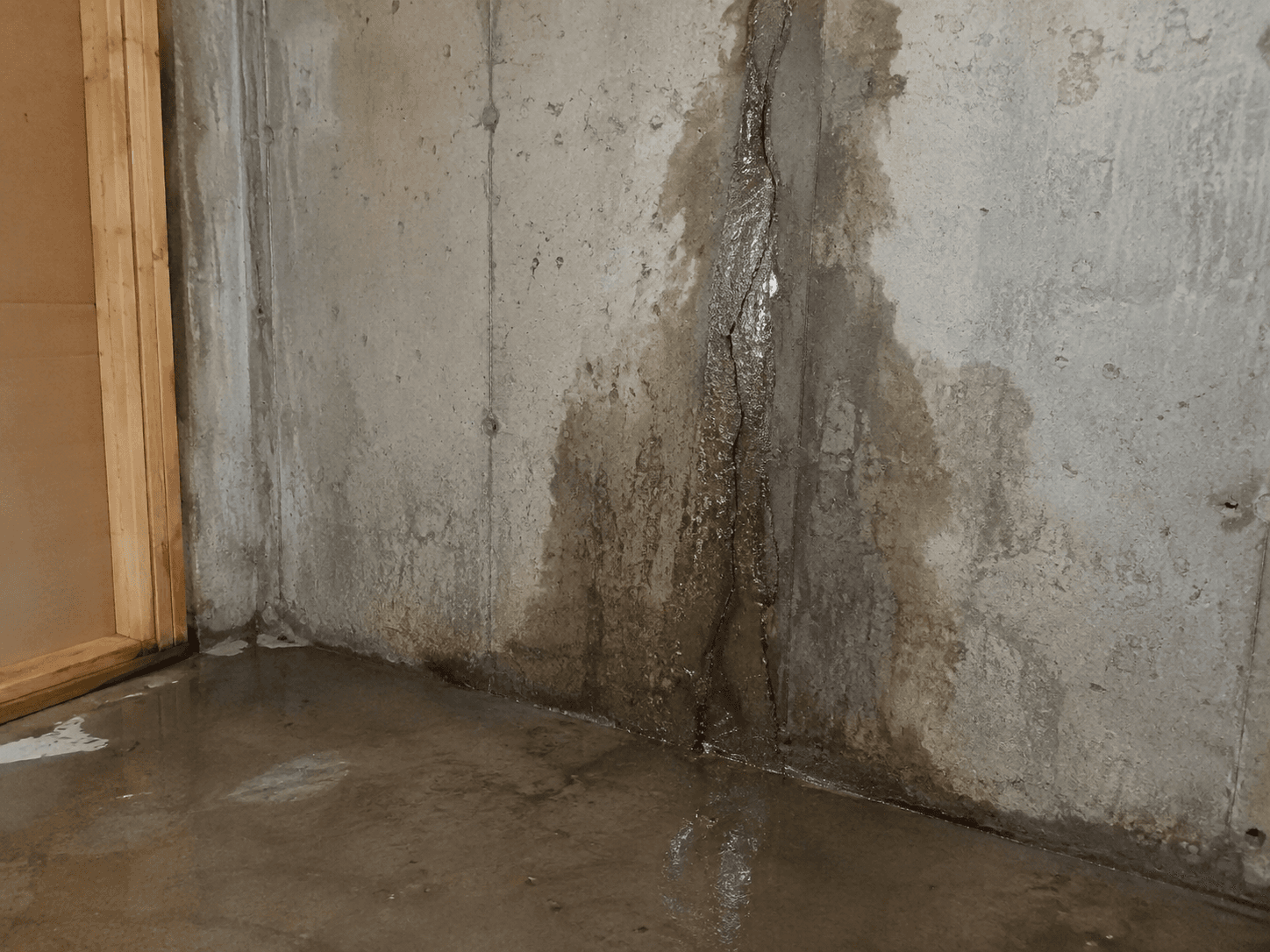
When a crack allows water to enter, polyurethane is often one of the preferred solutions for waterproofing, particularly when the formulation is designed for use in damp cracks.
Some resins can also accommodate slight movement in the substrate after curing. That does not mean injection is always sufficient. If water is entering because of a broader drainage problem around the home, a failing weeping tile system, or poor surface water management, the source of the water accumulation must also be fixed.
Dry, Stable Crack: Epoxy or Polyurethane?
For a dry crack that has stopped moving, epoxy may be more appropriate, especially when the objective is to create a rigid bond between the concrete sections. However, it is still important to distinguish a simple shrinkage crack from a structural issue.
A crack that appears dry today may also become an entry point for water during snowmelt or periods of heavy rain. The crack’s history should therefore be taken into account.
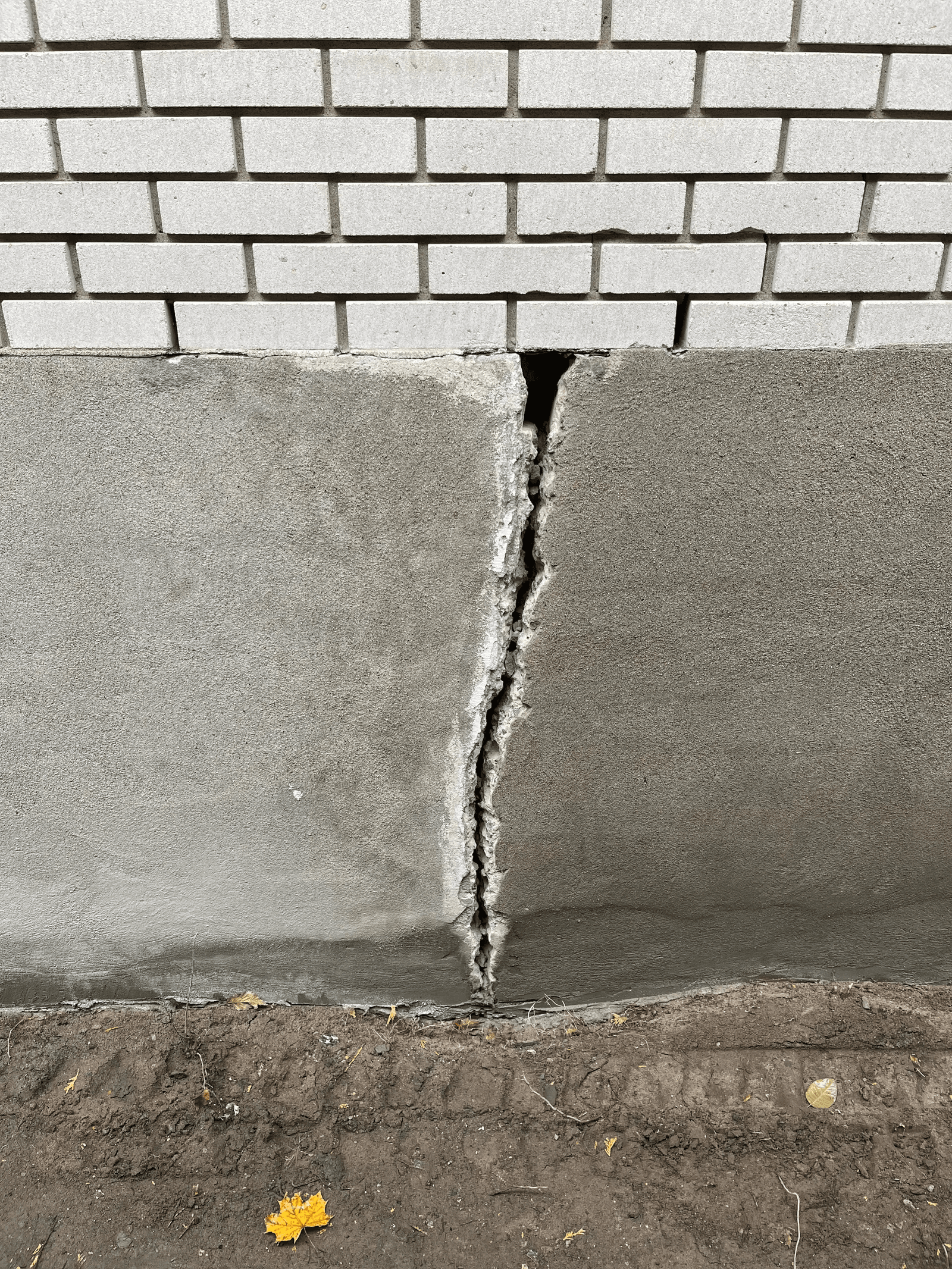
Can Injection Repair a Structural Crack?
Source: Construction AP
Sometimes, but the diagnosis must come before the repair method.
Epoxy can be used for certain structural injection repairs. There are also polyurethane products with high mechanical properties that are designed for structural applications. For example, Sika Canada describes its Injection-216 as a structural polyurethane resin intended for filling and sealing cracks in various components, including foundations.
It would therefore be inaccurate to reduce the choice to:
epoxy = structure / polyurethane = water.
That distinction can be a useful starting point, but the exact properties of the product, the type of crack, and the cause of the crack are what ultimately determine the appropriate solution. A crack caused by foundation movement, a bowing wall, or settlement should not simply be filled without first determining why the structure is moving.
When Is Injection Not Enough?
Source: Fissure et drain Soucy
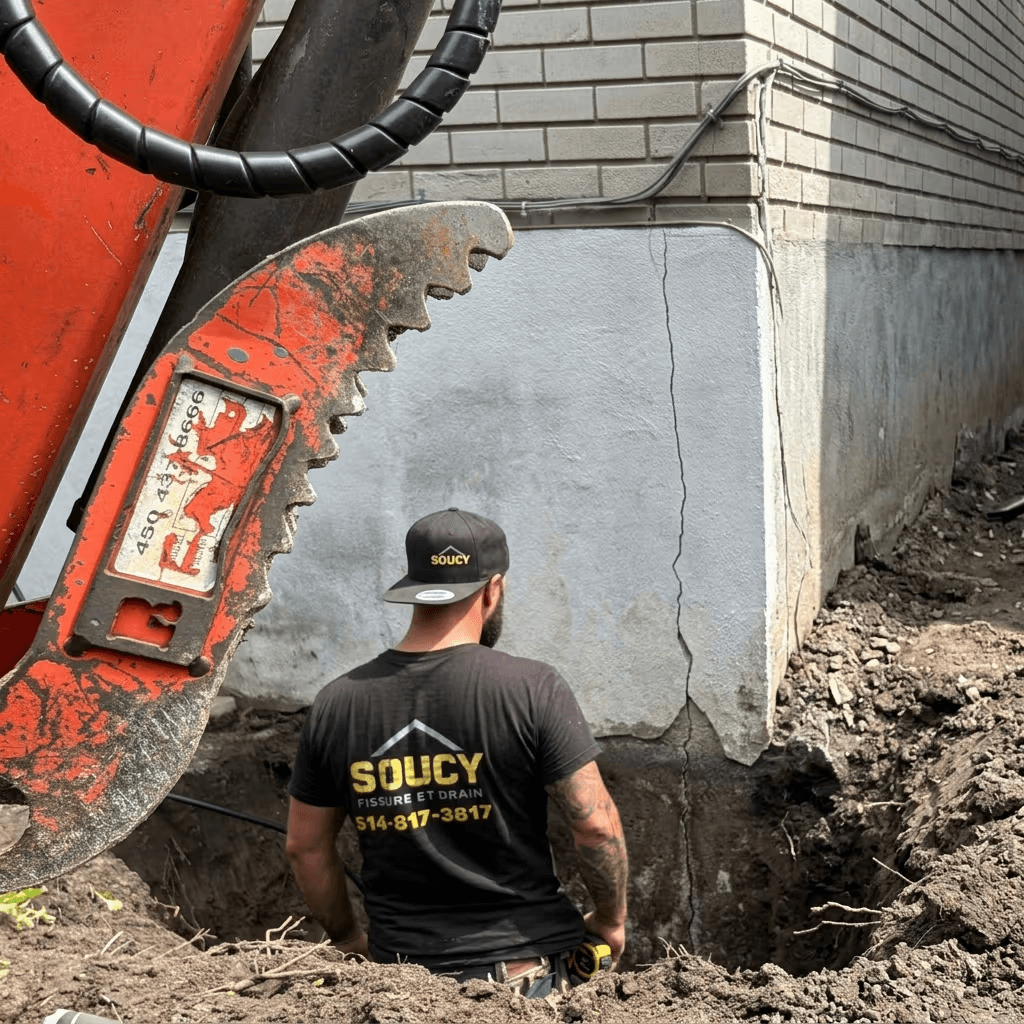
Both epoxy and polyurethane mainly treat the crack itself. They do not automatically correct the issue that caused it.
A more thorough inspection is especially important if you notice:
A significant horizontal crack
Several cracks appearing or getting larger
A stair-step crack in masonry
A foundation wall that is bowing or shifting
Displacement between both sides of the crack
Doors or windows that suddenly begin sticking
Visible settlement
Repeated water infiltration despite a previous repair
Depending on the diagnosis, the solution may require work on drainage, exterior waterproofing, the foundation itself, or structural reinforcement rather than injection alone.
Interior Injection or Exterior Repair?
Source: RenoQuotes
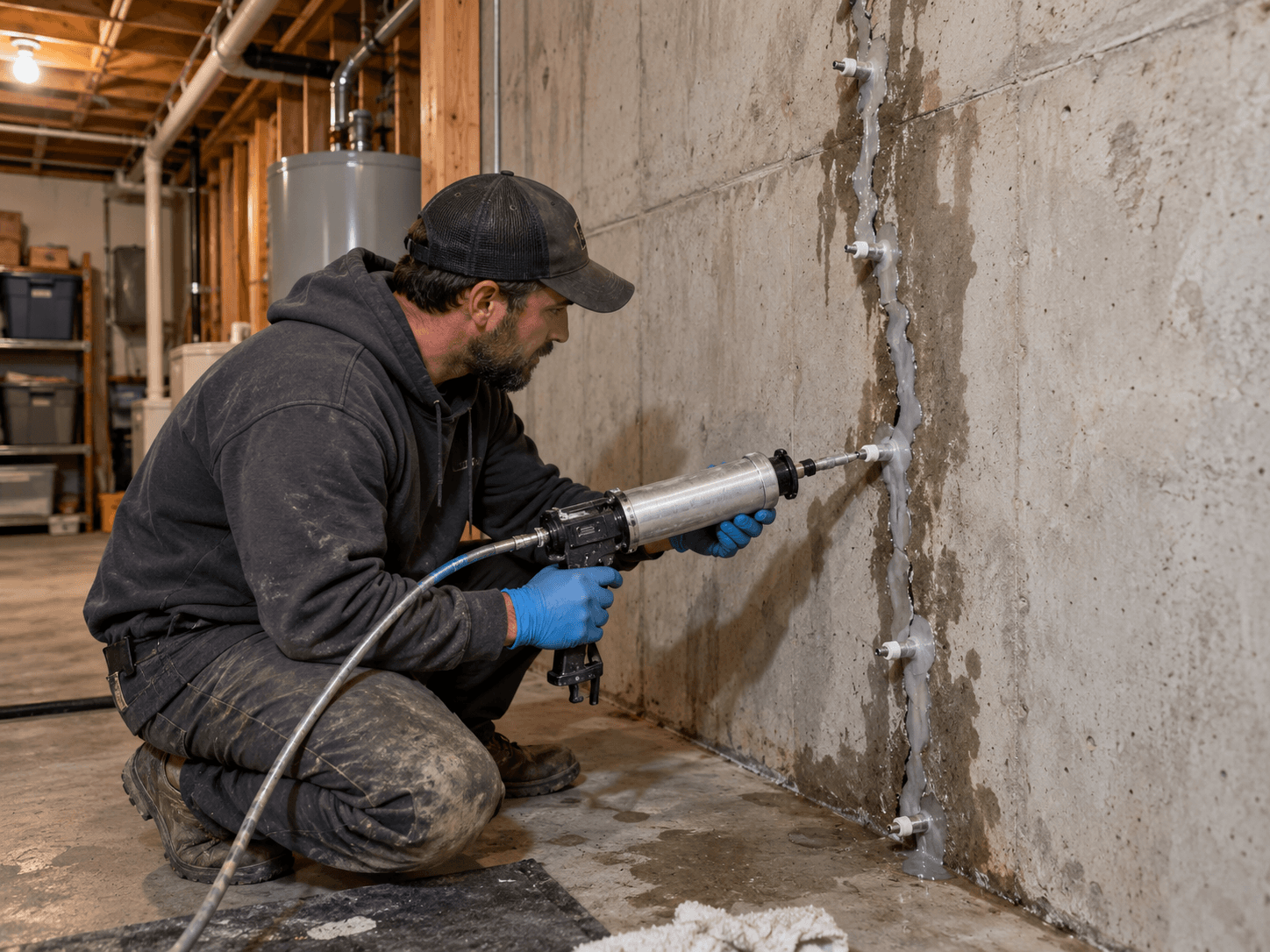
An injection performed from the inside has one major advantage: it can repair a crack without excavating along the entire foundation wall. However, the two approaches do not necessarily address the same problem.
An injection is mainly intended to fill and seal a specific crack. An exterior repair provides access to the outside face of the foundation wall and may be appropriate when the issue also involves waterproofing or drainage around the foundation.
The two methods should therefore not automatically be viewed as the “budget” and “premium” versions of the same repair. The right intervention depends on the problem that needs to be addressed.
How Much Does Foundation Crack Injection Cost?
The price can vary depending on:
Length and width of the crack
Accessibility
Number of cracks
Presence of water
Product and injection technique used
Preparation work required
Whether additional diagnosis is needed
Region
Warranty provided
To avoid duplicating information and to allow pricing to be updated regularly, see our foundation repair cost guide for current price ranges.
Epoxy or Polyurethane: How Do You Choose?
Here is a simple way to distinguish the two approaches.
Damp crack or one that is allowing water in: A polyurethane injection designed for waterproofing is generally one of the first solutions considered.
Dry, stable crack requiring a rigid bond: Epoxy injection may be considered.
Crack that is continuing to move: Avoid resin before identifying the cause of the movement.
Bowing wall, a displaced crack, or signs of settlement: The foundation should be assessed before any injection repair is carried out.
Diagnose the Issue Before Injecting the Crack
Source: RenoQuotes
Epoxy and polyurethane are both effective solutions, but they are not interchangeable.
Epoxy stands out for its rigidity and its ability to create a bond in certain stable cracks, while polyurethane is particularly versatile for waterproofing and for cracks that may be subject to slight movement. Before choosing between the two, three questions should be answered: Is the crack stable? Is it allowing water in? Why did it form?
A specialized contractor can inspect the crack, determine the appropriate repair method, and verify whether more extensive work on the foundation or drainage system is required.
With RenoQuotes, you can compare up to three quotes from local contractors for your foundation repair project.
FAQ About Epoxy and Polyurethane Injection
Is Polyurethane Less Durable Than Epoxy?
Not necessarily. Service life depends on the product, the condition of the crack, the quality of the installation, and above all, the stability of the foundation.
A very rigid material is not automatically more durable if the crack continues to move.
Can Polyurethane Be Injected Into a Dry Crack?
Yes, depending on the product being used. Some formulations are designed for dry or damp conditions, while certain foams require moisture to trigger their reaction. Check the manufacturer’s instructions before proceeding.
Can Epoxy Be Injected Into a Damp Crack?
It depends on the formulation and the substrate conditions. Some products tolerate more moisture than others. The choice should therefore never be based solely on the word “epoxy.”
Can Polyurethane Repair a Structural Crack?
Some polyurethane products are designed for structural applications, but that does not mean a structural crack can be repaired with just any polyurethane injection. The product and repair method must match the diagnosis.
Do All Foundation Cracks Need to Be Repaired?
At a minimum, a crack should be monitored and assessed based on its location, how it changes over time, whether water is present, and any other signs observed in the building.
A small, stable crack does not have the same significance as a crack that is widening or accompanied by wall movement.
Looking for something else?
Related articles
The latest industry news, interviews, technologies, and resources.

Editorial Team
•03 Dec 2024
A sunroom is an area that’s conducive to rest and relaxation. However, don’t read too much into the name, it can very well be used beneficially either during the summertime or wintertime, day or night. On top of increasing the resale value of your house, a sunroom means adding an enclosed space on your property to prolong those beautiful, warm days.

Léa Plourde-Archer
•25 Jul 2024
Applying drywall joint compound is an art that requires patience and meticulousness. Contrary to other types of renovation projects, this task is accessible to anyone. However, in order to ensure good results, it is important to follow certain guidelines.

Cynthia Pigeon
•01 Sep 2026
A true centrepiece of contemporary Quebec homes, the kitchen island has evolved significantly over the past decade. Once simply a wood or laminate prep surface, it has become a multifunctional hub that can include cooking appliances, an undermount sink, a dishwasher, and multiple charging points for electronic devices.

Editorial Team
•08 Nov 2023
Are you considering renovating your kitchen this year? With all the available material and decor options, at first, it can be difficult to navigate. To offer some inspiration for this large-scale project, take a look at the kitchen decor trends that are sure to steal the show in 2021!
Editorial Team
•20 Mar 2026
Whether it’s getting ready in the morning before leaving for work or treating yourself to some well-deserved R&R at the end of a long day, the bathroom is a space where one spends a considerable amount of time. And that’s why a bathroom that’s been hit hard by the passage of time can quickly become a nuisance, both in terms of function and aesthetics. Fortunately, the latest bathroom design trends can help turn your space into a modern and calming retreat.