Renovation Financing: What Canadian Options Are Comparable to an FHA 203(k) Loan?
By Cynthia Pigeon
Updated on July 23, 2026

When searching online for ways to finance the purchase of a fixer-upper, Canadian buyers may frequently encounter the term “203(k) loan.” Widely used in the United States, this concept appeals to buyers who want to purchase a property requiring renovations without exhausting their personal savings.
However, the 203(k) loan does not exist within the Canadian banking system. Canada has no official equivalent to the FHA 203(k) loan. Some lenders do, however, offer Purchase Plus Improvements programs that allow buyers to finance the purchase of a property and certain renovations through the same mortgage, subject to the lender’s requirements and, where applicable, those of the mortgage insurer.
What Is an FHA 203(k) Loan and Why Do Canadians Search for It?
Source: Capable group
In the United States, the FHA 203(k) loan is a government-backed program administered by the Federal Housing Administration. It allows borrowers to finance both the purchase of a fixer-upper and renovation costs through a single loan, thus avoiding having to combine a mortgage with higher-interest personal loans.
Canadian buyers often search for this option because the country has a significant number of older homes. Depending on their condition and level of maintenance, these properties may require work such as:
Replacing an aging heat pump, furnace or oil heating system
Improving insulation and replacing windows
Fully updating kitchens and bathrooms
Without a mortgage program that incorporates renovation costs, buyers must finance the work separately through savings, a line of credit, a personal loan or another financing option. For major renovations, this additional expense can represent a significant obstacle.
Purchase Plus Improvements Programs: Comparable Canadian Solutions
Source: Construction-Rénovation Clavel Inc.
Purchase Plus Improvements programs provide a Canadian solution comparable to the FHA 203(k) loan, although they are not an official equivalent. Offered by certain lenders and accessible through mortgage brokers, these programs may allow buyers to finance the purchase and eligible renovations with a minimum down payment starting at 5%, subject to the lender’s and mortgage insurer’s criteria.
By incorporating eligible renovation costs into the main mortgage, borrowers can generally obtain a lower interest rate than they would with a credit card or unsecured personal loan, depending on the lender's terms. This approach can be advantageous when planning renovations to an older home.
The Role of CMHC, Sagen and Canada Guaranty
In Canada, a mortgage with a down payment of less than 20% of the property’s applicable purchase price or lending value is generally considered a high-ratio mortgage. A down payment below 20% typically requires mortgage loan insurance, subject to the rules that apply to the mortgage and property.
Three mortgage insurers provide this coverage in Canada:
Canada Mortgage and Housing Corporation (CMHC), a federal Crown corporation
Sagen, formerly Genworth Canada
Canada Guaranty
All three insurers offer programs that can include eligible property improvements. The mortgage insurer assesses the application submitted by the lender according to its program criteria, including the property’s value after improvements and the project’s eligible costs. With mortgage insurance, the lender may include eligible renovations in the approved financing. However, the portion allocated to the renovations is generally held back and released according to the lender’s procedures after the work has been verified. For official eligibility requirements, consult the Canada Mortgage and Housing Corporation directly.
How Is the Property’s Value Calculated After Renovations?
Source: RenoQuotes
A central part of Purchase Plus Improvements financing is the calculation of the property’s projected market value, also known as its as-improved value. The lender does not base the financing solely on the property’s current condition, but also considers its estimated value once the approved renovations are complete.
Example of an As-Improved Valuation
A buyer finds a duplex listed for $200,000 and plans to occupy one of the two units as their principal residence. The property requires major renovations estimated at $50,000.
Total project cost: $200,000 + $50,000 = $250,000
The dedicated financial institution assigns an appraiser to review the plans and contractor quotes. The appraiser determines that the property will be worth $255,000 once the renovations are complete.
The lender uses the lower of the total project cost of $250,000 and the projected value of $255,000. The applicable lending value is therefore $250,000.
Minimum down payment in this example: $250,000 × 0.05 = $12,500
Base mortgage amount before the mortgage insurance premium: $237,500. The applicable mortgage insurance premium can generally be added to the mortgage balance.
Had the as-improved value been estimated at only $230,000, the lender would have calculated the maximum financing using that lower value. With maximum financing of 95%, the base mortgage could be limited to approximately $218,500, subject to the lender’s and insurer’s criteria. The buyer would then have to provide additional funds to cover the total project cost.
Steps for Obtaining Purchase Plus Improvements Financing in Canada

Source: Peinture J. Lessard S.E.N.C.
Obtaining Purchase Plus Improvements financing generally requires more preparation and documentation than a conventional real estate transaction. The recommended process is as follows:
Obtain mortgage pre-approval: Confirm your maximum borrowing capacity with a mortgage broker or lender.
Submit a conditional offer: Include conditions for a home inspection and access to the property so contractors can prepare renovation estimates before the transaction is finalized.
Gather professional quotes: Obtain written estimates from the contractors or trades involved.
Complete the appraisal: The lender arranges an appraisal based on the property’s current condition, renovation plans and projected value.
Obtain final approval and close the transaction: The lender approves the overall financing and sends the necessary instructions to the lawyer or notary handling the closing.
Obtain Detailed Quotes From Qualified Contractors
Many lenders require the work to be completed by qualified contractors, although policies regarding work performed by the homeowner vary by financial institution and program.
Depending on the lender and the nature of the renovations, detailed quotes from contractors holding the licences required in the applicable province or municipality may be necessary.
The information requested in each quote varies by lender, but may include:
The contractor’s valid licence or registration number, where applicable.
A detailed description of the work, materials and labour.
A clear project timeline.
Exact amounts, including applicable GST, HST and provincial sales taxes.
For minor cosmetic projects, such as interior painting, some lenders may allow the cost of materials to be included based on estimates from building supply retailers. However, limits applying to materials and owner-completed work vary by lender and financing program.
How Renovation Funds Are Released
Contrary to what some buyers may expect, the money allocated to renovations is not normally deposited into the buyer’s bank account on the closing date.
When the transaction closes:
The lawyer or notary transfers the agreed purchase amount to the seller.
The portion of the mortgage allocated to renovations is held back by the lender or placed in trust, depending on the transaction and province.
Depending on the amount and nature of the work, the renovation funds may be held and released in a single payment after completion or disbursed through several progress advances. The number of advances and inspections required varies by lender and program.
When a program provides for multiple progress advances, an appraiser or inspector may verify the work completed and submit a progress report to the lender. The lender then authorizes the next disbursement according to the established terms. When the program uses a single holdback, the funds are generally released after the lender receives confirmation that the eligible renovations have been completed.
Other Financing Options in Canada
Source: Metal MG inc.
Although Purchase Plus Improvements financing can incorporate renovation costs into the mortgage with a relatively low down payment, other options may be available depending on your financial situation.
Financing Option | Typical Interest Structure | Down Payment or Equity Required | Best Suited For |
Purchase Plus Improvements Mortgage | Fixed or variable mortgage rate, generally lower than unsecured credit | May start at 5% for certain eligible owner-occupied properties | Purchasing a property that requires immediate major renovations |
Home Equity Line of Credit | Variable rate, typically based on the lender’s prime rate plus a margin | Usually requires at least 20% equity or down payment | Renovations completed gradually by established homeowners |
Mortgage Refinancing | Standard mortgage rate | Financing generally limited to 80% of the property’s market value | Renovating a home you have owned for several years |
Personal Loan or Unsecured Line of Credit | Generally higher than a mortgage rate and dependent on the lender and borrower’s credit profile | No home equity required | Smaller urgent projects costing less than approximately $15,000 |
Before choosing an option, gauge the expected renovation costs to determine whether the project requires comprehensive mortgage financing or could be covered through a line of credit.
Tips for Preparing a Successful Renovation Financing Application
To reduce the risk of having your financing application delayed or declined, consider the following recommendations:
Set aside a contingency fund of 10% to 15%: Unexpected issues are common in older Canadian homes, including mould, asbestos, pyrite, outdated wiring, plumbing problems and foundation damage. Keep a contingency reserve outside the approved financing.
Account for seasonal construction conditions: Roofing, concrete and exterior work completed during winter may involve additional costs for heating, snow removal and weather protection. Plan the project and financing schedule accordingly.
Consult a mortgage broker: Not all lenders offer the same Purchase Plus Improvements programs or disbursement procedures. A broker can help identify financial institutions that handle this type of financing.
Obtain several contractor quotes: Clear and comprehensive quotes can help the appraiser and lender assess the project. You can request renovation quotes from contractors in our verified network.
Finance Your Purchase and Renovations with a Canadian-Suited Solution
Although the FHA 203(k) loan has no official Canadian equivalent, Purchase Plus Improvements programs offered by certain lenders and mortgage insurers provide a comparable way to finance the purchase of a property and eligible renovations at the same time. When insured by CMHC, Sagen or Canada Guaranty, this type of financing may combine the property purchase and eligible renovation costs within a single mortgage.
Before submitting an offer to purchase:
Confirm your total borrowing capacity.
Obtain compliant quotes from contractors who meet the licensing requirements in your province or municipality.
Confirm the lender’s holdback, inspection and disbursement procedures, as well as the role of the lawyer or notary handling the transaction.
Looking for something else?
Related articles
The latest industry news, interviews, technologies, and resources.
Editorial Team
•31 Mar 2025
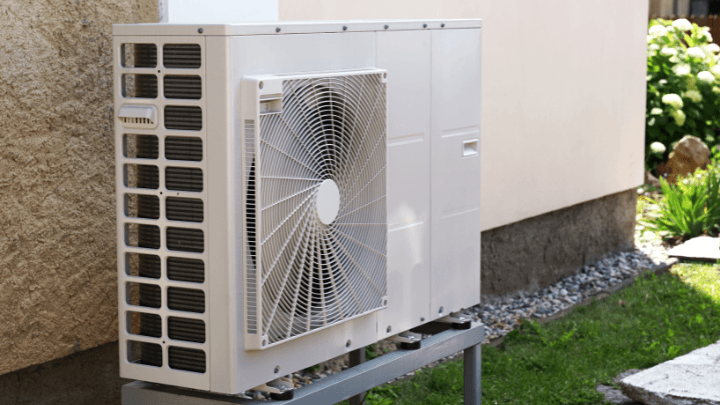
Are you thinking about purchasing a heat pump to offset both the winter cold and the sweltering summer heat? While this might sound interesting, you may still be reluctant to make the change due to the rather steep cost of such a device.

Editorial Team
•31 Mar 2025
What if we told you that you could secure an interest-free loan of up to $40,000 to make your home more eco-friendly and reduce your carbon footprint? Sounds too good to be true? Think again! It’s exactly what the Canada Greener Homes Loan offers.

Équipe éditoriale
•08 Nov 2023
It’s difficult to deny that as soon as the chilly weather arrives, rushing to the thermostat to crank up the heat seems like the only way to keep the inside of the home warm and comfortable. What you may not realize is that even if your heaters are on full blast, the indoor temperature will only stay cosy if your home is insulated correctly.
Editorial Team
•01 Apr 2026
Roof renovation in Canada must prioritize resistance to freeze-thaw cycles, regional weather exposure, and proper snow load management where applicable. Asphalt shingles remain one of the most affordable options, while metal roofing offers durability of more than 50 years. To ensure watertightness and help prevent ice dam formation in colder regions, proper attic ventilation and installation by a qualified, properly licensed roofing contractor are essential for protecting your investment.

Editorial Team
•08 Nov 2023
We can’t deny that painting usually turns out to be a time-consuming activity. Most homeowners love the idea of a fresh coat of paint, but the process of getting there can be tricky. This labour-intensive job needs attention to detail and perseverance, especially if you’re dealing with the age-old debate of how many coats of paint are necessary.