What is a 3-way switch and how does it work?
By Editorial Team
Updated on June 30, 2026

A 3-way switch lets you control the same light fixture from two different locations. It is commonly used in staircases, hallways, basements, garages, and rooms with more than one entrance.
Although a 3-way switch looks similar to a standard light switch, its wiring is different. Understanding the parts, wiring scenarios, and differences between single-pole, 3-way, and 4-way switches can help you identify what you have at home and know when to call a licensed electrical contractor or qualified electrician.
What is a 3-way switch?
Source: Reno Quotes
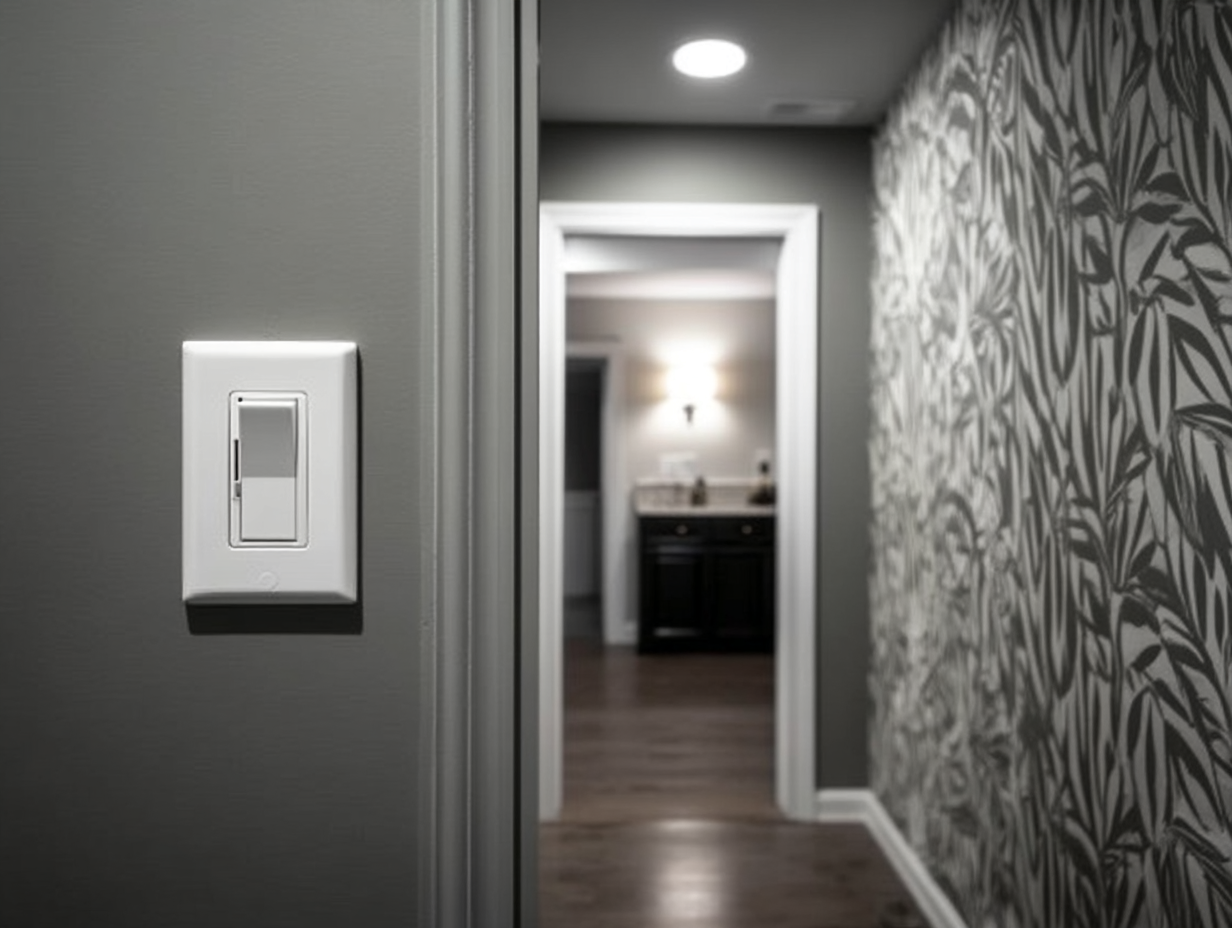
A 3-way switch is part of a pair of switches that control one light or lighting zone from two locations. For example, one switch may be installed at the bottom of a staircase and the other at the top.
Despite the name, a 3-way switch does not control three separate lights. The term refers to the switching arrangement. In technical terms, it is a single-pole, double-throw switch, often called an SPDT switch.
A standard 3-way switch usually has:
One common terminal, often marked by a darker screw
Two traveller terminals, often marked by brass screws
One ground terminal, usually green
The common terminal connects to either the power source, called the line, or the light fixture, called the load. The two traveller wires run between the pair of 3-way switches and allow the circuit to change paths.
How does a 3-way switch work?
A 3-way switch works by redirecting current between two traveller wires. When you flip either switch, the electrical path changes. If the path between the power source and the light is complete, the light turns on. If the path is interrupted, the light turns off.
This is why the up or down position of a 3-way switch does not always mean “on” or “off.” Unlike many single-pole switches, 3-way switches usually do not have on/off markings because the light’s state depends on the position of both switches.
Comparing 3-Way Switches With Other Switch Types
These switches can look similar from the front, but they are used for different lighting setups.
Switch Type | Main Use | How to Identify It |
Single-pole switch | Controls one light from one location | Usually has two terminal screws plus a ground screw |
3-way switch | Controls one light from two locations | Has one common terminal, two traveller terminals, and a ground screw |
4-way switch | Controls one light from three or more locations | Installed between two 3-way switches and has four traveller terminals plus a ground screw |
A 4-way switch is not used alone. It is added between two 3-way switches when you want lighting control from three or more locations, such as in a long hallway or large open-concept space.
Wiring and Installation Basics
Source: ZAK Electric
Common 3-Way Switch Wiring Scenarios
The exact wiring arrangement depends on where power enters the circuit and where the light fixture sits. These are the most common scenarios:
Power at the first switch, then the light
Power at the light fixture, then the switches
Light fixture between the two switches
Light fixture at the end of the run
In these setups, you may hear terms like line, load, common wire, traveller wires, switch loop, and common screw. The wire colours can vary depending on the age of the installation, the cable type, and how the circuit was wired. For this reason, wire colour alone should never be used as proof of a wire’s function.
Tools and Materials Used for 3-Way Switch Work
A licensed electrician may use the following tools and materials when replacing or wiring a 3-way light switch:
3-way light switch
Voltage tester
Screwdrivers
Wire stripper
Needle-nose pliers
Electrical tape
Wire connectors
14/3 or 12/3 cable, depending on the circuit
Faceplate
Electrical box, if the setup is being changed
Many Canadian residential lighting circuits are 15-amp circuits using 14 AWG copper cable, but circuit size, cable type, box fill, grounding, neutral requirements, and breaker requirements must follow the applicable provincial or territorial electrical code and any local authority requirements.
Can you install a 3-way switch yourself?
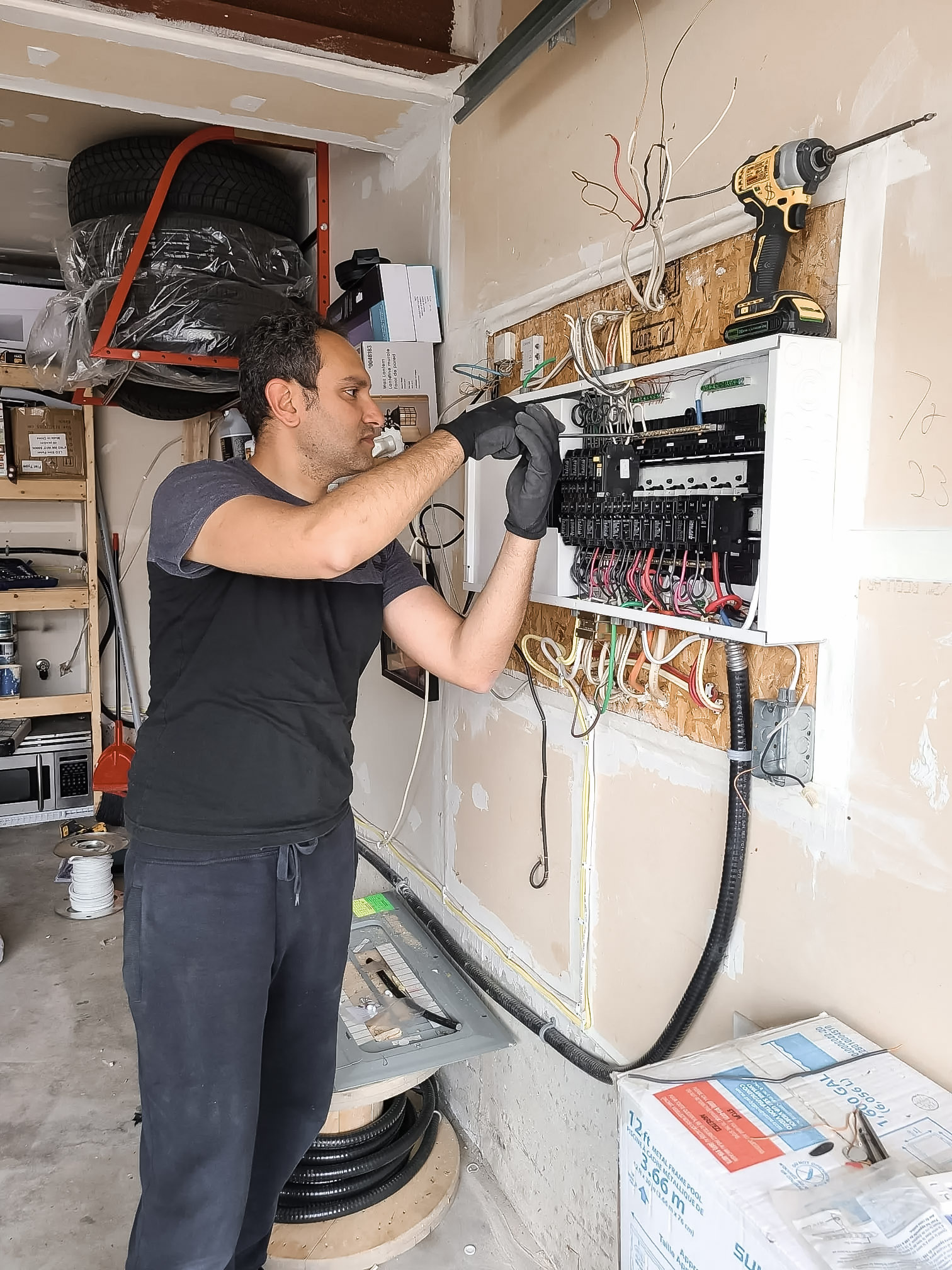
Electrical work can create a shock, fire, or code-compliance risk if it is done incorrectly. Installing a new 3-way switch circuit, adding cable, changing wiring, or modifying an electrical box should be handled by a licensed electrical contractor or qualified electrician, unless your province, territory, or municipality allows homeowner electrical work and you obtain any required permits or inspections.
A typical professional process may include:
Turning off the circuit breaker
Testing the wires to confirm the power is off
Identifying the line, load, common wire, travellers, neutral, and ground
Connecting the common terminal correctly
Connecting the traveller wires to the traveller terminals
Connecting the ground wire
Securing the switch and faceplate
Restoring power and testing both switch locations
If you are only replacing an existing switch, the most important step is identifying the common wire before disconnecting the old switch. Mixing up the common wire and traveller wires is one of the most common reasons a 3-way switch stops working properly.
Do 3-way switches need a neutral wire?
A basic mechanical 3-way switch may not need a neutral connection to operate, especially in older installations. However, for new or modified wiring, Canadian code requirements and local authorities may require a neutral conductor in light switch outlet boxes. Many smart switches, timers, dimmers, motion sensors, and similar controls also need a neutral wire to stay powered.
Some smart switch systems are designed for no-neutral applications or use a master switch with a remote, such as a wireless remote or companion switch. Compatibility depends on the product, the wiring in the box, the type of light fixture, and the manufacturer’s instructions.
Before buying a smart 3-way switch, check:
Whether your switch box has a neutral wire
Whether the product is rated for 3-way use
Whether it supports your bulb type
Whether it requires a hub, companion switch, or remote
Whether it carries a recognized Canadian approval mark, such as CSA, cUL, cETL, or another mark accepted by your local electrical authority
Dimmers, Smart Switches, and Compatibility
Source: Reno Quotes
What about dimmers and smart 3-way switches?
A 3-way dimmer must be designed for 3-way circuits. A standard single-pole dimmer should not be installed in a 3-way setup unless the manufacturer specifically allows it.
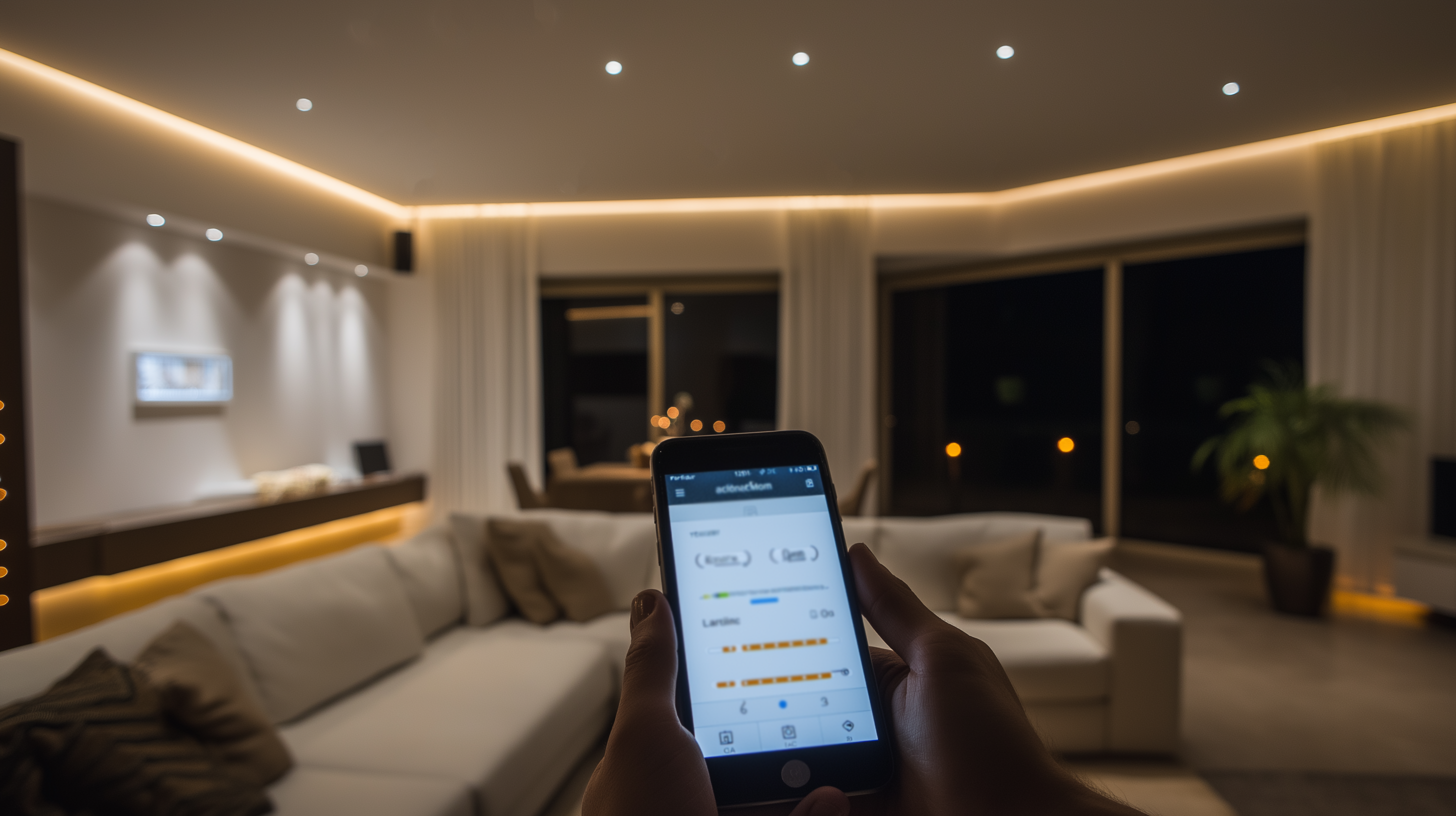
In many 3-way dimmer setups, only one switch location has the dimmer, while the other uses a compatible 3-way switch or companion device. Smart systems may work differently, especially if they use wireless remotes, Matter, Thread, Wi-Fi, Zigbee, or a hub-based setup.
Always follow the product instructions. Not all dimmers and smart switches are interchangeable.
Troubleshooting Common 3-Way Switch Problems
A 3-way switch that was wired incorrectly may still appear partly functional, but it can behave unpredictably.
Common issues include:
The light only works when one switch is in a certain position
One switch does nothing
The breaker trips
The light flickers
LED bulbs glow faintly when off
A smart switch loses connection or does not power on
The common wire is connected to the wrong screw
LED flickering or faint glowing can be caused by incompatible dimmers, ghost current, induced voltage, or a smart switch that is not suited to the circuit. If the breaker trips, the switch feels warm, or you see damaged wiring, stop using the circuit and call a licensed electrical contractor or qualified electrician.
In Conclusion
A 3-way switch is a practical way to control one light from two locations. It works by using a pair of switches, a common terminal, and traveller wires to complete or interrupt the electrical path.
Because 3-way switch wiring can vary from one home to another, it is important to identify the wires correctly and follow local electrical rules. For new wiring, smart switches, dimmers, or any uncertain setup, hiring a licensed electrical contractor or qualified electrician is the safest option.
FAQ
What is the main function of a 3-way switch?
A 3-way switch lets you control the same light from two different locations. It is commonly used in staircases, hallways, basements, and rooms with multiple entrances.
What is the difference between a single-pole and a 3-way switch?
A single-pole switch controls a light from one location and usually has two main terminals. A 3-way switch works as part of a pair and has one common terminal and two traveller terminals.
Can a 3-way switch control more than one light?
Yes. A 3-way switch setup can control more than one light if the fixtures are wired on the same lighting circuit. The switches still control the lighting zone from two locations.
Do I need a 4-way switch?
You need a 4-way switch if you want to control the same light from three or more locations. The 4-way switch is installed between two 3-way switches.
Can I install a smart switch on a 3-way circuit?
Yes, but the smart switch must be designed for 3-way use and compatible with your wiring. Many smart switches need a neutral wire, while others use a companion switch, remote, or hub-based system. The product should also carry a recognized Canadian approval mark.
Why does my 3-way switch only work sometimes?
This often happens when the common wire and traveller wires are mixed up. It can also be caused by a faulty switch, loose connection, incompatible dimmer, or wiring issue. A licensed electrical contractor or qualified electrician can test the circuit safely.
Looking for something else?
Related articles
The latest industry news, interviews, technologies, and resources.

Editorial Team
•23 Jun 2025
If you have a large yard, and therefore, perform a significant amount of yard maintenance, chances are you know a thing or two about dragging electrical wires along your lawn. Now, did you know that outlets can be mounted on soil-planted posts and wires can be buried beneath your feet? You can save yourself the hassle and frustration of pulling cords across the grass by running power underground!

Cynthia Pigeon
•01 Sep 2026
A true centrepiece of contemporary Quebec homes, the kitchen island has evolved significantly over the past decade. Once simply a wood or laminate prep surface, it has become a multifunctional hub that can include cooking appliances, an undermount sink, a dishwasher, and multiple charging points for electronic devices.
Editorial Team
•08 Nov 2023
Quartz countertops are popular for kitchen remodelling projects, valued as much for their durability as they are for the pattern and colour variations in which they’re available.

Léa Plourde-Archer
•06 Sep 2024
Are you preoccupied with the current state of your floors? Do they need to be maintained or completely replaced? We have gathered several articles published on our home renovation blog in order to classify them under different categories. Therefore, you will be able to identify articles that interest you, so that you can find the information you are looking for:

Cynthia Pigeon
•03 Nov 2025
When strolling through Old Montréal or Old Québec, you have most likely laid eyes on this outward-opening, antique window model. Elegant with a vintage charm, a cremone bolt window (vintage or French casement window) is rarely your top-of-the-list choice when purchasing new windows. However, their beauty definitely rivals that of the other models available on the market.