Attic Insulation in Canada: What R-Value Should You Choose in 2026?
By Cynthia Pigeon
Updated on May 5, 2026
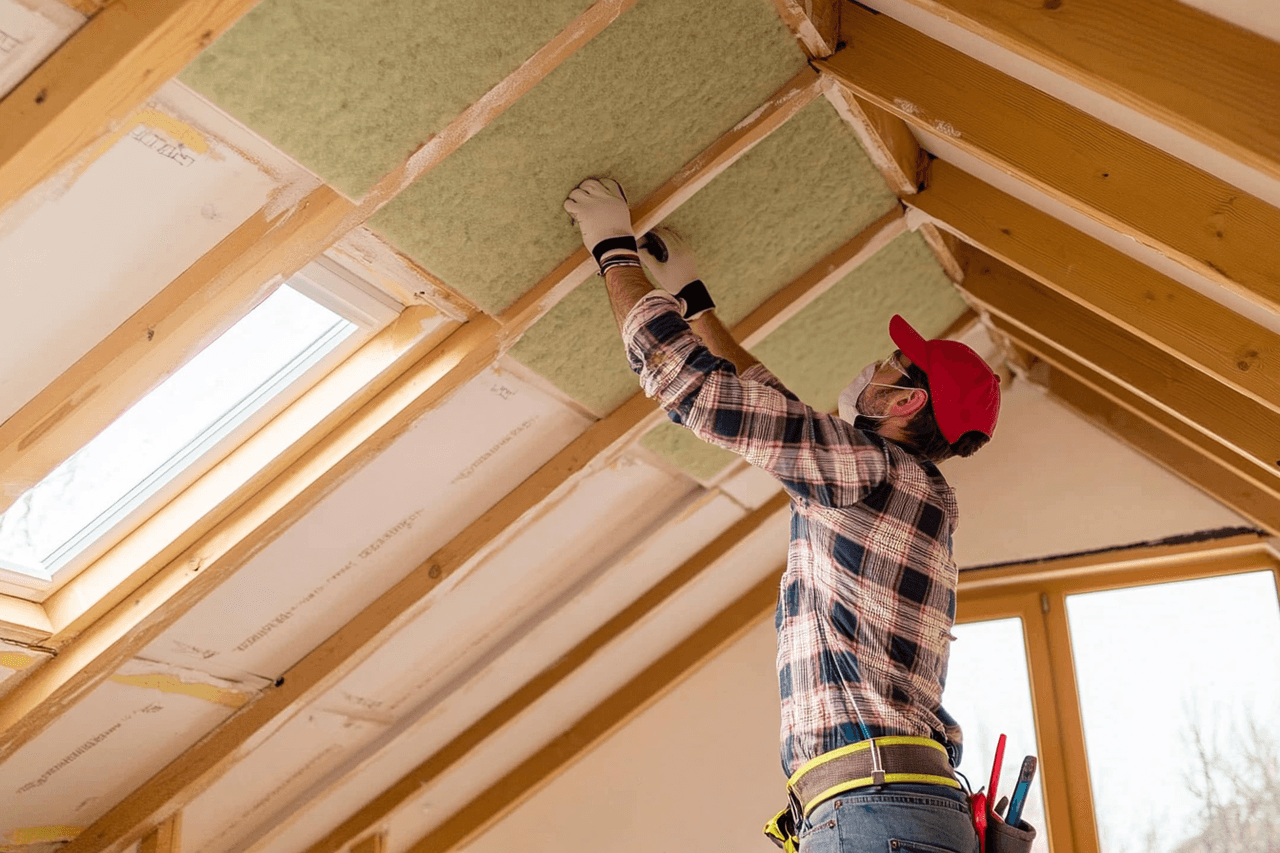
To maximize a home’s energy efficiency in Canada, the recommended R-value for attic insulation is R-60 (approximately 16 to 20 inches thick). While the National Building Code of Canada (NBC) typically requires a minimum of R-40 to R-50, depending on climate zone, aiming for R-60 can reduce heating costs by up to 15% to 30%, especially if your current insulation is outdated. Blown-in cellulose is one of the most commonly used methods to achieve this level of thermal performance in cold climates.
What R-Value Should You Choose for Attic Insulation in Canada?
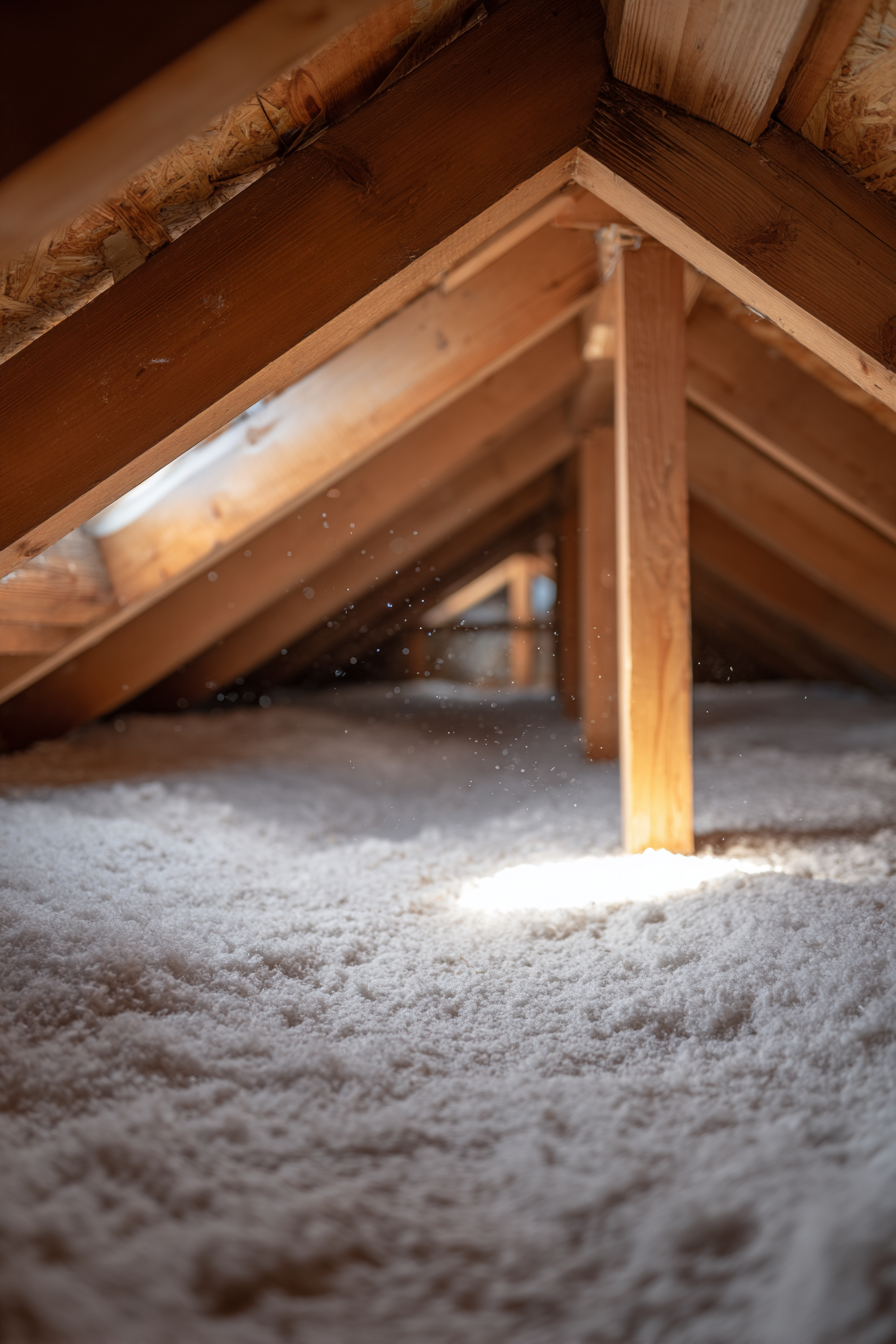
Source: RenoQuotes
Across Canada, the attic is one of the main sources of heat loss in a home. With winter temperatures regularly dropping well below freezing—especially in provinces like Ontario, Alberta, and Quebec—poor insulation leads not only to higher energy bills, but also to discomfort and potential structural issues.
Understanding R-value is the first step toward a more energy-efficient and comfortable home. This guide explains everything you need to know to optimize your attic insulation based on Canadian standards.
Understanding R-Value and Building Code Requirements
R-value measures a material’s resistance to heat flow. The higher the number, the better the insulation performance.
In Canada, insulation requirements are governed by the National Building Code (NBC), which varies slightly by climate zone. For attics, minimum requirements generally fall between R-40 and R-50 for new builds or major renovations.
However, there is an important distinction:
Code minimum (R-40 to R-50): Meets legal requirements, but may not maximize efficiency.
Recommended level (R-60): Preferred by energy efficiency experts and often targeted in rebate programs.
If your home was built before the early 2000s, there’s a strong chance your attic insulation is between R-20 and R-30. Adding insulation can significantly improve comfort and efficiency. To assess the scope of the work, consult attic renovation experts to obtain an accurate diagnosis.
Why Aim for R-60 in Canadian Climates?
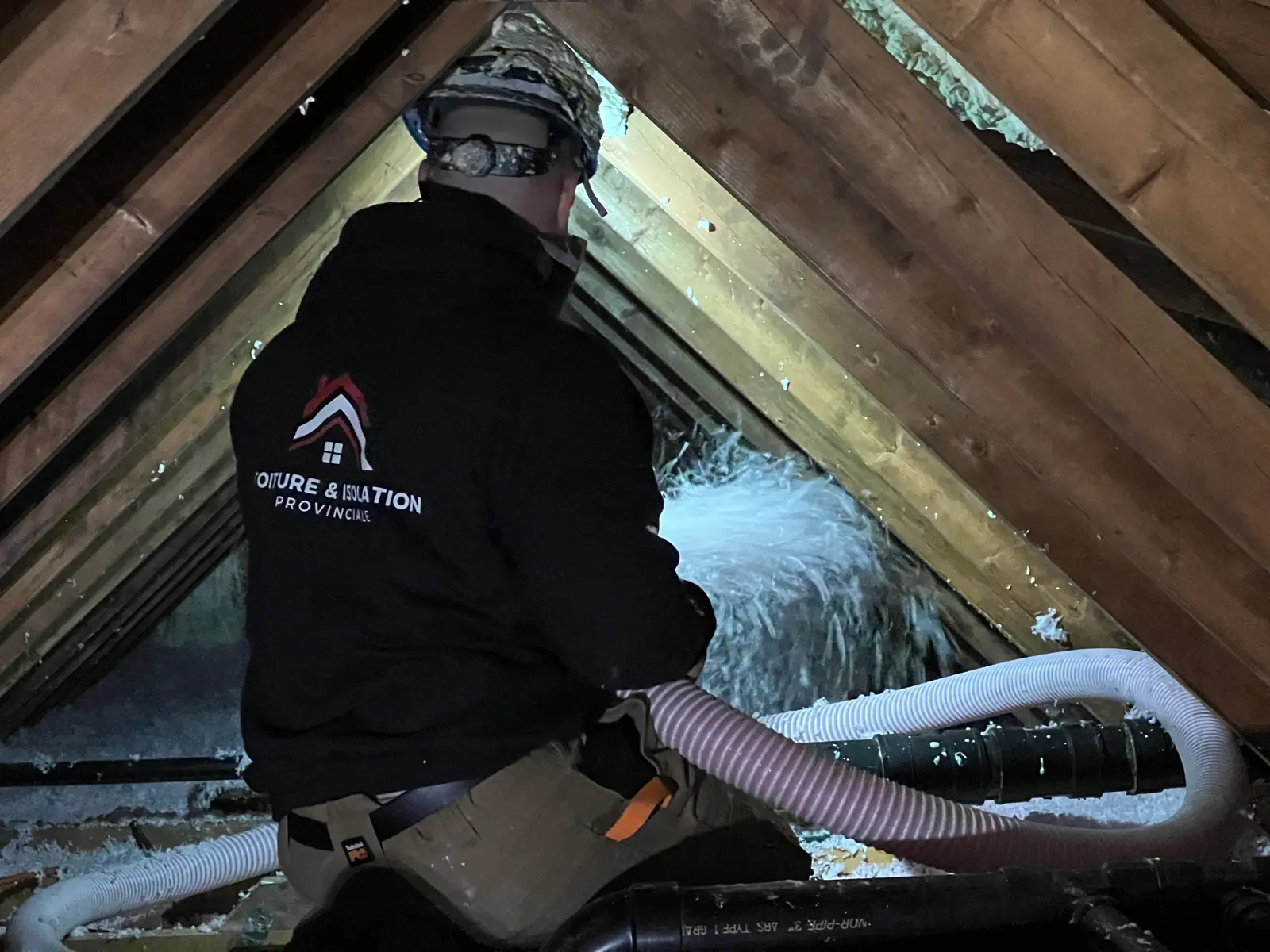
Source: Toiture & Isolation Provinciale inc.
Upgrading from minimum code levels (R-40) to R-60 is a strategic investment, particularly in cold regions. Here’s why this target has become the industry standard across Canada:
1. Lower Heating Costs
Heat naturally rises. In a poorly insulated attic, warm air escapes easily. Increasing insulation to R-60 helps retain heat inside your living space, reducing the workload on your heating system.
2. Reduced Risk of Ice Dams
It's a widespread problem for roofs across Canada. Ice dams form when heat escapes through the attic, melting roof snow, which then refreezes at the eaves. Proper insulation—combined with good air sealing and ventilation—helps keep the attic cold and reduces this risk.
3. Improved Summer Comfort
Insulation also works in reverse. During hot summers, R-60 helps block heat from entering your home, reducing the strain on your air conditioning system and heat pump.
Material Comparison: Fibreglass, Mineral Wool, and Blown Insulation
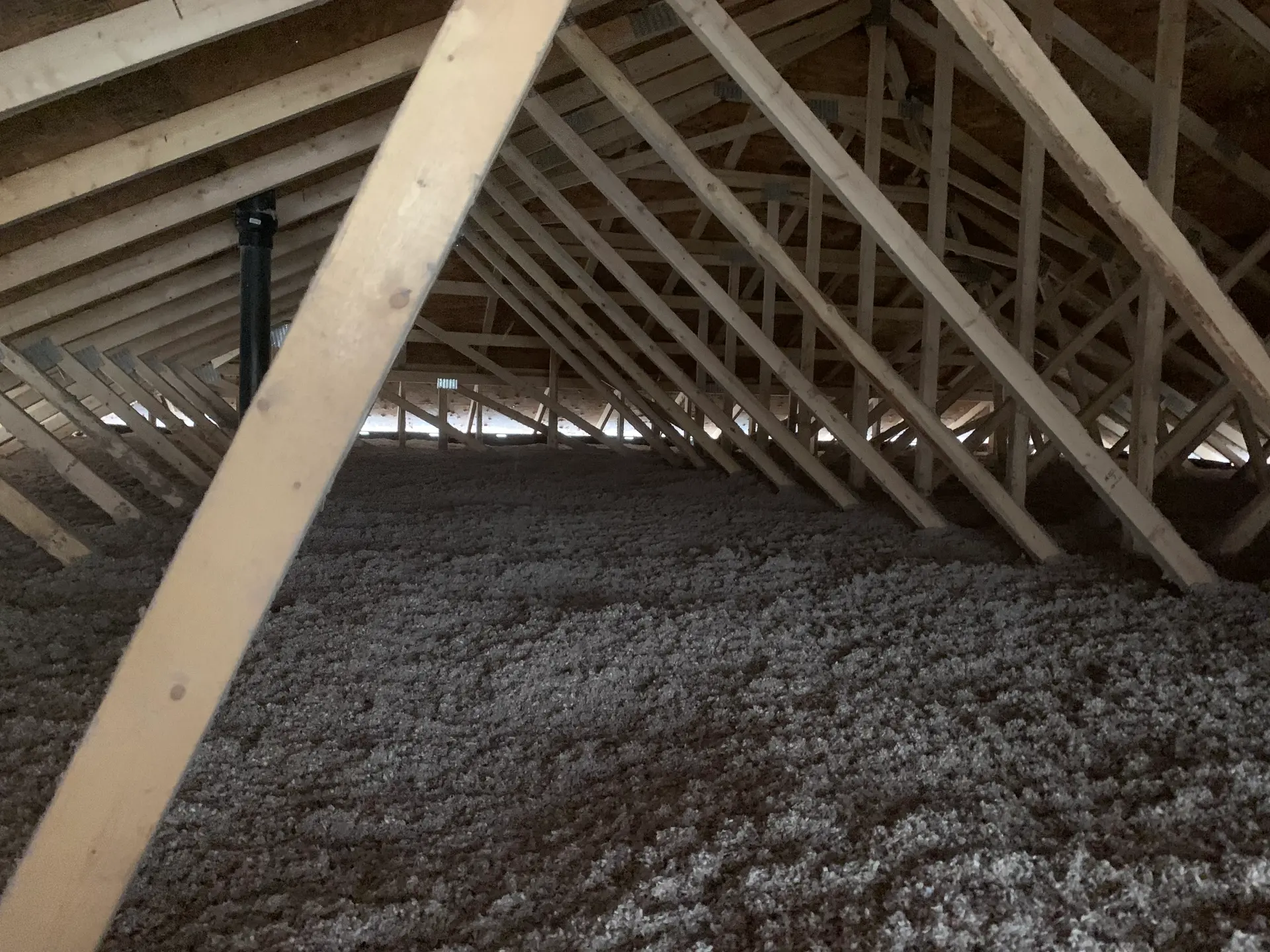
Source: Projet solutions limited
The best insulation material depends on your attic layout and budget. Here are the top three methods used by qualified contractors.
Blown-In Cellulose: The Most Common Choice
Made from recycled newspaper treated for fire and pest resistance, cellulose is widely used across Canada.
Advantages: Excellent air sealing, fills gaps effectively, cost-efficient.
Performance: Maintains strong thermal resistance when installed at proper density.
Mineral Wool and Fibreglass: Durable Alternatives
These two materials are often sold in batts or as loose-fill blown insulation.
Mineral wool: Made from volcanic rock, it is virtually non-combustible and has exceptional moisture resistance. It's mould-resistant, making it an excellent choice if condensation is a preoccupation.
Fibreglass: It’s the industry classic. Although less effective than cellulose at sealing air leaks in batt form, blown-in fibreglass remains a lightweight and efficient option.
Material | R-Value per Inch (approx.) | Key Advantage |
Blown cellulose | R-3.7 | Air sealing + affordability |
Mineral wool | R-3.3 to R-4.0 | Fire & moisture resistance |
Fibreglass | R-2.5 to R-3.8 | Lightweight & durable |
The Importance of Air Sealing and Ventilation
Source: Rénovation R4S
Adding insulation alone is not enough. Without proper air sealing and ventilation, performance is limited.
Air Sealing
Before adding insulation, all air leaks must be sealed—around recessed lights, attic hatches, and wiring penetrations. Warm, moist air from inside the home should not enter the attic, where it can condense and cause mould. A proper vapour barrier is essential.
Ventilation
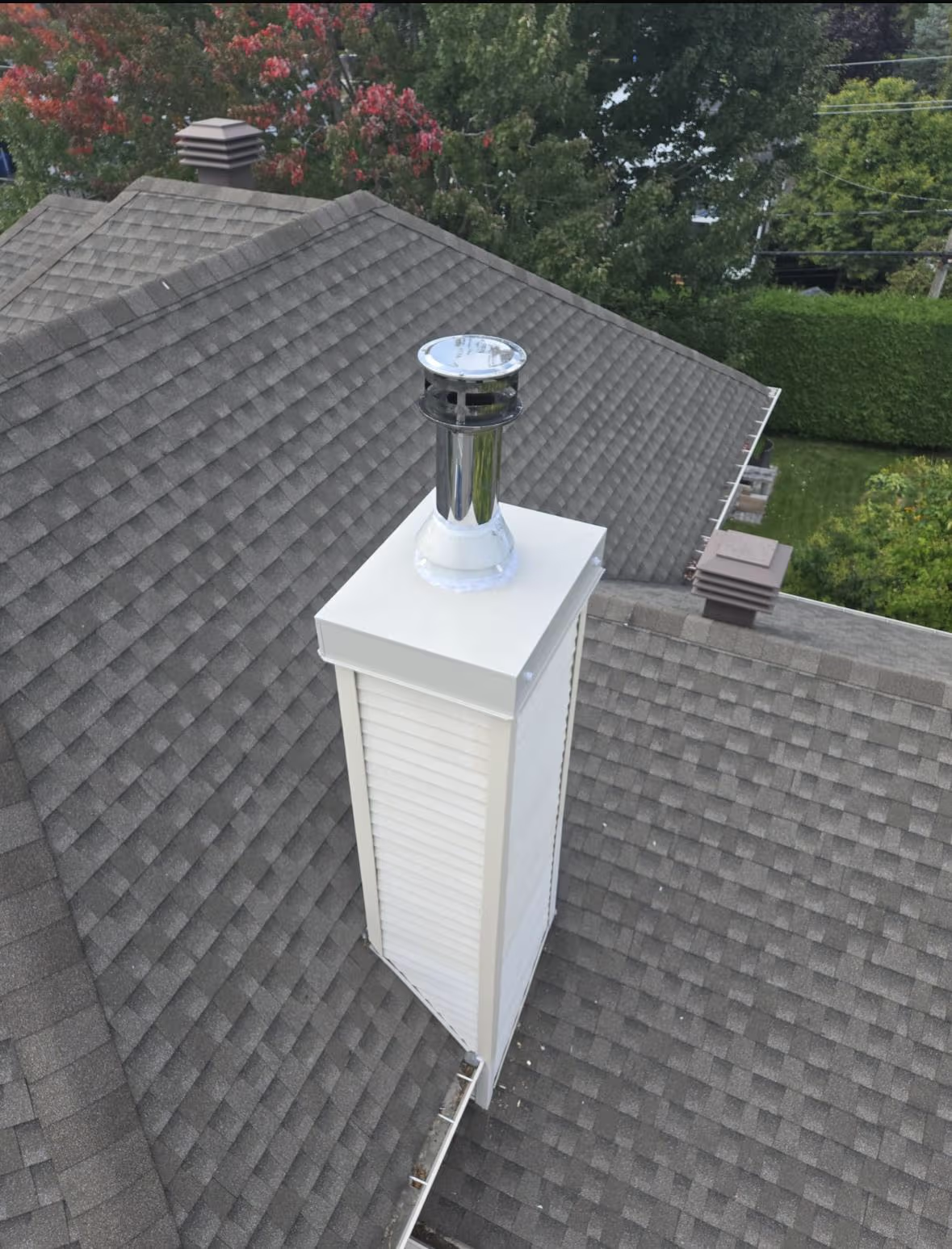
Your attic has to “breathe.” Fresh air enters through soffits and exits through roof vents.
To learn more about the costs associated with these fixes, consult RenoQuotes' guide.
Available Rebates and Incentives in Canada

Source: RenoQuotes
A budget-friendly bonus: government programs and energy providers across Canada actively encourage upgrading insulation to R-60.
Provincial energy programs (e.g., Quebec, Ontario, Alberta, BC) offer rebates for insulation upgrades.
Federal programs: Grants or interest-free loans may be available depending on current policies.
Eligibility often requires:
Work completed by a certified contractor
A pre- and post-retrofit energy evaluation
Attic Insulation: A Smart Long-Term Investment
Upgrading your attic insulation is not just about meeting code—it’s a strategic way to improve comfort, reduce energy costs, and protect your home over time. By targeting R-60, selecting the right material, and ensuring proper air sealing and ventilation, you can significantly improve your home’s performance in both winter and summer.
In Canada’s varied climate, effective insulation plays a critical role in stabilizing energy consumption and preventing costly issues like ice dams and moisture damage. Before starting your project, assess your current insulation, explore available incentives, and compare quotes to ensure a durable and high-performing result.
Looking for something else?
Related articles
The latest industry news, interviews, technologies, and resources.

Editorial Team
•13 Sep 2024
Have you been thinking about what kind of insulation would best suit your basement? Is it spray foam insulation or boards? Are you insulating from the inside or the outside? When it comes to choosing, a lot of questions come to mind. In terms of maximizing your energy savings, insulating a basement is an interesting option, but it has to be done properly. So, here's a guide to help you in your research.
Editorial Team
•08 Nov 2023
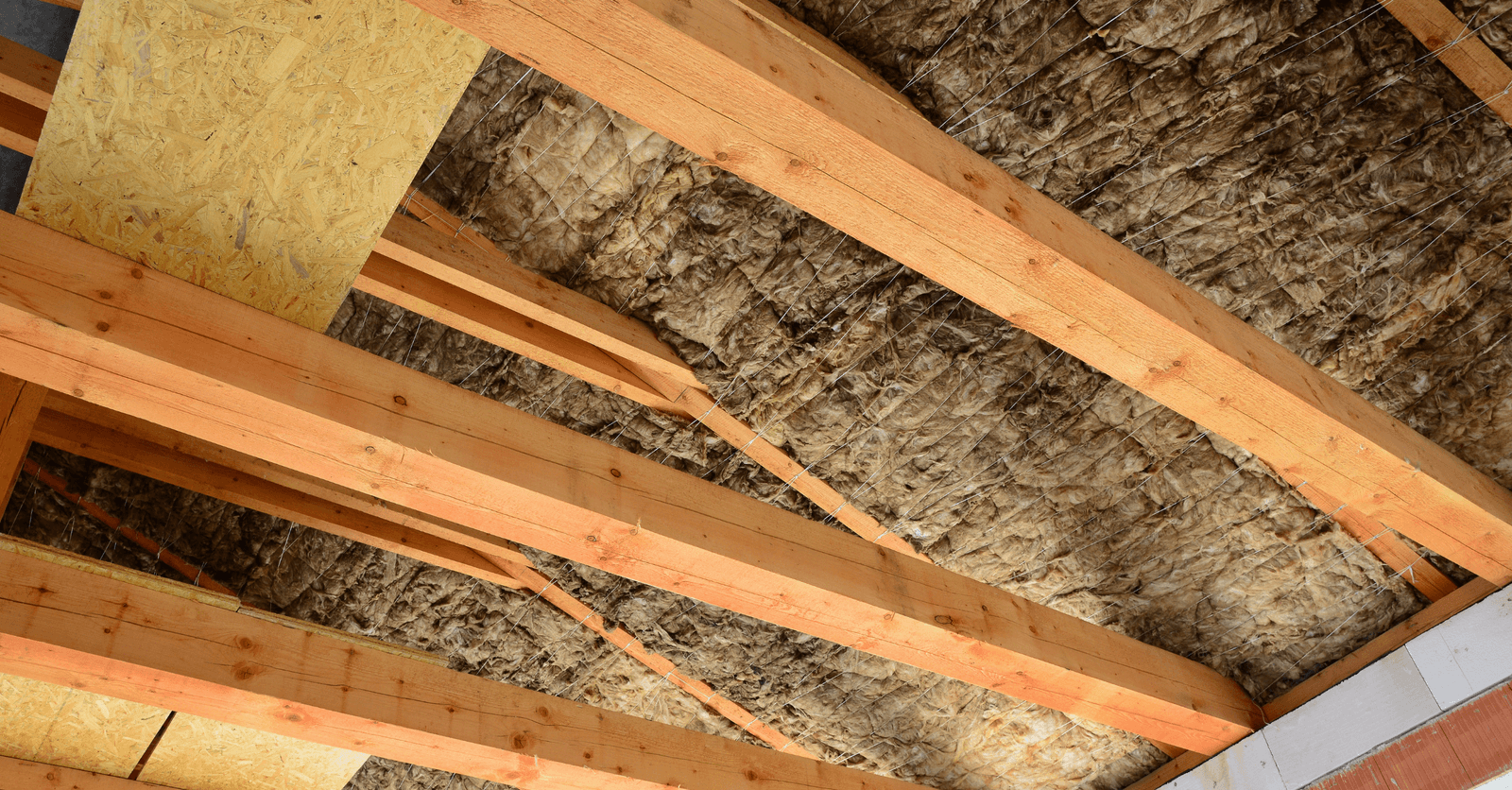
Insulation is a key step during the building or renovation process of a house. Nowadays, environmentally-friendly insulation materials have become essential elements, working to ensure the thermal comfort of a building’s occupants whilst saving energy alongside the environment.

Cynthia Pigeon
•08 Nov 2023
For some people, the prospect of living in a house that is a genuine time capsule is something of a reality. Perhaps you’re one of the many who’ve decided to keep the original retro design going since you’re drawn to its history. However, after a while, your home may need a little tweak here and there.

Karine Dutemple
•08 Nov 2023
Like many of us, you've probably spent a lot of time relaxing in your living room. Comfortably seated on your couch, you may be unhappy with what you are seeing when you look around the room. You are then hit with the sudden need to find new ideas to redecorate this much-loved relaxation spot.
Amanda Harvey
•04 Dec 2023
As the layers of winter slowly begin to shed, we start to consider all the possibilities of Spring. With warm weather approaching, it’s normal to feel like you could take on just about anything, including all those home renovation projects you’ve been dreaming of during winter months. Of course, there are lots of ways that you can update your home while Jack Frost is visiting. However, there are certain jobs that should be left for Spring.