Backyard Landscaping: How to Design a Durable Outdoor Space in Canada
By Editorial Team
Updated on May 7, 2026
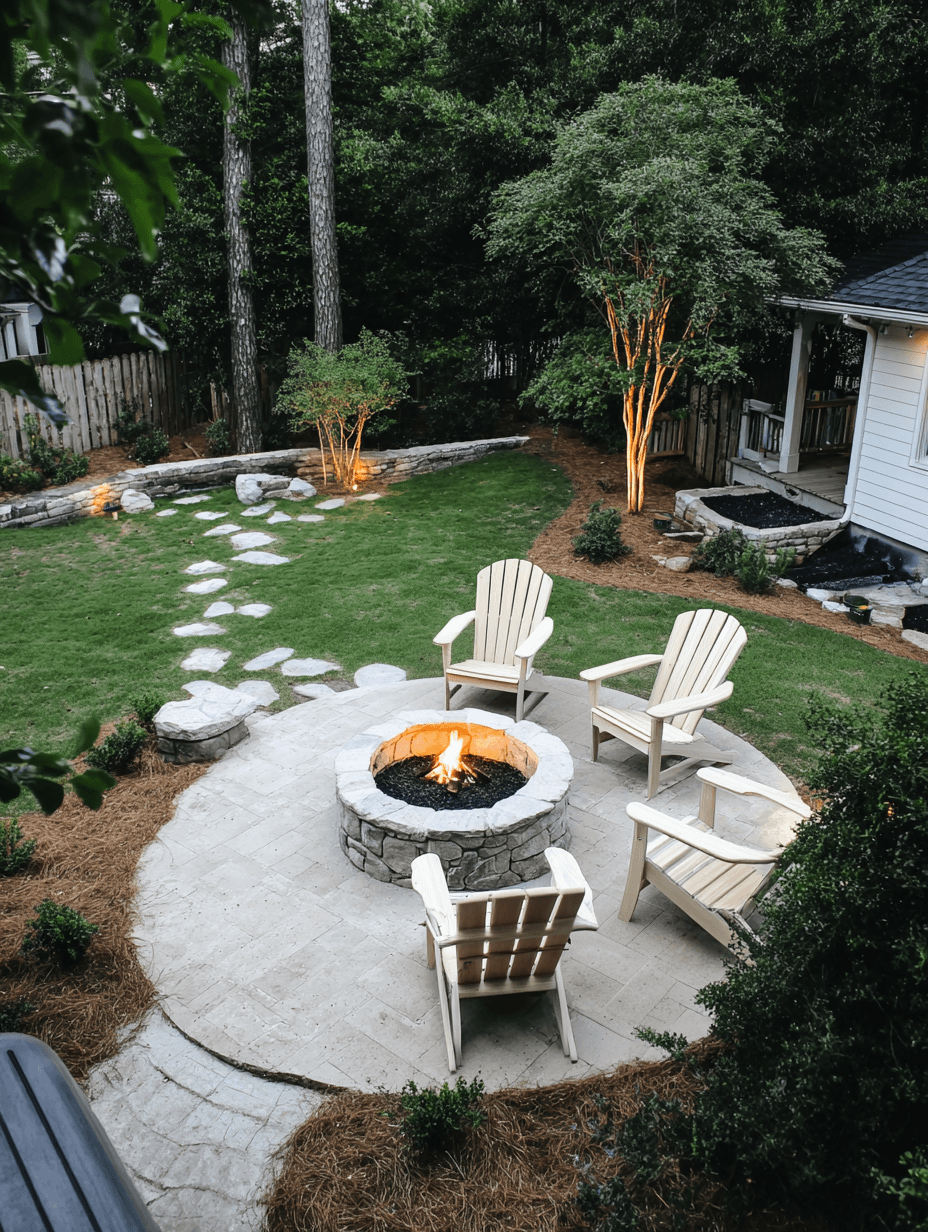
Designing a backyard in Canada requires careful planning to turn your outdoor space into a true extension of your home. To successfully complete your project in 2026, you should divide your yard into functional zones (dining area, lounge area, play area), choose materials commonly used for outdoor landscaping due to their resistance to freeze-thaw cycles—such as interlocking pavers or pressure-treated wood—and comply with local and provincial pool safety regulations. A well-designed layout that incorporates plants suited to your hardiness zone will increase your property value while extending your outdoor living season.
Designing Your Backyard: A Functional Outdoor Living Space
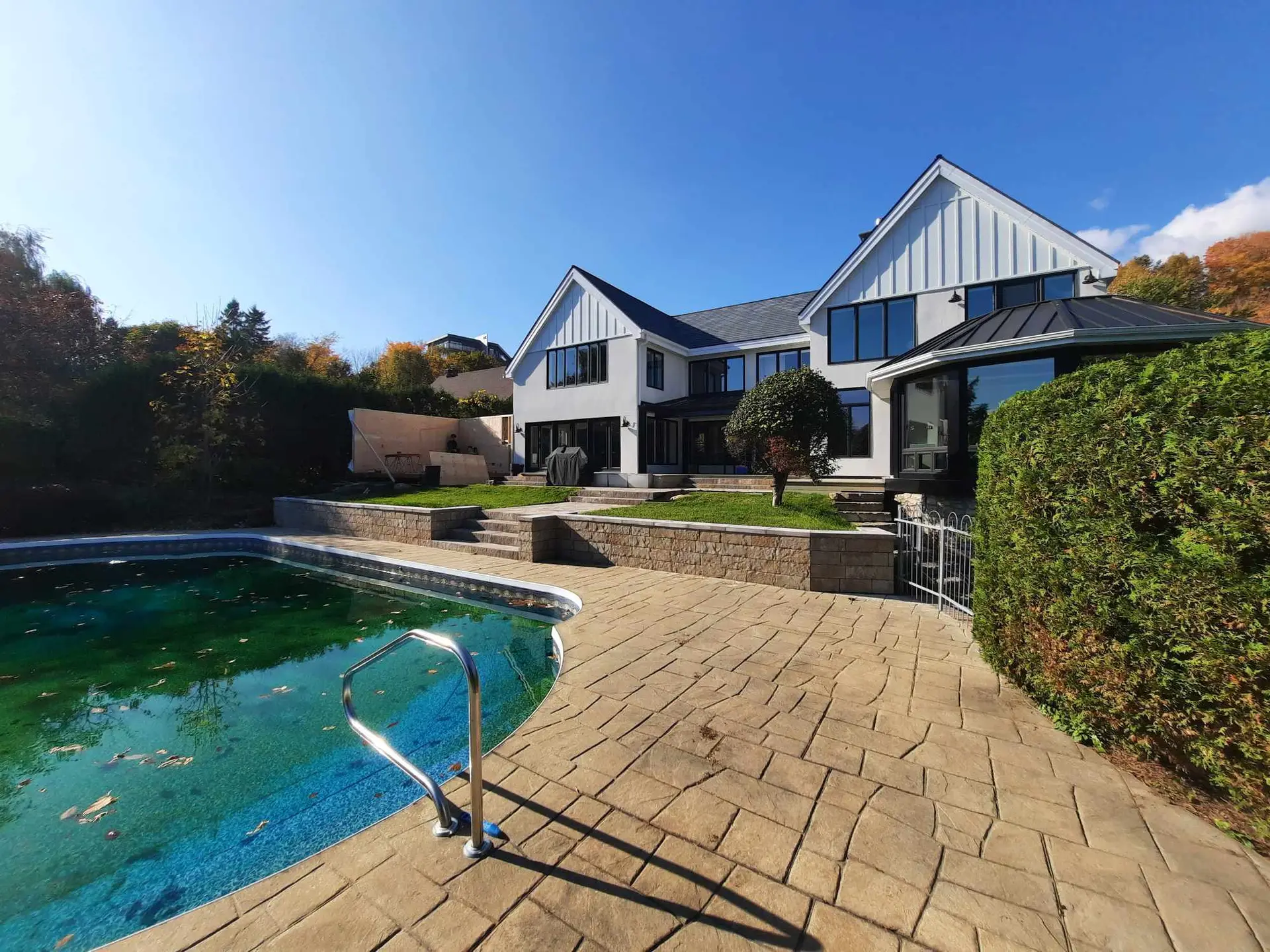
Source: Groupe Lemelin Inc.
Across Canada, backyards are increasingly designed as extensions of indoor living spaces—used for dining, lounging, and spending time with family. With a relatively short but intense summer season in many regions, every square foot should be optimized for comfort and usability. Whether you're a young family looking for a safe play area or a homeowner dreaming of a peaceful retreat, a successful landscaping project relies on balancing aesthetics, durability, and functionality.
Defining Your Living Zones: Dining, Lounge, and Play
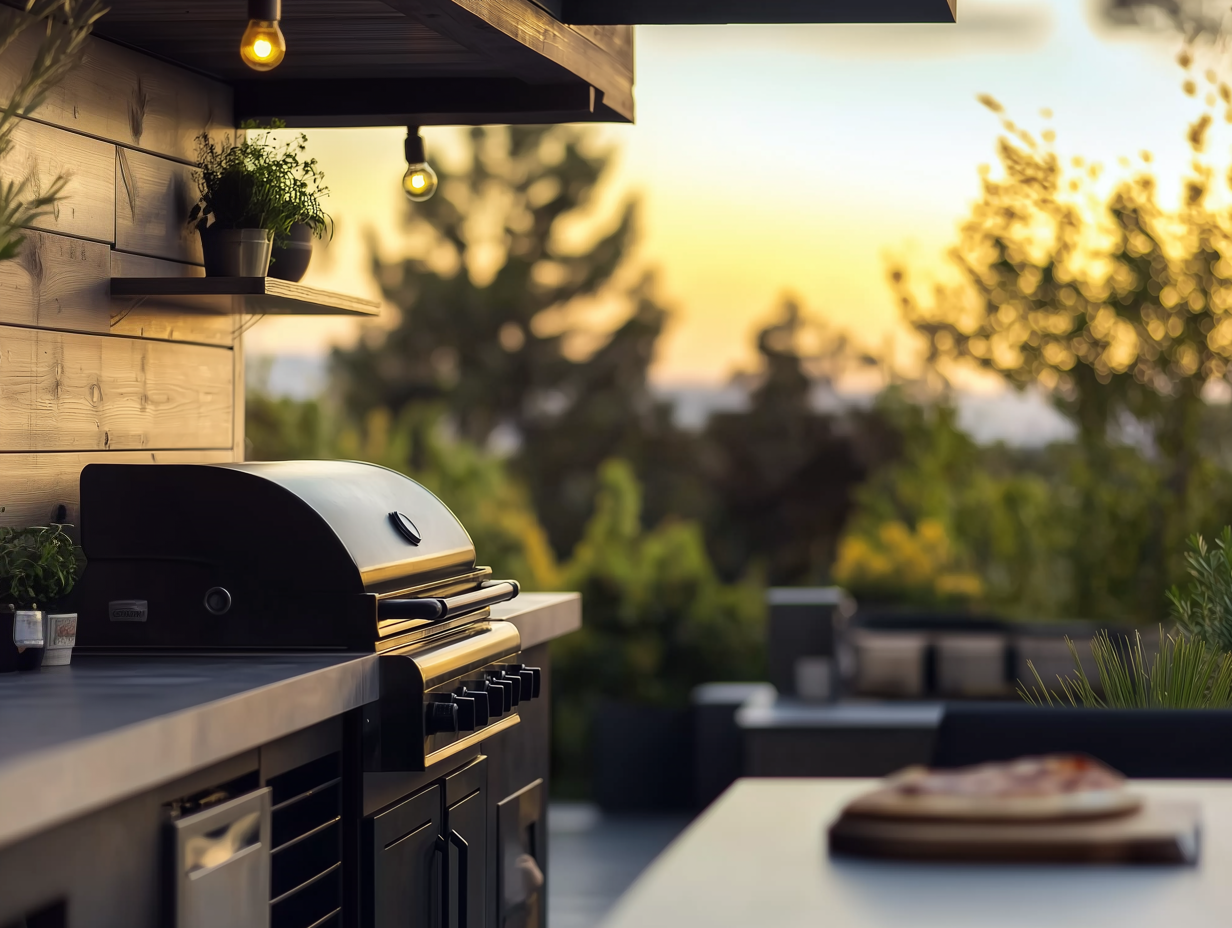
Source: RenoQuotes
The foundation of a well-designed backyard is zoning. Before starting any work, think about how you’ll move between indoor and outdoor spaces.
Dining area: Position this space as close as possible to the kitchen for convenience. Ensure the surface is level and stable for your table and BBQ.
Lounge area: Often designed for a deck or interlocking paver surface, this "outdoor living room” should be set up in a more private area, ideally with shade from a pergola or offset umbrella.
Play area: For families, an open lawn space is essential. Make sure this area is visible from the main seating area so you can keep an eye on the children.
Choosing Materials for Long-Term Durability
Canada’s climate—with its temperature fluctuations—can put significant stress on outdoor materials. Freeze-thaw cycles can cause movement, cracking, or settling if the base is not properly prepared.
Interlocking Pavers vs. Slabs: Aesthetic and Stability
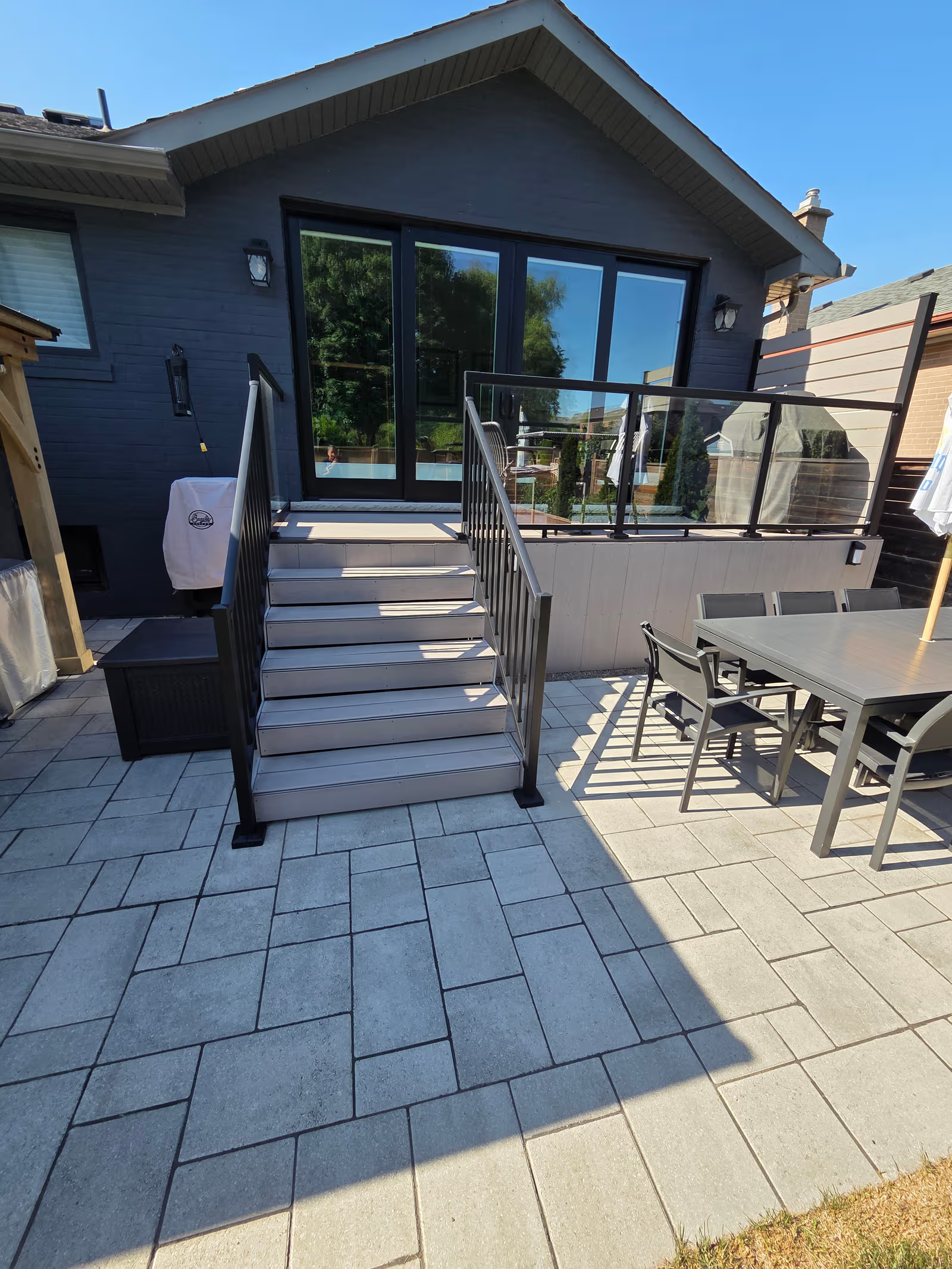
Source: TOTAL RENO & DESIGN
Pavers are a popular choice for walkways and fire pit areas.
Base preparation is critical: Typically, 12 to 18 inches of excavation, depending on soil type, followed by a compacted crushed stone base.
Maintenance: Using high-quality polymeric sand between joints helps prevent weed growth and improves stability.
Wood or Composite Decking: Which One to Choose?
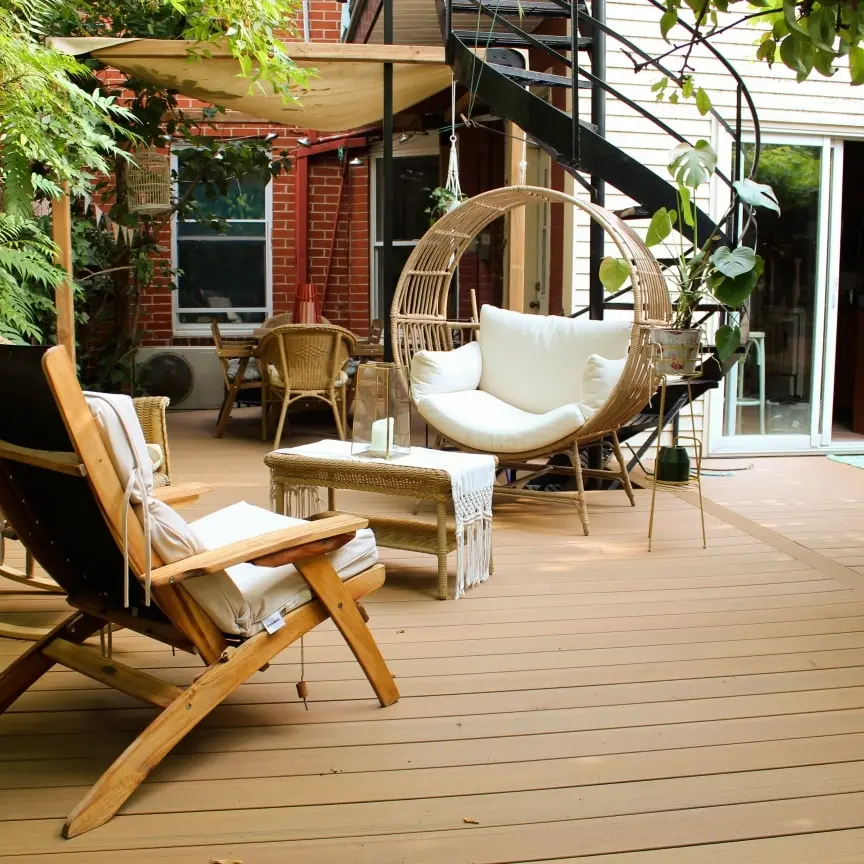
Source: Terrasse MTL
The deck is often the focal point of a backyard.
Pressure-treated wood or cedar: Pressure-treated wood is more affordable, while cedar offers natural rot resistance and a warm, appealing look. Both materials, however, require periodic staining or sealing to maintain their durability and appearance over time.
Composite decking: Albeit more expensive upfront, this material requires very little maintenance. It is resistant to cracking, fading, and UV exposure, making it a durable choice that has become increasingly popular across Canada.
Crucial safety rule: Before digging out the foundation for a retaining wall or patio, you must contact your local utility locate service (such as Click Before You Dig). This free service identifies underground gas lines, electrical wires, and telecommunications cables on your property to help prevent serious accidents.
Adding Water Features: Pool, Hot Tub, or Fountain
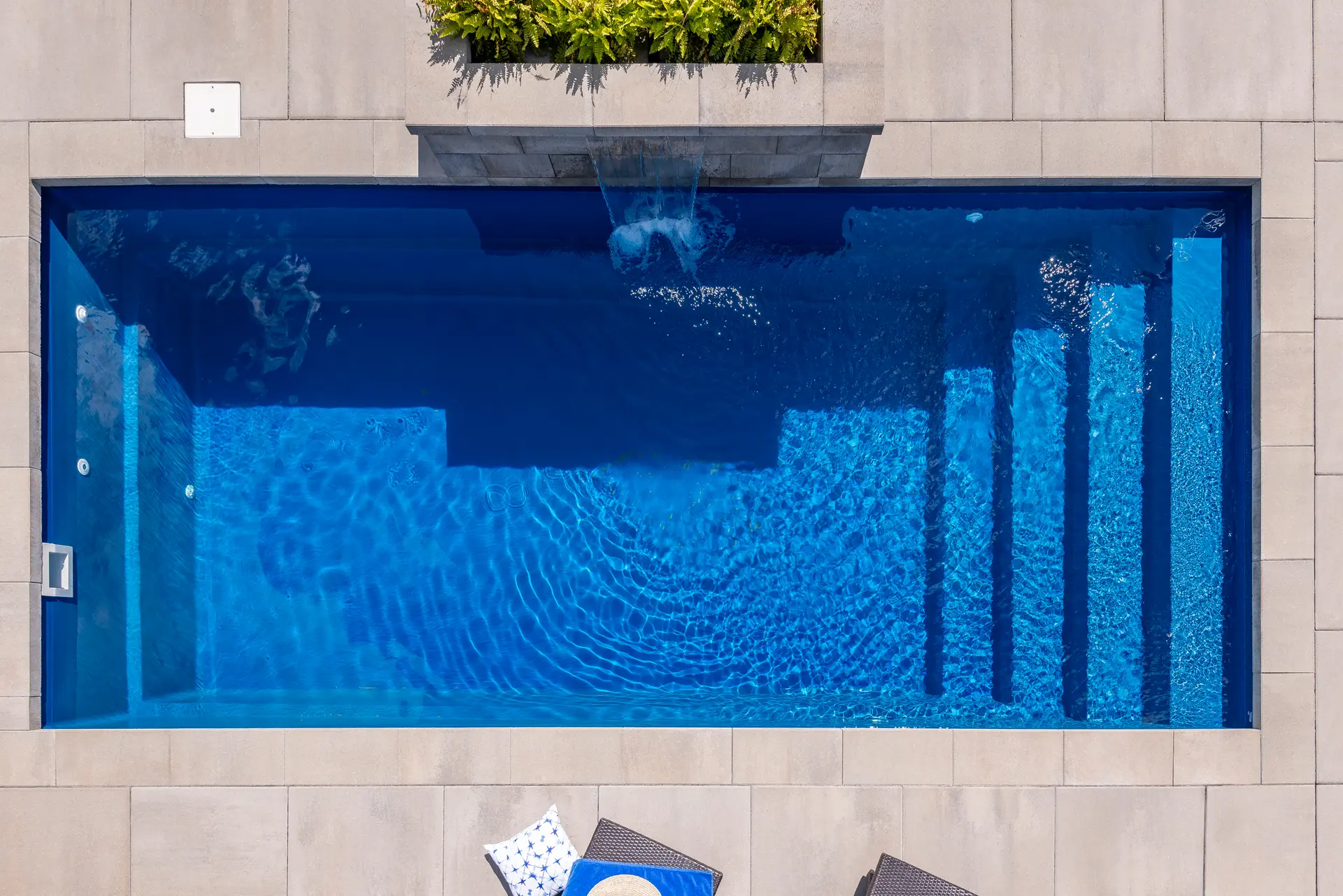
Source: Excavations Skella
Water features bring comfort during hot summer days.
Placement: Position pools or hot tubs where they receive maximum sunlight between late morning and mid-afternoon to reduce heating costs.
Pool safety regulations: Pool safety regulations vary across Canada depending on the province and municipality, but some general rules apply. Pools holding 60 cm (24 inches) of water or more must be enclosed, and fences are typically required, often with a minimum height of 1.2 m (4 ft). In addition, gates must be self-closing and self-latching to enhance safety. It is important to always verify your local bylaws to ensure full compliance.
Hot tub: A great option for year-round use. Install on a solid base such as concrete or compacted gravel.
Landscaping: Choosing Plants for Your Climate Zone
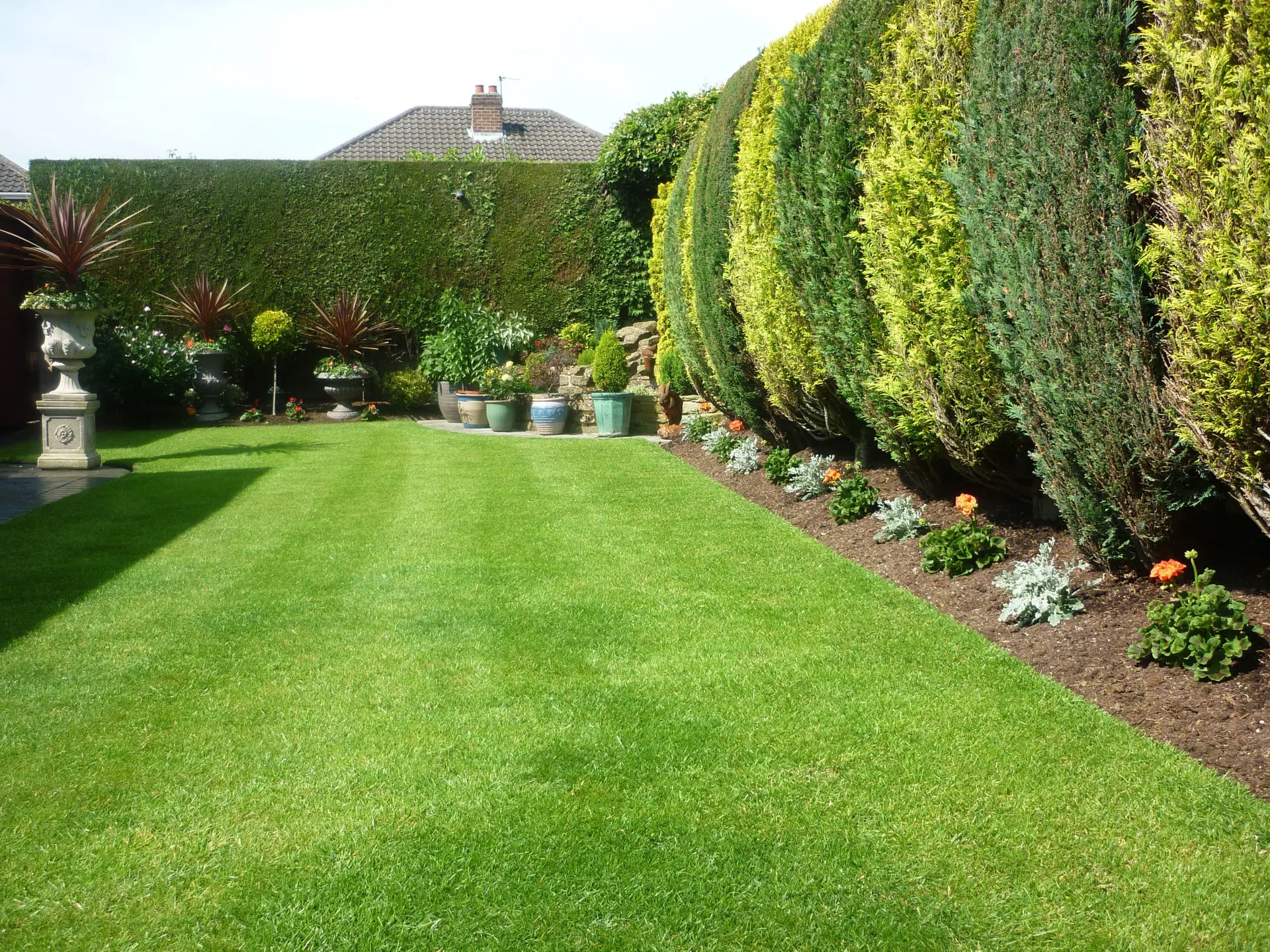
Source: K.W.'s Unique Supplies & Services
Successful landscaping in Canada depends on selecting plants suited to your local hardiness zone.
Climate zones: Hardiness zones vary significantly across the country. Always check your specific region before choosing plants rather than relying on general assumptions.
Native plants: Species such as milkweed, serviceberry, and echinacea, which require less watering, are more resistant to pests and support local biodiversity.
Privacy hedges: Cedar hedges remain a popular option for privacy, acting as natural windbreaks and staying green year-round.
Fences and Privacy: What You Need to Know
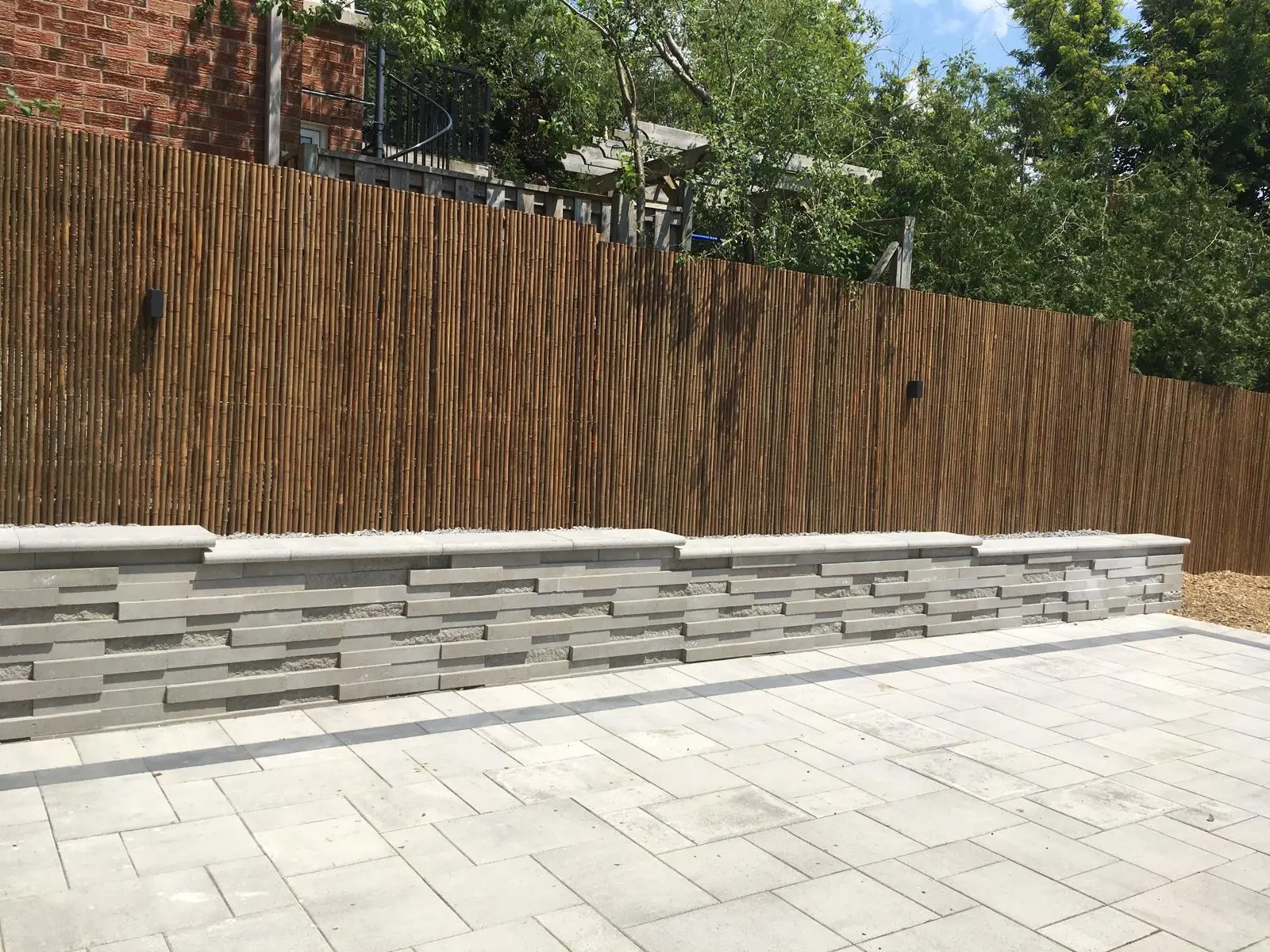
Source: Royal Town Landscape Developments
Fences define your outdoor space, but must comply with municipal regulations.
Height: A backyard fence height of around 2 metres (6.5 feet) is commonly permitted in many Canadian municipalities, but this varies by city.
Shared property lines: If installed on a property line, the fence may be considered shared. It’s best to discuss plans and costs with your neighbour and consult your property survey before installation.
Lighting and Heating: Extending Your Outdoor Season
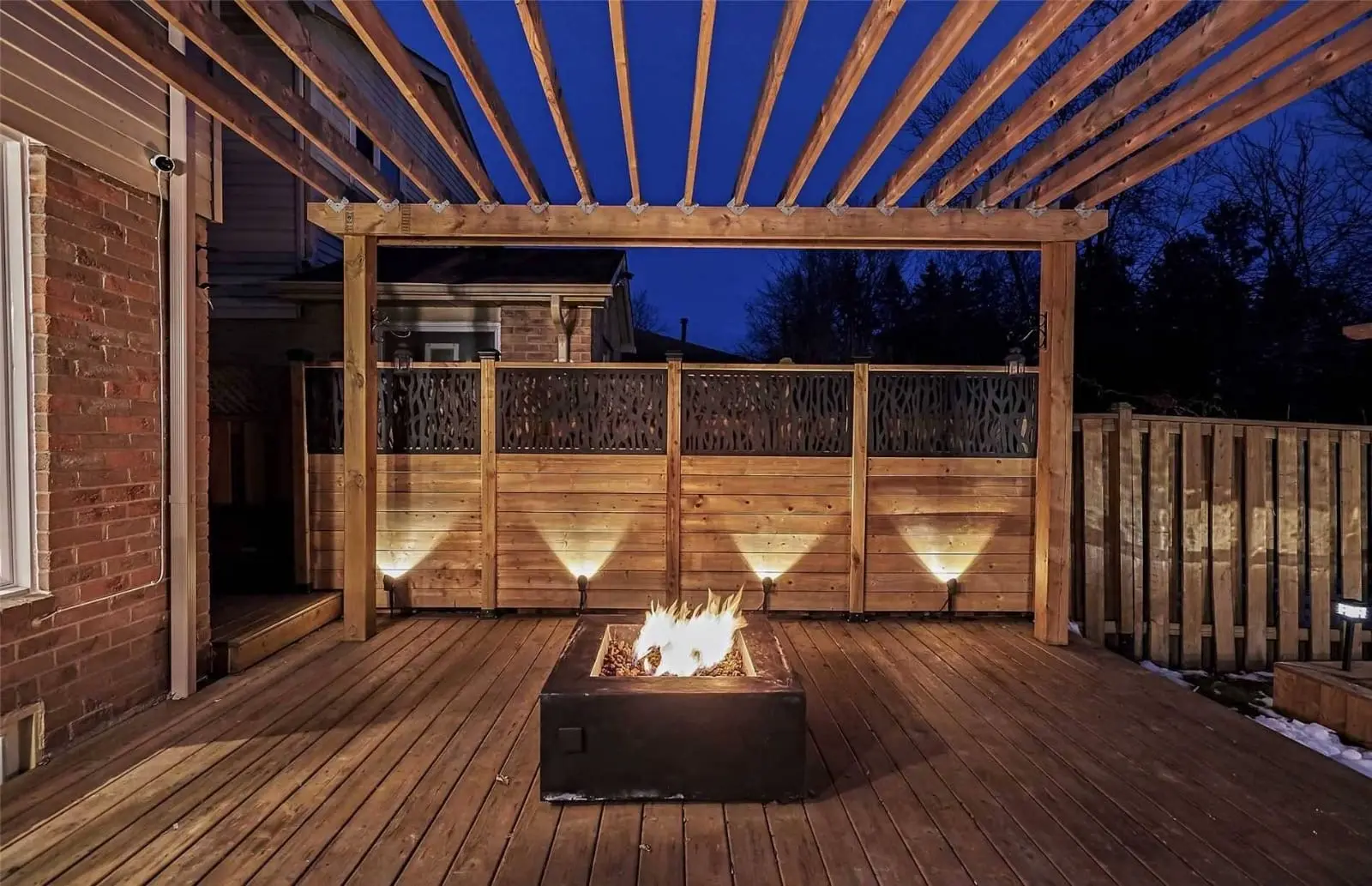
Source: C&D Contracting
To enjoy your backyard beyond summer, don’t overlook technical elements.
LED lighting: Low-voltage lighting along pathways and in landscaping adds both safety and ambiance.
Outdoor heating: Propane or electric deck or patio heaters are effective; fire pits are regulated in many municipalities, and wood-burning fires may be restricted or subject to strict rules (distance, spark screens, usage hours). Always check local bylaws before installation.
Water access: Ensure you have an accessible outdoor water connection for irrigation, ideally with a frost-free system suitable for Canadian winters.
Conclusion: Plan Today, Enjoy Tomorrow
Backyard landscaping is an exciting project that requires thoughtful planning. By choosing materials suited to Canada’s climate and following proper installation practices, you can transform your backyard into a comfortable and durable outdoor living space. For larger projects, consider hiring a qualified contractor to ensure compliance with local building codes and best practices.
To better plan your budget, consult a detailed landscaping cost guide before starting your project.
Looking for something else?
Related articles
The latest industry news, interviews, technologies, and resources.
Editorial Team
•08 Jul 2026
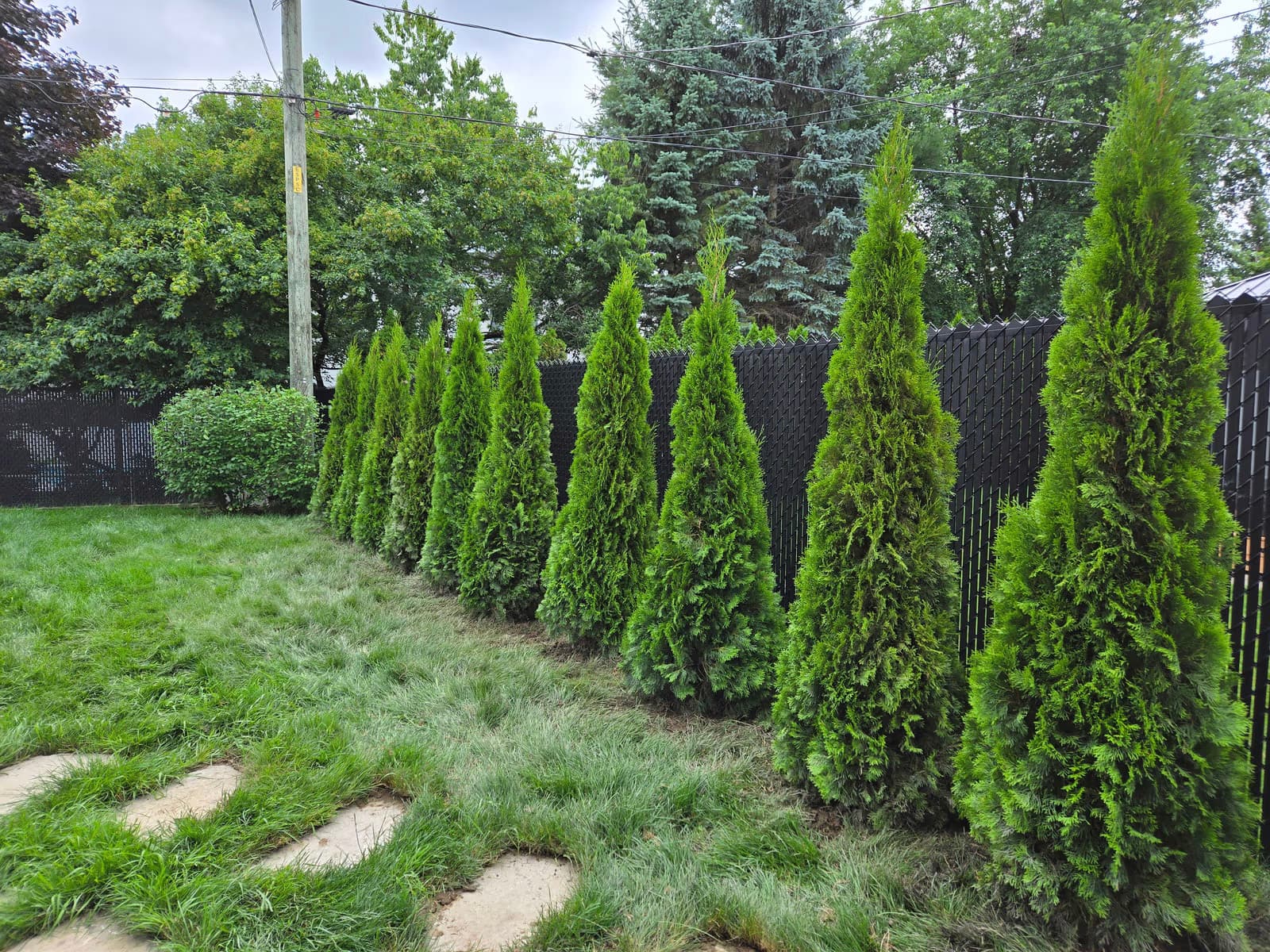
A cedar hedge is one of the most popular ways to add privacy, greenery, and wind protection to a Canadian yard. For many homeowners, the main question is simple: how much does a cedar hedge cost?
Editorial Team
•08 Apr 2026
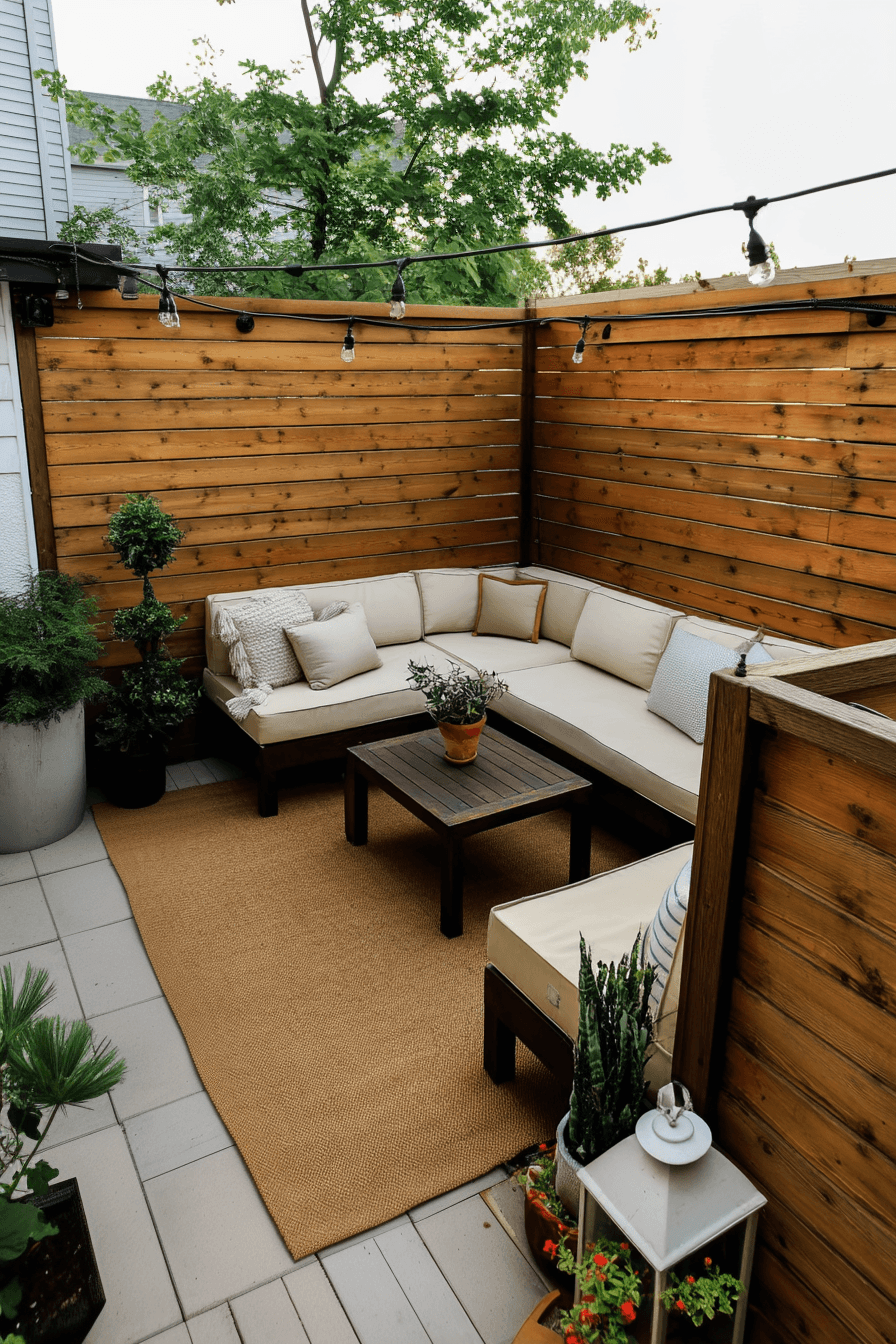
In 2026, the average cost to build a deck or patio in Canada typically ranges from $35 to $130 per square foot, installation included, with higher-end prices usually tied to premium materials such as high-end composite, aluminum, and glass railing systems. For a standard 12 x 12-foot deck (144 sq. ft.), homeowners can generally expect a budget starting at around $5,500 for pressure-treated wood and climbing to $18,000 or more for a premium composite build with glass railings and helical piles. Material choice and foundation type remain two of the biggest factors affecting your final quote.
Editorial Team
•05 Dec 2023
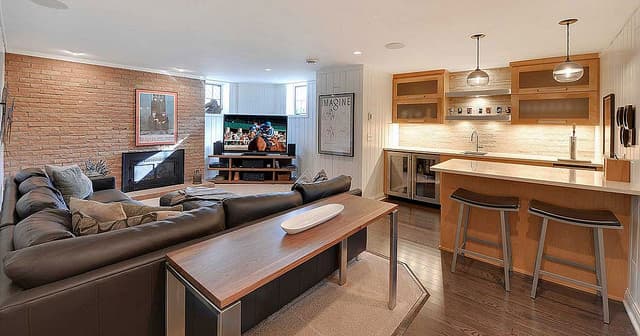
Storage space for some, unfinished room for others, yet thanks to its size the basement is a part of the house brimming with possibilities. Whether you’re ready to invest or get inventive, there is no limit to your comfort. Make your basement transformation a reality without having to quash your creativity.
Editorial Team
•23 Jul 2025
Anyone who has taken on the task of painting a ceiling knows how hard it can be... Frustration can continue until the very end of the process when you finally take a look at the finished job and realize that marks or light spots appear on your ceiling.

Cynthia Pigeon
•08 Nov 2023
Are you needing an interior door installed? Just like every first-time endeavour, hesitation is always on the table.