Swimming Pool Fences: What to Know and How Much They Cost
By Editorial Team
Updated on June 25, 2026
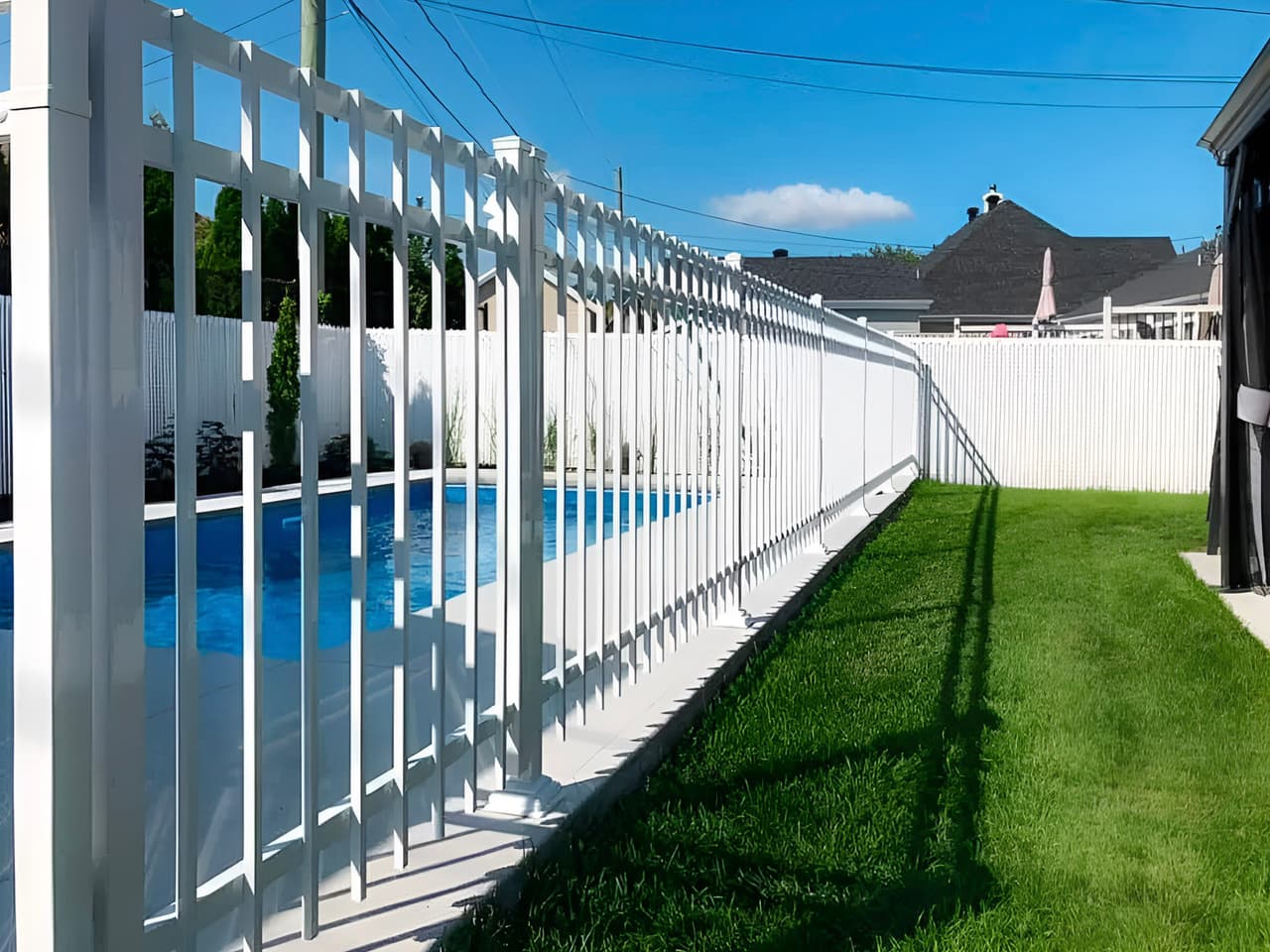
A pool fence is one of the most important safety features for a residential swimming pool. It helps limit access to the pool area, reduces the risk of accidents involving children or pets, and may be required by your province, city, or municipality.
Before buying a pool fence, compare the available materials, gate options, installation requirements, and local safety rules. The right choice depends on your pool type, backyard layout, budget, visibility needs, and the level of maintenance you are willing to take on.
Where to Buy a Pool Fence in Canada
Source: ClôtureLCA
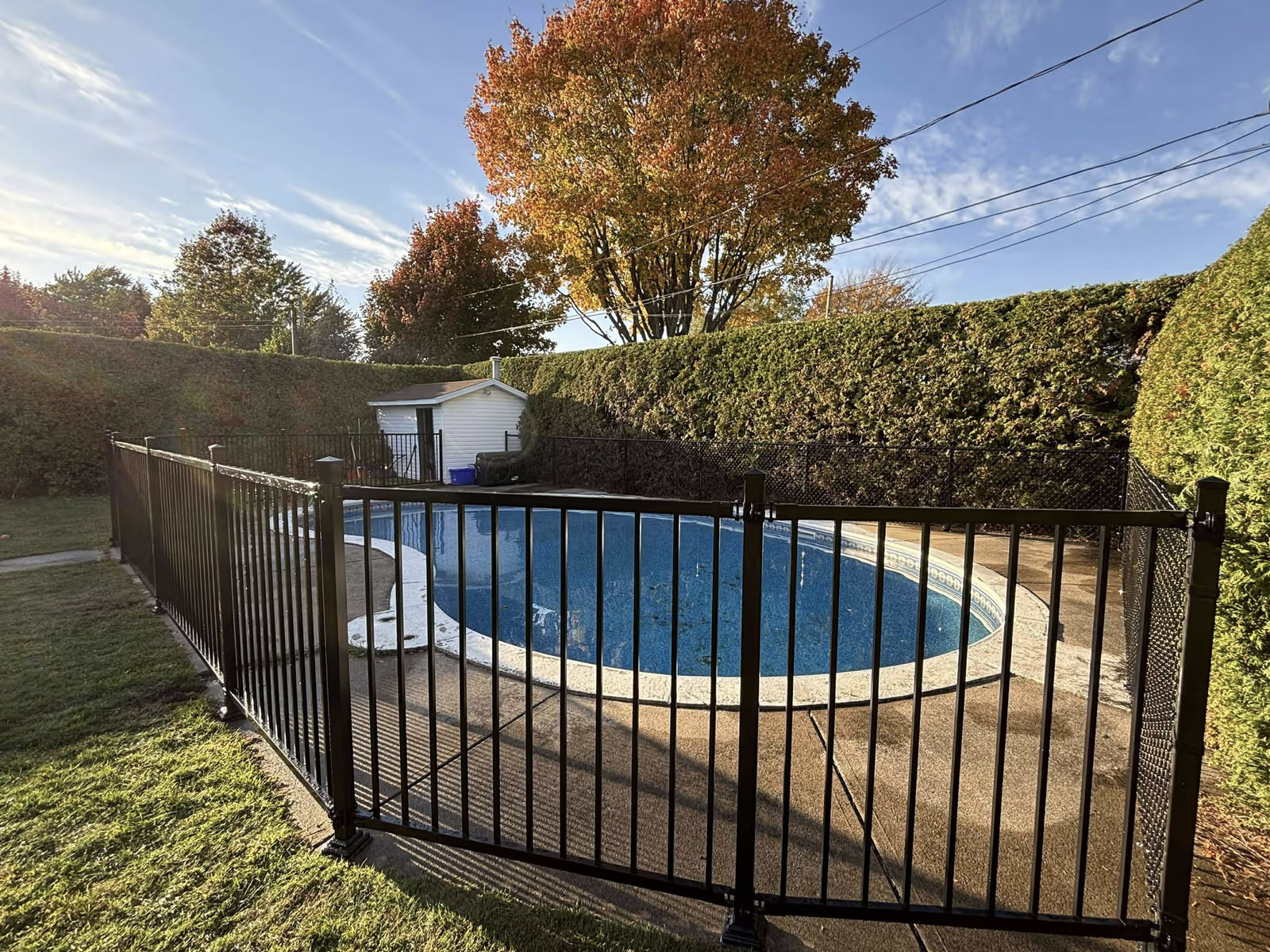
Canadian homeowners can buy pool fences through several types of suppliers. The best option depends on whether you want a complete professional installation or a pool fence kit you can assemble yourself.
You can usually find pool fencing through:
Residential fence contractors
Pool and spa retailers
Big-box hardware stores
Online pool supply retailers
Custom glass and metal fence companies
Landscape and backyard renovation contractors
For a simple above-ground pool or a small temporary barrier, a pool fence kit may be enough. For an inground pool, glass pool fence, sloped yard, complex gate layout, or permit-driven project, it is usually safer to work with a qualified fence installer who understands local pool enclosure rules.
When comparing products, check whether the system includes posts, gate sections, hinges, brackets, deck sleeves, anchors, and a self-closing, self-latching pool gate. Some kits are sold in separate components, so the advertised panel price may not reflect the total cost of the project.
Pool Fence Costs in Canada: What should homeowners expect?
Source: Verre luxe
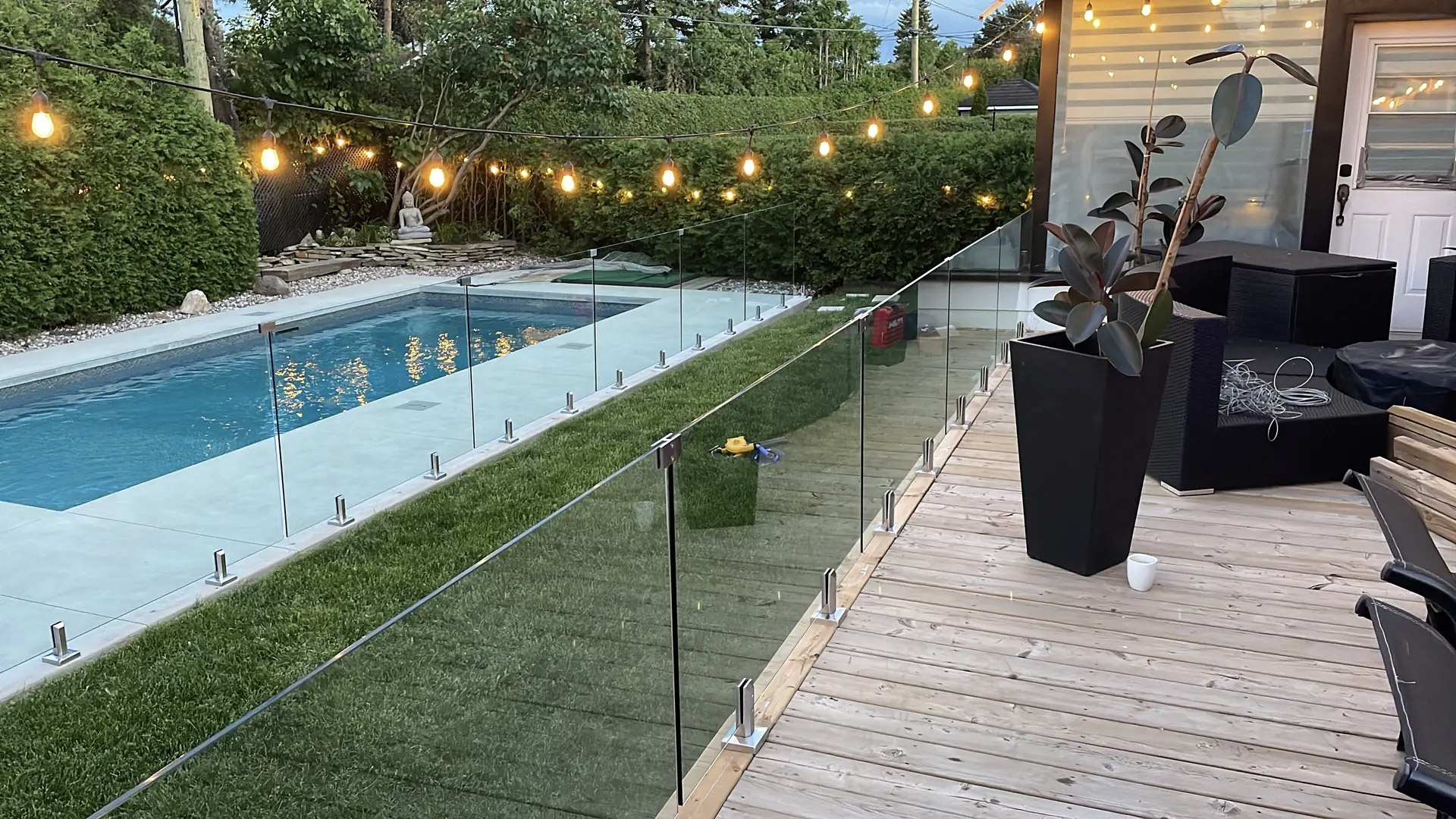
Pool fence costs in Canada vary based on the material, fence height, total perimeter, gate hardware, terrain, access to the yard, and whether concrete drilling or custom fabrication is needed. Local labour rates and permit requirements can also affect the final price.
Here are common installed price ranges to help you budget:
Type of pool fence | Estimated cost | Best suited for |
Aluminum pool fence | $50 to $150 per linear foot | Durable, rust-resistant pool enclosures |
Glass pool fence | $100 to $250+ per linear foot | Modern yards where visibility matters |
Removable mesh pool fence | $45 to $75 per linear foot | Temporary or seasonal safety barriers |
Wood pool fence | $40 to $90 per linear foot | Natural-looking yards and deck areas |
Composite pool fence | $85 to $155 per linear foot | Low-maintenance wood-look fencing |
PVC or vinyl pool fence | $55 to $100 per linear foot | Low-maintenance privacy fencing |
Wrought iron, steel, or stainless steel fence | $70 to $250 per linear foot | High-end decorative or custom projects |
Chain-link pool fence | $35 to $65 per linear foot | Budget-friendly enclosures with good visibility |
A pool gate can add several hundred dollars or more, especially if it requires a pool-rated latch, self-closing hinges, custom sizing, or heavy-duty posts. Hardware such as a Magna Latch and hinge kit, deck sleeves, brackets, caps, and replacement parts may also increase the total.
Types of Pool Fences
Aluminum Pool Fence: $50 to $150 Per Linear Foot
Source: Reno Quotes
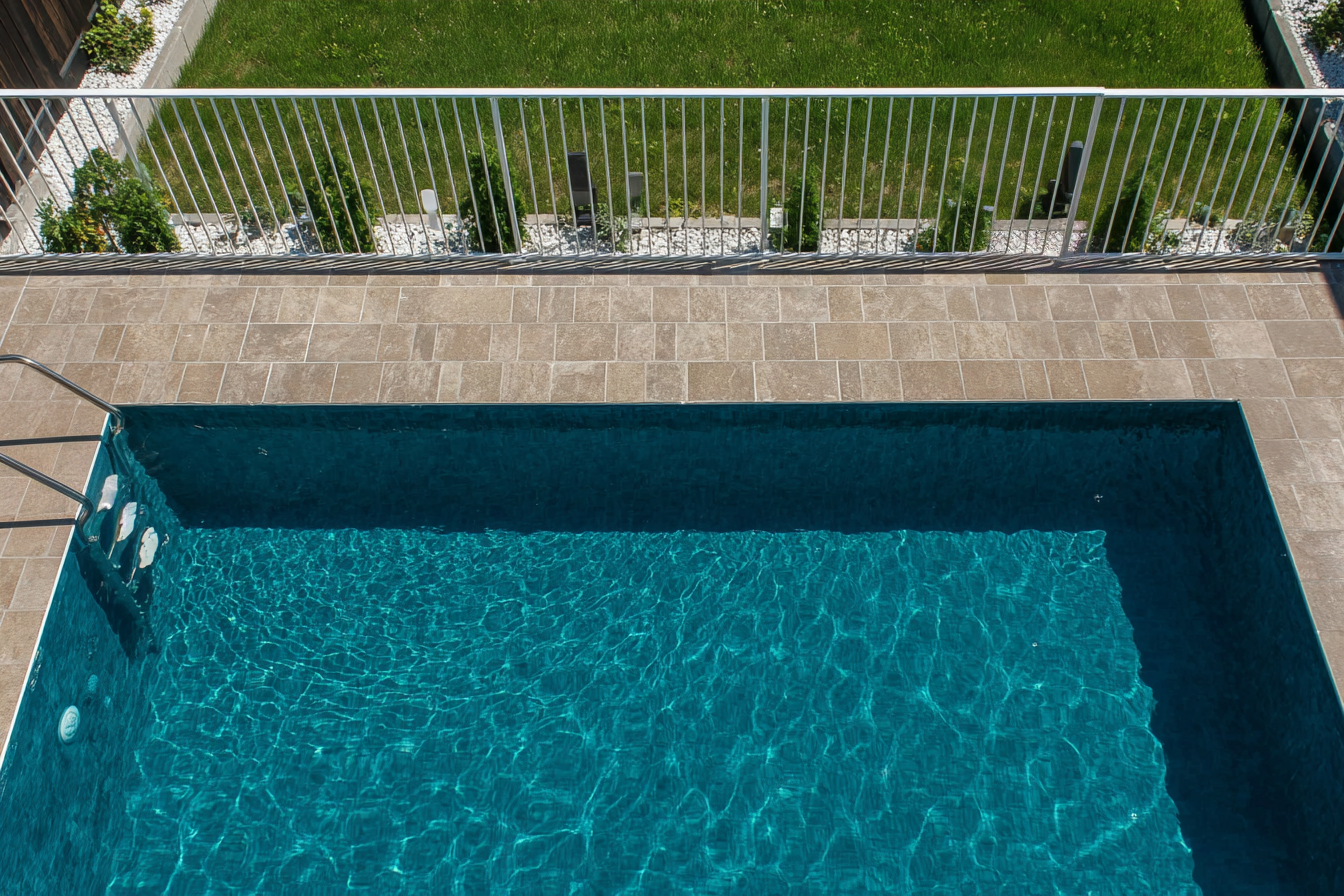
Aluminum is one of the most popular pool fence materials in Canada because it is lightweight, rust-resistant, and relatively low maintenance. It is often sold in black or dark powder-coated finishes, which blend well into landscaped yards and provide clear visibility toward the pool.
Aluminum pool fencing is a good fit for homeowners who want a permanent fence without the weight or rust concerns of traditional iron. It also works well for many inground pools, semi-inground pools, and backyard enclosures where visibility and durability matter.
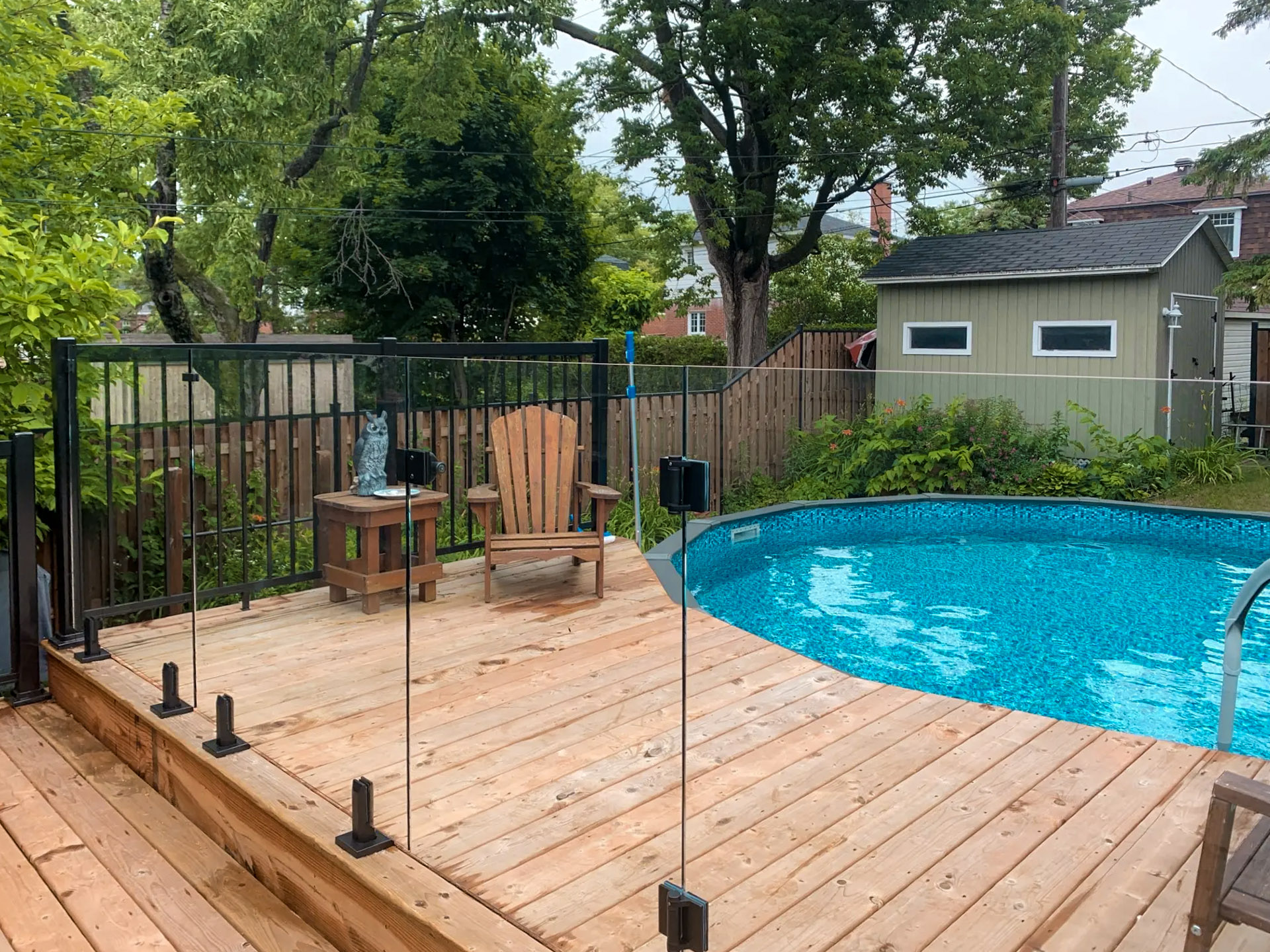
Glass Pool Fence: $100 to $250 Per Linear Foot
Source: Vitrerie Écono
A glass pool fence is a high-end option that keeps the pool area visible while creating a clean, modern look. Glass panels are often used around patios, contemporary backyards, and pools where the homeowner wants safety without blocking the view.
Glass is not easy to climb when installed properly, but the system must be designed with the right glass thickness, posts, brackets, spigots, gate hardware, and anchoring method. It also needs regular cleaning to remove water spots, dirt, and grime.
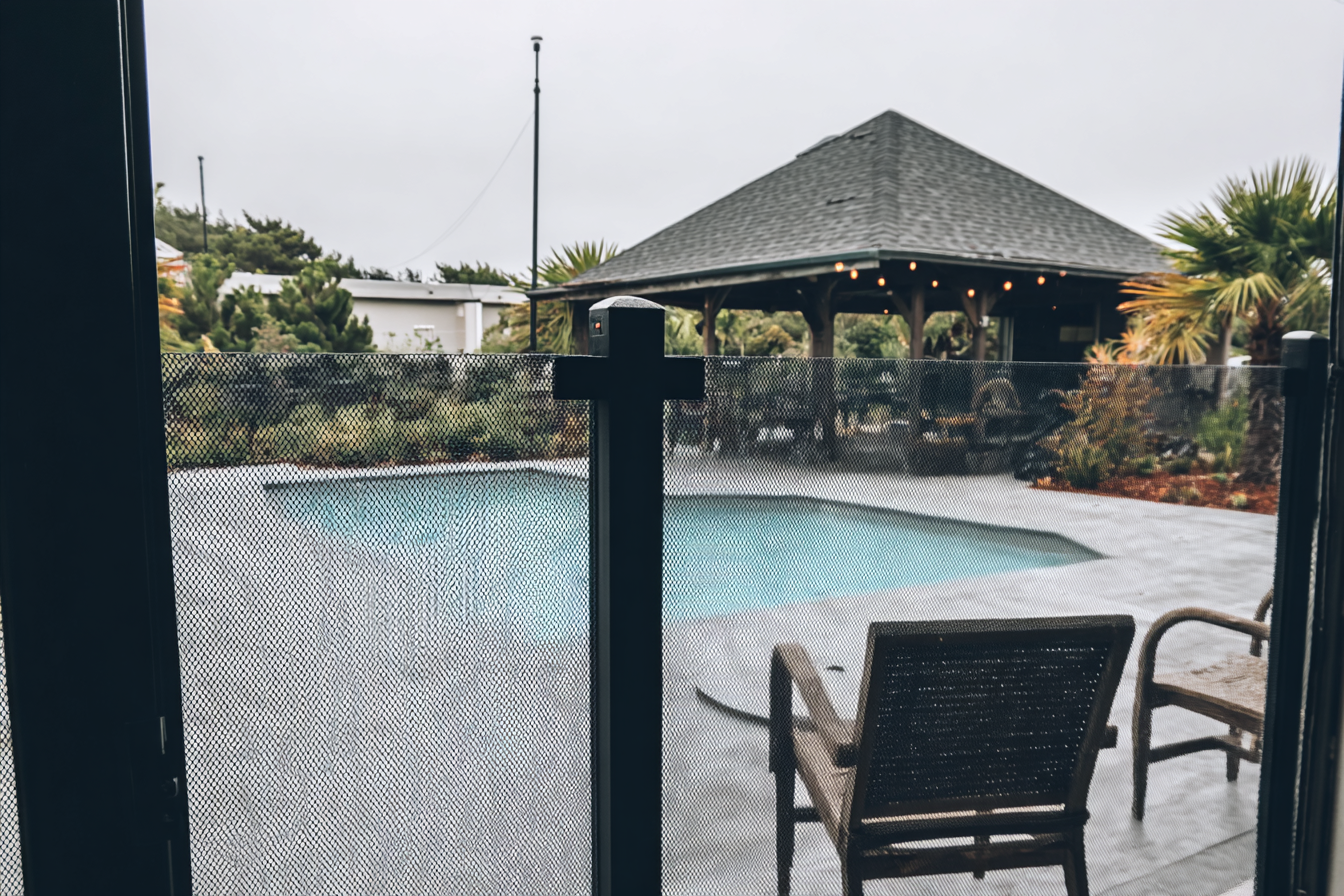
Removable Mesh Pool Fence: $45 to $75 Per Linear Foot
Source: Reno Quotes
A removable mesh pool fence is often used as a seasonal or temporary safety barrier. These systems typically include mesh panels, posts, sleeves, and a matching pool gate. Some removable DIY black mesh pool fence systems are designed for deck or concrete installation.
This option can be useful for families who want added protection when children are young or when the pool is not in use. However, removable does not automatically mean compliant. The fence still needs to meet local height, spacing, gate, and climb-resistance rules.
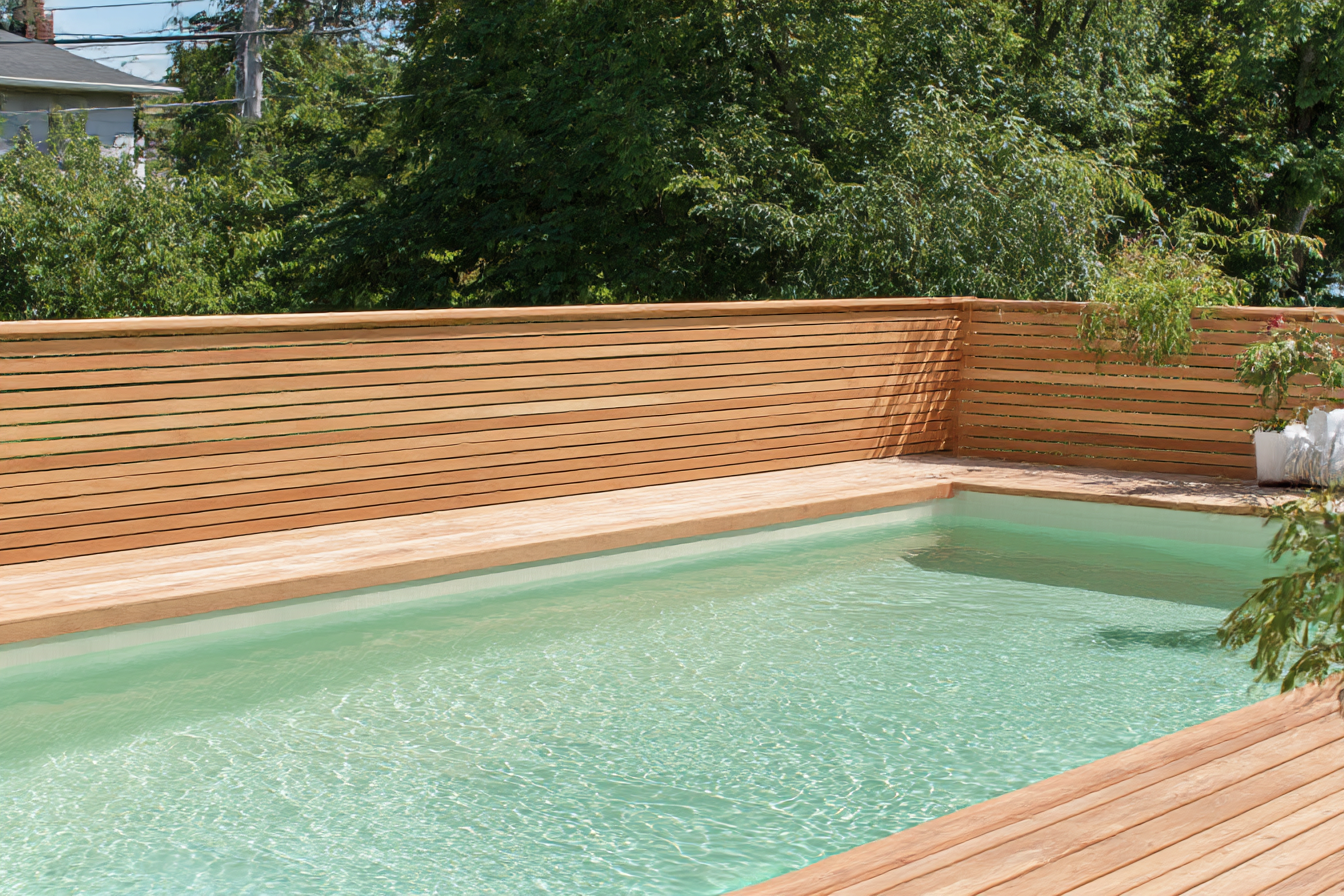
Wood Pool Fence: $40 to $90 Per Linear Foot
Source: Reno Quotes
Wood offers a warm, natural look and can match an existing deck or backyard design. Cedar, pressure-treated wood, and stained wood fences are common choices for Canadian homes.
The main drawback is maintenance. Wood can warp, crack, rot, or shift over time, which may affect fence integrity and gate alignment. A wooden pool fence should be inspected regularly and kept free of horizontal climbing supports, wide gaps, and loose boards.
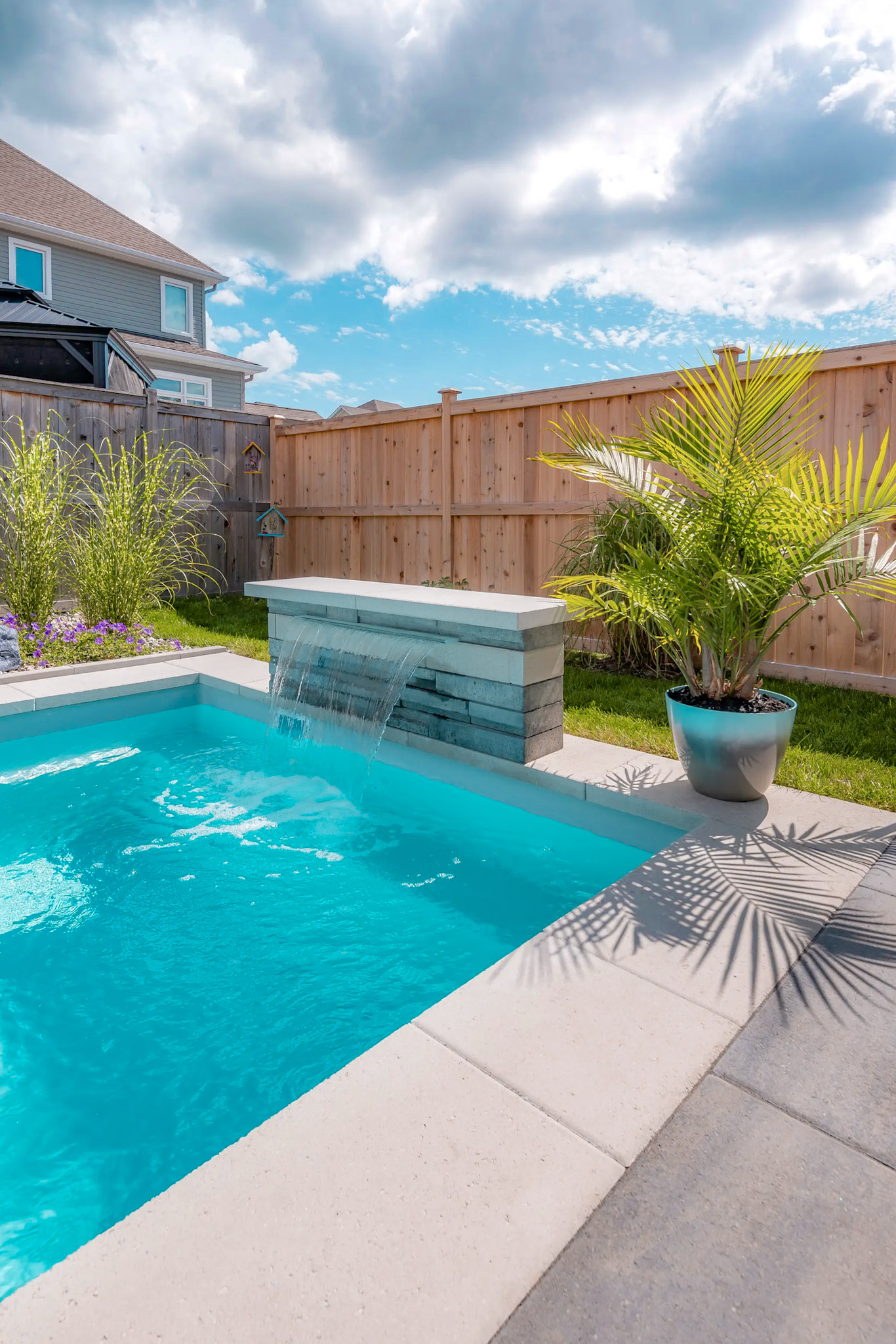
Composite Pool Fence: $85 to $155 Per Linear Foot
Source: Excavations Skella
Composite fencing gives homeowners a wood-like appearance with less maintenance than natural wood. It resists rot and does not need staining as often, making it a practical choice for homeowners who want privacy and durability.
Because composite panels can be heavy, the posts, foundations, and anchoring system must be strong enough for the product. Aluminum frames or reinforced posts may be required depending on the model.
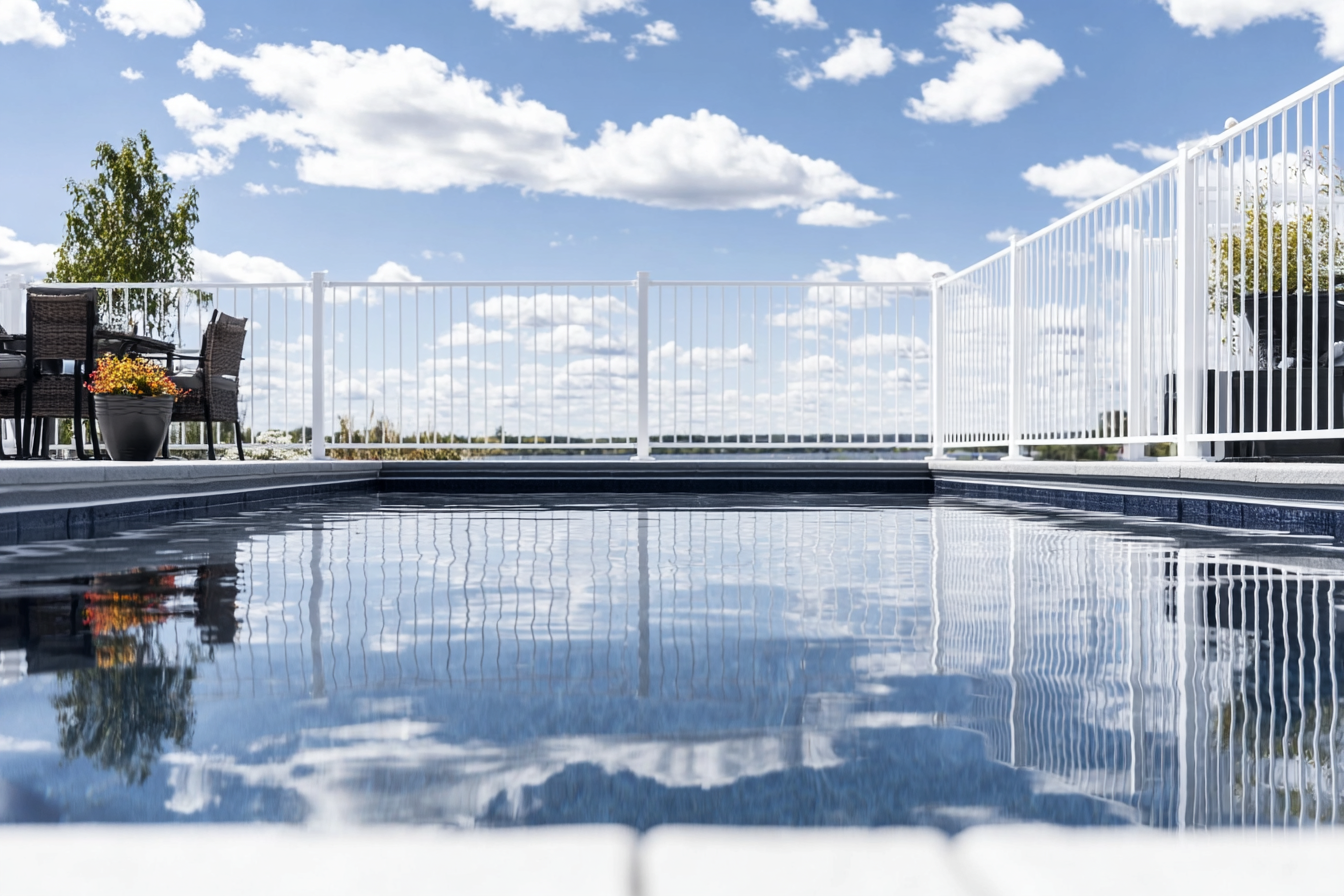
PVC or Vinyl Pool Fence: $55 to $100 Per Linear Foot
Source: Reno Quotes
PVC and vinyl fences are low-maintenance options that can provide more privacy than aluminum or chain-link fencing. They are easy to clean and do not require staining.
However, full privacy panels may reduce visibility into the pool area. For families with young children, a design that allows adults to see the pool from the yard or house can be a safer choice.
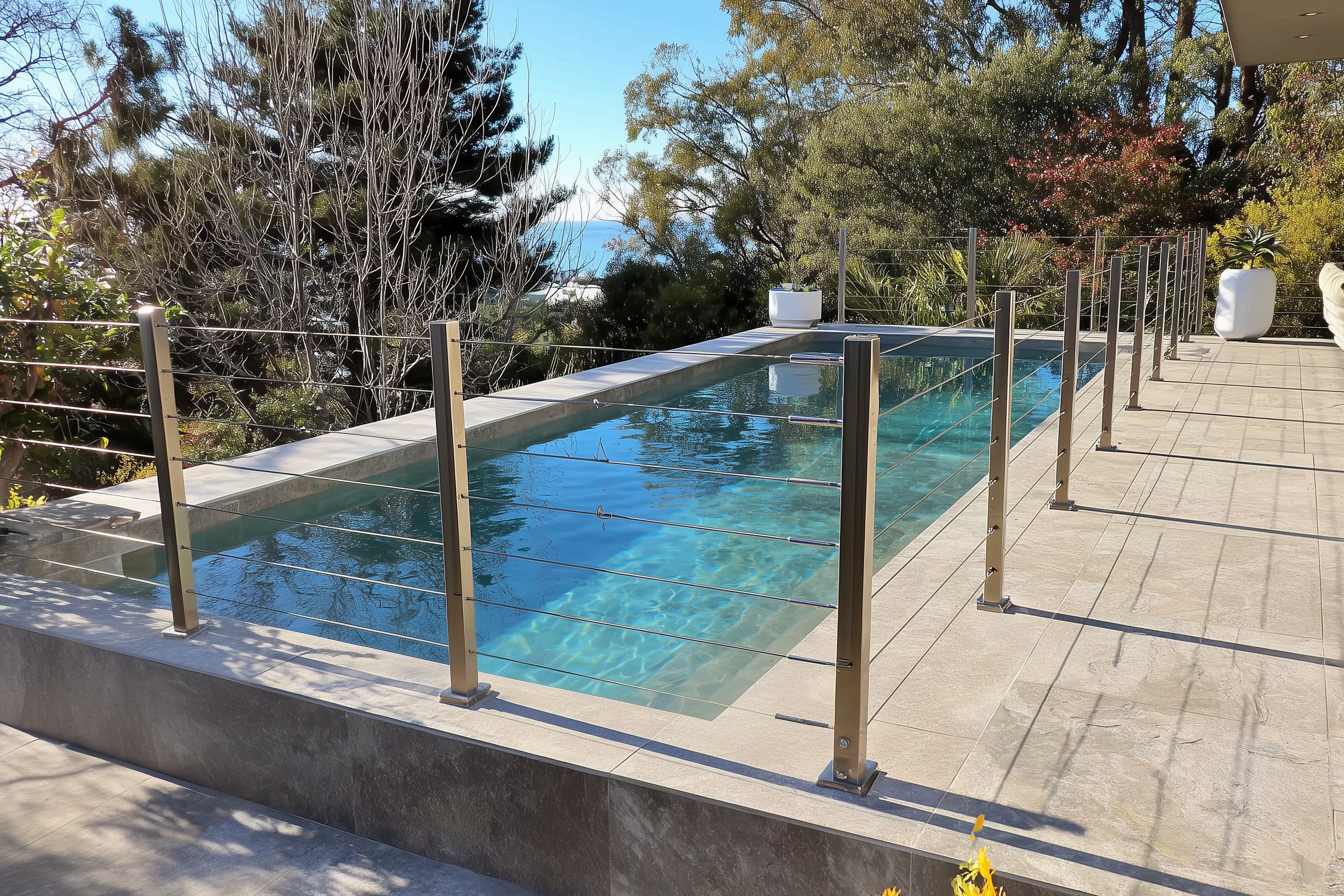
Wrought Iron, Steel, or Stainless Steel Pool Fence: $70 to $250 Per Linear Foot
Source: Reno Quotes
Metal pool fences are often chosen for their strength and decorative appearance. Wrought iron and steel can create a classic look, while stainless steel is more modern.
These options can be expensive, especially for custom work. Steel and wrought iron also need the right coating and maintenance to prevent corrosion, particularly in areas exposed to pool chemicals, road salt, or freeze-thaw conditions.
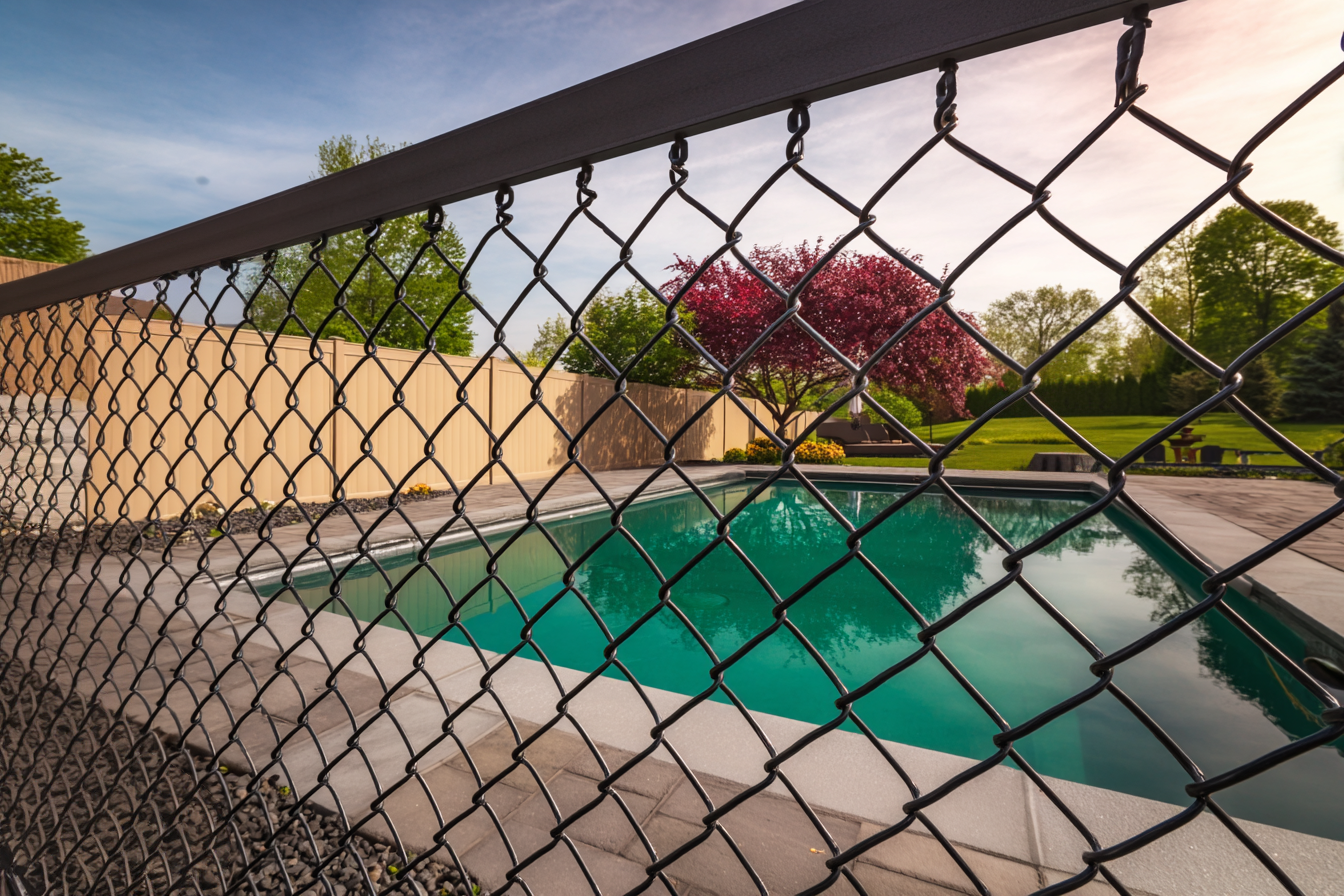
Chain-Link Pool Fence: $35 to $65 Per Linear Foot
Source: Reno Quotes
Chain-link is usually one of the more affordable pool fence options. It provides visibility, good airflow, and a functional barrier around the pool area.
For pool use, chain-link fencing must still meet spacing and climb-resistance requirements. In some jurisdictions, mesh size may be restricted, or privacy slats may be needed to reduce openings. Always confirm local requirements before choosing this material.
Pool Fence Kits, Gates, and Accessories
Pool fence kits can be convenient, but they are not all designed for the same use. Some kits are meant for above-ground pools, some for inground pools, and others for general backyard fencing. Before buying, confirm that the system is suitable for your pool type and local safety rules.
Important components to compare include:
Gate sections and gate width
Self-closing hinges
Self-latching pool gate hardware
Latch height and child-resistant release design
Deck sleeves, flanges, anchors, or spike bases
Post spacing and panel height
Picket spacing or mesh opening size
Replacement parts and winter storage options
Do not assume that a standard backyard gate latch is acceptable for a pool enclosure. Pool gates often need to close and latch automatically, and some municipalities require the latch to be installed at a specific height or on a specific side of the gate.
Pool Fence Rules in Canada
Source: Embellissements la Chaudière Inc.
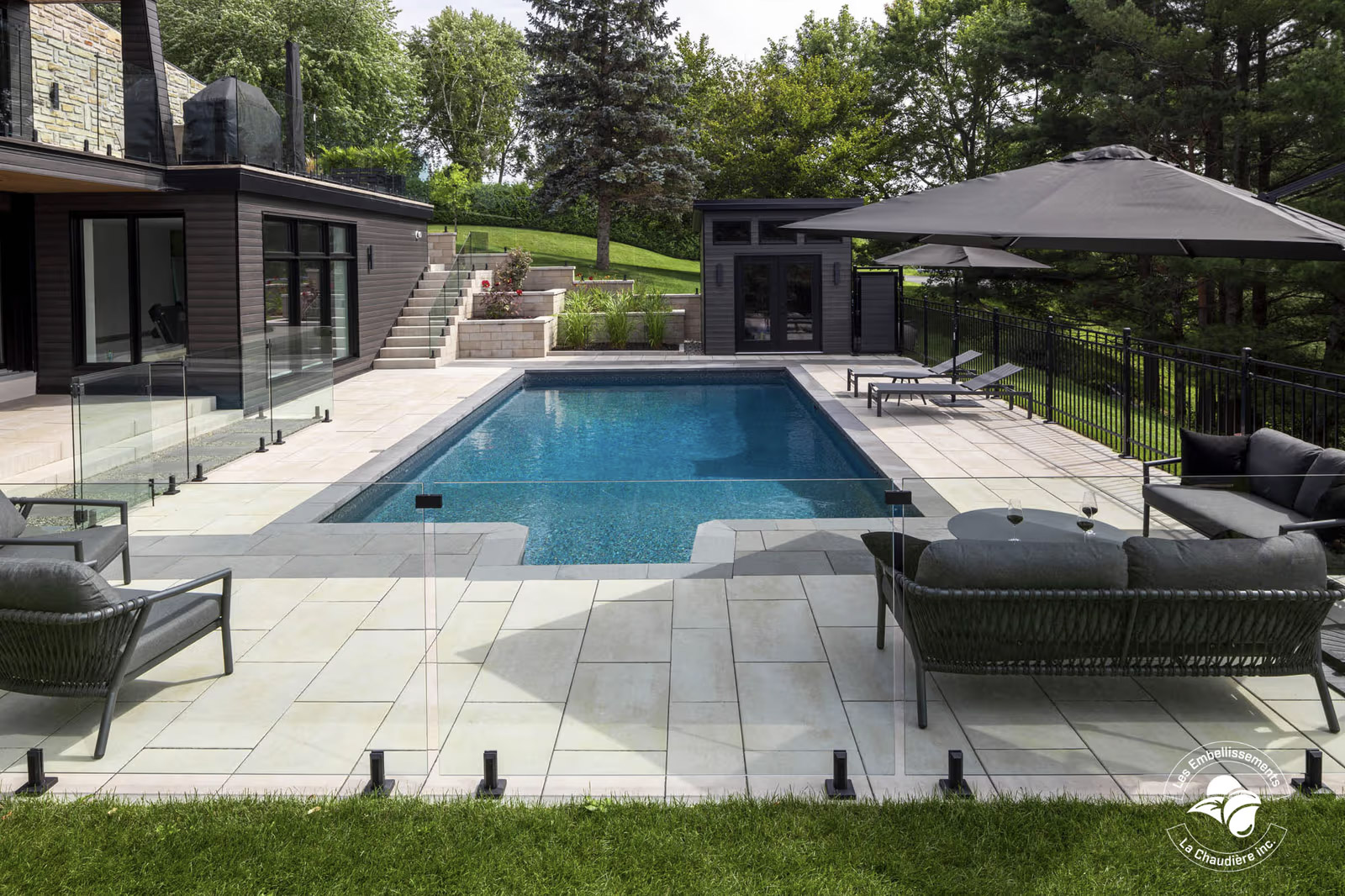
There is no single pool fence rule that applies the same way across all of Canada. Pool enclosure requirements are usually set by provincial regulations, municipal bylaws, or both. Before installing a pool fence, contact your municipality and ask about permits, inspections, minimum height, gate hardware, setback distances, and allowed materials.
Many Canadian pool safety rules focus on the same core features:
A fence or enclosure around the pool area
A minimum height, often at least 1.2 m or 4 ft.
A self-closing and self-latching pool gate
Openings small enough to prevent a child from passing through
No horizontal climbing supports or easy footholds
Controlled access from decks, ladders, platforms, and gates
Enough distance from climbable objects such as trees, furniture, or equipment
In Quebec, residential outdoor pools with a water depth of 60 cm or more must be secured. The enclosure must generally be at least 1.2 m high, prevent the passage of a 10 cm spherical object, and have no parts that make it easy to climb. Gates must have a self-closing and self-latching safety device. Owners of pools installed before November 1, 2010 now have until September 30, 2027 to make their installation compliant.
In Ontario, many rules are municipal. For example, Toronto requires a pool fence to completely surround the pool, with only compliant gate openings. Other cities may have different height, latch, permit, and inspection requirements.
Above-Ground, Semi-Inground, and Inground Pool Fences
Fence requirements can change depending on the type of pool.
For an inground pool, a compliant enclosure is usually required because the pool is directly accessible from ground level. The fence layout should control all access points, including patios, walkways, and gates.
For an above-ground pool, the pool wall may count as part of the barrier only in certain situations and only if it meets local height and access requirements. Stairs, ladders, decks, and platforms usually need to be secured with a gate or enclosure.
For a semi-inground pool, requirements can be more complex because part of the pool may be accessible from grade while another section is raised. In this case, it is best to confirm the layout with your municipality before buying materials.
Can you install a pool fence yourself?
Some pool fence kits are designed for DIY installation, especially removable mesh systems or component-based aluminum kits. However, DIY installation is only a good idea if the layout is simple and the finished fence will meet every local requirement.
Professional installation is strongly recommended for:
Glass pool fences
Custom metal fences
Sloped or uneven yards
Concrete core drilling
Retaining walls or raised decks
Complex gate layouts
Permit or inspection requirements
Situations where code compliance is uncertain
A poorly installed fence can sag, shift, fail to latch, or leave gaps that make the pool area unsafe. When in doubt, ask your municipality or a qualified contractor to review the project before installation.
Maintenance and Inspection
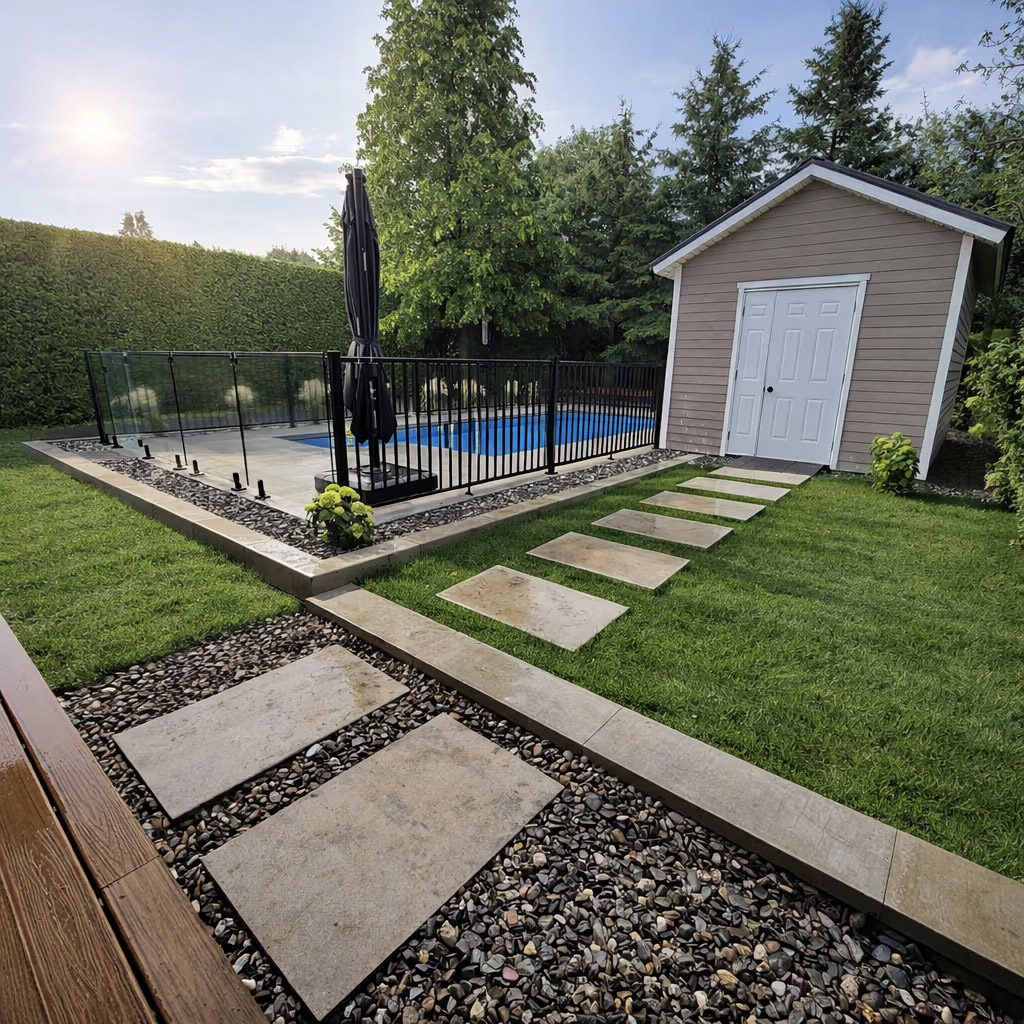
Source: Groupe Rocanova inc.
A pool fence should be inspected at the start of the swimming season, throughout the summer, and before winter. Regular inspections help catch small problems before they affect safety.
Check for loose or missing parts, broken panels, rust, cracked posts, sagging gates, and latches that no longer close properly. Make sure no furniture, planters, toys, storage bins, or pool equipment are placed close enough to help a child climb over the fence.
Glass pool fences should be cleaned regularly to remove dirt, grime, hard-water stains, and mildew. Wood fences may need staining or sealing every few years. Aluminum, PVC, composite, and chain-link fences are generally easier to maintain, but they still need routine cleaning and hardware checks.
Before winter, remove detachable mesh sections if the manufacturer recommends it, tighten loose hardware, and make sure snow buildup will not create a climbable path over the fence.
In Conclusion
A pool fence is both a safety feature and a major backyard design choice. Aluminum, mesh, glass, wood, composite, PVC, wrought iron, and chain-link fences all have different advantages, costs, maintenance needs, and visual effects.
Before buying, compare full system costs, not just panel prices. Include gates, latches, hinges, anchors, permits, labour, and inspection requirements in your budget. Most importantly, confirm your local pool fence rules before installing anything.
FAQ
Where can I buy a pool fence in Canada?
You can buy a pool fence from fence contractors, pool and spa retailers, hardware stores, online pool supply stores, and custom glass or metal fence companies. For a code-sensitive project, a professional installer is usually the safest option.
How high does a pool fence need to be?
Many Canadian jurisdictions require a pool fence to be at least 1.2 m or 4 ft. high, but local rules can be stricter. Some municipalities may also regulate latch height, gate swing direction, fence spacing, and the distance between the fence and climbable objects.
Are removable mesh pool fences allowed?
Removable mesh pool fences may be allowed in some areas if they meet all local safety requirements. They must still provide proper height, secure anchoring, a compliant gate, and openings small enough to prevent unsafe access.
How much does a pool fence cost in Canada?
Most pool fences cost between $40 and $300 per linear foot, depending on the material and installation complexity. Chain-link and mesh are usually more affordable, while glass, stainless steel, and custom metal fences are typically more expensive.
Do above-ground pools need a fence?
Many above-ground pools need controlled access, especially if they have a ladder, deck, stairs, or platform. In some cases, the pool wall may count as part of the barrier, but only if it meets local height and access rules.
Can I use a chain-link fence around a pool?
A chain-link fence may be allowed, but it must meet local pool enclosure requirements. Some areas restrict mesh size or require slats to reduce openings. Check your municipal rules before choosing chain-link for a pool fence.
Looking for something else?
Related articles
The latest industry news, interviews, technologies, and resources.

Editorial Team
•17 May 2024
Is your deck finally ready but you’re still on the fence about what kind of railing best suits what you’re looking for?

Editorial Team
•25 Jul 2025
Are you looking to add to your current living space? Whether it’s a solarium or a sunroom, they’re both great options. The question is, what’s the difference between the two?

Editorial Team
•20 Sep 2024
Installing a solar roof is a decision that's worth careful consideration. Quebec does have enough solar energy to render your installation financially worthwhile, provided that you take into account all costs involved:

Amanda Harvey
•08 Nov 2023
With the advancement of technology, and with many jobs becoming digitized, it's growing more common for people to work from the comfort of their home. Whether you’re a new mother raising a baby while trying to meet deadlines or a person who has decided to branch out and bring that new business venture to life, having an efficient and relaxing home office will allow you to maintain productivity and get the most out of life.

Cynthia Pigeon
•24 Oct 2024
Since basements are especially isolated compared to the rest of the house, ventilation is essential to ensure that humidity levels are kept under control.