Cost of Brick Repointing & Masonry Restoration Per Sq Ft
By Cynthia Pigeon
Updated on August 17, 2026
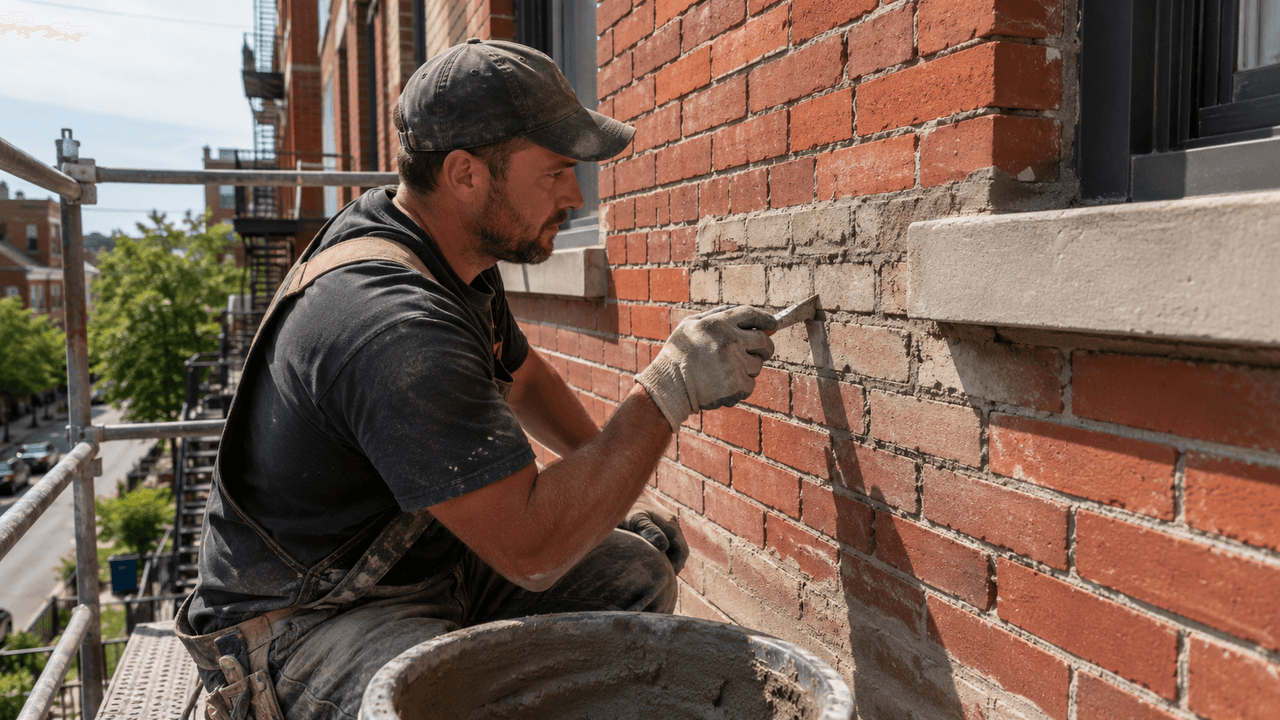
In Quebec, brick cladding is a defining architectural feature. Whether it is a 1970s bungalow in the Québec City area, a century-old plex with a red-brick facade in Montréal, or a heritage commercial building, masonry offers remarkable durability. However, while clay brick can last for more than a century, the mortar that binds the masonry units gradually deteriorates over time and is affected by weather (wind and precipitation).
Regular masonry maintenance helps preserve the building's integrity and reduce the risk of water infiltration, including extensive repairs.
When mortar joints begin to recede, powder, or crumble, repointing becomes necessary. This guide provides a realistic overview of Quebec market prices, explains the main factors that affect cost per square foot, and outlines how repointing work is typically carried out.
How Much Does Brick Repointing Cost per Square Foot?
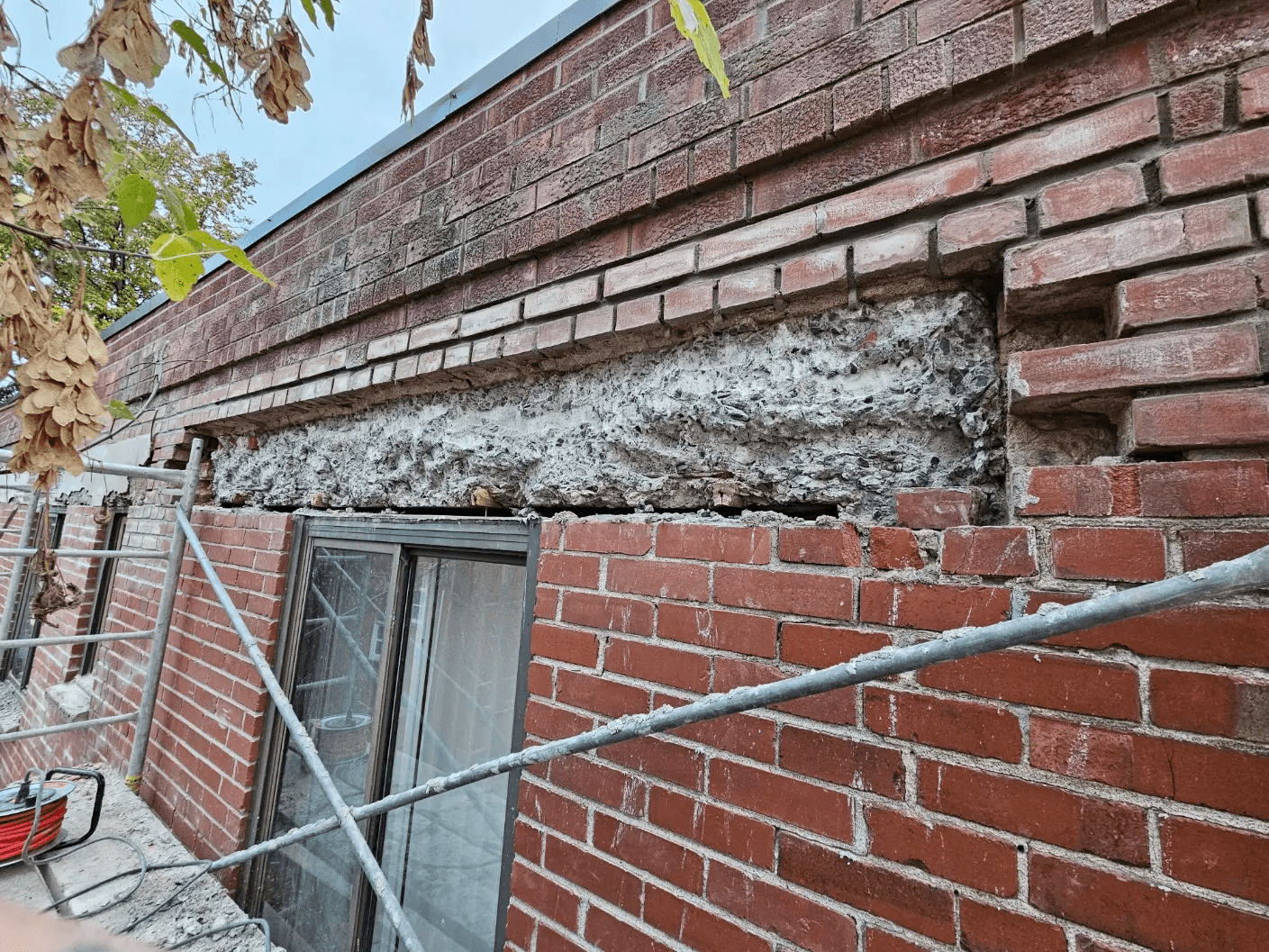
Source: Maçonnerie M.J inc
On average, brick repointing in Quebec costs between $10 and $25 per square foot, including labour and materials. For a standard residential facade, the total cost often ranges from $3,000 to $15,000, depending on the area being repaired and the complexity of access.
Average price ranges per square foot in Quebec:
Highly accessible standard facade (bungalow, ground floor): $10 to $14/sq. ft.
Two-storey residential facade: $14 to $18/sq. ft.
Complex or heritage facade (three-storey plex, lime mortar): $18 to $25/sq. ft.
To help you plan your budget, here are estimated total costs based on common building types:
Building Type | Average Area to Be Treated | Estimated Price Range |
Bungalow (front facade) | 250 to 400 sq. ft. | $2,500 to $6,000 |
Two-storey house (full facade) | 600 to 1,000 sq. ft. | $7,500 to $16,000 |
Two- or three-storey plex (front facade) | 800 to 1,400 sq. ft. | $12,000 to $28,000 |
Side or rear party wall of a plex | 1,000 to 2,000 sq. ft. | $12,000 to $35,000 |
*Prices are estimates only. They may vary depending on the region, the condition of the masonry, site accessibility, mortar type, and any related repairs required.
To get an accurate assessment for your building, you can request a masonry quote from qualified contractors in your area.
Factors That Affect the Price per Square Foot
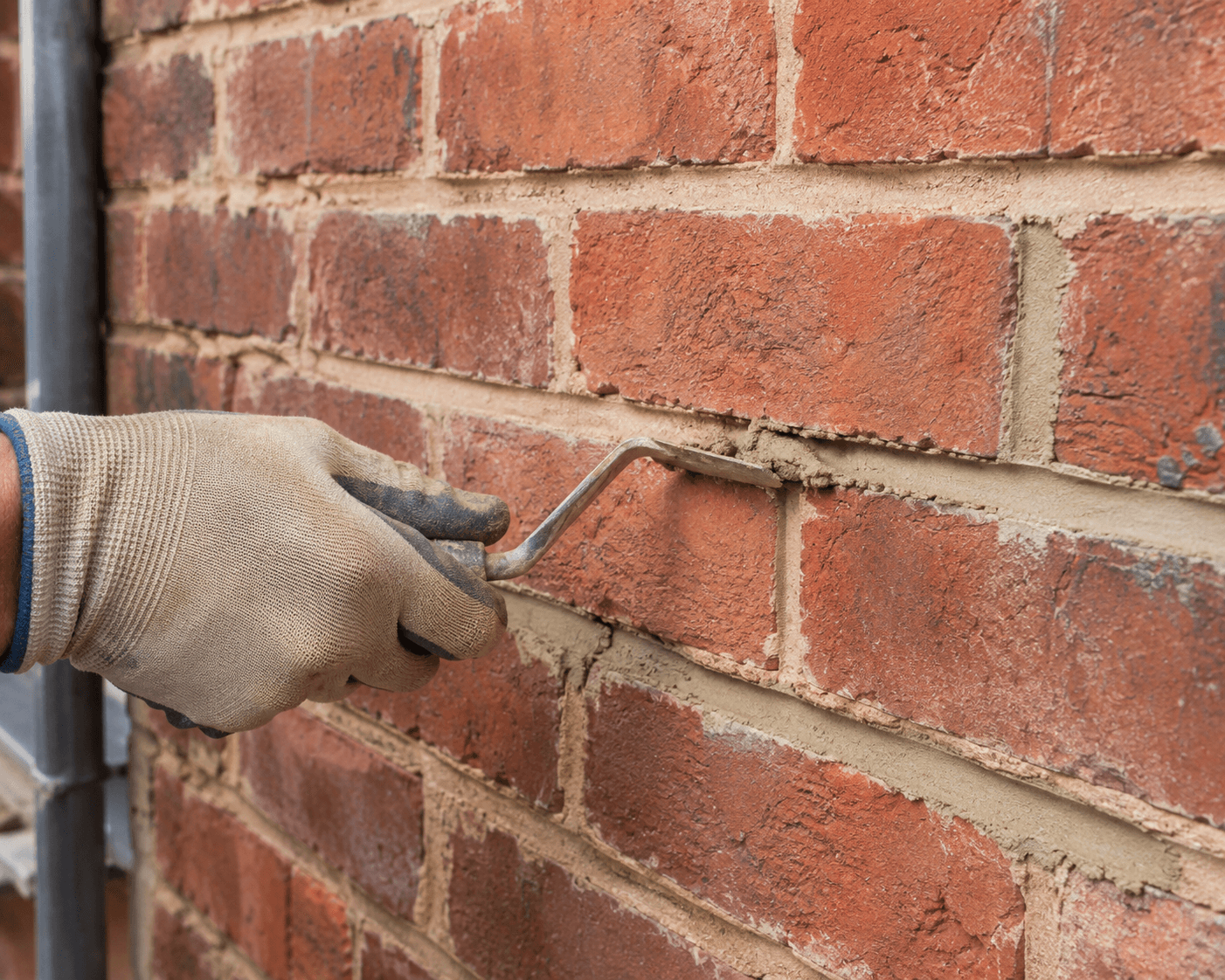
Source: RenoQuotes
The difference between $10 and $25 per square foot is largely explained by technical and logistical constraints on the job site. A professional mason will assess several factors before preparing an estimate.
Factors that affect the cost of repointing include:
Building height and safety equipment such as scaffolding and lifts
Depth of deterioration and the amount of mortar that must be removed
Mortar composition, including lime mortar versus cement-based mortar
Overall condition of the bricks, including replacement of deteriorated units
Architectural elements such as sills, lintels, and cornices
1. Building Height and Scaffolding Requirements
Working at ground level on the facade of a bungalow usually does not require complex access equipment. By contrast, repairing the facade of a three-storey plex often requires full scaffolding that complies with CNESST safety requirements. Installation, rental, and dismantling costs add fixed expenses that can increase the cost per square foot.
2. Degree of Deterioration and Mortar Removal Depth
Before new mortar can be applied, deteriorated mortar must be removed until sound material is reached, to a depth appropriate for the width and condition of the joint. If the original mortar is extremely hard or, conversely, has deteriorated deeply, joint grinding and removal will take longer and require greater care, increasing labour costs.
3. Architectural Detailing
A flat, uninterrupted facade can generally be repointed more quickly. More intricate facades require careful manual work around:
Window frames, sills, and lintels
Arches above doors
Wall corners and decorative masonry cornices
Why Is Repointing Important in Quebec?
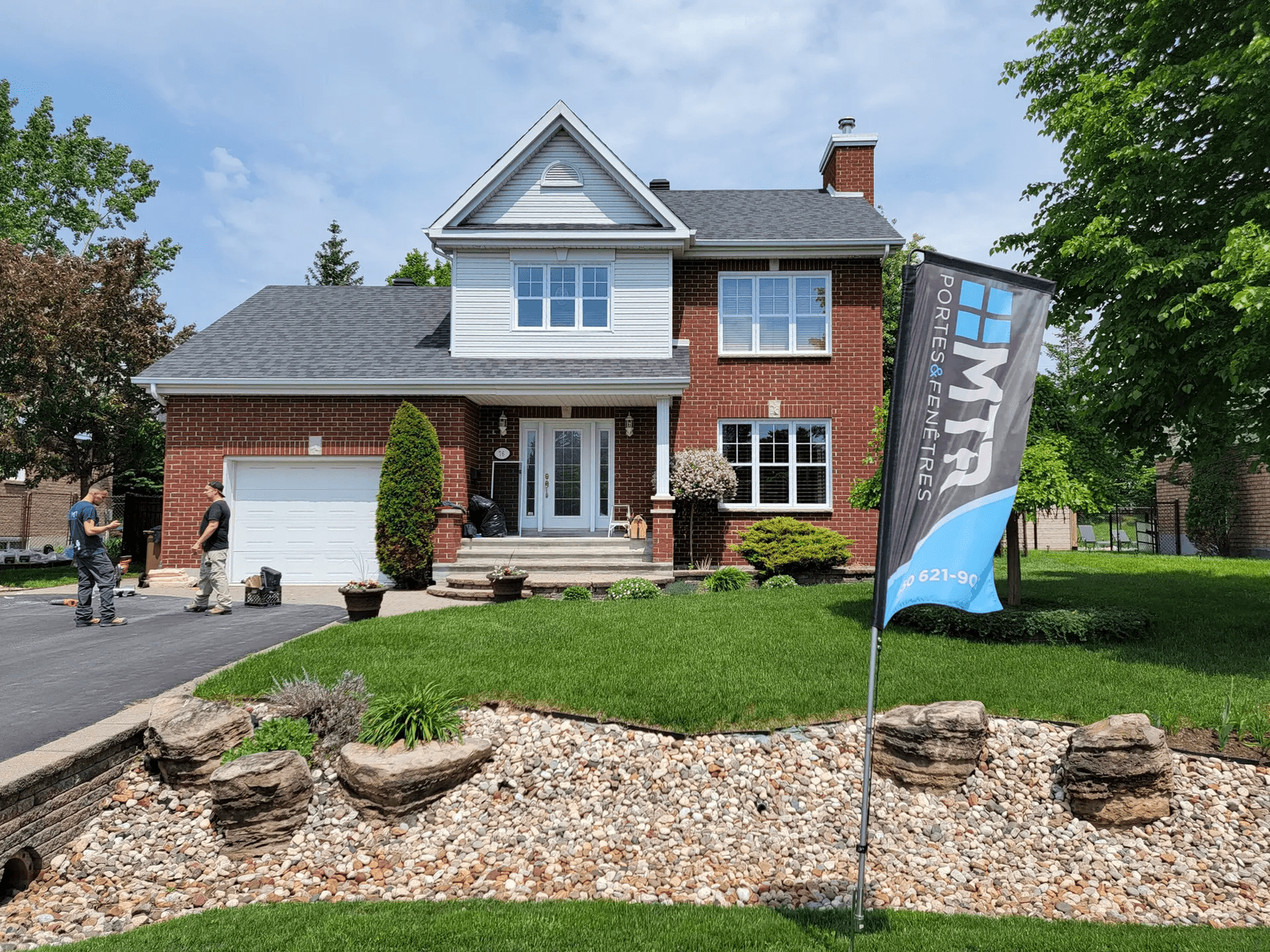
Source: Rénovations MTR inc.
Quebec’s climate is particularly demanding on building envelopes. Heavy autumn rain, severe winter cold, and frequent thaws expose masonry to repeated freeze-thaw cycles.
Typical winter deterioration process:
Rain and moisture: Water enters small cracks in the mortar.
Freezing: When water freezes, its volume increases by about 9%, which can create internal stresses in saturated masonry.
Pressure: Mortar can crack, and bricks can begin to deteriorate.
Thawing: Water can move deeper into the wall assembly.
When water trapped in masonry pores freezes, repeated freeze-thaw cycles can generate enough internal stress to gradually damage mortar and brick. If the mortar is porous or cracked:
Ice can cause mortar to break down, contributing to brick spalling.
Moisture can penetrate behind the brick veneer and potentially damage wood framing, insulation, or studs.
In severe cases, movement in the masonry can cause the brick veneer to pull away from the wall anchors, creating a dangerous bulging brick wall.
Timely repointing helps reduce water penetration through deteriorated joints and can significantly extend the service life of the masonry. To assess the condition of your brickwork, you can request a brick repointing cost estimate.
Which Mortar Should You Choose Based on the Age of the Building?
Source: RenoQuotes
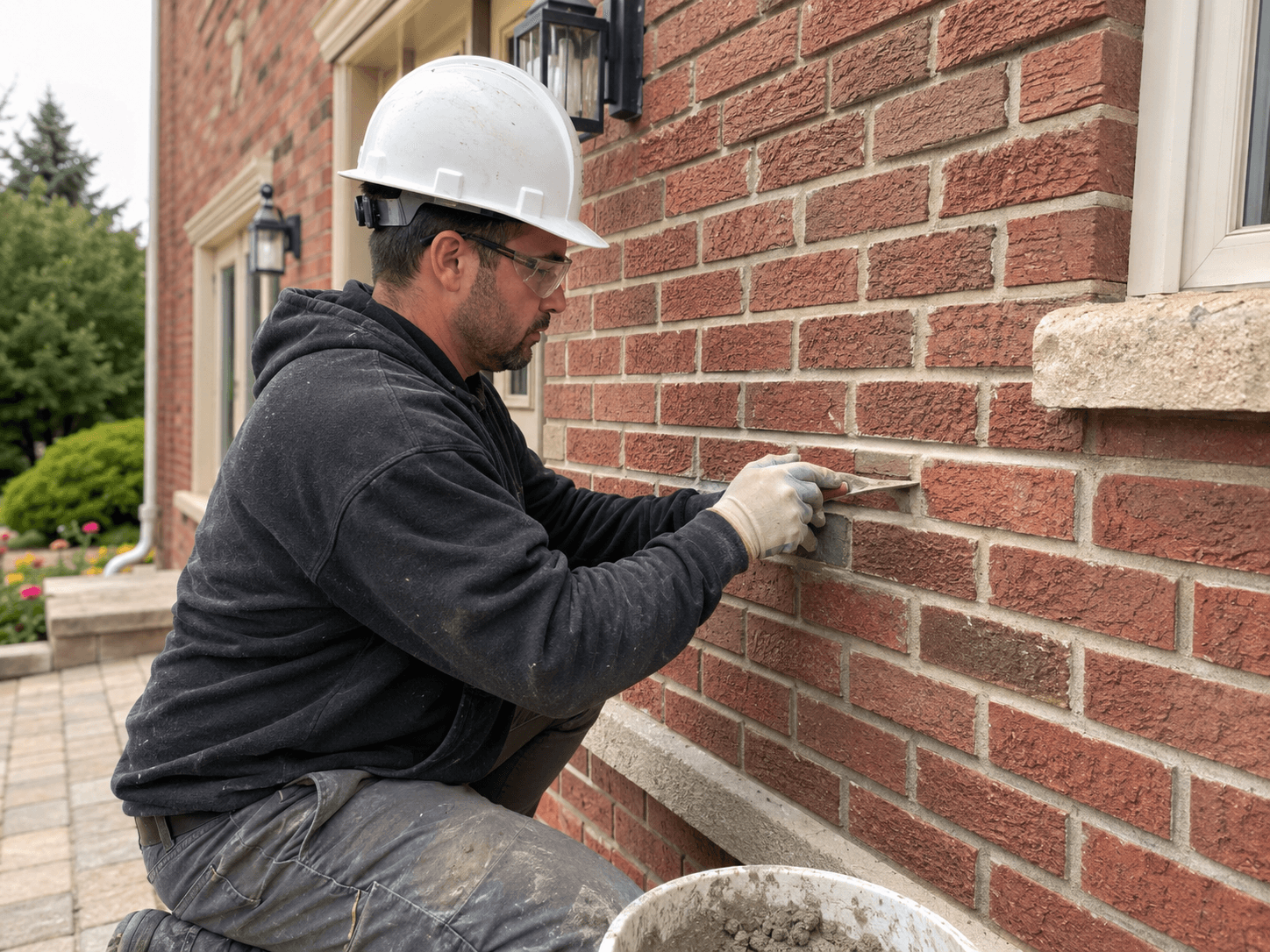
Choosing the right mortar is one of the most important technical aspects of a repointing project. An incompatible mortar can accelerate brick deterioration and cause significant damage to the facade over repeated freeze-thaw cycles.
General mortar compatibility considerations:
Older or heritage buildings: Choose a mortar compatible with the existing brick and original mortar, generally softer and more vapour-permeable than the masonry units.
Newer buildings: Select the mortar based on the characteristics of the existing masonry and wall assembly. Type N or Type S mortar may be appropriate depending on the application.
Lime Mortar for Heritage and Older Buildings
Many older buildings, including some Montréal plexes and heritage homes, contain so-called “soft” bricks that are generally more porous and less dense than many modern bricks.
For these facades, the new mortar must be compatible with the masonry and original mortar. In many older buildings, this means using a lime-rich mortar or a conservation mortar specifically formulated for historic masonry.
Lime provides two important properties:
Vapour permeability: It allows moisture trapped in the wall to migrate and evaporate.
Flexibility: Lime mortar is generally softer than the surrounding brick. During building movement or freeze-thaw cycles, the mortar can accommodate movement rather than transferring excessive stress to the brick.
A repointing mortar that is excessively hard or insufficiently permeable relative to older brick can retain more moisture in the masonry units and contribute to cracking or spalling during freeze-thaw cycles.
Cement-Based Mortar for Modern Construction
For buildings constructed from the 1960s or 1970s onward, including many bungalows and suburban homes, masonry units are often denser and less porous. Depending on the characteristics of the brick, existing mortar, and wall exposure, a Portland cement-based mortar such as Type N or Type S may be appropriate.
Key Steps in a Proper Repointing Job
Source: Rénovation R4S
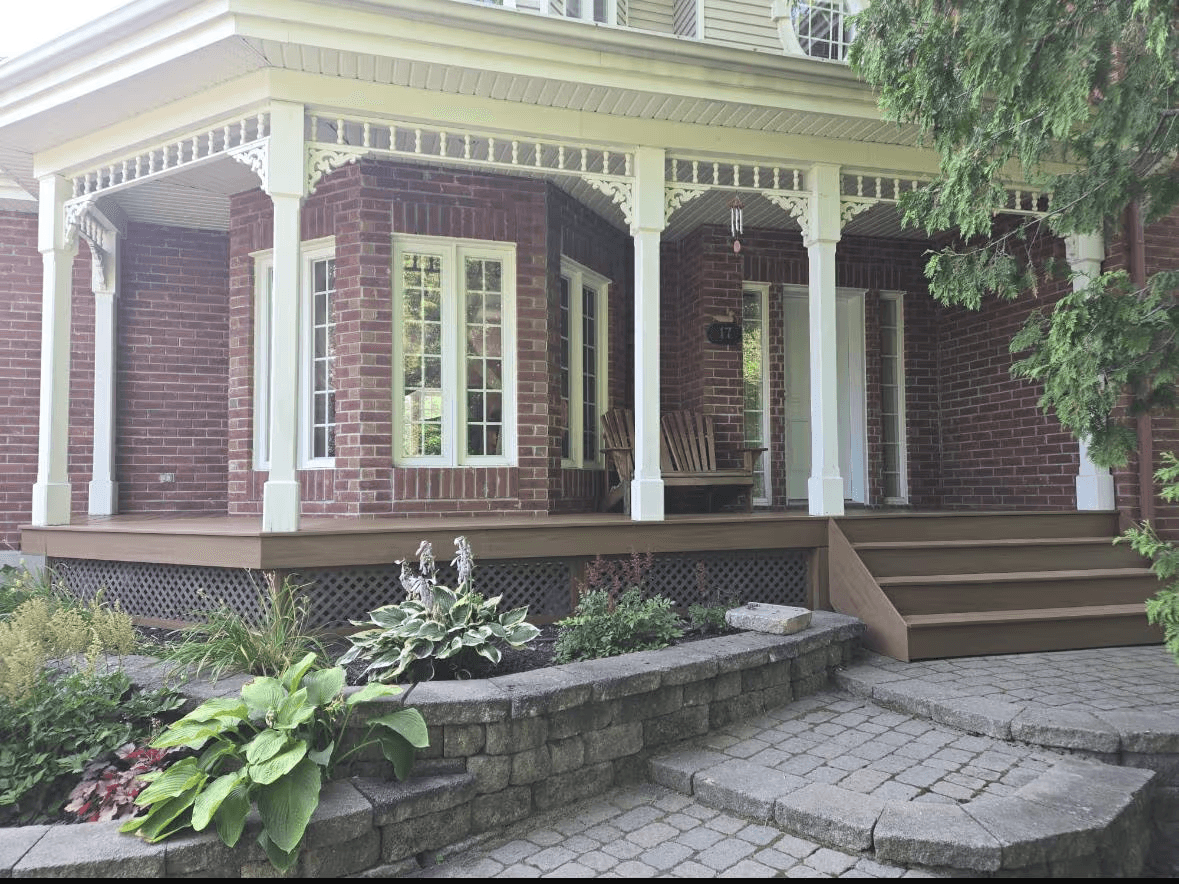
Durable repointing involves more than simply applying fresh mortar over an existing joint. It requires a methodical process.
Typical professional repointing process:
Site preparation: Windows, access areas, landscaping, and surrounding surfaces are protected.
Mortar removal: Using appropriate tools, often including an angle grinder with a diamond blade and dust extraction, the mason removes deteriorated mortar without damaging the bricks' edges.
Joint cleaning: Dust and debris are removed using air or low-pressure washing. The joint is then dampened so dry masonry does not absorb water too quickly from the new mortar.
Mortar placement: Fresh mortar is packed into the joints in successive layers using a pointing tool, with care taken to eliminate voids.
Joint finishing: The joint is tooled to match the original profile and help direct rainwater away from the masonry.
Cleaning and curing: Residue is removed using the least aggressive cleaning method appropriate for the masonry, in accordance with manufacturer recommendations, with products tested beforehand when necessary.
Regulations and Choosing a Qualified Masonry Contractor in Quebec
Source: RenoQuotes
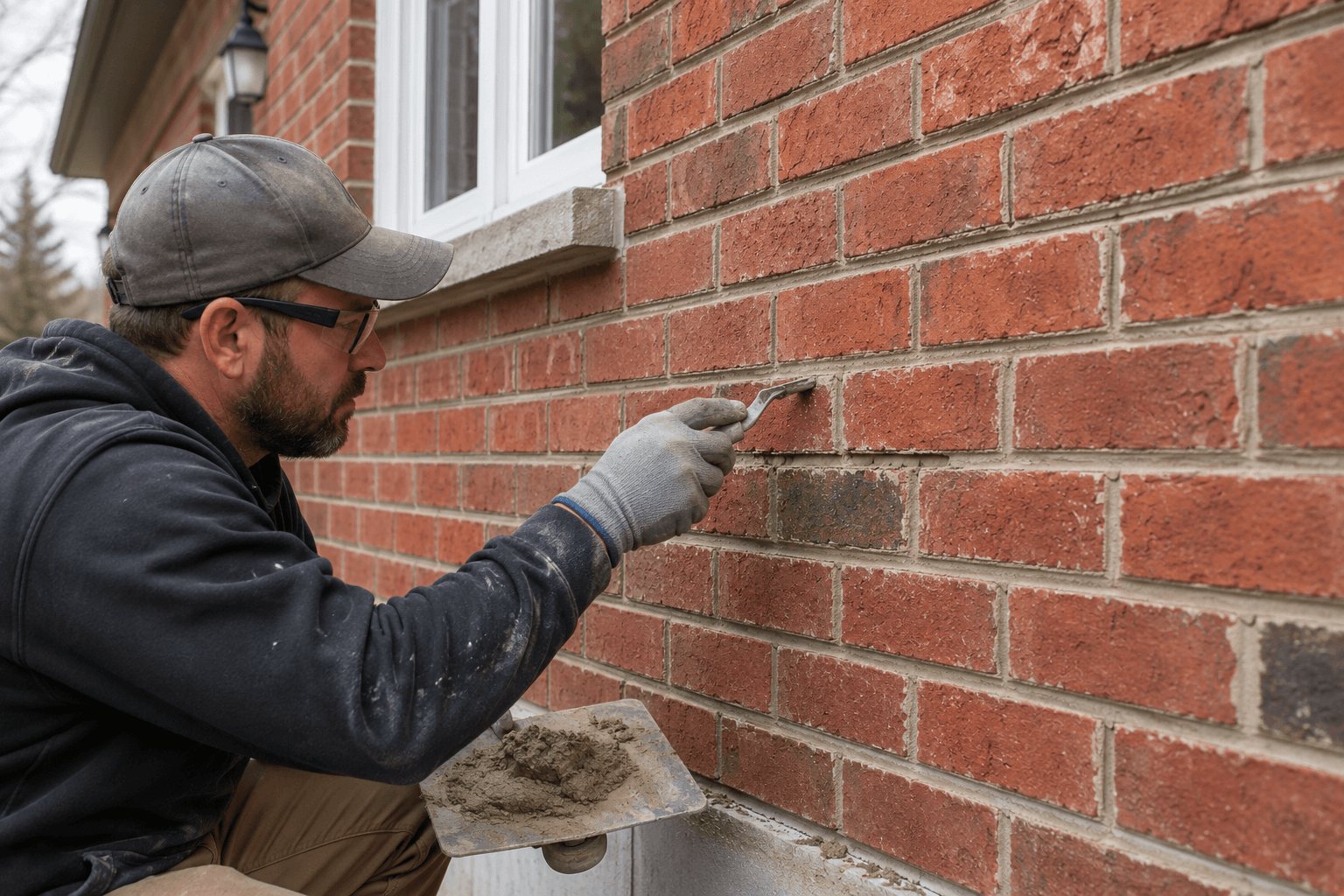
In Quebec, masonry work is regulated. Contractors and workers must meet the legal and professional requirements that apply to the work being performed.
Checklist for evaluating a masonry contractor:
Valid RBQ licence under subclass 4.1, Masonry Structures
Required CCQ competency certificates for workers when the project is subject to the Act respecting labour relations, vocational training and workforce management in the construction industry
Adequate commercial liability insurance; ask for proof of insurance and verify the coverage amount
Detailed quote specifying the type of mortar and the depth of mortar removal
Required RBQ Licence
To perform or have repointing work performed in Quebec, a masonry contractor must hold a valid licence from the Régie du bâtiment du Québec (RBQ) under subclass 4.1: Masonry Structures Contractor.
Working with a contractor who holds the appropriate RBQ licence provides important protections:
Access to the RBQ licence bond in eligible cases involving non-performance or defective work
Confirmation that the contractor is authorized to carry out the categories of work covered by the licence and is subject to applicable regulatory requirements
You can also verify whether the company belongs to a recognized professional association such as the APCHQ or ACQ.
To connect with professionals whose licences have been verified, you can use the platform to find a qualified masonry contractor.
Hidden Costs and Related Repairs to Consider
Source: Pascal Dubé Construction Rénovation
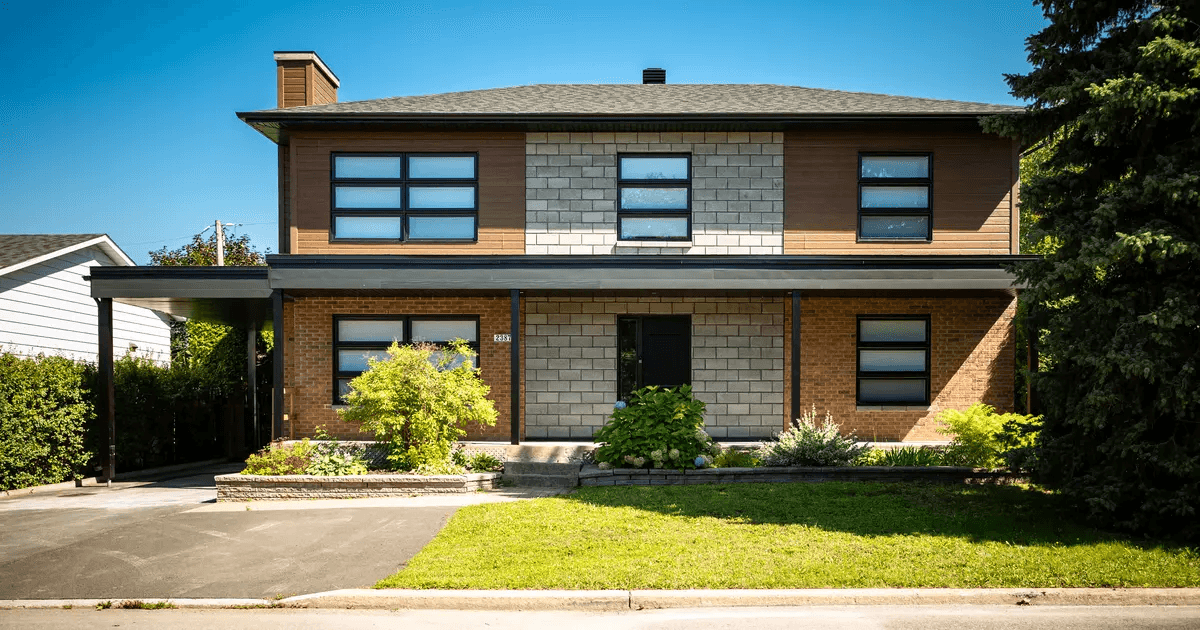
When planning your budget, keep in mind that a simple repointing project may uncover underlying repair needs. It is generally wise to allow a 10% to 15% contingency on the total project quote.
Common additional work during a repointing project includes:
1. Replacing Cracked or Deteriorate Bricks
If some bricks have spalled or cracked due to freeze-thaw damage, the mason may need to replace them. The cost generally ranges from $15 to $30 per brick. One of the main challenges is finding reclaimed bricks with a colour and texture that match the existing facade.
2. Replacing Sills and Lintels
If the structural elements above and below windows are rusted, such as steel lintels, or cracked, such as concrete or stone sills, they may need to be repaired or replaced while the scaffolding is already in place. These repairs generally cost between $500 and $1,500 per window.
3. Repairing a Bulging Brick Wall
If the brick veneer has separated from the underlying wall structure, repointing alone will not solve the problem. The affected section may need to be dismantled and rebuilt. Reconstructing a bulging brick wall generally costs between $35 and $65 per square foot.
4. Municipal Permits and Use of Public Property
If the work requires scaffolding that extends onto a sidewalk or roadway, which is common for plexes in urban areas such as Montréal or Québec City, you may need to obtain a temporary public property occupancy permit from the applicable municipality or borough.
To plan your project with a clearer understanding of the total cost, request and compare masonry quotes to find the option that best suits your building and budget.
Looking for something else?
Related articles
The latest industry news, interviews, technologies, and resources.

Cynthia Pigeon
•08 Nov 2023
Are you shopping around for a new roof? Do you also want to change the siding on your house, but aren't sure which roof colour is best? Well, you've come to the right place! Below, we've outlined all the factors to consider when choosing a roof colour for your Quebec home.

Cynthia Pigeon
•21 May 2026
Considering a change to your exterior siding? CanExel siding is a popular engineered siding choice in Canada, particularly for homeowners seeking the appearance of wood but with less maintenance than traditional cedar.
Editorial Team
•08 Nov 2023
Ready to whip yourself back into shape? If the thought of leaving your house to work out is enough to turn you off the idea completely, yet you happen to have an empty bedroom, why not turn it into a gym?

Editorial Team
•08 Nov 2023
The bathroom should be a sacred space that’s well looked after. We spend a lot of time in this room, and its maintenance is vital for keeping your house chic, comfortable, and running smoothly. Reviving a washroom that’s grown old, outdated or tired is an excellent way to offer character and style while increasing your home’s resale value. Looking for ways to modernize your bathroom doesn’t simply mean keeping up with what’s trending.
Léa Plourde-Archer
•08 Nov 2023
With the new year starting and the wind of renewal that is blowing in, paint companies are currently announcing their colour of the year. These companies are offering eclectic and creative palettes, which perfectly follow the trends of the coming year.