Exterior Brick Paint: Which Product Should You Choose in Canada?
By Cynthia Pigeon
Updated on July 28, 2026
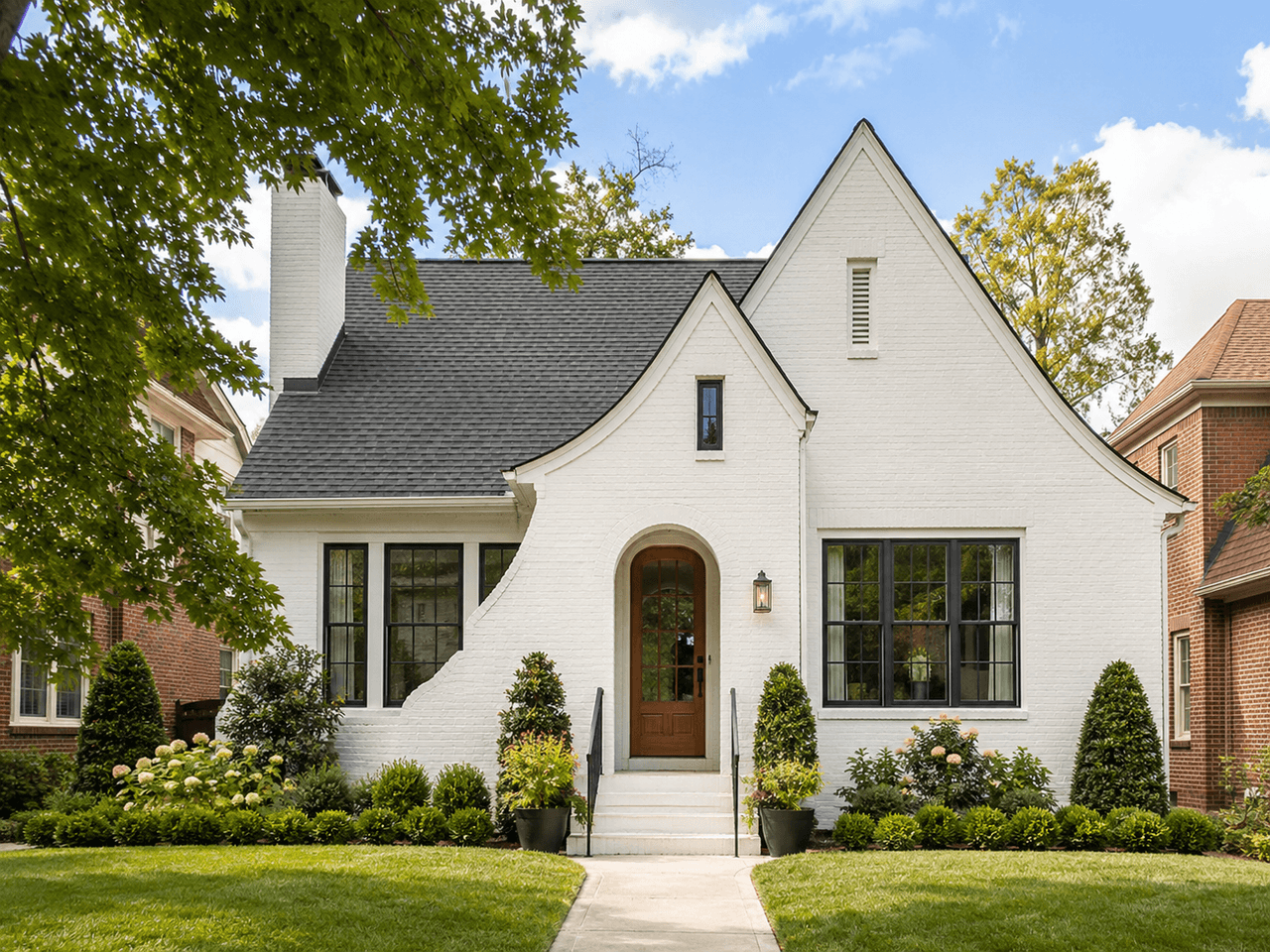
Updating the façade is a common way to improve the curb appeal of a Canadian home. Red, brown, or orange brick exteriors typical of homes built between the 1970s and 1990s can sometimes make a bungalow or two-storey house look dated. Covering the masonry with a contemporary shade, such as off-white, charcoal grey, or deep black, can significantly transform the building’s exterior and enhance its visual appeal.
However, painting brick is not a simple decorating project. Brick is a porous material exposed to demanding weather conditions throughout much of Canada. On many homes, it serves as an exterior cladding rather than a structural component. Choosing an incompatible product can trap moisture, accelerate masonry deterioration, and lead to costly repairs. To update your home without compromising the masonry's condition, it is essential to understand how these materials perform and select the right coating.
Why Is Paint Breathability Important in Canada?
Source: Toiture AG
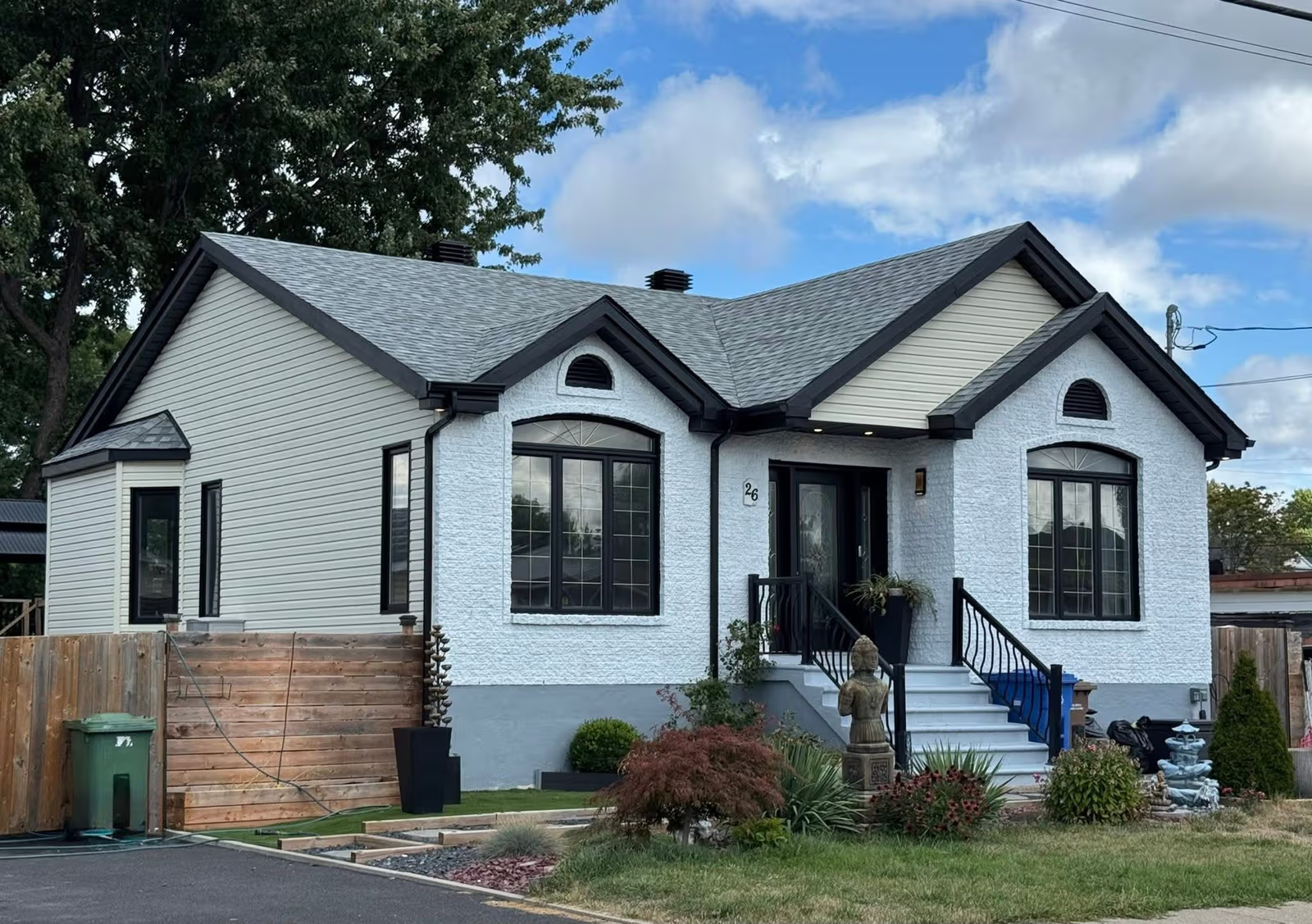
Clay brick is a highly porous natural material. It can absorb rainwater and retain moisture from several sources, including leaks, drainage problems, and vapour movement through the wall assembly. In many Canadian climates, masonry undergoes repeated freeze-thaw cycles during winter. The number and severity of these cycles vary depending on the region, wall orientation, exposure, temperature, and moisture content.
Exterior paint that is poorly suited to masonry can significantly reduce its ability to dry toward the exterior. Permeability varies according to the coating’s formulation and thickness; not all latex or acrylic paints create a completely impermeable barrier. However, if a coating has very low permeability, moisture may have greater difficulty escaping.
When highly saturated brick freezes, water expansion can cause the brick face to flake, crack, or spall. A low-permeability coating may increase this risk if it slows drying or traps moisture in the masonry. Persistent moisture can also accelerate the deterioration of bricks and mortar joints. Cracks, defective flashing, open joints, and other water-management problems may then allow moisture to enter the wall assembly.
Vapour permeability is therefore one of the main criteria to assess, along with product compatibility, the condition of the masonry, and overall moisture management.
The Best Exterior Brick Coating Options
Source: RenoQuotes
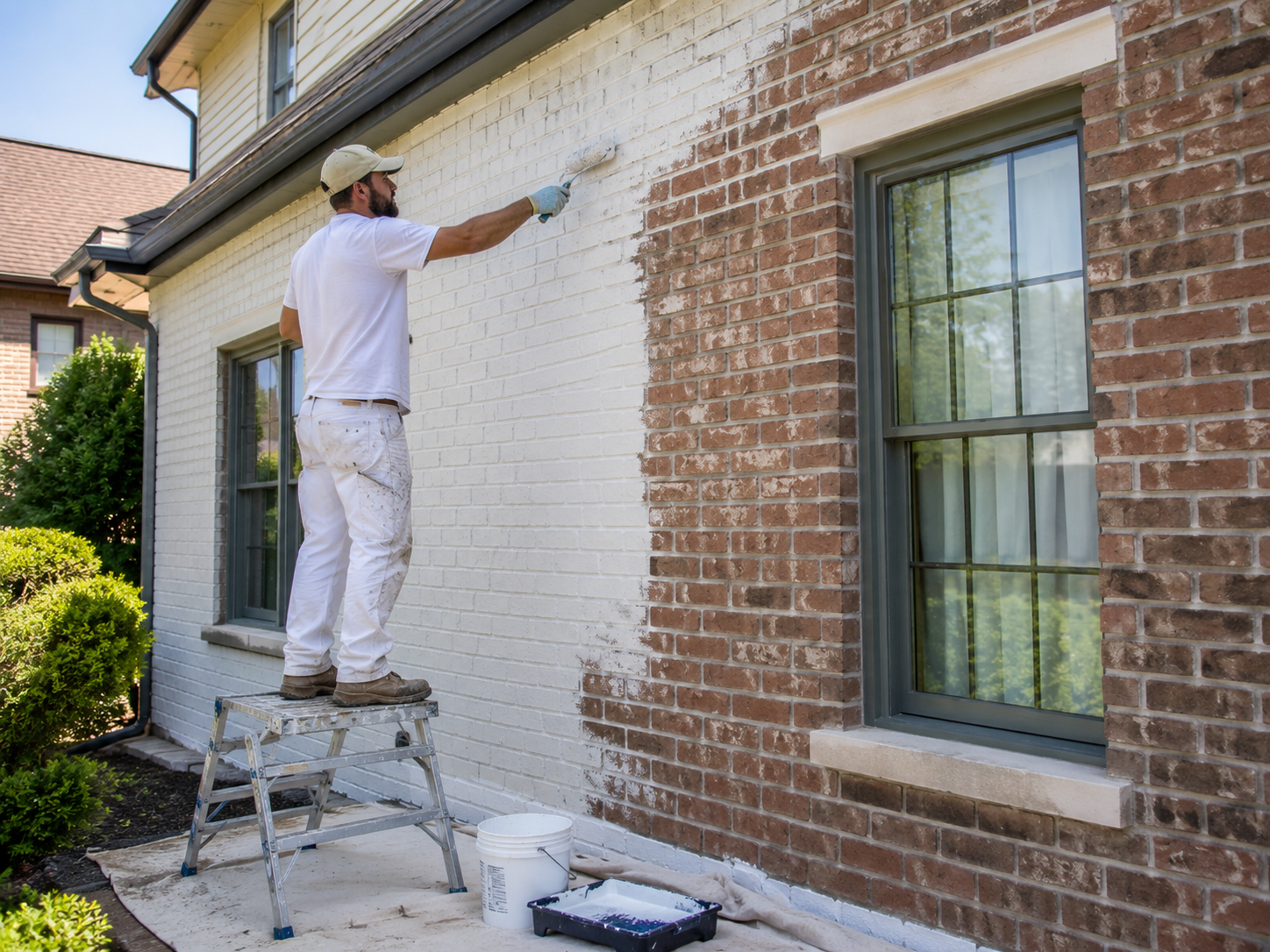
Three main product categories stand out in the Canadian market for improving the appearance of brick while supporting the durability of the finish.
Mineral Silicate Paint: A Highly Breathable Option
Developed in Europe during the 19th century, mineral silicate paints are among the most vapour-permeable coatings available for certain mineral substrates. Their composition varies by manufacturer, so it is important to verify the type of binder and confirm that the product is compatible with the existing brick.
Unlike primarily film-forming coatings, a compatible silicate paint bonds to a mineral substrate through a chemical process known as silicification. The potassium silicate binder reacts with compatible mineral components in the brick and mortar to form a durable bond with the surface.
Vapour permeability: Mineral silicate paints generally provide very high vapour permeability. Products should be compared using standardized technical data, such as the Sd value or permeance rating, rather than a generic percentage.
Durability: When compatible with the substrate and applied according to the manufacturer’s instructions, silicate paint forms a durable mineral bond and generally presents a lower risk of peeling than many film-forming coatings.
UV resistance: The mineral pigments used in some silicate paints offer excellent light stability and may resist fading better than many organic pigments. Performance nevertheless depends on the specific product and formulation.
Natural finish: Silicate paint creates an elegant matte mineral appearance that highlights the original texture of the building.
Masonry Stains
A masonry stain may be a suitable option when you want to change the colour of a façade while preserving more of the brick’s texture and natural variation than an opaque paint would. Its effect on appearance and permeability varies depending on the product and the number of coats applied.
Unlike a primarily film-forming opaque paint, a penetrating masonry stain is designed to enter the pores of the clay brick rather than form a thick surface film.
Appearance: It can preserve natural colour variation and leave the mortar lines visible, if desired.
Maintenance: A penetrating stain is generally less likely to peel like a film-forming coating, although it may wear, fade, or require reapplication over time.
Ideal use: Masonry stain can help blend mismatched brick after an addition or create a more uniform appearance across a residential façade.
Breathable 100% Acrylic Masonry Paints
Several major paint manufacturers offer 100% acrylic latex paints specifically formulated for exterior masonry.
These products are generally more affordable and easier to find at Canadian home improvement stores. However, the label or technical data sheet should explicitly identify the product as breathable or vapour-permeable.
Product Type | General Permeability | Typical Service Life | Type of Bond |
Mineral Silicate Paint | Generally very high; verify the product’s Sd value or permeance | May last for several decades, depending on the system and conditions | Silicification or mineral bonding, depending on the formulation |
Masonry Stain | Variable and often high for penetrating products | Varies by product, exposure, and maintenance | Penetration into the substrate |
Acrylic Masonry Paint | Varies by formulation and coating thickness | Varies by product, preparation, and exposure | Surface-adhering film |
When planning several exterior projects, consider the overall renovation budget so you can allocate funds appropriately among masonry coating, roofing, trim, and other exterior components.
Choosing the Right Colour to Maximize Curb Appeal
Source: RenoQuotes
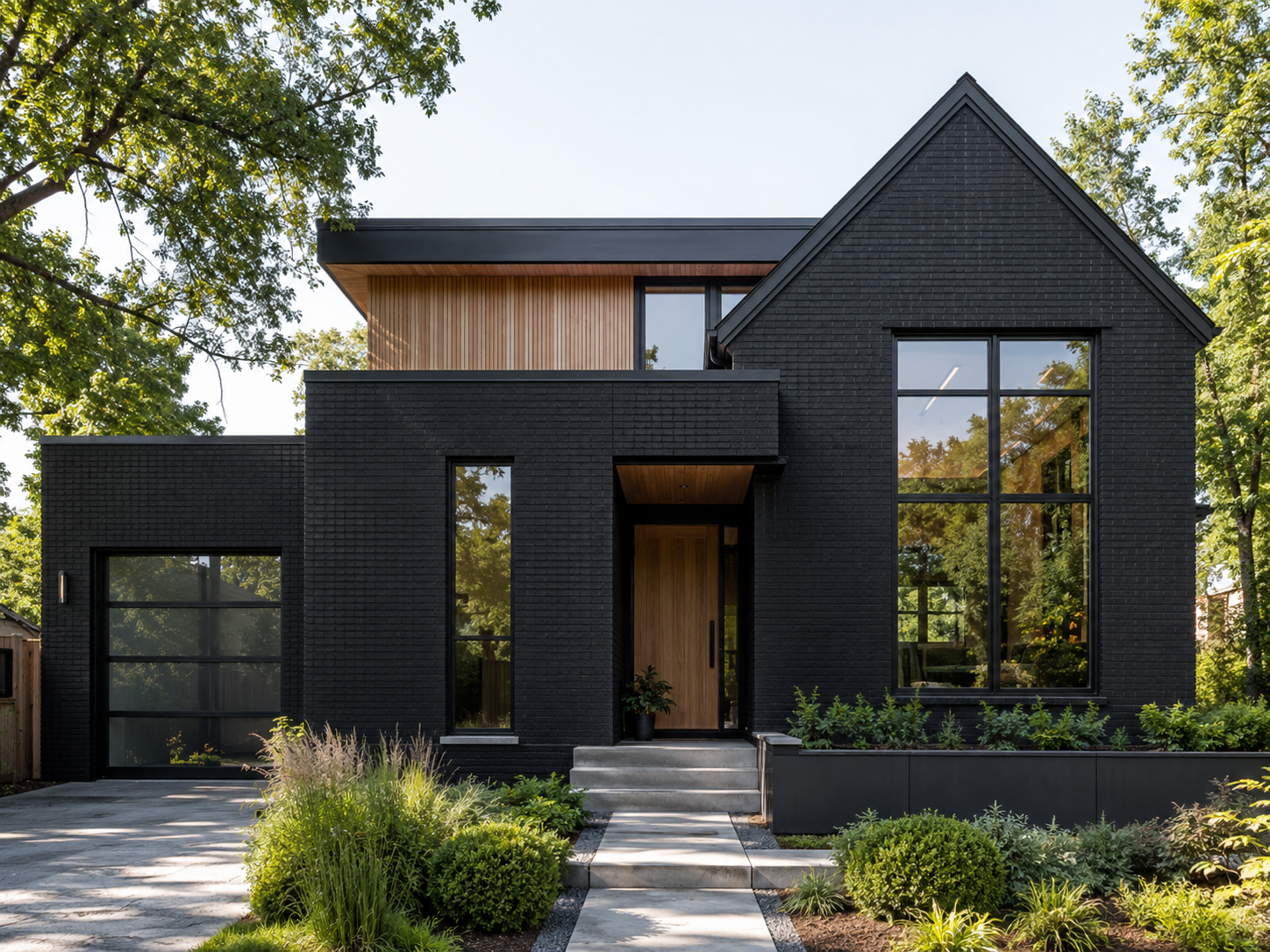
A colour palette can dramatically change how a home’s architecture is perceived. For a balanced result with lasting appeal, consider these popular Canadian exterior design choices.
Off-white: Popular in modern farmhouse designs, off-white can brighten façades shaded by mature trees and create a strong contrast with charcoal-black windows.
Lime finish: Some homeowners choose a masonry-compatible limewash or lime paint to achieve a nuanced mineral appearance.
Charcoal or mineral grey: A popular choice for updating a bungalow, these neutral tones complement green landscapes and pair well with natural wood elements such as soffits and porch posts.
Dark accents or matte black: Used on one brick section or across an entire façade, black can emphasize the architectural lines of an urban home.
Check Municipal and Heritage Requirements
Before purchasing paint, contact your community's planning or building department. Properties located in heritage districts, covered by architectural design controls, or protected under provincial, territorial, or federal heritage legislation may require approval before exterior changes are made.
In some areas, painting previously unpainted brick may require a building permit, development permit, heritage approval, or authorization of the proposed colour and finish. Requirements vary by community, neighbourhood, and property status, so confirm the applicable process before starting the work.
Surface Preparation: The Key to a Lasting Finish
Source: RenoQuotes
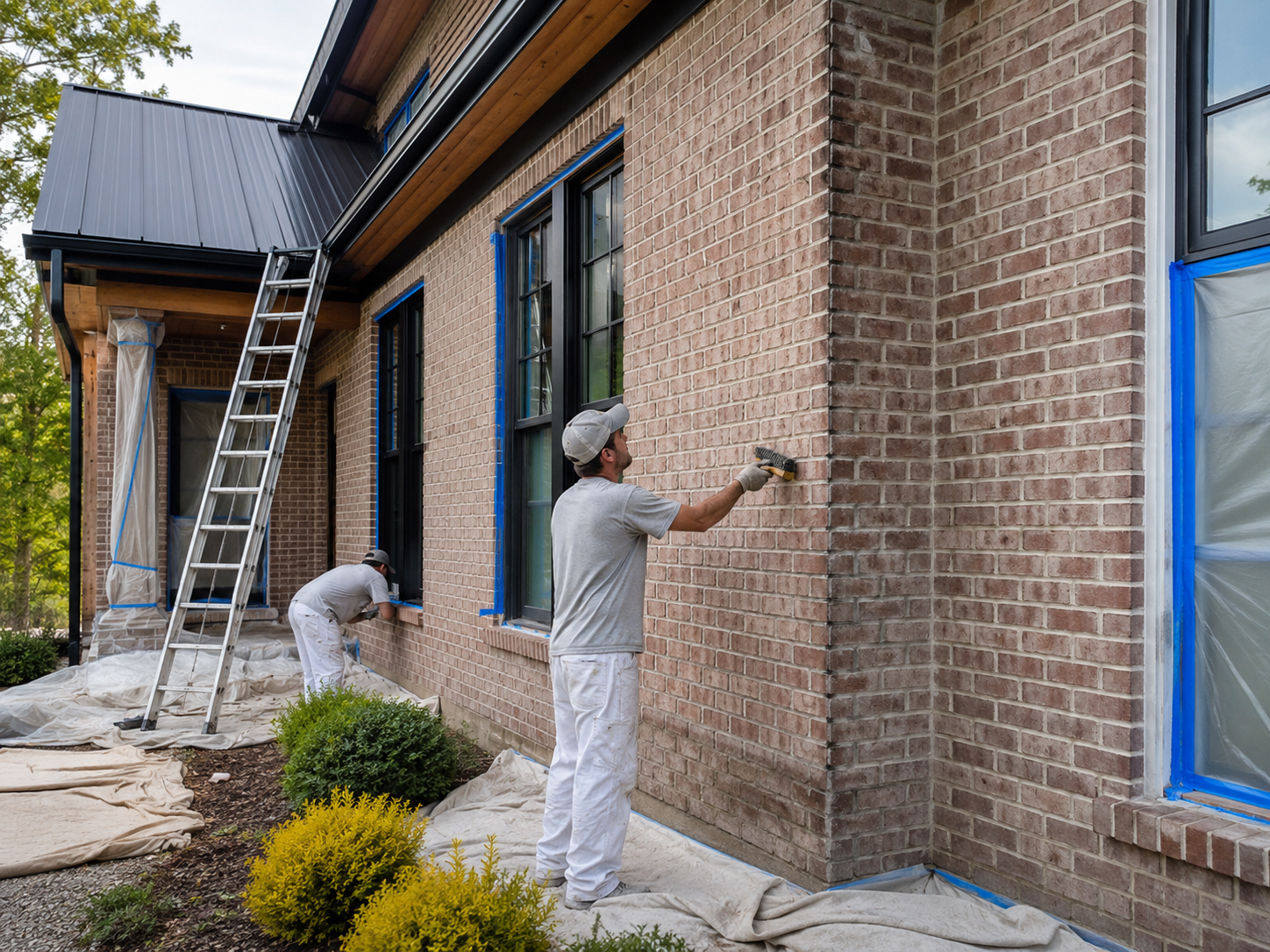
Even high-quality silicate paint may develop adhesion or durability problems if the surface is not prepared properly. Proper masonry preparation is essential to the coating’s adhesion, uniformity, and service life.
Step 1: Repoint Deteriorated Mortar Joints
Inspect the walls carefully before applying any coating. If the mortar is crumbling, recessed, or powdery, the joints should be repointed.
New mortar must cure sufficiently before it is coated. The required waiting period varies according to the mortar, weather conditions, and coating system. Follow the paint manufacturer’s instructions, which may require a curing period of approximately 28 days. The compatibility of silicate paint with recently applied mortar should also be confirmed in the product’s technical data sheet.
Step 2: Clean the Masonry
Brick can accumulate dust, soot, pollen, mould, efflorescence, and other contaminants. The surface must be cleaned before coating. The cleaning method should be selected according to the condition of the brick and mortar. Low-pressure washing may be appropriate in some cases, while fragile or historic masonry may require a gentler method.
Step 3: Confirm That the Masonry Is Dry Enough
The masonry must reach the moisture level specified by the coating manufacturer before painting. Drying time depends on temperature, relative humidity, wall orientation, sunlight, and the masonry's absorption rate. It cannot be set universally at 48 or 72 hours. Applying a coating to masonry that is too damp can reduce adhesion, cause blistering, or slow the wall’s drying. Check the product’s technical data sheet for the acceptable moisture level.
Hire a Properly Licensed or Qualified Contractor
Source: RenoQuotes
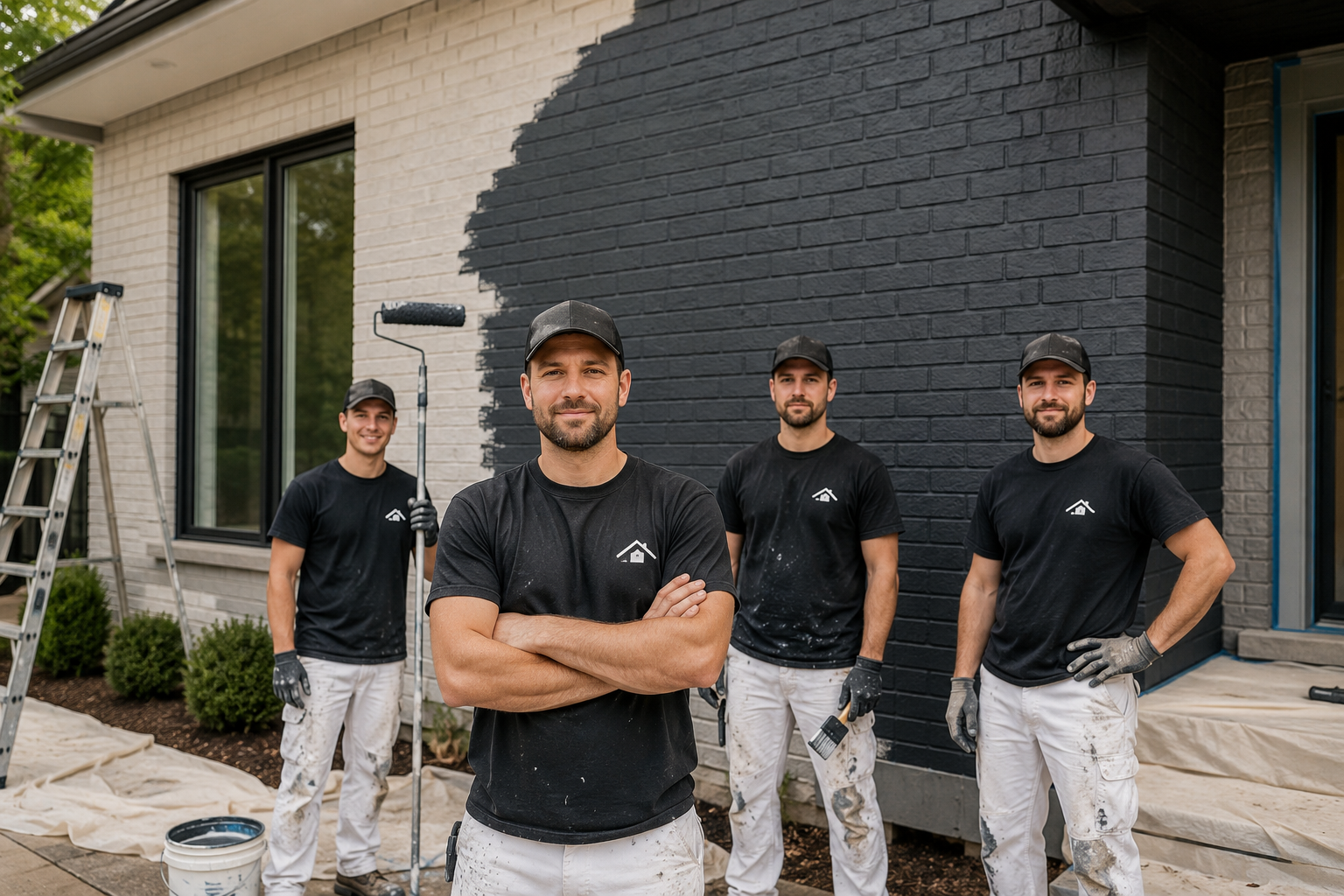
Painting a complete brick façade may require secure scaffolding, specialized rollers, or an airless paint sprayer, depending on the product and building configuration. Applying mineral paint before rain, to an overheated surface, or outside the recommended temperature range can interfere with drying and silicification.
To reduce the risk of coating failure and comply with product warranty conditions, have the masonry assessed and consider hiring an experienced contractor for the prep work and application. Also verify whether painting previously unpainted brick could affect an existing brick or building warranty.
Before awarding the contract, request proof of valid commercial general liability insurance. Depending on the province, territory, municipality, and scope of work, the contractor may also need a provincial trade certification, business licence, contractor licence (RBQ in Quebec), or municipal permit. Verify the requirements that apply in your jurisdiction.
To begin planning your exterior renovation, request painting quotes and compare qualified contractors serving your area.
Update Your Brick Façade Without Compromising Durability
Updating a brick façade can significantly improve a home’s curb appeal and, depending on the quality of the work and local market preferences, contribute to its perceived value. By selecting a coating that is compatible with masonry and sufficiently vapour-permeable, such as certain mineral silicate paints or penetrating stains, you can modernize the façade while supporting its ability to dry.
Before starting the project:
Confirm municipal planning, permit, and heritage requirements.
Repair deteriorated bricks and mortar joints before applying the coating.
Hire an experienced contractor who meets the licensing, insurance, and qualification requirements applicable in your province, territory, and municipality.
Looking for something else?
Related articles
The latest industry news, interviews, technologies, and resources.
Cynthia Pigeon
•28 Apr 2026
Have you detected the presence of lead paint in your home? As you might already know, this matter can be hazardous to your health and that of your family.

Editorial Team
•22 May 2024
Painting glass isn’t limited to a fun, weekend activity for your kids. It’s also a unique and creative way to personalize and shield your home windows. Whether you decide to use Vitrail paint for an artistic-looking result, or acrylic paint that surprisingly holds rather well on glass, there are a plethora of ways to transform your home’s exterior. Join us in uncovering the colourful world of window paint.
Editorial Team
•10 Sep 2026
Most people know about acrylic paint and acrylic mediums or have heard of water-based paints. However, few actually know what acrylic pigments actually entail. As a matter of fact, when undertaking a renovation project, we often find ourselves faced with obscure terms that are hard to grasp at first.
Cynthia Pigeon
•08 Nov 2023
Did you know that windows and glass doors are majorly responsible for heat loss in homes? Therefore, energy efficiency is a determining factor when it comes to changing your windows to maximize energy savings.

Cynthia Pigeon
•05 Dec 2025
Replacing the windows in your home can be quite an expensive project! And that is reason enough to be somewhat cautious when choosing a particular model or material.