How Much Does Brick Repointing Cost?
By Léa Plourde-Archer
Updated on November 8, 2023

Brick is a building material that's been used for hundreds, if not thousands, of years. In terms of sustainability, it has proven its worth. It is a very clever system used for structures and exterior cladding. Brick is made to withstand different climates and is suited to both modern aesthetics and more classic looks. In other words, basic brick work has a very long service life, spanning decades and even more!
However, there comes a time when the mortar joint that acts as a sealer between the bricks has to be repaired or replaced with new mortar. Several factors come into play here, and in this article, we will highlight the main causes of brick joint problems, the experts to hire to remedy such issues, and the approximate cost to budget for new mortar.
What causes brick mortar issues?
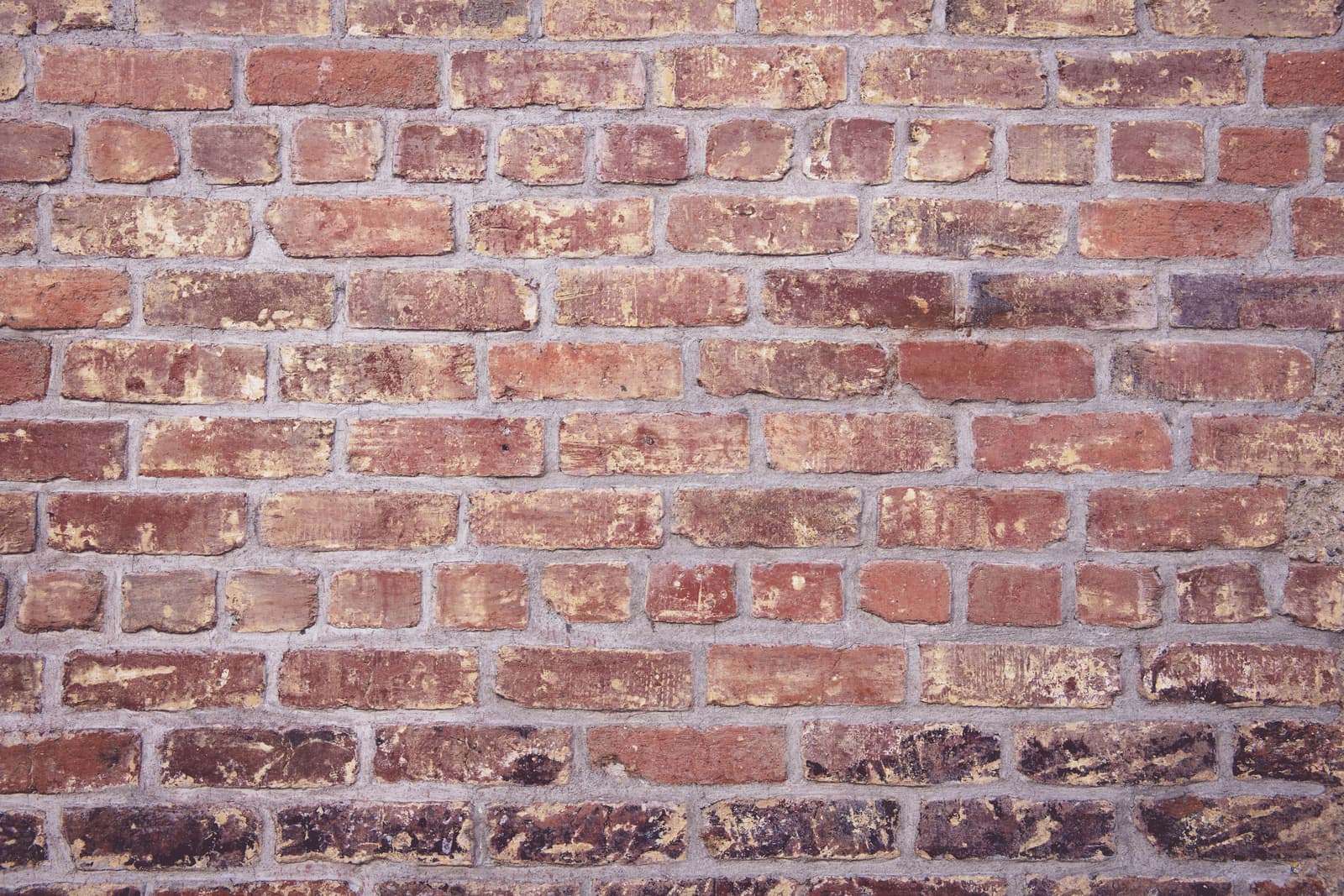
First, know that mortar brick joint problems are one of the 6 most common issues with masonry.
The main causes of mortar issues are as follows:
Use of poor quality mortar or the wrong type of mortar;
Weather conditions can affect the integrity of the product;
Incorrect product application (too much or not enough);
Lack of water drainage can cause other problems like bulging brick walls;
Other problems that lead to cracks in bricks and mortar (to be determined with the mason).
Before we delve into the telltale signs of mortar issues and total project costs, let's take a look at the difference between brick repointing and tuckpointing, which can be confusing.
Is it wise to wait a bit before having the mortar repaired?
Ideally, it is best to act as quickly as possible when you notice that the brick mortar joints on an exterior wall are damaged. Indeed, if what is commonly referred to as the bricks' seals are not in good condition, you run the risk of aggravating the situation. Eventually, it will no longer be a repointing job, but a bulging brick wall repair project caused by water leaks, cracks, structural problems, and so on.
Moreover, if there are holes between your bricks, it's like opening a door for critters! Your exterior walls will no longer be as impermeable for water, but also for insects and other critters that we prefer to keep outside.
Therefore, if you notice that some joints are in need of repair, it is best to at least have them evaluated by an expert. They can tell you if you need to carry out the repairs as soon as possible or if it can wait a few months.
Repointing vs tuckpointing: What's the difference and which is cheaper?
Brick repointing and tuckpointing are both methods that are commonly used to repair or restore brickwork mortar joints. However, the two differ in their techniques and, ultimately, the objective of the repair. Meaning, the costs are rather competitive and shopping around for the right professional for the job is worthwhile. Note that some companies may offer free estimates.
When repointing brickwork, said task involves removing the damaged or deteriorating mortar from between the bricks and replacing it with fresh, new mortar. As such, the brickwork will be strengthened, thus making the structural aspect of the chimney, cladding, retaining wall, whatever it may be, more structurally sound, durable, and let's face it, more beautiful! The reason why repointing is a home, chimney crown, or older bricks is that the new mortar will act as a brand-new seal, thereby preventing structural damage down the line.
As for brick tuckpointing, this is a rather more complex, specialized technique, one that isn't always used to repair structural damage, but rather for aesthetic purposes. And, since homeowners will mainly employ said technique to enhance the beauty of a brick wall or other, costs are steeper than repointing.
Tuckpointing is the action of creating what appears to be thinner and neater mortar brick joints. Basically, this means that two types of mortars will be used: one with a colour that is very similar to that of the bricks, and a second one that's layered using a narrow pointing trowel. By using two different colours of mortar, the final result gives off the effect of fine joint lines, rather than thick mortar between the brickwork.
It goes without saying but, the latter is a more time-consuming and expensive process, while the former is very much used to repair deteriorating mortar joints. Oftentimes, aside from labour costs, material costs significantly increase the overall price.
What type of expert should you hire to point brick work?
For projects involving brickwork, always call in masonry experts! If you reside in Quebec, make sure the contractor you are dealing with has the right RBQ licence, with the relevant subclasses, including a 4.1 licence (masonry structures contractor). As for other provinces, check with your local authorities to know what type of licence the professionals will need to operate legally.
If you use the services of RenoQuotes.com, know that for all our network contractors, licences have been verified to ensure they are indeed valid.
Masonry is an expertise in itself. You have to know the techniques to employ and the products to use in order to make the best choices so that the result is durable and safe. Therefore, for a mortar joint project, it is often better to entrust the task to a specialist rather than a contractor with less experience in the matter. Also, high-quality results are further guaranteed that way.
In a previous article, we detailed the stages for repairing brick joints. If you want to get an idea of what this is all about, feel free to peruse our article prior to reaching out to contractors!
How much does it cost to repoint a brick wall in Canada?
At last, the long-awaited question that most likely drew you to this article! We consulted several masonry experts who are part of our network and they stated that this type of project entails costs ranging between $14 and $20 per square foot. To get a general idea of the costs involved, you can try measuring the area in question and multiplying accordingly.
Check out our article Price Guide: Masonry Work and Bricklaying to learn more about the average cost for other work.
How often should a brick wall or chimney be repointed?
As you've probably noticed, this article, first and foremost, addresses brick work located outside of a home. Obviously, indoor brick wall joints also need to be repointed. This is especially true if the brick wall is located in a humidity-prone area such as a bathroom or kitchen.
In a living room or bedroom, repointing can be less immediate, but you should still seek the advice of an expert because it is impossible to assess all this without being knowledgeable on the subject and you should especially not trust some vague telltale signs that you may have heard somewhere and then base your diagnosis on it.
Get 3 renovation quotes from masonry contractors
RenoQuotes.com can help you get quotes from qualified masons. If you submit your project to us, we’ll put you in contact with the best masons in our contractor network. Fill in the form on (it only takes a few minutes), and you will receive quotes from qualified masons and home renovation companies.
Dial 1-844 828-1588 to speak with one of our customer service representatives.
Looking for something else?
Related articles
The latest industry news, interviews, technologies, and resources.
Léa Plourde-Archer
•30 Oct 2026
Looking to have floating flooring installed to refresh your home without undertaking major renovations? Affordable, versatile, and relatively easy to install, this type of flooring is an excellent option for many home renovation projects.
Editorial Team
•12 May 2025
Crown moulding has been a decorative staple dating as far back as ancient Greece. This is likely due to the fact that they understood how much it can help liven up a space. The name refers to a family of mouldings which are aesthetically designed to shape and accentuate the top edge where the ceiling meets the wall.

Cynthia Pigeon
•08 Nov 2023
Quebec’s weather can really put a damper on the integrity of homes, and at times, it may appear as though the walls of your home are “sweating”. However, this phenomenon can also be indicative of a larger problem.

Léa Plourde-Archer
•28 Aug 2024
Cherrywood, also known as yellow birch, is a light wood species known to be uniform in terms of tone, without being completely homogeneous. Its colour varies from pale white to dark brown and has more golden hues than oak or maple, for example.

Editorial Team
•23 Jul 2024
When it comes to large-scale renovations, there is plenty of potential to build in a way that enriches the lives of your family and loved ones. Of course, not everyone is well-versed in the inner workings of home renovation. If the project is too big to tackle as a DIY job, you might be considering who you can hire to help things run as smoothly as possible. Working with an engineer will offer a way to avoid mishaps and make sure that the structure of your home isn't compromised.