CanExel vs Vinyl Siding: Which Exterior Siding Should You Choose?
By Léa Plourde-Archer
Updated on September 10, 2026
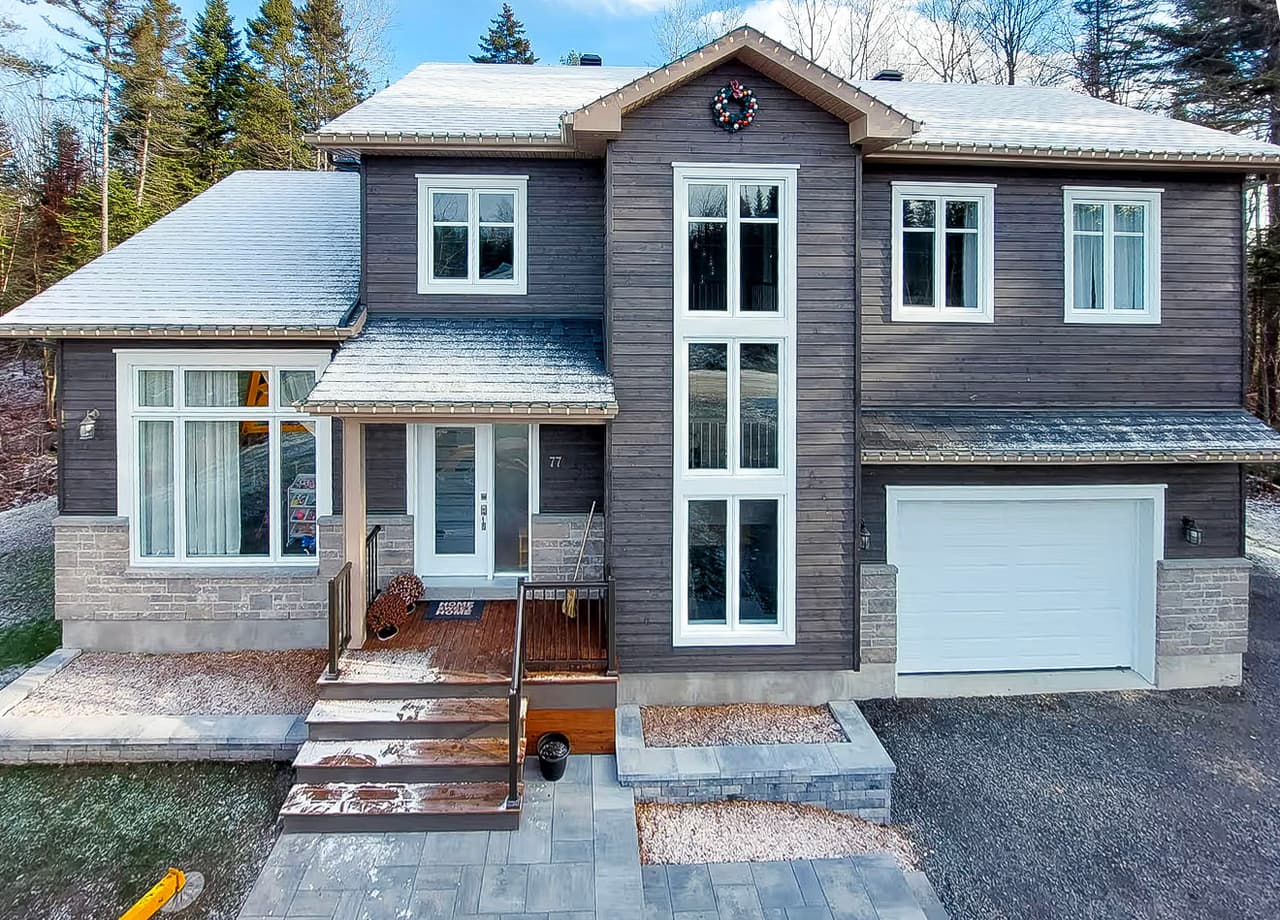
Replacing the exterior siding of a house in Canada is a major project that raises just as many aesthetic as technical questions. Across the country, Canadians live in some of the most demanding climates in the world for building materials. Between humid and scorching summers, autumn winds, and winters where the temperature can drop below -30°C, our home facades are subjected to constant stress.
Two materials dominate the residential renovation market: vinyl (PVC) and CanExel (engineered wood). While the former was long shunned for its "plastic" appearance, manufacturers have reworked it to give it a more natural look. The latter, a true flagship product of Canadian industry, has become the benchmark for the authentic character it lends to buildings.
In this comprehensive guide, we will compare these two types of exterior siding in all their aspects: price, installation, thermal performance, durability, and impact on your property value.
Vinyl siding: the undisputed champion of exterior siding
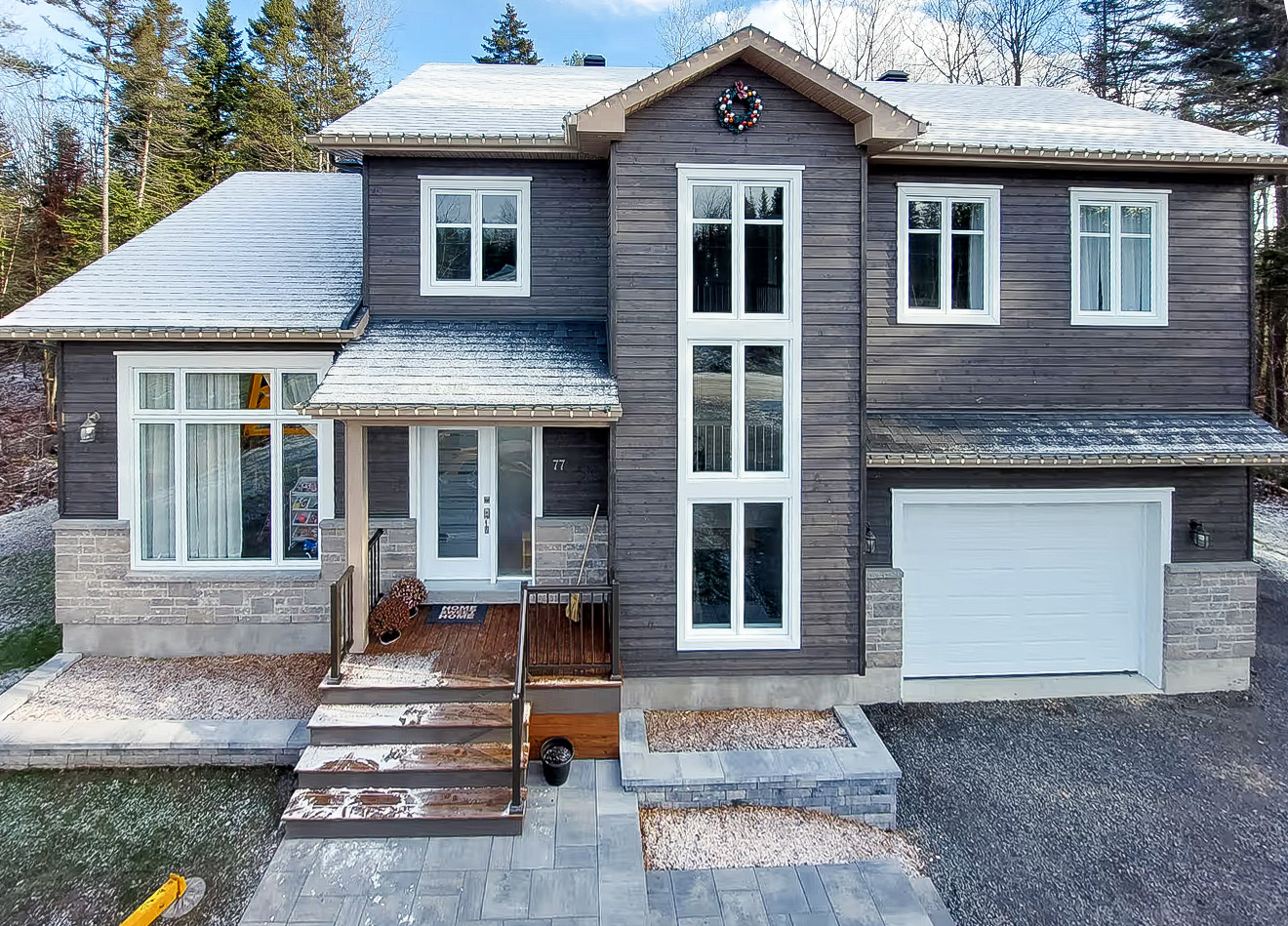
Source : Signature Lefort Construction inc.
Vinyl siding is present on a majority of single-family homes in Canada. This is no coincidence. It's a product that has evolved dramatically since the 1960s.
What is modern vinyl siding?
Vinyl is made from polyvinyl chloride (PVC). Unlike older versions that faded under UV rays within a few years, today's vinyl incorporates color stabilizers and heat-protecting agents.
The pros of vinyl
The purchase price: this is the number one selling point. For a homeowner looking to renovate on a budget or for a first-time buyer, vinyl siding offers protection for a fraction of the cost of other materials.
Minimal maintenance: vinyl requires no painting, staining, or sealing. An annual wash with soapy water is all it takes to remove dust and pollution.
Quick installation: Being lightweight and flexible, it installs quickly, reducing labour costs.
Waterproof: PVC is impervious to water. It will never rot, regardless of exposure to rain or snow.
Weaknesses (The realities of the Canadian climate)
Vinyl has its limitations, especially during our harsh winters.
Fragile in cold weather: In extreme cold, PVC becomes rigid and brittle. An accidental blow from a snowblower or shovel can cause a panel to crack.
Thermal expansion: Vinyl expands and contracts significantly. Between summer and winter, a panel can expand or contract by more than half an inch. If the installer nails it too tightly, the panel will warp.
Heat sensitivity: A barbecue placed too close to the house can melt the siding in a matter of minutes.
CanExel: the elegance and robustness of engineered wood
CanExel is a trademark that belonged to LP Building Solutions but was acquired by Maibec in 2020. In parts of Canada, the term is used to refer to any compressed wood fiber siding. It's the preferred choice for those who want the look of wood without the drawbacks of natural wood.
Manufacturing: Cutting-edge technology
CanExel is made of wood fibers, resin, and wax, compressed under high pressure. It is then coated with a baked acrylic paint. This process creates an extremely dense and durable board.
Why Canadians love CanExel
Visual prestige: The wood grain is perfectly imitated, giving any property a warm and upscale look.
Impact resistance: Unlike vinyl, CanExel is durable. It withstands children's hockey pucks, hail, and minor impacts.
Wide range of colors: CanExel offers rich, deep hues that resist fading from sunlight better than entry-level vinyl siding.
Resale value: A home clad in CanExel typically sells for more money and more quickly. This is a sign of quality perceived by potential buyers.
The challenges of CanExel
Moisture: Although very durable, it is still a wood-based product. If the paint chips and water penetrates the wood fibers, the board can swell and deteriorate.
Delayed maintenance: After 15 or 20 years, the color may fade. Repainting with a specialized paint will then be necessary.
Price: It's a substantial investment that can double the total cost compared to vinyl.
CanExel House Siding: Colour Options
Direct comparison of vinyl vs. CanExel: performance and durability
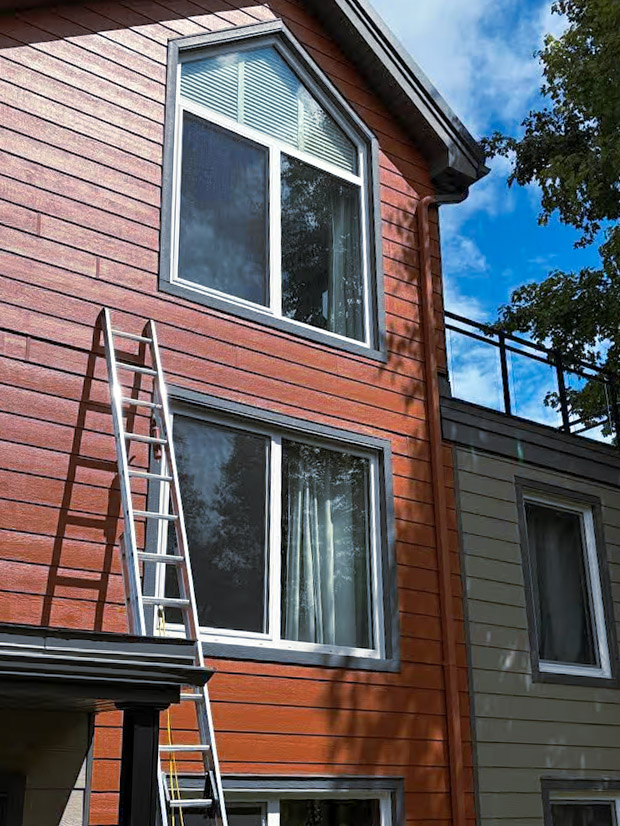
Source : Coreva inc.
To make the right choice, you have to look beyond appearances. Let's analyze the technical criteria that matter for a house in Canada.
Wind and weather resistance
In windy parts of Canada such as Southern Alberta, Newfoundland, Vancouver island and Gaspésie, wind resistance is crucial.
Standard vinyl siding can tear in extreme winds if it doesn't have a reinforced nailing hem.
CanExel siding is much heavier and more rigid. Once installed, it stays put. Its wind resistance is significantly superior.
Insulation and energy efficiency
It is important to clarify that the exterior cladding is not the primary insulation of the house. That role is played by the insulating material inside the walls. However:
Insulated vinyl (with a polystyrene foam backing) is available and can add an R-value of 2.0 to 3.0 to your walls, thus eliminating thermal bridges.
CanExel, due to its natural density, offers a slightly more effective barrier than hollow vinyl, but it is not considered a thermal insulator in itself.
Adding a rigid insulating panel under the new cladding is an excellent strategy for saving on power bills.
Life cycle and environment
The environmental impact of each of the two materials is hard to compare, as they are very different. Vinyl is a petroleum-based product that is difficult to recycle, but it is long-lasting. CanExel uses wood fibers (often from reclaimed wood), which is more environmentally friendly, but its production requires chemical resins and a significant amount of energy for curing.
If environmental considerations are a priority, here is an article on the most interesting flooring options:
Eco-Friendly Exterior Siding: Sustainable Materials
Vinyl and CanExel Siding: 2025-2026 Price Guide in Canada
Budget is often the deciding factor. The prices below include materials, weatherproofing membrane, wood slats (furring strips), and labour.
Material | Price per sq.ft. (installed) | Cost for a 2000 sq.ft. home |
Entry-level Vinyl | $6 - $8,50 | $12,000 - $17,000 |
High-end Vinyl (thick) | $9 - $15 | $18,000 - $30,000 |
CanExel (standard) | $13 - $20 | $26,000 - $40,000 |
CanExel (special profiles) | $18 - $28 | $36,000 - $56,000 |
Note: These amounts do not include the removal of the old siding (stripping), which can add between $2,000 and $5,000 depending on the presence of asbestos or heavy materials.
To get a fair price, it is essential to compare several quotes for your exterior siding. A 15% difference is common between two contractors for the same materials.
The crucial importance of installing the exterior cladding
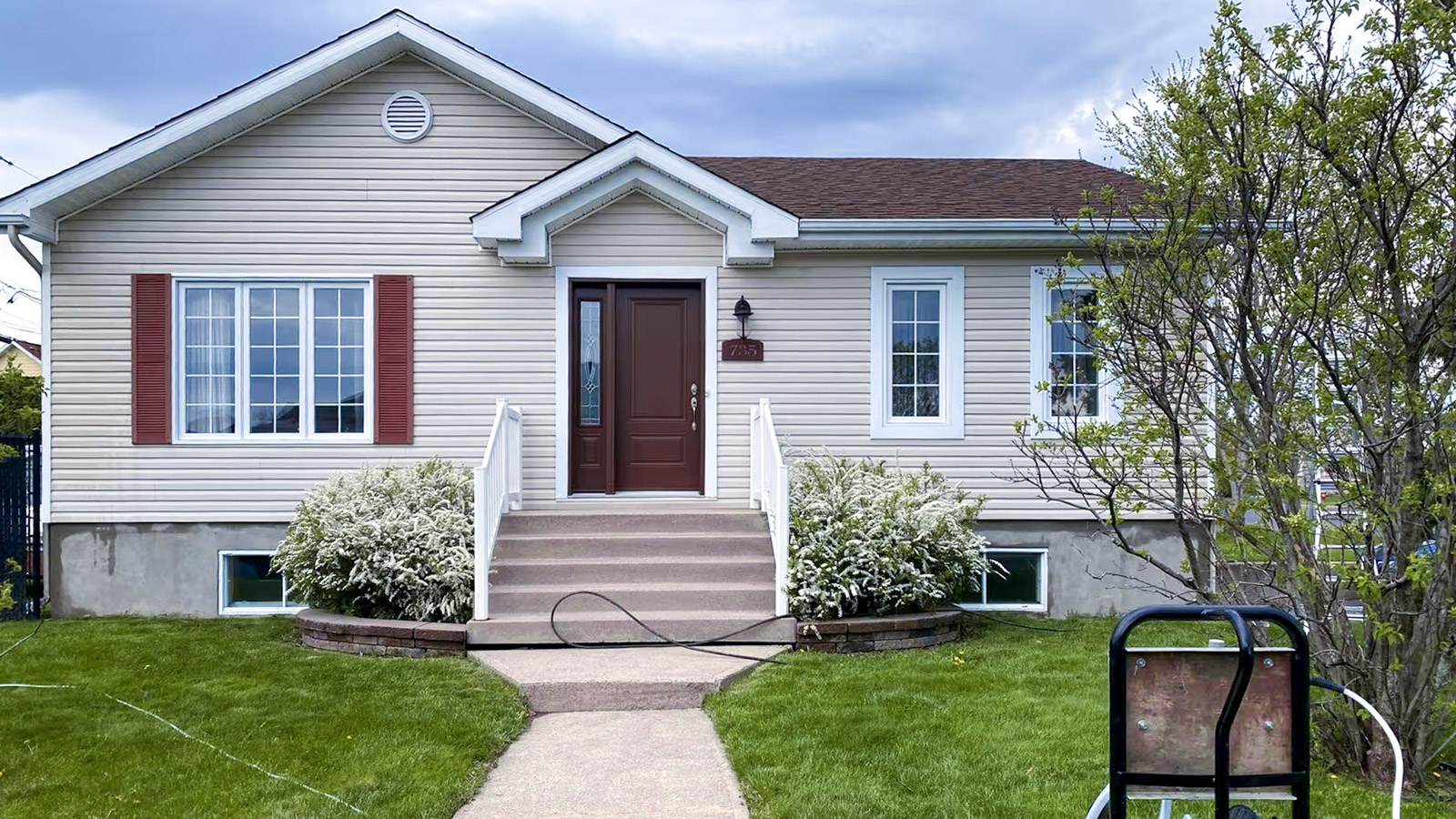
Source : Lavage haute pression AB
Even the best material in the world will fail if it is improperly installed.
Moisture management: wall furring
Regardless of your choice of material, the installation must include an air gap between the wall and the siding. This is called a vapour barrier. The wood slats (furring strips) allow moisture to escape. Without this gap, condensation can accumulate, rot your wood studs, and encourage the growth of toxic mould.
Common mistakes with vinyl siding
The most common mistake is nailing the vinyl too tightly. The panel should be able to slide from side to side. If you hear clicking or cracking sounds when the sun shines on your house, your vinyl is too tight. Over time, this can cause permanent rippling.
Common mistakes with CanExel
The weak point of CanExel is its cutting. Every time an installer cuts a board to fit around a window, they expose the inner wood fibers. It is essential to apply a touch-up paint (supplied by the manufacturer) to each cut. If this step is skipped, the board will absorb water and swell like a sponge in less than two years.
Read this article about installing vinyl siding:
Aesthetics and trends in exterior cladding in Canada
The look of your home influences not only your daily enjoyment, but also the value of the neighbourhood.
Mixing materials
The current trend across the country is mixing and matching siding. CanExel siding is often used for the main facade to maximize curb appeal, while vinyl siding is used for the sides and back of the house to reduce costs. For this to work well, complementary colors and similar profiles must be chosen.
Popular colours
No more beige houses! Canadians are now embracing darker, more modern shades:
Anthracite gray and black: Very popular for contemporary-style homes.
Midnight blue and forest green: For a classic look that blends well with nature.
Pure white with black accents: The "modern farmhouse" style that dominates new construction.r.
Note: Dark colors absorb more heat. Make sure the material you choose (especially vinyl) is designed to withstand this heat absorption without warping.
To help you choose :
10 Exterior Cladding Examples to Revamp Your Home’s Look
Maintenance and longevity : what to expect
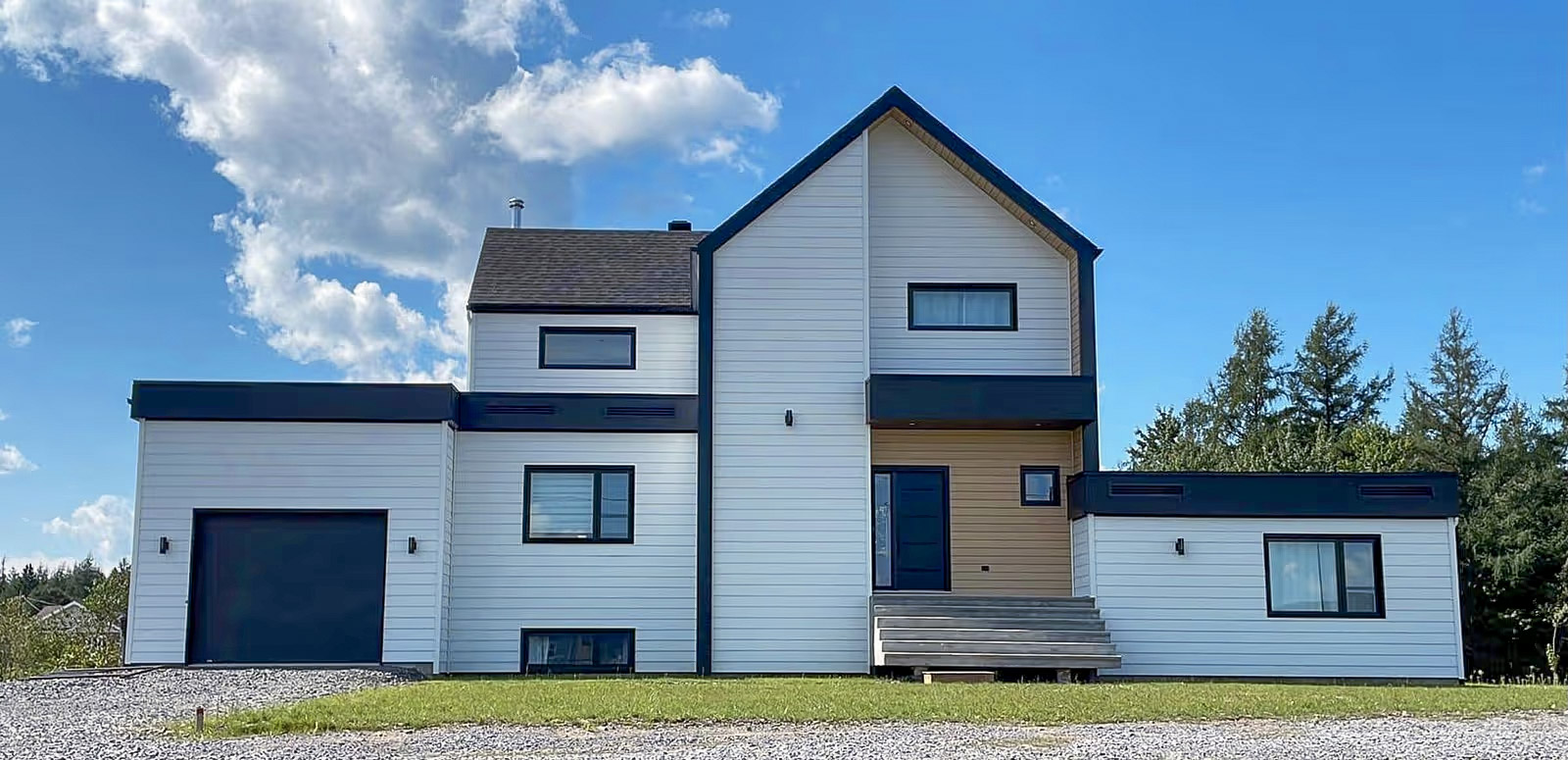
Source : Construction Rénovation RB inc.
True lifespan
Vinyl: Expect a lifespan of 20 to 40 years. After this time period, the plastic becomes too porous and brittle. The color may fade unevenly depending on sun exposure.
CanExel: With proper care, it can last 40 years or more. The board's structure is extremely durable; it's the topcoat that determines its aesthetic longevity.
How to maintain exterior cladding?
Washing: Use a regular garden hose. Avoid high-pressure washers that can force water behind the joints and wet the insulation.
Caulking: This is the most important element. Check the seals around windows and doors every fall. If the sealant is cracked, replace it. A failing sealant is the number one entry point for water leaks, regardless of the siding.
Vegetation: Do not allow plants or vines to climb directly onto CanExel. This traps moisture against the wood and accelerates its deterioration.
How to Clean Exterior Siding: Tips for Each Type
Legal aspects and municipal regulations concerning exterior cladding.
Before ordering your materials, you must contact your local authorities.
In Canada, each municipality has its own rules and regulations with respect to exterior renovations. Some cities prohibit vinyl siding on facades or impose specific colours to respect the historical harmony of the area. Within cities, this can even vary from one neighbourhood to another.
For example :
In Montreal's Plateau-Mont-Royal neighbourhood, regulations regarding authentic building materials can be very strict.
In new developments in Toronto or Calgary, a minimum percentage of masonry or engineered wood is often required.
If you do not comply with these municipal regulations, you could be required to remove the siding at your own expense. A renovation permit is always required before starting any work.
Why use a certified professional for the installation of exterior cladding?
It may be tempting to hire a "handyman" to install your vinyl, but for a project of this scale, the risks are high.
Contractor’s licence: a licensed contractor has surety bonds that protect you in case of shoddy workmanship or abandonment of the job site.
Liability Insurance: If a worker falls off a ladder or a tool damages a neighbor's house, you don't want to be held responsible.
Manufacturer's Warranty: Manufacturers like LP (CanExel) or Gentek (Vinyl) may refuse to honor their warranty if the product was not installed according to their specific technical guides.
To find a reliable expert, you can consult our specialized platform which filters exterior cladding contractors based on their background and certifications.
Conclusion: the final verdict between vinyl and CanExel
So, vinyl or CanExel?
Vinyl is for you if:
Your top priority is staying within a tight budget.
You never want to pick up a paintbrush again.
You're renovating a rental property or a vacation home where the "prestige" aspect is secondary.
CanExel is for you if:
You want to radically transform the look of your home.
You're looking for a robust material that can withstand the rigours of family life.
You see your home as an investment and want to maximize its value in the Canadian real estate market.
Whatever your choice, remember that the quality of the accessories (mouldings, soffits, fascias) and the workmanship will make all the difference. A well-sealed and well-ventilated house is a house that will remain healthy for decades to come.
Checklist: exterior cladding renovation guide
Are you ready to take action? Don't leave your home's protection to chance. Consult a renovation expert for personalized advice tailored to your property's architecture.
FAQs on exterior cladding
What are the most popular exterior cladding materials?
Besides vinyl and CanExel, there's also brick, metal, natural wood, stone, SureTouch, and fiber cement. To learn more about other exterior cladding materials, see this article:
Siding Reno—What should you know before buying?
Exterior cladding installation: what time of year should you prioritize?
The best times to install exterior siding are spring and fall, but work can be done in summer. In case of emergency repairs, it may be possible to do it in winter. The answer to this question can vary depending on the material chosen. Talk to your contractor and/or the material manufacturer for more information.
Looking for something else?
Related articles
The latest industry news, interviews, technologies, and resources.

Cynthia Pigeon
•21 May 2026
Considering a change to your exterior siding? CanExel siding is a popular engineered siding choice in Canada, particularly for homeowners seeking the appearance of wood but with less maintenance than traditional cedar.

Editorial Team
•16 Jun 2025
Are you looking to learn more about the different types of interior wall covering materials? There are so many different options available that one can easily feel lost when faced with the idea of choosing one over another. In order to help you find the material that best suits your needs and taste, here is an overview :

Editorial Team
•05 Dec 2025
Is your living room floor showing telltale signs of wear and tear? If it seems faded and scratched in several areas, then it’s about time to replace it. So, here are a few options available to you!

Christine Simard
•08 Nov 2023
Are you one of those people who tend to be nostalgic for past eras and not too fond of modern decors? If polka dots, bright colours and geometric forms are all things you like, maybe it's time to give your home a little retro makeover! Here are some examples that could inspire you!

Amanda Harvey
•08 Nov 2023
When you think about your bathroom, you may not consider it a space with futuristic potential. The possibilities of our world have expanded as a result of technology, and of course, your home is the next logical step when it comes to enhancing your lifestyle.