Carpet Installation Cost in Canada: 2026 Price Guide
By Editorial Team
Updated on September 23, 2026
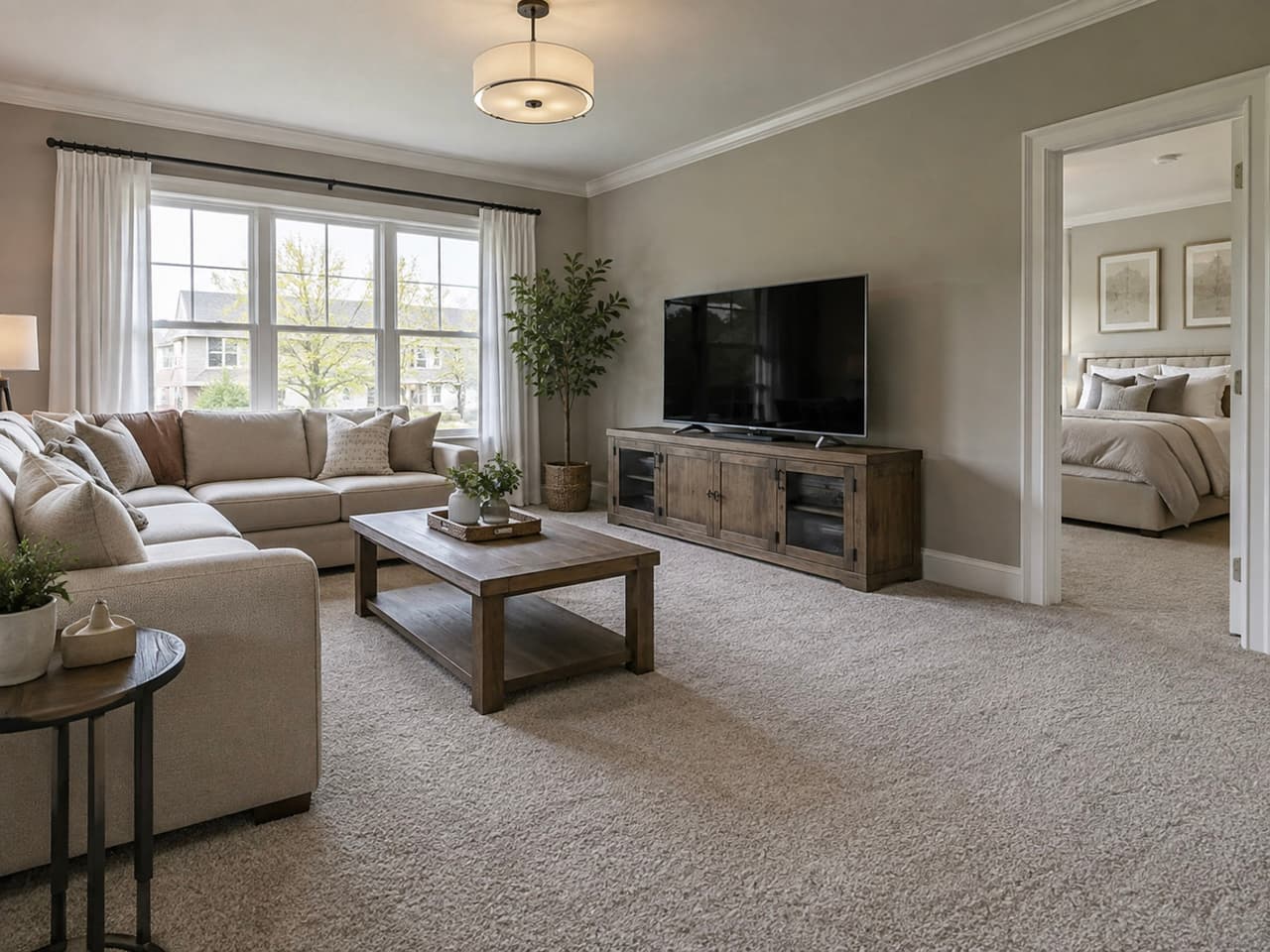
Carpet installation costs $4.50 to $12.50 per square foot installed in Canada, with a national average around $7.25. For a 900 sq. ft. project covering three bedrooms and a hallway, that's roughly $4,000 to $11,000 depending on the carpet grade you choose.
The spread comes from three things: the fibre, the underlay, and what's under the old carpet. This guide breaks the price into its components, gives you real project examples by size, and covers the line items that make two quotes stop matching.
How much does carpet installation cost?
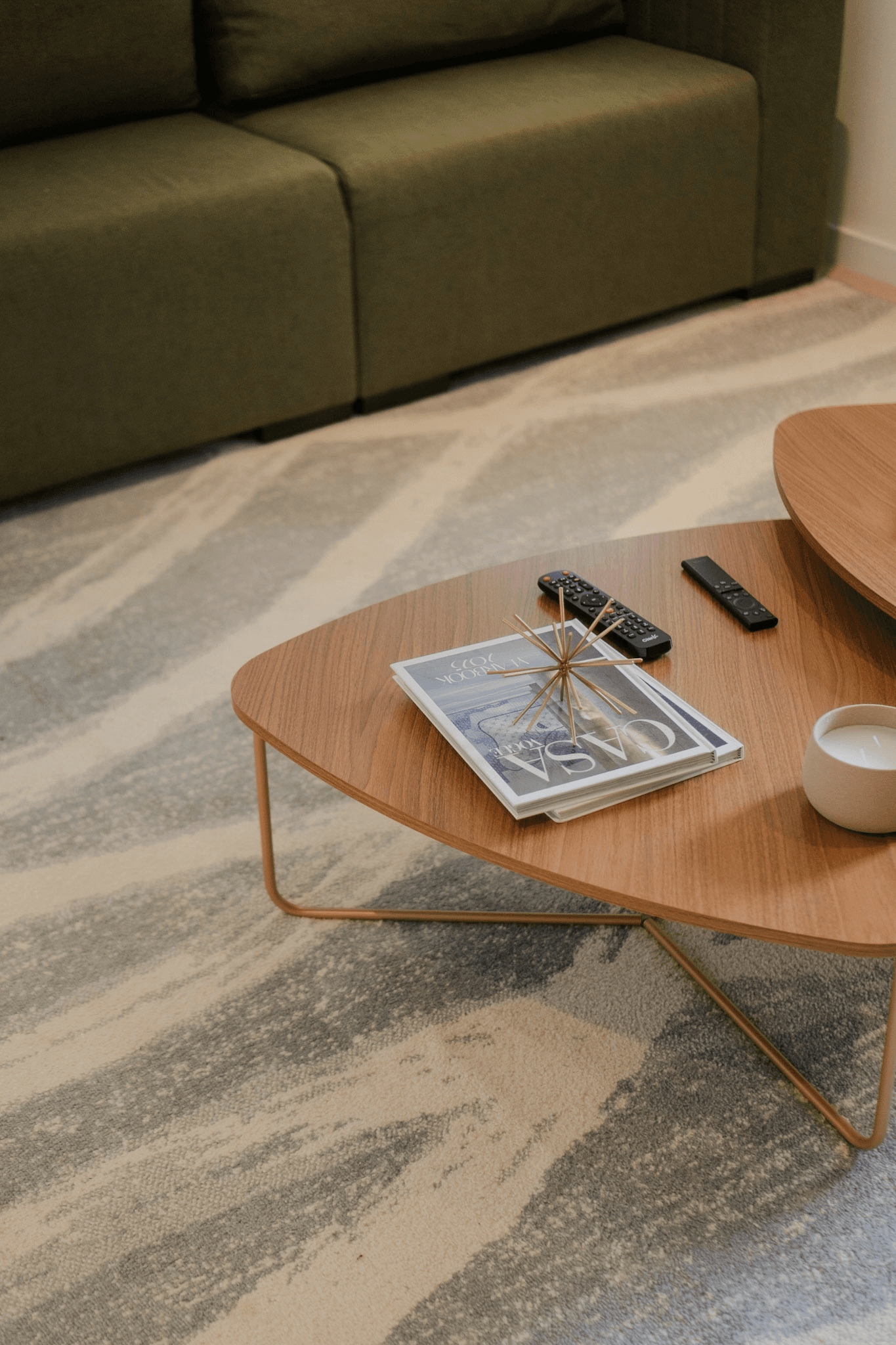
Source: Unsplash
Cost by Budget Tier
Tier | Material | Labour | Total installed |
Budget | $2 to $3 /sq. ft. | $1.50 to $2 | $4 to $5 /sq. ft. |
Mid-range | $3 to $5 /sq. ft. | $2 to $3 | $6 to $8 /sq. ft. |
Premium | $5 to $8+ /sq. ft. | $2.50 to $4 | $8 to $12.50 /sq. ft. |
Budget means polyester carpet over foam padding. It looks good on day one and shows wear in high-traffic areas within a few years. Fine for a guest room, a spare bedroom or a rental.
Mid-range means nylon over standard rubber padding, and it's where most homeowners land. Nylon resists wear, holds colour and bounces back underfoot. At this tier the installation includes power stretching, seam sealing and proper trimming, which is what separates a carpet that lasts a decade from one that ripples in three years.
Premium covers wool, triexta and designer patterns with high-density underlay. Worth it in a primary bedroom or a home where the carpet has to survive children and pets simultaneously.
Cost by Region
Market | Installed cost per sq. ft. |
Toronto and GTA | $5.50 to $13 |
Vancouver and Lower Mainland | $5.50 to $13 |
Calgary | $4 to $12 |
Edmonton | $4 to $11 |
Ottawa | $4 to $10 |
Montreal and Quebec | $4 to $10 |
Smaller markets and rural areas | $3.50 to $9 |
Alberta adds only 5% GST with no provincial sales tax, which makes the all-in number noticeably lower in Calgary and Edmonton than in Ontario at 13% HST or Quebec at roughly 15%. On a $5,000 job that's a $400 to $500 difference before anyone quotes a rate.
Seasonality matters more than most homeowners realize. Canadian installers charge 15% to 25% more during spring and summer. Booking in fall or winter can save $0.50 to $1.25 per square foot.
Cost Breakdown by Component
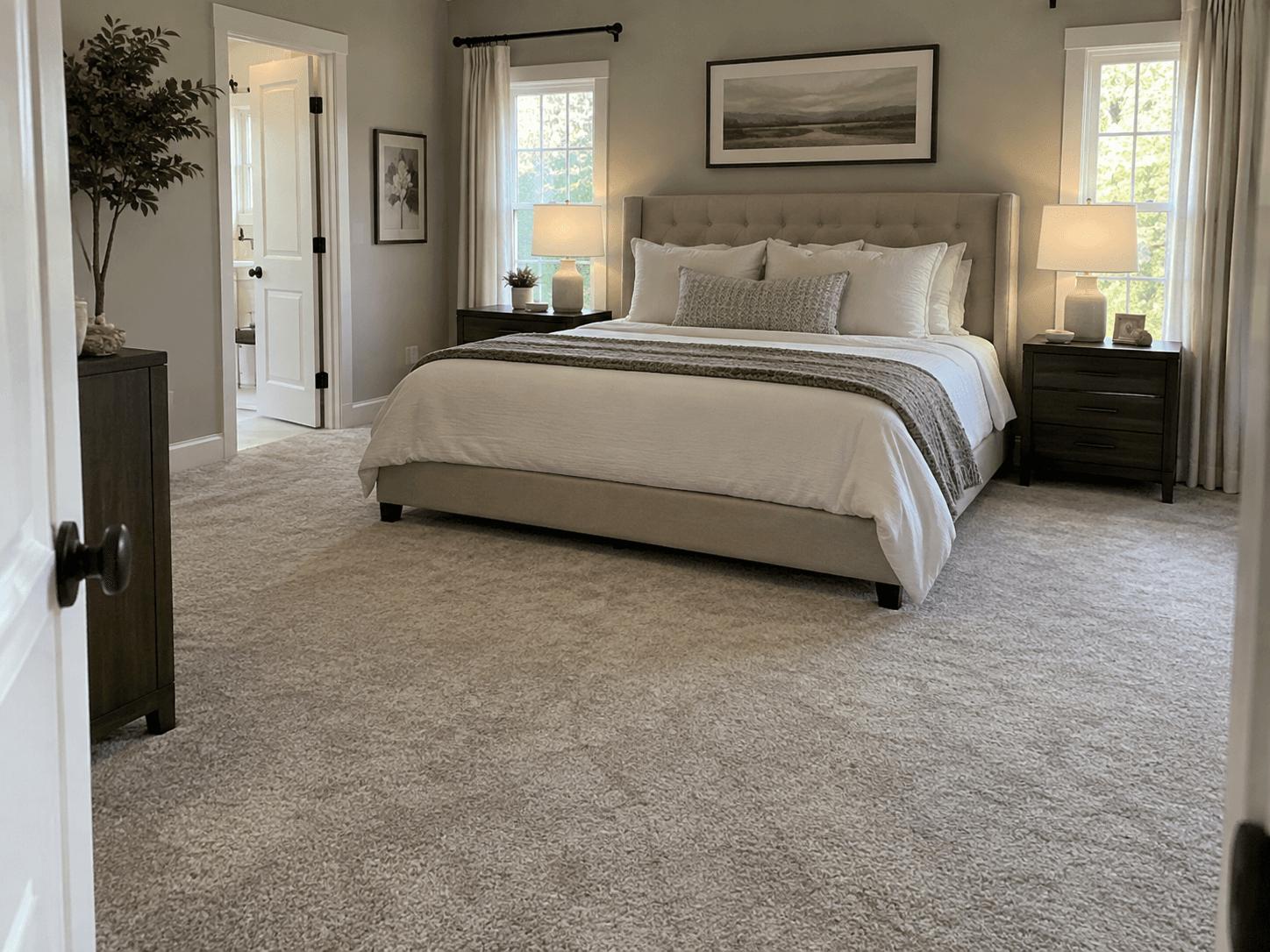
Source: Reno Quotes
This is the table to bring to a quote conversation.
Component | Cost |
Carpet material | $2 to $8 /sq. ft. |
Underlay | $0.50 to $1.50 /sq. ft. |
Installation labour, open areas | $1.25 to $3.50 /sq. ft. |
Installation labour, complex layouts | $4 to $6 /sq. ft. |
Old carpet and pad removal | $0.30 to $0.80 /sq. ft. |
Disposal fee | $100 to $250 per load |
Stairs | $15 to $60 per step |
$1 to $3 /sq. ft. of affected area | |
Moisture barrier on concrete | $0.50 to $1.50 /sq. ft. |
Transitions and trims | $2 to $6 per linear foot |
Door trimming | $25 to $50 per door |
Furniture moving | $50 to $200 flat, or $25 to $75 per room |
Minimum job charge | $400 to $600 |
Taxes | 5% to 15% depending on province |
The minimum job charge catches people out on small projects. Setup, travel and cleanup take the same time whether you're doing one bedroom or four, so a single 120 sq. ft. room often prices against a $400 to $600 floor rather than against square footage.
Door trimming is the line item nobody expects. New carpet and underlay sit higher than what came out, and interior doors frequently need their bottoms trimmed to clear.
Carpet Material and Fibre Types
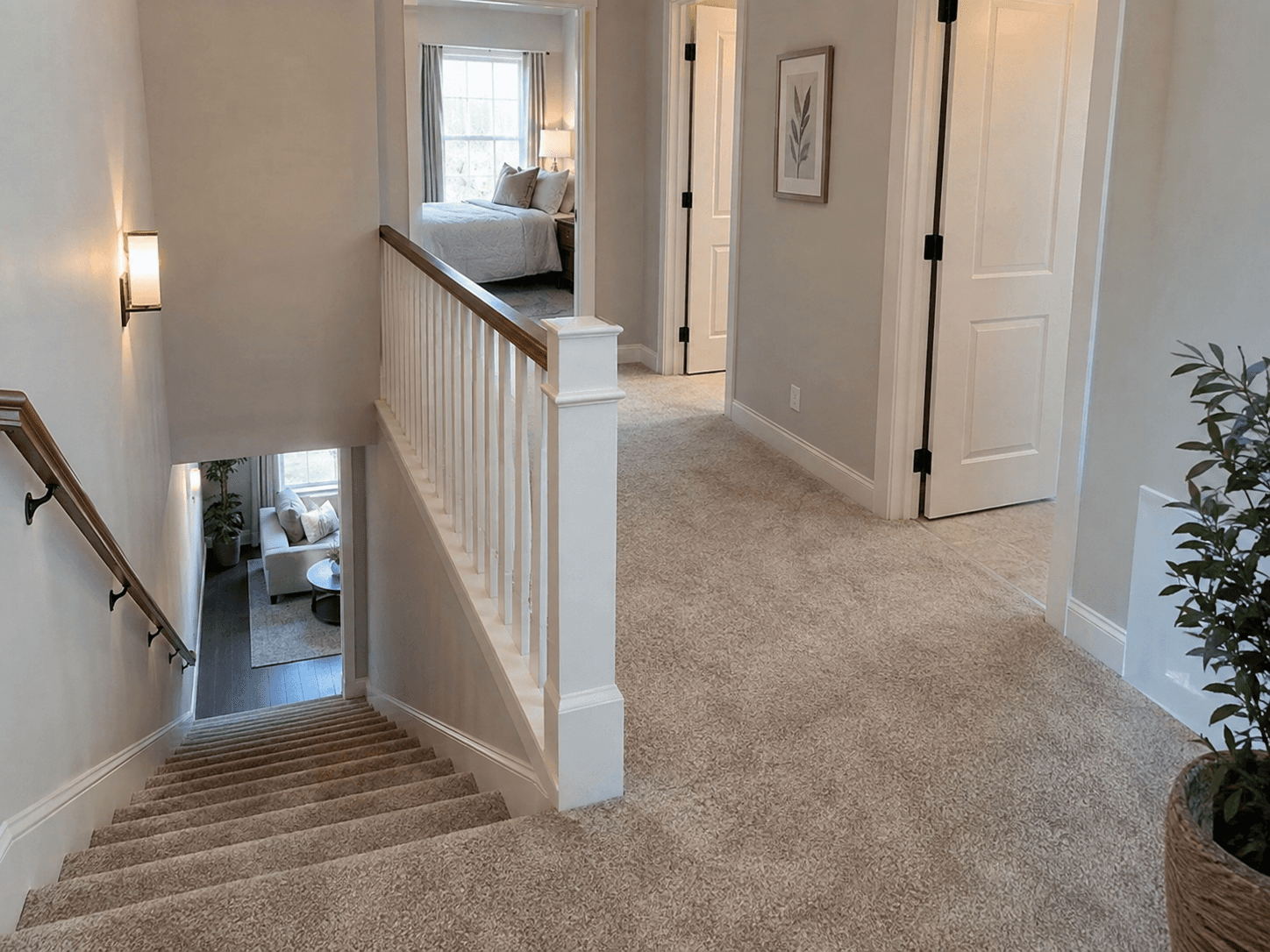
Source: Reno Quotes
Fibre | Material cost /sq. ft. | Durability | Stain resistance | Best for |
Polyester | $2 to $3 | Moderate | Good | Bedrooms, low-traffic rooms |
Olefin (polypropylene) | $2 to $3.50 | Moderate | Excellent | Basements, moisture-prone areas |
Nylon | $3 to $5 | Excellent | Good with treatment | Stairs, hallways, family rooms |
Triexta | $4 to $6 | Excellent | Excellent | Pet-rich homes |
Wool | $6 to $12+ | Excellent | Moderate | Primary bedrooms, premium spaces |
Nylon
The workhorse of Canadian carpet. Nylon has the best resilience of any common fibre, meaning it springs back after compression rather than matting flat under furniture and foot traffic. It's the right choice for stairs, hallways and any heavy-traffic home.
Look for solution-dyed nylon rather than conventionally dyed. Solution-dyed fibres have colour locked into the fibre itself rather than applied to the surface, which means they resist bleaching from sunlight and cleaning products.
Polyester
Softer underfoot than nylon and naturally stain-resistant, at a lower price. The trade-off is resilience — polyester crushes more readily and doesn't recover as well, so it shows traffic patterns sooner.
Best in bedrooms and rooms where the carpet isn't walked across constantly.
Triexta
A newer fibre, often sold under brand names, combining polyester's stain resistance with something closer to nylon's resilience. It's particularly good in pet-rich homes because it's inherently stain resistant rather than treated, so the protection doesn't wear off.
Wool
The premium option, and genuinely excellent: naturally resilient, naturally flame resistant, and it ages well. It's also the most expensive and the most vulnerable to staining, since it absorbs liquids readily.
What Determines Quality Within a Fibre
Two carpets of the same fibre can differ enormously, and the difference is construction.
Denser construction with tighter tufts wears better, full stop. Bend a carpet sample backward — if you can easily see the backing through the pile, it's a loosely constructed carpet that will mat quickly. Density matters more than pile height.
Fibre warranties are worth reading. Manufacturers typically warrant against wear, stains and texture retention separately, with different durations. Most require professional installation and documented cleaning to stay valid.
Underlay and Padding Costs
Underlay type | Cost /sq. ft. | Notes |
Prime foam | $0.30 to $0.50 | Entry level, compresses quickly |
Rebond foam | $0.50 to $0.90 | The standard choice for most homes |
Rubber | $0.80 to $1.30 | Dense and durable, good for stairs |
High-density comfort pad | $1 to $1.50 | Best underfoot feel |
Memory foam | $1 to $1.75 | Luxurious, less durable long-term |
Moisture-resistant with integrated barrier | $1 to $1.60 | Basements over concrete |
Specialty acoustic pad | $1.50 to $2.50 | Condos with IIC/STC requirements |
Underlay is where people economize and shouldn't. The pad absorbs the impact of every footstep, and a thin or low-density pad lets that impact reach the carpet backing directly. A good pad can add years to a carpet's life, and the difference across an entire house is only a few hundred dollars.
Denser is better than thicker. A thick, soft pad feels luxurious in the showroom but allows the carpet to flex excessively, which breaks down the backing. Most manufacturers specify a maximum pad thickness — usually 7/16 inch — and exceeding it voids the warranty.
In a basement over concrete, use moisture-resistant underlay with an integrated barrier. Concrete slabs transmit humidity even when they appear dry, and standard foam traps it against the carpet backing. This is the most common cause of basement carpet odour.
Condo owners should check their IIC and STC requirements. Many buildings specify minimum acoustic ratings for flooring, and a specialty acoustic pad may be mandatory rather than optional.
Labour and Installation Fees
Source: Reno Quotes
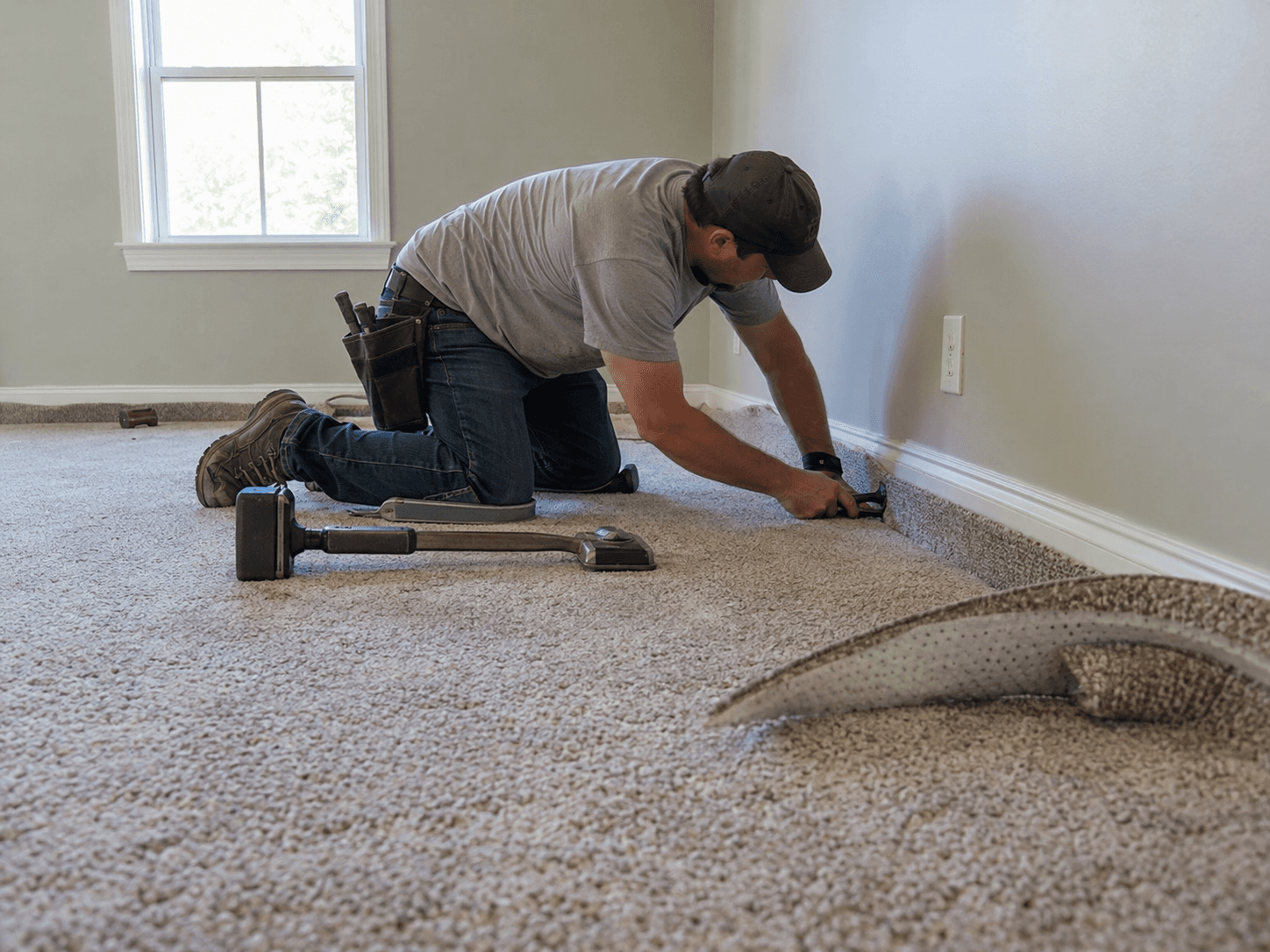
Labour runs $1.25 to $3.50 per square foot in open areas, rising to $4 to $6 for complex layouts.
What Professional Installation Includes
Power stretching the carpet to the proper tension using a power stretcher rather than a knee kicker
Seam sealing so seams don't separate or fray
Trimming and tucking at walls and transitions
Installing tack strips where needed
Basic furniture moving, on most jobs
Power stretching is the one that matters most. A carpet installed with a knee kicker alone isn't properly tensioned, and it will ripple within a year or two. Restretching later costs $150 to $400 per room, so it's worth confirming upfront that power stretching is included.
What Drives Labour Cost Up
Stairs, at $15 to $60 per step, since each requires precise cutting, wrapping and nosing detail
Complex layouts with many corners, closets, angled walls or irregular rooms
Commercial or glue-down installation, which costs more than standard residential stretch-in
Site conditions, including limited access, upper floors and tight stairwells
Transitions and trims at every doorway and flooring change
Moisture testing on concrete, which good installers do before proceeding
Floor Preparation
The substrate determines the result. Minor patching and levelling runs $1 to $3 per square foot of affected area. Concrete crack fill and high-spot grinding are typically priced after a site visit, since neither can be estimated from a floor plan.
Skipping prep is false economy. Every imperfection in the subfloor telegraphs through carpet within months and accelerates wear at that point.
Old Carpet Removal and Disposal
Task | Cost |
Old carpet and pad removal | $0.30 to $0.80 /sq. ft. |
Removing other flooring types | $1 to $5 /sq. ft. |
Tack strip and staple pull-out | Often extra if extensive |
Disposal and haul-away | $100 to $250 per load |
Carpet is the easiest flooring to remove, which is why it sits at the bottom of that range. Glued-down vinyl, ceramic tile and old laminate take considerably longer.
Staple pull-out is the hidden one. Carpet installed over a wood subfloor is often stapled at the pad, leaving hundreds of staples behind that have to be pulled individually before new carpet goes down. On a whole house, that's hours of labour that may or may not be in your quote.
Municipal disposal: most Canadian cities accept carpet through bulk waste pickup or at a transfer station, sometimes with a tipping fee. If you're handling removal yourself, confirm your municipality's rules before tearing anything out.
Ask specifically whether disposal is included, since removal and disposal are separate line items and quotes frequently cover one without the other.
Single Bedroom, 150 sq. ft.
Line item | Cost |
Mid-range nylon carpet and underlay | $600 |
Labour | $300 |
Removal and disposal | $75 |
Subtotal | $975 |
Minimum job charge may apply | $400 to $600 floor |
Total: $975 to $1,100. Small projects often price against the minimum charge rather than square footage, so a single room rarely comes in below $600 regardless of size.
Three Bedrooms Plus Hallway, 900 sq. ft.
Grade | Total installed |
Budget polyester with foam pad | $3,600 to $4,500 |
Mid-range nylon with rubber pad | $5,400 to $7,200 |
Premium with high-density pad | $7,200 to $11,000 |
Doing all three bedrooms at once is meaningfully cheaper than one at a time. Bulk material orders reduce the per-square-foot cost and the installer saves travel and setup time.
900 sq. ft. Plus 13 Stairs
Line item | Cost |
Mid-range carpet, underlay and labour, 900 sq. ft. | $5,400 to $7,200 |
13 stairs at $25 to $60 per step | $325 to $780 |
Removal and disposal | $270 to $720 |
Furniture moving, 3 rooms | $100 to $225 |
Subtotal | $6,095 to $8,925 |
Taxes (13% HST, Ontario) | $790 to $1,160 |
Total: $6,885 to $10,085.
500 sq. ft. Basement Refresh
Line item | Cost |
Mid-range carpet and moisture-resistant underlay | $2,250 |
Labour | $1,000 |
Moisture barrier over concrete | $250 to $750 |
Removal and disposal | $150 to $400 |
Subtotal | $3,650 to $4,400 |
GST (5%, Alberta) | $183 to $220 |
Total: $3,833 to $4,620. Basements cost more per square foot than bedrooms because of the moisture work, not the carpet.
Carpet Lifespan and Maintenance
Source: Reno Quotes
How Long Carpet Lasts
Grade | Expected lifespan |
Budget polyester | 5 to 7 years |
Mid-range nylon | 8 to 12 years |
Premium nylon or triexta | 12 to 15 years |
Wool | 15 to 20 years |
Pad life often exceeds carpet life, which means a replacement carpet can sometimes go over existing underlay if it's still resilient. Have the installer assess it rather than assuming either way.
Heavy-traffic homes and pet-rich homes land at the bottom of every range. In those situations, paying for nylon or triexta upfront genuinely costs less over fifteen years than replacing polyester twice.
Maintenance That Extends It
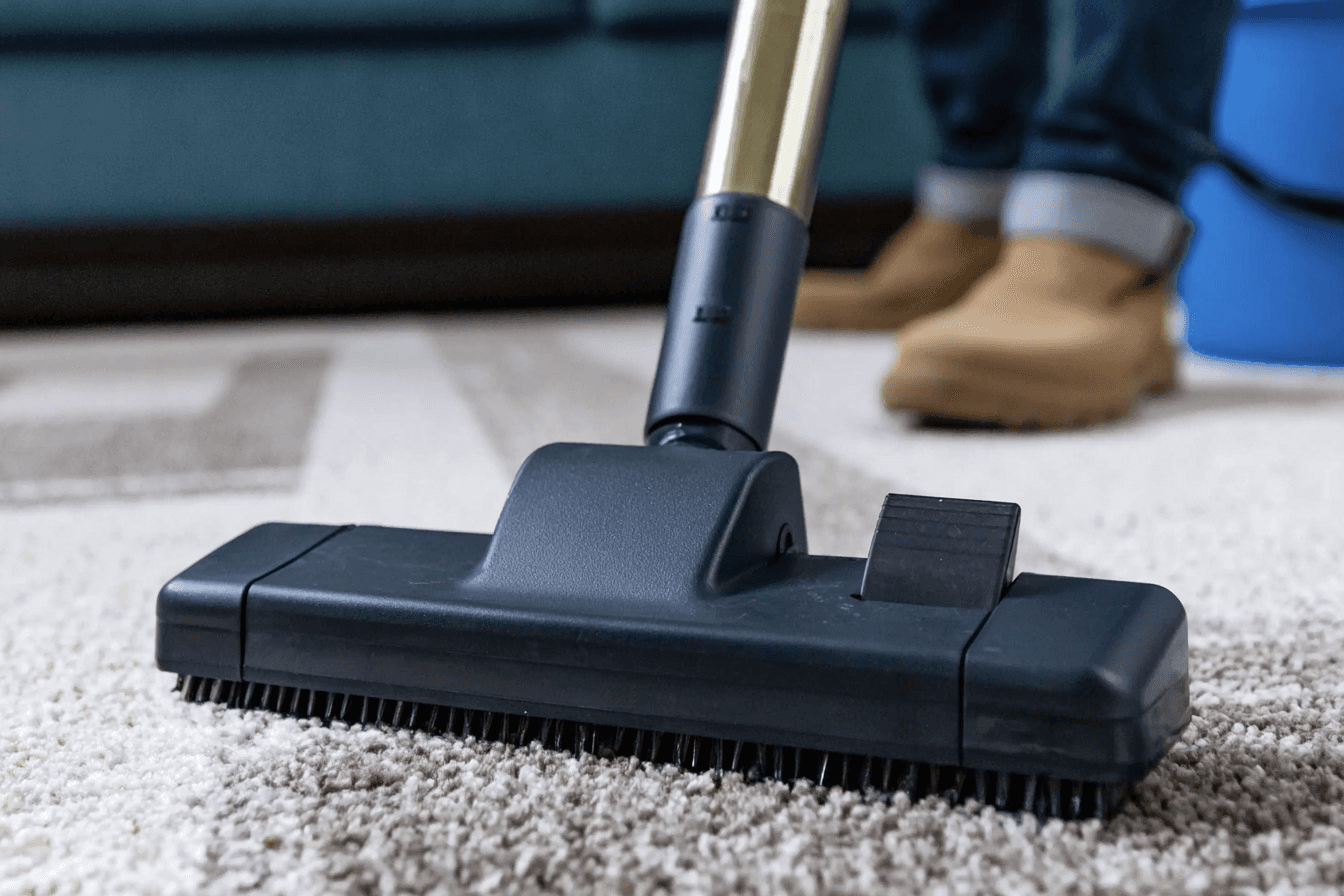
Vacuum regularly, more often than feels necessary. Soil is abrasive, and vacuuming removes it before it cuts fibres. This matters more than any other single habit.
Address spills immediately. Blot rather than rub, since rubbing pushes the stain into the backing and damages the fibre.
Book professional hot-water extraction every 12 to 18 months. This is what manufacturers mean by "professional cleaning," and most fibre warranties require it with receipts as proof of care. Skipping it can void your coverage even if the carpet is otherwise fine.
Use entry mats at every exterior door. Most of what damages carpet arrives on shoes.
Humidity Management in Canadian Homes
Canadian winters create a specific problem: forced-air heating drops indoor humidity dramatically, and carpet fibres become brittle and generate static.
Aim for 35% to 45% relative humidity in winter. A home humidifier is the usual solution, and it protects hardwood, trim and your own comfort alongside the carpet.
The opposite problem appears in summer basements, where high humidity against a cool slab creates the conditions for mould under the carpet. This is what moisture-savvy planning means in practice: barrier underlay at installation, and a dehumidifier running through the humid months.
Warranties
Fibre warranties come from the manufacturer and cover wear, staining and texture retention, usually with separate durations. They generally require professional installation and documented cleaning.
Workmanship warranties come from the installer and cover the installation itself — seams separating, ripples appearing, stretching failing. Ask for the duration in writing. A year is common; some installers offer more.
The two are separate, and a problem with one isn't covered by the other.
Ways to Save on Carpet Installation
Source: Reno Quotes
Book in fall or winter: Installers charge 15% to 25% more in spring and summer, and off-season booking saves $0.50 to $1.25 per square foot.
Bundle rooms into one job: Bulk material orders reduce the per-square-foot cost and you pay one setup and travel charge instead of several.
Move small furniture yourself: Clearing the space saves $100 to $300. Leave pianos, pool tables and appliances to the installer.
Choose mid-grade nylon over premium: It delivers most of the durability at a meaningfully lower price, and the difference is invisible in a bedroom.
Handle removal yourself if you're able: Carpet tear-out is straightforward work, though staple pull-out is tedious and disposal still needs arranging.
Check local inventory and roll ends: Retailers discount discontinued lines and remnants significantly, and a bedroom often fits within a single remnant.
Don't economize on underlay or installation: These are the two places where saving $300 costs you years of carpet life.
Getting Apples-to-Apples Quotes
The single most useful thing you can do is demand line-item quotes. Every estimate should separately list:
Carpet material, including the specific product name and fibre
Underlay type and density
Labour
Removal and disposal
Floor preparation, and the rate if more is discovered
Stairs, priced per step
Transitions, trims and door trimming
Furniture moving
Taxes
Insist on an on-site laser measurement rather than an estimate from a floor plan. Carpet is sold by the square yard from rolls of fixed width, and an accurate measurement determines how much waste your job generates.
Scope gaps are where quotes diverge. A bid substantially below the others usually excludes disposal, prep or stairs.
What should you budget?
For most Canadian homes, carpet installation costs $6 to $8 per square foot at the mid-range tier, putting a typical three-bedroom project at $5,400 to $7,200 before taxes and extras.
Two decisions determine where you land. The fibre — nylon or triexta rather than polyester — is what separates a carpet lasting twelve years from one lasting six. And the underlay, where a few hundred dollars buys years of additional life.
Get three line-item quotes, insist on an on-site measurement, and confirm that power stretching and disposal are both included.
Frequently Asked Questions
How much does carpet installation cost per square foot in Canada?
$4.50 to $12.50 installed, with a national average around $7.25. Budget installs run $4 to $5, mid-range $6 to $8, and premium $8 to $12.50. That includes material, underlay and labour but not removal, stairs or taxes.
What's the all-in number for a three-bedroom house?
$3,600 to $4,500 for budget polyester across 900 sq. ft., $5,400 to $7,200 for mid-range nylon, and $7,200 to $11,000 for premium. Add $325 to $780 for a 13-step staircase, plus removal and taxes.
How much does it cost to carpet stairs?
$15 to $60 per step, depending on style and nosing detail. A 13-step staircase adds $325 to $780. Stairs cost more per square foot than open areas because each step requires precise cutting, wrapping and finishing.
Do I need underlay in every room?
Yes. Underlay protects the carpet, adds insulation and improves comfort, and skipping it voids most carpet warranties. Budget $0.50 to $1.50 per square foot, and use moisture-resistant underlay with an integrated barrier in basements.
What carpet fibre is most durable?
Nylon has the best resilience and recovers from compression better than any other common fibre, making it the right choice for stairs and high-traffic areas. Triexta is comparable and better on stains, which suits pet-rich homes. Polyester is softer and cheaper but shows traffic patterns sooner.
How much does it cost to remove old carpet?
$0.30 to $0.80 per square foot for removal, plus $100 to $250 per load for disposal. Extensive tack strip or staple pull-out may be extra. Confirm whether disposal is included, since removal and disposal are separate line items.
Do installers move furniture?
Most move basic furniture as part of the job, but it's rarely free. Expect $50 to $200 flat or $25 to $75 per room. Move small items yourself to save $100 to $300, and expect additional charges for pianos, pool tables or appliances.
How long does carpet last?
5 to 7 years for budget polyester, 8 to 12 for mid-range nylon, 12 to 15 for premium nylon or triexta, and 15 to 20 for wool. Regular vacuuming and professional cleaning every 12 to 18 months push each toward the upper end.
Is it cheaper to carpet multiple rooms at once?
Yes, noticeably. Bulk material orders lower the per-square-foot cost, and you pay one setup and travel charge rather than several. Small single-room projects often price against a $400 to $600 minimum charge regardless of size.
When is the cheapest time to install carpet?
Fall and winter. Canadian installers charge 15% to 25% more during spring and summer, so off-season booking saves $0.50 to $1.25 per square foot on top of better scheduling availability.
What is power stretching and why does it matter?
A power stretcher tensions the carpet properly across the room, unlike a knee kicker which can't reach the same tension. Carpet installed without it ripples within a year or two, and restretching costs $150 to $400 per room. Confirm it's included in your quote.
Can I put new carpet over the old underlay?
Sometimes. Pad often outlasts carpet, so if it's still resilient and free of moisture damage or odour, it can be reused. Have the installer assess it rather than deciding yourself, since a compressed pad undermines a new carpet immediately.
Looking for something else?
Related articles
The latest industry news, interviews, technologies, and resources.
Léa Plourde-Archer
•25 Aug 2026
Gutter installation in Canada typically costs $3 to $15 per linear foot installed for most materials, which works out to roughly $600 to $3,000 for an average home. Whether you're replacing old eavestroughs, installing gutters on a new home, or comparing quotes from local professionals, knowing the key cost factors can help you budget more effectively.
Cynthia Pigeon
•17 Jun 2026
Living in a condominium, townhouse, or semi-detached home has many advantages, but being close to neighbours can sometimes test your patience. Whether it’s a crying child, rhythmic footsteps, an overly powerful home theatre system, or vibrations from your neighbour’s heat pump, noise disturbances can significantly affect your quality of life. When Quebec winter sets in and we spend most of our time indoors, these noises become even more noticeable and irritating.
Editorial Team
•27 Sep 2024
If you own a cottage and go there several times per year or per season, you may be considering taking on some renovations. Even if it was recently built, it’s never unnecessary or too late to add value to your property.
Editorial Team
•08 Nov 2023
Is there anything worse than a cold floor beneath your feet as soon as you take off your shoes? The feeling that sends shivers right up your spine may have you wishing your home’s entrance had heated floors! Don’t fret because it’s a very reasonable option to consider for your entrance and RenoQuotes.com is here to share a guide on how to go about installing heated floors in your foyer.
Editorial Team
•08 Oct 2026
New flooring costs $4 to $25 per square foot installed in Canada, with most homeowners paying $5 to $12. A 500 square foot project typically runs $2,500 to $6,000, and a whole-home job of 1,500 square feet lands between $7,500 and $18,000 in mid-range materials.