Cost of a Hardwood Staircase in Quebec: Pricing Guide
By Cynthia Pigeon
Updated on June 11, 2026
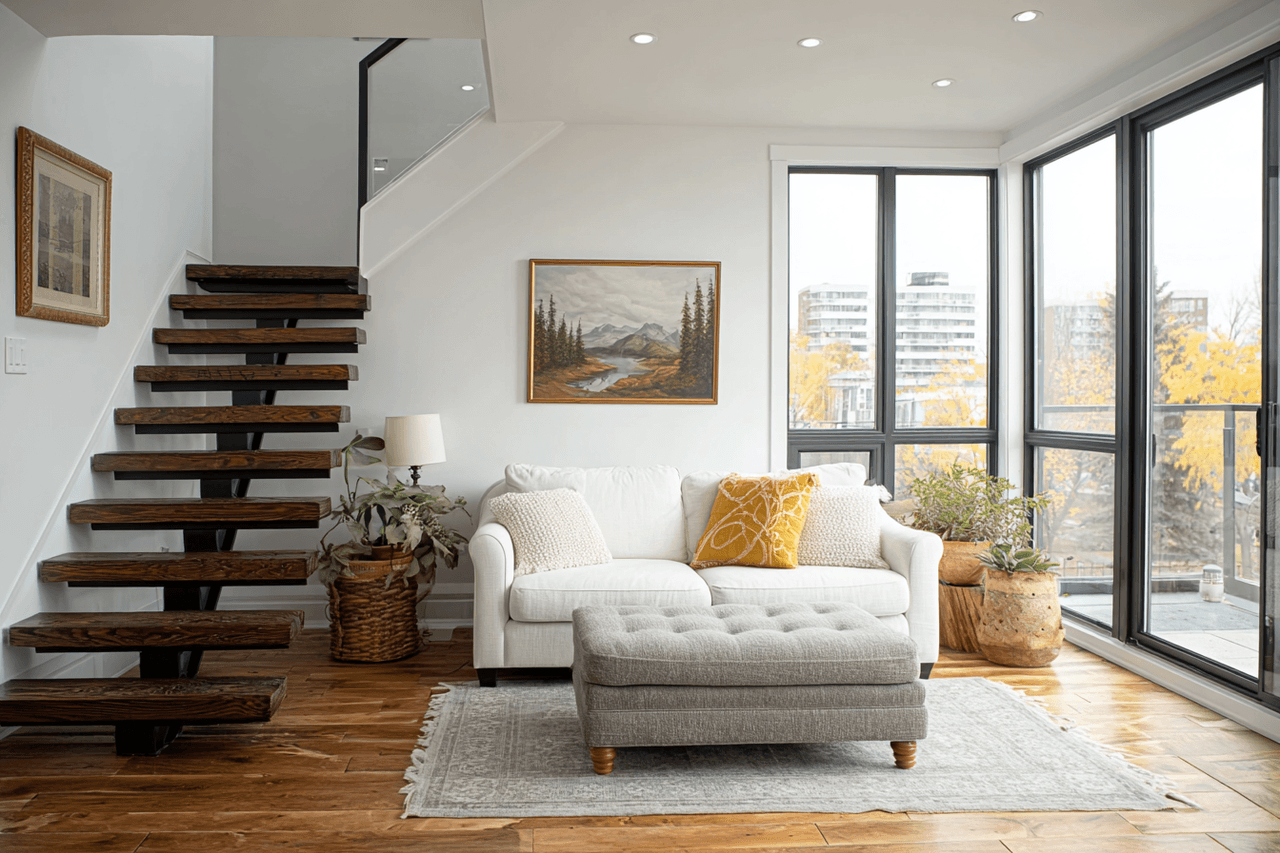
A central element of a home’s architecture, the staircase is more than just a functional link between two floors. It is a key feature of your interior design and can add considerable value to your property. When it comes to choosing a durable, warm, and timeless material, hardwood remains a top choice for Quebec homeowners.
However, planning the renovation or construction of a staircase requires a clear understanding of real market costs. Between the choice of wood species, the requirements of the existing layout, and labour costs, the total budget can vary quickly. This transparent buying guide is designed to help you analyze each component, understand the regulatory requirements generally applicable in the province, and properly plan your investment.
Factors That Influence the Cost of a Hardwood Staircase
Source: Les Rénovations Serge B Inc
The total cost of designing and installing a hardwood staircase cannot be reduced to a simple fixed price per linear foot. Every project is unique, and several variables determine the final quote submitted by manufacturers and installers.
To avoid surprises when shopping around, it is important to understand the four main factors that affect pricing:
Wood species: Local and exotic wood species do not have the same supply cost or density, which affects machining time.
Structural configuration: The more cutting and assembly require precision and handling time, the higher the price.
Type of finish: Raw wood to be stained and varnished on-site does not have the same cost as factory-prefinished wood.
Complexity of architectural components: The choice of stringers, railing style, and stair nosing or tread profile can add variable costs.
Wood Species: Maple, Red Oak, or Birch
Source: Tamber Flooring
Choosing the hardwood species is the first major decision in your project. In Quebec, the residential market strongly favours three local species known for their excellent resistance to local climate variations and their durability under daily foot traffic.
Birch
Often considered the best-kept secret for mid-range budgets, birch offers excellent value for money. With a subtle and uniform grain, it is slightly less hard than maple, but still resists everyday impacts very well. It is a popular local option for its modern, clean appearance.
Red Oak
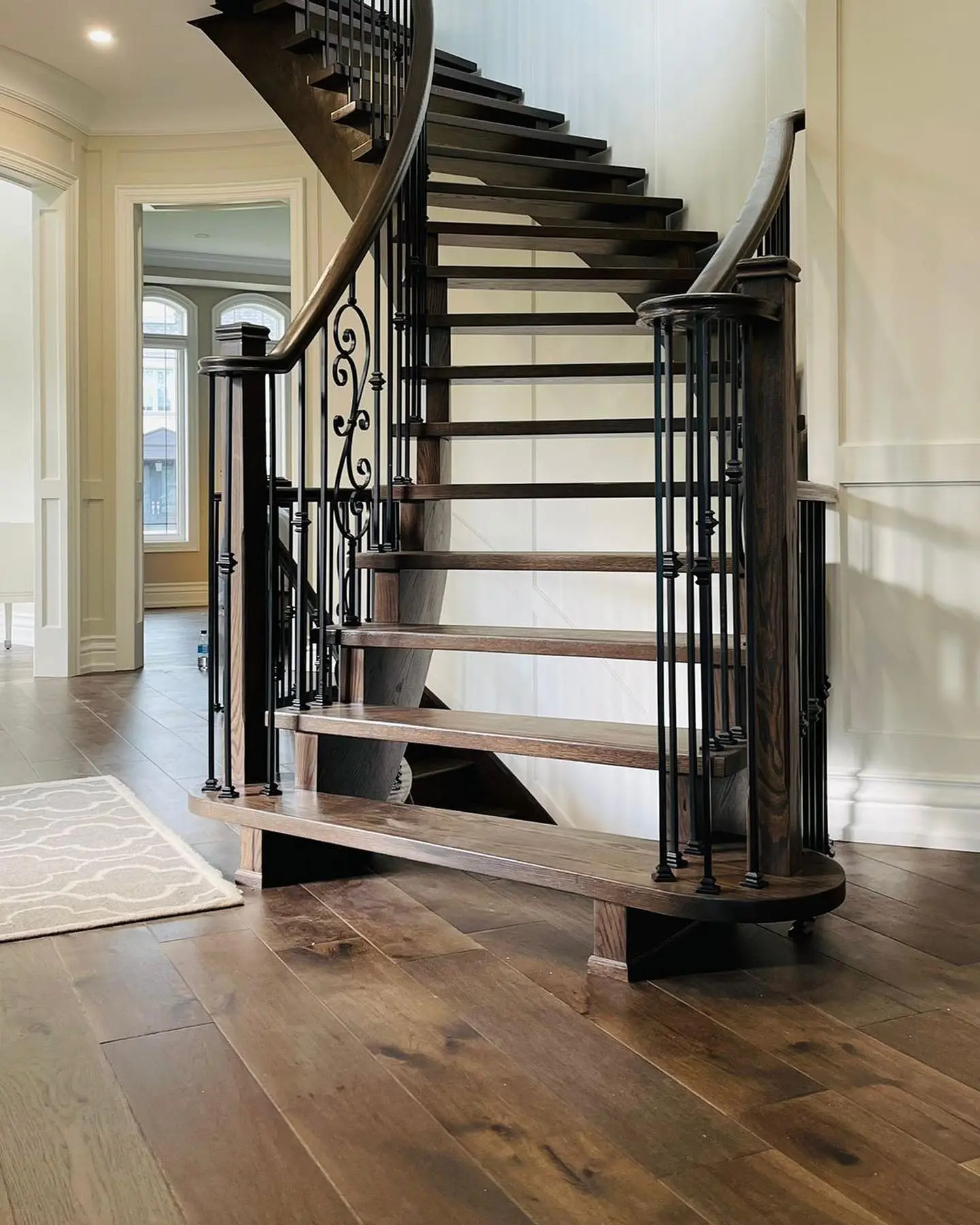
Red oak is a timeless classic in Quebec homes. Known for its textured, prominent grain and distinctive patterns, it has excellent natural hardness. Its unique texture offers a major advantage: it helps hide small scratches and dust. It is a particularly stable species that is easy to stain to match existing floors.
Maple
Sugar maple, also known as hard maple, is the premium choice among native wood species. Its surface is extremely dense, smooth, and light in colour, making it ideal for contemporary or minimalist interiors. Because of its superior hardness, maple is more difficult to machine and sand, which explains its higher purchase cost. It also requires specific expertise to apply the stain evenly.
Configuration: Straight, Turning, or Floating Staircase
Source: Levesque Sylvain
The geometry of the available space in your home will determine the structure’s configuration. The more complex the engineering and cutting work, the higher the prices rise.
Straight Staircase
This is the simplest and most economical configuration to manufacture and install. The treads and risers follow a straight line with no change in direction. Material waste during cutting is minimal, and installation time for a carpenter is greatly reduced.
Turning Staircase, L-Shaped or U-Shaped
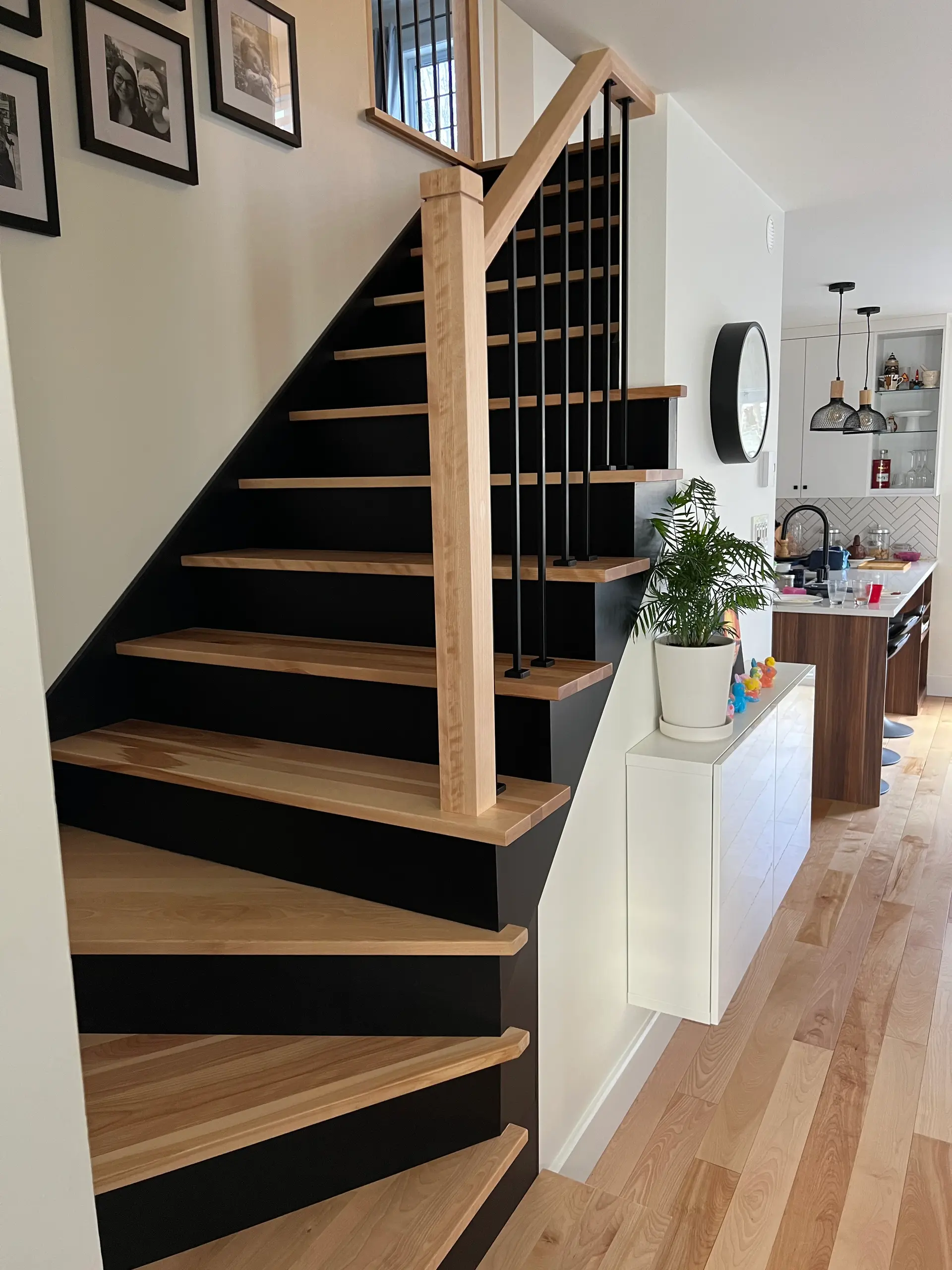
This configuration includes a 90-degree turn, in an L shape, or a 180-degree turn, in a U shape. The turn can be created with an intermediate landing, a square platform, or with winder steps, also known as angled or fan-shaped steps. Winder steps require very precise custom adjustment on-site to comply with the Quebec Construction Code, which increases labour costs.
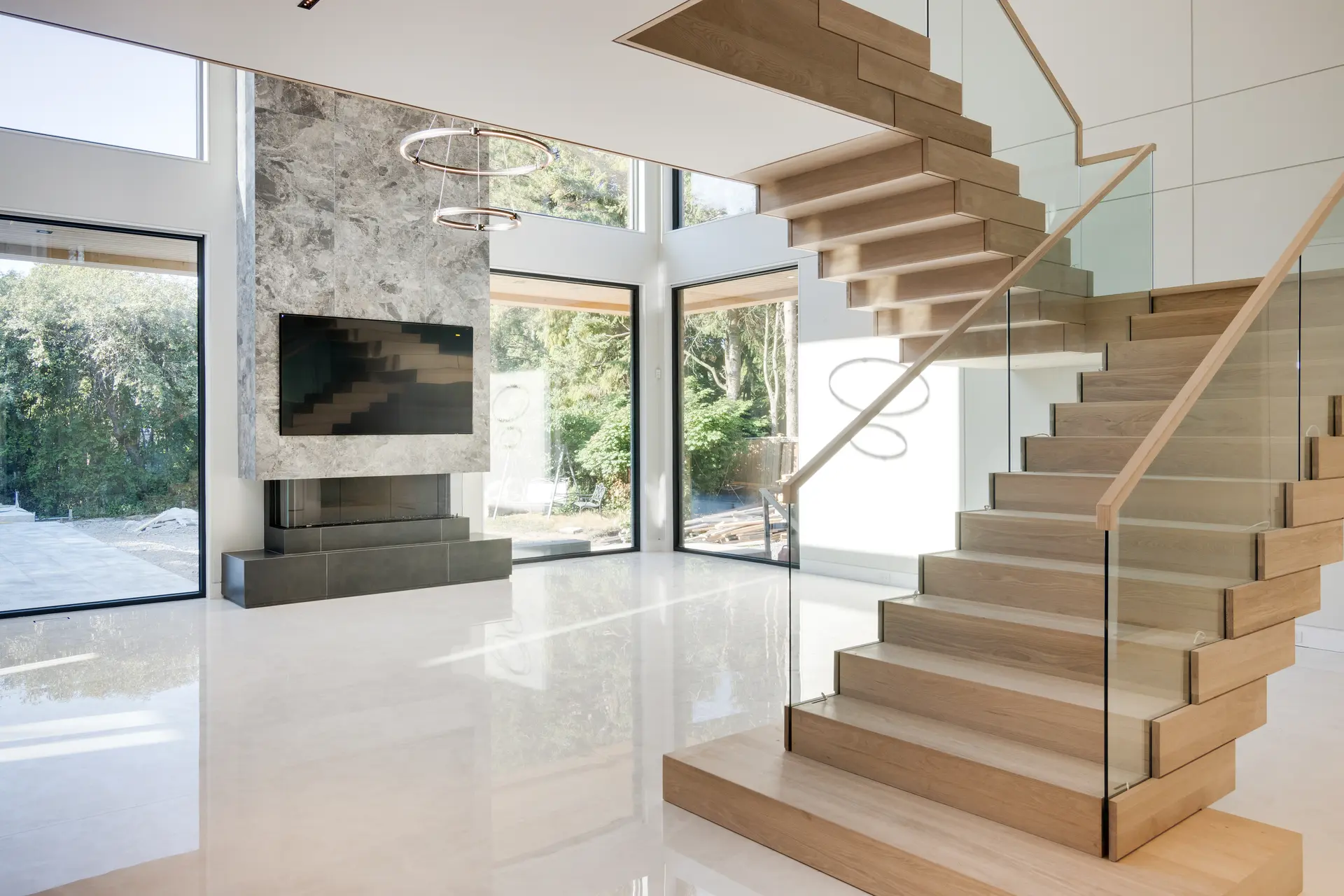
Floating or Self-Supporting Staircase
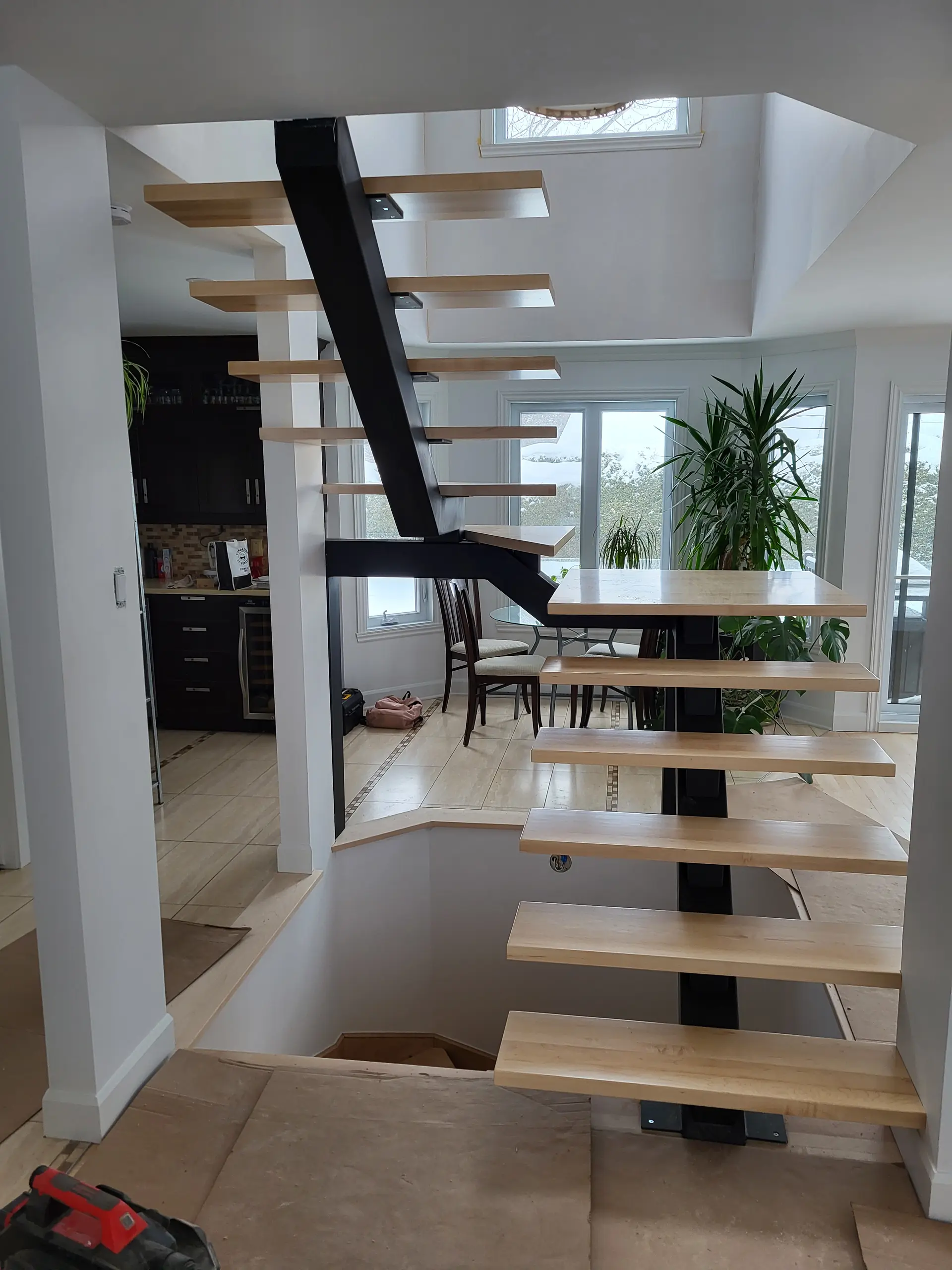
Very popular in new contemporary-style builds, a floating staircase gives the impression that the steps are suspended in the air. The hardwood treads, generally very thick, often 2 to 3 inches, are attached to a central steel stringer or anchored directly into a reinforced wall structure. The required engineering and anchoring components make this the most expensive option on the market.
Estimated Purchase and Installation Costs in Quebec
Source: Ayon Design & Build Corp.
To properly plan the financial side of your renovation project, it is useful to review a representative pricing grid for the current Quebec market.
The table below presents an indicative estimate of total costs for a standard staircase project with 12 to 14 steps, including the making of wood components and labour costs for home installation. Prices may vary depending on the project, region, and contractor.
Staircase Configuration | Hardwood Species | Estimated Price Range, Materials and Installation Included |
Standard Straight Staircase | Birch / red oak | $3,500 to $5,500 |
Standard Straight Staircase | Maple | $4,500 to $6,500 |
Turning Staircase with Landing | Birch / red oak | $5,500 to $7,500 |
Turning Staircase with Winder Steps | Maple | $7,000 to $9,500 |
Floating / Self-Supporting Staircase | Maple, thick treads | $12,000 to $25,000+ depending on complexity |
Cost of Components: Treads, Risers, and Stringers
If you are an owner-builder or want to buy your components directly from a wood mill or renovation centre to reduce costs, it is useful to know the average unit cost of raw or pre-machined materials.
Hardwood tread: Prices can vary depending on the species, thickness, and supplier, but usually range from about $45 to $90 per unit for a standard 36-inch-wide tread, as an indicative estimate. Starting steps, which are the first step at the bottom and are often rounded or wider, generally cost between about $150 and $300, depending on the supplier and specifications, as an indicative estimate.
Riser: The vertical piece between two treads can vary depending on the supplier and specifications, generally ranging from about $20 to $45 per unit in solid hardwood, as an indicative estimate. To save money, some homeowners choose ready-to-paint white MDF risers, which can reduce the cost to about $15 to $25 per unit, as an indicative estimate, while creating an attractive visual contrast.
Stringer: The side or central structural component that supports the treads can cost, depending on the required length and supplier, between about $150 and $350 per hardwood section, as an indicative estimate.
Guardrail and handrail: This section is often priced by the linear foot. A complete set, including the wooden handrail, support posts, and balusters, whether wood or contemporary-style metal, can range from about $80 to $200 per linear foot, materials and installation included, depending on complexity and supplier, as an indicative estimate.
Labour Rates and Installation Fees
Installing a staircase is a highly technical task that leaves no room for error. A miscalculation can make the staircase uncomfortable, or even unsafe, for daily use.
In Quebec, the hourly rate for a qualified residential renovation carpenter can generally range, depending on the region and the size of the company, from about $65 to $95 per hour. For a standard straight staircase, you should often plan for 1 to 2 full days of work to install the structure and guardrail, depending on project complexity. Custom projects or complex turning configurations can take, depending on complexity, from 3 to 5 business days.
To ensure a compliant installation, the contractor will generally make sure to follow the geometric requirements set out in the Quebec Construction Code and Safety Code:
Riser height: It must generally be between 125 mm and 200 mm, depending on the Quebec Construction Code and the type of building, such as residential or commercial.
Run, or tread depth: It must generally measure between 210 mm and 355 mm to ensure safe foot support when going down the stairs, according to the Quebec Construction Code.
Handrail or guardrail height: It must generally reach a minimum height of 900 mm, measured vertically from the nosing of the tread, according to the Quebec Construction Code. If the staircase borders an open space, the spacing between vertical balusters must generally not exceed 100 mm to help prevent accidents involving young children, according to the Quebec Construction Code.
How to Optimize Your Staircase Renovation Budget
Source: V&W Floors and Stairs
Replacing or rebuilding a staircase is a major investment, but several strategic tips can help reduce costs without compromising the strength or overall aesthetics of the structure.
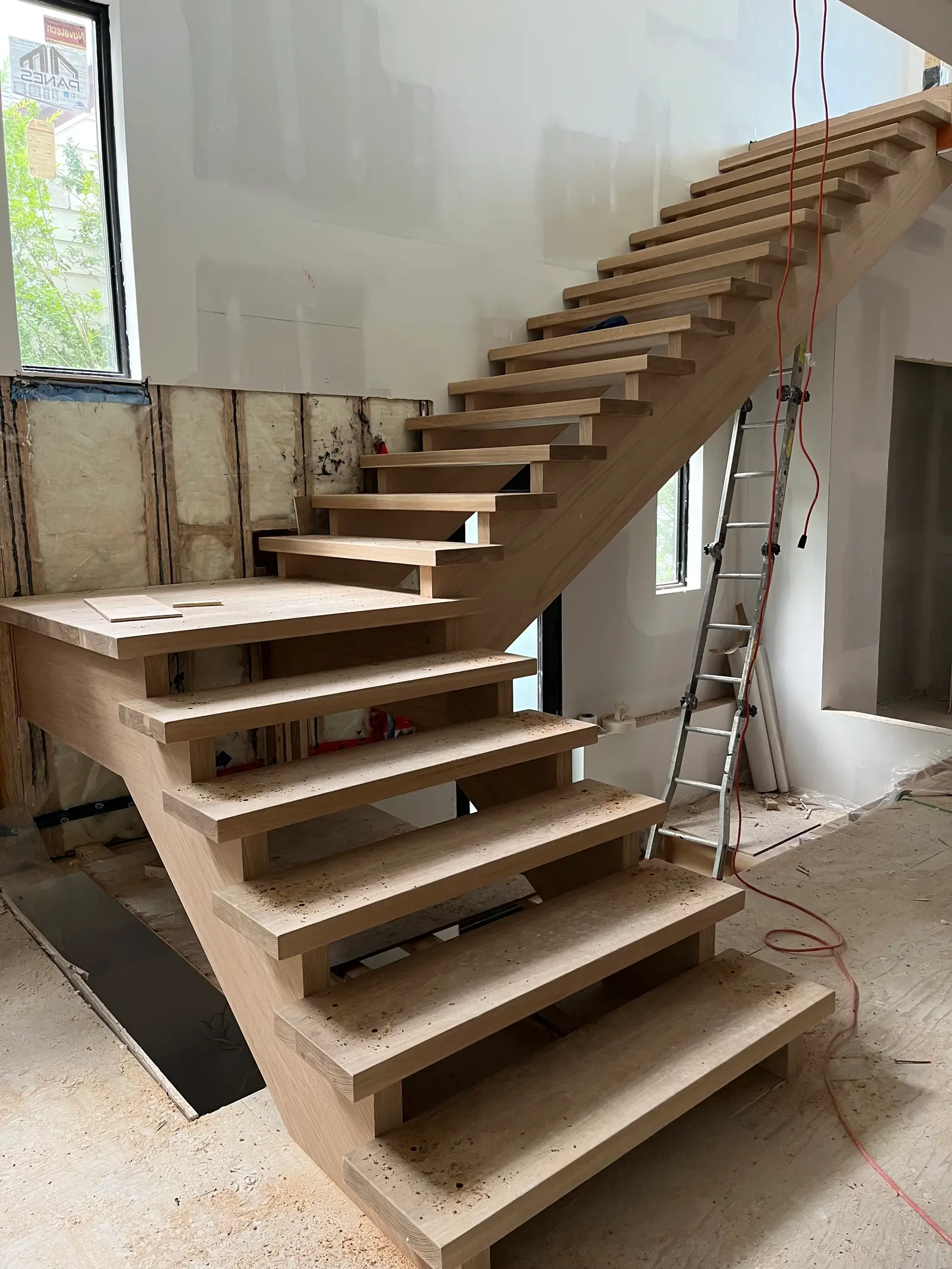
Crucial importance of wood acclimation: Quebec’s climate involves significant temperature and humidity variations, with intensive heating in winter and air conditioning or ambient humidity in summer. To prevent warping, cracking, or gaps opening between joints, it is recommended to store hardwood components in the destination room for 48 to 72 hours before installation to allow acclimation. This step helps protect your investment against warping, cracking, and joint movement.
Choose a wood and painted MDF combination: Replacing hardwood risers with high-quality MDF painted white can not only reduce material costs, but also shorten the time needed for sanding and varnish application. Visually, it also brightens the staircase area.
DIY finish: If you have solid manual skills, you can ask your contractor to install the staircase, leaving it raw, unfinished. You can then handle the sanding, staining, and three coats of protective varnish over the weekend. This can save you several hundred dollars in labour costs.
Plan the project during the right season: Carpenters are especially busy during the summer and just before the holiday season. By planning your work during slower periods, such as late winter or early spring, you may be able to secure more competitive rates or faster turnaround times.
The best practice for obtaining a fair price is to plan your shopping process properly. Take the time to request several quotes from qualified local contractors and verify, where applicable, their RBQ licences and insurance coverage. By comparing at least three detailed proposals, you will be able to break down material costs, validate RBQ licence numbers, and evaluate design approaches to secure the best value for your home.
Looking for something else?
Related articles
The latest industry news, interviews, technologies, and resources.
Équipe éditoriale
•05 Dec 2025
A bathtub can be a serious luxury and a beautiful addition to any bathroom. But when a bathroom is outfitted with an older bathtub and you’d rather have a modern, walk-in shower, it can be an eyesore. In this case, you may be looking to transform your bathtub into a shower and wondering if this is possible.
Cynthia Pigeon
•26 Jun 2026
The aging population and the growing desire to remain at home for as long as possible have highlighted the importance of residential accessibility. In this context, a stairlift stands out as a practical solution for moving around at home more safely and preserving the independence of people with reduced mobility.

Amanda Harvey
•27 Jun 2024
Installing a brand-new toilet in your bathroom isn’t exactly a desirable project. Plumbing aside, this isn’t a job for the faint at heart and takes some time, effort and heavy lifting. However, if you’ve got a spirit for adventure and you’re feeling up for it, this is a DIY job that you can easily take on!
Editorial Team
•06 May 2026
Choosing the right heat pump matters in Canada. A good model can help keep your home comfortable in winter, cool in summer, and may reduce your energy use compared with older heating and cooling systems.
Editorial Team
•19 Jun 2026
The dangers of cellulose insulation are worth understanding before colder weather puts more pressure on your home’s attic, roof, and heating system. As Canadian homeowners move from renovation ideas to seasonal preparation, early insulation planning can help identify dust exposure risks, moisture issues, fire-clearance concerns, and installation problems before they affect comfort or indoor air quality.