Installing a Glass Railing on a Deck: Enhance Your Outdoor Space
By Cynthia Pigeon
Updated on July 30, 2026
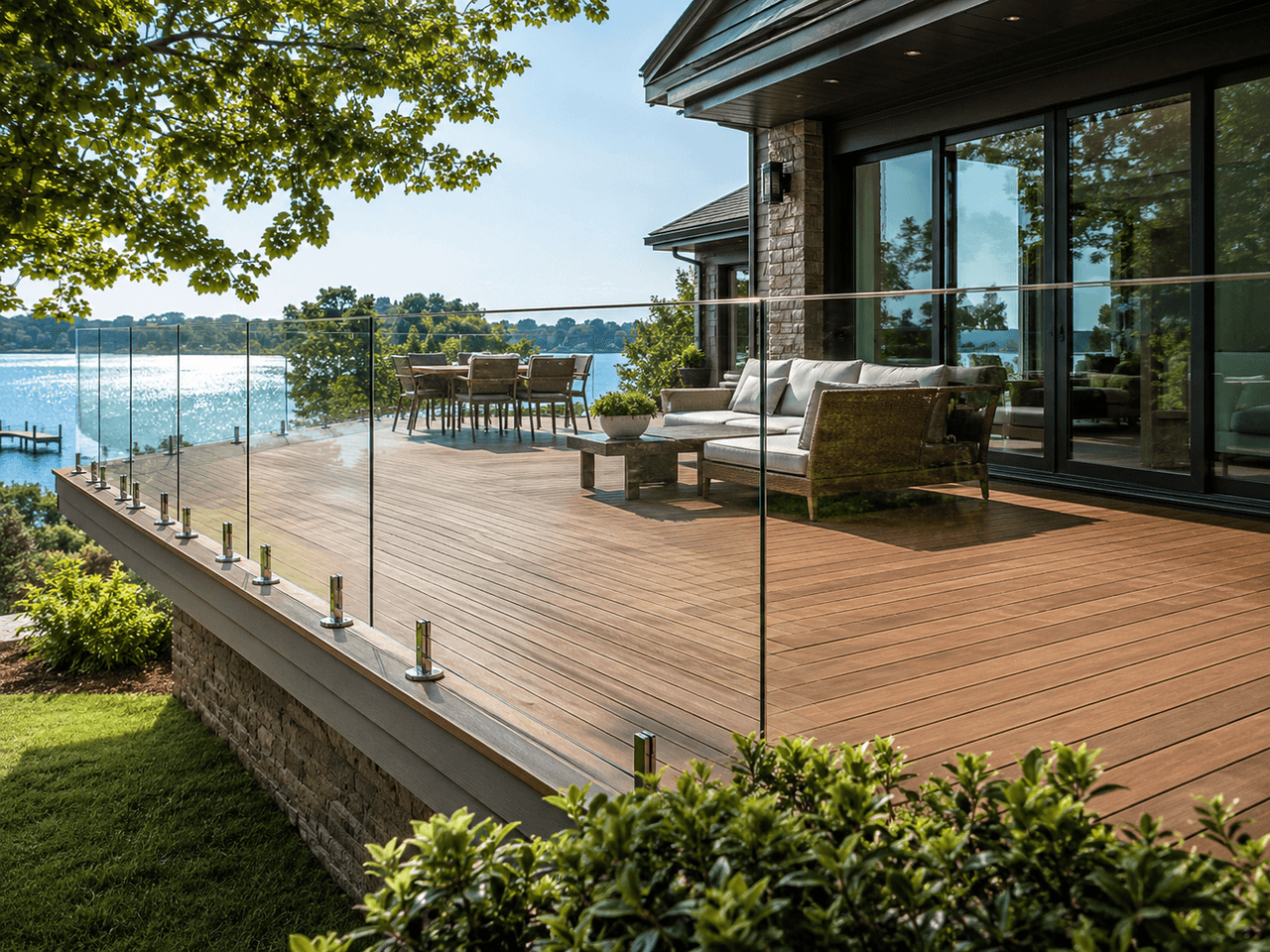
Across Canada, the warm season is often as valuable as it is short. Making the most of your backyard frequently involves creating a comfortable and attractive outdoor living space. When designing or renovating a deck, the choice of guardrail plays an important role in the home’s overall architectural style. While pressure-treated wood and traditional aluminum pickets have long dominated the market, Canadian homeowners are increasingly turning to a more contemporary material: glass.
Installing a glass railing on a deck addresses two modern priorities: maximizing natural light and preserving clear views of the garden, pool, or surrounding landscape. By eliminating the enclosed feeling created by conventional pickets, glass extends sightlines and creates a greater sense of space, significantly improving the home’s curb appeal.
Beyond its aesthetic value, a glass railing can be a worthwhile investment. Certain outdoor improvement projects, including building or renovating a deck, may recover a substantial portion of their cost when the property is sold. However, the return varies considerably depending on the local real estate market, the scope of the work, the materials selected, and buyer preferences. There is no universal rate of return specifically associated with glass railings in Canada. Furthermore, because Canadian temperatures can fluctuate dramatically throughout the year, installing a glass railing requires careful planning and proper execution.
Why Choose a Glass Guardrail for Your Deck?
Source: Espace Terrasse inc
Choosing an exterior glass guardrail involves more than appearance alone. This type of system also offers several practical benefits for homeowners.
1. An Unobstructed Panoramic View
Whether your deck overlooks a wooded area, waterfront, in-ground pool, or landscaped yard, glass panels help blur the boundary between the outdoor living space and its surroundings. Their transparency allows sunlight to pass through without casting the same shadows as traditional pickets.
2. Greater Protection From the Wind
Unlike picket railings, continuous glass panels can reduce direct exposure to gusts and improve comfort on windy days. However, they do not function as a thermal barrier and do not generate or retain heat in the same way as an insulated enclosure.
3. A Durable, Rot-Resistant Material
Architectural glass does not rot, rust, or develop mould. Unlike wood, which generally requires periodic staining or painting, glass can usually maintain its appearance with routine cleaning.
To assess the feasibility of your project, it is helpful to estimate the cost of renovating your deck before selecting the glazing system that best suits your budget.
Different Types of Exterior Glass Railings
Source: Alouette Construction inc.
Several systems can be used to incorporate glass panels into a deck railing. The right choice depends on the desired style, the degree of transparency, and the deck’s supporting structure.
Spigot-Mounted Systems
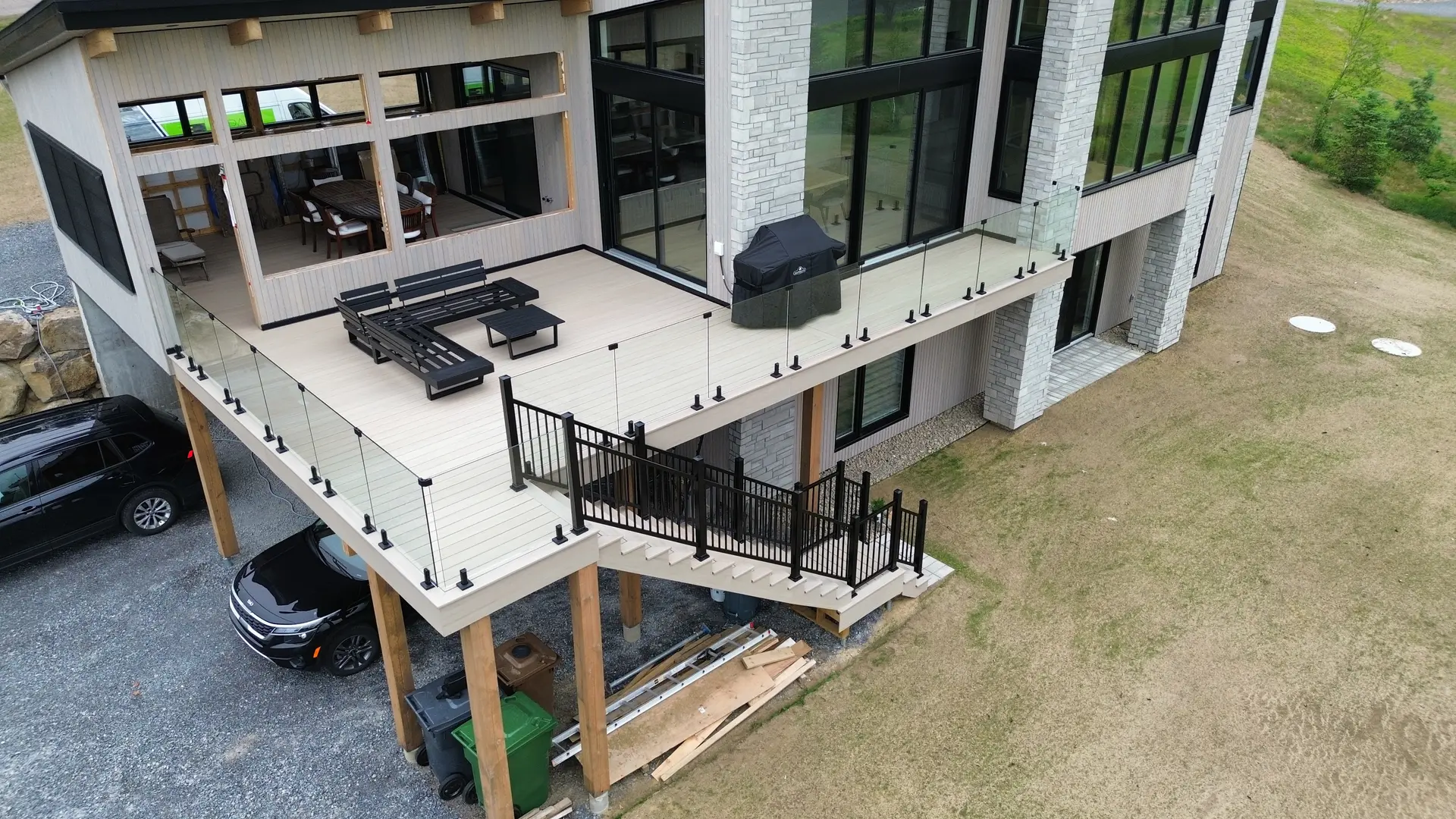
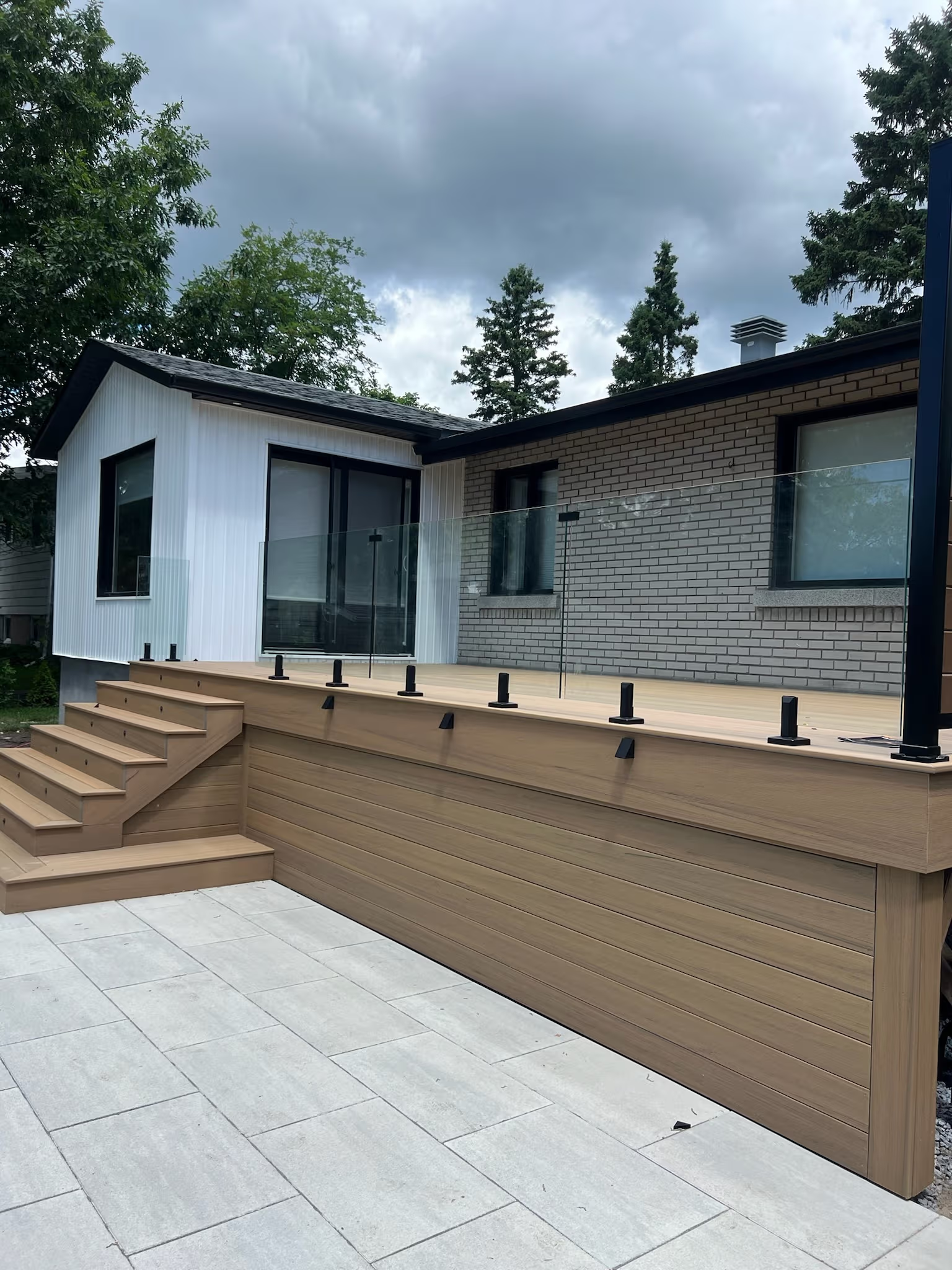
Considered a particularly streamlined option, a self-supporting spigot system uses small floor-mounted clamps or mini-posts to create an almost invisible appearance.
Design: The glass panels are secured at the bottom with metal clamps, often made with 316 stainless steel for greater resistance to outdoor corrosion.
Glass thickness: Spigot systems frequently use thick tempered or laminated glass, often about 12 mm or more. However, the required thickness must be determined by the approved system, panel dimensions, applicable loads, and the manufacturer’s or engineer’s specifications.
Advantages: No vertical posts interrupt the view. A gap is generally provided between the bottom of the glass and the deck surface to allow drainage and cleaning. Its dimensions vary by system and must comply with the manufacturer’s instructions and the applicable limits for openings in a guardrail.
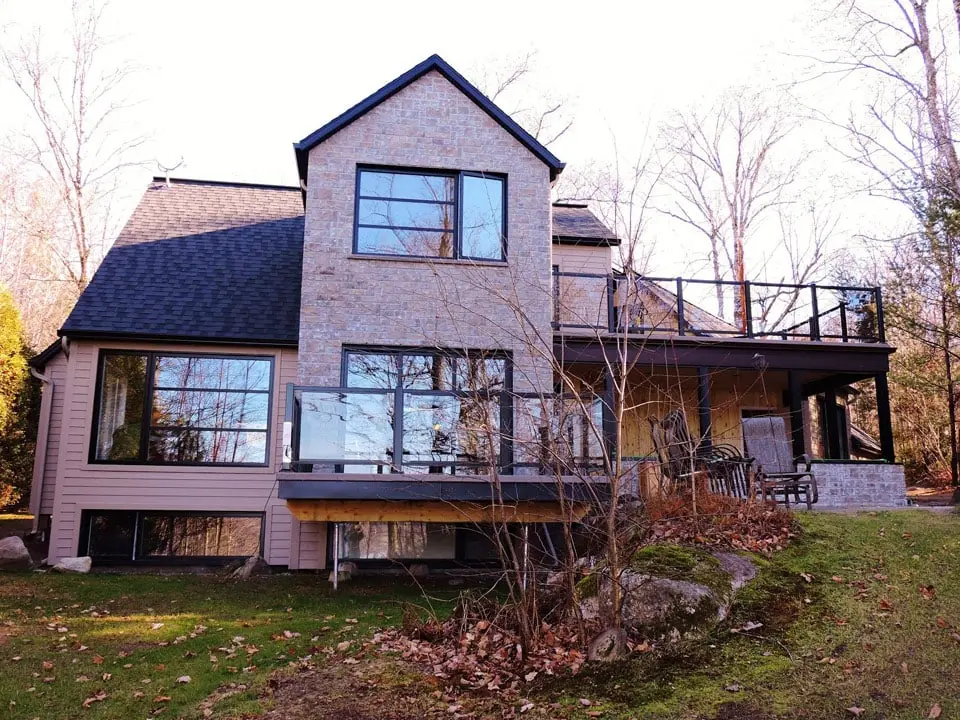
Systems with Aluminum or Stainless Steel Posts
This option combines the strength of a metal post system with the transparency of glass inserts.
Design: Structural posts are spaced according to the system design, panel width and thickness, applicable loads, and manufacturer requirements. The glass panels are inserted into channels or secured with side-mounted clamps.
Glass thickness: Some framed systems are designed to accommodate 10 mm glass, while others require a different thickness or glass composition. The glazing must meet the specifications of the approved system and the applicable design loads.
Advantages: These systems provide high structural rigidity and are available in several post colours, such as matte black, commercial bronze, and white, making it possible to coordinate the railing with the home’s window frames and exterior finishes.
To determine the safest system for your property, request quotes from contractors who specialize in glass guardrails.
Glass Railing Safety Requirements in Canada
Source: Demex Decks Inc
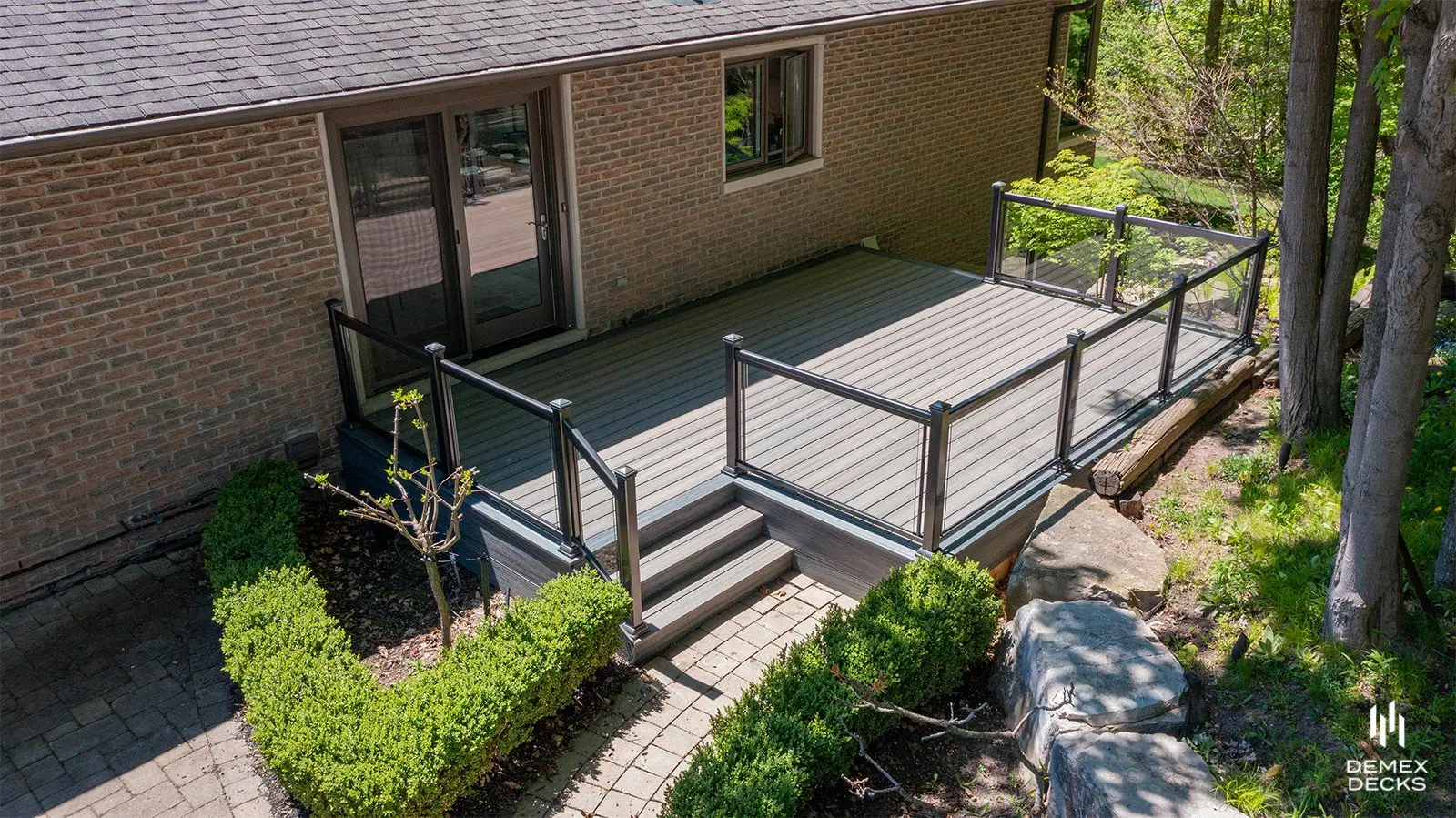
A guardrail is not merely a decorative feature. It is a regulated safety system intended to prevent serious falls. Glass railing installations must comply with the building code adopted in the province or territory where the property is located (CCQ in Quebec), as well as any applicable municipal requirements.
1. Required Guardrail Height
The minimum height of a guardrail generally depends on the vertical distance between the deck surface and the adjacent finished ground.
Building-code requirements vary across Canada. Depending on the jurisdiction, a guardrail may not be required when a deck is close to grade, while elevated decks typically require a guardrail measuring approximately 900 mm or 1,070 mm high. Different requirements may apply near a pool, along stairs, on sloped properties, or in other specific configurations.
Before beginning the project, confirm the applicable height and fall-distance thresholds with your city and the building code authority in your province or territory.
2. Required Safety Glass
Ordinary untreated float glass is generally unsuitable for use as safety glazing in a guardrail. The glazing must comply with the applicable building-code provisions and incorporated standards, including CAN/CGSB-12.1 where required. The selection must also account for the glass’s structural role, fastening method, and the overall guardrail design.
Tempered glass: This glass undergoes heat treatment that increases its impact resistance to approximately four or five times that of standard glass. If it breaks, tempered glass generally fragments into many small pieces that are less likely to cause deep cuts than large shards of ordinary glass. However, the fragments can still cause injury.
Laminated glass: This material consists of two sheets of glass bonded with a plastic interlayer, such as PVB or SGP. If the glass breaks, the interlayer can retain a large portion of the fragments. However, the panel’s ability to continue providing fall protection depends on its composition, fastening system, and residual strength after breakage.
3. Resistance to Impact and Wind Loads
The complete guardrail system must be designed to withstand the loads prescribed by the applicable code for its use and location. These may include concentrated, linear, and other structural loads. Compliance cannot necessarily be determined using a single horizontal load value.
Because glass panels form a solid surface, they can transfer significant wind loads to the posts, spigots, fasteners, and deck framing. The system must therefore be designed according to the loads applicable to the building and its location.
Key Steps for Installing a Glass Railing on a Deck
Source: RenoQuotes
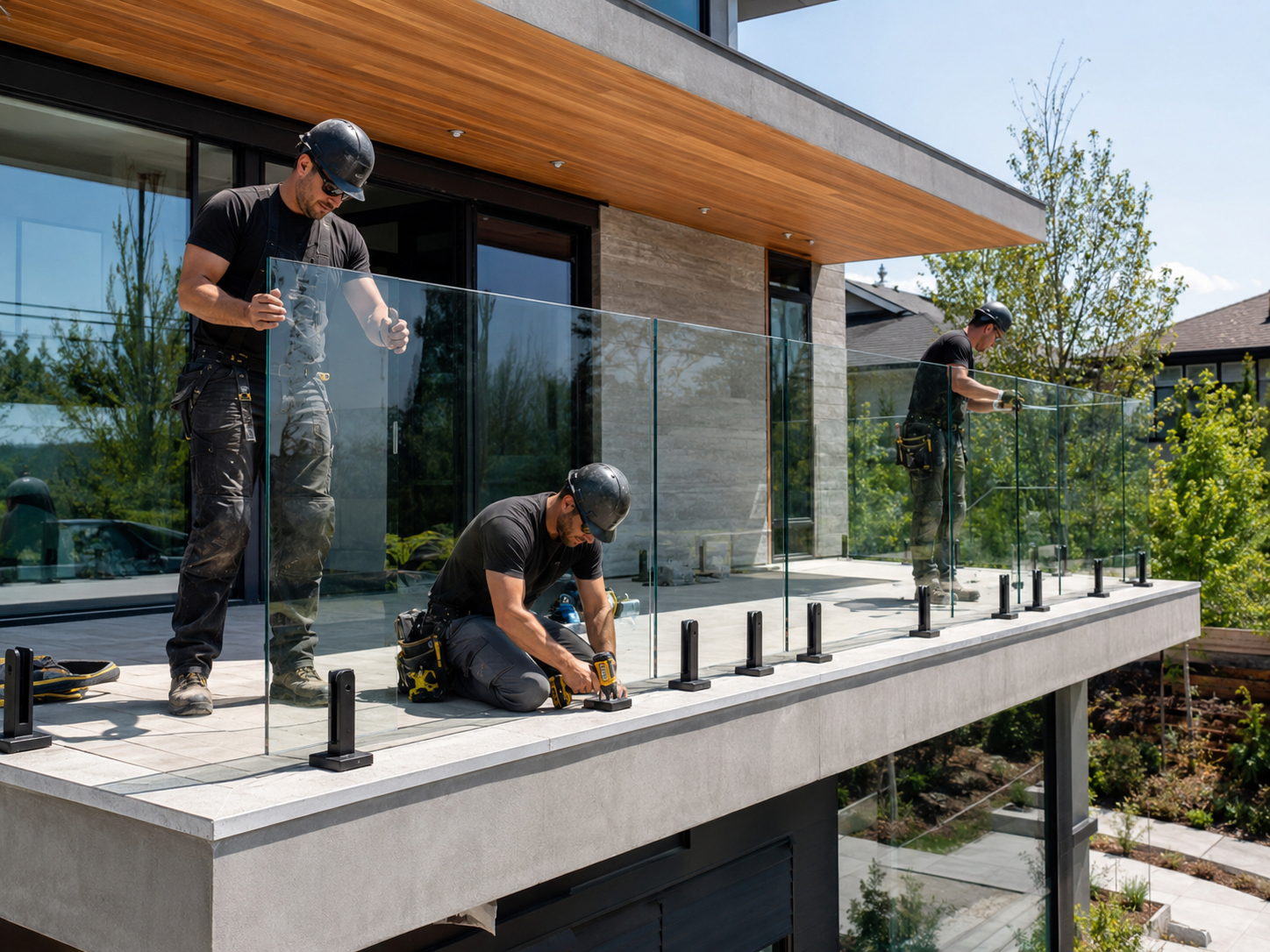
A successful installation depends on careful preparation of the supporting structure. Excessive movement or deflection in the deck framing can create visible panel misalignment and place additional stress on the fasteners.
Step 1: Reinforce the Framing
This is one of the most important parts of the installation. Spigots and posts must never be fastened only to the deck board, whether the surface is composite or cedar.
The framing must provide adequate support for the guardrail fasteners. Depending on the deck configuration, this may require structural blocking, reinforcement of the rim joist, additional framing members, or another solution designed to transfer loads into the main structure. The type, diameter, length, spacing, and embedment depth of the fasteners must comply with the system design, the manufacturer’s instructions, and professional plans where required.
Step 2: Mark and Align the System
Use a laser level to mark a straight reference line around the perimeter of the deck. Posts, spigots, and panels must be aligned according to the tolerances and installation instructions provided by the system manufacturer. Waterproof shims may be used beneath mounting plates to correct alignment where the deck surface has a slight drainage slope.
Step 3: Install the Hardware and Fasteners
Use the fasteners specified by the manufacturer or structural design. Their material, diameter, length, and quantity must be compatible with the supporting material and the loads being transferred. For a concrete structure, use the specific fastening system detailed by the manufacturer or structural design, such as mechanical anchors or threaded rods secured with structural epoxy.
Step 4: Handle and Position the Panels
Glass that is 12 mm thick weighs approximately 30 kg per square metre. Depending on its dimensions, a single panel may therefore weigh more than 40 kg.
Use double-cup glass-handling suction lifters.
Protect the panel corners during transportation. Tempered glass offers greater mechanical resistance than ordinary glass, but its edges remain particularly vulnerable to impact.
Insert the glass into clamps fitted with neoprene rubber gaskets, check that the panel is plumb, and tighten the hardware to the torque specified by the manufacturer.
Maintenance and Resistance to Canadian Winters
Source: Patio Boulianne & Fils inc.
Homeowners often wonder how glass panels will perform during Canadian winters, particularly when exposed to heavy snow, freezing rain, and repeated freeze-thaw cycles.
1. Performance in Freezing Conditions
Tempered glass offers greater resistance to thermal shock than ordinary glass. However, its actual performance depends on its composition, thickness, edge quality, and exposure conditions. Properly designed and installed safety glass normally withstands the expected winter conditions. Nevertheless, excessive loads, impacts, pressure on the glass edges, and accumulations beyond the system’s design limits should be avoided. Ice build-up at deck level may also exert pressure on the system. The clearance beneath the panels promotes drainage and can reduce the buildup of water or ice against the glass, but does not guarantee that winter accumulation or pressure will never occur.
2. Cleaning and Removing Water Spots
To preserve the clarity of the glass without spending every weekend cleaning it:
Water-repellent treatment: A hydrophobic treatment that is compatible with the glazing and hardware may make maintenance easier. Review the manufacturer’s recommendations before applying any product, particularly to avoid contact with gaskets, metal finishes, or factory-treated surfaces. Performance and durability vary depending on the product, exposure, and maintenance.
Gentle cleaning: Use warm soapy water or water mixed with white vinegar, followed by a rubber squeegee. Avoid abrasive powders and metal scouring pads, which can scratch the glass or damage the aluminum finish.
3. Snow-Removal Precautions
During winter, clear the deck with a snow broom or plastic shovel. Avoid striking the panels, their edges, or the fasteners, as impacts may damage the glass, gaskets, and hardware.
Hire a Properly Licensed Contractor
Although glass railing kits are available from major home improvement retailers, hiring a qualified deck and railing contractor can reduce the risk of an improper installation.
An inadequately secured glass panel or poorly reinforced supporting structure can create a serious safety hazard. Handling large 12 mm glass panels also requires suitable lifting equipment and proven experience.
Contractor licensing and registration requirements vary by province and territory. Verify that the contractor holds any licence, registration, or certification required in your jurisdiction and is authorized to perform the proposed work (RBQ in Quebec). Holding a licence alone does not guarantee that every installation will be fully compliant, so homeowners should also review the contract, proposed products, plans, and installation methods.
Ask for current proof of liability insurance and verify the scope and amount of coverage before work begins.
Ensure that the contract clearly identifies the warranties covering labour, fasteners, glazing, and hardware, including their duration, exclusions, and claims procedure.
An Elegant, Safe, and Durable Glass Railing for Your Deck
Source: RenoQuotes
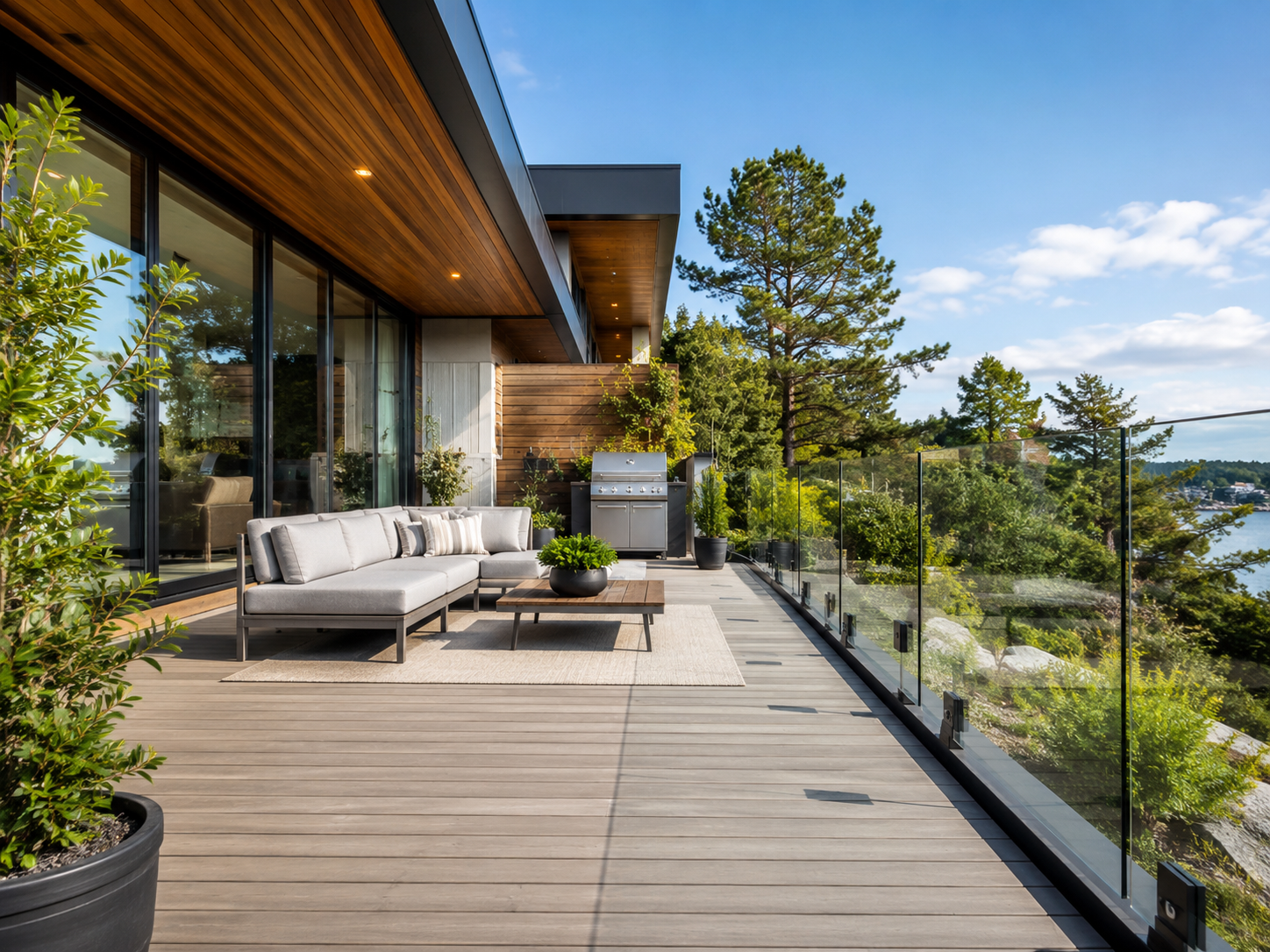
Installing a glass railing on a deck is a durable way to modernize a backyard. It preserves sightlines, performs well in Canadian weather when properly designed, and can help improve the property’s curb appeal.
To complete your project successfully:
Confirm the minimum guardrail height required under the building code and municipal rules applicable in your area.
Require an approved safety-glazing product that is compatible with the selected guardrail system. Its composition and thickness must meet the manufacturer’s specifications, panel dimensions, and applicable loads.
Ensure that the framing provides adequate structural support for the fasteners, in accordance with the system requirements and professionally prepared plans where necessary.
Hire a qualified contractor who meets the licensing or registration requirements in your province or territory.
Give your outdoor space a new dimension this season!
Looking for something else?
Related articles
The latest industry news, interviews, technologies, and resources.
Léa Plourde-Archer
•12 Aug 2025
Choosing a new garage door implies taking into account both technical and esthetical aspects, all whilst picking a door that suits your budget. What are the most important factors to take into account when making a choice?

Editorial Team
•08 Nov 2023
The windows of your home are one of the most complex and important structural elements. Not only do they allow natural light and air to enter, bringing the outdoors inside, they also keep all the unwanted outdoor elements where they belong: outside! It is important that the windows of your home are resistant to whatever comes at them.

Cynthia Pigeon
•22 Jul 2026
Owning an older or heritage home in Canada comes with undeniable architectural charm, whether it is a century-old duplex in Montréal, a Victorian house in Ontario, or a historic property in the Maritimes. However, restoring these buildings can also reveal hidden challenges. One of the most serious environmental risks is the presence of lead-based paint.
Editorial Team
•05 Dec 2023
Storage space for some, unfinished room for others, yet thanks to its size the basement is a part of the house brimming with possibilities. Whether you’re ready to invest or get inventive, there is no limit to your comfort. Make your basement transformation a reality without having to quash your creativity.
Cynthia Pigeon
•22 Apr 2026
For a basement apartment (often referred to as a secondary suite) to be considered compliant in Canada in 2026, several requirements must generally be met, including those based on the National Building Code of Canada and applicable municipal bylaws. Common criteria typically include a minimum ceiling height of around 1.95 m (6 ft 5 in), egress windows providing a minimum unobstructed opening of approximately 0.35 m² per bedroom, and proper fire separation between units. That said, requirements can vary significantly depending on the province, municipality, and type of building. Failing to comply may lead to serious consequences, such as fines, insurance limitations, or restrictions on renting out the unit.