Interior Demolition Costs in Quebec: A Guide to Prices per Square Foot
By Cynthia Pigeon
Updated on June 11, 2026
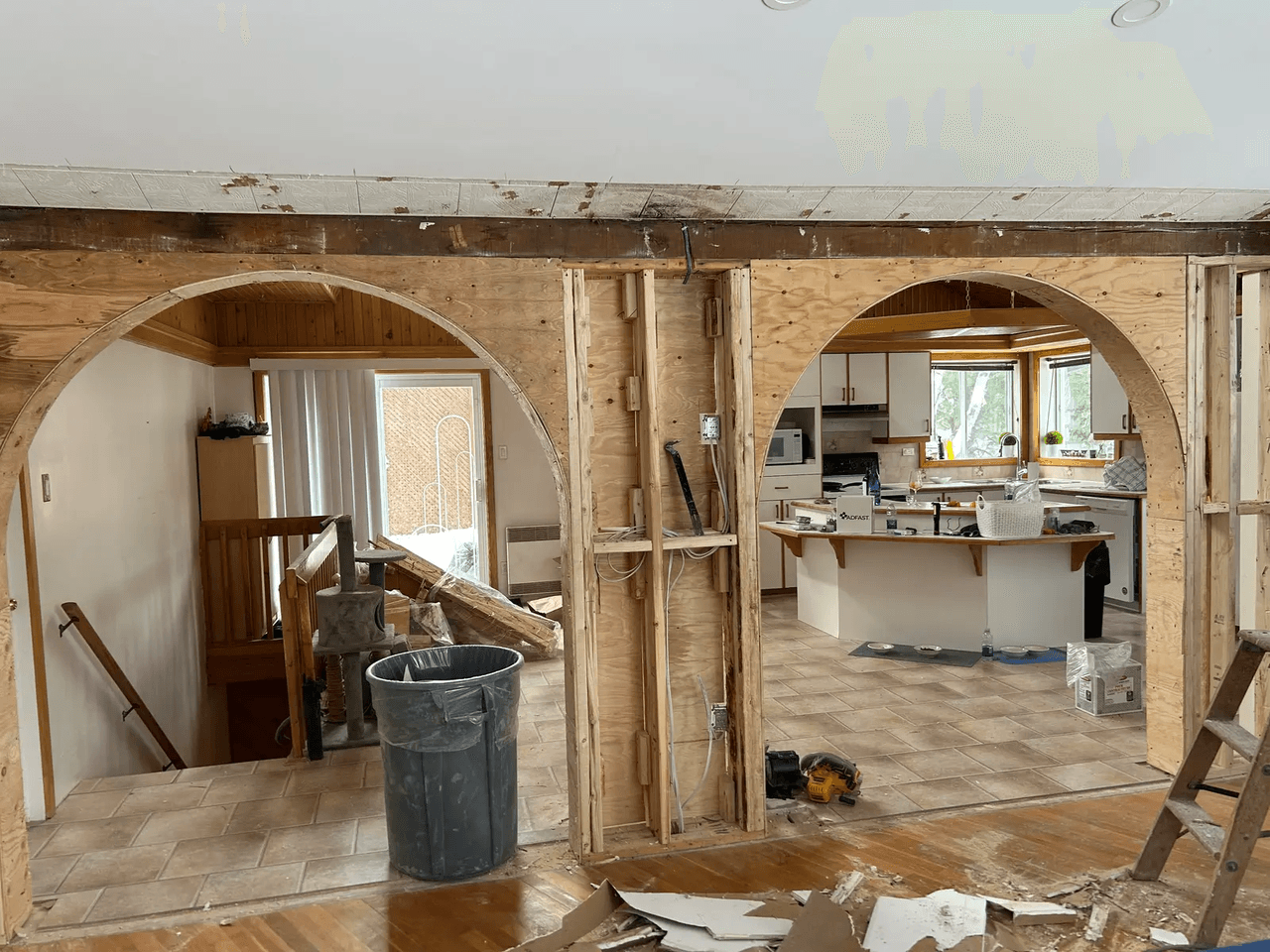
Whether you are planning the complete transformation of an ancestral duplex on Plateau-Mont-Royal, modernizing a suburban kitchen, or fully redesigning corporate offices in downtown Québec City, interior demolition is the crucial first step in your project. Often referred to as “stripping” when the goal is to expose the structure, this type of work requires far more than sledgehammers and manpower.
To avoid budget surprises and extra costs during the project, it is essential to understand how demolition costs are structured in Quebec in 2026. This complete guide provides a transparent overview of indicative rates per square foot, economic cost factors, and the generally applicable legal obligations currently in force.
What Is the Average Cost of Interior Demolition per Square Foot?
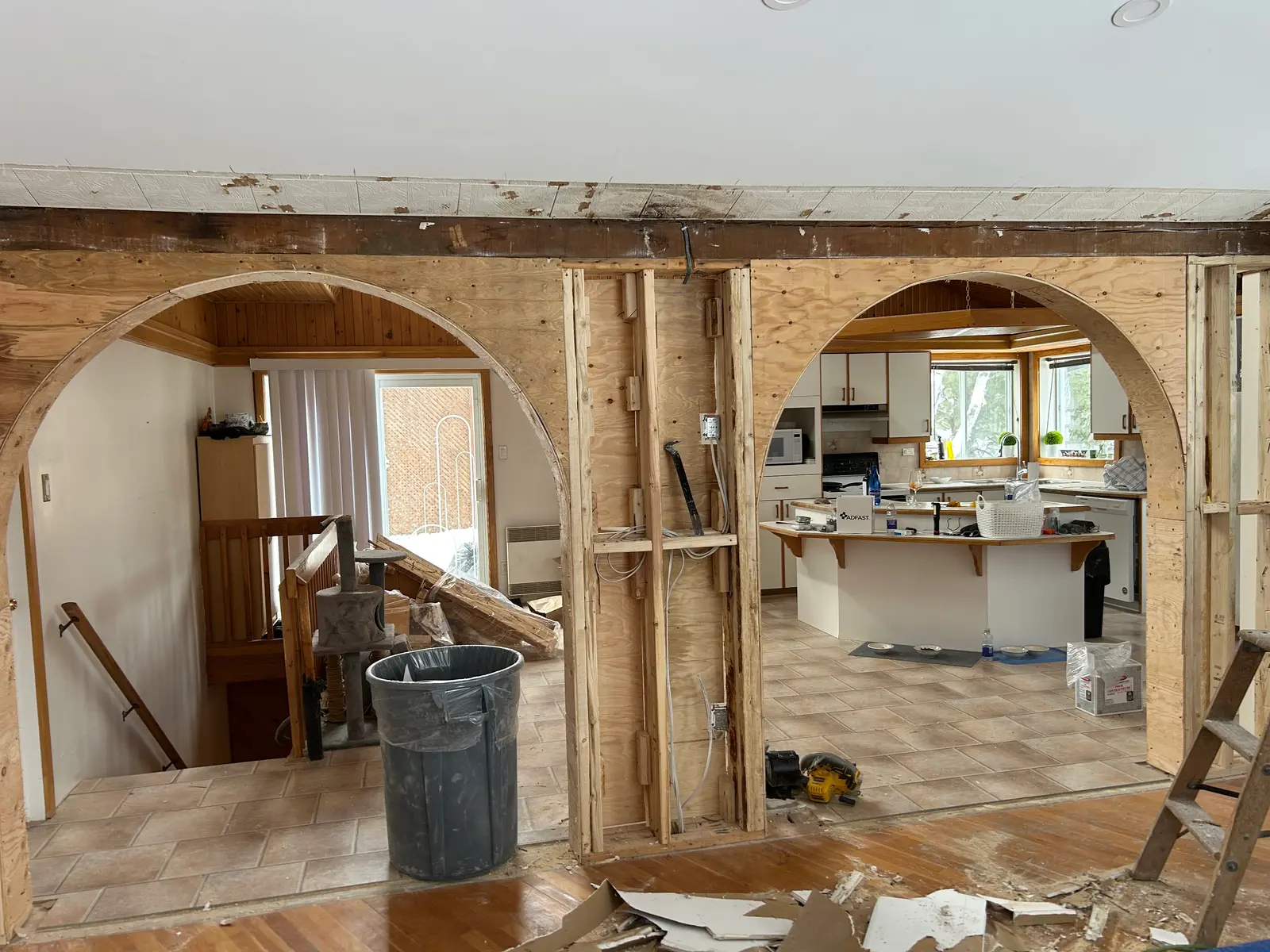
Source: Construction-Rénovation Clavel Inc.
The cost of a demolition project is almost always calculated based on square footage. This allows estimators to quantify the volume of materials to remove, the labour time required, and the transportation logistics involved. Rates vary significantly depending on the building’s use, whether residential or commercial, because construction methods and safety requirements differ.
Project Type | Indicative Price Range (per sq. ft., estimate) | Typically Included Elements |
|---|---|---|
Light Residential (Kitchen, Bathroom) | $5 to $10 | Removal of drywall, flooring, cabinets |
Complete Residential (Full Stripping) | $10 to $15 | Removal of partitions, ceilings, insulation, non-structural plumbing |
Standard Commercial (Partitioned Offices) | $8 to $18 | Removal of drywall partitions, carpeting, suspended ceilings, light fixtures |
Heavy Commercial / Industrial | $18 to $25+ | Demolition of concrete slabs, steel structures, complex HVAC systems |
These prices are indicative and may vary depending on the region, access, site complexity, and municipal requirements. For an actual project, always consult specialized contractors and verify the regulations in effect.
Rates for Quebec's Residential Sector
In the residential sector, demolition projects often target specific rooms or an entire property before reconstruction. For the removal of non-load-bearing partitions made of drywall panels and wood studs, the cost may fall, depending on the project, at the lower end of the range, around $5 to $8/sq. ft. (estimate).
However, the situation changes when the home’s architecture is modified:
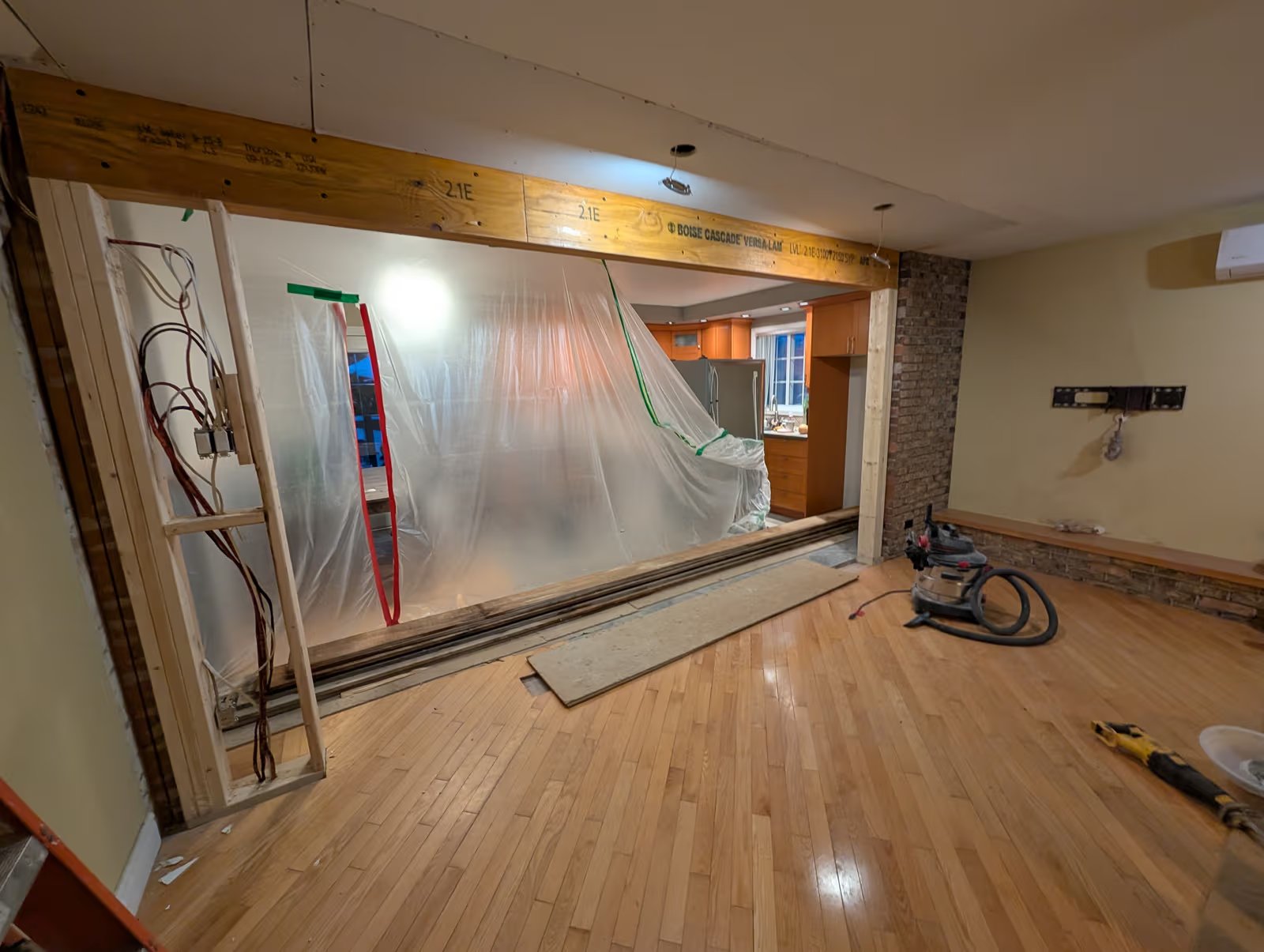
Load-bearing walls: If the demolition involves changing structural loads, the involvement of a structural engineer is required. Removing a load-bearing wall and installing a support beam, often made of steel or engineered wood, adds significant technical costs that greatly increase the unit cost per square foot for the affected area.
Ancestral homes: Buildings constructed before the 1950s, which are common in older neighbourhoods in Montréal, Québec City, or Trois-Rivières, present specific challenges such as lath and plaster, the well-known “wood strips and mortar” system. This is much heavier and dustier to remove than modern drywall, which can push the rate, depending on the project, to $12 to $15/sq. ft..
To obtain a precise evaluation adapted to your home’s configuration, you can request a renovation quote to plan your stripping work safely.
Rates for Commercial and Corporate Spaces
The commercial sector shows higher rates, ranging from $8 to $25 per square foot. This is due to the inherent complexity of business infrastructure.
Corporate job sites involve major constraints:
Complex mechanical systems: Demolition teams must work around ventilation systems (HVAC), fire sprinkler networks, IT cable pathways, and high-voltage electrical conduits that require careful identification and disconnection by a specialized contractor.
Work outside regular hours: To avoid disrupting nearby businesses or the daily operations of an office tower, heavy or noisy demolition work is frequently scheduled in the evening or on weekends. Labour hourly rates may therefore increase due to evening or weekend premiums, depending on construction collective agreements.
Robust materials: The use of reinforced concrete structures, concrete blocks, or steel-stud partitions requires heavier and more powerful industrial equipment, increasing operating costs.
Key Factors That Influence Project Costs
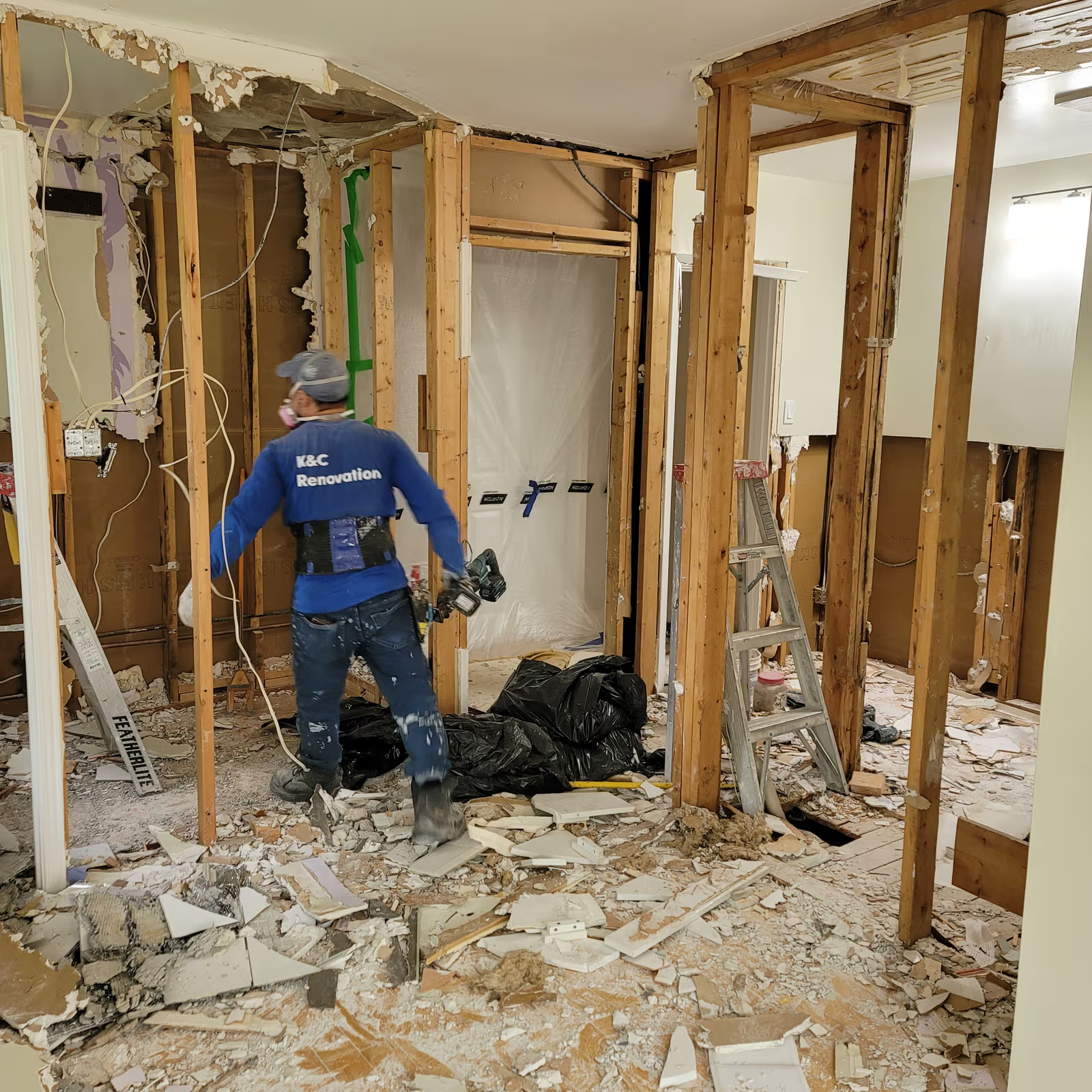
Source: KC Renovation
The price per square foot provided during an initial estimate is indicative. Several on-site variables can cause the final invoice to increase or decrease.
Site accessibility is one of the most underestimated criteria for property owners. If workers can throw debris directly through a window into a waste container located in the driveway, productivity is maximized. However, if construction debris must be carried down three flights of stairs through a spiral staircase or transported through a shared commercial freight elevator located at the other end of a building, manual handling doubles, which directly affects labour costs.
The machinery used also plays a role. Using electric mini-excavators, to avoid gas emissions indoors, or remote-controlled demolition robots can speed up the work, but it also involves significant specialized equipment rental fees.
Debris Management and Container Fees
Waste management represents a substantial portion of a demolition budget. In Quebec, there is a strong emphasis on source sorting and the recovery of debris to avoid large-scale landfill disposal.
Costs related to waste management include:
Container rental: The rental cost of a waste container varies according to its size, measured in cubic yards, generally from 10 to 40 yards. For a standard 20-cubic-yard model, prices may vary, depending on the region and contractor, between approximately $450 and $700 for a one-week period (estimate).
Disposal fees (weighing fees): Quebec ecocentres and sorting centres charge for material disposal by weight, by the ton. Disposal rates for construction, renovation, and demolition debris may vary depending on the region and sorting centre; they often range from approximately $95 to $140 per ton (estimate). Since drywall and concrete are very heavy, proper management involves separating metals, which have resale value, from the rest of the debris to reduce the bill.
Asbestos and Lead Removal and Remediation Cost
This is a factor that can double, or in some cases even triple, the initial cost of an interior demolition project, depending on the situation. If your property was built before 1980, asbestos may be present in certain materials, such as plaster squares, joint compounds, insulation such as vermiculite, or vinyl floor tiles, and must be verified.
CNESST regulations impose safety requirements for work involving asbestos. Before starting demolition work in a building constructed before 1980, and strongly recommended up to 1990, it is often required, depending on the type of work and the context, to have a material characterization study performed by a specialized laboratory.
If the analyses come back positive:
The costs of a demolition site under asbestos containment may vary depending on the complexity and often range from approximately $25 to $65/sq. ft. (estimate; sometimes more for complex areas).
The budget must account for the installation of sealed negative-pressure zones, the purchase of individual respiratory protection equipment, and the transport of asbestos debris bags to specific authorized technical landfill sites.
Standards, Permits, and Legal Obligations in Quebec
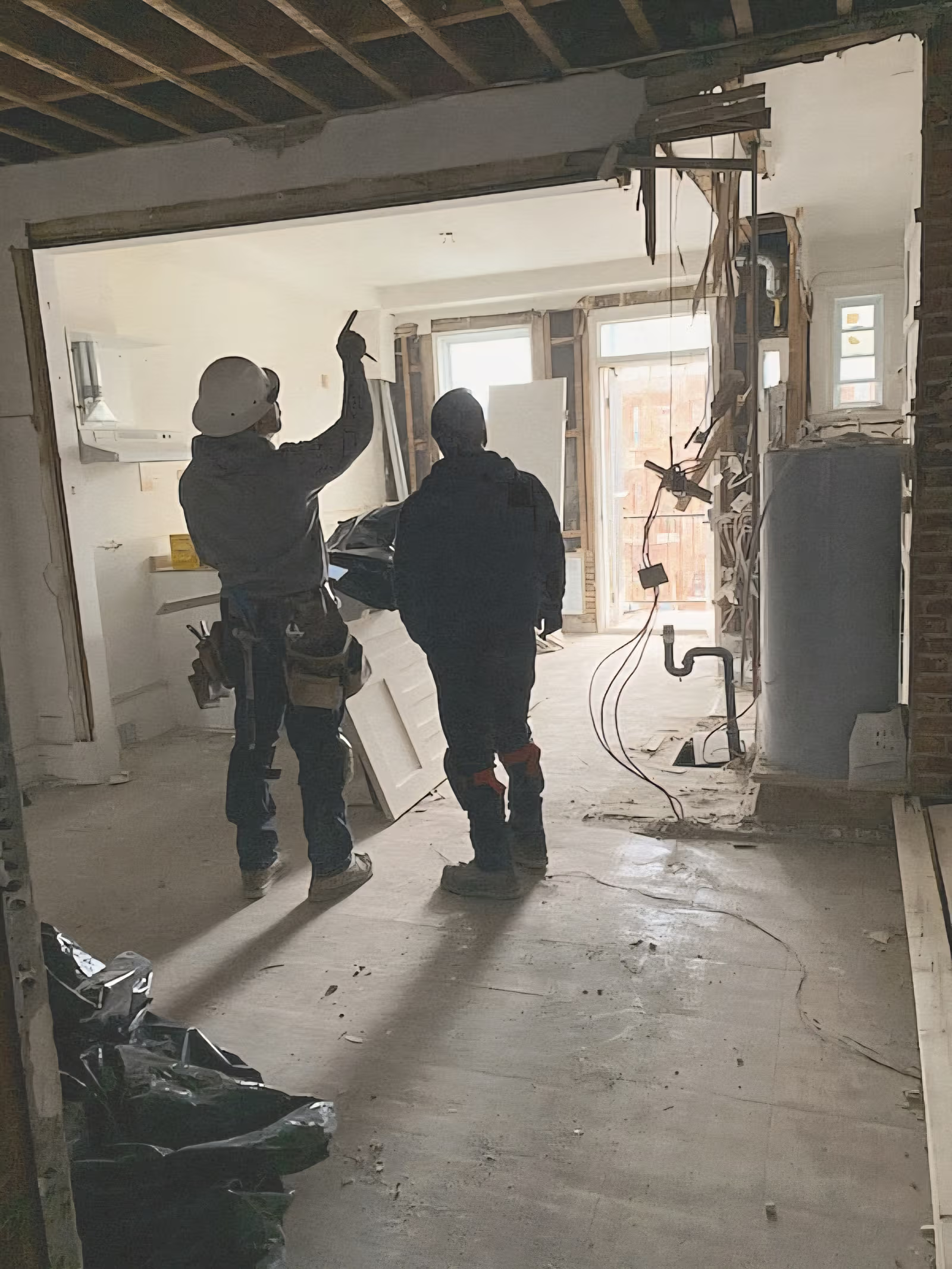
Source: Brawk Construction Inc.
To complete your project without exposing yourself to work stoppages or steep administrative fines, compliance with Quebec’s regulatory framework is mandatory.
RBQ Licence: A Non-Negotiable Requirement
In Quebec, most demolition work that affects the structure or important building components requires the involvement of a contractor holding a valid licence from the Régie du bâtiment du Québec (RBQ); requirements must be verified according to the type of project. Depending on the exact nature of the project, the company must hold the appropriate subcategories; the exact subcategory must be verified in the RBQ public registry, as categories may vary depending on the type of demolition.
Subcategory 1.4: Contractor for residential buildings covered by a guarantee plan, if the demolition is part of a complete reconstruction.
Subcategory 2.6: Concrete structure contractor, if interior slabs are being removed.
Subcategory 2.7: Site work and structure contractor, a broader category that includes demolition.
Hiring an unlicensed worker or company may leave you exposed to fines imposed by the RBQ, potentially amounting to several thousand dollars, and may compromise your home or commercial insurance coverage in the event of a collapse or major damage.
Municipal Regulations and Occupation of Public Property
Pricing and the permits required vary greatly depending on the municipality where the work takes place:
City of Montréal: Montréal boroughs may require a transformation or demolition permit, including for interior work, as soon as partition walls or plumbing are affected; requirements vary depending on the borough and the project. In addition, if you need to place a waste container on the street or sidewalk because there is no space on your property, a permit to occupy public property is often required, depending on the municipality. Occupation fees are calculated according to the number of days and the linear space occupied.
Québec City and Sherbrooke: Urban planning rules are also strict. Obtaining a renovation/demolition permit may require submitting a residual materials management plan showing where and how debris will be sent to local sorting centres or ecocentres.
How to Obtain a Realistic Project Quote
Source: Construction Gerico
To maximize the profitability of your investment and validate the accuracy of the prices per square foot being proposed, it is recommended to compare several separate quotes, for example, three.
When analyzing proposals from local demolition contractors, make sure to validate the following points:
Level of detail: The quote must clearly indicate whether the price includes removing floor coverings, removing ceilings, sorting materials, and disposal fees at the ecocentre or sorting centre. A quote that is too general, such as “Basement demolition: $8,000,” leaves room for extras.
Logistical inclusions: Check whether the cost of renting the waste container and, where applicable, obtaining permits to occupy public property are handled by the contractor or remain your responsibility.
Site protections: A good professional will include the installation of dust barriers, such as polyethylene plastic partitions, protection for floors that must be preserved, and the use of air filters or air scrubbers to maintain acceptable air quality in the rest of the building.
To begin comparing options efficiently and safely, do not hesitate to use specialized matchmaking platforms to find a general or specialized contractor who has, depending on the case, the required liability insurance and accreditations to transform your space according to industry standards.
Looking for something else?
Related articles
The latest industry news, interviews, technologies, and resources.
Cynthia Pigeon
•19 Sep 2026
Toilet installation costs $260 to $960 in Canada with the fixture included, and most homeowners pay around $520 for a standard two-piece toilet supplied and installed. Labour alone runs $150 to $400 if you've already bought the toilet.
Editorial Team
•10 Sep 2026
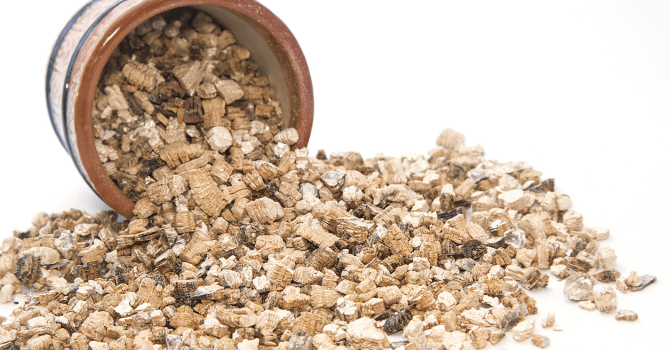
Vermiculite, the insulation that every homeowner who bought a home built before 1990 dreads finding, has made headlines many times for all the wrong reasons.

Editorial Team
•08 Oct 2025
Streets, parks, playgrounds, wetlands, river systems even, are all the makings of landscape architects. At first glance, their expertise, coupled with their vision, is far greater than one might think.

Christine Simard
•08 Nov 2023
Thinking of renovating your kitchen or bathroom floor? There are already several materials on the market that can give you a professional and original finish, which will give your room a breath of fresh air. If you've been considering slate for your new home improvement project but are still unsure, maybe this information can help you!
Editorial Team
•08 Nov 2023
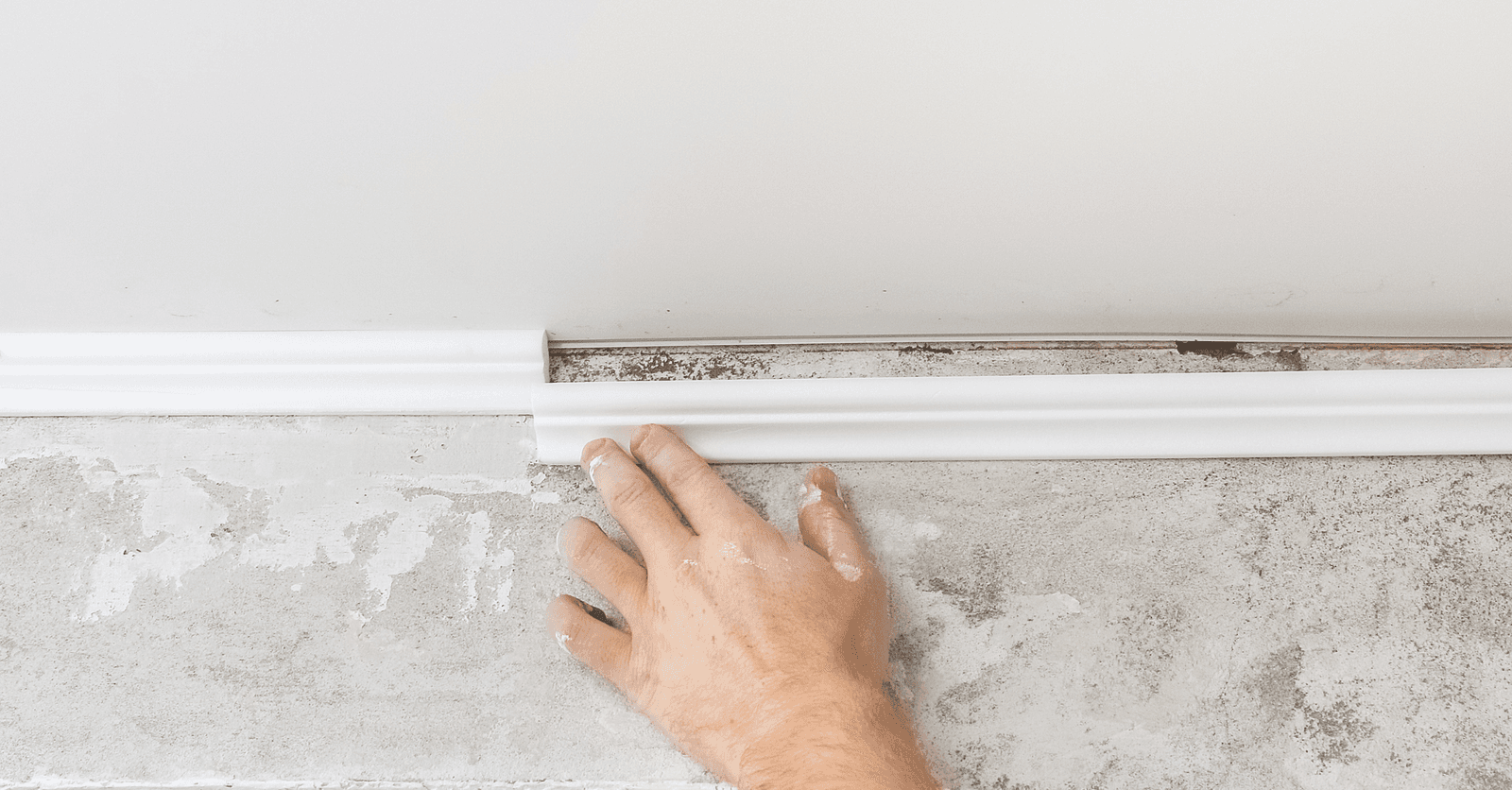
Are you in the process of renovating a part of your home and would like to create an impeccable finish? Adding moulding, like quarter rounds, is indispensable in this regard and will surely add a lot in terms of aesthetics. Want to know more about this type of moulding? Keep reading!