Renovation Permits in Montréal: Fees and Examples
By Cynthia Pigeon
Updated on May 28, 2026
Maintaining, expanding or modernizing a property on the island of Montréal requires careful planning. Whether you are restoring the foundation of a century-old duplex after a harsh winter or reconfiguring the interior layout of a condo, projects must comply with the municipality’s regulatory requirements. Due to the effects of Quebec’s climate, including freeze-thaw cycles, summer humidity and heavy snow loads, structural components and building envelopes often require frequent and durable interventions.
To avoid financial surprises and administrative delays, it is essential to understand how the cost of a permit application or authorization certificate is determined. This complete guide presents the City of Montréal’s official calculation rules, the minimum fees currently in effect, and the terms related to permit renewal or to carrying out work without a permit. However, not all work automatically requires a permit, but all work must still comply with applicable municipal regulations. When in doubt, it is best to check with your borough before starting.
How Much Does a Rnovation Permit Cost in Montréal?
Source: RenoQuotes
In Montréal, the cost of a renovation permit is not a single flat fee chosen at random. The system is based on a proportional formula indexed directly to the declared value of the work. According to the City of Montréal, the base cost of a renovation permit is calculated at a rate of $9.80 per $1,000 of the total estimated cost of the work.
The declared value must realistically reflect all expenses related to the project. It includes not only the cost of materials, such as wood, insulation, siding and plumbing, but also the value of the labour required to carry out the work, even if you decide to complete part of the project yourself over the weekend. The municipal administration uses this approach to ensure fairness between projects.
When reviewing the file, the borough may verify whether the declared value of the work is consistent with the scope of the project. If it appears too low, supporting documents, such as a contractor’s quote, may be requested.
This base formula is provided by the City of Montréal for calculating the cost of a renovation permit. However, required documents, timelines and certain technical requirements may vary depending on the borough, the type of building, the nature of the work or whether the property is located in a heritage area.
Minimum Fee for a Residential Building
When a permit is required for work on an exclusively residential building, the City of Montréal applies a minimum fee of $167.40.
This amount automatically applies when the calculation based on the $1,000 increments results in a lower amount. This minimum threshold applies to a wide range of homes on the island:
Single-family homes, whether detached, semi-detached or row houses
Condominium apartments
Residential income properties such as duplexes, including triplexes, fourplexes and apartment buildings
For example, if you are simply planning to replace two front-facing windows to improve thermal insulation before the arrival of cold weather, and the total cost of the work is $5,000, the theoretical calculation would result in an amount below the established minimum. Therefore, the minimum amount of $167.40 would be charged by your borough office. This amount covers the administrative fees related to file review and, when needed, compliance checks carried out by the borough.
Minimum Fee for Commercial and Mixed-Use Buildings
Regulatory, fire safety and universal accessibility requirements are much more complex for buildings that welcome the public or host commercial activities. Because city engineers and urban planners may need to carry out more in-depth reviews, the starting fees reflect this increased workload.
When a permit is required for a commercial, industrial, institutional or mixed-use building, the applicable minimum fee is $491.70.
The concept of a mixed-use building is especially important in Montréal, where thousands of traditional buildings include a business or shop on the ground floor and residential units on the upper floors, especially along major streets such as Boulevard Saint-Laurent or Avenue du Mont-Royal. If you are planning renovations affecting the foundation, roof or overall structure of this type of building, the applicable minimum fee could be the one for commercial, industrial, institutional or mixed-use buildings, namely $491.70. It is best to confirm the applicable category with your borough.
How to Estimate the Cost of Your Permit

Source: RenoQuotes
To avoid distorting your budget forecasts when shopping for materials and choosing service providers, you can estimate the base cost of your municipal authorization. The mathematical formula can be summarized as follows:
The permit cost is calculated by dividing the total value of the work by $1,000, then multiplying the result by the applicable rate of $9.80.
Formula: Permit cost = (total value of the work ÷ $1,000) × $9.80
Example:
For work valued at $35,000: $35,000 ÷ $1,000 = 35 | 35 × $9.80 = $343.00
The permit would therefore cost $343.00.
If the result is below the minimum threshold for your building category, either $167.40 or $491.70, the minimum amount applies.
To make this clearer, here are three concrete examples based on common project types in Montréal.
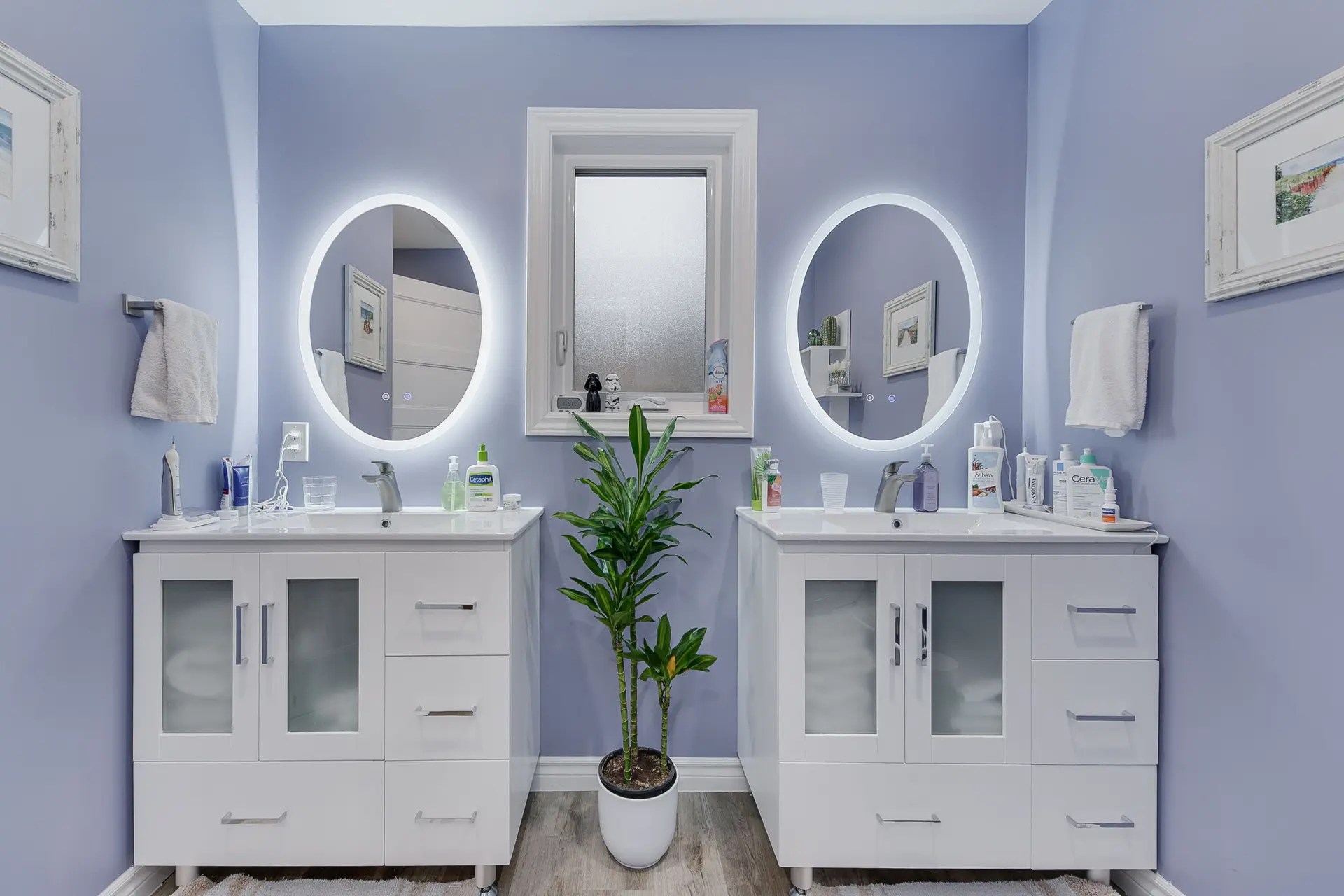
Example 1: Complete Kitchen and Bathroom Renovation in a Triplex Residential Building
Source: Barrie Renovations
Project description: A property owner wants to modernize the wet rooms in a unit located in a triplex in the Rosemont–La Petite-Patrie borough. They hire a professional after comparing several proposals to obtain quotes from qualified contractors.
Total estimated value of the work: $35,000
Calculation: $35,000 ÷ $1,000 = 35 | 35 × $9.80 = $343.00
Fees to pay: Since the result, $343.00, is higher than the residential minimum fee of $167.40, the owner will pay exactly $343.00 to obtain the renovation permit.
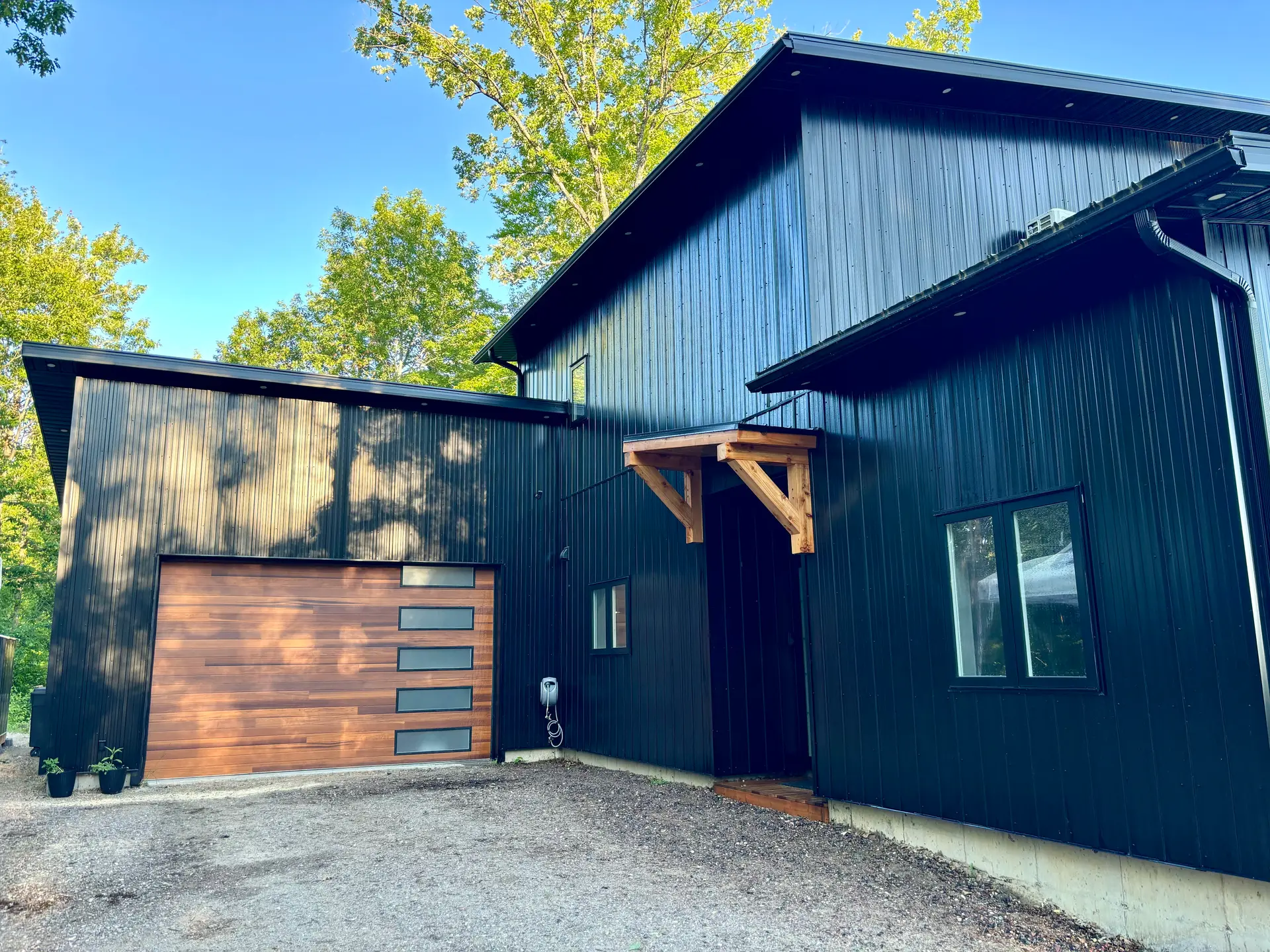
Example 2: Replacing a Residential Garage Door and Minor Balcony Repairs
Source: Groupe Boisvert Construction Inc.
Project description: The owner of a single-family home in LaSalle needs to replace an exterior garage door damaged by frost and refresh the balcony railings.
Total estimated value of the work: $8,500
Theoretical calculation: $8,500 ÷ $1,000 = 8.5 | 8.5 × $9.80 = $83.30
Fees to pay: The amount of $83.30 is below the city’s minimum threshold. The minimum fee rule applies: the owner must pay the mandatory amount of $167.40.
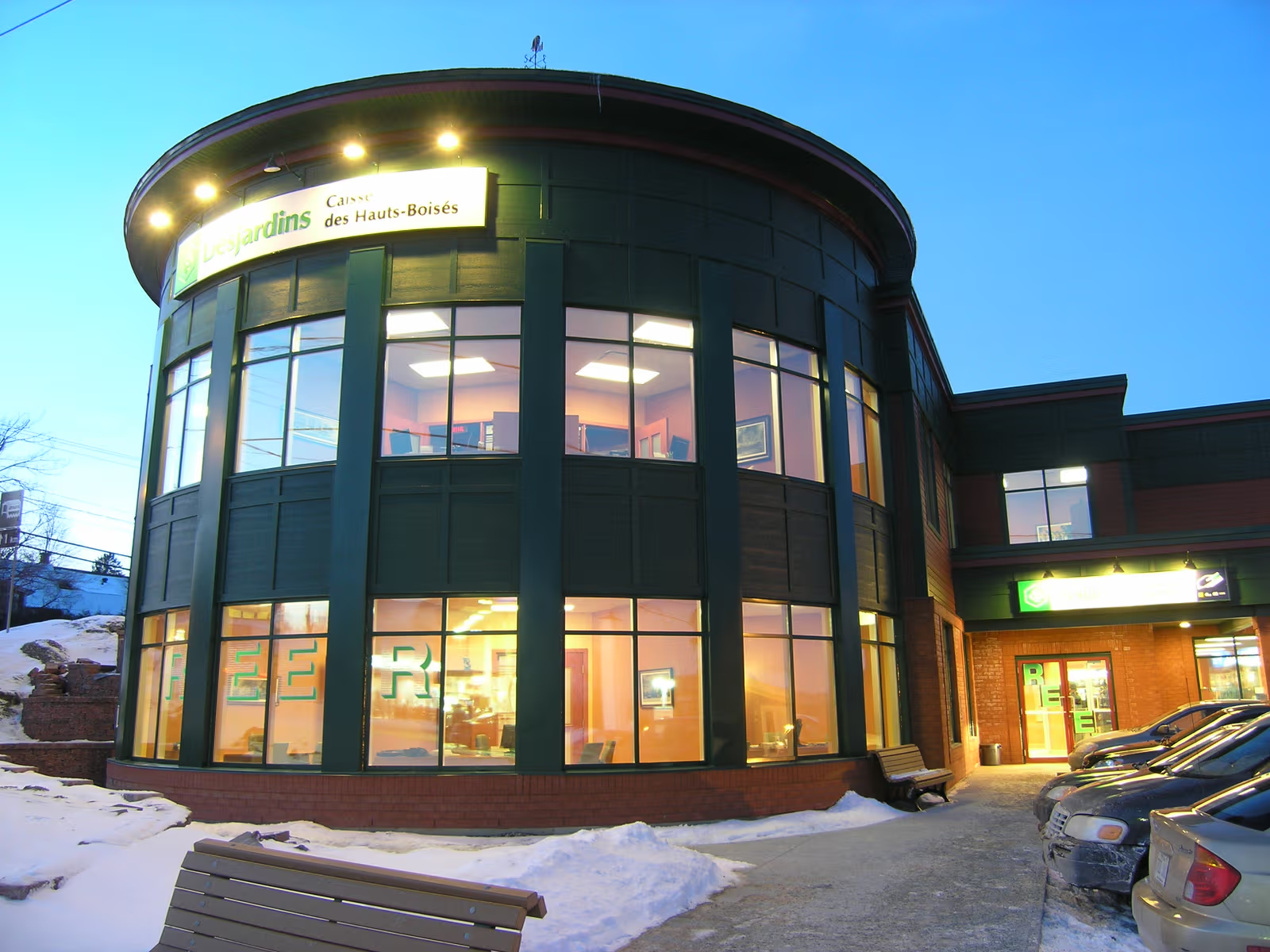
Example 3: Major Façade Repair on a Commercial Building in the Plateau-Mont-Royal Borough
Source: David Leslie Architecte
Project description: A property manager must consolidate masonry and replace storefront windows for a street-facing business. Before beginning the process, they use reference tools to properly estimate the budget for the work.
Total estimated value of the work: $120,000
Calculation: $9.80 per $1,000 $120,000 ÷ $1,000 = 120 | 120 × $9.80 = $1,176.00
Fees to pay: The final cost required for issuing the renovation permit will be $1,176.00.
Renovating Without a Permit in Montréal: What Are the Risks?
Some property owners may be tempted to begin renovation work quietly in order to save on permit fees or speed up the start of their project. This decision can lead to significant financial, administrative and legal consequences.
First, municipalities employ inspectors whose main role is to ensure compliance with urban planning regulations. A simple report from a neighbour, the prolonged presence of a waste container in the street or the appearance of new materials on a historic façade visible from the public road can trigger an unexpected inspection visit.
If a municipal inspector finds that structural or major work is being carried out without a valid authorization certificate, they may issue a notice of violation, require the work to stop or request that the file be regularized.
The financial consequences of such a situation can be serious:
Administrative fines: Fines can vary depending on the borough, the nature of the offence and the type of offender. In some cases, they can reach several hundred or several thousand dollars and may accumulate if the work continues without regularization.
Obligation to bring the work up to code or demolish it: If the work does not comply with the building code or the borough’s specific zoning rules, the city may require the newly completed work to be demolished or impose very costly corrective modifications.
Problems during real estate transactions: When shopping for a property, cautious buyers and real estate brokers often carefully check the permit history with the city. If major renovations, such as converting a duplex into a single-family home or fully finishing a basement, were carried out without official approval, this can complicate the transaction, lead to lower negotiations, delay the sale or require the seller to cover regularization costs.
Possible complications with insurance: In the event of a loss, work carried out without a permit or without complying with applicable standards may also complicate an insurance claim, especially if the work is connected to the cause of the damage.
To ensure full compliance on your project, it remains essential to find a trustworthy general contractor with all required licences in good standing.
Permit Renewal: What Fees Apply?
Source: K.C. Renovation
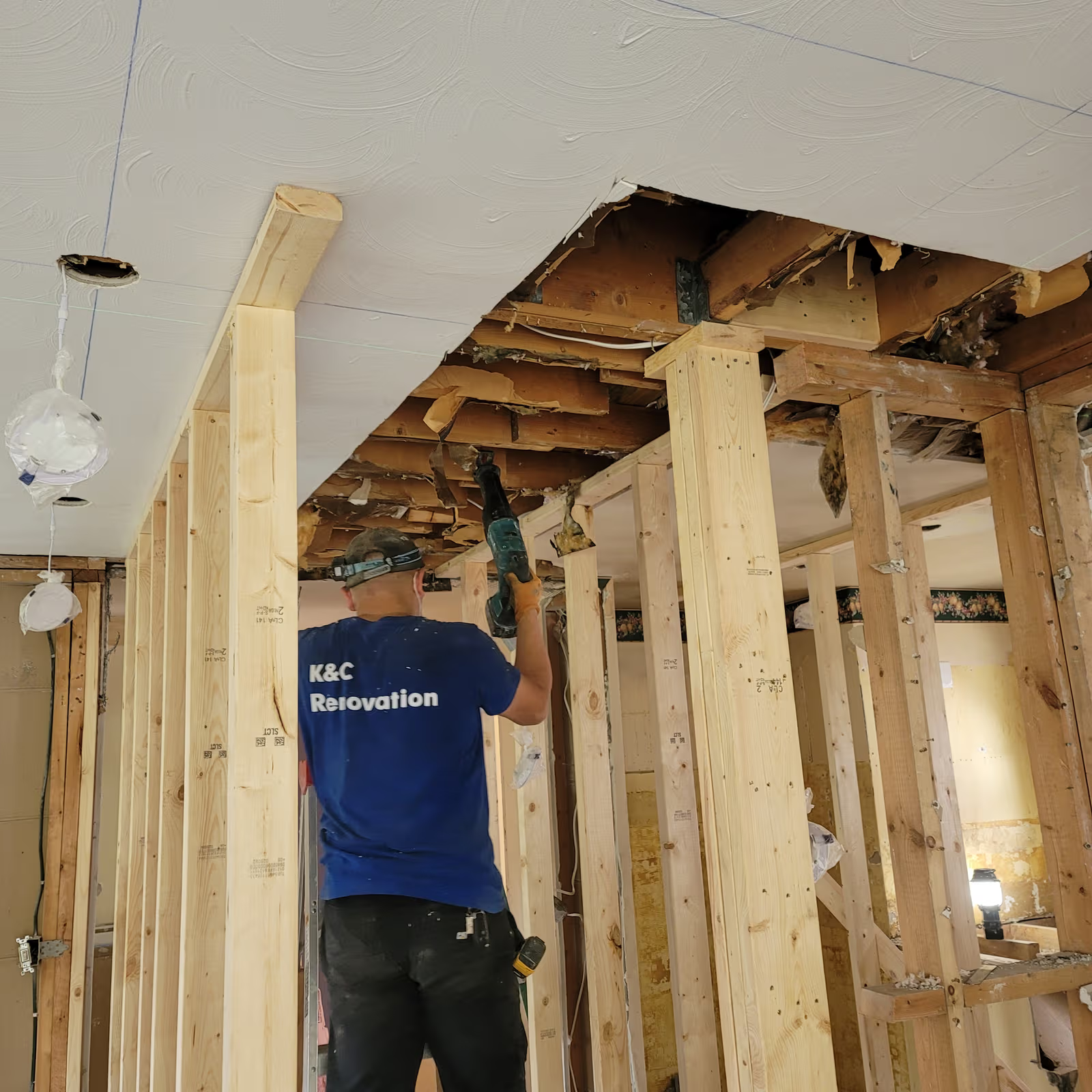
Managing a construction project can come with unexpected challenges. Delays in the delivery of specialized materials, extreme weather conditions preventing concrete pouring or structural surprises discovered after opening walls can extend the original timeline of your renovation work.
All building permits issued by the City of Montréal have a specific validity date, generally tied to the estimated scope of the project. If you realize that your work will not be completed before the expiry date listed on your official document, it is best to submit an extension request before the original permit expires.
The pricing rule for renewing or extending an existing permit is proportional: renewal fees correspond to 25% of the price paid for the original permit.
However, the municipality maintains its minimum fee thresholds. This means that the minimum amounts also apply to this procedure:
For a residential project, if 25% of the initial cost represents an amount below $167.40, this minimum amount of $167.40 must be paid to obtain the extension.
For a commercial or mixed-use building, the minimum fee required for a renewal cannot be less than $491.70.
Concrete example: Let’s return to the case of the triplex owner in Example 1, who paid $343.00 for the original permit. Due to a delay in plumbing delivery, they need to request an extension. The calculation of 25% of the original permit gives $85.75. Since this amount is below the residential minimum threshold, they will need to pay the minimum fee of $167.40 to regularize the situation and continue the work legally.
Plan your applications in advance through the City of Montréal’s online portal to avoid the complete expiry of your file, which would require you to restart the application process from scratch and pay the full fee again.
Looking for something else?