Kitchen Renovation Cost in Canada in 2026: Budget, Prices, and Tips
By Cynthia Pigeon
Updated on September 4, 2026
In 2026, the average cost of a full kitchen renovation in Canada is around $35,000 to $45,000, depending on the region. A budget-friendly refresh may start at $15,000 to $25,000, while a high-end kitchen with a large island and premium materials often exceeds $65,000.
That budget typically includes design services, cabinetry, countertops, and professional labour. This guide breaks down what each component costs, how prices differ by kitchen size and by city, and where the savings actually are. Working with qualified contractors is essential to ensure safety, compliance with local building codes, and long-term property value.
How much does a kitchen renovation cost in Canada in 2026?
Source: Versa Style Design
The kitchen is still the heart of the home and one of the most valuable renovation projects nationwide. Costs vary significantly by location, since major urban centres like Toronto or Vancouver carry higher labour and material costs than smaller cities or rural areas. Material prices, skilled labour availability, and project complexity all influence the final budget, and proper planning is what keeps a project from overrunning.
A full kitchen renovation is a major investment, but it consistently delivers one of the highest returns on investment in the residential real estate market.
Average Budget by Project Type
The total cost depends on the scope of work, material quality, and whether structural or technical changes are required. Not every kitchen needs a full remodel, and the right scope depends on the condition of the space and your long-term goals for the property.
Basic or Minor Remodel: $15,000 to $25,000
A cosmetic upgrade without major plumbing or electrical changes. This is often the most cost-effective option when the existing layout still works and the kitchen is functional but dated.
Cabinets: Melamine, basic thermofoil, or painting and refinishing existing cabinets
Countertops: Laminate, with a wide variety to choose from
Upgrades: New hardware, ceramic backsplash tile, updated lighting fixtures, and paint
Mid-Range Renovation: $30,000 to $55,000
The most common choice for Canadian homeowners seeking durability and modern design, and a good balance for those who want better functionality and resale value without moving walls.
Cabinets: Thermofoil, MDF, polyester finishes, or semi-custom cabinets
Countertops: Quartz or standard granite
Features: Simple kitchen island, upgraded range hood, new flooring, improved lighting, updated appliances
High-End Remodel: $65,000 and Up
Premium materials and fully customized layouts, better suited to kitchens needing a major redesign.
Cabinets: Solid wood or full custom lacquered finishes
Countertops: Quartzite, Dekton, or exotic natural stone
Luxury features: Built-in appliances, integrated LED lighting, heated flooring, structural changes
While a high-end remodel improves aesthetics and functionality, the budget should still make sense for the home's property value and the local real estate market.
Cost by Kitchen Size
A small kitchen doesn't cost proportionally less than a large one. The plumber, electrician, cabinet installer, stone fabricator and tile setter all attend a small kitchen the same way they attend a large one, and their call-out costs are close to fixed.
Kitchen size | Typical cost |
Small, under 70 sq. ft. (condo, galley) | $15,000 to $28,000 |
Medium, 70 to 150 sq. ft. | $25,000 to $60,000 |
Large, over 150 sq. ft. | $45,000 to $90,000+ |
Cost by Province and City
Where you live changes your budget more than almost any design decision.
Region | Mid-range kitchen renovation |
Toronto and the GTA | $40,000 to $75,000 |
Vancouver and Lower Mainland | $40,000 to $75,000 |
Calgary, Edmonton, Ottawa | $30,000 to $60,000 |
Montreal and Quebec | $28,000 to $50,000 |
Winnipeg, Halifax, smaller centres | $25,000 to $45,000 |
Toronto and Vancouver typically run 25% to 40% above the national average on trade rates alone. Provincial construction costs, labour availability, and permit fees vary enough that a national figure can mislead if you don't adjust for your own market.
Cost Breakdown by Component
Source: Peinture mur design inc.
On a mid-range project, the budget generally distributes as follows.
Component | Share of budget | On a $40,000 kitchen |
Cabinetry | 30% to 40% | $12,000 to $16,000 |
Labour and installation | 20% to 25% | $8,000 to $10,000 |
Countertops | 15% | $6,000 |
Appliances | 15% | $6,000 |
Flooring, backsplash, lighting | 10% | $4,000 |
Permits and contingency | 5% | $2,000 |
Kitchen Cabinets
Cabinetry typically represents 40% to 50% of the total budget. Across Canada, pricing is often calculated per linear foot, combining upper and lower cabinets.
Material | Price per linear foot | Characteristics |
Melamine | $250 to $400 | Affordable, easy maintenance |
Polyester | $450 to $600 | Popular, wood-like finish |
Thermofoil | $500 to $750 | Seamless, modern look |
Solid wood | $850+ | Durable, premium finish |
What that means for a whole kitchen. A typical Canadian kitchen has 20 to 25 linear feet of cabinetry. At melamine pricing that's roughly $5,000 to $10,000, while solid wood custom cabinetry runs $17,000 to $21,000 or more. Stock cabinets sit at the low end, semi-custom in the middle, and full custom cabinetry at the top.
Cabinetry and countertops are the two most volatile categories in any quote. A custom package can swing thousands based on wood species and door style alone.
Cabinet Refacing: A Cost-Effective Alternative
If your cabinet boxes are still in good condition, refacing is a smart alternative. The technique replaces only the cabinet doors, drawer fronts, and visible exterior surfaces.
Budget: Typically $6,000 to $15,000
Advantages: Faster at 2 to 5 days, less disruption, lower cost
Sustainability: Reduces material waste
Countertops
Countertops significantly impact both aesthetics and functionality. Prices typically include measurement and installation.
Material | Price per square foot |
Laminate | $35 to $70 |
Wood (butcher block) | $75 to $140 |
Granite | $100 to $200 |
Quartz | $110 to $180 |
A typical kitchen has 30 to 40 sq. ft. of counter surface, putting quartz at roughly $3,300 to $7,200 installed.
Appliances
Appliances are the most controllable line in the budget, since the cost is a function of brand tier rather than kitchen size.
Package level | Cost |
Basic (range, hood, fridge, dishwasher) | $3,000 to $6,000 |
Mid-range | $6,000 to $12,000 |
Premium or built-in | $15,000 and up |
Note that many contractor quotes exclude appliances entirely unless specified at the design stage. Confirm this before comparing two estimates. Energy-efficient models cost more upfront but improve day-to-day performance and appeal to future buyers.
Flooring, Backsplash, and Lighting
Element | Typical cost |
Flooring (tile, luxury vinyl plank, hardwood) | $1,500 to $6,000 |
Backsplash and tiling | $800 to $2,500 |
Lighting layout and fixtures | $800 to $3,000 |
Sink and faucet | $500 to $2,000 |
Backsplash cost is driven by tile choice more than by area. A feature tile adds cost without adding size.
Labour and Contractor Requirements
A kitchen renovation involves multiple trades, and requirements vary by province. Quebec requires licensing through the Régie du bâtiment du Québec (RBQ), while other provinces have their own regulatory bodies and certification systems.
Trade | Typical cost |
General installation labour | 20% to 25% of project cost |
Plumbing, existing rough-in | $1,500 to $4,500 |
Plumbing relocation (sink to island) | $2,500 to $5,500 additional |
Plumber hourly rate | $100 to $150 |
Cabinet installation, if not included | $80 to $120 per hour |
Electrical work must be completed by a licensed electrician. Hiring a general contractor is strongly recommended to coordinate all trades and ensure compliance with provincial regulations and building codes.
What Influences Your Final Cost
Source: SOLUTION RÉNOBEC Inc
Even when two kitchens are similar in size, the final cost can differ considerably.
Age of the Home
Older properties may need electrical systems, plumbing, ventilation, or structural elements updated before the renovation can proceed. They may also require a structural review if walls are being moved, openings widened, or the layout significantly changed.
Scope of the Renovation
A minor remodel keeping the existing layout costs considerably less than a full renovation involving layout changes, new flooring, plumbing upgrades, electrical upgrades, or structural modifications.
Design Complexity and Custom Features
Complex designs require more planning, labour, and materials. Custom cabinetry, premium finishes, natural stone, built-in appliances, hidden storage, and integrated lighting all increase the final budget. The more customized the kitchen, the more important it becomes to balance design goals against functionality, proportions, and long-term value.
Local Labour and Material Pricing
Labour availability, labour costs, material pricing and access to skilled tradespeople all affect both cost and timeline. This is why a kitchen renovation in a major city costs more than a similar project in a smaller market.
How to Keep Costs Under Control

Source: RenoQuotes
The single most effective way to reduce costs is to maintain the existing layout. Moving plumbing, electrical systems, or structural elements increases expenses substantially, and in Ontario, relocating a sink to an island triggers a building permit requirement under the Ontario Building Code.
Reface or reuse existing cabinets: If the boxes are sound, refacing updates the look while reducing waste and cost. Stock or semi-custom cabinetry is another step down from full custom.
Focus on high-impact updates: Painting walls, updating lighting fixtures, replacing hardware and accessories, adding backsplash tile, or improving storage capacity make a kitchen feel updated for far less than a full replacement.
Choose materials strategically: Quartz and granite are popular, but laminate, butcher block, or other mid-range options suit a budget-conscious project. The same applies to flooring, appliances, and premium finishes.
Compare multiple quotes: Get itemized estimates from qualified professionals, and confirm whether appliances are included in each one.
Buy materials opportunistically: Discontinued lines, remnant stone, and showroom promotions can cut thousands, particularly on countertops.
Phase the work: If the full scope exceeds your budget, split it rather than compromising on the parts you can't easily redo later.
Permits, Code Requirements and Timelines
Source: KAS contracting LTD
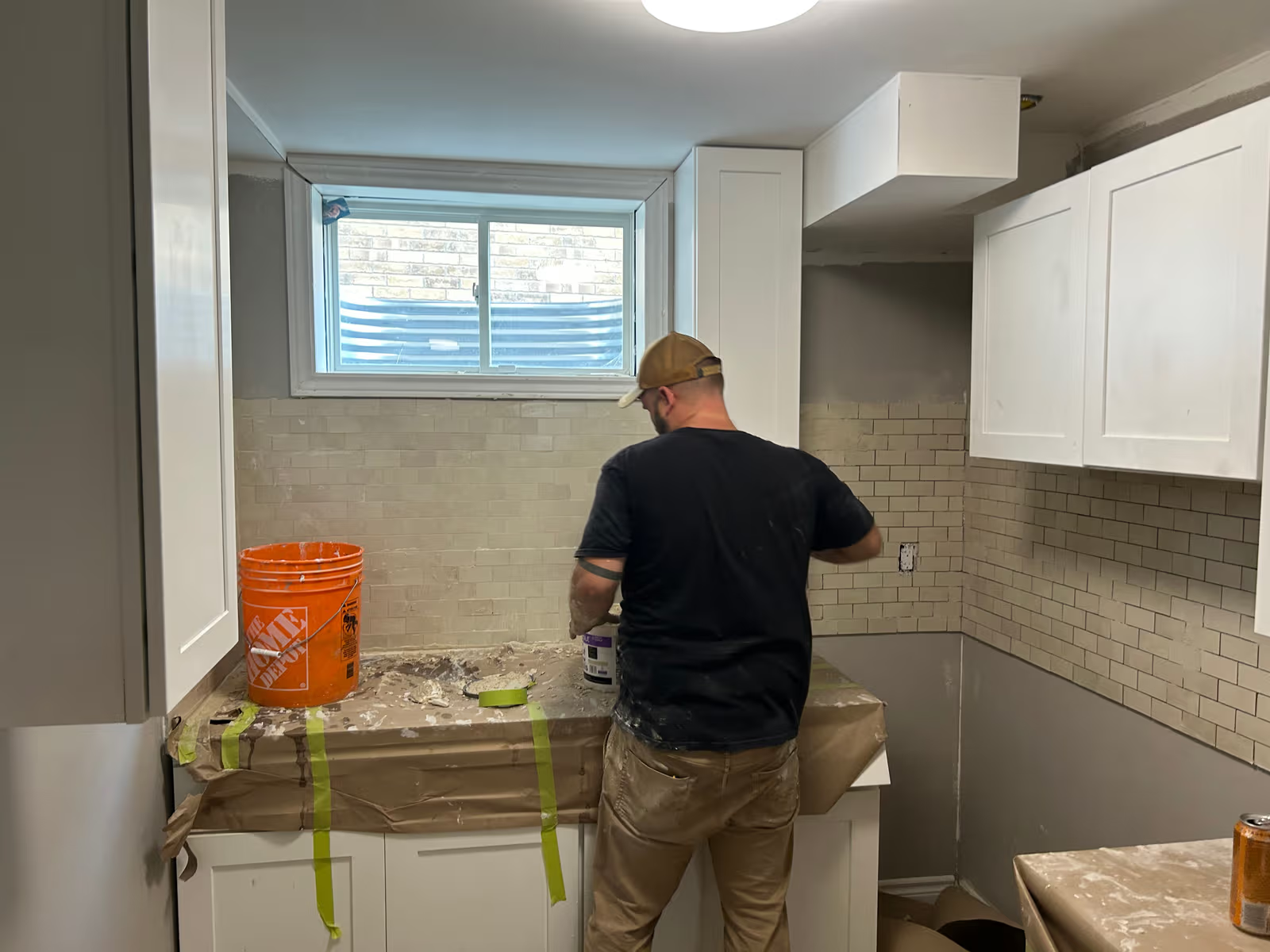
Permit requirements depend on the city, province, and type of work. Cosmetic updates usually involve fewer requirements, while technical or structural work may need permits and inspections.
When Permits May Be Required
Building permits, electrical permits, or plumbing permits may be required when the renovation includes electrical upgrades, plumbing modifications, ventilation changes, or structural modifications. Most surface-finish work, including cabinet and countertop replacement, does not require a permit.
Homeowners planning work in Edmonton should check city of Edmonton permit requirements before starting if the project includes electrical, plumbing, ventilation, or structural work.
Code Requirements and Professional Work
Kitchen renovations often involve more than finishes. Electrical, plumbing, gas, and ventilation work may need to meet specific code requirements. A qualified contractor helps ensure the project is completed safely, coordinates trades, manages inspections, and supports quality craftsmanship throughout.
Typical Renovation Timelines
Timelines depend on scope and material availability. A simple cabinet refacing project may take only a few days, while a larger remodel with custom cabinetry, new flooring, layout changes, permit requirements, and delayed materials can take several weeks or more.
Return on Investment and Value
Source: A4 Group Construction Services Inc.
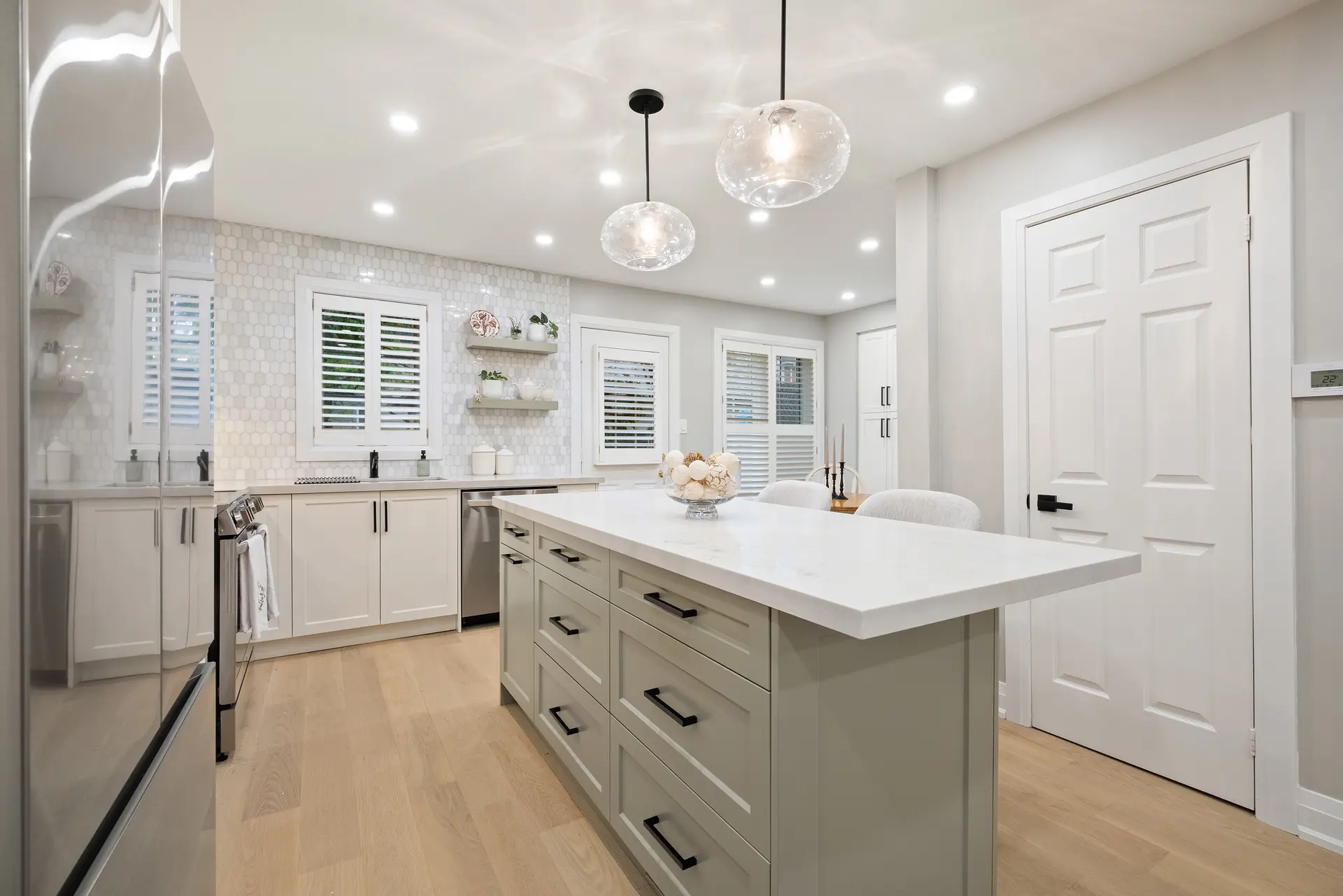
According to the Appraisal Institute of Canada, kitchen renovations offer one of the best returns on investment. There's a common benchmark for avoiding over-renovation relative to your neighbourhood:
The 10 to 15% rule: your kitchen renovation budget should generally represent 10% to 15% of your home's market value.
For a $500,000 home, a $50,000 to $75,000 renovation budget is typically justified, with most costs recouped at resale. This helps avoid over-investing relative to your neighbourhood market.
Planning Your Kitchen Renovation in Canada
In 2026, kitchen renovation costs in Canada vary widely depending on project size, materials, and complexity, with most mid-range projects landing between $30,000 and $55,000 nationally and considerably higher in Toronto and Vancouver.
The decisions that move your budget most are whether you keep the existing layout, and whether your cabinetry is stock, semi-custom, or fully custom. By relying on realistic estimates, working with qualified professionals, and comparing itemized quotes, you can create a kitchen that is both functional and financially sound.
FAQ
How much does a kitchen renovation cost in Canada?
A full renovation averages $35,000 to $45,000 nationally. Budget refreshes start at $15,000 to $25,000, mid-range projects run $30,000 to $55,000, and high-end kitchens exceed $65,000. Toronto and Vancouver run 25% to 40% above these figures.
How much do kitchen cabinets cost?
Cabinetry runs $250 to $400 per linear foot for melamine and $850 or more for solid wood. A typical kitchen with 20 to 25 linear feet costs roughly $5,000 to $10,000 in melamine or $17,000 to $21,000 in custom solid wood. Cabinetry is 40% to 50% of most kitchen budgets.
Is cabinet refacing worth it?
Yes, if the cabinet boxes are structurally sound. Refacing costs $6,000 to $15,000 against $15,000 or more for full replacement, takes 2 to 5 days instead of weeks, and delivers most of the visual change.
How long does a kitchen renovation take?
Cabinet refacing takes a few days. A mid-range remodel typically runs three to six weeks. A full renovation with custom cabinetry, layout changes, and permits can take several months, with material lead times often the longest element.
Do I need a permit for a kitchen renovation?
Not for surface-finish work like cabinet or countertop replacement. Permits are generally required for electrical upgrades, plumbing relocation, ventilation changes, or structural modifications. Moving a sink to an island triggers a permit in most Ontario municipalities.
What is the most expensive part of a kitchen renovation?
Cabinetry, at 30% to 50% of the total budget. Labour follows at 20% to 25%, then countertops and appliances at roughly 15% each.
How can I reduce my kitchen renovation cost?
Keep the existing layout, which avoids plumbing and electrical relocation. Reface cabinets rather than replacing them. Choose semi-custom over full custom cabinetry. Buy remnant stone for countertops, and shop appliance clearances.
Are appliances included in a kitchen renovation quote?
Usually not. Most contractor quotes exclude appliances unless specified at the design stage. Confirm this explicitly before comparing estimates, since a $6,000 appliance package is a meaningful difference between two otherwise similar quotes.
Looking for something else?
Related articles
The latest industry news, interviews, technologies, and resources.

Cynthia Pigeon
•08 Nov 2023
Perhaps you’re the victim of an accident that’s left you temporarily or permanently disabled. Maybe you're thinking of adapting your staircase for an individual experiencing a loss of autonomy. Perhaps your child with limited mobility is ageing and seeking independence…
Editorial Team
•27 Jan 2026
Are you looking to upgrade your kitchen with a new countertop? Here, you’ll find not only pricing but also the pros and cons of the most popular materials, including quartz, granite, laminate, and wood. We provide detailed information on each option to help you make an informed choice based on your budget, needs, and kitchen style.
Editorial Team
•08 Nov 2023
Have you finally decided to organize your garage and store away the tools that have just been piling up everywhere? Are you looking for the best storage system? If so, go for a garage storage cabinet! It’s a functional, utility cabinet that allows you to organize and secure your tools and other items. Learn more about the various types of garage storage cabinets, their features, and their advantages down below!
Editorial Team
•13 Feb 2026
An office space needs a bunch of competing elements to keep things fresh and fun while ensuring your staff stays productive. If you’re running a business and want to change up the layout or structure of the office—or if your company is growing and you’re looking into expanding—then a commercial office renovation may be on the table.

Editorial Team
•16 May 2024
Formerly restricted to commercial, agricultural, and industrial buildings, sheet metal or corrugated metal has, as of late, made its way to the residential sector. On top of having great durability, such roofing material offers a wide range of possibilities in terms of innovative architectural designs. Are you looking to have sheet metal or corrugated metal roofing installed and want more information on the matter? Read on to learn what there’s to know.