Interlocking Paver Installation in Canada: Complete Price Guide per Square Metre and Square Foot
By Cynthia Pigeon
Updated on May 19, 2026
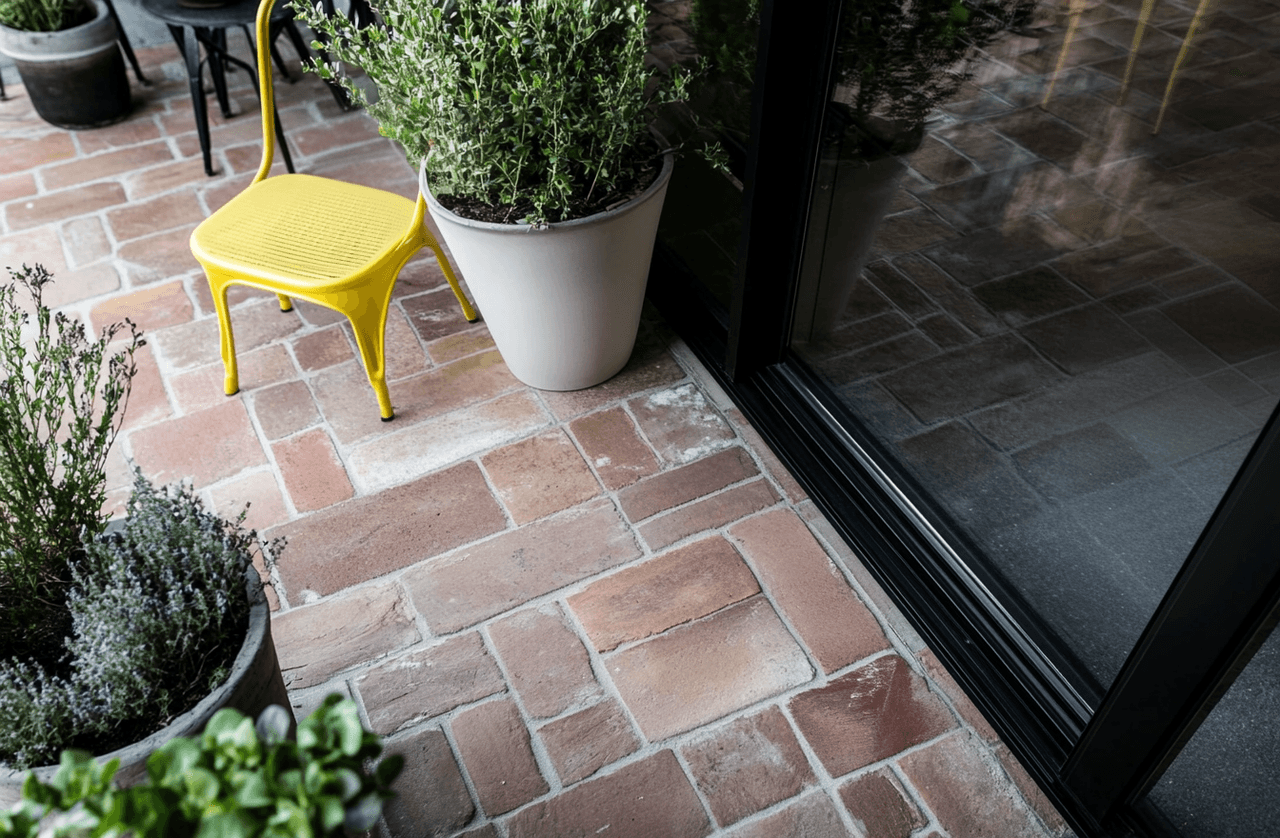
In Canada, the cost of interlocking paver installation generally ranges from $150 to $350 per square metre, or about $15 to $35 per square foot. In Quebec, prices often fall within the same range, especially for turnkey residential projects that include excavation, granular base preparation, paver installation, and labour.
The total cost varies mainly depending on the material selected, such as concrete pavers or natural stone, the complexity of the ground preparation, local labour rates, and the climate conditions in your region. In provinces with freeze-thaw cycles, including Quebec, Ontario, Manitoba, Saskatchewan, Alberta, and parts of Atlantic Canada, proper base preparation is especially important to help prevent movement, sinking, and heaving.
Interlocking Pavers in Canada: Understanding Costs Before Planning Your Project
Source: Aménagement Alpha
Planning a landscaping project is a great way to improve your property’s curb appeal, increase usable outdoor space, and make the most of the warmer months. Whether you want to redo a driveway, stabilize a parking area, or create a cozy backyard patio, interlocking pavers remain a popular option because of their durability and visual appeal.
Before shopping for materials, it is important to understand how costs are calculated. Across Canada, homeowners may see prices listed in both square metres and square feet, depending on the contractor, region, supplier, or project documents. In Quebec, even though architectural plans and some official documents may use the metric system, many local contractors still quote paving work by the square foot. This guide presents the main price ranges to help you budget your project more accurately.
What Is the Cost per Square Metre for Interlocking Paver Installation in Canada?
Source: Vert Design Paysagiste
For a standard turnkey residential project, expect an average price of $150 to $350 per square metre, or roughly $15 to $35 per square foot.
This price generally includes:
Excavation of the existing soil and disposal of debris
Supply and installation of geotextile fabric, when recommended
Purchase and compaction of the granular base
Installation of concrete pavers or natural stone
Application of polymeric sand to stabilize the joints
Specialized labour
If you choose complex patterns, architectural borders, steps, large-format slabs, or natural stone, the price can rise toward the upper end of the range or exceed $400/m² for higher-end projects. To get a more accurate estimate, it is best to compare several detailed quotes from contractors in your region.
Factors That Influence the Cost of Interlocking Paver Installation
Source: Pavemulti
The price of an interlocking paver project is never fixed. Each property has unique conditions that can affect the contractor’s method, equipment, timeline, and final quote.
Soil Preparation and Excavation Depth
Canadian climates can be hard on outdoor surfaces, especially in regions with freeze-thaw cycles, heavy rainfall, snow, or clay soil. If the granular base is not properly prepared, pavers may shift, sink, heave, or become uneven over time.
The original soil type plays a major role:
Clay soils: Common in many parts of Canada, including Quebec’s St. Lawrence Valley, southern Ontario, parts of the Prairies, and some urban areas, clay retains water and can move significantly during freeze-thaw cycles. It often requires deeper excavation, better drainage, and a thicker granular base.
Sandy soils: Sandy soils usually drain more easily and may require less excavation, depending on the project and load requirements.
In most projects, a professional-grade geotextile fabric is strongly recommended to separate the natural soil from the granular base and help prevent the base layers from becoming contaminated.
Type of Paver Selected: Concrete or Natural Stone
Material choice represents an important part of the budget.
Concrete pavers: Concrete pavers are widely available across Canada and offer a strong balance between price, durability, and design flexibility. In Quebec, well-known manufacturers include Techo-Bloc, Permacon, and Rinox, while other brands and suppliers may be more common elsewhere in Canada. Modern concrete pavers can imitate the appearance of cut stone, natural textures, or wood-inspired finishes. Material-only prices can vary significantly, but many concrete pavers fall within a broad range of $5 to $15 per square foot, depending on the product.
Natural stone: Granite, slate, limestone, sandstone, and other natural stones offer a distinctive appearance and high-end finish. However, the material cost is usually higher, and installation can be more labour-intensive because pieces may vary in thickness, shape, and size.
A high-quality polymeric sand is generally recommended to stabilize joints, limit weed growth, and reduce movement caused by insects or water infiltration.
Site Access and Yard Configuration
A landscaping contractor needs to move large quantities of soil, gravel, and pavers. Site access can directly affect labour time and equipment costs.
Easy access: A flat, wide property where mini-excavators, loaders, and delivery trucks can move freely usually helps reduce labour costs.
Restricted access: If workers must move materials by wheelbarrow or use smaller equipment because of narrow side yards, urban lots, fences, stairs, or tight spaces between buildings, labour time can increase significantly. This is common in dense areas such as Montréal, Toronto, Vancouver, Ottawa, Calgary, and older neighbourhoods in many Canadian cities.
Complex configuration: Steep slopes, surface drainage requirements, curves, retaining edges, steps, and transitions to existing walkways or driveways can all increase the technical difficulty.
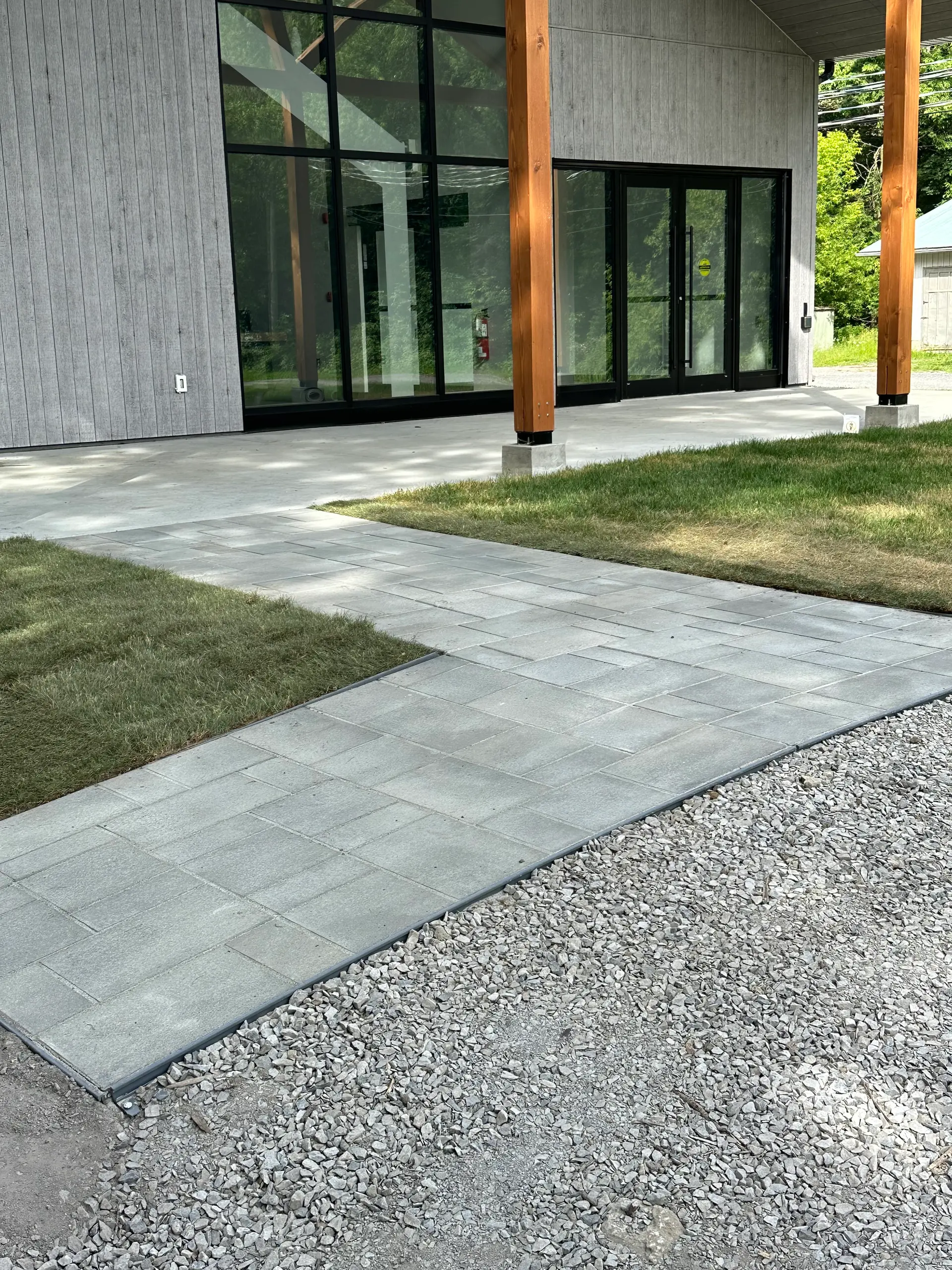
Average Installation Cost: Comparison Table per m² and sq. ft.
Source: PAYSAGEMENT DES ROCHERS INC
Here is a general price table to help you prepare a realistic budget. Prices include materials and professional installation.
Type of Project | Average Price per m² | Average Price per sq. ft. | What Is Usually Included |
Pedestrian walkway or small path | $150 to $200 | $15 to $20 | Light excavation, geotextile when needed, gravel base, standard pavers, polymeric sand |
Backyard patio or terrace | $180 to $250 | $18 to $25 | Medium excavation, bedding layer, mid-range pavers, edge restraints |
Driveway or vehicle parking area | $220 to $350 | $22 to $35 | Deeper excavation, reinforced granular base, heavy-duty pavers |
High-end project or natural stone | $350 to $500+ | $35 to $50+ | Custom excavation, natural stone or large-format slabs, complex patterns |
These prices are general estimates.
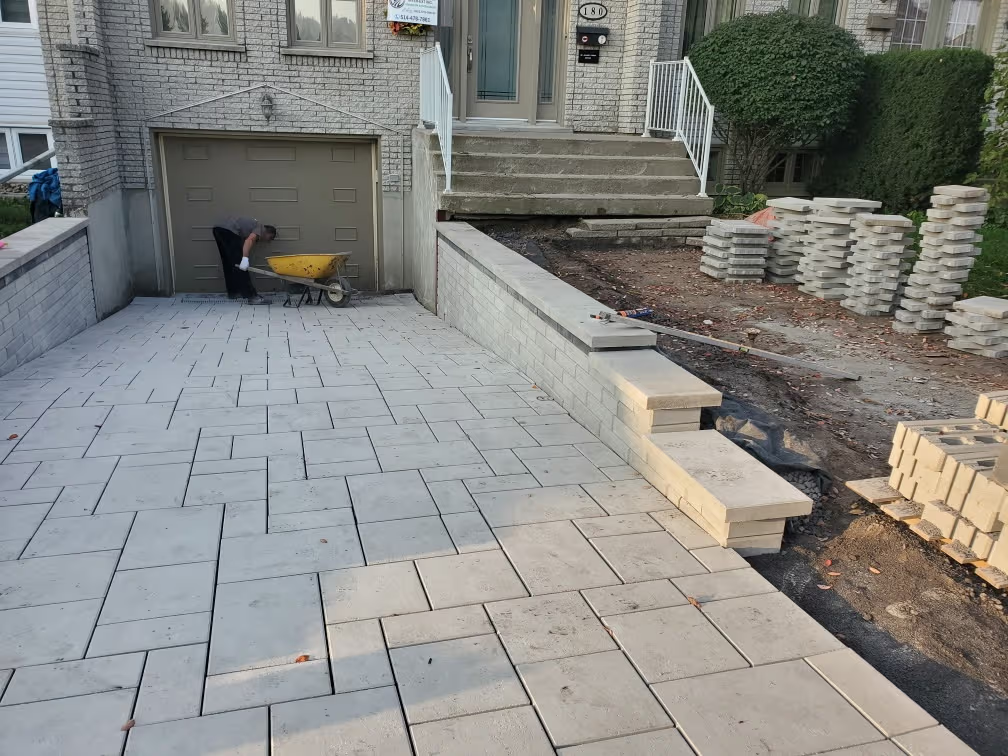
Estimated Cost for a Driveway or Parking Area
Source: Paysagiste Deneigement expert
A driveway is exposed to significant mechanical stress. Daily vehicle traffic, the weight of trucks or SUVs, snow clearing, and freeze-thaw cycles can all affect the structure.
For a driveway, the granular base often reaches 12 to 18 inches, depending on soil type, drainage, expected loads, climate, and manufacturer recommendations.
Here are two typical budget examples:
Single parking space, about 250 sq. ft. / 23 m²: Ideal for one vehicle. The total cost may range from $5,500 to $8,750.
Double parking space, about 500 sq. ft. / 46 m²: Designed for two vehicles side by side. The expected budget may range from $11,000 to $17,500.
Although the initial investment is higher than that of basic asphalt resurfacing, interlocking pavers can last for several decades when the foundation is properly built. They also make localized repairs easier, since individual pavers can often be removed and reset when needed. Unlike asphalt, they also do not require a black tar sealer every two years.
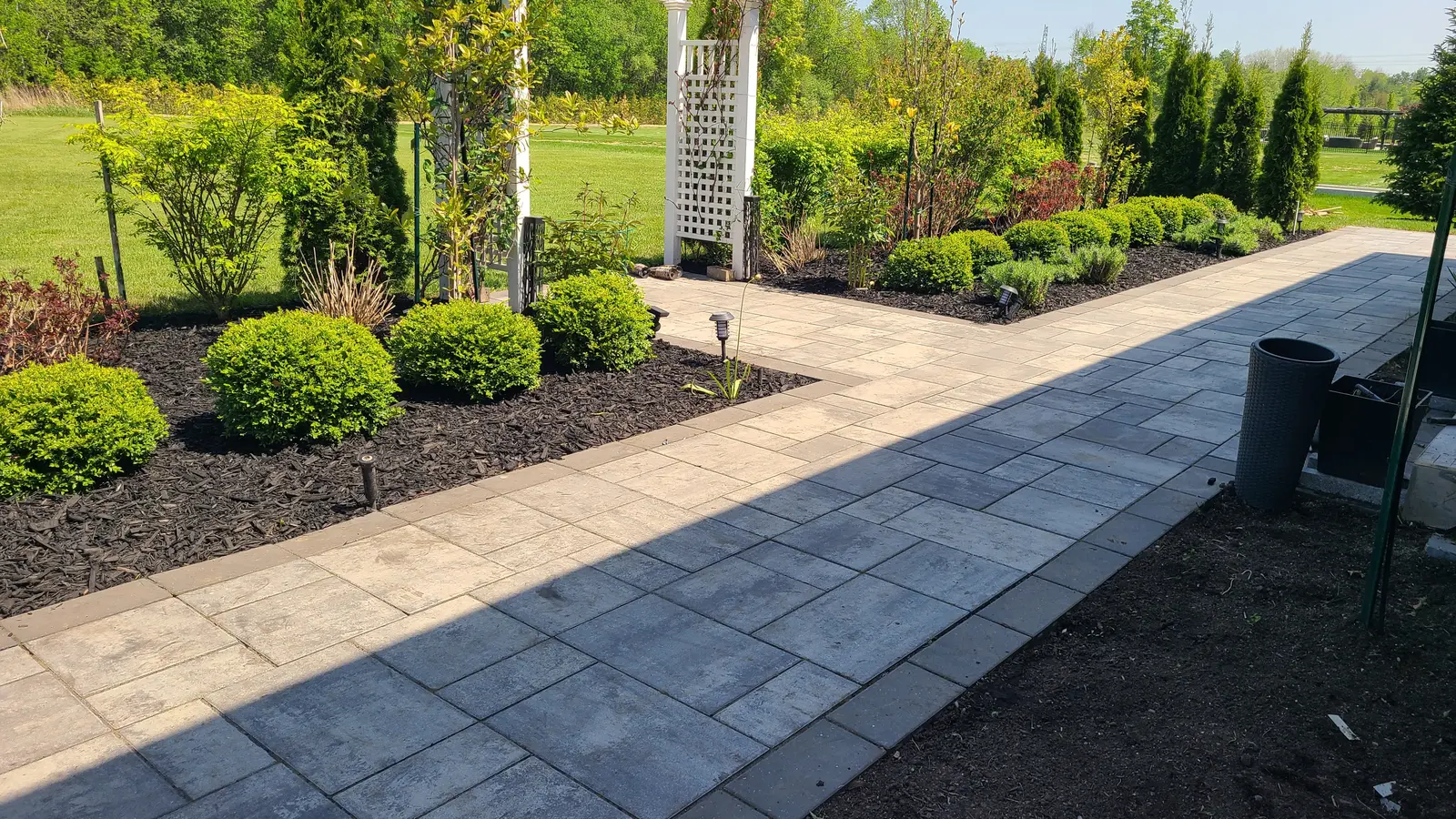
Estimated Cost for a Patio or Pedestrian Walkway
Source: Pro Era Contracting Inc
Unlike a driveway, a walkway or backyard patio does not need to support heavy vehicle loads. It mainly supports patio furniture, barbecues, pedestrians, and everyday outdoor use.
As a result, the technical requirements are usually lighter:
Excavation is generally shallower.
Less soil needs to be removed.
A smaller volume of base material is required.
For a standard 12 x 12 ft. patio, or 144 sq. ft. / 13.5 m², the cost generally ranges from $2,600 to $3,600, depending on the paver model, access, edging, and site preparation required. This type of project can significantly improve the usability of a backyard and create a more comfortable outdoor living area.
Why Hire a Qualified Contractor?
Installing pavers yourself may seem tempting, especially if you want to save on labour. However, heavy landscaping work is not very forgiving. Poor compaction, inadequate drainage, weak edging, or improper slope away from the home can lead to uneven pavers, water pooling, and even water infiltration near the foundation.
Hiring a qualified contractor is strongly recommended for three main reasons.
Licensing and local requirements: Across Canada, licensing rules vary by province and municipality. Some landscaping projects may not require a specific contractor licence, while excavation, drainage, retaining structures, work connected to a building, or larger projects may be subject to specific requirements. In Quebec, certain residential landscaping projects may not require an RBQ licence, but excavation, grading, or work connected to a building may require an appropriate licence subclass depending on the scope of the project. Before signing a contract, check whether the contractor meets the licensing, insurance, permit, and qualification requirements that apply in your province or municipality.
Safety and utility locates: Before excavation begins, it is essential to request a utility locate through the appropriate provincial or regional “Call/Click Before You Dig” service. This helps identify underground infrastructure such as gas lines, electrical cables, water lines, telecommunications cables, and other buried services. In Quebec, homeowners and contractors commonly use Info-Excavation before digging. A qualified contractor should handle or coordinate this step before excavation to reduce the risk of accidents, service interruptions, or costly damage.
Durability and warranty: Professional landscapers often provide written workmanship warranties on the stability of the base and installation, commonly for a limited period, depending on the contractor. Some paver manufacturers also offer limited product warranties against certain manufacturing defects, depending on the product selected and installation conditions.
To start your project properly, compare at least three landscaping quotes. Review the scope of work, base depth, drainage plan, materials, warranty, insurance, licence or permit requirements, and customer reviews. A well-planned project is the best way to get interlocking pavers that stay level, stable, and attractive for years.
Looking for something else?
Related articles
The latest industry news, interviews, technologies, and resources.
Editorial Team
•08 Nov 2023
Every spring, homeowners, and especially those who live close to waterways, fear being flooded. The damage this disaster causes is serious, and thus, we can understand the concern.
Editorial Team
•11 May 2026
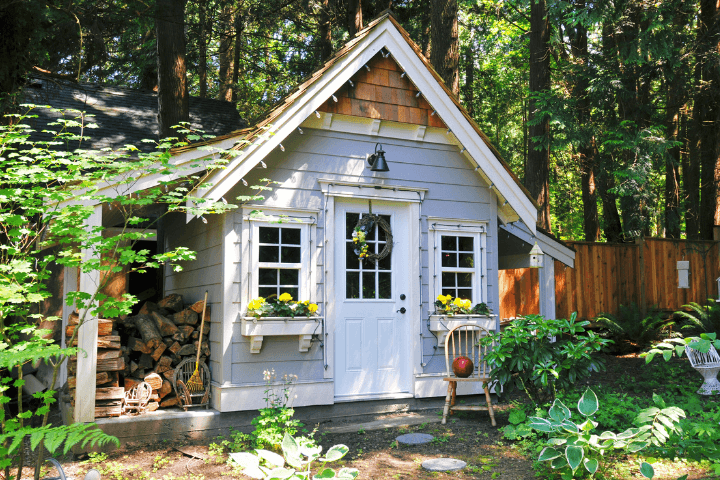
A lean-to shed is an outdoor storage solution that’s both practical and cost-effective, ideal for homeowners looking to maximize the use of their space without compromising on aesthetics. Whether you’re a seasoned gardener, a craft-minded individual, or simply looking for a supplementary storage solution, discover how the lean-to-storage shed can transform your backyard into a practical and organized space.
Editorial Team
•21 Jun 2024
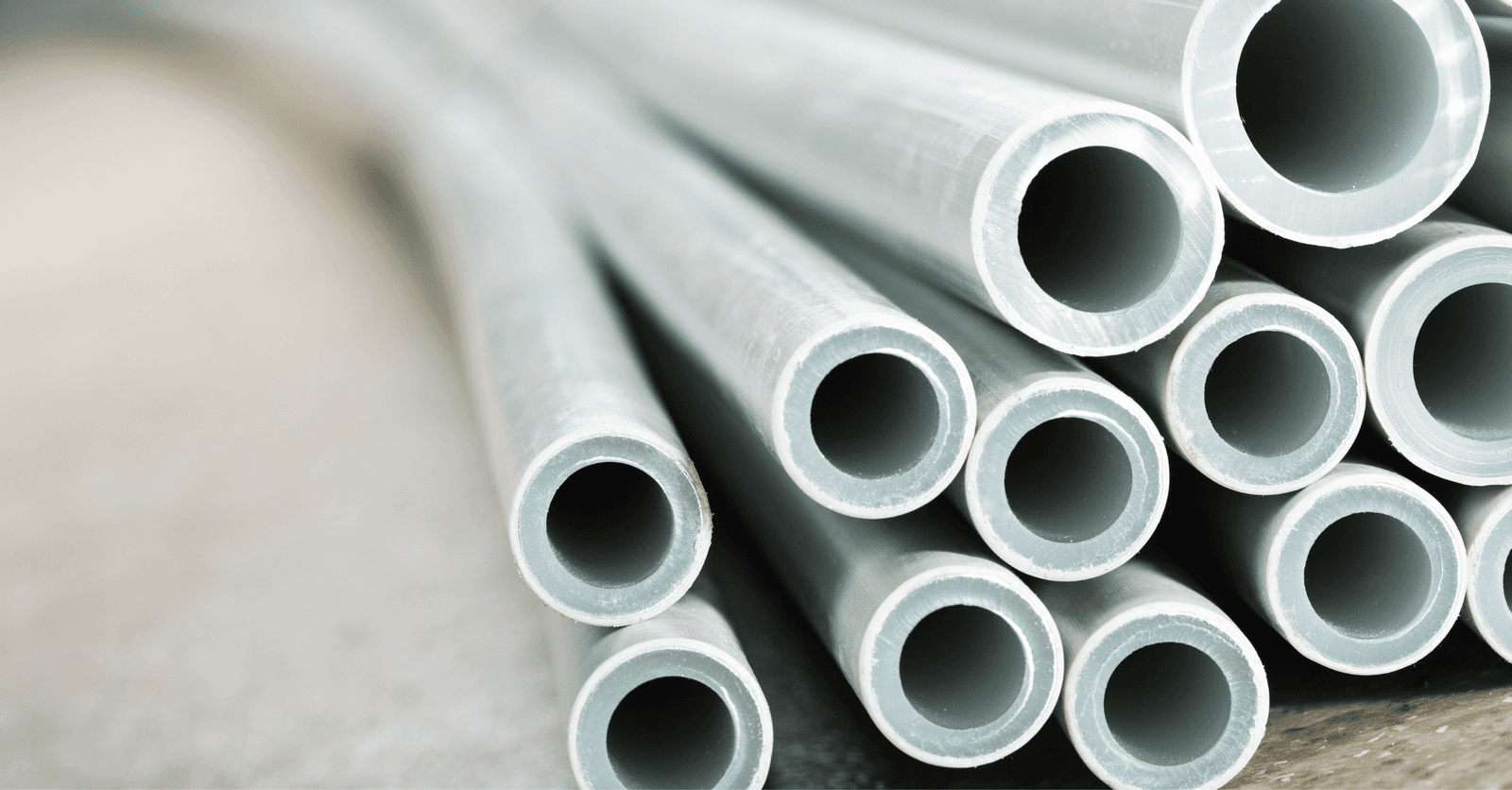
Are you remodelling, adding a sanitary installation, or building your home? Well then, a multilayer plumbing pipe is exactly what you need.
Editorial Team
•12 Aug 2025
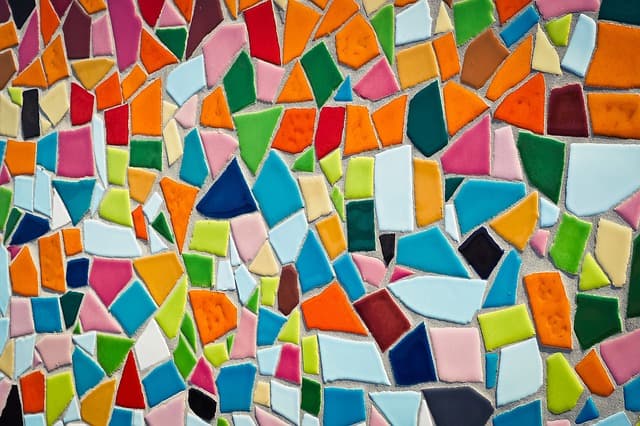
Whether for the kitchen, the bathroom, or other rooms in the house, ceramic is a material known for its various colours, shapes, and patterns. Typical properties of ceramic material include wear resistance, heat resistance, high hardness, good electrical insulation, and a certain lightness.

Amanda Harvey
•08 Nov 2023
Industrial style is excellent for the homeowner who is looking for a concept that lacks any sort of pretentiousness. The visual appeal and charm of industrial style lie in its ability to showcase utilitarian surfaces, stripped-back architecture and salvaged objects. If you’re looking to celebrate humble materials, then this is the home decor option worth considering!