How to Install French Doors: Step-by-Step
By Editorial Team
Updated on December 17, 2024

If you’re looking to let a little bit of light in between two otherwise dull or dingy rooms, or you’re looking for an alternative to the classic sliding door, then you might be in the market for French doors. These doors can be a beautiful addition to both classic and modern home décors.
However, installing French doors isn’t the easiest task. In fact, there is a bit of skill involved when it comes to the process. Of course, with a little bit of perseverance and hard work, it is easy to accomplish most things in the realm of home renovation. So, if you’re interested in doing so, read on for all of the step-by-step instructions for installing French doors.
How to install French doors
Preparation for French door installation

Photo: Deposit photo
A wonderful accent to add character and dignity to an interior or exterior of a home, French doors are a pair of doors which are generally equipped with glass panes for most of their length. These doors are unique in that they open outwardly, and close towards one another to form a barrier. In some cases, French doors were considered a safety hazard. But, by way of modern advancements, this is no longer the case. Although they used to be reserved for outdoor spaces, such as the patio, they are now widely used for the interior of homes. As mentioned, installing French doors is a bit of a complex process, and you’ll likely need an extra set of hands for the process.
Firstly, the list of the materials you’ll need is as follows:
Tape measure;
Hammer;
Power drill;
Regular drill bit;
Paddle bit;
Hole saw;
Philips-head screwdriver;
Pry bars;
Carpenter's square;
Chisel;
Flush cutting saw;
Rubber mallet;
Level (long in length);
Safety glasses;
Nails;
Screws;
Shims.
You will also need a French door kit and all of the necessary hardware, including doorknobs and latches.
Getting started
Start by removing the old door frame. For this job, you will require the assistance of a hammer and a pry bar as they will help you to avoid damaging the frame that’s in place. It is recommended that you label the trim pieces after removal, as this will help you to decipher where each one will go following their reinstallation.
Using a level as well as a carpenter's square, check the opening of the space where you plan to put your French doors, making sure you have squared it off. Make sure not to skip this step, as paying close attention to these details will make the installation process much easier.
To install the new door frame, hold it up in place and make sure it is level. Use shims to firm it up into place, drilling pilot holes through both the frame and the shims. Following this, drill or drive nails in just deep enough to hold the frame in place.
Fitting the french doors and finishing up

source: pixabay
Now, test fit the new doors to make sure that they remain snuggly in place. It is important to do this step before securing the frame permanently, as you’ll need the doors to be flush with one another while hanging above your floors at the correct height. Make any adjustments necessary, ensuring that the doors open and close correctly.
If you find that everything fits plumb in place, you can now secure the frame permanently. This job can be done using the proper screws for the material of your French doors. Once the door frames are in place, you can allow the doors to hang. Finally, install the hardware that you’ve chosen, or which came alongside your kit. For this part of the process, follow the instructions provided by the manufacturer.
For more information about interior doors, see:
Get 3 renovation quotes for your French door renovation project
RenoQuotes.com can help you get quotes for. By submitting your French door renovation project to us, we’ll put you in contact with top-rated contractors. Fill in the form on the homepage (it only takes a few minutes), and you will get estimates from certified professionals.
Dial 1-844 828-1588 to speak with one of our customer service representatives
Looking for something else?
Related articles
The latest industry news, interviews, technologies, and resources.

Editorial Team
•02 Apr 2026
Noisy pipes are likely the cause of a significant problem, often leading one to hire a plumber.
Cynthia Pigeon
•17 Aug 2026
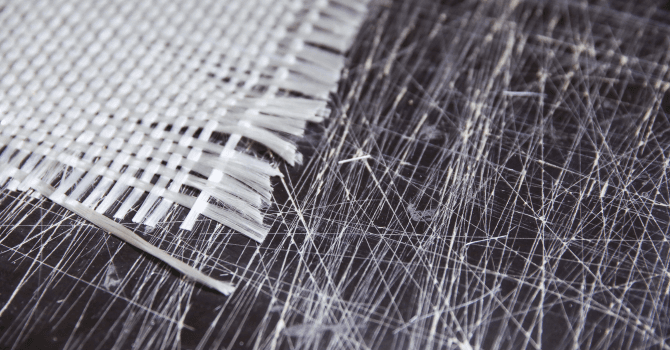
Fibreglass is a material made from extremely fine glass fibres. In construction and home renovation, those fibres are mainly used as glass wool for thermal and acoustic insulation or as reinforcement inside plastics, concrete, roofing materials, and other composite products.

Editorial Team
•28 May 2024
No one is above making a bad decision, hence why it’s so important to gain the necessary knowledge before carrying out a renovation project. Note that every municipality has a unique regulation, one that must be respected, otherwise, you risk exposing yourself to fines. A city also has the authority to halt any worksite or rescind any changes carried out post-construction.

Editorial Team
•08 Nov 2023
Window shutters are a classic choice when it comes to indoor and outdoor home decor. They offer a hint of sophistication while increasing the privacy of your home.

Cynthia Pigeon
•08 Nov 2023
Progress, innovation, and environmentally friendly concepts are all part of the current culture in various industries, and the real estate industry is no different. When it comes to architecture, the possibilities are now only limited by your imagination.