About Porcelain Tiles: Prices, Formats, Uses, and Buying Tips
By Équipe éditoriale
Updated on July 2, 2026
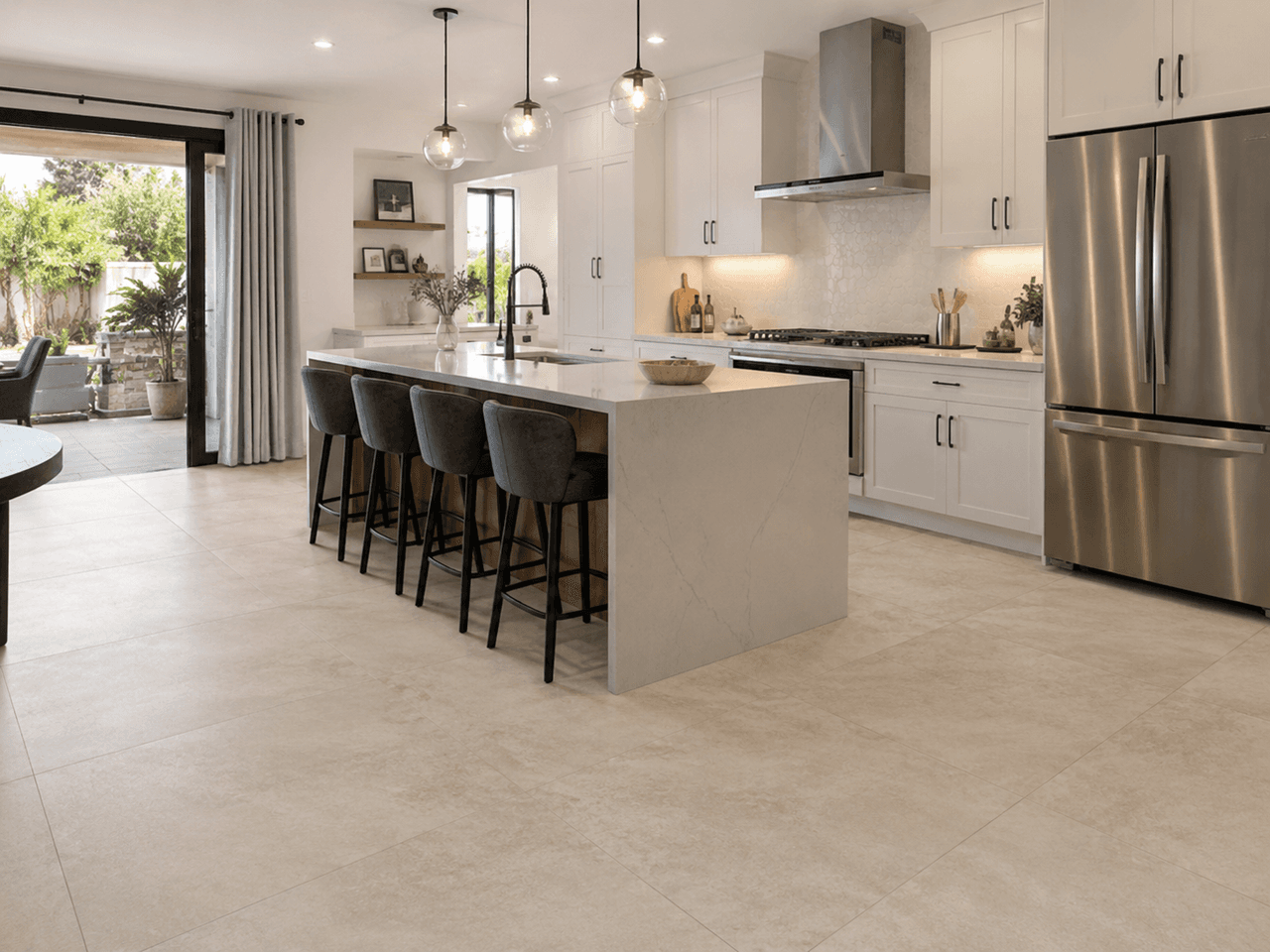
Porcelain tiles are a durable, low-porosity tile option used for floors, walls, showers, backsplashes, fireplace surrounds, patios, and high-traffic areas. They are popular with Canadian homeowners because they combine water resistance, design flexibility, and long-term performance.
This guide explains what porcelain tile is made of, how it is manufactured, how it compares with other tile materials, what formats and finishes are available, how much it costs, and what to check before buying.
What are porcelain tiles?
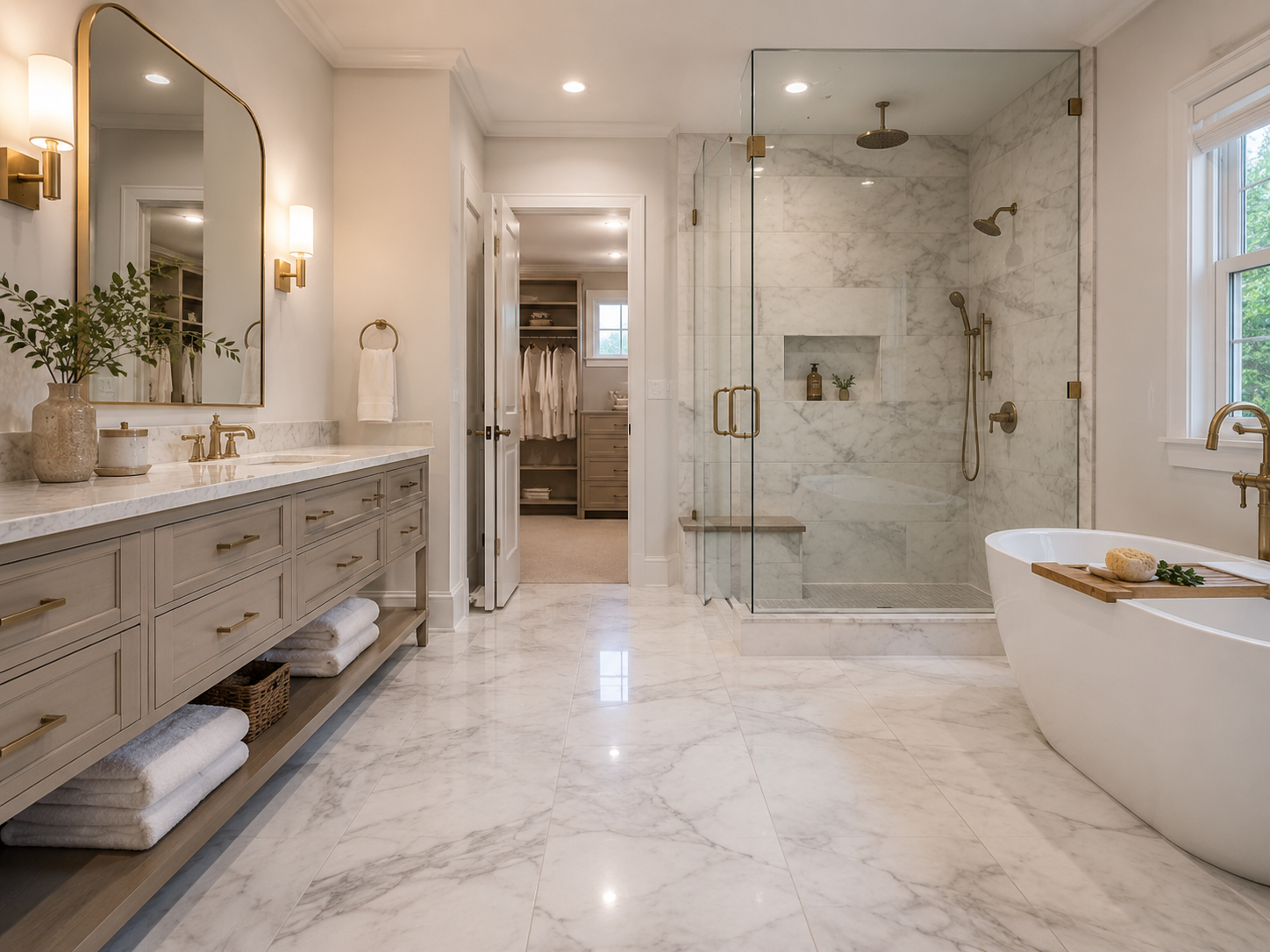
Source: Reno Quotes
Porcelain tile is a type of ceramic tile made from refined clay and mineral ingredients that are pressed, shaped, and fired at high temperatures. Common ingredients include kaolin, feldspar, quartz, silica, and other finely ground minerals.
What makes porcelain different from many standard ceramic tiles is its density. Under ISO 13006 and ANSI tile standards, porcelain tile is generally defined by its very low water absorption rate: 0.5% or less. This low porosity helps explain why porcelain is often used in bathrooms, kitchens, entryways, laundry rooms, and some exterior applications.
How Porcelain Tiles Are Made
Porcelain tile manufacturing starts with a carefully prepared mixture of refined clay and minerals. The ingredients are ground, mixed, and formed into tile bodies using a high-pressure press or extrusion process.
The tiles are then fired at high temperatures. During firing, the materials become dense and glass-like through a process called vitrification. This helps reduce microscopic pores, improve surface hardness, and increase resistance to moisture, staining, and wear.
Some porcelain tiles are glazed, while others are unglazed or through-body. Glazed porcelain tiles have a decorative surface layer, often created with digital printing technology to mimic stone, wood, concrete, marble, or terrazzo. Unglazed and double-charged porcelain tiles rely more on the tile body itself for colour and wear performance.
Porcelain Tile Prices in Canada
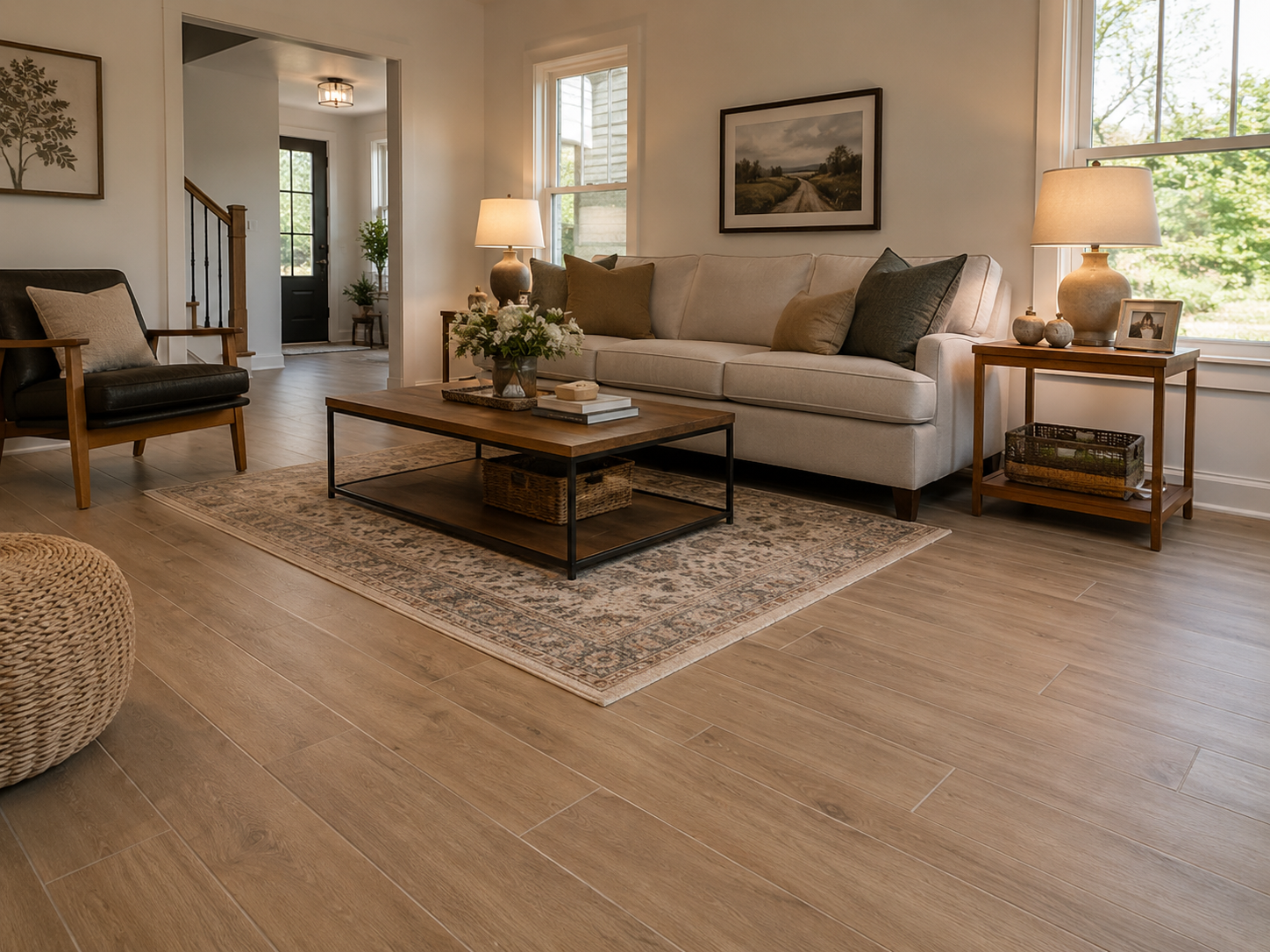
Source: Reno Quotes
Porcelain tile prices vary widely depending on the size, finish, thickness, design, brand, installation complexity, and whether the tile is intended for indoor or outdoor use.
For materials only, many standard porcelain tiles in Canada fall around $3 to $12 per square foot. Budget options may be closer to $1.50 to $4 per square foot, while premium large-format tiles, designer collections, polished tiles, specialty mosaics, and porcelain slabs can cost $10 to $25 or more per square foot.
Outdoor 2 cm porcelain pavers are usually more expensive than standard indoor tiles. Homeowners should often budget $14 to $25 or more per square foot for the tile alone, depending on the collection and supplier.
Professional installation can add significantly to the project cost. For a typical indoor tile floor, a practical planning range is often $8 to $20 per square foot for installation labour and setting materials, with higher costs for demolition, subfloor prep, waterproofing, heated floors, patterns, stairs, showers, mosaics, or large-format tile. Fully installed porcelain tile floors often land around $15 to $35 per square foot, but complex bathrooms and showers can cost more.
Common Cost Factors
Tile format and thickness
Tile finish, pattern, and manufacturing quality
Rectified edges or specialty trims
Subfloor condition and levelling needs
Waterproofing or uncoupling membrane requirements
Layout complexity, including herringbone or geometric patterns
Labour rates in your region
Waste allowance, usually higher for diagonal layouts or large-format tiles
For most projects, order extra tile for cuts, breakage, and future repairs. A common allowance is 10% extra for simple layouts and 15% or more for complex patterns or rooms with many cuts.
Common Porcelain Tile Formats
Porcelain tile is available in many sizes, from small mosaics to very large slabs. The right format depends on the room size, installation surface, drainage needs, design goals, and budget.
Format | Common Uses | Notes |
2 in. × 2 in. mosaics | Shower floors, niches, accents | More grout lines can improve grip on wet shower floors |
Penny rounds | Shower floors, backsplashes, feature walls | Decorative, but installation is more labour-intensive |
12 in. × 24 in. | Bathrooms, kitchens, entryways, laundry rooms | One of the most common modern formats |
24 in. × 24 in. | Open floors, basements, living areas | Creates a clean look with fewer grout lines |
24 in. × 48 in. | Large floors, walls, fireplace surrounds | Requires very flat substrates and careful handling |
Porcelain slab tiles | Shower walls, fireplace surrounds, feature walls, countertops | Fewer grout lines, but higher material and installation costs |
2 cm porcelain pavers | Patios, walkways, pool surrounds | Designed for exterior use when rated for the application |
Large-format porcelain tiles can make a room feel more open because there are fewer grout lines. However, they are heavier, harder to cut, and less forgiving if the substrate is uneven.
Types and Finishes of Porcelain Tile
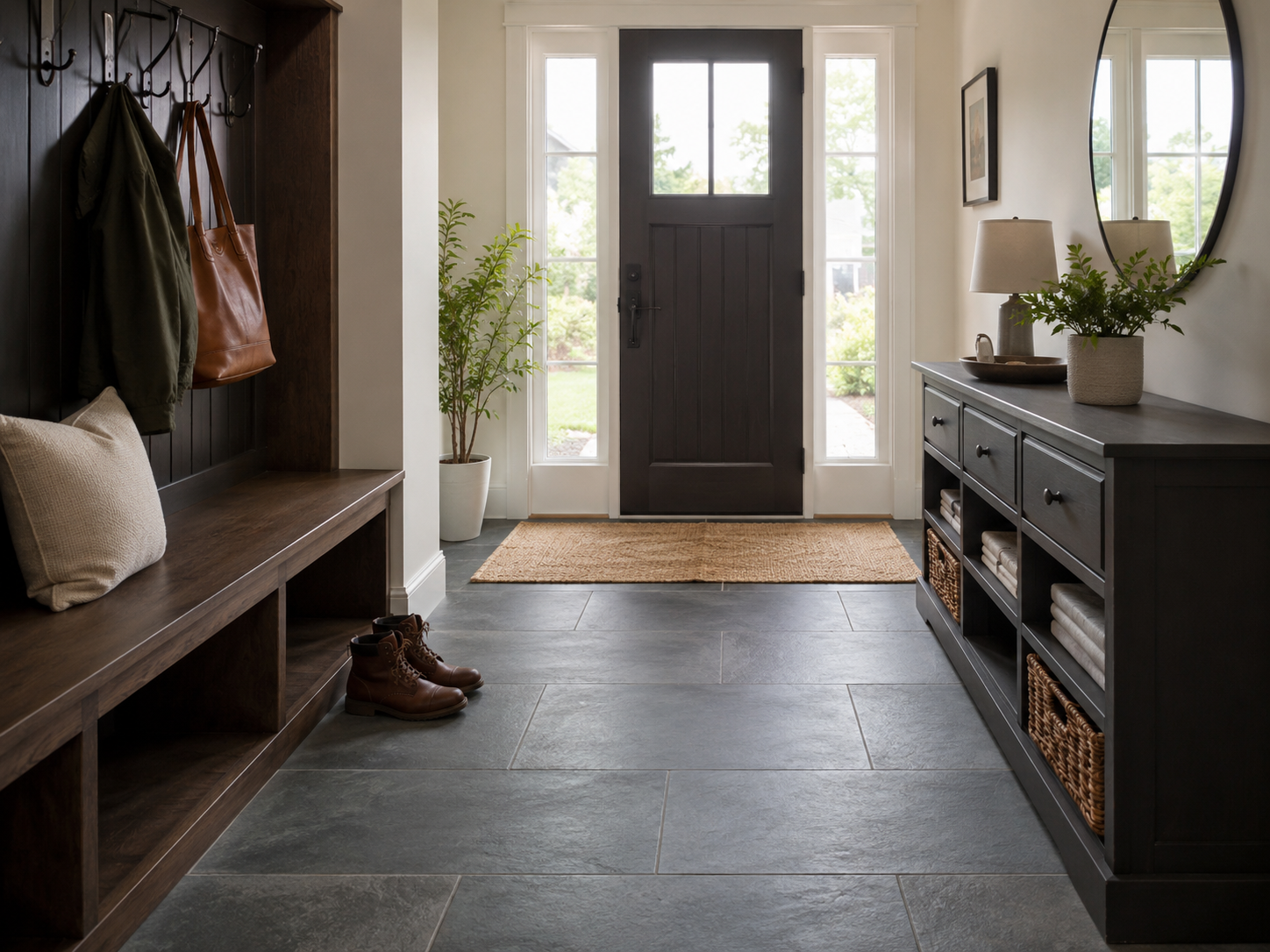
Source: Reno Quotes
Porcelain tiles come in many styles and finishes. The best choice depends on where the tile will be installed and how much foot traffic, moisture, and cleaning it will face.
Glazed Porcelain Tiles
Glazed porcelain tiles have a protective decorative layer on the surface. They are available in stone-look, marble-look, wood-look, concrete-look, terrazzo effect, black porcelain, patterned, and solid-colour styles.
They are a good choice for floors, walls, backsplashes, bathrooms, and kitchens, as long as the surface rating matches the use.
Unglazed Porcelain Tiles
Unglazed porcelain tiles do not have a separate decorative glaze. Their colour and texture come from the tile body. They are often chosen for commercial spaces, high-traffic areas, and projects where durability is a priority.
Polished Porcelain Tiles
Polished porcelain tiles have a glossy, reflective surface. They can look elegant on walls, fireplace surrounds, and some low-risk floor areas. However, polished porcelain may show smudges, water spots, and surface staining more easily, especially if it has microscopic pores from the polishing process.
Some polished porcelain tiles may need pre-sealing or special maintenance. Always check the manufacturer’s technical specifications.
Matte Porcelain Tiles
Matte porcelain tiles have a softer, less reflective surface. They are popular for bathroom floors, kitchen floors, entryways, and contemporary interiors because they are usually easier to live with than high-gloss finishes.
Textured Porcelain Tiles
Textured porcelain tiles are designed to provide more surface grip. They are often used in outdoor spaces, shower floors, pool surrounds, mudrooms, and commercial areas. For wet floors, check the slip-resistance rating instead of relying only on the word "non-slip."
Porcelain Mosaic Tile
Porcelain mosaic tile is commonly used on shower floors, backsplashes, niches, accent walls, and curved surfaces. Because mosaics have more grout joints, they can be helpful where extra traction is needed. They also cost more to install because alignment and grout work take more time.
Best Uses for Porcelain Tiles
Porcelain tile is versatile, but the product should always match the application. A tile that works on a bathroom wall may not be suitable for a shower floor, outdoor patio, or commercial entrance.
Kitchens
Porcelain tile works well for kitchen floors and backsplashes because it resists moisture, heat, stains, and everyday wear. For floors, choose a tile rated for foot traffic and consider a matte or lightly textured finish for better grip.
Bathrooms
Porcelain is a strong choice for bathroom floors, shower walls, tub surrounds, and moisture-prone areas. For shower floors, small mosaics or textured tiles are often safer and easier to slope toward the drain.
Living Rooms and Basements
Large-format porcelain tile can create a clean, modern look in living rooms, basements, and open-concept spaces. It is durable, but it can feel cold underfoot. In Canadian homes, many homeowners pair porcelain tile with radiant floor heating for comfort.
Entryways and Mudrooms
Porcelain is well suited to entryways and mudrooms because it can handle wet boots, road salt, dirt, and frequent cleaning. Choose a durable matte or textured finish and a grout colour that will not show every stain.
Fireplace Surrounds and Accent Walls
Porcelain slab tiles and large-format panels are often used for fireplace surrounds and accent walls. They can mimic marble, stone, concrete, or metal without the same resealing requirements as some natural stone products.
Outdoor Spaces
Outdoor porcelain tiles can be used for patios, walkways, balconies, and pool surrounds when they are specifically rated for exterior use. In Canada, check that the tile is frost-resistant, textured for wet conditions, and suitable for freeze-thaw exposure.
Do not assume every porcelain tile is appropriate outdoors. Standard indoor porcelain may not have the right thickness, texture, edge profile, or installation system for exterior use.
Porcelain Compared to Other Products
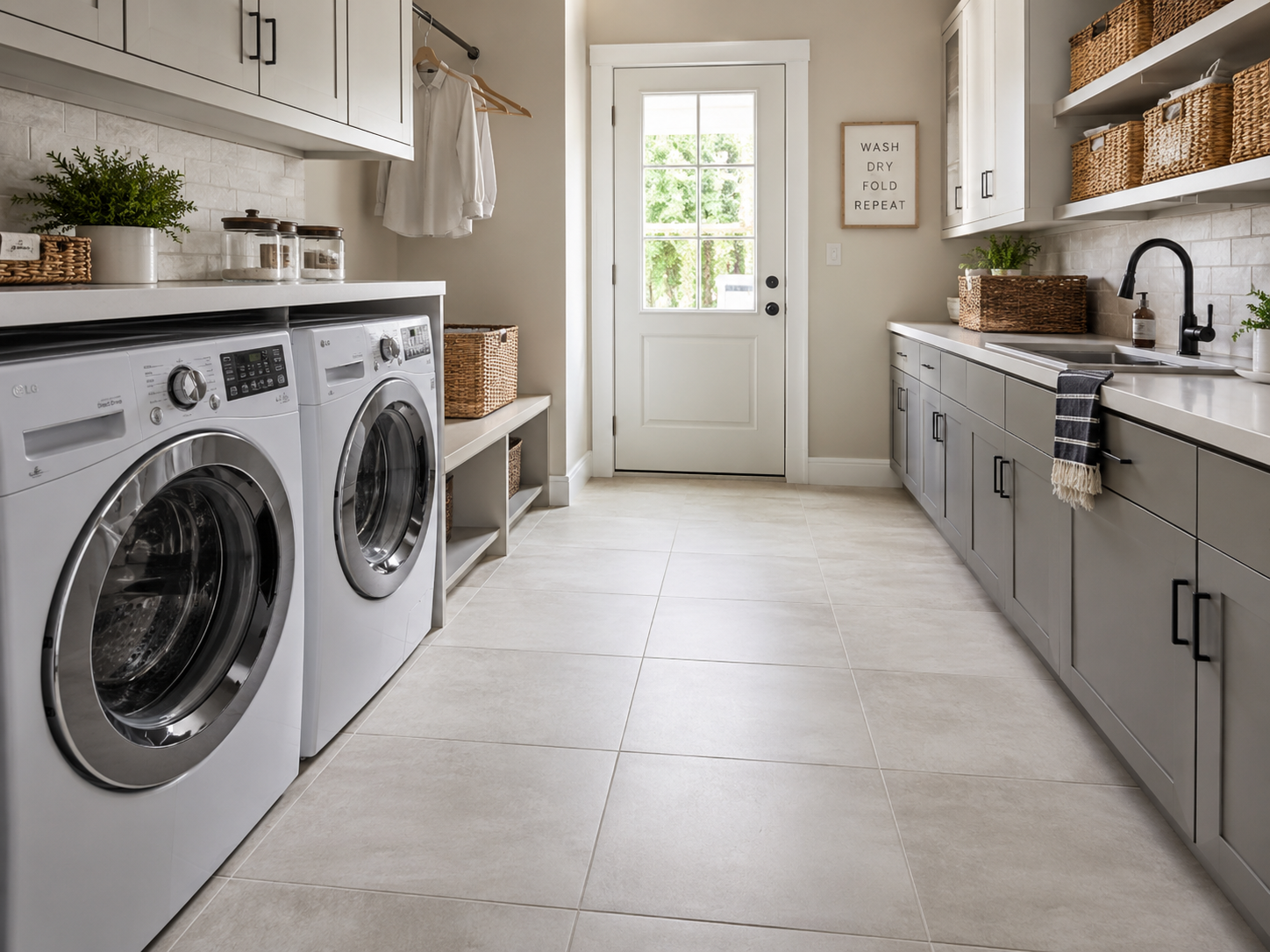
Source: Reno Quotes
Porcelain vs Ceramic Tile
Porcelain and ceramic tiles are related, but they are not identical. Both are made from clay and mineral materials fired at high temperatures. The main difference is that porcelain is denser and absorbs less water.
Feature | Porcelain Tile | Ceramic Tile |
Water absorption | Very low, generally 0.5% or less | Usually higher than porcelain |
Durability | Very durable when properly installed | Durable, but often softer than porcelain |
Cost | Usually higher | Often more budget-friendly |
Cutting and installation | Harder to cut and install | Easier to cut and install |
Outdoor use | Possible if rated for exterior use | Usually not recommended in freeze-thaw climates |
Best uses | Floors, showers, high-traffic areas, some exteriors | Walls, backsplashes, lower-traffic floors |
Ceramic tile can still be an excellent choice for walls, backsplashes, and some floors. Porcelain is often the better option when moisture resistance, density, and durability are priorities.
Porcelain vs Natural Stone
Porcelain tile can mimic marble, slate, limestone, travertine, and other natural stone materials. It offers a more predictable surface, usually with lower maintenance.
Feature | Porcelain Tile | Natural Stone |
Appearance | Can imitate stone, wood, concrete, or terrazzo with consistent patterns | Unique natural variation from tile to tile |
Maintenance | Usually easy to clean and often does not require sealing | Often requires sealing and periodic resealing |
Stain resistance | Generally strong, especially with glazed porcelain | Varies by stone type; some stones stain more easily |
Water resistance | Very low porosity when properly manufactured | Depends on the stone; some options are more porous |
Cost | Often more predictable, but premium porcelain can be expensive | Can be expensive, especially for marble, slate, or specialty stone |
Durability | Very durable when properly installed | Durable, but some stones are softer or more sensitive |
Cleaning | Usually compatible with mild tile cleaners | May require pH-neutral cleaners to avoid etching or damage |
Best uses | Floors, showers, backsplashes, entryways, walls, some exteriors | Floors, walls, fireplaces, feature areas, and luxury finishes |
Natural stone has a unique appearance, but many stone products need more maintenance than porcelain. Some stones are more porous, softer, or more sensitive to acidic cleaners. Porcelain is generally the practical choice for homeowners who like the look of stone but want fewer maintenance concerns.
Pros and Cons of Porcelain Tiles
Porcelain tile has many advantages, but it is not the perfect material for every project.
Pros
Excellent water resistance
Strong durability for high-traffic areas
Good stain resistance
Many formats, colours, textures, and patterns
Suitable for kitchens, bathrooms, entryways, and some outdoor spaces
Lower maintenance than many natural stone tiles
Good compatibility with radiant floor heating when properly installed
Cons
Higher initial cost than many ceramic tiles
Harder to cut, drill, and install
Cold and hard underfoot
Slippery if the wrong finish is used in wet areas
Heavy, especially in large-format tiles and slabs
Requires careful subfloor prep
Damaged tiles can be difficult to replace if the style is discontinued
Installation and Maintenance Tips
Source: C.G.O GESTION CONSTRUCTION INC.
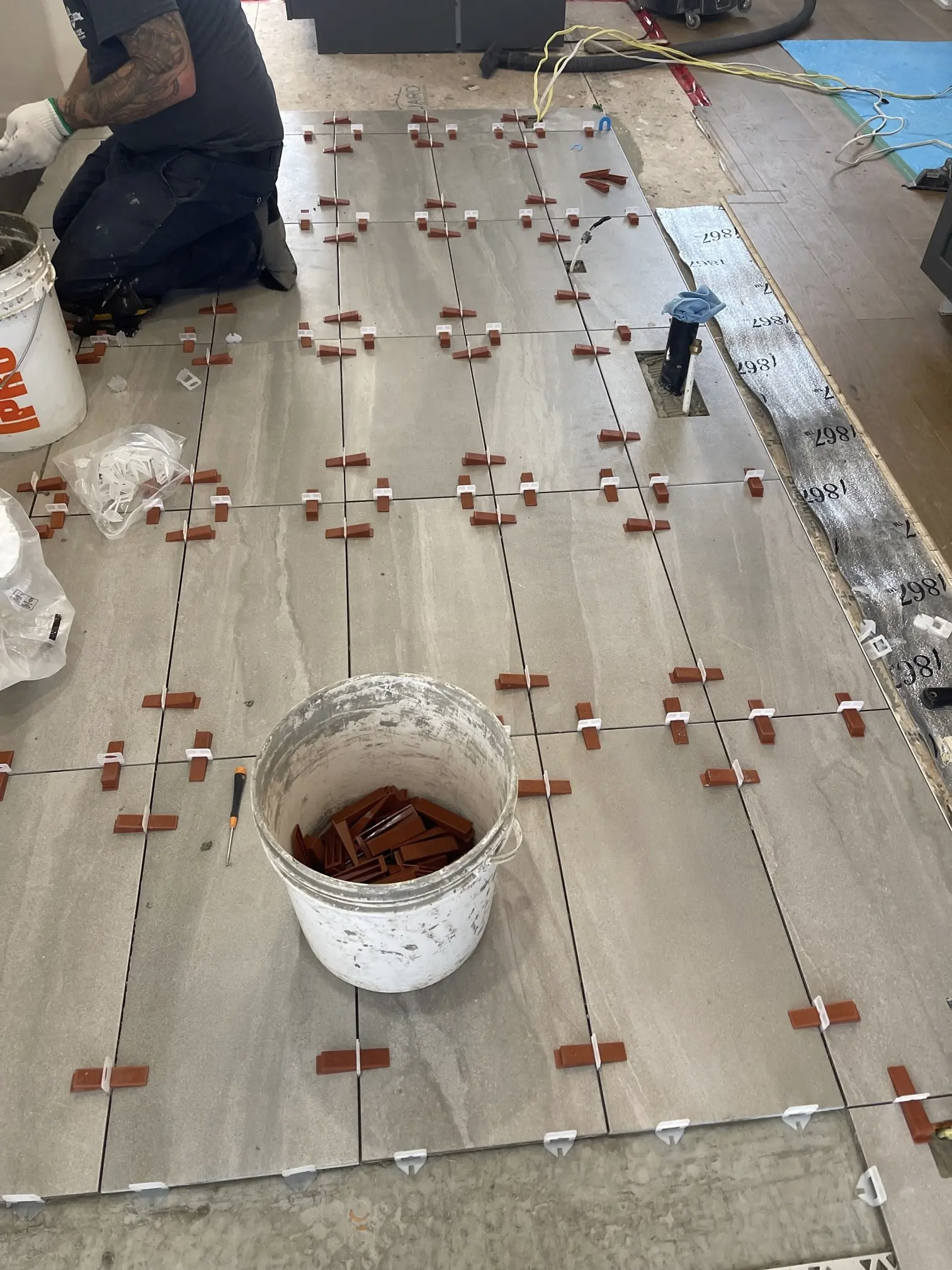
Porcelain tile performance depends heavily on installation quality. Even a premium tile can crack, lip, or fail if the substrate is uneven, unstable, or poorly prepared.
Before Installation
Check that the subfloor is flat, clean, stable, and suitable for tile. Large-format tiles require especially strict flatness because even small uneven areas can cause lippage or hollow spots.
For wet areas, waterproofing is not optional. Showers, tub surrounds, and some bathroom floors need a properly designed waterproofing system, not just moisture-resistant tile.
Use the mortar, adhesive, membrane, grout, and trowel size recommended for the tile and installation surface. Porcelain is dense, so standard adhesives are not always the right choice for every project. Large and heavy tile may require specialized cement mortar.
During Installation
Professional installation is strongly recommended for showers, large-format tiles, porcelain slabs, exterior tiles, heated floors, and any project involving waterproofing or structural concerns.
Tile trims, profiles, and edge protection should be planned before installation begins. They help protect exposed edges, finish corners, and create a cleaner transition between surfaces.
Maintenance
Porcelain tile is relatively easy to maintain. Regular sweeping, vacuuming, and damp mopping are usually enough for everyday cleaning.
Avoid harsh cleaners that can damage grout, sealers, or certain polished finishes. Grout may need sealing depending on the type used. If you choose polished porcelain, ask whether pre-sealing is recommended before grouting to reduce the risk of staining.
What to Check Before Buying Porcelain Tiles
Before choosing porcelain tile based on appearance alone, review the technical specifications. This is especially important for floors, showers, outdoor spaces, and high-traffic areas.
Look for:
Water absorption rating
Floor or wall use rating
Slip-resistance information
Abrasion or wear rating
Frost resistance for exterior use
Tile thickness
Rectified or pressed edges
Recommended grout joint width
Compatibility with radiant heat
Manufacturer installation instructions
Shade variation rating
Cleaning and sealing recommendations
For wet floors, do not rely only on marketing terms like "anti-skid" or "non-slip." Ask for the tile’s slip-resistance data and confirm the tile is appropriate for the exact location.
Tips for Choosing the Right Porcelain Tile
Start with the room, not the colour. A beautiful polished tile may be a poor choice for a wet entryway, while a textured outdoor tile may feel too rough for a bathroom wall.
For busy households, matte stone-look or concrete-look porcelain is often more forgiving than glossy black porcelain or bright polished tile. For small bathrooms, 12 in. × 24 in. porcelain tile is a popular option because it feels modern without being too difficult to handle. For large open areas, 24 in. × 24 in. or 24 in. × 48 in. tiles can reduce grout lines and create a cleaner look.
Bring samples home before ordering. Lighting can change the way white, grey, beige, black, and wood-look porcelain tiles appear. Also compare the tile against cabinets, countertops, paint colours, and flooring in nearby rooms.
In Conclusion
Porcelain tiles are a durable, low-maintenance, and design-friendly option for many Canadian homes. They work especially well in kitchens, bathrooms, entryways, showers, high-traffic spaces, and some outdoor applications when the tile is properly rated.
The key is to choose porcelain tile based on both appearance and technical performance. Check the format, finish, slip resistance, water absorption, frost rating, installation requirements, and total project cost before making a final decision.
Frequently Asked Questions
Are porcelain tiles waterproof?
Porcelain tiles are highly water-resistant because they absorb very little water. However, a tiled surface is not automatically waterproof. In showers and other wet areas, the waterproofing system behind or below the tile is what protects the structure.
Are porcelain tiles good for bathroom floors?
Yes, porcelain tiles are a good choice for bathroom floors when the tile is rated for floor use and has an appropriate slip-resistant finish. Matte, textured, or small-format mosaic tiles are often better choices than polished tiles for wet floors.
Can porcelain tiles be used outside in Canada?
Yes, but only if the tile is rated for exterior use, frost resistance, and wet conditions. In Canadian climates, outdoor porcelain should be selected carefully and installed using a system designed for freeze-thaw exposure.
Is 12 in. × 24 in. porcelain tile a good size?
Yes, 12 in. × 24 in. porcelain tile is one of the most common sizes for bathrooms, kitchens, laundry rooms, and entryways. It gives a modern look without being as difficult to install as very large-format tiles.
Is 24 in. × 24 in. porcelain tile harder to install?
It can be. Larger tiles require a flatter substrate, careful mortar coverage, and precise alignment. Professional installation is often worthwhile, especially in visible areas or larger rooms.
Do polished porcelain tiles stain?
They can, depending on the product. Some polished porcelain tiles have microscopic pores created during polishing, which may make them more vulnerable to grout haze or staining. Ask the supplier whether pre-sealing is recommended before installation.
Are porcelain tiles better than ceramic tiles?
Porcelain is denser, less porous, and usually more durable than standard ceramic tile. Ceramic tile can still be a good and more affordable option for walls, backsplashes, and some lower-traffic areas.
Do porcelain tiles need sealing?
Most glazed porcelain tiles do not need sealing. Some polished or unglazed porcelain tiles may require sealing, especially before grouting. Grout may also need sealing unless an epoxy or pre-sealed grout is used.
Are porcelain tiles slippery?
Some porcelain tiles can be slippery, especially polished tiles or smooth surfaces in wet areas. For bathrooms, showers, entryways, and outdoor spaces, choose a tile with appropriate slip-resistance specifications.
Are porcelain tiles expensive?
Porcelain tiles usually cost more than basic ceramic tiles, but prices vary. Standard porcelain can be affordable, while large-format tiles, porcelain slabs, mosaics, polished finishes, and outdoor pavers cost more to buy and install.
Looking for something else?
Related articles
The latest industry news, interviews, technologies, and resources.
Cynthia Pigeon
•22 Apr 2026
For a basement apartment (often referred to as a secondary suite) to be considered compliant in Canada in 2026, several requirements must generally be met, including those based on the National Building Code of Canada and applicable municipal bylaws. Common criteria typically include a minimum ceiling height of around 1.95 m (6 ft 5 in), egress windows providing a minimum unobstructed opening of approximately 0.35 m² per bedroom, and proper fire separation between units. That said, requirements can vary significantly depending on the province, municipality, and type of building. Failing to comply may lead to serious consequences, such as fines, insurance limitations, or restrictions on renting out the unit.

Editorial Team
•08 Nov 2023
When vinyl comes to mind, you might immediately think of music and the classic record player. However, in this case, we're talking about the floor. If you’re considering renovating your floor and looking for a versatile, easy to clean and crack-resistant flooring option, maybe you’d be interested in vinyl tile? Vinyl tile is a popular choice for the kitchen, bathroom, laundry or mudroom.

Editorial Team
•08 Nov 2023
Has the time come to change your patio door? Given that you will have to live with it for many years to come, you definitely do not want to regret your choice.

Editorial Team
•22 May 2026
In the sphere of jobs one can have in the construction field, being a well contractor might sound strange and a bit old fashioned in our modern times. Yet, the work of a well technician is vital in the field of construction. We all need access to clean and safe water, so being a water well driller can be a very rewarding profession
Editorial Team
•21 May 2025
Closets are some of the most fundamental spaces in any home as they allow for the storage of your wardrobe and much more, from footwear to jewelry and other accessories.