Building Material Supply Chain: Setbacks and Opportunities
By Editorial Team
Updated on March 25, 2025

During the COVID-19 pandemic, several economic sectors crumbled under restrictions and a global pause. Albeit everything is slowly being restored to normal, the construction industry is still facing setbacks in this post-pandemic world: material shortage, supply depletion, delayed deliveries, unstable prices, lack of labour on all fronts… In a nutshell, the entire building material supply chain is suffering the consequences. On one hand, such a situation is a total turmoil for contractors attempting to wrap up their worksites and projects on time. On the other, one can benefit from such hurdles by taking this opportunity to innovate and improve know-how to better face future unexpected challenges of such a magnitude.
How to Supply a Construction Worksite
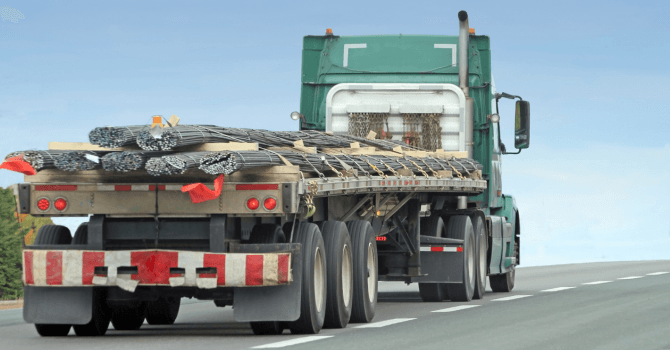
Source: Canva
First and foremost, one must fully grasp the supply chain concept. It’s a lot more complex than it seems. It’s a network connecting a business with its suppliers, customers, and vendors if necessary. The supply chain encompasses all steps, from product manufacturing to customer delivery. It entails a whole set of techniques, services, and tools that must interact correctly, thereby allowing customers to receive their orders without delaying or blocking their activities.
Therefore, requesting aluminum isn’t all it takes… One must foresee the required quantity, when and where it’ll be used, inform customers regarding delivery dates, etc.
Here is a brief list of elements to consider as part of the supply chain:
Raw materials used for manufacturing
Suppliers of raw materials, tools, etc.
Transportation of parts and materials
Subcontractors in production progress
Customers (homeowner, city, business, etc.)
Communication systems to interact with customers and suppliers (delays, changes, issues, orders, questions, etc.)
Workload and necessary timeline, including delay management
Effective in-house system (incoming orders, real-time updates, stock inventory, planned and ongoing work, sending alerts, etc.)
Other services (installers, cleaners, electricians, etc.)
Where are we at with material shortage?
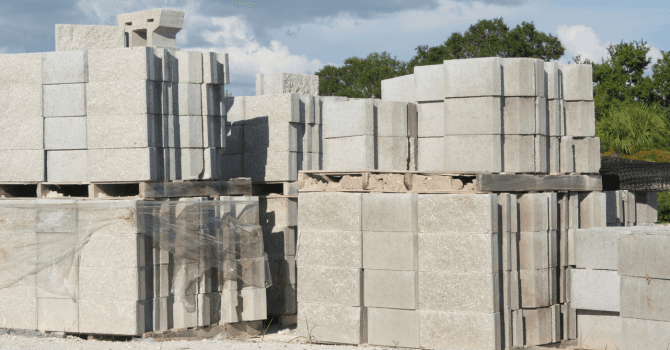
Source: Canva
Instability is a healthy supply chain’s Achilles’ heel. Unpredictability is witnessed on several levels:
Out-of-stock materials
Suppliers who spread out their materials over several orders and can't supply too much at once
Rising material costs given the supply hardship
Changing or pending delivery delays
Lack of experienced workers resulting in potential errors
Accumulating delays and debts
On top of factories closing on a global scale, and a drop in import/export, one has to factor into the mix that a lot of homeowners were taking advantage of their free time mandated by the lockdowns to carry out renovation work, which overloaded demand while supplies dwindled.
A lot of contractors were forced to wait between 12 and 30 weeks before receiving their material orders, while pre-pandemic, they solely had to wait four to six weeks. Furthermore, materials ordered from overseas are even more difficult to acquire, such as wood from Asia.
Note that the pandemic isn’t all to blame here. As a matter of fact, climate change, and natural disasters, such as flooding, forest fires, wars, energy crises, and so forth, have also played their part in product availability and skyrocketing prices.
Indeed, some contractors fear that they will have to shut down their businesses should another catastrophe veer its ugly head or should global markets not stabilize over the next two or three years.
Initiatives to Offset Supply Hardships
Some contractors have also been able to put materials on hold to offset a second shortage wave. However, it doesn’t really strike the lot as a long-term, viable solution.
Consultants are suggesting avoiding getting supplies from a sole supplier. The goal is to select merchants with a solid economy that can deliver under all circumstances, and then divide the volume purchased between suppliers. Smaller orders might result in soaring invoices, yet proceeding as such may prevent any further delays on worksites.
Also, to help contractors, the Association de la construction du Québec (ACQ) and its partners negotiated with the Société québécoise des infrastructures (SQI), a clause regarding temporary price adjustments for specific materials. As an option, said clause allows contractors to request a 2% rebate if their invoice increases by 7% or more due to unpredictable material spikes. On the flip side, contractors will be forced to pay the amount back to the SQI if prices drop.
Suggested Tools by the ACRGTQ and Investissement Québec
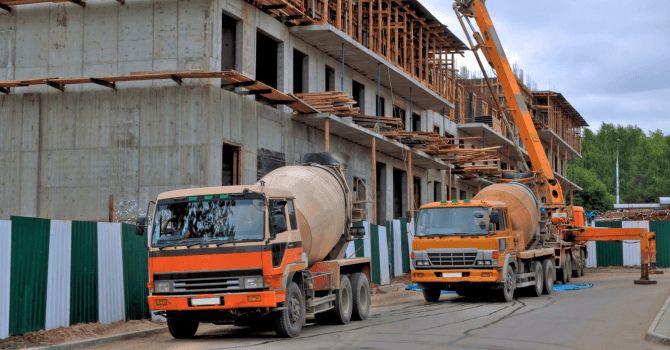
Source: Canva
What is the ACRGTQ’s mission?
The Association des constructeurs de routes et grands travaux du Québec (ACRGTQ) includes the majority of contractors and suppliers for roadways, civil engineering work, and major projects. It represents 2,600 employers and 46,000 labourers.
After taking note of the budget presented by Quebec’s Minister of Finance, the ACRGTQ is pleased that three long-standing requests are finally being addressed:
Regulations regarding payment deadlines.
Regulations regarding disputes.
The resort to alternative approaches focused on performance, innovation, and collaboration.
Nonetheless, the budget doesn’t necessarily contain any measures set in stone upholding the construction industry’s supply chain, thereby letting down contractors facing rising global costs. Said association is putting forth a plethora of solutions, such as the following:
improve the Temporary Foreign Worker program;
that a massive investment be made to refine construction-related trade training; and
that a clear-cut project be set in motion to reclaim residual materials.
However, one still has to wait for such initiatives to become effective.
What are the solutions introduced by Investissement Québec?
Investissement Québec (IQ) is a Quebec-based public corporation acting as an economic development agency and financial institution designed for small and big businesses. Whilst seeking solutions related to the construction industry’s supply chain setbacks, IQ is seeing a ton of opportunities for the local economy. Indeed, it might just be time to mitigate the industry’s dependence on foreign suppliers to instead Americanize the supply chain by purchasing materials made in Quebec, Canada, and the United States.
Naturally, not all materials are available here or are straight-up more expensive. Therefore, it may seem more intricate for Quebec-based businesses to compete against foreign suppliers. However, it isn’t necessary nor mandatory to relocate all purchases. Buying 30% of one’s building materials in Quebec might suffice to reduce the risks of unstable supplies.
Note that not all local construction-related purchases are more expensive. One must factor in costs, such as non-conforming products, on-site quality assessment, financing, etc.
To help contractors make well-informed decisions, Investissement Québec launched an importation fee calculator to pinpoint the difference between a Quebec-based purchase versus a foreign one. This calculator is made available on the IQ website; it’ll analyze roughly 20 parameters to give you accurate figures.
Along the same lines, said public corporation guides businesses looking to substitute their importations for local acquisitions or are attempting to compete on a worldwide scale in terms of productivity.
Their services are, but not limited to, the following:
Assessment of the company's needs
Seeking out potential province-based suppliers
Networking opportunities with businesses expressing interest
Thorough guidance
Funding for automated or robot-controlled projects
Upcoming IQ projects: a greenhouse gas calculator and company-tailored waste management guidance.
A Local Supply Seeking Equilibrium
To conclude, the construction material supply chain was most likely already vulnerable and the pandemic simply exposed pre-existing challenges. If not for nothing, COVID-19 will have proven that one has to act to minimize the risks and later transition toward a new equilibrium and innovate whilst leaning toward local procurement.
Get new contracts for your construction or renovation company
RenoQuotes.com can help you get new contracts. We get new project proposals from clients seeking top-rated and trustworthy renovation professionals like yourself. To get started, simply fill in the form on our homepage (it only takes a few minutes) and receive information regarding potential clients by way of our services.
Dial 1-844 828-1588 to speak with one of our customer service representatives.
Looking for something else?
Related articles
The latest industry news, interviews, technologies, and resources.
Editorial Team
•08 Nov 2023
Recently, the rules surrounding the legal construction hypothec have been the subject of analysis and discussion. Now, a new view is emerging to ensure better supervision of the use of this restrictive measure, which can have financial consequences for many families.
Editorial Team
•28 Sep 2024
In December 2022, Benoit Charette, Minister of the Environment, the Fight Against Climate Change, Wildlife and Parks, announced a ban against installing and repairing oil-fired heating systems in residential homes.
Editorial Team
•08 Apr 2026
In 2026, the average cost to build a deck or patio in Canada typically ranges from $35 to $130 per square foot, installation included, with higher-end prices usually tied to premium materials such as high-end composite, aluminum, and glass railing systems. For a standard 12 x 12-foot deck (144 sq. ft.), homeowners can generally expect a budget starting at around $5,500 for pressure-treated wood and climbing to $18,000 or more for a premium composite build with glass railings and helical piles. Material choice and foundation type remain two of the biggest factors affecting your final quote.
Léa Plourde-Archer
•15 Nov 2024
With the arrival of warmer weather, spring cleaning is in full swing. While many start indoors, the exterior of your home deserves attention as well. How do you ensure your home's exterior siding looks its best for the summer? What are the best techniques for cleaning different types of siding materials? Whether you're tackling aluminum, vinyl, wood, or brick, each material requires a specific cleaning approach. From using pressure washers to scrubbing with soft brushes and applying the right cleaning agents, this guide will answer all your questions about how to effectively clean and maintain your home’s exterior siding.
Editorial Team
•08 Nov 2023
Small rooms in the home require ample planning in order to set the right tone. Lighting is an integral part of this process, as excellently designed and placed lighting and fixtures can help a space to really shine.