Cork Flooring: Pros and Cons for Your Home in Quebec
By Cynthia Pigeon
Updated on July 9, 2026
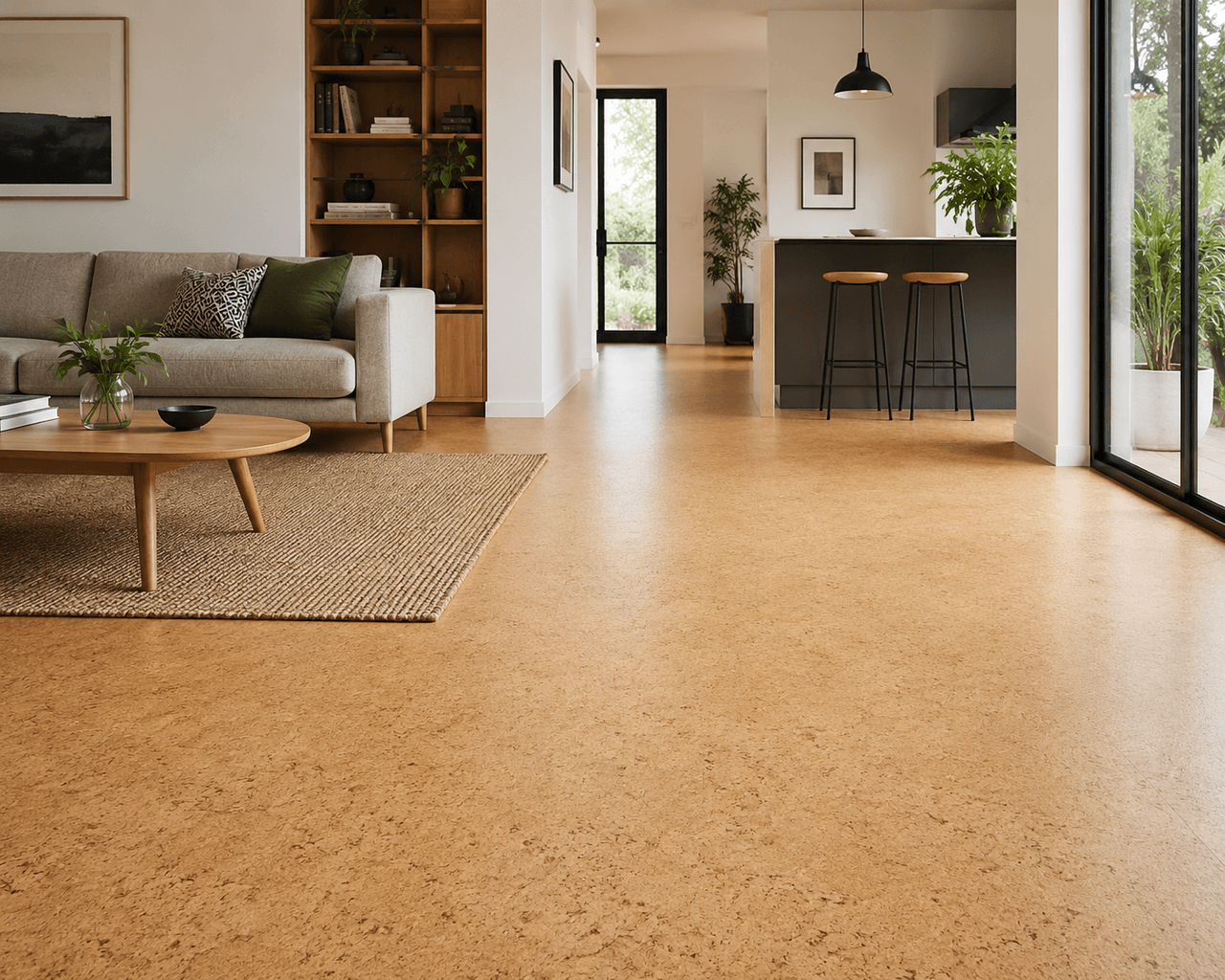
When it comes time to choose new flooring for a residential property in Quebec, the classic dilemma often comes down to the refined look of hardwood versus the affordable durability of vinyl. Yet in 2026, the shift toward greener renovations and better energy efficiency is leading many eco-conscious homeowners and local interior designers to consider an underrated alternative: cork.
Made from the bark of the cork oak tree, this material has unique physical properties that respond directly to the challenges of Quebec’s climate, marked by extreme temperature swings and significant humidity fluctuations. Sold in a price range of about $5 to $12 per square foot, cork sits in a similar budget category to mid-range hardwood, while offering very different technical benefits.
Before you start shopping at hardware stores or specialty flooring retailers, it is important to look objectively at its strengths and weaknesses to determine whether it is suited to the structure and conditions of your home.
The Advantages of Cork Flooring: Comfort and Insulation
Source: Versatile Renovations Inc.
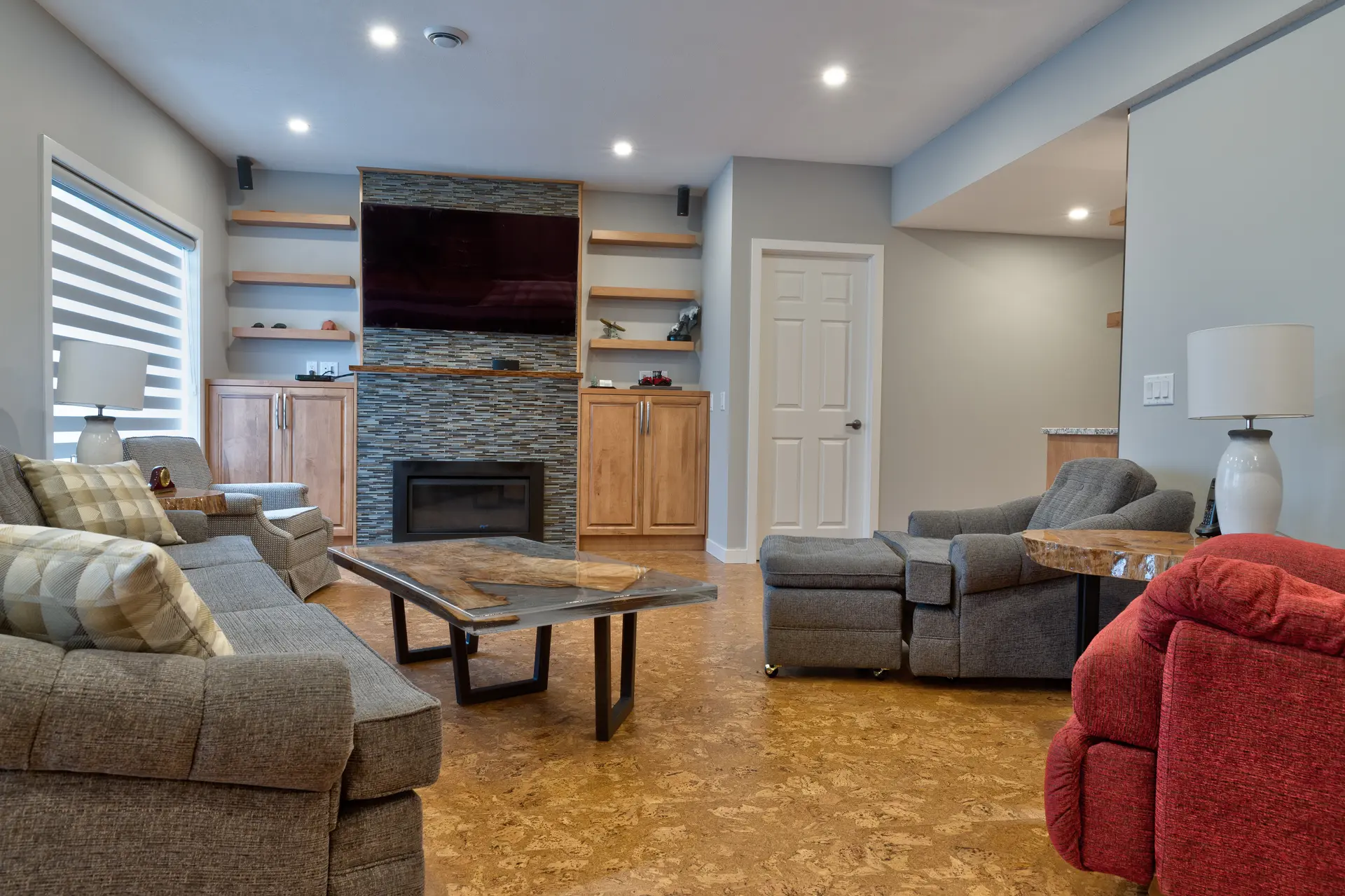
Cork is not new to the construction world, but recent manufacturing innovations have greatly improved its finish and ease of installation, especially with click-lock planks. Its microscopic cellular structure, similar to a honeycomb, is made up of more than 50% trapped air, giving it remarkable absorption properties.
For homeowners, the first tangible benefit is acoustic insulation. Cork acts as a natural sound absorber. It is especially helpful for reducing impact noise, such as footsteps or objects dropped on the floor. Its effect on airborne noise, such as conversations or music, depends more on the full floor, ceiling and soundproofing assembly. If you live in a Montréal plex or are setting up a home theatre in the basement, this flooring can help reduce sound transmission between floors without necessarily requiring a specialized acoustic underlayment, depending on the existing structure.
Its natural elasticity also provides excellent walking comfort. Unlike ceramic tile or concrete, which create more pressure on the joints, cork flexes slightly under body weight, helping reduce muscle fatigue during long periods of standing, such as in a kitchen.
Natural Insulation Against Quebec’s Cold
Any Quebec homeowner knows how cold floors can get when the outdoor temperature drops below -20 °C. Cork has exceptionally low thermal conductivity, meaning it does not absorb heat from your body as quickly and does not transfer as much cold from the lower structures of the home.
Thermal performance: Cork offers good thermal insulation for a floor covering and feels warmer underfoot than many hard surfaces, such as ceramic tile or some wood floors. Exact performance varies depending on the thickness, composition and product selected.
Thermal comfort: A cork surface can improve the feeling of warmth underfoot, especially in colder rooms. However, measurable energy savings depend mainly on the overall insulation of the building envelope, including the walls, basement, foundation and attic.
Passive thermal compatibility: Even without an integrated radiant floor heating system, a cork surface maintains a more consistent and comfortable surface temperature, helping reduce the discomfort of cold feet during Quebec’s long winter months.
An Eco-Friendly Choice That Can Support Better Indoor Air Quality
From a green renovation perspective, cork has a strong environmental profile. Its harvesting process is a model of sustainable resource use: only the outer bark of the tree is removed, without cutting the tree down. The cork oak naturally regenerates, and its bark is typically harvested about every nine years. Some cork products can have a very favourable environmental footprint, but the final carbon impact depends on manufacturing, adhesives, finishes, transportation and the product’s full life cycle analysis.
Beyond environmental considerations, cork can contribute to a healthier indoor environment, depending on the product selected, its finishes and the installation method.
Indoor air quality and VOCs: Natural cork can be an interesting option for indoor air quality, but cork flooring may contain adhesives, resins, finishes or sealants. It is therefore best to choose a low-emission certified product, such as FloorScore or GREENGUARD Gold, and to verify the adhesives and sealants used during installation.
Hypoallergenic properties: Cork contains suberin, a natural substance that contributes to its resistance to moisture and some biological agents. As a smooth surface, it can also be easier to clean than carpet, helping limit the buildup of dust and allergens. It may be a good option for people who are sensitive to dust or allergens, as long as the product is low in VOC emissions, properly installed and regularly maintained.
To properly factor these environmental considerations into your overall renovation budget, consider estimating the cost of your project by working with qualified eco-conscious contractors.
The Disadvantages and Limits of Cork Flooring
Source: H Man Reno
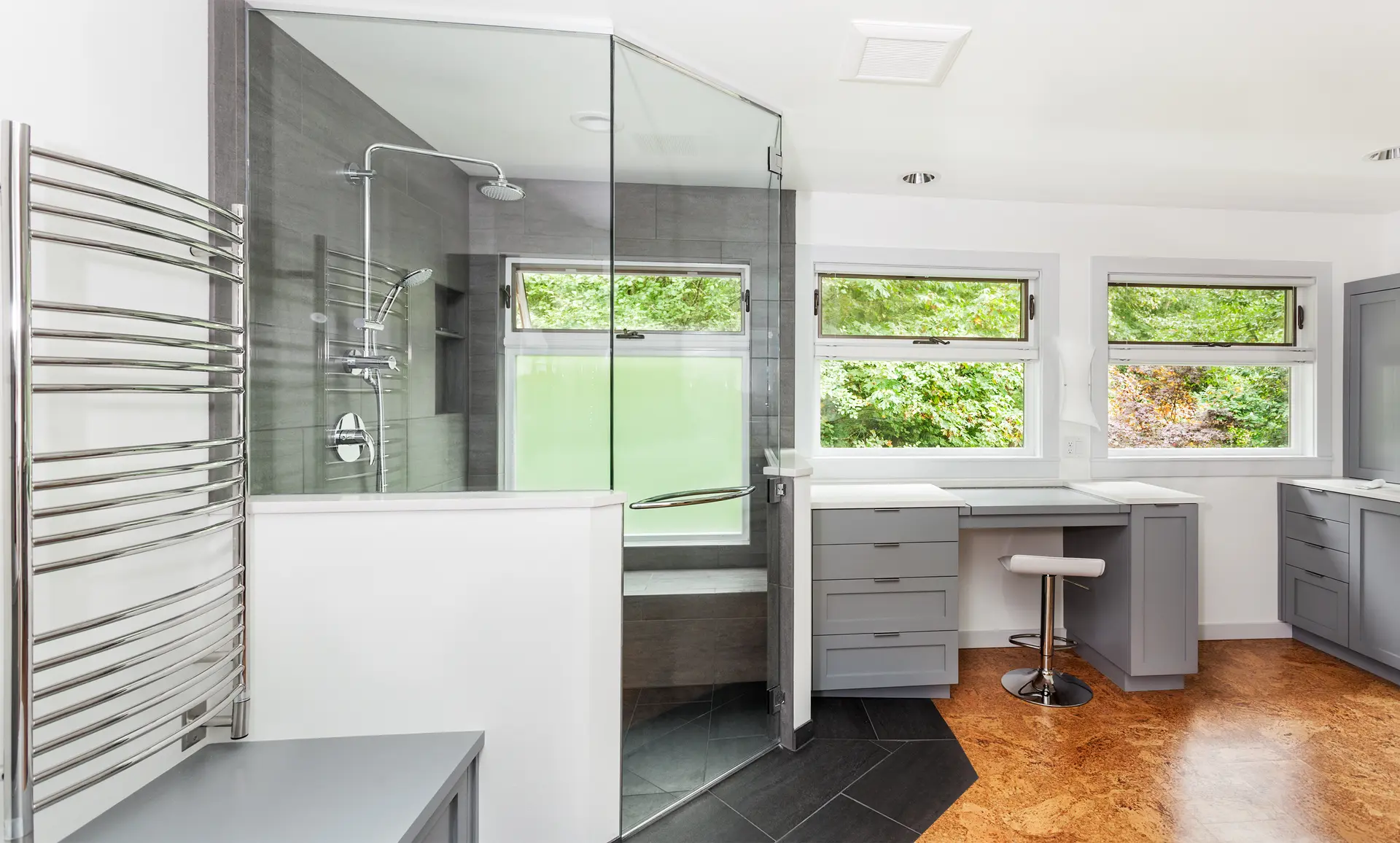
Despite its many advantages, cork is not a perfect or universal material. Its soft and porous structure, which is the source of its comfort, is also behind its main weaknesses when exposed to everyday wear and Quebec’s contrasting climate.
Sensitivity to Water and Humidity Fluctuations
One of the main challenges with cork in Quebec is the seasonal variation in indoor relative humidity. In summer, the air can become heavy and moisture-laden; in winter, intensive heating dries out the air inside homes.
Manufacturers generally recommend keeping relative humidity within a stable range, often between 30% and 50%, or according to the specific requirements of the product selected. Some manufacturers allow a wider range, for example, up to about 65% relative humidity.
Winter's dry air: Cork may contract. Tiny gaps or cracks can appear between click-lock planks. A central or portable humidifier may become necessary.
Summer humidity: Cork can absorb ambient moisture and expand. If it has not been installed with enough expansion space along the perimeter of the walls, the floor may buckle or lift. A dehumidifier or adequate air conditioning system may be needed.
The Specific Challenge of Quebec Basements
The basement of a Quebec home may be exposed to hydrostatic pressure and moisture migration through the concrete slab. Installing cork directly over a concrete slab without checking the moisture level of the substrate or following the manufacturer’s requirements can cause premature deterioration and increase the risk of moisture-related issues.
For installation in a basement or over a concrete slab, you must verify the manufacturer’s requirements, test the moisture level of the substrate and install a vapour barrier or moisture barrier when required by the product. Depending on the product selected, applying a surface sealant after installation may also be recommended to better protect the joints from cleaning water or small spills.
Impact Resistance and Long-Term Maintenance
Cork’s resilience has its limits. As a soft and compressible material, cork is more vulnerable to pressure marks, point impacts and scratches than very hard hardwood or high-density composite vinyl.
Heavy furniture pressure: Sofa legs, refrigerators, bookcases or pianos may leave permanent indentations if the weight is not properly distributed. Wide furniture cups or thick felt pads under all heavy furniture are essential to minimize localized compression.
Pet claws and high heels: If you have large dogs whose nails are not trimmed regularly, cork can quickly accumulate visible scratch marks. Similarly, the concentrated impact of stilettos can puncture the protective surface layer.
UV discolouration: Like many hardwood species, cork is photosensitive. If it is exposed to direct and prolonged sunlight through a large south-facing window, its original colour can fade over time. UV-protective window film or curtains can help limit this selective discolouration.
Periodic maintenance: To maintain protection against wear and surface moisture, some cork floors may require a new layer of sealant after a few years, depending on the type of finish, level of use and manufacturer’s recommendations. This maintenance can require emptying the room and lightly sanding the surface before applying the product.
Comparison: Cork vs. Hardwood and Vinyl
Source: RenoQuotes
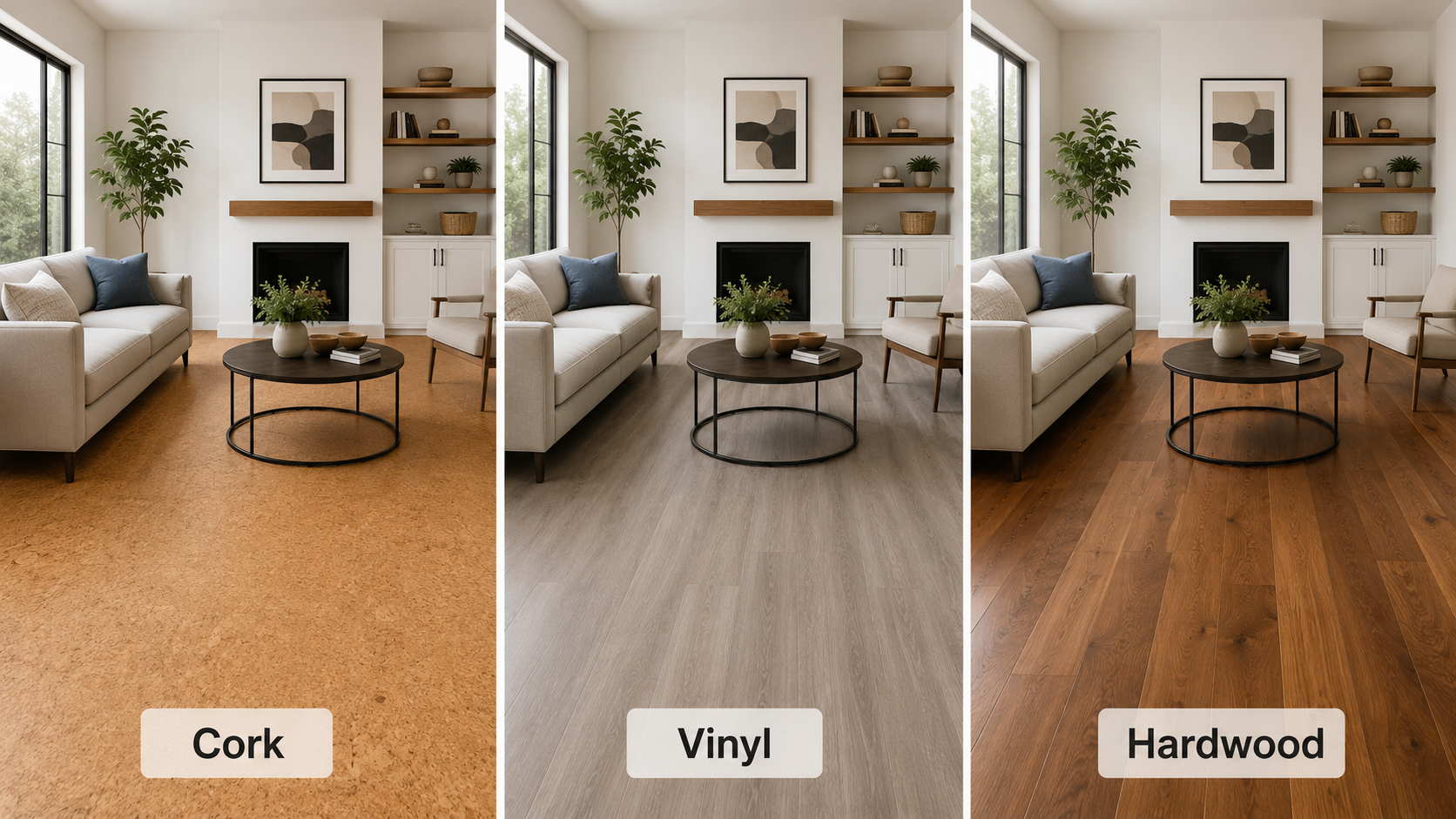
To guide your flooring shopping process, it is useful to compare cork with two major options in Quebec’s residential market: hardwood, which is traditional and warm, and vinyl, which is modern and water-resistant.
Technical Comparison Table
Evaluation Criteria | Cork Flooring | Hardwood | Luxury Vinyl |
Average Purchase Price per Sq. Ft. | $5 to $12 | $6 to $15 | $4 to $8 |
Acoustic Insulation | Excellent natural sound absorption | Low, with higher resonance | Moderate |
Thermal Insulation | Excellent, warm underfoot | Moderate | Low, takes on the temperature of the subfloor |
Scratch Resistance | Low to moderate | High, depending on the wood species | Very high |
Resistance to Standing Water | Moderate, requires a sealant | Low, can buckle quickly | Very high on the surface for many vinyl products, but variable depending on the type of vinyl, joint quality, installation and subfloor condition |
Carbon Footprint | Generally favourable and renewable, but variable depending on the product, adhesives, finishes, manufacturing and transportation | Neutral to positive | High, petroleum-based |
Basement Installation | Possible with strict moisture protection | Not recommended | Often well suited to basements, especially with a product designed for humid environments, but the slab must be dry, stable and prepared according to the manufacturer’s recommendations |
How to Choose the Right Flooring for Each Room
Hardwood can be advantageous if you are looking for long-term resale value and durability, especially in dry rooms and areas with moderate to high traffic. Its resistance depends on the wood species, finish, maintenance and humidity conditions. A well-maintained solid hardwood floor can last several decades or longer because it can be sanded and refinished several times. However, its lifespan depends on the thickness of the wood, wear, maintenance and installation conditions.
Vinyl is often more advantageous in critical wet rooms, such as the main bathroom or laundry room, where major water damage is more likely. It is also a practical choice for tighter budgets and homeowners looking for simple, quick maintenance.
Cork can be an excellent choice for bedrooms, home offices, residential yoga studios, children’s playrooms or properly insulated basements. It offers walking comfort that recalls some of the qualities of carpet, while being easier to clean than a textile floor covering. It also provides a warmer surface underfoot, which can improve comfort during the winter.
To make an informed choice and avoid costly installation mistakes that could void the manufacturer’s warranty, take the time to find a qualified professional installer in your area for your flooring project.
Looking for something else?
Related articles
The latest industry news, interviews, technologies, and resources.
Editorial Team
•15 Nov 2024
Ethanol fireplaces are increasingly sought-after, making for an aesthetic and odourless solution to create a warm ambiance. Unlike conventional fireplaces, such units don’t need a chimney or direct vent, streamlining their installation. Smoke-free, chimneyless, nothing but a gentle warmth inside your home. This article will focus on the benefits of ethanol fireplaces. Amongst all the different types of fireplaces out there, “Ethanol fireplaces are best suited for ambiance purposes,” states Stéphanie Ouimet, an Eco-Feu representative.
Editorial Team
•05 Dec 2023
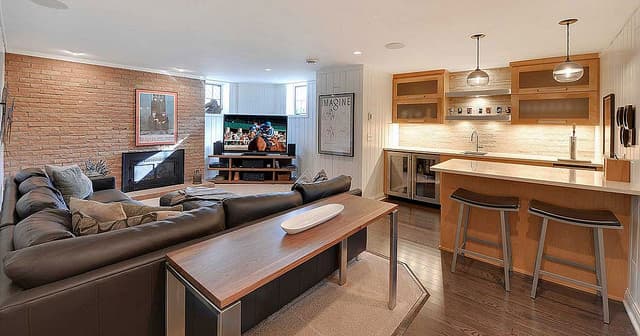
Storage space for some, unfinished room for others, yet thanks to its size the basement is a part of the house brimming with possibilities. Whether you’re ready to invest or get inventive, there is no limit to your comfort. Make your basement transformation a reality without having to quash your creativity.

Editorial Team
•24 Mar 2025
Are you the proud owner of a home with a basement, but said space is still unfinished? Looking to turn it into a bedroom, playroom, or fully-loaded apartment? Here’s what you need to know before jumpstarting a basement finishing project.

Karine Dutemple
•05 Dec 2025
A lot of homeowners still opt for the application of oil on their floor, whether it’s in the kitchen, the bedroom or the living room. Given its ability to bring out the grain of the wood and to let is natural charm shine trough, an oiled floor is certainly a must.
Editorial Team
•08 Nov 2023
Self-building has not been a frequent topic of discussion, yet over the past few years, this type of very large-scale project is now becoming common knowledge and more frequently talked about.