Crown Moulding: Everything You Need to Know | Renovation Quotes
By Editorial Team
Updated on May 12, 2025
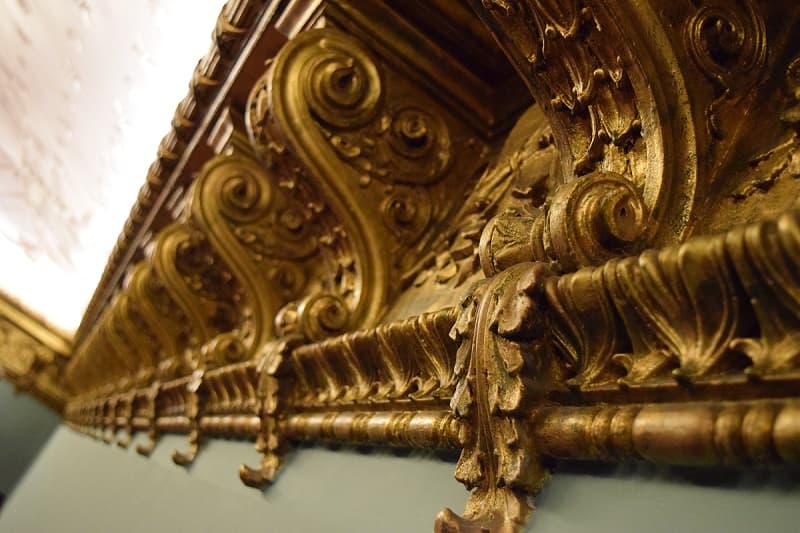
Crown moulding has been a decorative staple dating as far back as ancient Greece. This is likely due to the fact that they understood how much it can help liven up a space. The name refers to a family of mouldings which are aesthetically designed to shape and accentuate the top edge where the ceiling meets the wall.
Moulding has always been a popular way to highlight the transition between wall and ceiling on interior walls because it tends to add a lot of visual detail and depth to a room. In fact, crown moulding is so versatile that it alone can transform the atmosphere in the drabbest of rooms.
The anatomy of the crown moulding
Crown mouldings are made of three main parts. First, you have the baseboard which rests flush against the wall as a backing. The next part is the bed moulding upon which the crown moulding rests. Lastly, you have the decorative crown moulding itself. For all intents and purposes, all three parts together are generally referred to as the crown. It is also important to note that crown moulding is most often measured by the linear foot.
Stock or custom crown moulding: which is best for you?
When choosing your crown, it is essential to have a proper budget set out. This is because the price can fluctuate considerably when choosing between stock and custom options. Stock crowns are available in multiple materials from pine to foam and even flexible polyurethane.
Custom crowns will naturally cost more because ultimately they should match the existing wall profile and this will easily double the cost and take as many as six weeks to construct. Therefore, if your budget allows for custom crown moulding, you should account for the length of time it takes to choose and have it produced.

Photo: Wikimedia
Crown moulding materials and prices
One of the great aspects of a crown moulding's beauty is that it is available in a plethora of materials and finishes to match any style.
Wood is a very common crown material found in many homes. This is because wood is a lightweight material that is also quite flexible, making it easy to install. Wood mouldings can be made from hardwood, pine, or oak and are easily milled to go with any room style. There are two categories of unfinished wood; stain-grade which is great for staining and paint-grade which is not suited for staining but is already primed to be painted. Prices of wood mouldings start at around:
$2 - $6/linear foot for hardwood;
$1 - $6/linear foot for pine;
$9 - $12/linear foot for cedar;
exotic woods like walnut costing upward of $24 - $35/linear foot. Remember, these prices reflect the cost of prefabricated mouldings and custom solutions will undoubtedly go up in price.
Plaster is a great solution if you’re seeking white moulding to accent a room. But if you aren't looking for white crown mouldings, plaster is ready to be painted any colour you like! Unfortunately, a big downside of plaster is its weight which necessitates a professional for proper installation. On the upside, plaster that can be greatly detailed if you wish to have very ornate crown mouldings. The cost of plaster mouldings can be placed between $5 and $15/linear foot.
Plaster-covered foam is a great alternative to traditional plaster. This is due to the fact that it’s equally durable as standard plaster but considerably lighter in weight. It is also one of the least expensive crown moulding materials, making it a great choice for smaller rooms that could use some nice accenting. Prices for plaster-covered foam mouldings are roughly $7/linear foot.
Polyurethane foam is another very lightweight and affordable option. This material holds up quite well and is resistant to scratches, rotting and warping making it a great contender. The major drawbacks are that it can dent easily during installation and it isn’t really designed to be painted or stained. Therefore, if you’re looking for a very utilitarian option, polyurethane may be just what you’re looking for. The prices for polyurethane mouldings are around $9/linear foot.
Medium density fiberboard (MDF) is a very lightweight option that has been designed to mimic the look of wood. It holds up against humidity and high temperatures better than wood making it well suited for humid climates. MDF can also dent easily during installation so it is recommended to hire a professional. Excessive moisture can damage MDF causing it to warp or bow so it is not recommended for high moisture areas like the bathroom. Prices for MDF can be between $1 and $12/linear foot.

Photo: Flickr
Carefully consider your design options
As with other decorative trimmings, you should always try to match the moulding with the setup of the room. Carefully consider the layout, furniture style, colours and all-around vibe in order to pair the right moulding. Although moulding can look great in any room, it really enhances spaces with high ceilings. A great rule of thumb guideline, go for visual balance and try to keep the moulding choices in harmony by using other trims within the space as a gauge.
Choosing the right size for your crown moulding
Making sure you choose the correct size for your crown moulding is one of the most crucial steps since you’re installing it to enhance the room. Use the crown's drop (measured from the ceiling to the lower edge of the crown) as an indicator of appropriate size.
A rule of thumb when measuring for moulding is to measure the perimeter of the room and then to add roughly 10 to 15 percent in case mistakes are made when laying down the crown. If the room you are working in is particularly large or has lots of cornered edges, you should aim to add 20% to be safe.
Installing crown moulding in your house will immediately change the atmosphere while adding more visual depth. If your budget allows for it why not splurge on crown moulding with intricately milled designs? It's sure to garner compliments from guests and should you ever wish to sell it will definitely catch the eye of prospective buyers.
In any case, installing moulding is a significant decision that will remain for quite some time so we recommend taking as much time as possible to determine which room(s) you’ll want to do. While some moulding materials can be installed on your own, for jobs of this nature we always suggest you hire a licensed professional contractor.
Overview of the prices of crown mouldings
Types of mouldings | Average price |
|---|---|
Hardwood mouldings | $2 - $6/linear foot |
Pine mouldings | $1 - $6/linear foot |
Cedar mouldings | $9 - $12/linear foot |
Exotic wood mouldings (e.g.. walnut) | $24 - $35/linear foot |
Plaster mouldings | $5 - $15/linear foot |
Plaster-covered foam | approx. $7/linear foot |
Polyurethane foam | approx. $9/linear foot |
MDF mouldings | $1 - $12/ linear foot |
*Please note that the prices above are an estimation and do not reflect the added cost of labour.
To find out about the average prices of different home renovation projects, check out our Home renovation price guide.
Author: David Ben-Zaken
Get 3 renovation quotes for your crown moulding project
RenoQuotes.com can help you get quotes for your crown moulding renovation project. If you submit your project to us, we’ll put you in contact with top-rated contractors. Fill in the form on the homepage (it only takes a few minutes), and you will get estimates from trusted professionals.
Dial 1-844 828-1588 to speak with one of our customer service representatives.
Looking for something else?
Related articles
The latest industry news, interviews, technologies, and resources.
Cynthia Pigeon
•06 Oct 2026
In 2026, the cost of a bathroom renovation can vary considerably between Quebec and Toronto. These differences result from labour costs, contractor availability, regulatory requirements, required permits and project complexity.
Amanda Harvey
•08 Nov 2023
A fence protects the exterior of your home, and when well maintained, can add some serious curb appeal to any property. Since this structure is left outside day and night, it comes up against some severe conditions: snow, rain, sleet, heat, both freezing and melting water. Therefore, it's only natural that the paint on an outdoor fence should easily wear and fade.

Editorial Team
•08 Nov 2023
The hallway (and its near equivalent, the corridor) is a space that is often overlooked and neglected, due to the idea that it’s not such a useful part of the home. If we look at things a little differently, we can nevertheless see that this part of the home is a great place to create transitions between different sections of the home. Are you looking for ideas or inspiration for arranging your hallway?

Editorial Team
•23 Nov 2024
Is your staircase showing signs of wear and tear? Should you repair or completely replace it? What steps are essential to ensure a safe and stylish renovation? A deteriorating staircase is not only an eyesore but can also pose serious safety risks. Whether you’re looking to address structural damage or simply refresh the design, renovating your staircase is key to maintaining a safe and attractive home.

Editorial Team
•08 Nov 2023
2020 has proven to be a year of adaptation and evolution. The ongoing Black Lives Matter movement has sparked reckoning across almost all industries. As we’re being made aware of the imbalances and injustices faced globally by racialized people, we need to begin and continue to find ways to support and highlight the work they’ve done.