How Much Does it Cost to Install a Pellet Stove?
By Editorial Team
Updated on June 18, 2024
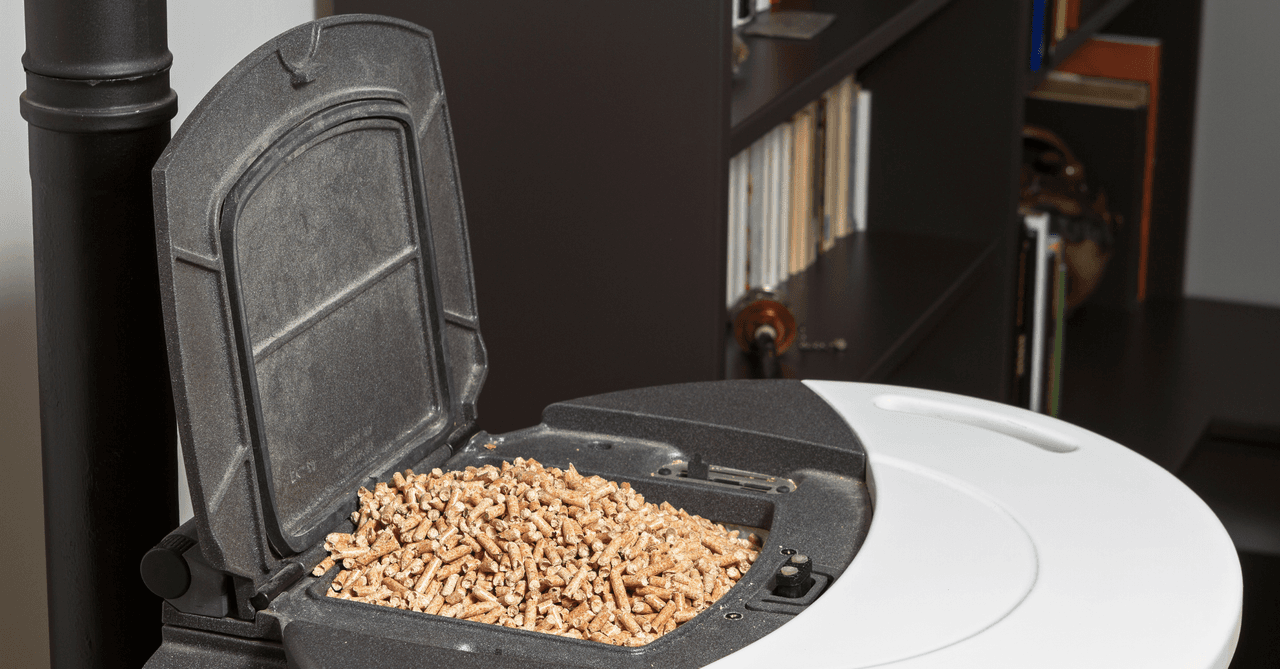
While traditional, wood-burning stoves have been flagged by the City of Montréal for their high levels of pollution, the current by-law regarding the use of less pollutant models is also to come under review. As such, in 2020, all solid fuel-burning appliances were banned, except for pellet stoves. The latter are still tolerated, even though they can only be used during smog-free periods.
Since a lot of Montréal residents will have to change their existing fuel-burning appliances, it becomes inevitable to question the costs related to purchasing a pellet stove.
The Costs of Buying and Operating a Pellet Stove
Source: Canva
In order to efficiently heat a 1,800-square-foot residence, a 40,000 BTU rating device will suffice. And, a stove capable of operating to that capacity costs about $3,500, installation and chimney included.
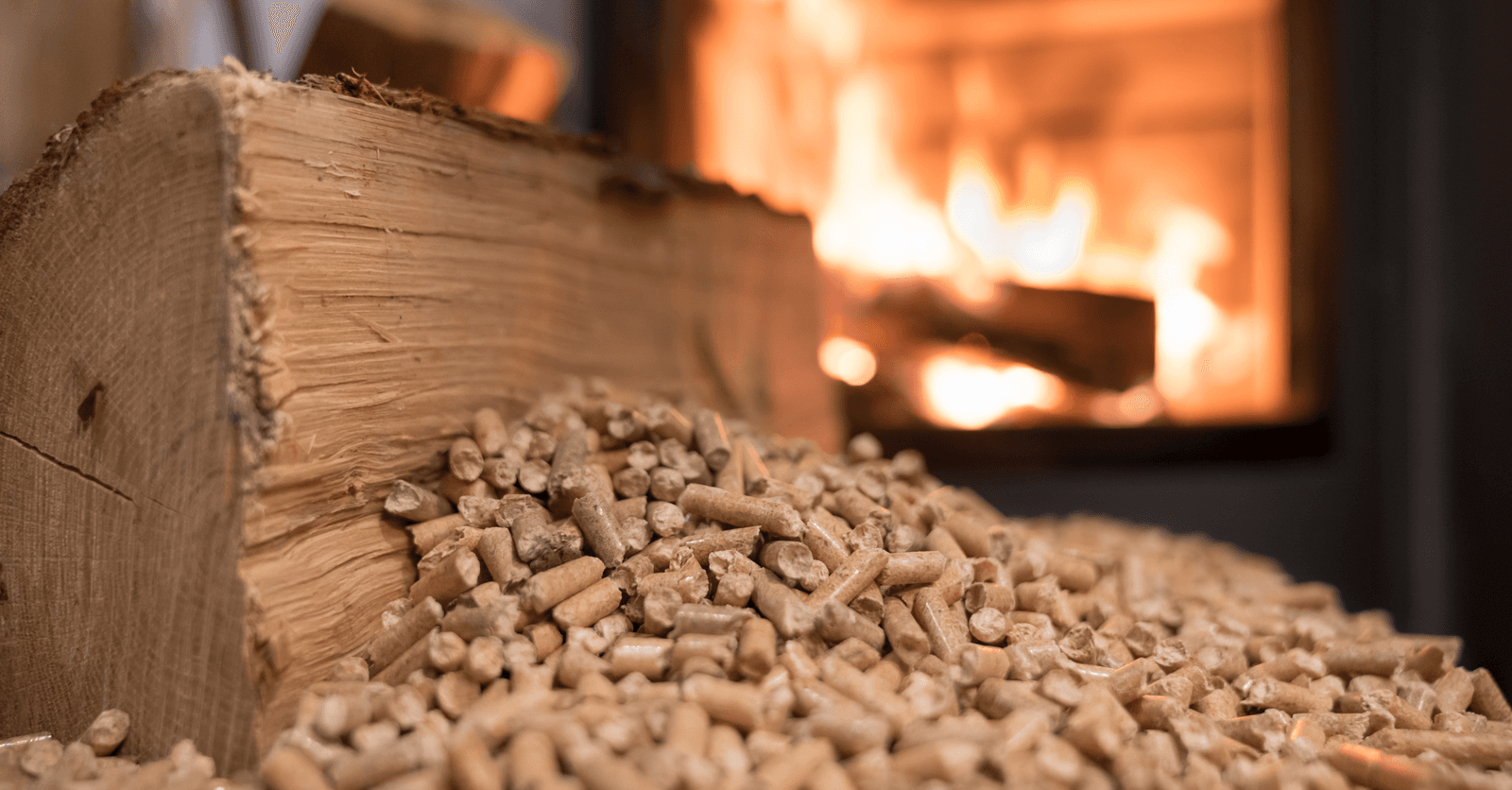
Regarding the cost of fuel, plan for about $7 for a 40-pound bag of pellets. Shop around since some retailers sell pellets at a much higher cost. On average, a bag of pellets should last about 24 hours, depending on the type of pellet stove purchased, its fuel capacity, and the level of comfort you prefer. Therefore, you can easily calculate the total cost based on the number of days you plan on using the stove.
Given that the pellet stove will shut off during a power outage (exhaust and supply systems run on electricity), it’s advised to purchase a deep-cycle battery with a power converter to offset this problem. The latter costs between $400 and $600.
Note that it’s especially important to have the ducts of your pellet stove swept and cleaned once a year by a certified contractor. To that effect, you’ll need to spend between $100 and $200.
If your budget allows it, go for a cast-iron stove. Although it means an investment that’s 10-15% more expensive, it’ll last longer than its counterparts and offers better heat distribution.
As for the cost of using a pellet stove, Natural Resources Canada states that the yearly cost of heating a newly built, two-person home is $1,490 per year.
Just how efficient is a pellet stove?

Source: Canva
It goes without saying that the decision to purchase a heating system will largely depend on its overall efficiency. In order to answer this important question, we can say that pellet stoves have an 80% to 90% efficiency, which, all in all, is a very respectable benchmark. For comparison’s sake, keep in mind that traditional stoves reach roughly 50%, while other, more modern, models reach about 75%.
It’s also worth noting that pellets are a less expensive fuel source than logs, and pellet bags are quite easy to store. Also, fueling a stove with pellets allows for better control of the heat’s intensity. Lastly, note that some pellet stove models have a tank, which allows for autonomous heating for periods of 1 to 4 days.
Important precautionary measures
First and foremost, pellet stoves have to be certified by either the Canadian Standards Association (CSA) or the Underwriters Laboratories of Canada (ULC). These two organizations are able to confirm whether the use of the stove in question is harmful or not. In other words, the stove must be certified by the U.S Environment Protection Agency (EPA) to ascertain whether its fine-particle emissions are less than 90 mg per cubic metre.
The device in question must be installed according to the manufacturer’s guidelines by a certified professional holding a valid, sub-category 10 licence. The list of licenced contractors can be perused online via the Régie du bâtiment du Québec (RBQ) website.
Get 3 quotes for your pellet stove installation
RenoQuotes.com can help you get quotes for your pellet stove installation project. If you submit your project, we’ll put you in contact with top-rated contractors. Fill in the form on the homepage (it only takes a few minutes) and get estimates from trusted professionals.
Dial 1-844 828-1588 to speak with one of our customer service representatives.
Looking for something else?
Related articles
The latest industry news, interviews, technologies, and resources.
Editorial Team
•16 Jul 2026
The housing crisis has been a pressing issue in Ontario for several years now, with rising prices and low availability making it increasingly difficult for residents to find affordable and suitable housing. In response to this, modular homes or housing have emerged as a potential solution that could help address these challenges and provide a more sustainable and efficient way to build homes in the province.

Cynthia Pigeon
•08 Nov 2023
For some people, the prospect of living in a house that is a genuine time capsule is something of a reality. Perhaps you’re one of the many who’ve decided to keep the original retro design going since you’re drawn to its history. However, after a while, your home may need a little tweak here and there.

Editorial Team
•15 May 2026
Helical piles are a practical solution for building deep, stable foundations or reinforcing existing foundations for residential properties. They are often used for homes, additions, decks, balconies, cottages, and other light to medium structures, especially when soil conditions make traditional foundation work more complex.

Amanda Harvey
•08 Nov 2023
Renovation and remodelling projects aren’t the cheapest ventures. Not only do they take time and effort, but they can also leave your home in a state of unrest.
Editorial Team
•04 Nov 2025
Everyone envisions their ideal home with a specific idea in mind. For some, this means dreaming of a spacious kitchen, while for others, it’s an opulent bathroom or a complete structural transformation of a home’s floor.