Foundation Waterproofing Cost: Tar vs. Membrane, How to Protect Your Home at the Right Price?
By Cynthia Pigeon
Updated on July 8, 2026
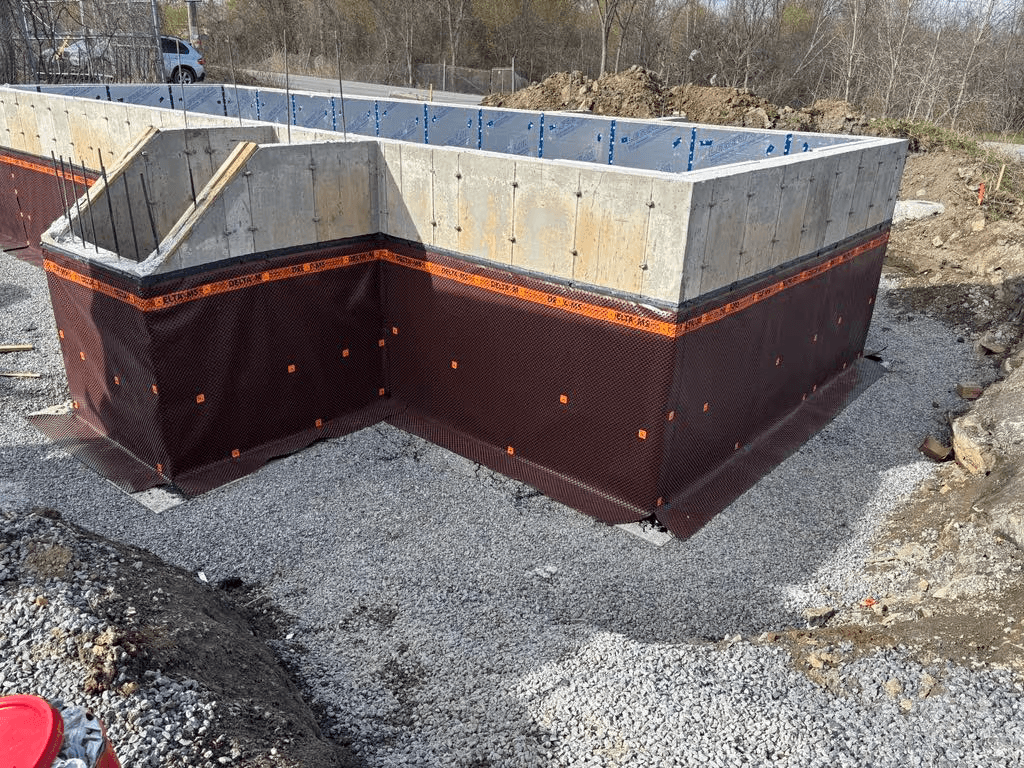
For homeowners in Quebec, managing moisture and water around foundations is a major challenge. Basement water infiltration can quickly cause significant damage, whether structural or not, while also promoting mould growth that can be health-hazardous. When facing this issue, foundation waterproofing is one of the most durable solutions, especially when combined with an effective drainage system.
When planning this type of work, one financial and technical question always comes up: should you choose traditional tar coating or invest in a modern waterproofing membrane? Understanding the real impact of these technologies on your budget and on the durability of your foundation is key to making an informed decision.
What Is the Average Price per Linear Foot to Waterproof a Foundation?
Source: Drain & Fissure L.M. Inc
The cost of foundation waterproofing work is almost always calculated per linear foot. This pricing method generally includes all the necessary steps: soil excavation, concrete surface preparation, protective product application, and backfilling.
In practice, many waterproofing projects with excavation range from $100 to $250 per linear foot. More complex projects, including high-performance membranes, difficult access, significant depth, crack repair, or French drain replacement, can sometimes reach approximately $180 to $400 per linear foot.
This significant price variation is mainly explained by the chosen waterproofing method and property-specific characteristics. To better understand these differences, here is a comparative table of the available options:
Protection Option | Average Price per Linear Foot, Excavation Included | Estimated Lifespan in Quebec’s Climate | Effectiveness Against the Water Table |
Bituminous coating, liquid tar | $180 – $250 | 5 to 10 years, variable depending on protection and conditions | Low to moderate, protection against moisture, not waterproof against water under pressure |
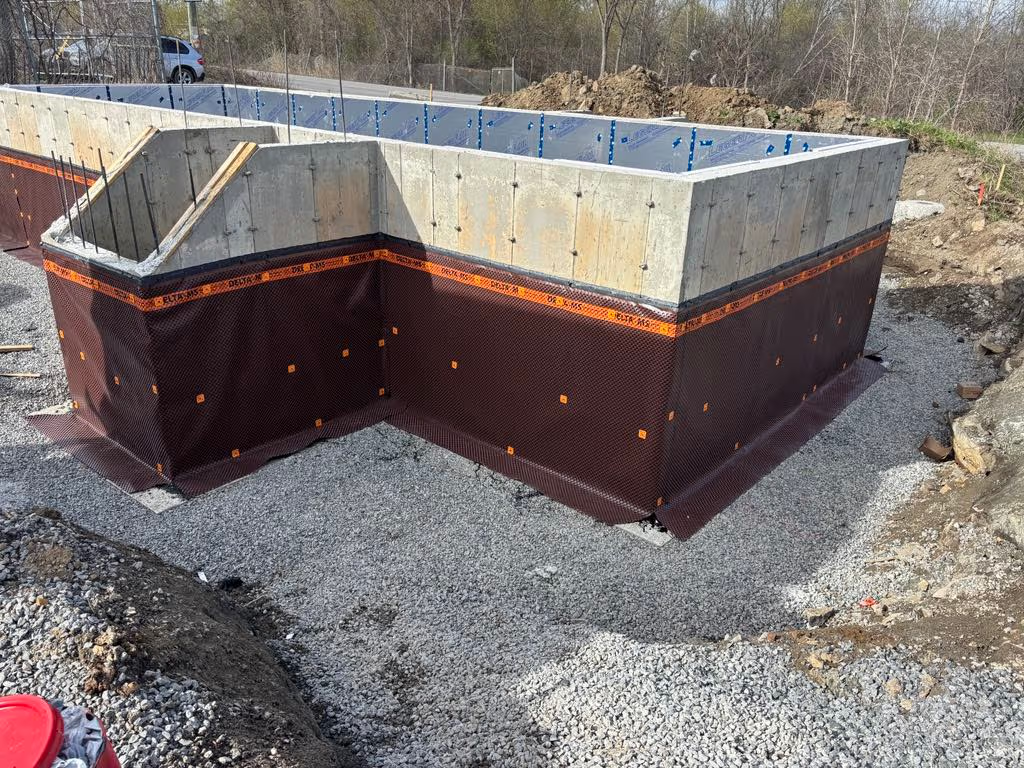
Dimpled membrane, Delta-MS type | $220 – $300 | 20 to 30 years | Good water management through drainage; depends on joints, installation, and the French drain |
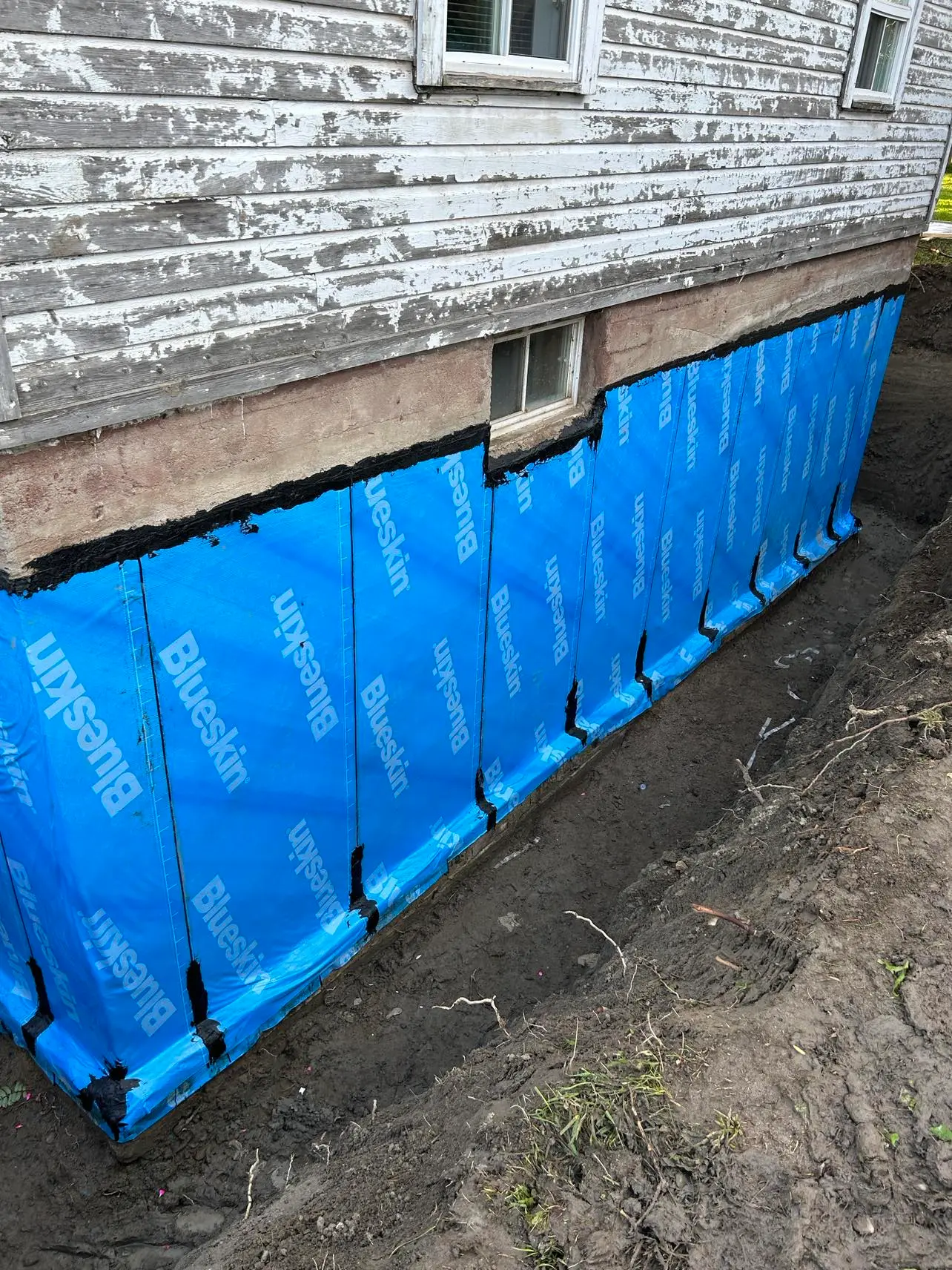
Elastomeric membrane, self-adhesive or torch-applied | $250 – $400 | 25 to 40+ years depending on conditions | Maximum, waterproof and flexible barrier |
In practice, these solutions are often combined, such as an elastomeric membrane protected by a dimpled membrane, to provide both waterproofing and mechanical protection.
To get a precise idea of the rates that apply to your geographic area, it remains essential to plan foundation waterproofing work with professionals who can directly analyze the nature of your soil.
Budget Option: Applying Liquid Tar or Bituminous Coating
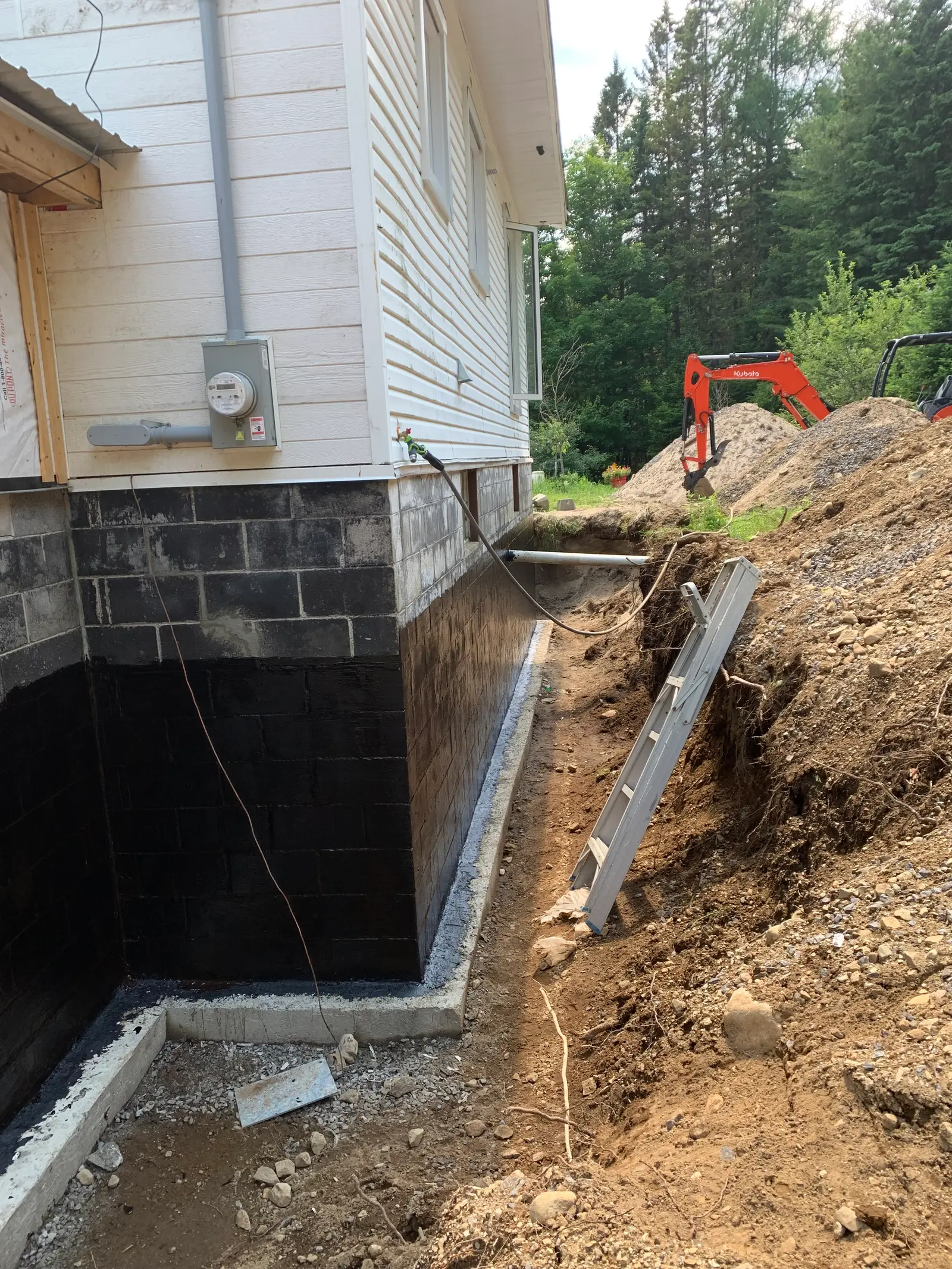
Applying a bituminous coating, commonly called tar coating, is the traditional approach in residential construction. This method consists of spraying or rolling a liquid bitumen-based coating directly onto the exterior walls of the foundation.
The main advantage of this option is its affordable price. Homeowners with a limited initial budget often turn to this solution, which costs between $180 and $250 per linear foot. In the short term, tar acts as a damp-proofing layer by preventing natural ground moisture from penetrating through the porosity of the concrete.
However, the durability of this option is very limited. Liquid tar is not a flexible waterproofing membrane. As it ages, the product dries out, hardens, and becomes extremely brittle. Under the effect of ground movement and water pressure, this thin bituminous layer eventually flakes and cracks after only a few years. As a result, its protective capacity decreases significantly, once again exposing your basement to the risk of water infiltration.
Performance Option: Cost of Installing an Elastomeric or Dimpled Membrane
For homeowners looking for long-term peace of mind, modern waterproofing membranes are the high-performance option of choice. Although the initial investment is higher, ranging from $220 to $400 per linear foot, the financial return becomes clear over the decades.
Elastomeric membrane: Whether self-adhesive or torch-applied, this membrane has exceptional elastic properties. It can stretch and follow the natural movements of the foundation without tearing. Even if microcracks appear in the foundation concrete over time, the elastomeric membrane maintains its integrity and provides a highly effective waterproof barrier, provided it is combined with proper drainage.
Dimpled membrane: This is an impermeable material that creates an air gap and helps water flow toward the drain. When installed on its own, it mainly acts as mechanical protection and as a drainage layer. Its effectiveness depends heavily on the quality of the joints, the finishing at the top of the membrane, and the proper functioning of the French drain.
The real financial advantage of this option lies in its longevity. A properly installed membrane system can offer a lifespan of 25 to 40 years or more, depending on conditions and installation quality. Considering that most of the cost of the work is related to excavation, installing a durable product helps you avoid having to dig up your yard again ten years later, which could lead to significant long-term costs.
In practice, tar coating may be suitable for temporary situations or very limited budgets. However, for durable protection in a Quebec-specific context, membrane systems, often combined with a dimpled membrane and a high-performing drain, are generally the most reliable long-term option.
Key Factors That Influence the Total Cost of the Work
Source: Nettoyage de Conduits Souterrains inc.
The final price on your quote does not depend only on the materials chosen. Every property has unique characteristics that can make the job more complex and affect the overall cost of waterproofing operations.
Site Accessibility and Required Excavation Depth
Excavation is the heaviest and most technical step in the process. If a large mechanical excavator can move freely around the perimeter of the house, the work will progress quickly, keeping labour costs as low as possible. However, several site constraints can increase the overall cost:
Physical obstacles: The presence of a concrete patio, asphalt driveway, paved walkways, or mature flower beds requires demolition and reconstruction work.
Restricted spaces: In dense urban areas, such as many neighbourhoods in Montréal or Québec City, the space between two houses is sometimes too narrow for standard machinery. The use of mini-excavators, or even manual digging in extreme cases, considerably slows down the work and increases the hourly cost.
Foundation depth: A house with a full basement and an 8-foot ceiling requires a much deeper trench than a building built on a shallow crawl space. Deep trenches also require specific safety measures, particularly to prevent wall collapse, protect workers, and secure the worksite perimeter.
Foundation Crack Repair and French Drain Optimization
A waterproofing membrane cannot be applied to damaged or unstable concrete. Before installing the protection, the contractor must carefully inspect the foundation. If structural or passive foundation cracks are discovered, they must be repaired using polyurethane or epoxy injection. These preliminary repairs result in additional costs per crack.
In addition, exterior wall waterproofing goes hand in hand with water management at the base of the foundation. When the trench is open, it is the ideal time to check the condition of the drainage system.
If the existing drain is clogged, crushed, or missing, replacement is necessary. It is strongly recommended to take advantage of the excavation to compare the cost of a new French drain and integrate it into the project. A malfunctioning drainage system will eventually saturate the soil with water, ultimately undermining the waterproofing efforts.
Why Simple Tar Coating Is Rarely the Best Long-Term Solution in Quebec
Source: Philip Gerard
Quebec’s climate imposes extreme thermal and mechanical constraints on buildings. Temperature variations between summer heat waves and winter freezes cause constant ground movement. The most destructive phenomenon for foundations remains the freeze-thaw cycle.
During winter, the water contained in the soil freezes and expands, exerting immense lateral pressure on the foundation. In spring, the rapid thaw saturates the soil with water, critically increasing hydrostatic pressure against the concrete walls. Faced with these repeated stresses year after year, the concrete moves and works, creating microcracks in the foundation concrete.
Because of its early rigidity, simple tar coating is unable to follow these movements. It can crack when the concrete moves or cracks, opening the door to spring water infiltration. By contrast, current best practices often favour the use of flexible materials that can better follow building movement.
Industry best practices favour waterproofing systems capable of bridging cracks. Elastomeric membranes are among the most effective solutions because of their ability to bridge cracks.
How to Choose a Trustworthy Foundation Contractor in Quebec
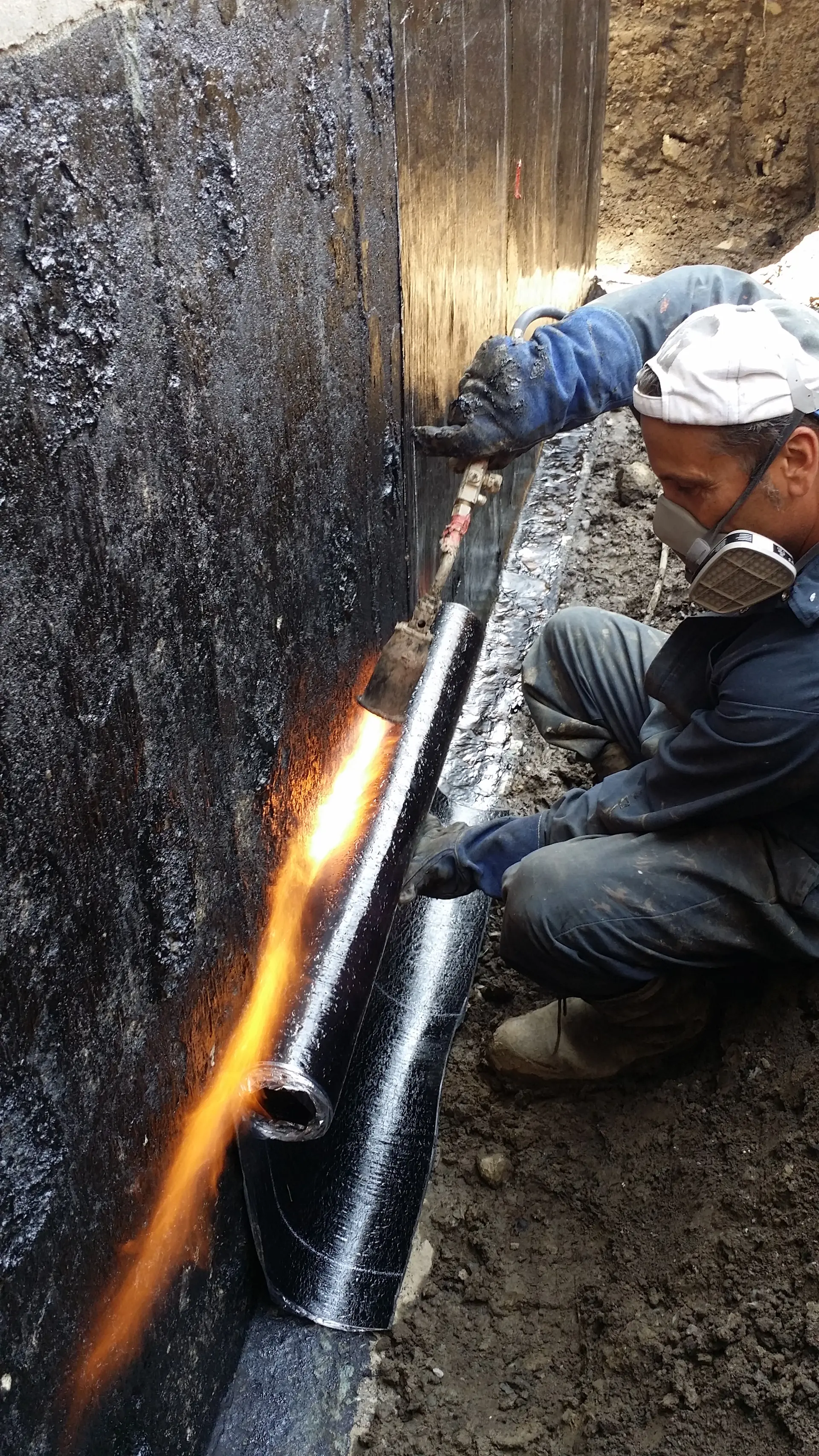
Source: Fissure Supérieure S.B. inc.
Foundation waterproofing and excavation work directly affects the foundations and stability of the building. A technical error can compromise the stability of your home. It is therefore essential to choose a rigorous professional.
The first mandatory verification concerns legal authorizations. In Quebec, the selected contractor must hold a valid licence from the Régie du bâtiment du Québec (RBQ). For this type of work, subclasses may include, among others, 2.5 for excavation and those related to foundation work. It is preferable to verify that the contractor is specifically authorized to perform waterproofing and excavation work. This licence confirms that the contractor is authorized to carry out certain categories of work, but it does not replace the need to check insurance, references, the written contract, and the warranty offered.
Here are a few practical recommendations to protect your investment:
Ask for references: A reliable contractor will not hesitate to provide contact information from satisfied clients for whom they completed similar work in your area.
Require a detailed written contract: The document should specify the membrane thickness, the concrete preparation method, debris management, and the duration of the written warranty against water infiltration.
Compare offers: Do not stop at the lowest price. Take the time to analyze what is included in each proposal.
To support your process and ensure that your work complies with provincial standards, you can get quotes from certified contractors through verified referral networks.
Looking for something else?
Related articles
The latest industry news, interviews, technologies, and resources.
Editorial Team
•08 Nov 2023
The clay composition of brick is what gives it its characteristic earthy colour while also delivering enormous strength and durability. While brick does outlast other materials such as wood, over time a brick wall’s worst enemies are moisture and extreme temperature changes. These two natural elements that every Canadian must deal with annually can really compromise the mortar over time, leaving cracks and stains.
Editorial Team
•27 Aug 2025
Concrete panels are durable, cost-effective, and viable options for both indoor and outdoor walls. Their list of attributes doesn’t end here: they're also easy to install, especially aesthetic-looking, thermal insulators, and soundproof. We’ll delve into why and how these panels should be installed.
Editorial Team
•15 Jun 2026
Summer brings barbecues, fresh produce, gatherings, and more daily kitchen use, which can make a smelly kitchen sink hard to ignore. Food debris, grease buildup, biofilm, or a dry P-trap can quickly turn a busy kitchen into an unpleasant space.

Editorial Team
•06 Nov 2024
Each renovation project comes with a lot of concerns and questions. This is why when comes the time to give your walls a fresh coat of paint, finding a trustworthy house painter will be the key in order to keep your serenity. Finding a good contractor isn't always an easy job and requires a minimum amount of research in order to limit any inconveniences.
Cynthia Pigeon
•08 Jul 2026
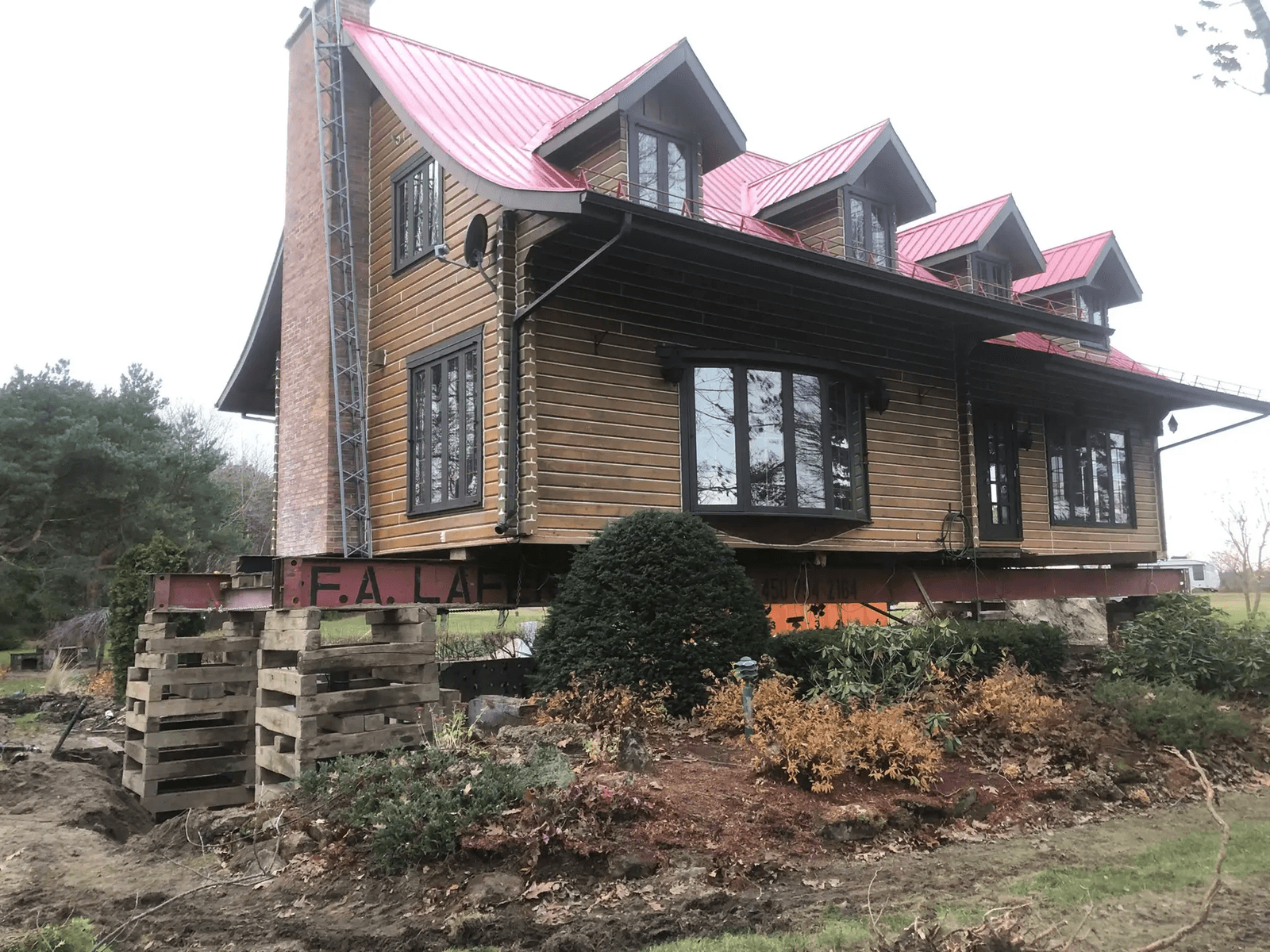
In Quebec, owning an older home or a bungalow with foundations showing advanced signs of wear can be a major challenge. Whether the goal is to correct serious foundation cracks, replace concrete affected by pyrite, or simply gain usable living space by converting a crawl space into a full basement, building lifting is often a durable solution in several complex situations.