Heated Floor Cost and Installation: Electric vs. Hydronic in Quebec
By Cynthia Pigeon
Updated on September 3, 2026
Dealing with harsh Canadian winters requires a heating system that is efficient, comfortable, and economical. When temperatures drop below -20°C, few things compare with the comfort of a warm floor underfoot. From bathroom renovations to new single-family home construction, underfloor heating has become a popular comfort upgrade in Quebec.
However, one major financial and technical question comes up when planning the work: should you choose an electric heated floor or a hydronic system that circulates hot water?
Although both technologies serve the same purpose — distributing even radiant heat from the floor upward — their purchase costs, installation requirements, and impact on energy bills can be very different. This comparison guide presents indicative price ranges for the Quebec market, specialized labour costs, and the main energy-efficiency factors to consider before investing.
How Much Does Heated Floor Installation Cost per Square Foot?
Source: Challice Construction
In Quebec, the cost of installing a heated slab or heated floor generally ranges from $10 to $28 per sq. ft. for basic materials and installation, excluding central heating equipment. Total surface area has a major impact on the unit price: the larger the area, the lower the installation cost per square foot tends to be.
Average price ranges in Quebec for materials and installation:
Electric heated floor: $10 to $20/sq. ft.
Hydronic heated floor: $12 to $28/sq. ft.
Central heating equipment: $5,000 to $12,000
* Indicative residential price ranges. Costs vary by region, surface area, materials, system type, and site conditions. Taxes extra.
Electric Heated Floor Cost: Materials and Installation
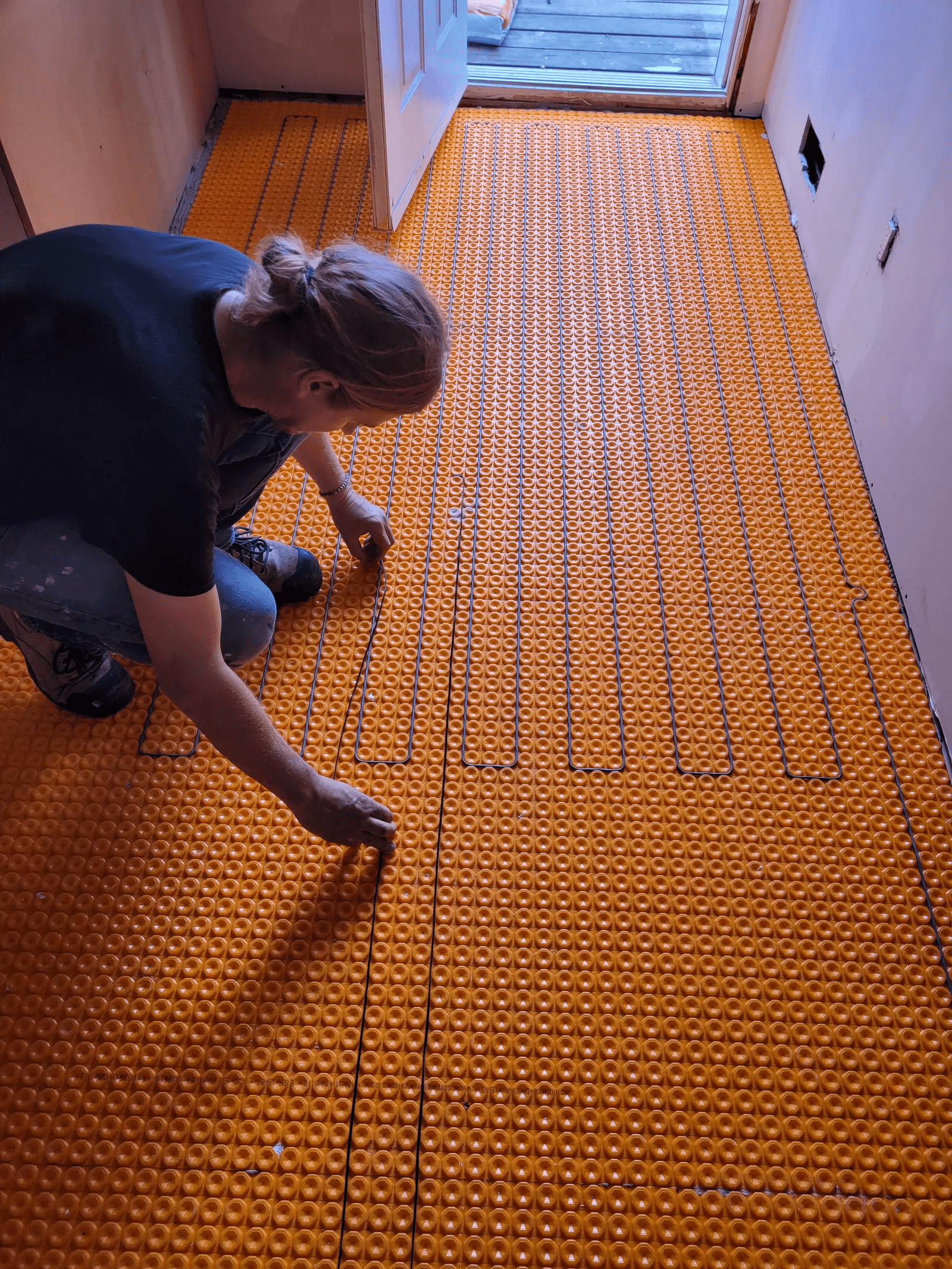
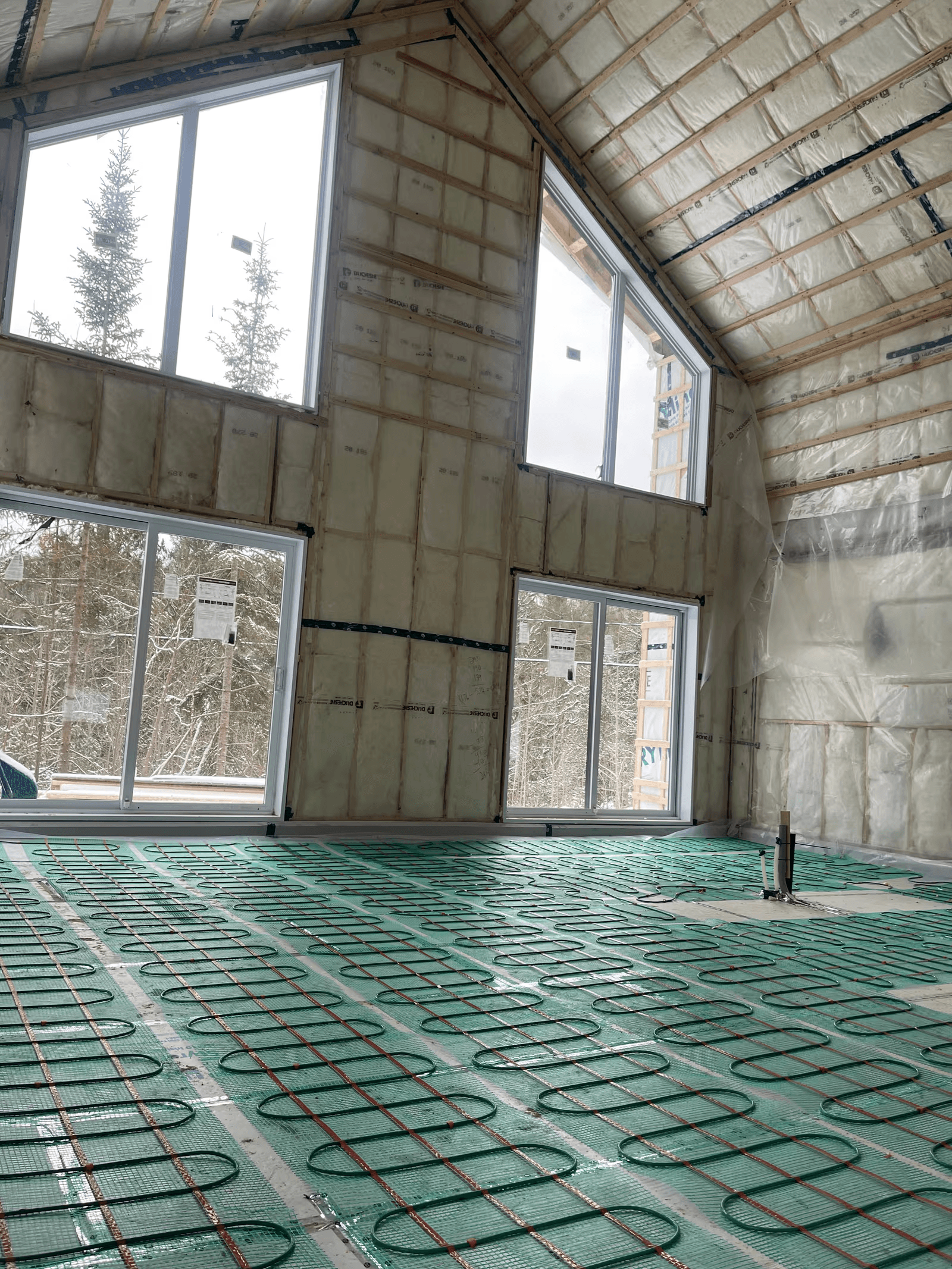
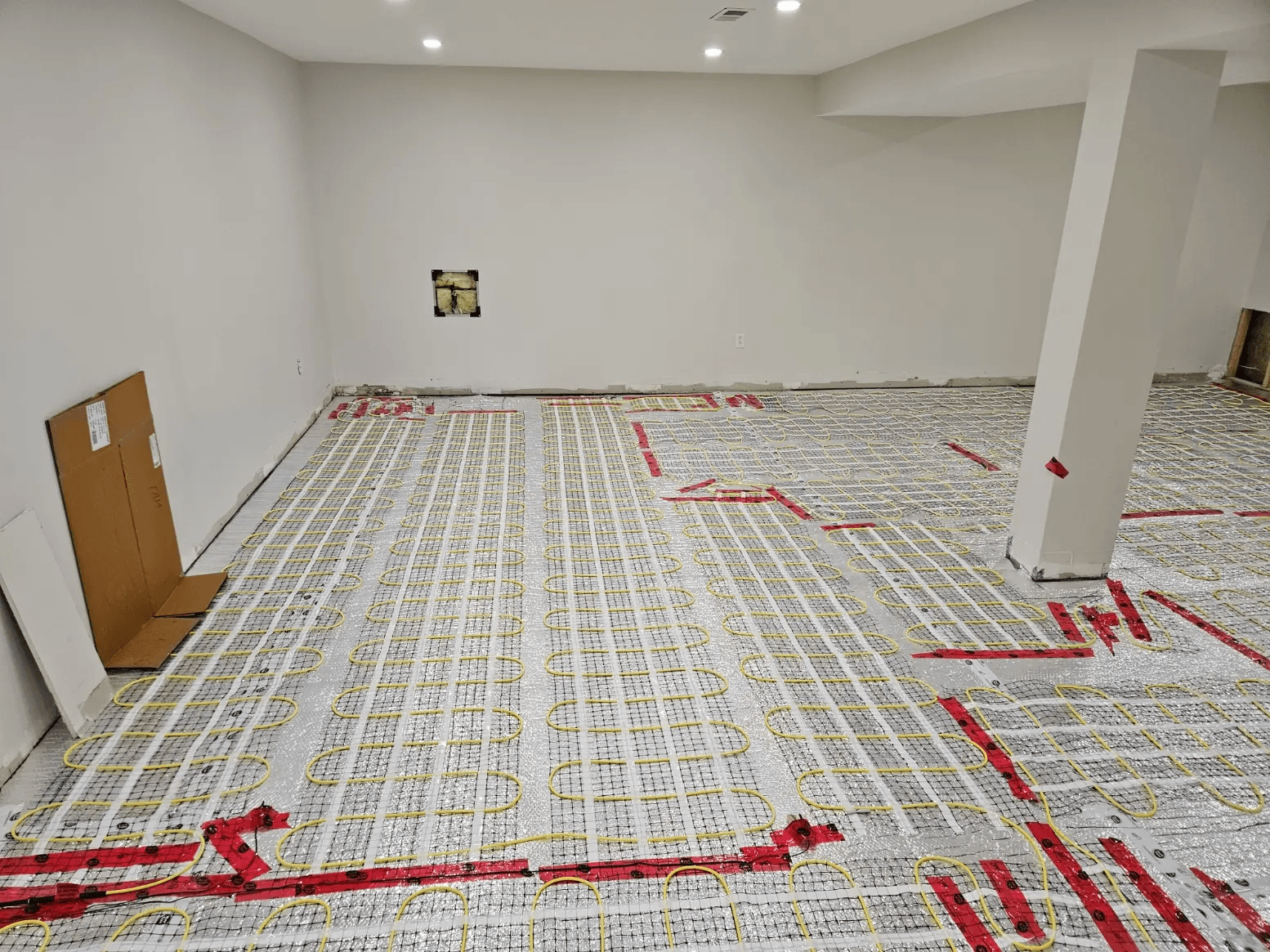
Electric heated flooring uses a heating cable secured to a membrane or incorporated into a pre-spaced mat. It is then covered with self-levelling cement or tile adhesive.
Installation generally costs between $10 and $20 per square foot, including materials and the electrical connection.
Cost breakdown for an electric system, based on a 50-sq.-ft. bathroom:
Heating cables and uncoupling membrane: $250 to $450 ($5 to $9/sq. ft.)
Self-levelling cement and subfloor preparation: $100 to $200 ($2 to $4/sq. ft.)
Programmable or smart electronic thermostat: $150 to $300 each
Labour, including a CMEQ master electrician and installer: $300 to $600
Estimated total: $800 to $1,550, or approximately $16 to $31 per sq. ft. all-in for a small area.
Because of its relatively low upfront fixed costs, electric heated flooring is generally the most economical option for targeted renovation projects such as:
Bathrooms and powder rooms
Smaller kitchens
To assess the overall cost of renovating your bathroom, you can compare bathroom renovation prices with qualified general contractors.
Hydronic Heated Floor Cost
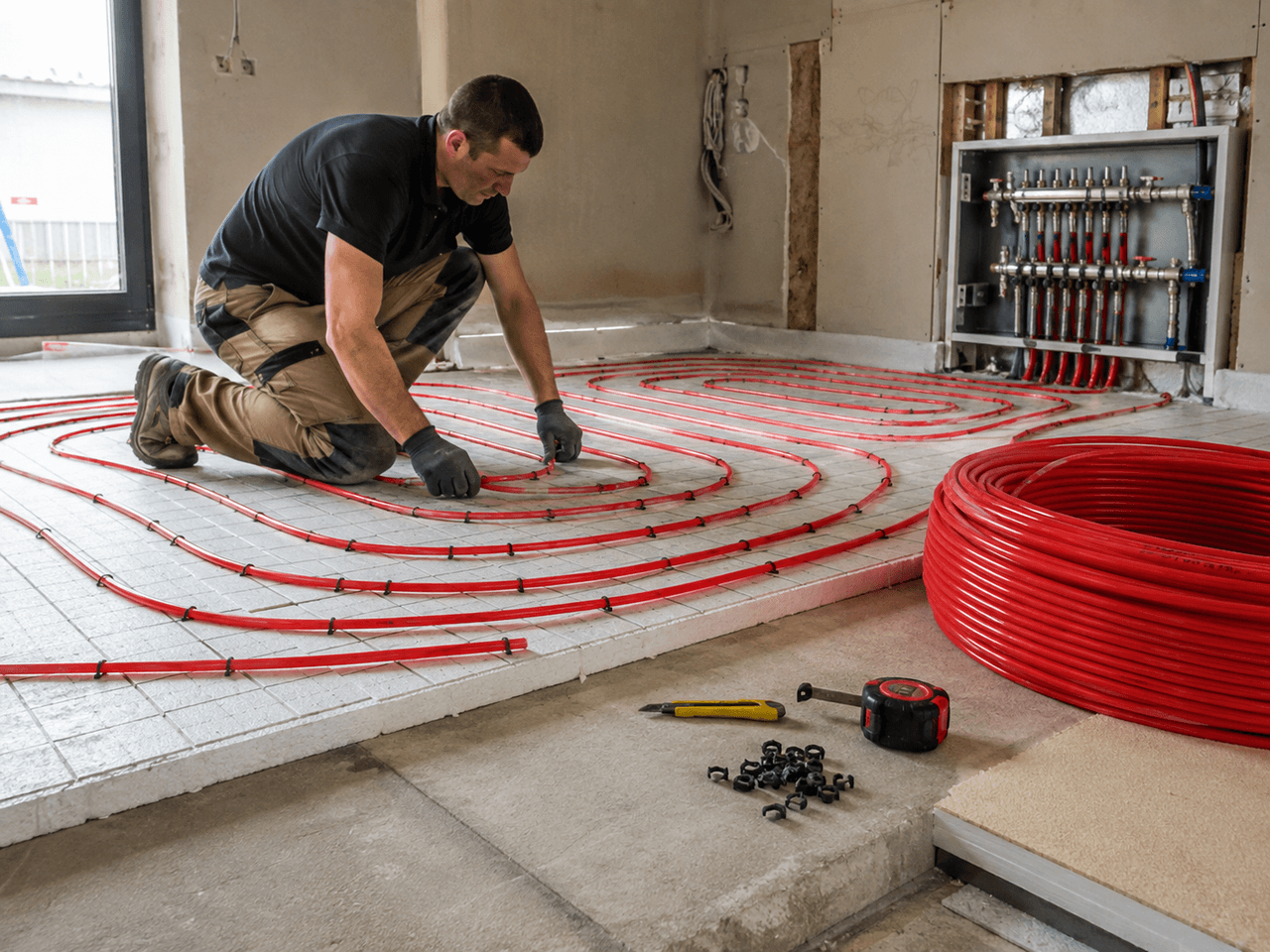
A hydronic heated floor circulates a heat-transfer fluid, typically water or a water-glycol mixture, through a network of cross-linked polyethylene (PEX) tubing installed in a concrete topping or beneath the subfloor.
The cost of installing the PEX tubing and insulation panels generally ranges from $12 to $28 per square foot. On top of that, the system requires a central heat source such as a boiler or heat pump.
Typical hydronic system costs include:
PEX tubing, manifolds, and insulation: $12 to $28/sq. ft.
Electric or gas boiler: $5,000 to $8,500
Or hydronic air-to-water heat pump: $8,000 to $12,000
Self-levelling concrete topping, 1.5 to 4 in.: $3 to $7/sq. ft.
For a new 1,500-sq.-ft. home, the total cost depends on the system type, installation method, concrete topping, heat source, and labour. Based on the ranges above, the theoretical total would fall roughly between $27,500 and $64,500. A detailed quote is necessary to establish a realistic project cost. The initial investment is significant, but hydronic systems can offer favourable operating costs over large areas, especially when paired with a high-efficiency heat source such as a heat pump.
Electric vs. Hydronic Heated Floors in Quebec
Here is a side-by-side comparison of the two technologies for renovation and new-construction projects in Quebec:
Evaluation Criteria | Electric Heated Floor | Hydronic Heated Floor |
Cost per sq. ft., materials and installation | $10 to $20/sq. ft. | $12 to $28/sq. ft. |
Central equipment cost | Low; thermostat typically $150 to $300 | High; boiler or heat pump typically $5,000 to $12,000 |
Best suited for | Smaller areas and targeted renovations | Larger areas, multiple rooms, or whole-home heating |
Heat-up time | Generally faster, depending on the floor assembly | Generally slower when embedded in a high-mass concrete topping |
Added floor thickness | Very thin, about 1/8 to 1/4 in. with adhesive | Varies by system; concrete-embedded systems are thicker, while some dry or panel systems have a much lower profile |
Energy source | Direct electricity | Electricity, natural gas, biomass, geothermal |
Theoretical service life | 25 to 30 years for heating cable | 50 years or more for PEX tubing |
Maintenance | Minimal, with no moving parts in the floor | Pressure and fluid condition should be inspected periodically |
Electric systems tend to provide more responsive, localized radiant heat, while hydronic systems can function as a thermal mass that stores and releases heat over longer periods, particularly when embedded in concrete.
What Factors Affect Installation Costs?
Source: Construction signature Lafontaine
When reviewing a contractor quote, several architectural and structural factors can affect the final cost.
Key cost variables include:
Condition and flatness of the wood subfloor or concrete slab
Thickness of the insulation beneath the heating system
Electrical panel capacity
Site access for pouring cement or concrete
Final floor covering, such as tile, polished concrete, or vinyl
Subfloor Preparation, Insulation, and Concrete Topping
The thermal performance of a heated floor depends heavily on the insulation installed beneath it. Without an effective thermal barrier, some of the heat can be lost downward into the ground or foundation instead of moving into the room.
Requirements vary depending on the floor assembly.
Over a concrete slab (basement or garage)
Appropriate rigid insulation should be installed beneath or around the slab to limit heat loss into the ground. The required insulation value depends on the floor assembly, slab location, applicable building requirements, and manufacturer recommendations.
Over a wood subfloor on the upper storeys
Confirm that the subfloor and framing provide sufficient stiffness for the selected flooring.
Install an uncoupling and/or waterproofing membrane when required by the system or floor covering manufacturer.
For hydronic or electric systems embedded in concrete, installation may require self-levelling cement for thinner applications of approximately 1/2 to 1 in., or a flowable concrete topping approximately 1.5 to 3 in. thick. This can add around $3 to $7 per square foot while increasing thermal mass.
Required Connections: CMEQ Electrician and CMMTQ Hydronic Heating Contractor
In Quebec, renovation and construction work is regulated under the Building Act and overseen by the Régie du bâtiment du Québec (RBQ). Homeowners are not permitted to perform certain technical connections themselves.
When a heat pump is connected to a hydronic system, additional licence subclasses may also be required for refrigeration and electrical work. The exact licensing requirements depend on the equipment and the scope of work.
Electric system
A CMEQ electrician must be hired
The system must be connected to the electrical circuit, with GFCI protection where required by the Code or the manufacturer
The floor thermostat must be installed and calibrated
Hydronic system
A heating contractor who is a member of the CMMTQ must be hired
The manifold, pumps, and expansion tank must be connected
A hydraulic pressure test must be completed before the concrete is poured
These requirements help protect against electrical hazards, fire risks, and water damage. Hourly rates for these certified trades generally range from $95 to $145 per hour, based on industry reference rates.
To find a qualified professional for the electrical portion of the work, make sure your contractor holds a valid RBQ licence.
Long-Term Operating Costs and Hydro-Québec Electricity Use
Source: Jet Électrique Inc
Quebec benefits from some of the lowest residential electricity rates in North America through Hydro-Québec’s Rate D. However, the way your heated floor operates can still have a direct impact on your monthly energy bill.
Energy-efficiency comparison:
Electric: Approximately 100% efficient at the point of use, meaning 1 kWh of electricity consumed produces about 1 kWh of heat.
Hydronic with an air-to-water heat pump: COP of about 2.5 to 3.5, meaning 1 kWh of electricity can deliver roughly 2.5 to 3.5 kWh of heat under suitable operating conditions.
Lowering the Thermostat Setpoint
A heated floor distributes radiant heat over a large surface, creating a different comfort profile from conventional electric baseboards, which heat the room primarily through convection.
Hydro-Québec indicates that lowering the thermostat setpoint by 1°C during the heating season can reduce heating costs by approximately 5% to 7%. The comfort provided by radiant flooring may influence the temperature occupants consider comfortable, but actual savings depend on the building, thermostat settings, and usage habits.
Operating costs vary significantly depending on the building’s heating load, heated area, insulation, thermostat setting, electricity rate, and heat source. Electric heated floors and electric baseboards both use resistance heating, so differences in consumption are mainly tied to controls, setpoints, and building characteristics.
An air-to-water heat pump can reduce electricity use further because its coefficient of performance is greater than 1.
Rebates and Energy-Efficiency Programs
Financial incentives may be available for certain high-efficiency heating equipment in Quebec. Eligibility depends on the specific equipment and the program requirements in effect.
Some heat pumps qualify for Hydro-Québec’s LogisVert program, but homeowners should not assume that an air-to-water heat pump serving a hydronic floor is eligible. Always verify the current eligible measures and equipment before purchasing.
How to Get and Evaluate Contractor Quotes in Quebec

Source: RenoQuotes
To get a fair price and reduce the risk of unexpected costs, use the following approach when comparing contractors:
Define the scope of work: Clearly state whether the contractor must handle removal of the existing floor, insulation, concrete topping, or only the heated floor system itself.
Confirm the required licence subclasses: In Quebec, this includes subclasses 16 – Electrical Contractor for electrical work and 15.4 – Hydronic Heating Systems Contractor for hydronic radiant flooring. A general contractor holding a 1.2 or 1.3 licence may coordinate the project and subcontract specialized work to properly licensed contractors.
Request written warranties: Warranty periods vary significantly by manufacturer, product, and system configuration. For example, Schluter offers a 15-year limited warranty on its DITRA-HEAT system. Review the manufacturer’s exact warranty terms before installation and confirm the contractor’s labour warranty in writing.
Request the electrical tests recommended by the manufacturer: For electric systems, the heating cable’s resistance and integrity should be checked at the required stages of installation according to the manufacturer’s instructions. Some manufacturers recommend insulation testing with a megohmmeter and require test results to be documented for full warranty coverage.
By comparing several detailed quotes, you can get a clearer picture of prices in your municipality and choose the right contractor for your project. To get started, you can request quotes from certified contractors across Quebec.
Looking for something else?
Related articles
The latest industry news, interviews, technologies, and resources.

Editorial Team
•08 Nov 2023
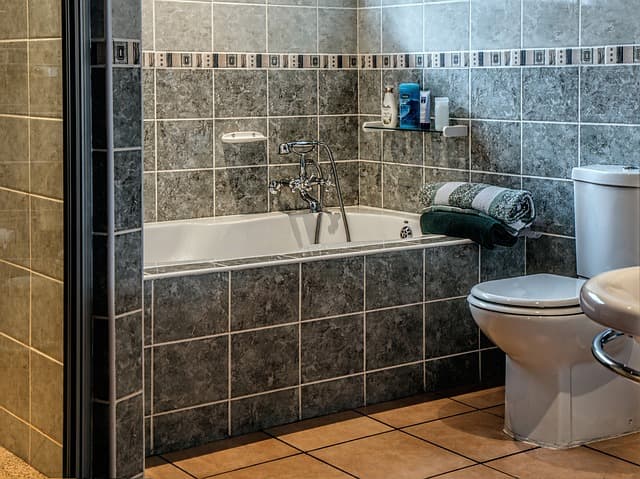
Trying to manage the items of multiple family members is one of the many difficult tasks that running a household entails. Since the bathroom is generally the smallest room in the home, keeping it neat and tidy is a part-time job.
Amanda Harvey
•03 Nov 2025
Tiles come in all kinds of colours, shapes and sizes, keeping bathroom floors waterproof and beautiful. However, like any home surface, they need proper maintenance to uphold their elegance while preventing cracking, mould or mildew growth.

Editorial Team
•02 Jul 2024
Composite panels are far from the latest addition in all things construction-related. However, what is groundbreaking is the wide range of materials from which such panels are manufactured.
Editorial Team
•08 Nov 2023
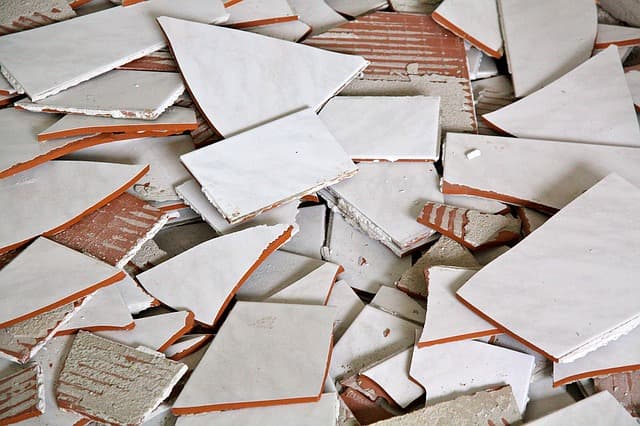
Kitchen floors covered in ceramic tiles are a durable and low-maintenance option for any home. However durable, one slip of a hot pot could easily cause a crack in the tiles, leaving you with a partially broken floor. Luckily, this is an easy fix that can be done without destroying the entire floor.
Editorial Team
•15 Dec 2023
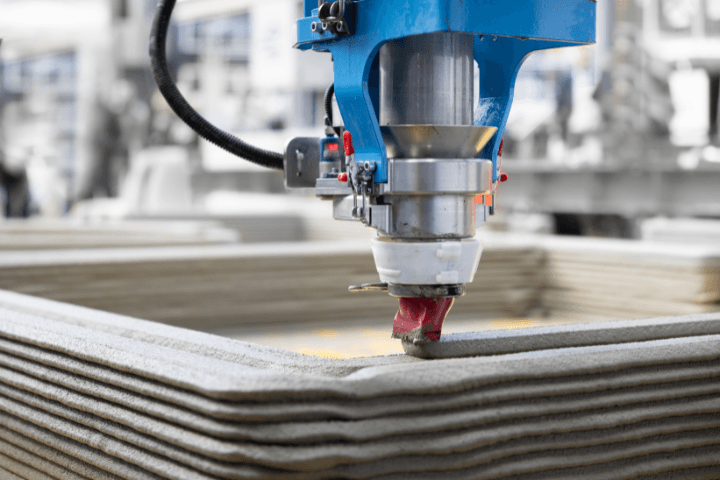
3D concrete printing is deemed the future of habitat for humanity. An overstatement? Think again—by 2060, 230 billion square metres will be needed to shelter our new fellow citizens, or the size equivalence of Paris multiplied every week over a 40-year period.