Carpeted Stairs: Pros, Cons, Costs, and Installation
By Editorial Team
Updated on November 17, 2026
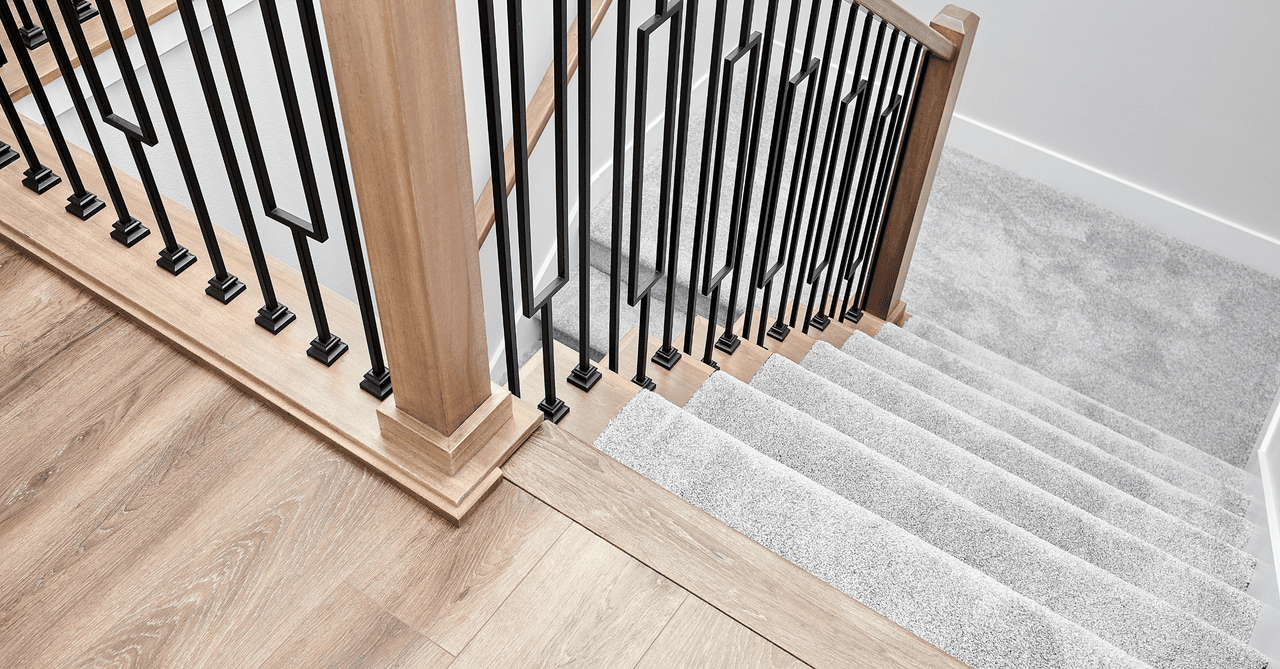
Carpeted stairs add traction, cushioning, and sound absorption, but they need more cleaning than hardwood and can hide the natural beauty of a wood staircase. In Toronto, installing a stair runner typically costs $40 to $60 per step, plus about $40 to $60 per step for a custom-bound runner.
This guide compares carpeted stairs with exposed hardwood, explains the difference between a stair runner and full stair carpet, and covers materials, pile height, compatibility with your staircase, installation, cost, and maintenance.
Carpeted Stairs vs. Exposed Hardwood

Source: Canva
The Benefits of Carpeted Stairs
Traction: Carpet gives better grip underfoot than varnished hardwood or stone, especially in socks, which reduces the risk of slipping.
Cushioning: A soft and cushioned surface is more comfortable and softens the impact of a fall.
Noise reduction: Carpet absorbs the noise generated when walking up and down the stairs, including the sounds of people and pets.
Hides minor imperfections: Carpet can cover worn or mismatched treads without frequent refinishing.
Protects the steps: It shields the treads from daily wear and tear.
The Drawbacks
More maintenance: Carpet needs regular vacuuming and occasional deep cleaning, and the nosing of each step wears faster than the rest.
Moisture absorption: Spills and humidity can lead to mould, mildew, or odours if not cleaned quickly.
Hides the wood: Full carpet covers the natural beauty of your staircase, which is a loss with quality hardwood.
Removal leaves marks: Tacks and nail holes, staples, or glue stay behind when the carpet is removed, so the steps usually need repairs or refinishing.
A worn carpet is a hazard: A loose, curled, or worn carpet can itself cause falls.
Household Needs
The right choice depends on who lives in the home. Carpet's traction and cushioning help prevent falls for young children, older people, and anyone with mobility issues. On the other hand, carpet traps dust and allergens, so households with allergies or asthma may prefer hardwood with a runner they can vacuum often. Carpet also adds a little insulation and feels warmer underfoot, though its effect on energy bills is minor. Consider your home layout, too: a staircase in a busy entryway gets dirtier than one between bedrooms.
Stair runner, full carpet, or a mix of both?

Source: Canva
Stair Runner
A carpet runner covers the centre of each step and leaves 2 to 4 inches of wood exposed on each side. It keeps the hardwood visible while adding traction and comfort, and it's one of the most popular choices for wood staircases.
Runners and stair carpet can be installed in two ways over the nosing. In the "Hollywood" style, the carpet hugs the nosing and is fastened tightly underneath it, following the shape of the step. In the "waterfall" style, the carpet runs over the nosing and drops straight down to the step below, which is faster to install and less expensive.
Full Stair Carpet
Wall-to-wall stair carpet covers the treads and risers completely. It suits worn or damaged stairs, since it hides them entirely, and creates continuity with a carpeted upper floor.
Mixed-Material Stair Finishes
You don't have to choose between fully carpeted and fully exposed stairs. Common combinations include:
Runner over hardwood stairs: The treads are stained or varnished, and a runner covers the centre.
Painted risers with a runner: White or coloured painted risers contrast with stained treads and a runner for a classic look.
Softwood stairs: Softwood stairs are often painted, since they dent easily, with a runner to protect them.
If you'd like to go the other way, from carpet to exposed wood, some contractors offer a full conversion service: removing the carpet, replacing or capping the treads, and painting, staining, or varnishing the staircase.
Staircase Compatibility
The type of staircase affects whether carpet is a good fit:
Straight stairs: The easiest and least expensive to carpet or fit with a runner.
Curved or winder stairs: Each step is different, so they need custom-fit solutions, which cost more.
Open riser stairs: With no risers, a runner can only be wrapped around each floating tread, which is costly and labour-intensive; individual carpet treads are usually the simpler option.
Spindles and railings: Where spindles sit directly on the treads, full carpet must be cut around each one, which adds installation time. Spindles set on a closed stringer don't require cutting.
Under-step lighting: Make sure the runner or carpet won't cover lights set into the steps or risers.
On a fine hardwood staircase, a runner preserves the hardwood craftsmanship, while full carpet hides it. Choose colours, patterns, and textures that suit your decor and the timber of the staircase.
Choosing a Carpet for Stairs

Source: Canva
Materials
Wool: Soft, durable, and naturally flame-resistant, but more expensive and prone to staining.
Nylon: The most durable synthetic, well suited to high-traffic stairs.
Polyester and polypropylene: Affordable and stain-resistant, but less resilient than nylon.
Sisal and jute: Natural, eco-friendly fibres with a textured look, but they're stiff, rough underfoot, hard to clean when stained, and can be slippery on stairs, especially in socks.
Textile carpets and runners sold in Canada must meet the Textile Floor Coverings Regulations, which require a flammability test.
Pile Height and Texture
For stairs, choose a low, dense pile. It's more durable, wears better on the nosing, and is safer, since a thick, plush pile can feel unstable underfoot. Plush carpets are soft but harder to clean and wear faster on stairs. Ribbed or loop carpets are very durable, but loops can snag on pet claws; with dogs or cats, a dense cut pile is safer. Textured carpets offer the widest choice of colours and patterns and hide footprints well.
How to Install a Stair Runner

Source: Canva
First: How to Measure for a Stair Runner
For a straight staircase, measure the depth of one tread, the height of one riser, and the nosing, add the three measurements together, then multiply by the number of steps. Remember that a staircase usually has one more riser than treads, at the top landing. Add one or two extra steps' worth of length for a margin of error, and more for a patterned carpet, which needs extra length to match the pattern. For a runner, also measure the width of the steps and subtract the exposed border you want on each side.
On a winder staircase, each step is different: measure each one at its widest point. These stairs are harder to cover, and a custom-cut runner installed by a professional gives a better result.
Step 1: Gather Materials
You'll need the runner, a carpet pad, tack strips, a staple gun, a carpet knife, and a stair tool to tuck the carpet into the angle of each step.
Step 2: Mark the Position
Mark the runner's position in pencil so the exposed border is even on both sides of every step.
Step 3: Install Tack Strips and Pad
Fasten one tack strip at the back of each tread and another at the bottom of each riser, leaving a small gap of about 1 cm in the corner to tuck the carpet into. For a runner, cut the pad slightly narrower than the runner, about 1/2 to 1 inch on each side, so it doesn't show at the edges, and stop it just short of the tack strip at the back of the tread. Staple it over the nosing.
Step 4: Install the Runner
Stretch the runner tightly over each step, with the pile facing down the stairs for better appearance and wear. Tuck it into the gap between the two tack strips in each corner, then staple it under the nosing. Some runners are glued instead, following the manufacturer's instructions.
Step 5: Trim and Finish
Trim the excess at the bottom of the stairs and finish the ends neatly. Check that there are no wrinkles or loose spots, since a poorly stretched runner can cause a fall.
How much does it cost to carpet stairs?
In Toronto, installing a stair runner typically costs $40 to $60 per step, and a custom-bound runner adds about $40 to $60 per step for the material. In Quebec, carpet installation on stairs typically runs $15 to $60 per step for labour. For wall-to-wall carpet elsewhere in the home, installation costs $4.50 to $12.50 per square foot in Canada, materials and labour included.
Costs rise with curved or winder stairs, spindles, premium materials like wool, and removal of old carpet. A professional installer can also help you choose the right carpet and cut a custom runner, especially for winders or a staircase with several flights.
Keeping Carpeted Stairs in Good Shape

Source: Canva
Keeping It in Place
A runner fastened with tack strips or glue won't slip. Loose runners or mats at the top or bottom of the stairs can, so use grip strips, a non-slip rug pad, or double-sided carpet tape under them.
Cleaning Carpets and Removing Stains
Vacuum regularly, since grit wears down the fibres. For stains, blot from the outside in with a cloth dampened with a stain remover, without rubbing, and always test the product on a hidden spot. A mix of white vinegar and dish soap works on many fibres, but check the manufacturer's care instructions, especially for wool and natural fibres.
Carpeted Stairs: Safer and Quieter, with a Bit More Care
Carpeted stairs offer better traction, cushioning, and sound absorption, but they need more cleaning and can hide the beauty of a wood staircase. A runner over hardwood is often the best compromise, while full carpet suits worn or damaged stairs.
Choose a durable, low-pile carpet, measure carefully, and make sure it's stretched tight. In Toronto, a professional runner installation typically costs $40 to $60 per step, plus the runner itself.
Carpeted Stairs FAQ
Are carpeted stairs safer than hardwood?
Carpet gives better traction than varnished hardwood and cushions falls, which makes it safer for children and older people, as long as it's tight and in good condition. A worn or loose carpet can cause falls.
How much does it cost to carpet stairs?
In Toronto, a stair runner typically costs $40 to $60 per step to install, plus $40 to $60 per step for a custom-bound runner. Curved stairs, spindles, and premium materials cost more.
Should I choose a runner or full carpet?
A runner suits hardwood stairs in good condition, since it keeps the wood visible. Full carpet suits worn or damaged stairs, or a home with carpeted floors upstairs.
What pile height is best for stairs?
A low, dense pile is best: it's more durable, wears better on the nosing, and feels more stable underfoot than a thick, plush carpet.
Looking for something else?
Related articles
The latest industry news, interviews, technologies, and resources.
Cynthia Pigeon
•08 Nov 2023
Whether for interior or exterior work, knowing how to pour a concrete slab is vital for anyone wanting to carry out major home renovations. This process can be a bit tricky, especially since you have to follow certain steps to a T, otherwise, the slab could crack prematurely.
Editorial Team
•08 Nov 2023
The doors of your home play a significant role in keeping things looking and feeling comfortable. Your front door is a portal into the interior, whilst the doors of each individual room allow for privacy and maintain proper temperatures.
Editorial Team
•08 Nov 2023
As the summer months slowly approach, we must begin to think about preparing for warmer weather. In Canada, temperatures can soar during summer months, leaving us hot and bothered. Luckily, installing an air conditioner in any home is a great way to keep cool when things outside are hot, hot, hot!

Léa Plourde-Archer
•08 Nov 2023
Installing a hardwood floor can have a huge impact on your house: it can transform a room and increase the value of the building. Timeless and durable, hardwood floors are also popular because they are known for their warmth and beauty.

Cynthia Pigeon
•31 Mar 2025
How many windows does your home need? Where should they be placed? Do basement windows have specific safety requirements? Whether you are looking to enhance your home’s energy efficiency, improve its exterior appeal, or tackle a DIY renovation, understanding the regulations surrounding window installation is crucial.