Protection Against Legal Construction Hypothecs in Quebec
By Cynthia Pigeon
Updated on August 26, 2026

In Quebec, undertaking a real estate project—whether building a new home, replacing a roof after harsh winters, or undertaking a major renovation on a heritage plex—represents a significant investment. However, many homeowners are unaware that unpaid debts owed by their general contractor to certain project participants can result in a legal hypothec (construction lien) being registered against their property.
If the contractor fails to pay subcontractors, workers, or material suppliers, such as a lumber or concrete supplier, these parties may seek a legal avenue: registering a legal construction hypothec against your home. This can expose the homeowner to the risk of paying twice if they must settle a claim to have the hypothec (lien) discharged and protect their property.
To build or renovate with greater peace of mind, understanding the rules of the Civil Code of Québec, how contract notices work, and how to manage project payments carefully is a top priority.
What Is a Legal Construction Hypothec?
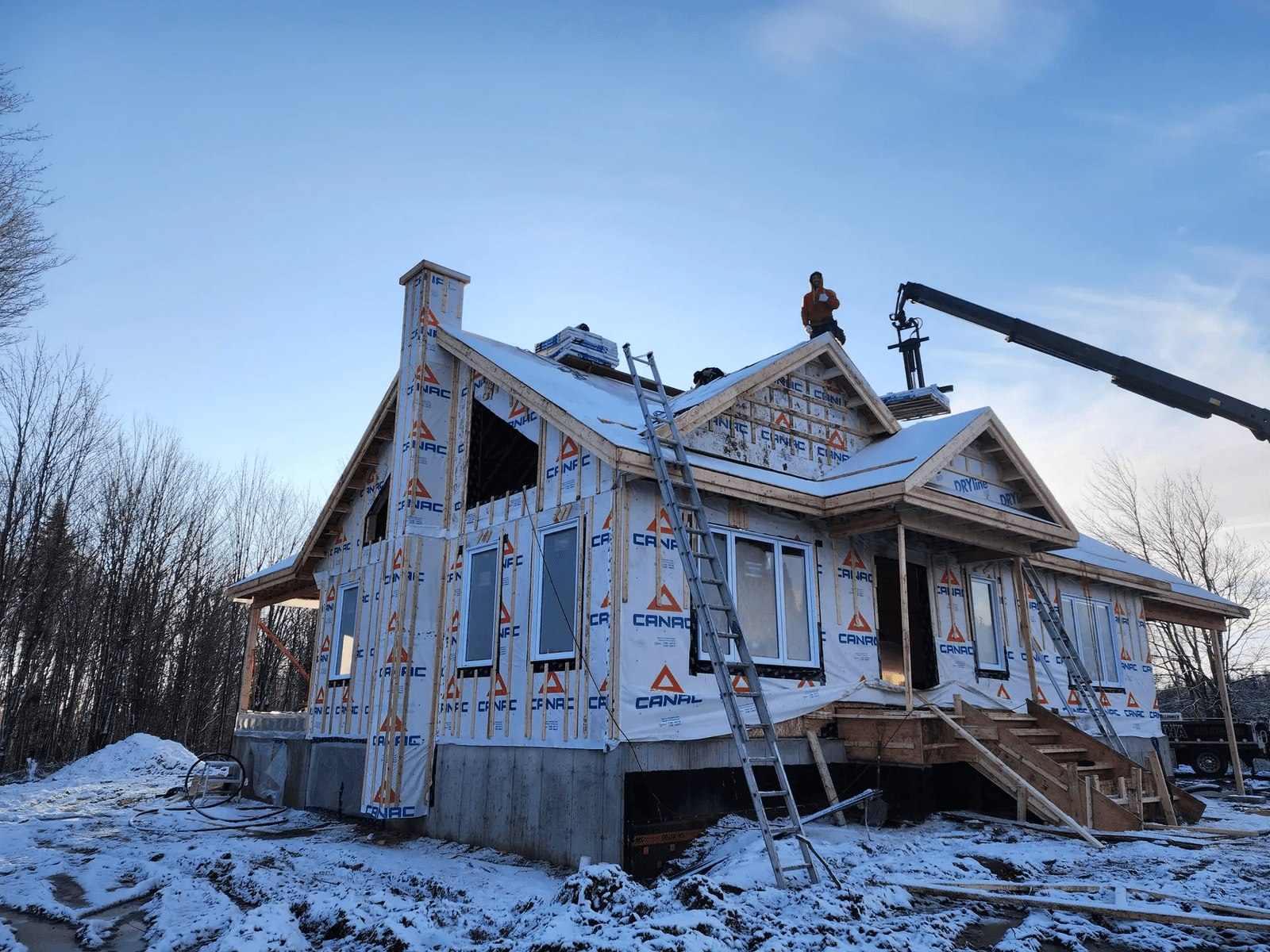
Source: Symétrix Construction Inc
A legal construction hypothec is a form of financial security granted by law to certain people who have participated in the construction or renovation of an immovable property. Governed by section 2724 of the Civil Code of Québec (C.c.Q.), this charge attaches directly to the building and land, regardless of the owner’s wishes.
A typical legal hypothec scenario may look like this:
The homeowner pays 100% of the contract price to the contractor.
The general contractor does not pay a subcontractor.
The subcontractor registers a legal hypothec against the property.
Result: The homeowner may have to settle the claim or face remedies that can ultimately include a court-supervised sale of the property.
This mechanism is intended to protect the increase in property value created by the labour and materials supplied by project participants. Even if you have paid all invoices generated by the general contractor, an unpaid subcontractor may be able to assert a claim by registering a real right against the property in the Quebec Land Register.
This can interfere with mortgage refinancing, prevent the sale of the property, or force the homeowner's involvement in costly legal proceedings.
Who Can Register a Legal Construction Hypothec?

Source: RenoQuotes
The individuals who can benefit from this protection are specifically identified under section 2726 of the Civil Code of Québec. Only certain parties who contributed directly to the construction or renovation of the property may exercise this right.
Those who may be entitled to register a legal construction hypothec include:
General contractors who have a direct contract with the homeowner
Subcontractors, such as electricians, plumbers, and drywall finishers
Material suppliers, such as suppliers of brick, framing lumber, and windows
Workers and employees working on the project
Engineering professionals and architects
One important condition applies: the legal hypothec can only secure work requested by the property owner, along with materials or services supplied or prepared for that work. In addition, the hypothec is limited to the actual increase in value resulting from the work performed.
Why the Notice of Contract Matters

Source: RenoQuotes
For subcontractors and material suppliers who aren't directly involved with the homeowner, providing written notice of their contract is an important step. Without it, the hypothec of a person who did not contract directly with the owner generally cannot cover work, materials, or services supplied before a valid notice was given.
When a subcontractor or supplier has not contracted directly with the owner, section 2728 C.c.Q. limits the hypothec to work, materials, or services supplied after written notice of the contract is given to the owner. As such, it is better to provide this notice before work or deliveries begin to protect the full claim. Workers are not required to provide this notice.
The process under section 2728 C.c.Q. can be summarized as follows:
The subcontractor or supplier provides the homeowner with written notice of the contract.
If the notice is provided before work or deliveries begin, all subsequent qualifying work, materials, or services may be covered, subject to the other conditions established by law.
If the notice is provided later, the hypothec will typically be limited to work, materials, or services supplied after the notice.
The notice formally informs the homeowner that a particular subcontractor has been hired by the general contractor to complete part of the project—for example, installing a heat pump or completing electrical work—for an estimated amount.
For an extensive renovation project, consider requesting a major renovation quote from established companies that manage their subcontractors with total transparency.
How Can You Protect Yourself Against a Legal Construction Hypothec?

Source: RenoQuotes
Preventing a lien from being registered against your property requires careful administration throughout the project. A well-written contract, regular checks, and close control over payments provide a strong line of defence.
A three-step approach can include:
Drafting a contract that addresses notices and releases.
Planning a holdback suited to the claims that could potentially be secured.
Checking amounts owed to subcontractors and obtaining relevant releases before paying out withheld amounts.
Use a Holdback on Payments
Section 2123 C.c.Q. allows the client, at the time of payment, to withhold an amount sufficient to pay claims owed to workers and to other persons who may exercise a legal hypothec and who have provided notice of their contract. The Civil Code of Québec does not set this holdback at 10%. The amount should instead reflect the claims involved and the payment terms established in the contract.
For example, a contractual holdback on a $100,000 project could look like this:
Total contract amount: $100,000
Progress payments made to the contractor: $90,000
Illustrative 10% holdback: $10,000
* The percentage above is only an example. The amount actually required depends on the contract terms and the claims that may be secured.
** The release of a holdback depends on the contract. If a holdback is exercised under section 2123 C.c.Q., it may also depend on obtaining releases for the relevant claims or on sufficient security being provided.
Section 2727 C.c.Q. establishes an important deadline: the legal hypothec must be registered in the Quebec Land Register within 30 days after the completion of the work. To preserve it beyond this period, it must be registered in the Quebec Land Register. Before releasing a final payment, it may be prudent to check the Land Register and obtain the relevant releases.
Obtain Partial and Final Written Releases
Before making progress payments, ask the contractor for the information required under the contract regarding amounts already paid and amounts still owed to subcontractors, suppliers, and other participants. Where appropriate, also obtain the necessary releases before paying out withheld funds:
Partial release: A document signed by a subcontractor confirming that amounts owing for work completed up to a specified date have been paid.
Final release: A written confirmation that the subcontractor has been paid in full for their work and releases their right to register a legal hypothec against the property.
To make project tracking easier, keep a table comparing the notices received with the releases obtained:
Subcontractor / Supplier | Notice Received? | Amount Stated | Partial Releases Received | Final Release Signed |
Concrete / Foundations Inc. | Yes (May 12) | $15,000 | Yes (Invoices 1 & 2) | Yes |
South Shore Electrical | Yes (May 28) | $8,500 | Yes (Invoice 1) | Pending |
Plumbing & Heating | No | N/A | Not required | Not required |
Quebec Roofing | Yes (June 10) | $12,000 | No | Pending |
Before releasing the final payment, you can also consult the Quebec Land Register online to see whether a charge has been registered against your property.
Draft a Strong Renovation Contract
A clear written contract is one of the foundations of a project with fewer disputes. Do not rely solely on a basic quote signed without reviewing the contractual protections.
Your agreement can include provisions addressing:
The contractor’s obligation to identify all subcontractors
Clear holdback terms adapted to potential claims
Information about amounts owed to subcontractors and, where appropriate, releases before certain payments
Mechanisms allowing certain subcontractors or suppliers to be paid directly when circumstances justify it
You can also include a clause allowing the homeowner to issue joint cheques payable to both the general contractor and the subcontractor to help ensure that project funds reach those performing the work.
To reduce contractual surprises, make sure you find a qualified general contractor with a valid Régie du bâtiment du Québec (RBQ) licence.
What If a Legal Construction Hypothec Has Already Been Registered?

Source: RenoQuotes
If you receive a prior notice that a hypothecary right has been exercised or discover that a legal construction hypothec has been registered against your property, act promptly.
Check the registration deadline (section 2727 C.c.Q.): The hypothec must be registered in the Quebec Land Register within 30 days following completion of the overall project. If the notice required to preserve the hypothec was not registered within the prescribed period, its validity may be challenged, and its cancellation may be requested.
Check the notice of contract (section 2728 C.c.Q.): If the creditor was required to provide notice, verify when it was registered. The hypothec is limited to qualifying work, materials, or services supplied after that notice.
Check the expiry period (section 2727 C.c.Q.): A legal hypothec expires six months after completion of the work unless the creditor preserves it by registering an action against the property owner or registering a prior notice of the exercise of a hypothecary right.
If the hypothec appears clearly irregular, a formal demand letter prepared by a legal professional may be enough to persuade the claimant to provide a voluntary discharge. The plain-language legal information available from Éducaloi can also help you better understand your rights.
Replacing the Hypothec with Other Security
When a dispute arises and a legal hypothec prevents the sale of a property or the release of financing, waiting for a court case to be resolved may not be practical.
Section 2731 C.c.Q. allows the homeowner to ask the court to replace the legal hypothec with other security that is sufficient to guarantee payment. If the application is granted, the court may order the legal hypothec registration to be cancelled.
For example:
The homeowner asks the court for permission to replace the legal hypothec with another form of sufficient security.
The court determines whether the proposed security adequately guarantees the claim.
If the substitution is authorized, the court may order the legal hypothec registration to be cancelled.
The dispute over the underlying claim may continue, but the claim is then secured by the replacement security.
This mechanism can allow the hypothec to be removed from the property while maintaining sufficient security for the claim as the dispute continues.
For commercial or rental-property projects, you can also request technical advice and a renovation estimate to help assess the value of the completed work.
Protecting Your Property and When to Consult a Lawyer or Notary

Source: RenoQuotes
Protecting yourself against a legal construction hypothec requires ongoing attention during the project and post-work. Proper management of notices, payments, holdbacks suited to the claims involved, and relevant releases can significantly reduce the risk of double payment and claims against the property.
If you are disputing a claim, receive a prior notice of the exercise of a hypothecary right, or believe an improper registration has been made in the Quebec Land Register, consulting a lawyer or notary who practises in real estate or construction law is advisable. A legal professional can advise you on obtaining a discharge or substituting security to protect your rights and property value.
Looking for something else?
Related articles
The latest industry news, interviews, technologies, and resources.

Editorial Team
•10 Jan 2025
Not unlike people, homes come in all shapes and sizes. Yet, one thing that every homeowner or renter can agree on, regardless of the size of their home, is the desire to make the most out of their living space.

Editorial Team
•08 Nov 2023
Children are curious by nature, and although this curiosity can lead them to knowledge and exploration, it can also get them into some sticky situations. As little bundles of energy, children are naturally bound to bounce around their bedrooms and other rooms alike.

Amanda Harvey
•03 Aug 2026
Painting the outside of a house can be a long and gruelling process, but if completed correctly, the transformation can be dramatic! When high-quality exterior paint is applied to a properly treated surface, it’ll last much longer than expected. As well, it will protect the outside of your home from sun, wind, rain and snow. Although the price of paint will often indicate quality, there are several other factors that will help you to determine which paint is right for the exterior of your home.

Amanda Harvey
•11 Jan 2025
A minimalist look makes for the ultimate style choice for urban-modern homeowners who perceive clutter as a distraction. The minimalist lifestyle philosophy embraces a simplistic aesthetic, paired with well-designed rooms that feature only useful items and a limited amount of furniture.

Editorial Team
•25 Sep 2024
When it comes to choosing a kitchen countertop material, one can quickly deduce that choices aren’t what’s lacking. In fact, there are at least ten different types of materials that are readily available in-store or from manufacturers.