Asbestos Abatement Costs in Canada in 2026: How Much Does It Cost?
By Editorial Team
Updated on October 8, 2026

The presence of asbestos can quickly complicate a renovation or demolition project. Before breaking ground, it is important to determine where asbestos is located, which materials are contaminated, and what safety measures will be required for its removal.
Across Canada, asbestos abatement costs vary considerably depending on the affected area, the contaminated material, accessibility, the province or city, and the level of containment required.
For a single-family home, an asbestos abatement project can cost several thousand dollars and may exceed $10,000 when the work is complex or affects several areas of the property. Large-scale or whole-home abatement projects can reach $20,000 to $30,000 or more in higher-cost Canadian markets.
How Much Does Asbestos Abatement Cost in Canada?
Here are some approximate planning ranges for residential asbestos work in Canada.
Scope of Work | Typical Price Range |
Small or relatively straightforward asbestos removal project | Approximately $1,000 to $4,000 |
Partial removal of asbestos-containing materials | Starting at approximately $1,500 |
More extensive removal of asbestos-containing materials | Approximately $3,000 to $10,000+ |
Complex or large-scale project | Approximately $10,000 to $30,000+ |
Professional inspection, sampling, and laboratory analysis | Approximately $500 to $950 for many homes, up to $1,500+ for more comprehensive surveys |
* These figures are intended as general planning estimates. An accurate quote usually requires an inspection of the property and identification of the materials involved.
Prices can also vary significantly by market. Labour rates in Toronto and Vancouver, for example, may be higher than in smaller cities or rural regions.
Asbestos Removal Costs by Material
Asbestos was incorporated into many different building materials. Removal costs therefore depend heavily on where the material is located and how difficult it is to remove safely.
Service or Material | Typical Price Range |
Professional asbestos inspection and testing | Approximately $500 to $950 for a typical residential inspection; up to $1,500+ for extensive surveys |
Vermiculite removal from an attic | Approximately $4,000 to $15,000+ |
Removal of asbestos-containing plaster, drywall, or similar materials | Approximately $20 to $50+/sq. ft., depending on the project |
Removal of asbestos-containing vinyl flooring or similar materials | Approximately $8 to $25+/sq. ft., depending on the material and removal method |
Site setup and containment | Approximately $500 to $1,500+ |
Decontamination and final cleanup | Approximately $500 to $2,000+ |
Containment, specialized equipment, transportation, air testing, and disposal of contaminated materials may be included in the contractor's quote or billed separately.
Because asbestos removal methods vary considerably by material and risk level, square-foot pricing should be used as a planning reference rather than a fixed rate.
How Much Does Asbestos Testing Cost?
Source: Abri Spec
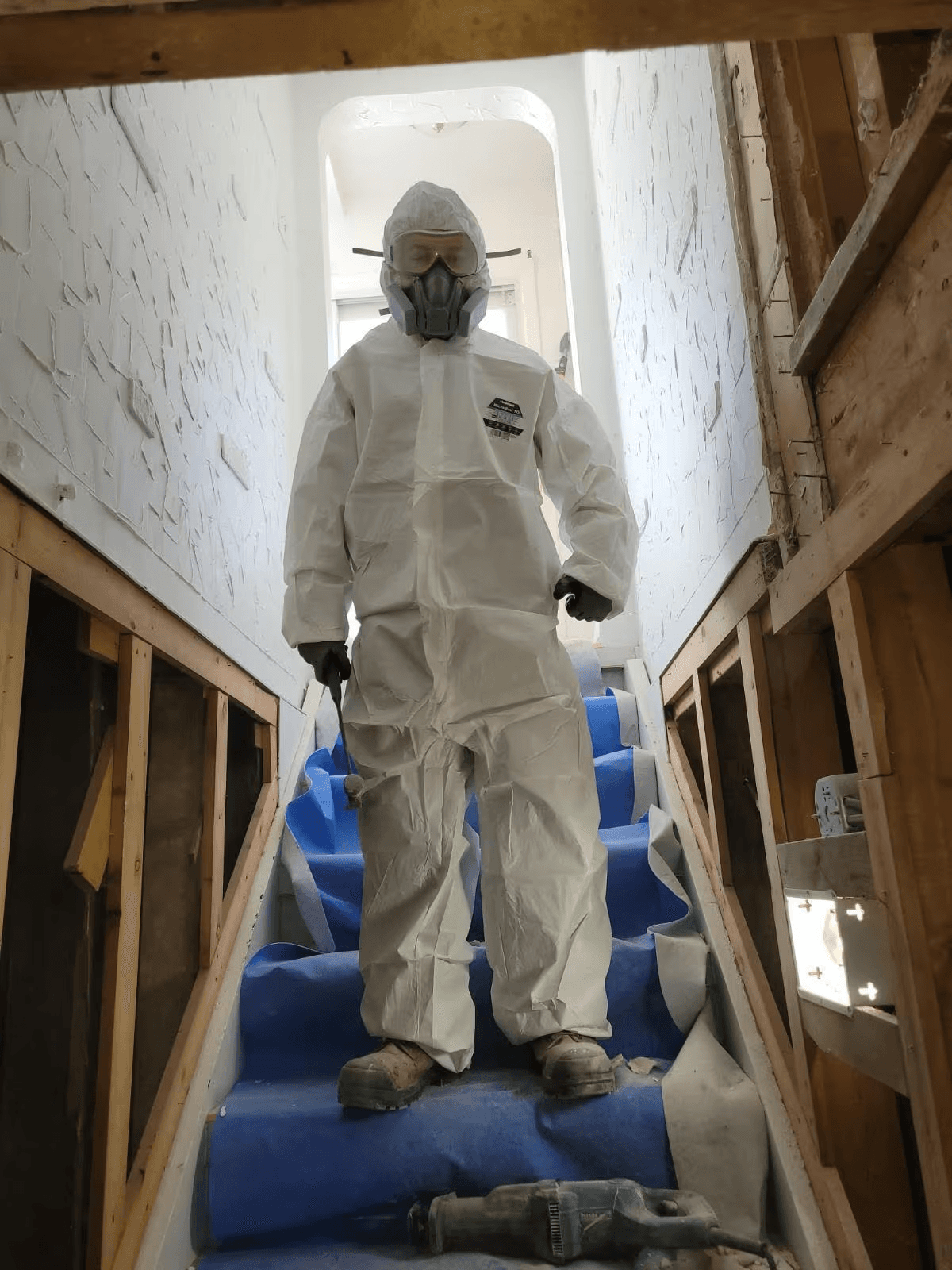
Before demolishing or removing a suspected material, it is important to determine whether it actually contains asbestos.
Across Canada, a professional pre-renovation asbestos inspection for a single-family home generally costs approximately $500 to $950, including a site visit and laboratory analysis of several samples. More comprehensive hazardous-material or designated substance surveys can cost approximately $500 to $1,500 or more, depending on the property and jurisdiction.
Individual laboratory samples may cost much less, but professional collection and documentation add to the overall price.
The cost depends on factors such as:
Number of samples
Number of rooms inspected
Materials being analyzed
Laboratory used
Complexity of the building
Level of detail required in the report
Applicable provincial requirements.
For a major renovation in an older property, several materials may need to be tested separately.
How Much Does It Cost to Remove Vermiculite from an Attic?
Source: Isolation Toit
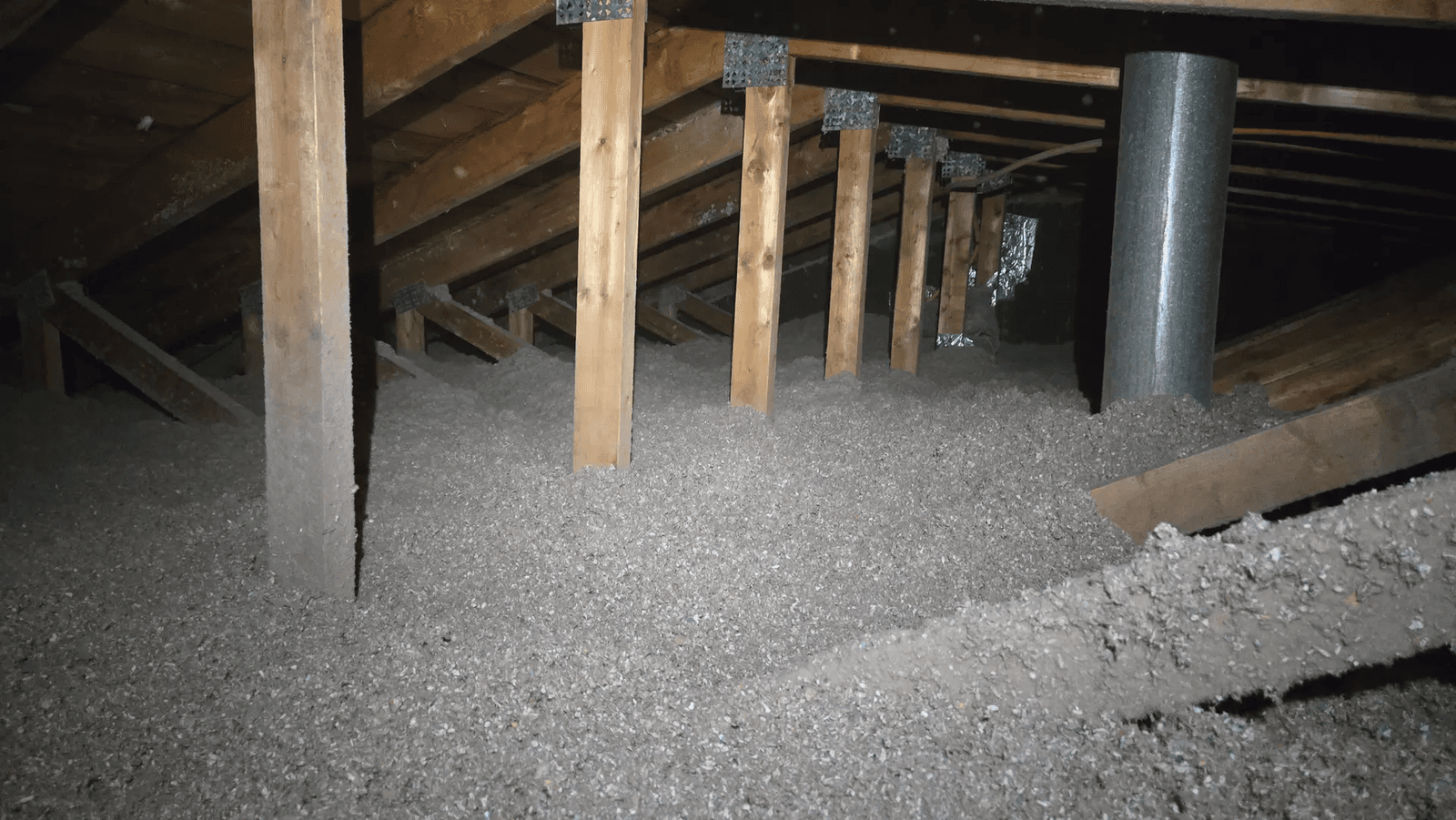
Vermiculite was used as insulation in many older Canadian homes. Vermiculite removal from an attic can cost approximately $4,000 to $15,000 or more in Canada, depending on:
Size of the attic
Depth of the insulation
Accessibility
Quantity of material being removed
Level of containment required
Disposal costs
Regional labour rates
Whether the attic must be reinsulated after abatement
A difficult-to-access attic or one containing a large volume of vermiculite will generally require more labour. If new insulation is included in the contractor's price, the total project cost can be considerably higher than the abatement cost alone.
How Much Does It Cost to Remove Asbestos from Plaster or Drywall?
In some older properties, asbestos can be found in drywall joint compound, plaster, certain textured finishes, and other finishing materials. For asbestos abatement projects involving walls or similar building materials, Canadian market estimates may fall around $20 to $50 per square foot or more, depending on the material, removal method, containment requirements, and complexity of the project.
Smaller localized projects may also be subject to minimum contractor charges, meaning that the effective price per square foot can be considerably higher.
Drywall and Joint Compound
Drywall panels can sometimes be removed in sections, but dust generated by joint compound and contaminated materials must be properly controlled.
Plaster and Lath
Traditional plaster is heavier and can generate a significant quantity of debris. Demolition may therefore require more labour and more extensive handling and disposal procedures.
Textured Ceilings
Removing an asbestos-containing textured or popcorn ceiling requires work methods designed to limit the release of fibres. Standard popcorn ceiling removal without asbestos concerns may cost only a few dollars per square foot, but confirmed asbestos can substantially increase the price because containment, protective equipment, specialized removal methods, and disposal are required. Even when only a small area is affected, fixed costs for site preparation and containment can quickly increase the total bill.
What Factors Affect the Cost of Asbestos Removal?
Source: Gestion Dromadaire inc.
The Extent of the Contamination
The larger the area being treated, the higher the labour, containment, and waste disposal costs will generally be. An intervention limited to a small area typically costs much less than an abatement project affecting several rooms or a large portion of the building.
Location of the Asbestos
An easily accessible material is generally less expensive to remove than one located in:
Crawl space
Narrow attic
Wall cavity
Difficult-to-access ceiling
Area containing numerous obstacles
Accessibility can have a significant effect on the amount of labour required.
Type of Material
Removing a rigid and relatively intact material does not necessarily require the same precautions as removing friable material that can easily release asbestos fibres. The work method must therefore be adapted to the material and the level of risk associated with the project.
Containment Level Required
Depending on the nature of the work and applicable provincial regulations, different control measures may be required.
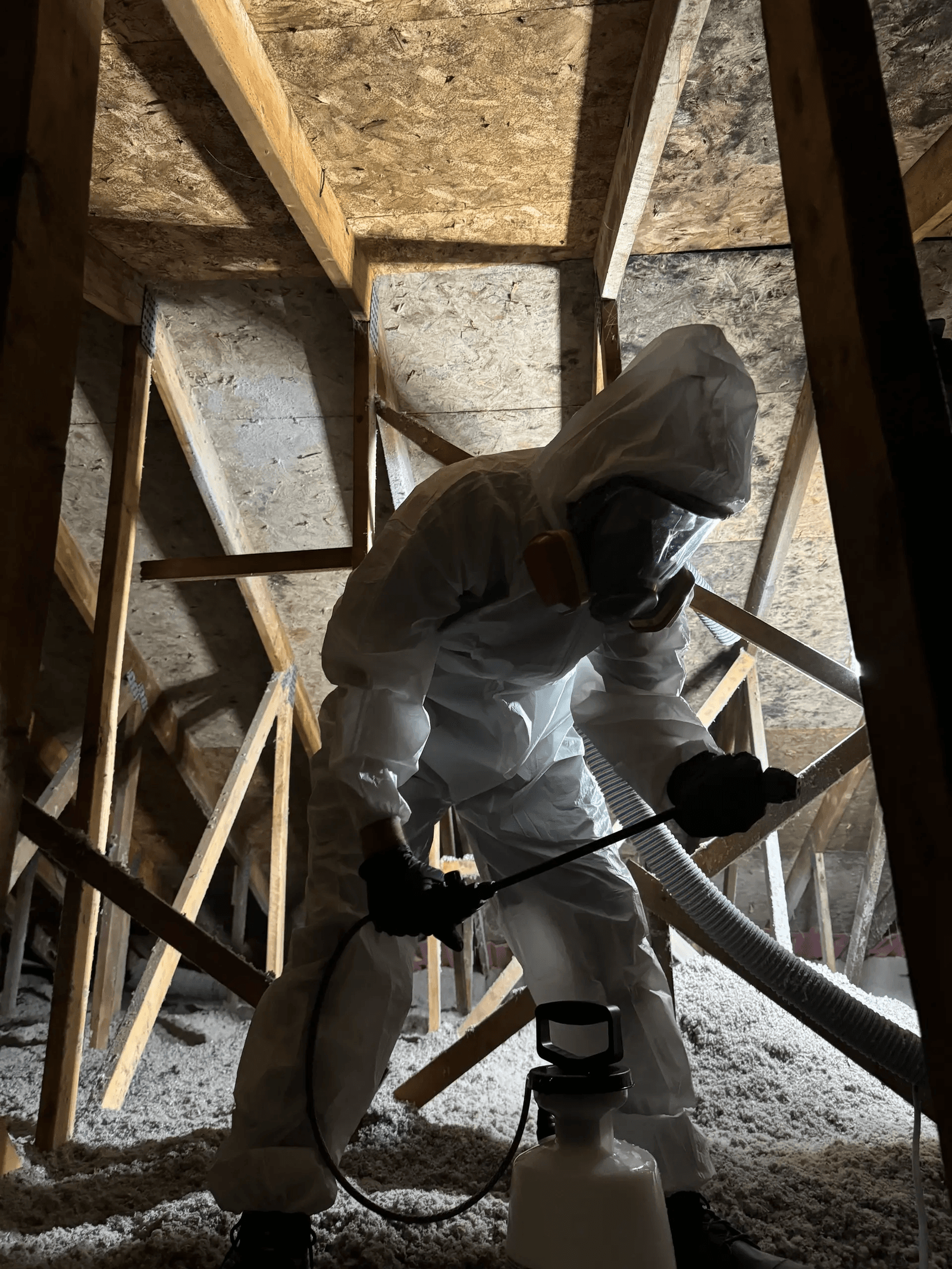
For certain asbestos abatement projects, these may include:
Creating an isolated work area
Installing polyethylene sheeting
Using HEPA filtration equipment
Maintaining negative air pressure in the work area
Specific worker procedures
Decontamination facilities
Specialized cleaning of the work area
Post-abatement air testing
The more extensive the required protocol, the higher the project cost will generally be.
Material Transportation and Disposal
Asbestos-containing debris must be handled and disposed of in accordance with applicable provincial and local requirements.
The amount and type of material removed therefore also affect the project price. Disposal charges may be incorporated into the contractor's price or listed separately.
Reconstruction Post-Abatement
Asbestos abatement prices do not always include complete restoration of the affected surfaces.
After removal, it may be necessary to replace:
Insulation
Drywall
Plaster
Ceilings
Certain finishing materials
Always ask the contractor exactly what is included in the quote.
For example, a quote for vermiculite removal may cover only removal and disposal, while another may include air testing and installation of new attic insulation. These quotes should not be compared on price alone.
Why Do Asbestos Removal Prices Vary Between Contractors?
Source: Démo Solution
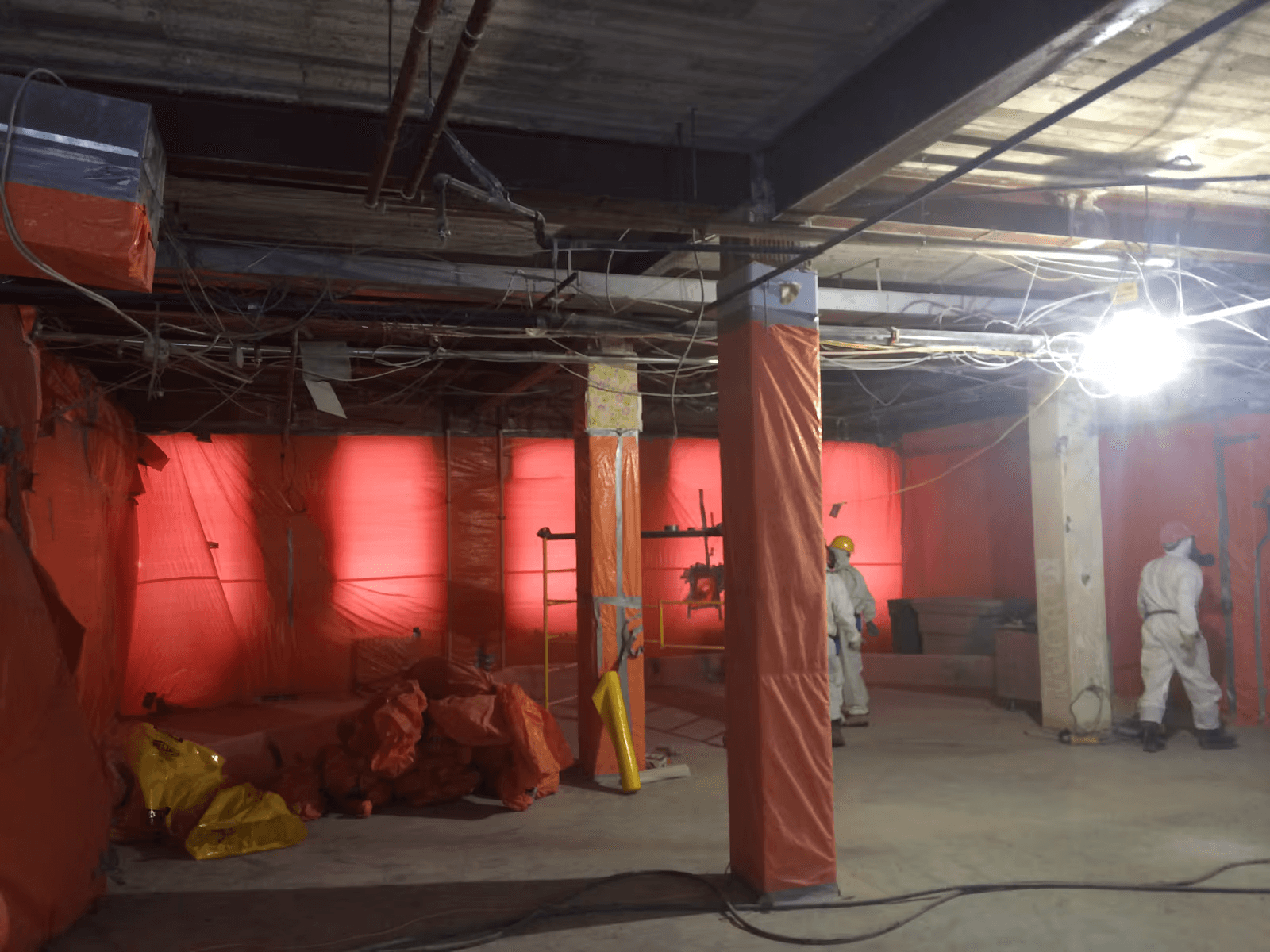
Two contractors may submit very different prices for the same building because their quotes do not necessarily include the same services.
Before comparing prices, check whether the quote includes:
Site preparation and containment
Labour
Personal protective equipment
HEPA filtration or negative-air equipment
Removal of contaminated materials
Packaging of asbestos waste
Transportation and disposal
Final cleaning
Post-removal testing or verification
Reconstruction work.
A particularly low price may simply mean that several of these services are not included.
How to Choose an Asbestos Abatement Contractor
Asbestos abatement requires specific work procedures. It is therefore important to compare contractors based on more than price alone.
Verify the Applicable Licences and Qualifications
Requirements vary across Canada.
In Quebec, check whether the company holds the licences and qualifications applicable to the work it plans to perform. Information can be verified with the Régie du bâtiment du Québec (RBQ) when the work requires a contractor's licence.
Elsewhere in Canada, homeowners should verify the occupational health and safety, asbestos abatement, training, notification, and contractor requirements that apply in their province or territory. Provincial rules can differ significantly, so a contractor operating legally in one province should not automatically be assumed to meet the requirements of another.
Ask How the Work Area Will Be Secured
The contractor should be able to clearly explain:
How the work area will be contained
How asbestos fibres and dust will be controlled
What equipment will be used
How contaminated waste will be handled
How the work area will be cleaned
Whether air monitoring or clearance testing will be performed
What verification will take place before the area is reoccupied
Compare Several Quotes
Ideally, compare several detailed work proposals rather than focusing on the final price. A detailed quote should make it clear exactly what is included and make it easier to compare contractors.
Can You Remove Asbestos Yourself?
Handling asbestos-containing materials can release fibres into the air when the materials are cut, drilled, broken, sanded, or demolished. Improper work can also spread contamination to other areas of the property.
If you suspect asbestos before a renovation, the first step should therefore be to have the affected materials properly assessed and determine the appropriate intervention method before disturbing them.
How Much Should You Budget for Your Project?
There is no single standard price for asbestos abatement in Canada. A relatively limited intervention may cost $1,000 to $4,000, while a more extensive residential project can easily exceed $10,000.
The best way to establish a realistic budget is to first identify the contaminated materials and then compare several detailed quotes provided by qualified professionals. Not only will you be able to compare price points, but also work methods, inclusions, testing requirements, disposal procedures, and the actual scope of each proposal.
Looking for something else?
Related articles
The latest industry news, interviews, technologies, and resources.

Karine Dutemple
•08 Nov 2023
Do you have lots of energy to spare and are thinking about buying a house to flip it? Take a look at these few examples of flips to find ideas for this large-scale project!
Cynthia Pigeon
•25 Jun 2026
Bathrooms are one of the most important rooms in a home, but it is also one of the areas where household accidents are most likely to happen. With humidity, slippery surfaces and often limited space, the risk of falls is especially high for seniors and people with reduced mobility.

Editorial Team
•21 Dec 2023
When the months start to feel warmer, there’s nothing we crave more than some time outside. There are plenty of ways to make the most of your front or backyard, and this includes building a beautiful deck. If you’ve been considering this project but are having a hard time making a concrete choice between the different materials on the market, then look no further!

Editorial Team
•03 Dec 2024
When it comes to spending time outside, you’re likely hoping for things to be cool, cosy and comfortable while also remaining functional. Especially during those warmer months as our outdoor spaces gain importance, creating a specific spot for recreational activities as well as relaxation has become a priority. Structures designed to optimize outdoor space generally come in the form of a patio, balcony or veranda. You might think these are all the same, but in the world of renovations, there are some distinctions between them.
Editorial Team
•08 Nov 2023
Owning a rental apartment is not without challenges to overcome, as it comes with a number of obligations and responsibilities, which aren’t easy to maintain.