Heated Driveway Cost in Canada: 2026 Price Guide
By Editorial Team
Updated on September 25, 2026
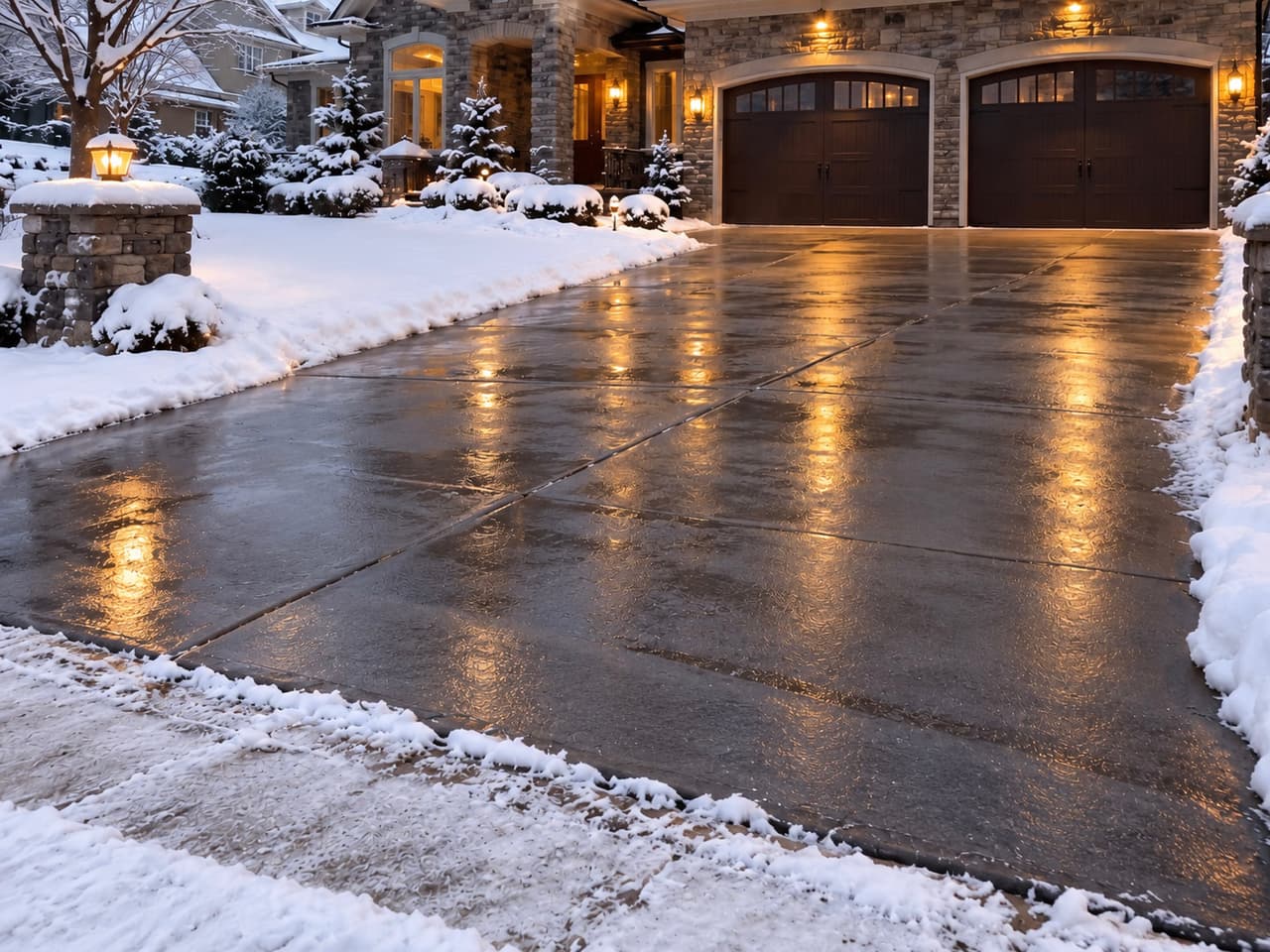
A heated driveway costs $18 to $28 per square foot installed for an electric system in Canada, and $26 to $55 per square foot for hydronic before the boiler. That puts a standard 600 sq. ft. two-car driveway between $10,800 and $16,800 electric, or $24,600 to $51,000 hydronic once the boiler is included. Retrofitting cables into an existing driveway runs less, at $7 to $17 per square foot.
A snow melt system keeps the surface above freezing during a storm, which means no shovelling, no salt, and no ice at the bottom of a sloped driveway at 6 a.m. This guide covers what each system type costs, what it costs to run through a Canadian winter, and whether the numbers actually work.
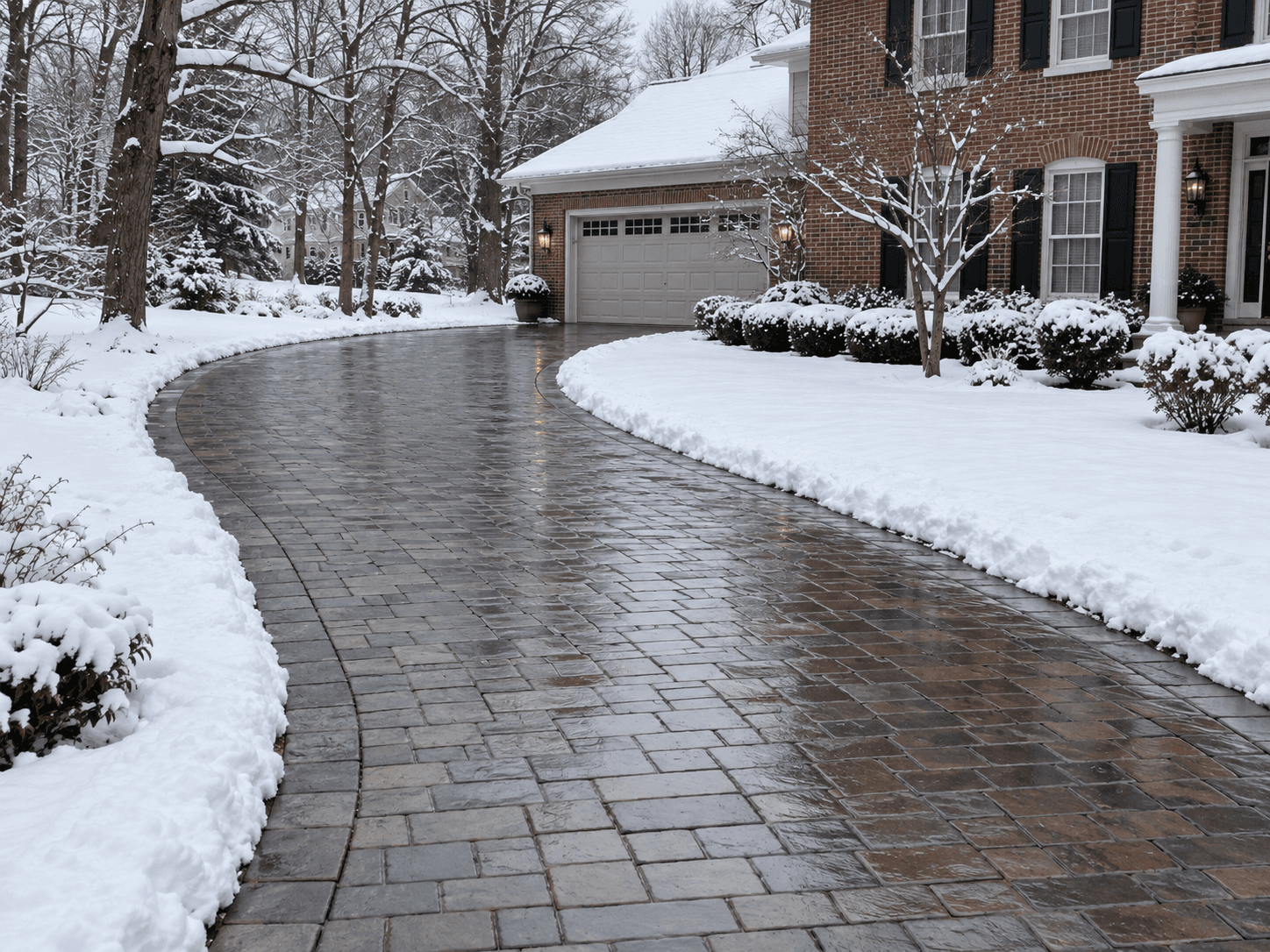
How much does a heated driveway cost?
Source: Reno Quotes
Cost Per Square Foot
System type | Installed cost per sq. ft. |
Retrofit into existing driveway | $7 to $17 |
Electric, tire tracks only | $12 to $20 |
Electric, full coverage | $18 to $28 |
Hydronic, excluding boiler | $26 to $55 |
Heated pavers | $25 to $66 |
Electric pricing scales with the control package. A basic system with manual controls sits near the bottom of the range, zoned systems with Wi-Fi controls and a snow sensor run $22 to $25, and full zoning with dual sensors and premium cable reaches $26 to $28.
Hydronic systems need a boiler, which adds $9,000 to $18,000 for the boiler, manifold, expansion tank, glycol fill and outdoor reset controls. That figure drops considerably if you're tying into an existing high-efficiency boiler rather than installing a dedicated unit.
Total Cost by Driveway Size
Driveway size | Electric | Hydronic, including boiler |
300 sq. ft. (single car) | $5,400 to $8,400 | $16,800 to $34,500 |
600 sq. ft. (two car) | $10,800 to $16,800 | $24,600 to $51,000 |
900 sq. ft. (two car + walkway) | $16,200 to $25,200 | $32,400 to $67,500 |
1,200 sq. ft. (long laneway) | $21,600 to $33,600 | $40,200 to $84,000 |
Hydronic figures include the $9,000 to $18,000 boiler, manifold, expansion tank and controls. These prices assume the surface is being replaced at the same time.
Tire-track coverage is the budget option. Heating two strips where the wheels travel rather than the whole surface cuts the area by roughly 40%, which cuts the cost proportionally. You still shovel the middle, but the car moves.
Other Cost Components
Item | Cost |
Electrical work and dedicated circuits | $2,000 to $3,000 |
Panel and service upgrade (usually required) | $1,500 to $4,500 |
Licensed electrician, billed rate | $80 to $175 per hour |
Wi-Fi control module | $1,600 to $2,000 |
Slot drain for meltwater | $1,500 to $4,000 |
Removing existing driveway | $2 to $6 per sq. ft. |
Permit | $150 to $500 |
Treat the panel upgrade as likely rather than possible. A 600 sq. ft. electric system draws 30 kW, which at 240V is 125 amps of continuous load requiring a dedicated 150A breaker. A home on 100A service cannot support it, and a 200A service already running a furnace, range, dryer and water heater usually can't either. Have an electrician assess your capacity before you budget the system, not after.
The drain is the other cost homeowners don't anticipate. A heated driveway produces meltwater in the middle of winter, and that water has to go somewhere other than the sidewalk or the garage. A slot drain is usually required, and it's part of the design rather than an optional extra.
Regional Variation
Installation costs run reasonably close across Canada, but the value equation differs sharply by climate.
Region | Case for a heated driveway |
Quebec, Atlantic Canada, northern Ontario | Strongest — heavy snowfall, long season, frequent freeze-thaw |
Southern Ontario and the GTA | Strong, especially on slopes and in areas with ice storms |
Prairies | Moderate — cold but drier, with less total accumulation |
Vancouver and Lower Mainland | Weakest — limited snowfall makes the case hard to justify |
Heavy-snowfall regions are where these systems earn their cost. In a city that gets four snow events a winter, the same system costs the same to install and does a fraction of the work.
Types of Heated Driveway Systems
Electric Systems
The most common choice in Canada, and the default for a single residential driveway.
An electric system uses radiant heating cables or mats embedded roughly two inches below the surface. Current passes through the cable, the cable warms, and the heat conducts up through the asphalt or concrete.
Advantages: lower installation cost, no mechanical room equipment, simpler to zone, and nothing to maintain beyond the controller. An embedded electric heating system has no moving parts underground.
Drawbacks: higher operating cost per hour, and it draws significant electrical capacity. A 600 sq. ft. system at 50 watts per square foot pulls 30 kW, which virtually always means a panel and service upgrade.
Hydronic Systems
Hydronic radiant heat systems circulate a heated water and glycol mixture through PEX tubing beneath the surface. A boiler and pump heat and move the fluid, typically located in the garage or mechanical room.
Advantages: substantially lower operating cost, especially on natural gas, and far better suited to large areas. A hydronic system heating 1,200 sq. ft. costs a fraction per hour of what an electric system of the same size would.
Drawbacks: much higher upfront cost once the boiler is included, more components to maintain, and a mechanical room requirement.
The threshold is roughly 600 square feet. Below that, electric almost always wins on total cost of ownership. Above it, and particularly on a long laneway or a property with natural gas already serving a boiler, the operating-cost difference begins to offset the boiler.
Portable Heated Mats
The low-commitment option. Portable heated driveway mats are non-slip rubber mats that roll out when snow starts and store in spring.
Tire-track mats at roughly 2 by 20 feet cost about $1,600 to $2,200 each, with controllers running $47 to $95.
Check the electrical load before assuming they plug in anywhere. A single 40 sq. ft. mat draws 1,400 to 2,000 watts, which is at or above the 1,440-watt continuous limit of a standard 120V 15-amp circuit. One mat may need a dedicated 20-amp circuit, and a pair of tire-track mats at 2,800 to 4,000 watts will trip a shared breaker immediately. Running two mats means two separate circuits, and an electrician if you don't already have them.
They also won't clear a full driveway or handle heavy accumulation the way an embedded system does. But for keeping a walkway or a pair of tire tracks clear, they're a legitimate answer at a fraction of the cost.
Comparing the Three
Electric | Hydronic | Portable mats | |
Installed cost, 600 sq. ft. | $10,800 to $16,800 | $24,600 to $51,000 | $3,200 to $4,400 |
Operating cost | Higher per hour | Lower per hour | Low, limited area |
Best for | Most residential driveways | Large areas, long laneways | Tire tracks, walkways |
Contractor required | Yes | Yes | Often, for circuits |
Maintenance | Minimal | Boiler servicing | Store seasonally |
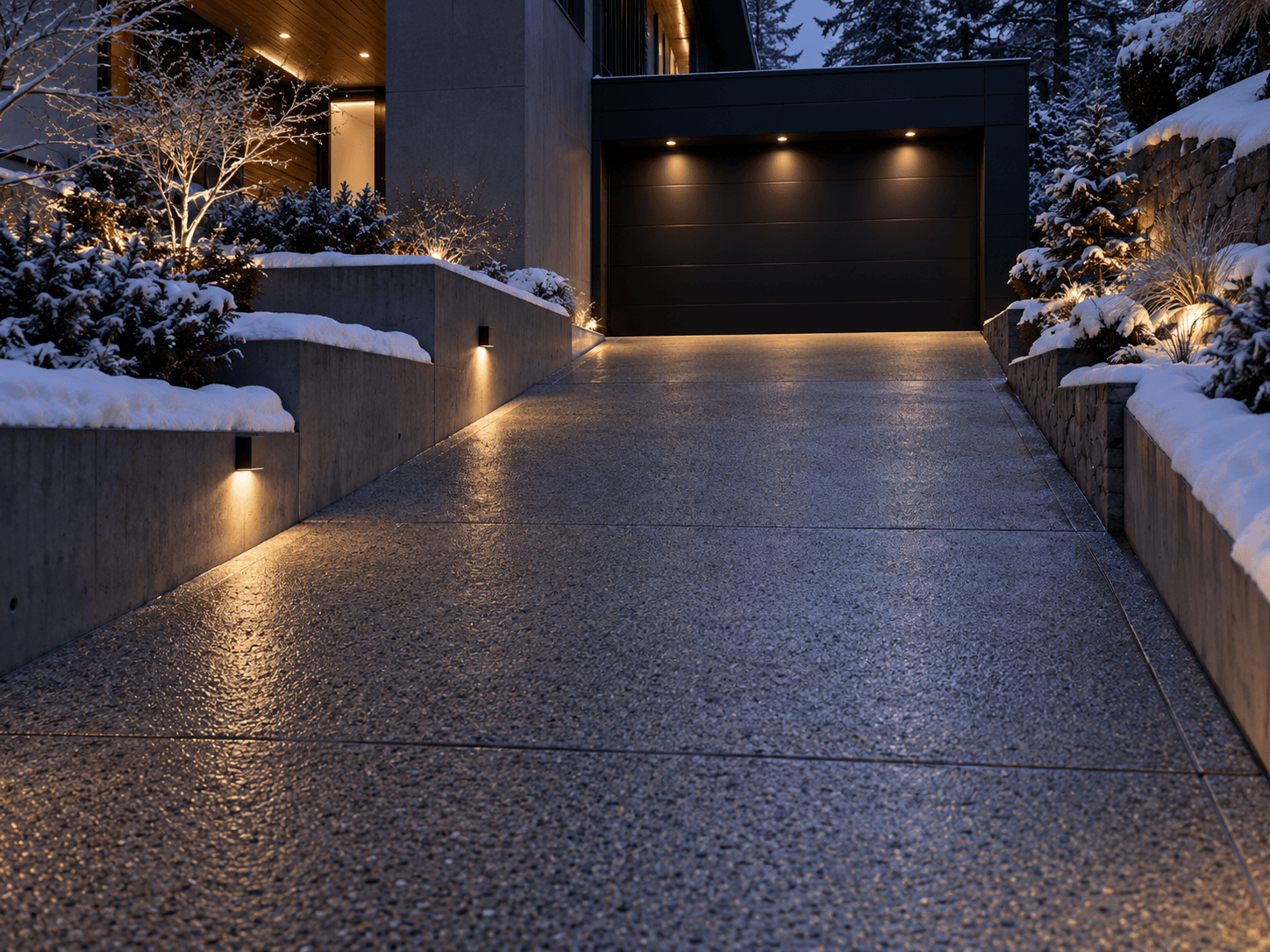
What It Costs to Run
Source: Reno Quotes
Energy Use
An electric snow melt system typically draws 50 watts per square foot. That makes the arithmetic straightforward:
Driveway size | Power draw | Cost per hour at $0.13/kWh | At $0.17/kWh |
300 sq. ft. | 15 kW | $1.95 | $2.55 |
400 sq. ft. | 20 kW | $2.60 | $3.40 |
600 sq. ft. | 30 kW | $3.90 | $5.10 |
900 sq. ft. | 45 kW | $5.85 | $7.65 |
Expect roughly $30 per storm for a standard 400 sq. ft. driveway.
Across a season, a heated driveway adds $100 to $300 to your electricity bill in a moderate climate, and more in a heavy-snowfall region with a longer season. A 500 sq. ft. system running 50 hours over a winter at off-peak rates costs roughly $162 to $195.
Off-Peak and On-Peak Rates
Where time-of-use pricing applies, when the system runs matters. Ontario off-peak rates sit near $0.13 per kWh against considerably more on-peak.
This is where automatic controls earn their cost. A system that fires during an overnight storm runs entirely at off-peak rates. One that's manually switched on at 7 a.m. runs through the most expensive hours of the day.
Provincial rates vary enormously. Quebec's low hydro rates make electric operation far cheaper than in Ontario or the Maritimes, which shifts the electric-versus-hydronic calculation.
How Fast It Melts
A properly sized system melts 1 to 3 inches of snow per hour. Anything above 3 inches per hour is effectively blizzard conditions, and the system will fall behind until the storm eases.
The system doesn't remove existing snow well either — it's designed to prevent accumulation, which means running it before or as the storm begins rather than after.
Controls and Automation
The control system affects both convenience and running cost more than most buyers expect.
Manual Controls
A switch. You turn the system on when snow starts and off when the driveway is clear.
The cheapest option and the most expensive to run, because human judgment consistently errs toward leaving it on. A system left running overnight after the snow stopped costs $30 to $50 in wasted electricity.
Manual control also means the driveway isn't clear when you wake up unless you thought about it before bed.
Automatic Sensors
Temperature and moisture sensors detect the two conditions that matter — falling temperature and precipitation — and fire the system only when both are present.
This is the configuration that makes a heated driveway work as intended. The system activates as the storm begins, runs through it, and shuts off when the surface is clear and dry.
Automatic controls typically pay for themselves in reduced energy use within a few seasons, particularly on time-of-use electricity where they concentrate operation in off-peak hours.
Zoning and Wi-Fi Controls
Multi-zone controllers let you heat different areas independently — the driveway, the walkway, the front steps — each with its own schedule and sensor. On a property with several surfaces, zoning avoids heating all of them for the sake of one.
Wi-Fi-enabled controls add remote operation and monitoring, letting you fire the system from your phone if a storm arrives while you're away. Expect $1,600 to $2,000 for the module on a professional installation.
Whether that's worth it depends on how often you're away during storms. The energy monitoring some systems include is arguably more useful than the remote switch.
Compatible Driveway Materials
Surface material | Compatibility | Notes |
Concrete | Excellent | Cables embed directly in the pour |
Asphalt | Good | Requires careful temperature control at installation |
Pavers | Excellent | Heating goes beneath a sand-set bed |
Natural stone | Good | Similar to pavers, requires careful bedding |
Gravel | Not compatible | No solid surface to embed heating in |
Concrete
The most straightforward surface for a heated system. Cables embed in the slab during the pour, heat conducts evenly, and the result is durable.
The caution is thermal stress. Concrete that heats and cools repeatedly experiences movement, and a slab without adequate control joints can crack. Proper joint layout is part of the design, not an afterthought.
Asphalt
Compatible, but installation is where asphalt heated driveways fail.
Fresh asphalt is laid hot, and laying it too hot directly over heating cable damages the cable. This is the single most common cause of a failed new installation. The paving contractor and the heating contractor have to coordinate, and the cable specification has to match the application temperature.
Done correctly, asphalt over a snow melt system is routine work.
Pavers
The premium option at $25 to $66 per square foot, because the heating elements install beneath a sand-set bed rather than embedding in a single pour. That's slower work.
The payoff is repairability. If a cable fails under a paver driveway, individual pavers lift and reset in a small section. Under concrete, the same repair means breaking the slab. Pavers also tend to do more for property value than plain concrete in most Canadian markets.
Important Information About Drainage
Whatever the surface, drainage capability matters more on a heated driveway than an unheated one. The system generates meltwater continuously during a storm, and without somewhere for it to go, that water runs to the lowest point and refreezes.
A slot drain at the garage entrance or the base of a slope is standard, and it's usually the difference between a system that works and one that creates an ice sheet where you didn't want one.
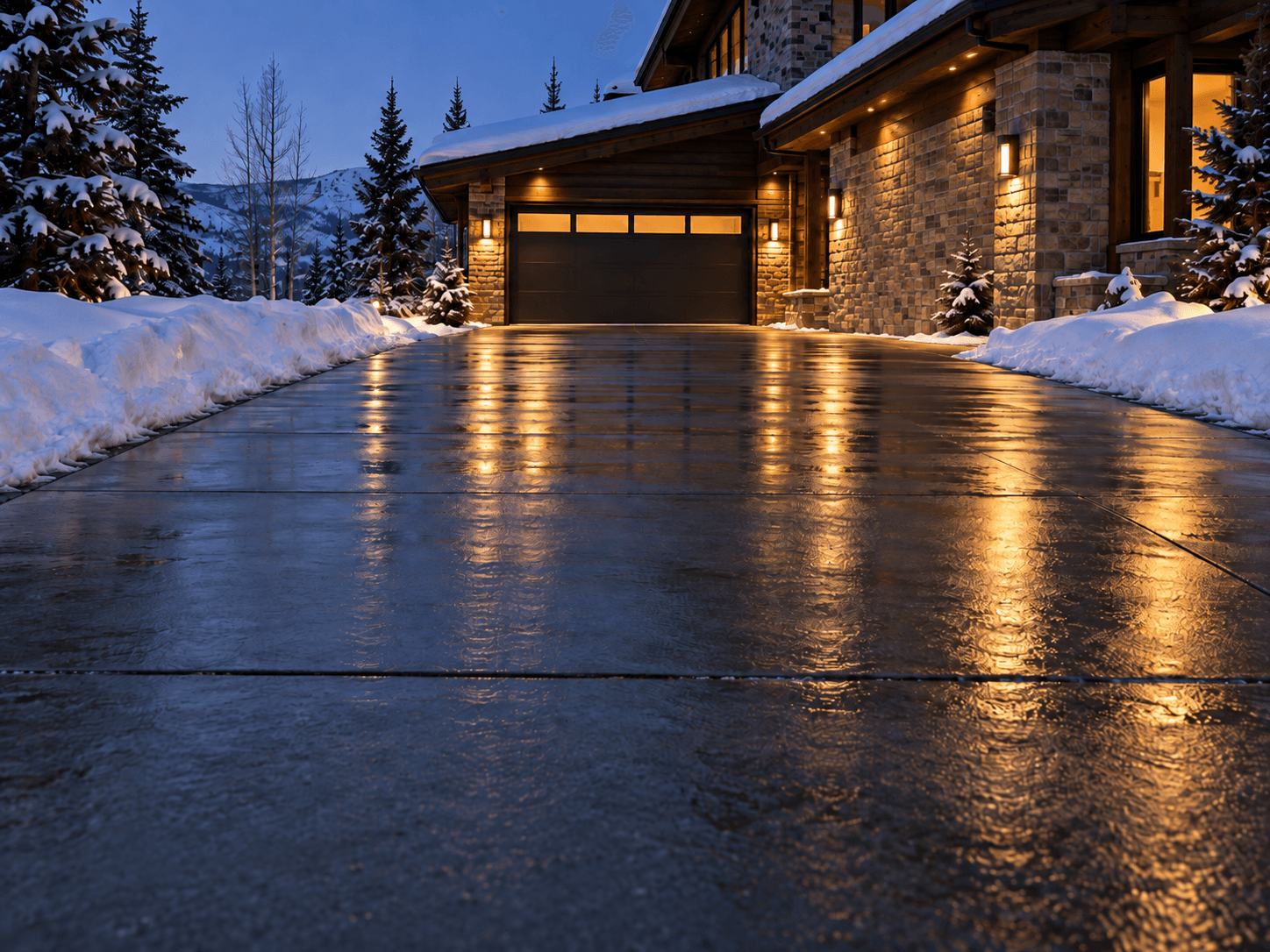
What Affects the Cost
Source: Reno Quotes
Driveway size is the primary driver, since everything is priced per square foot.
Coverage type. Full coverage against tire tracks only changes the heated area by roughly 40%, and the cost with it.
System type. Electric costs less to install, hydronic less to run, and the boiler is the swing factor.
Electrical capacity. A 600 sq. ft. electric system draws 125 amps continuous, and a panel and service upgrade at $1,500 to $4,500 is the norm rather than the exception.
Surface material. Pavers cost more to install over than concrete or asphalt because the work is slower.
Removing the existing driveway, at $2 to $6 per square foot if the surface is being replaced rather than newly built.
The control system. Manual versus automatic versus zoned Wi-Fi spans several thousand dollars on a typical installation.
Drainage requirements. A slot drain and any associated grading work.
Slope and site conditions. A sloped driveway needs more careful zoning and drainage, and it's also where a heated system delivers the most value.
Labour rates, which vary by market and by season. Licensed electricians bill $80 to $175 per hour depending on the city.
Installation Considerations
The Best Time to Install
During a driveway replacement. This is the single most important cost factor and the reason timing matters.
Retrofitting cables into an existing driveway runs $7 to $17 per square foot, but it means cutting channels into the surface, which compromises both appearance and longevity. Installing during a full replacement means the cable goes in as part of the build, and you're only paying the incremental cost of the heating system rather than for demolition too.
If your driveway has five years left in it, the honest advice is to wait. Doing both at once saves thousands and materially improves the payback arithmetic.
New construction is the ideal case, where the system is designed into the driveway from the start.
What the Process Involves
Site assessment and a custom installation plan, accounting for driveway dimensions, slope, drainage and electrical capacity.
Electrical load calculation, confirming what your service can support and what upgrade is needed.
Permit application, required in most municipalities for the electrical work.
Removal of the existing surface, if applicable.
Base preparation and drainage, including any slot drain.
Cable layout, spaced according to the design and secured so it can't shift during the pour.
Surface installation, with careful temperature management on asphalt.
Sensor and controller installation, including the outdoor sensor placement that determines how well the automation works.
Testing and commissioning, with cable resistance verified before and after the pour.
Resistance testing before and after is not optional. A cable damaged during the pour is invisible until the first storm, and by then the surface is over it.
Why This Isn't a DIY Project
Improper installation is the leading cause of snow-melt failures. The cable has to be spaced correctly, secured so it doesn't float or shift, protected during the surface installation, and connected to adequately sized electrical service.
Everything is buried afterward. A mistake that would take ten minutes to fix before the pour takes a jackhammer to fix after it.
Ask any contractor for a written warranty covering both the cable and the workmanship. A 25-year cable warranty is common on premium systems, and the workmanship warranty is usually five years.
Drawbacks and Limitations
The Upfront Cost
$10,800 to $16,800 for a typical electric installation is a substantial renovation budget, and considerably more with hydronic. For many households, that money buys decades of professional snow clearing.
Repair Difficulty
This is the most serious limitation. If a cable fails underground, locating and repairing it means digging up pavement.
On a paver driveway, individual units lift and reset. On concrete or asphalt, the repair involves breaking the surface, fixing the cable, and patching — which never quite matches.
Premium cable with a long warranty is worth the upgrade for exactly this reason. So is documentation of the cable layout, which makes locating a fault far less destructive.
Electrical Capacity
A full-coverage electric system is one of the largest loads a residential property can carry. 30 kW is 125 amps continuous, which needs a dedicated 150A breaker and a service capable of supplying it alongside everything else in the house.
For many homes, the panel and service upgrade is a condition of the project rather than an optional add-on. Find out before you commit.
Energy Use and Bills
A heated driveway is an energy-intensive appliance. In a heavy-snowfall winter with frequent activation, the seasonal cost can exceed the $100 to $300 typical of a moderate climate.
Manual controls make this worse. Automatic sensors and off-peak operation are what keep the number reasonable.
Concrete Stress and Cracking
Repeated heating and cooling puts thermal stress on a concrete slab. Adequate control joints and a properly designed cable layout manage it, but a poorly designed installation can accelerate cracking rather than prevent it.
Temperature Inconsistency
Systems melt 1 to 3 inches per hour. In a genuine blizzard, the driveway will accumulate snow faster than the system clears it.
Edges and shaded areas can also lag, particularly where the cable layout stops short of the perimeter. A design that heats to the edges costs slightly more and avoids an ice rim.
Not Suitable for Every Home
A gravel driveway can't accept a heated system. A property with limited electrical service faces a significant upgrade. A flat driveway in a low-snowfall region won't come close to justifying the cost.
Are heated driveways worth it?
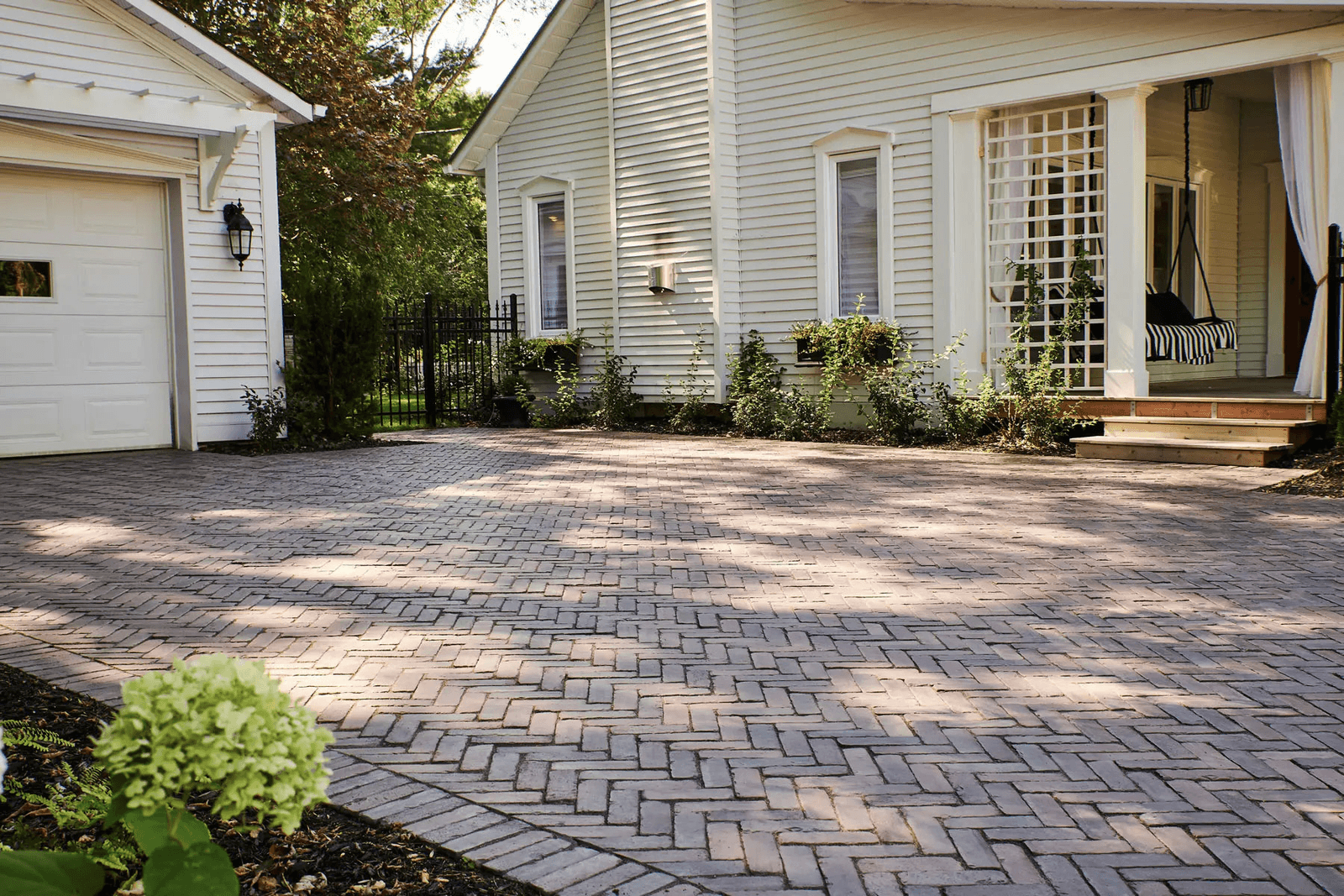
Source: Groupe Richer
The Payback Arithmetic
Be sceptical of contractor payback claims. The honest arithmetic is less flattering than the marketing.
A seasonal snow-clearing contract runs $500 to $1,200 for a typical residential driveway. Running the heated system costs $100 to $300 per winter. Net saving: $200 to $1,100 per year.
Scenario | Installation | Annual saving | Payback |
Electric, large driveway, expensive clearing contract | $10,800 | $1,100 | 10 years |
Electric, typical case | $13,800 | $650 | 21 years |
Electric, small driveway, cheap clearing | $16,800 | $200 | 84 years |
Hydronic, typical case | $37,000 | $900 | 41 years |
Straight financial payback runs 15 to 25 years for electric and 25 to 40 for hydronic, which exceeds the service life of most driveway surfaces. A heated driveway is not an investment that pays for itself the way a furnace upgrade might.
Two things genuinely shorten it:
Installing during a planned driveway replacement, which removes demolition and surface costs from the equation and can cut the incremental cost by a third or more.
Extending surface life by 30% to 50% through eliminating de-icing chemicals and reducing freeze-thaw cycling. On a $15,000 paver driveway, deferring replacement by ten years is real money that doesn't appear in a snow-clearing comparison.
The Honest Case for a Heated Driveway
Buy one because of what it does, not because of what it saves.
Safety on a sloped driveway, where ice is a genuine hazard rather than an inconvenience. Slips, falls and vehicle damage carry costs that don't fit neatly into a payback calculation.
Mobility considerations, where shovelling isn't realistic and reliable clearing has value beyond dollars.
Heavy-snowfall regions — Quebec, Atlantic Canada, northern Ontario — where the system earns its keep often enough to matter.
Convenience, which is the reason most owners actually cite afterward. Never shovelling again is worth something, and it's more honest to price it as a lifestyle purchase than to dress it up as an investment.
Surface protection, since no salt means no spalling, no scaling, and no damage to the garage floor or the car.
Resale value benefits in premium markets and heavy-snowfall regions, though rarely dollar for dollar. It's better understood as a feature that differentiates a listing than as an investment that returns its cost.
Worth asking your insurer as well — some offer premium consideration for reduced slip-and-fall liability, particularly on properties with rental units or frequent visitors.
When to Skip It
A low-snowfall region. Vancouver gets a handful of snow events a year, and the system costs the same to install regardless.
A short-term stay. Payback runs decades, and you won't recover the cost in a sale after three years.
A driveway with years left in it. Retrofitting costs more per square foot, delivers a worse result, and worsens the already long payback.
Limited electrical service where a full upgrade would be required on top of the system cost.
A tight renovation budget with competing priorities. A $14,000 heated driveway and a $14,000 insulation upgrade are not equivalent investments in a Canadian home, and only one of them lowers your energy bill.
What should you budget?
For most Canadian homeowners, an electric heated driveway costs $18 to $28 per square foot installed, which puts a standard 600 sq. ft. two-car driveway between $10,800 and $16,800 before any electrical upgrade. Hydronic runs $24,600 to $51,000 for the same area once the boiler is included, and makes sense mainly above 600 square feet or where a boiler already serves the house.
Three things move the number most. Full coverage versus tire tracks changes the heated area by roughly 40%. Whether you're replacing the driveway anyway determines whether you're paying the incremental cost or the full retrofit cost. And your electrical service decides whether a $1,500 to $4,500 panel upgrade joins the bill.
Budget $100 to $300 per winter to run it. Get three quotes that specify the cable, the controls, the drainage and the electrical work separately, and ask for the workmanship warranty in writing.
Frequently Asked Questions
How much does a heated driveway cost in Canada?
$18 to $28 per square foot installed for electric and $26 to $55 for hydronic before the boiler. A standard 600 sq. ft. two-car driveway runs $10,800 to $16,800 electric, or $24,600 to $51,000 hydronic with the boiler included.
Does a heated driveway pay for itself?
Not quickly. Seasonal snow clearing costs $500 to $1,200 and running the system costs $100 to $300, so the net saving is $200 to $1,100 a year against a $10,800 to $16,800 installation. Straight payback runs 15 to 25 years for electric and longer for hydronic. The stronger case is safety, convenience and extended surface life rather than the clearing contract.
How much does it cost to run a heated driveway?
Roughly $30 per storm for a 400 sq. ft. driveway, and $100 to $300 added to your seasonal electricity bill in a moderate climate. A 600 sq. ft. electric system draws 30 kW, costing $3.90 to $5.10 per hour depending on your rate.
Will I need an electrical panel upgrade?
Usually, for a full-coverage electric system. A 600 sq. ft. driveway draws 30 kW, or 125 amps continuous, requiring a dedicated 150A breaker. Homes on 100A service definitely need an upgrade, and most 200A services already running a furnace, range and dryer will too. Budget $1,500 to $4,500 and have an electrician assess capacity before committing.
Electric or hydronic — which should I choose?
Electric for most residential driveways under 600 square feet. Hydronic above that, on long laneways, or where you already have a boiler and natural gas service. Hydronic costs considerably more upfront, and the operating-cost difference only begins to offset the boiler on large areas.
Can I add heating to my existing driveway?
Yes, at $7 to $17 per square foot, though it means cutting channels into the surface. Installing during a full driveway replacement produces a better result, costs less in total, and meaningfully improves the payback. If your driveway has years left, waiting is usually the better call.
How fast does a heated driveway melt snow?
1 to 3 inches per hour with a properly sized system. Anything above that is blizzard territory and the system will fall behind until the storm eases. These systems prevent accumulation rather than clearing existing snow, so running them as the storm begins works better than after.
Are portable heated mats worth considering?
For tire tracks or a walkway, yes. A 2 by 20 foot mat runs $1,600 to $2,200 and needs no permit or contractor for the mat itself. Check your electrical capacity first, though: a single mat draws 1,400 to 2,000 watts, which is at or above what a standard 15-amp circuit supports continuously. Two mats need two separate circuits.
Do heated driveways work with asphalt?
Yes, but installation temperature is critical. Laying asphalt too hot over the cable is the most common cause of a failed installation. The paving and heating contractors have to coordinate, and the cable specification must match the application temperature.
Will a heated driveway crack my concrete?
It can, if the design is poor. Repeated heating and cooling puts thermal stress on a slab, which is why adequate control joints and a proper cable layout matter. A well-designed system doesn't cause cracking; a badly designed one accelerates it.
What happens if the cable fails?
Repair means digging up pavement, which is the system's most serious limitation. On pavers, individual units lift and reset. On concrete or asphalt, the surface has to be broken and patched. Premium cable with a 25-year warranty and a documented cable layout both reduce the pain.
Do I need a permit?
In most municipalities, yes, primarily for the electrical work. Your contractor should handle the application. Budget $150 to $500 depending on your city.
Does a heated driveway need a drain?
Almost always. The system produces meltwater during winter storms, and without a slot drain that water runs to the lowest point and refreezes, often at the garage entrance. Drainage is part of the design rather than an optional extra.
Looking for something else?
Related articles
The latest industry news, interviews, technologies, and resources.
Editorial Team
•04 Nov 2025
Planning a home add-on is a serious project requiring technical expertise and design experience. With such a big project to undertake, you might be left with some equally big questions. Why is an architect essential? What are the costs involved? How do you find the right professional? Luckily, you'll find the answers to all of those questions and more in this article. So, here's everything you need to know to ensure your project’s success.

Amanda Harvey
•08 Nov 2023
Every single winter, homeowners like yourself know how difficult it is to leave the driveway successfully. Between the constant build-up of ice and snow and the energy it takes to shovel, we all find cold weather exhausting. Many have turned to hiring someone to frequently clear their driveway, but this is a costly affair. So, is there a middle ground to consider that’ll solve this problem? Enter heated asphalt.

Editorial Team
•08 Nov 2023
2019 is coming to an end, and we are leaving a decade behind us. For many, 2020 promises great things: it’s a return to zero as well as a new beginning. Some will seize the opportunity to finally start the projects that have been put aside, such as pressing renovations.
Editorial Team
•17 Jul 2026
A refrigerator is the only major appliance that never gets a day off. Not on holidays. Not during heat waves. Not when the kitchen’s being renovated and the door’s opening every two minutes because someone is “just checking” what’s inside. It runs 24/7, quietly taking abuse, until it doesn’t.

Editorial Team
•20 Mar 2026
Rebuilding a deck or patio space means choosing from a vast range of materials, making the choice quite difficult at times. How can you select the right material from all the options available? What factors are likely to affect project costs? While material-specific characteristics are key in choosing the right material to build your new deck, price points will also be a deciding factor.