Reasons, Methods and Products to Waterproof Your Foundation
By Editorial Team
Updated on June 4, 2025

Waterproofing your foundation is paramount to preserve the integrity of the concrete, prevent basement water leaks, and reduce humidity levels. Doing so is deemed essential to prevent water and moisture found in the soil from seeping into the basement of your home, thus preventing material deterioration and health-hazardous mould growth. Also, foundation waterproofing is a way of controlling the moisture level in your basement and home as a whole, which will in turn reduce your heating and air conditioning bills.
Why waterproof your foundation?
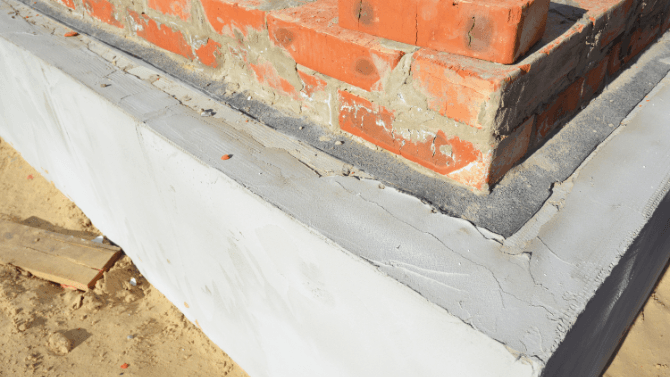
Source: Canva
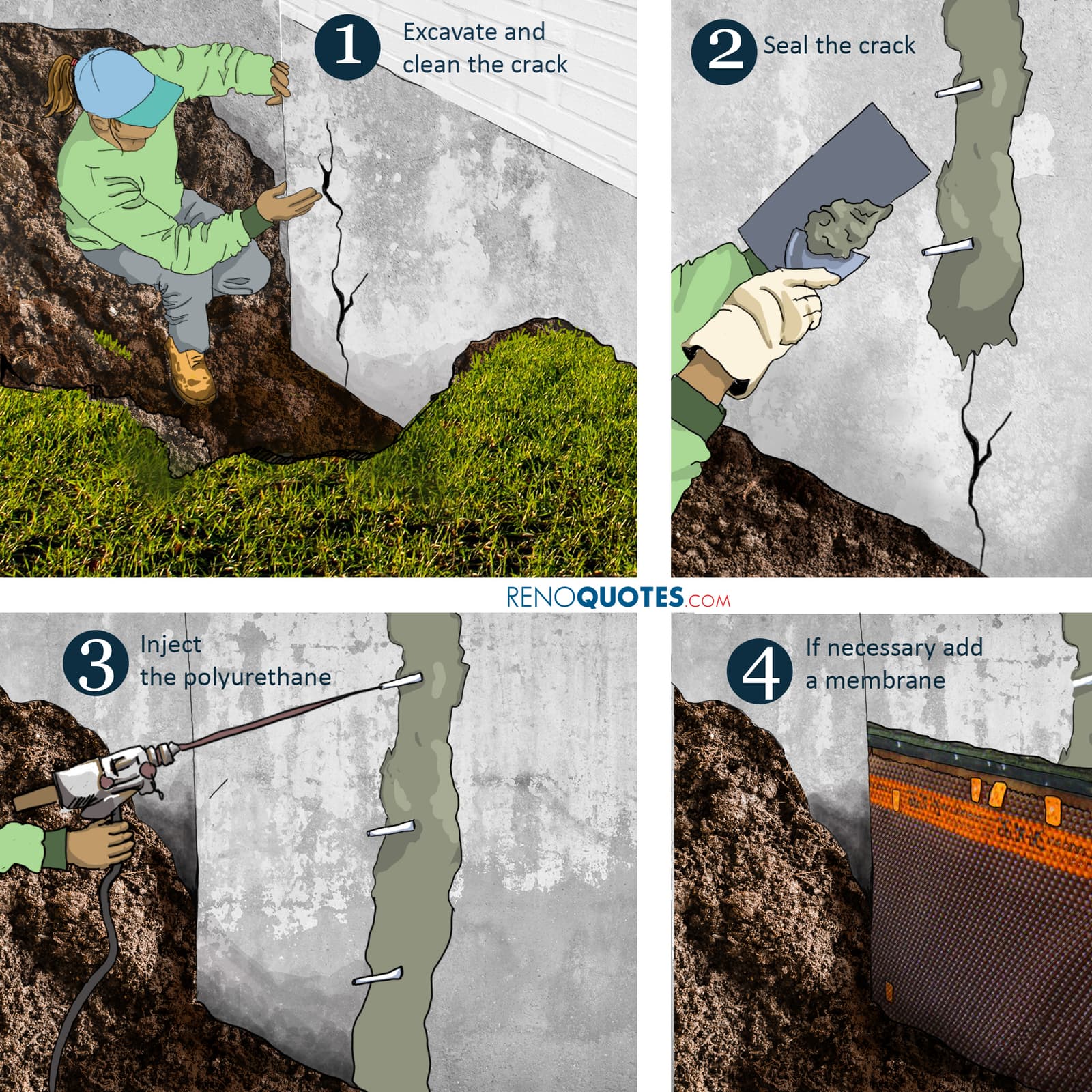
Foundation waterproofing is a mandatory step in protecting a building against water and moisture. Waterproofing is, first and foremost, extending the service life of your home’s structural concrete. Exterior humidity is Mother Nature’s doing, it’s in the ground, poses a permanent threat to structures, and risks damaging concrete. In the long run, exposure to damp or humid soil may lead to a variety of problems, such as active fissures (check out How to Repair Cracked Foundation Walls for more information).
Cracks classified as active are continuously evolving over time and are increasingly problematic. Several factors can be at cause here: soil collapse, poor drainage, or freeze. Furthermore, active cracks are often a sign of clay soils and an unstable embankment. These factors can give rise to a plethora of damage to your home or building (water leaks, structural deterioration, mould, etc.).
If you spot cracks in your home’s concrete foundation, we highly recommend reaching out to a renovation or construction professional to assess the situation and carry out the appropriate repairs. Foundation cracks are likely to lead to basement water leaks, which may potentially cause severe damage.
Note that depending on where you live, it may be near a phreatic zone, the latter can also negatively affect your foundation. Come spring and fall, when water levels tend to be elevated, there’s a rise in underground water, extending to the soil level. This problem leads to what’s known as hydrostatic pressure on foundations, which causes water leaks and other structural problems. Should this apply to you, waterproofing the foundation surrounding and supporting your home is paramount.
Waterproofing Methods and Products
Tar-Based Coating vs. Membranes
When waterproofing your home, there’s no doubt about it, you have to pay special attention to a few elements. There are methods used and different products applied to waterproof a concrete foundation. As such, it’s important to gauge where you’re going and what you’re planning on doing. To waterproof a block foundation, add urethane and a spray polyurethane foam coating for very rigid results. This will reinforce the concrete blocks. The latter consists of a lightweight foundation insulation.
The first foundation waterproofing method consists of adding a tar-based coating. This method is actually made mandatory by the Construction Code established by the Régie du bâtiment du Québec. Given the latter, this method is very common and can serve as the base coat for other waterproofing products. This liquid coating consists of solvents and asphalt. Typically, the product is heated prior to its application and then sprayed on.
The second waterproofing method consists of installing an elastomeric membrane. There are liquid waterproofing membranes and self-adhesive membranes. To waterproof a poured-concrete foundation, use a water- or oil-based liquid elastomeric waterproofing membrane. It’s applied with a roller, trowel, or pump.
A liquid membrane is made with emulsified bitumen, and true to its name, it’s applied in liquid form. After being left to dry, the product turns into a waterproof rubber-like surface. The product’s main advantage is that it’s devoid of joints, which further contributes to its level of air-tightness.
As for the self-adhesive membrane, it’s made of rubberized asphalt and laminated onto a blue polyethene film.
Beware of “cheap” products made for a DIY application. Oftentimes, such products available in stores have an extremely limited efficiency. Indeed, as unfortunate as it may be, homeowners will often use such products on their foundation to later be disappointed by the sheer inefficiency of the product.
When it comes to such work, it’s always best to hire trade specialists because if the work is poorly done, it exposes the foundation to further damage. Then, the waterproofing process will have to be carried out again from scratch, which does imply significant expenses, or in the best case scenario, carrying out time-consuming repairs.
Therefore, unless you really know what you’re doing, always ask for a trade expert’s assessment and hire a team of qualified individuals to carry out the intended work. And, a job well done will stand the test of time, which is, “when using a double-layer waterproofing membrane, roughly 20 years, but [with modern techniques] can last 40 or 50 years,” as explained by Sébastien Dery, Solutions Fondation Rive-Sud.
Waterproofing a Foundation from Inside
Waterproofing a foundation from the inside, meaning through the basement, is a method used when the foundation cannot be accessed from the outside, or if the moisture issues experienced persist despite exterior waterproofing.
This method consists of applying a waterproofing membrane to the interior face of the structure’s foundation, such as a rigid waterproofing membrane (Delta-MS), which offers optimal humidity protection. Another option would be installing a thermofusible waterproofing membrane, effective for existing foundations, such as rubble trench foundations or block foundations.
Waterproofing from the interior can also be done by installing an interior drainage system to manage water that may build up around the foundation’s perimeter.
It’s best to hire trade professionals to waterproof your foundation from the inside to ensure properly executed and durable work.
RenoQuotes.com details everything you should know about waterproofing your home’s foundation.
What are the project-related factors to consider?
First and foremost, you have to clean the foundation using a pressure washer, make any necessary mortar repairs, and ascertain the joining of the footing and the foundation wall, to then inject the fissures.
There are several tools and products used for this type of work:
Pump
Personal protective equipment
Liquid membranes
Rigid membranes like the Delta-MS, Delta-Drain, or MiraDRAIN
In terms of timelines, a foundation waterproofing project can take “a day, depending on the surface area to cover,” explained Déry.
How much does it cost to waterproof a foundation in Quebec?
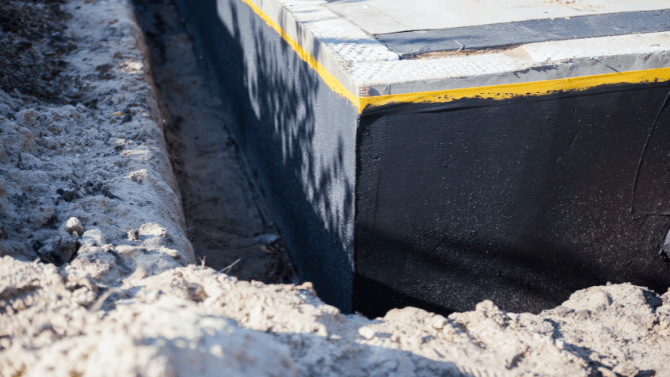
Source: Canva
Note that it’s best to work with a qualified contractor who can suggest using incredibly efficient products that are often restricted and solely available through trade professionals. The hired professional will also be able to carry out quality work with long-lasting results. Plan on spending anywhere between $90 and $150 per linear foot to waterproof the walls of your foundation, as well as install a French drain around the perimeter, but that’s if you go through a professional.
Overall, the cost of waterproofing your foundation will vary greatly based on several factors. Amongst these, are the size of your home, the complexity of the work at hand, and the chosen waterproofing method, such as detailed above.
Bear in mind that waterproofing product costs are definitely to be considered, but so are labour fees. Indeed, installing the insulation material and any additional work required will incur extra costs.
Also, note that labour costs for such projects vary based on the complexity of the work and the skill level of the hired professional; hourly rates typically reaching $100.
Lastly, on top of budgeting for waterproofing costs, note that there might be other costs involved, such as those related to foundation excavation or a French drain installation.
Get 3 renovation quotes for your foundation issues
RenoQuotes.com can help you get quotes for your foundation renovation. We have a network of home renovation specialists that will be glad to find the proper solution for your particular situation.
Dial 1-844 828-1588 to speak with one of our customer service representatives.
Looking for something else?
Related articles
The latest industry news, interviews, technologies, and resources.
Cynthia Pigeon
•15 May 2026
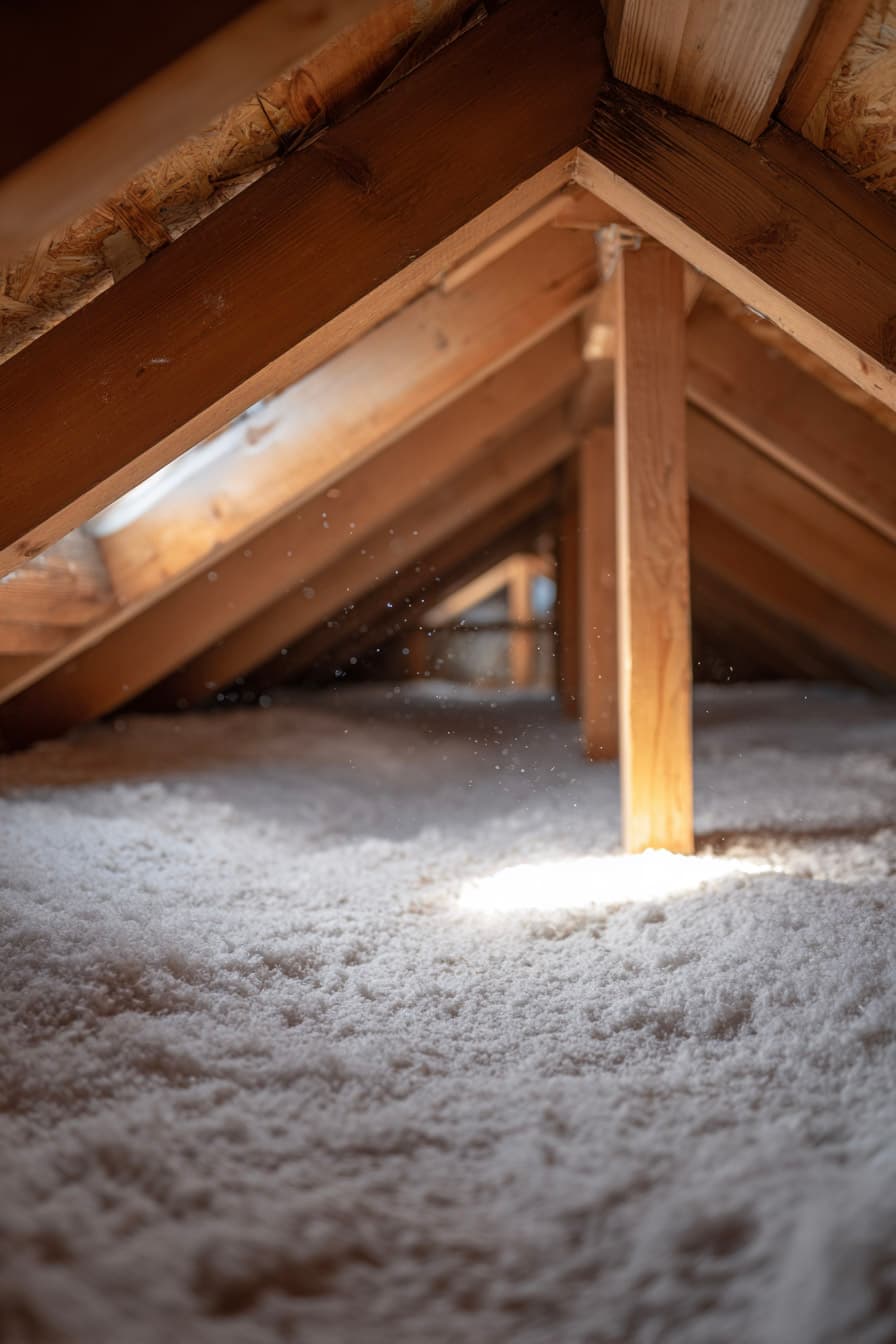
In Canada, where winters can be harsh and seasonal temperature swings are significant, proper attic insulation is essential for improving comfort and reducing heat loss. Among the most common insulation materials, cellulose and spray foam, also known as sprayed polyurethane foam, stand out for their performance, cost, and long-term value.
Editorial Team
•18 Aug 2026
A vapour barrier is a material used in a home's building envelope to limit the movement of water vapour through walls, ceilings, and other assemblies. In Canada's climate, it plays an important role in moisture control by helping prevent indoor water vapour from reaching colder parts of an insulated assembly, where it could condense.

Editorial Team
•08 Oct 2025
This a promising career path for those who have a love of the outdoors, excellent attention to detail and ease of using computers; if so, you may be interested in working as a land surveyor.
Editorial Team
•18 Apr 2024
Have you noticed the presence of traces of humidity in your crawl space? You're right to wince because a buildup of moisture is never good news.

Editorial Team
•08 Nov 2023
A renovation project without delays is like thunder without lightning; when one occurs, the other follows. Yes, the truth of the matter is that almost every single renovation project will experience a small or large bump in the road.