
Is the air inside your home too dry? It can be challenging to identify the cause of this unpleasant situation and determine the appropriate ways to address it.
Get Your Project Started Today
Submit your details and receive three free quotes from trusted contractors.
Here is an explanation of this phenomenon and some solutions to correct the humidity level in your home.
Excessively Dry Indoor Air
Causes
Several factors can explain the presence of overly dry air inside the home. Firstly, the heaters commonly used in winter tend to dry out the air and reduce humidity levels. Due to the home's insulation, the air remains trapped inside and circulates little.
Secondly, insulation problems can also be the source of a lack of humidity inside the house. Indeed, cold air is less capable of retaining humidity, so when it enters the home (due to poor insulation), it warms up and becomes dry.
Consequences
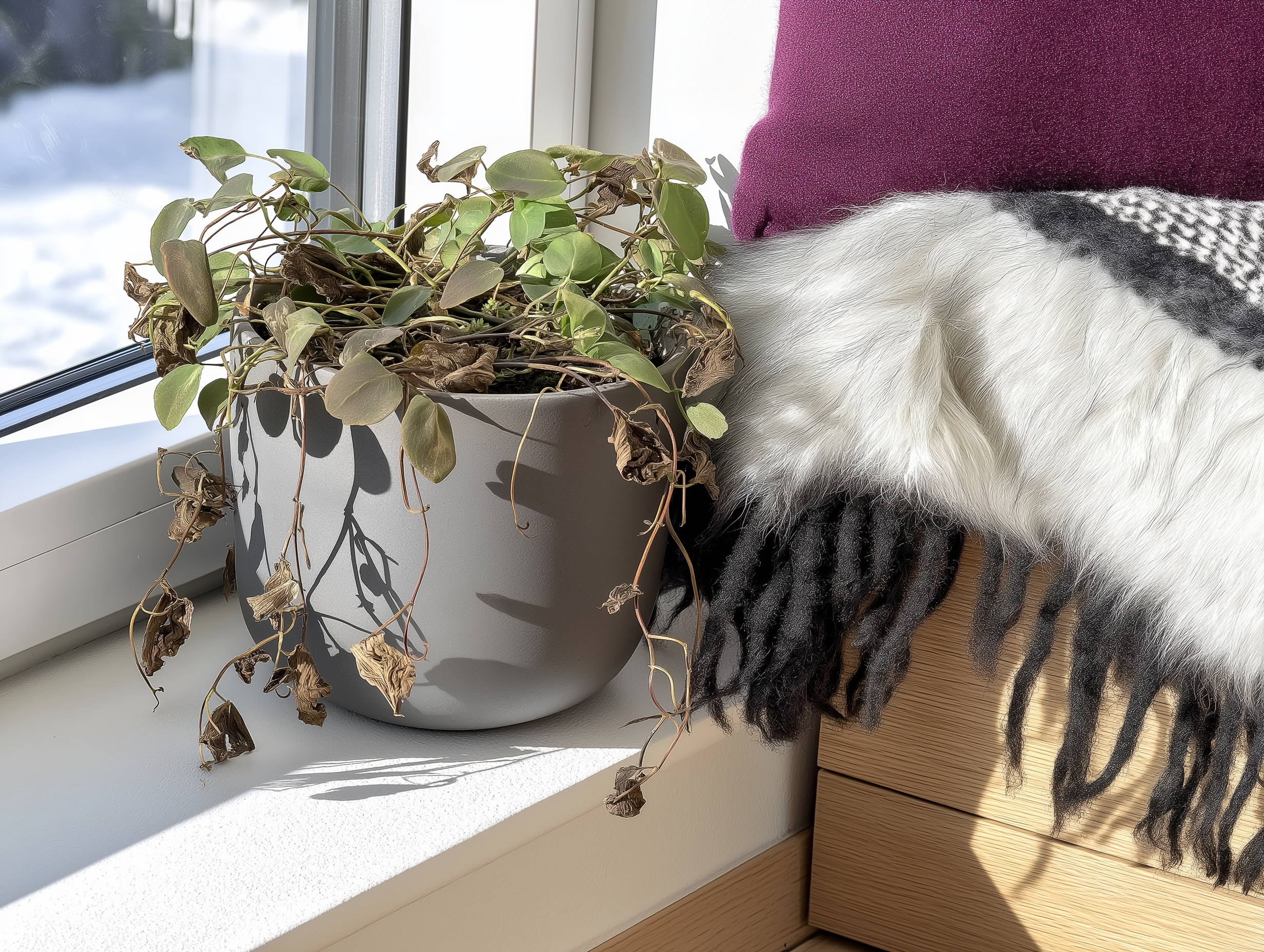
Particularly in winter, dry air can quickly become a problem and have unpleasant consequences. Not only does dry air cause many health issues such as nasal congestion, nosebleeds, and worsening respiratory problems, but it can also damage your wooden furniture or floors. These can crack due to insufficient humidity in the air. Lastly, dry air tends to increase the concentration of dust in the air.
Addressing the Dry Air Problem: Solutions
Source : Soumission Rénovation
First, you should check the humidity level with a hygrometer. If it indicates that your humidity level is below 40-45%, the air in your home is indeed too dry. Depending on your dwelling, the solutions to implement will vary.
For a Small House or Apartment
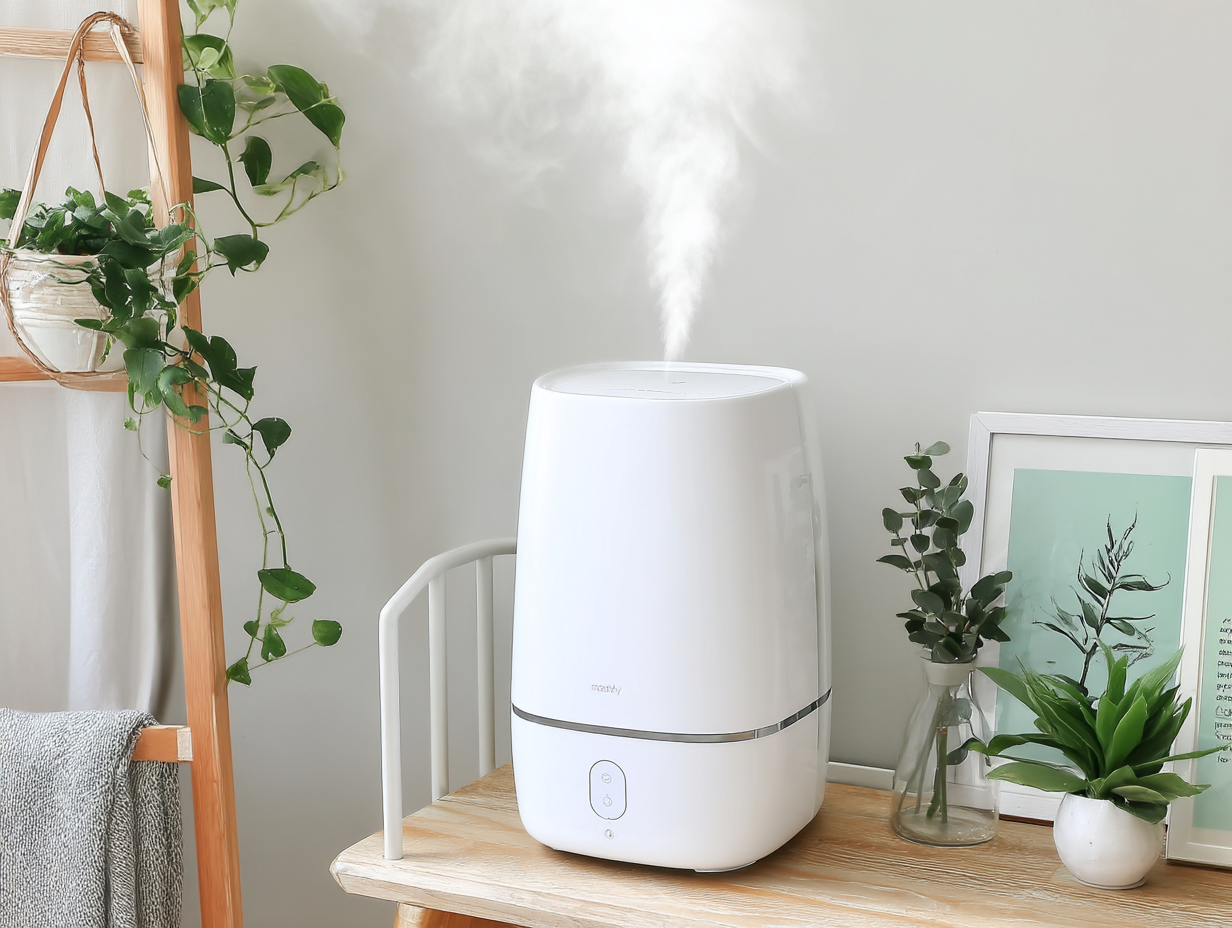
If your home is small or you live in an apartment, you can increase the humidity level using portable humidifiers, which should be installed in the most frequently used rooms. There are three main models: warm mist, cool mist, and ultrasonic.
Warm Mist Humidifiers: As the name suggests, this model emits warm steam. Since hot water tends to eliminate bacteria, warm mist humidifiers usually require little maintenance. However, they pose a burn risk and are therefore not recommended for children's rooms. Note that they are slightly noisier than other models.
Cool Mist Humidifiers: These models pass ambient air through a water-soaked filter to diffuse cool mist via a small fan. However, they require daily maintenance, as bacteria can proliferate in the water. Inhaling this mist could have adverse health effects, so it's recommended to change the water and clean the device after each use.nachi.org
Ultrasonic Humidifiers: These are known for being more efficient than the previously mentioned models. They operate by using a thin metal plate that vibrates at high frequency, breaking water molecules into fine droplets. The resulting ultrasonic mist is then diffused into the ambient air, where it evaporates without leaving any water vapor residue on interior surfaces. These humidifiers are appreciated for their quiet operation. Like cool mist models, they require daily cleaning. Ideally, you should use distilled water to prevent the filter from clogging due to minerals present in tap water.
For a Large House
For a larger home, it will be necessary to invest in the installation of a central humidifier. Central humidifiers are equipped with programmable humidity regulators, allowing you to maintain an optimal humidity level in the air.
To ensure your humidifier operates at full capacity, maintain the system regularly and don't forget to clean the filters.
Tips to Prevent Dry Air in Your Home
Source : Soumission Rénovation
Do not allow the indoor temperature to rise above 21 degrees Celsius.
Leave the bathroom door slightly open after taking a shower.
When possible, ventilate the house. Ideally, do this twice a day for 5 minutes.
Lower the heating by one or two degrees.
Additional Information
A home heated by forced air allows for the installation of a humidifier at the furnace outlet, which is very practical. These air humidifiers for heating systems use water directly from the plumbing system instead of requiring constant refilling like portable humidifiers.
How Much Does a Humidifier Cost?
As a guideline, here are the average prices for purchasing a humidifier:
Central Humidifier: between $800 and $4,000
Cool Mist Humidifier: between $45 and $200
Warm Mist Humidifier: between $55 and $500
Ultrasonic Humidifier: between $40 and $300
Summary Table of Key Information About Dry Air Problems in a Home
What you need to know | |
|---|---|
The consequences | Health issues: nasal congestion, nosebleeds, and worsening of respiratory problems. |
The causes | Heaters used in winter can dry out the air and reduce humidity levels. |
Solution for a small house | Purchasing a portable humidifier (warm mist, cool mist, or ultrasonic). |
Solution for a large home | Installing a central humidifier. |
Would you like a few tips to improve your home's indoor air quality? Take a look at our article on the topic!
Looking for something else?
Related articles
The latest industry news, interviews, technologies, and resources.
Cynthia Pigeon
•19 Sep 2026
Toilet installation costs $260 to $960 in Canada with the fixture included, and most homeowners pay around $520 for a standard two-piece toilet supplied and installed. Labour alone runs $150 to $400 if you've already bought the toilet.
Editorial Team
•13 May 2026
A staircase renovation project is essential to transforming not only the look of your foyer and interior but also its functionality and safety. A well-designed and renovated staircase is crucial to your home’s aesthetic appeal while adhering to mandatory safety standards.

Équipe éditoriale
•28 Aug 2024
Although hidden behind the scenes, both fuses and circuit breakers run the central electrical operations while they serve to protect your home as well as your family. Both work to defend against an overloaded electrical circuit by interrupting the flow of electricity.
Editorial Team
•08 Nov 2023
Do you have a problematic front door lock? Whether this is a direct result of regular wear or an attempted break-in, there’s no doubt that you’re trying to remedy the situation as fast as possible. So here’s a rundown of the quick fixes available to you.
Editorial Team
•08 Nov 2023
If you're looking to give your interior a modern look, concrete and concrete-inspired wall coverings are a great option. This article explains all the ways you can achieve a concrete look for your wall, with or without real concrete!