HVAC Technician: A Hot and Cool Promising Trade
By Editorial Team
Updated on October 8, 2025
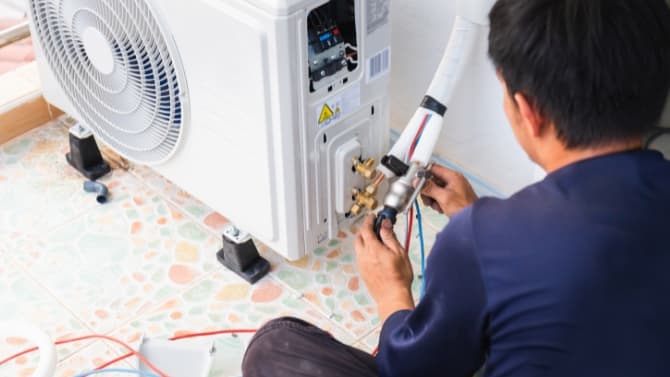
Are you looking to make a career for yourself in an ever-growing and in-demand field? One that’s both versatile and well-paid?
In Quebec, heating, ventilation, and air conditioning—HVAC—technicians, also known as refrigeration technicians, are part of an ever-growing trade. Such trade professionals are responsible for making, installing, maintaining, and repairing heating, ventilation, and air conditioning systems in residential, commercial, and industrial buildings.
The work they carry out is essential for ensuring the comfort and safety of building occupants, while also contributing to reducing energy consumption and fostering conversation efforts.
What does an HVAC system installation and maintenance technician do?
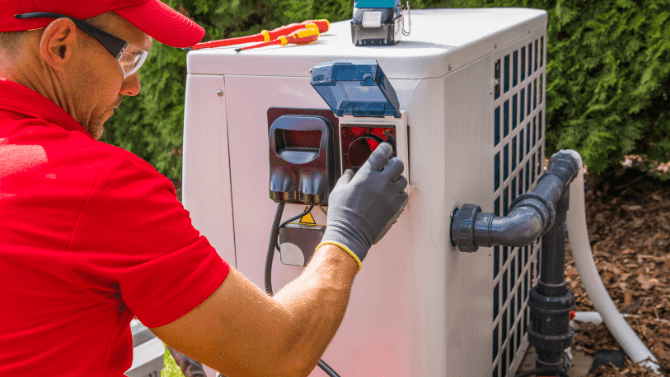
Source: Canva
Being an HVAC technician is a rather versatile profession. As part of their responsibilities, HVAC specialists are called upon to carry out diverse tasks, such as installing and connecting heating and cooling systems, commissioning equipment, preventative maintenance and upkeep, urgent repairs, replacing defective parts, and calibrating control systems. As part of their duties, they must also be capable of complying with established standards and regulations in terms of safety and environmental protection.
Given that the HVAC technician profession is constantly evolving, you can find that differing challenges can be met based on personal ambitions or interests.
General service technicians: As a general service technician, you’re tasked with working on residential systems. A typical day in the life of such workers consists of answering maintenance service calls by heading on-site to carry out repairs or maintenance. They also install heating, ventilation, and air conditioning systems.
Commercial HVAC installer: As a commercial heating, ventilation, and cooling system installer, you’re tasked with working with oversized equipment, which requires additional training. Heating, ventilation, and air conditioning systems are also complex to use as they cool down server rooms as well as other temperature-controlled areas.
Design and installation technician: As a design and installation technician, you will be tasked with duties that overlap with those of engineers. Technicians who design, fabricate, and install new systems must have a thorough understanding of HVAC systems. This includes calculating the right pressure required for a specific system, determining the right size for diverse components, and following airflow (drafts) to create ductwork and other elements.
Refrigeration technicians: Certain technicians choose to focus solely on refrigeration. Refrigerators are tiny air conditioners capable of generating extremely cold temperatures. Such technicians work with restaurants, food suppliers, and other companies that need large refrigerated rooms.
How to Become an HVAC System Installation and Maintenance Technician
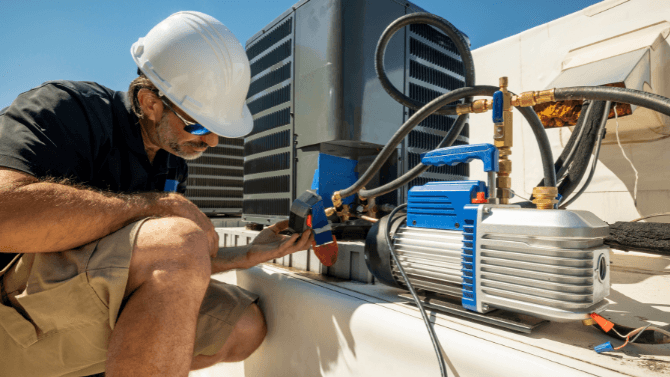
Source: Canva
Required Skills of an HVAC Technician:
HVAC technicians must have completed thorough training in the following:
Building mechanics
Electricity, thermodynamics, and HVAC control systems
They must be capable of reading plans and sketches, selecting and installing the right equipment, troubleshooting defective parts, and suggesting problem-specific solutions
Their work also requires them to have good communication, time-managing, and problem-solving skills
HVAC Technician or Refrigeration Technician Training in Quebec:
Here are the basic prerequisites for carrying out said profession in Quebec.
HVAC technicians must hold a certificate of competency for working on construction worksites. Trade novices must hold a diploma of vocational studies (DVS/DEP) as a refrigeration technician, as well as complete a 150-hour internship, spread out over a three-month period with a CCQ-registered employer. There are also AEC courses (attestation of college studies) available.
Once these prerequisites are met, candidates can obtain an apprentice’s certificate of competency. Then, apprentices must complete four training periods, amounting to 8,000 supervised work hours, which represents roughly four years of professional experience. From there, they will be able to take the provincial qualification examination; if done successfully, they can request their trade journeyperson certificate. The refrigeration technician trade in Quebec is overseen by the Commission de la construction du Québec (CCQ).
HVAC System Installation and Maintenance Technician: Job Outlook and Yearly Wage
Job opportunities reserved for HVAC technicians aren’t lacking in the province of Quebec, most especially with prominent construction companies, energy services companies, public institutions, hospitals, shopping centres, and HVAC maintenance and installation companies. In terms of the yearly wage for such trade professionals, it is devised according to experience, training, and industry-specific sector.
Based on the information collected by the CCQ back in 2018, the job outlook is excellent and there’s a growing demand. Overall, 742 Quebec-based companies are currently employing HVAC or refrigeration technicians.
What’s the yearly wage of an HVAC technician in Quebec?
According to Philippe Gagnon, a member of the CCQ’s professional training management team, journeypersons working in industrial, institutional, commercial, civil engineering, and roadway sectors earn an average of $34 an hour.
“Overall, salary-wise, this is one of the best-compensated trades in the construction industry because refrigeration technicians average a lot of work hours,” said Gagnon. “They typically work for specialized contractors.”
HVAC technicians can also choose to work outside of the construction industry.
The average yearly wage of an HVAC or refrigeration technician, according to the statistics published by Guichet-Emplois states that the median salary of a heating, ventilation, and air conditioning mechanic in Quebec is $64,000 a year.
When it comes to qualified technicians working on construction worksites, the Commission de la construction du Québec published the following yearly wages:
Apprentice: $24,274
Journeyperson: $68,100
Journeyperson working at least 500 hours a year: $79,222
Refrigeration or HVAC technicians are typically remunerated according to hourly wages. The number of hours worked per week will naturally have an impact on the worker’s monthly or yearly income. Years of experience, sector of employment, and certification are also factors that will influence their monetary revenues.
To conclude, let it be said that working as a heating, ventilation, and air conditioning technician in Quebec is a promising career path. Industry professionals are a vital part of society, ensuring comfort and safety to building occupants, while also preserving the environment. It’s a cool and hot trade, pun intended!
Looking for something else?
Related articles
The latest industry news, interviews, technologies, and resources.

Editorial Team
•08 Oct 2025
When it comes to choosing a career path, we’re often faced with multiple options that can lead to confusion and render the task at hand much more difficult. The best way to proceed in such a situation is to opt for a profession that’s in line with our interests and one that has positive prospects.

Cynthia Pigeon
•08 Oct 2025
Are you looking for a rewarding and worthwhile job? Looking to start a new career and are still debating as to which trade would suit you best? Why not opt for electrical power line installation? Do you know less than nothing about the trade but are still jumping in with both feet? Well, check out this article to learn more about it!

Editorial Team
•27 Aug 2025
Did you know that concrete could be recycled? Well, yes siree Bob! Concrete recycling is a technique used to salvage concrete waste. It’s an alternative to disposing of it in landfills that happens to be both cost-effective and eco-friendly. So, let’s zero in on concrete recycling, a practice that’s still, to this day, little known in Canada.

Christine Simard
•08 Nov 2023
The rusty look has never been on trend and unfortunately for us, it is inevitable when we have exterior metal structures that are exposed to the elements. If you are a person who enjoys doing small renovations on your own, it's good to know that metal, especially rusty metal, requires specific maintenance if you want to achieve a professional end result.

Editorial Team
•08 Nov 2023
Why choose timber formwork at the height of steel formwork? Simply because timber has three undeniable advantages: it’s cheap, effective, and safe.