Laneway House Contractor in Montréal: Zoning and Construction Guide
By Cynthia Pigeon
Updated on June 23, 2026
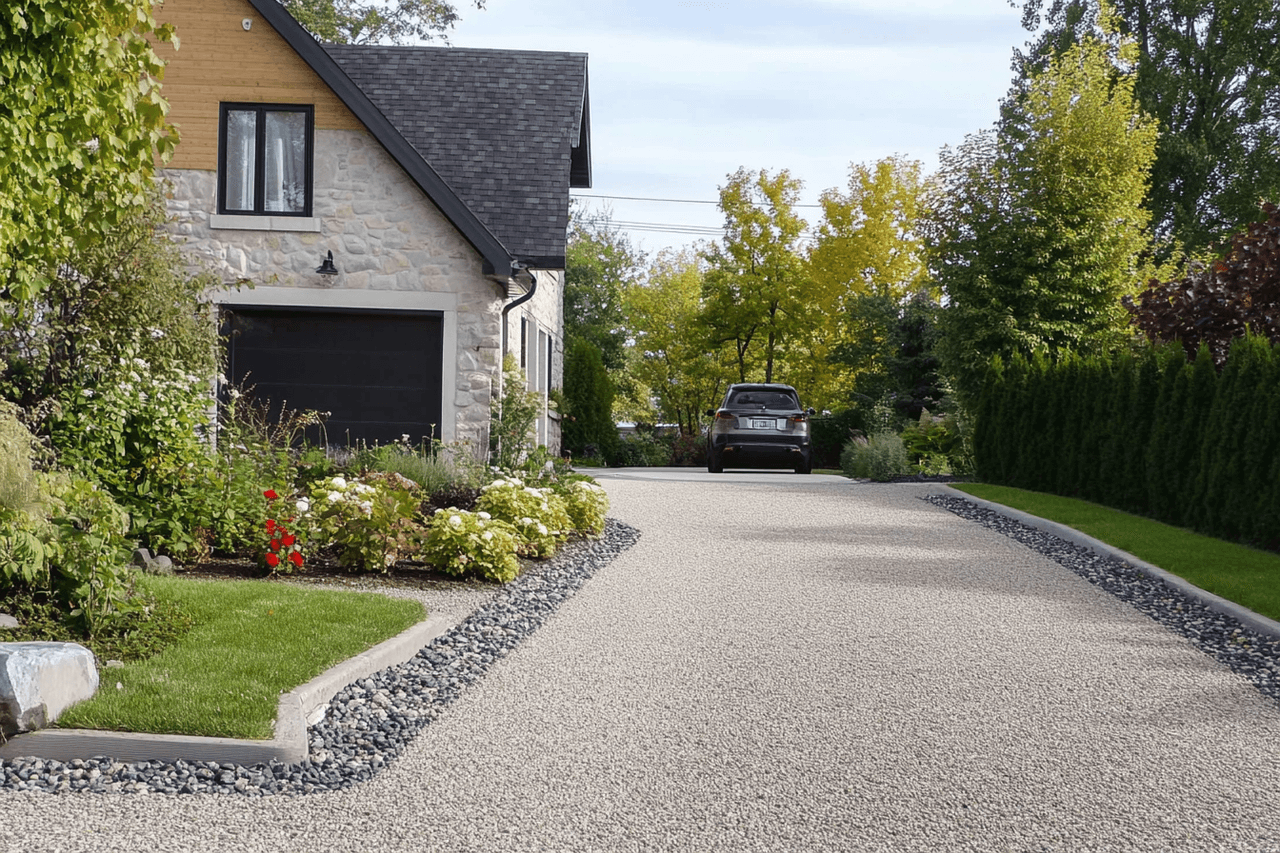
In Montréal, real estate pressure and the lack of housing are pushing homeowners to rethink urban space. If you own a residential lot in a central neighbourhood such as Rosemont, Plateau-Mont-Royal, or Sud-Ouest, your backyard or direct access to a laneway may hold unexpected potential. Some boroughs, such as Rosemont, have recently adapted their regulations to oversee accessory dwelling units. However, rules can vary significantly from one borough to another. Before confirming whether a project is feasible, check the standards that apply to the specific lot. Building a backyard home has become one of the most attractive alternatives for housing a loved one, generating rental income, or maximizing the value of your property.
However, building a separate dwelling in a city as dense and historically layered as Montréal is not something to improvise. Between the City’s strict regulatory requirements, the management of underground infrastructure, and the logistical constraints of narrow laneways, support from experienced professionals is essential. This complete guide gives you a clear overview of the legal, technical, and financial framework for successfully completing your project with a qualified builder.
What Is a Detached Accessory Dwelling Unit in Quebec?
Source: Les Ateliers Duo
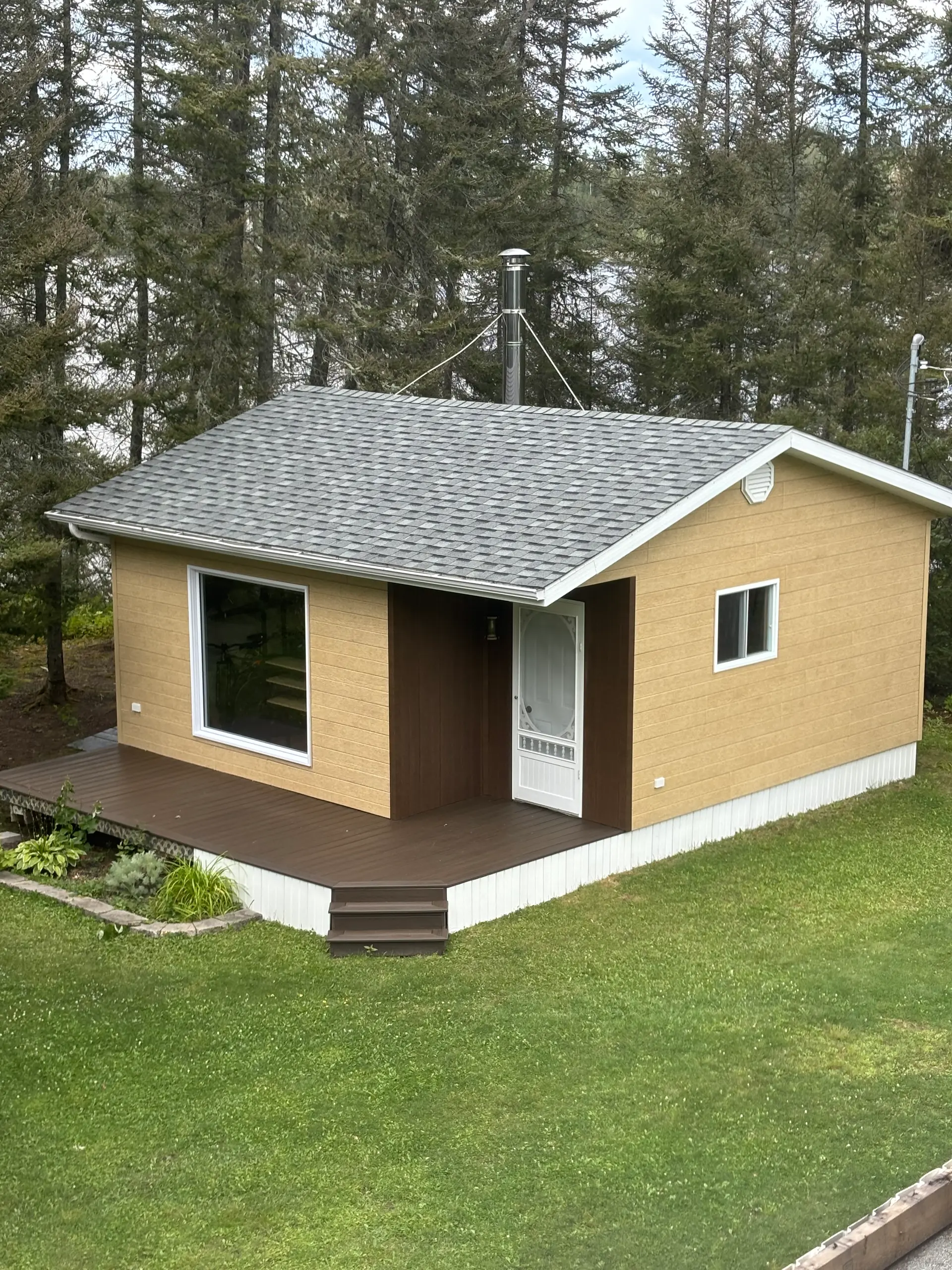
A detached accessory dwelling unit, commonly known as a laneway house or garden suite, is an independent residential structure built on the same lot as an existing main building, generally a single-family home, duplex, or triplex. Unlike a second-storey addition or a basement apartment, a detached accessory dwelling unit has its own foundation, separate exterior walls, and its own independent access.
This concept is directly tied to the movement toward gentle density housing. The goal is to increase the number of available homes in sought-after neighbourhoods without altering the architectural character or quality of life of residents. According to Ecohome, the development of detached accessory dwelling units represents a major ecological step forward: it limits urban sprawl, optimizes the use of existing municipal infrastructure, and supports a more walkable, local lifestyle.
For Montréal families, a detached accessory dwelling unit often takes the form of an intergenerational project, allowing aging parents or adult children to live nearby while preserving everyone’s privacy. For others, it is a strategic investment aimed at bringing a high-performance rental unit to market.
Regulations and Zoning for Laneway Houses in Montréal
Source: Construction FSM inc
This is where the project becomes administrative. Many homeowners mistakenly believe that Quebec’s recent housing-related Bill 31 gives them free rein to build any structure in their backyard. Some clarification is needed.
Bill 31 makes it easier, under certain conditions, to create accessory dwelling units that are integrated into or attached to a detached single-family home. However, this as-of-right authorization does not apply to detached accessory dwellings, such as a backyard pavilion or laneway house. In Montréal, this type of project therefore remains subject to the zoning and urban planning rules of the borough.
Each borough applies its own eligibility criteria:
Rosemont: This borough recently tweaked its urban planning regulations to oversee certain forms of accessory dwelling units, particularly in the context of the PUM 2050 orientations.
Plateau-Mont-Royal and Sud-Ouest: In other central boroughs, such as Plateau-Mont-Royal or Sud-Ouest, the rules may also be influenced by built heritage, area density, yard layout, and the presence of green laneways. However, you must validate the applicable standards directly with the borough concerned.
Before starting any design work, the first step is to contact the local urban planning office or hire an architectural technologist to verify whether your lot meets the minimum dimensions required to obtain a building permit. To help with the overall planning of your renovations or addition project, you can also use RenoQuotes' services to validate the general feasibility of your work.
SPAIP Process and Applicable Setbacks
Depending on the borough, the location of the lot, and the nature of the project, a laneway house may be subject to review under a Site Planning and Architectural Integration Program (SPAIP). When this procedure applies, the project is analyzed by the borough and may be submitted to the urban planning advisory committee, known as the Comité consultatif d’urbanisme, or CCU, before the permit is issued.
When the project is subject to this procedure, the CCU reviews the visual, architectural, and environmental impact of the proposed building. The criteria reviewed may include:
Respect for built heritage: The choice of exterior cladding materials, such as brick, wood, or metal, must harmonize with the immediate laneway environment.
Preserving the tree canopy: Montréal strictly protects its urban trees. If the pavilion’s footprint requires a tree to be removed, you will need to obtain the required authorizations from the borough and comply with the applicable conditions, including replacement requirements where they apply.
Applicable setbacks: These are the minimum distances that must be respected between the new laneway house, neighbouring property lines, and the main building, according to the borough’s standards. These setbacks help preserve sunlight in neighbouring yards, avoid direct views that could affect privacy, and allow access for emergency services.
Technical Connection to Water and Electrical Services
Building at the rear of a lot creates major underground logistical challenges, especially in Quebec’s climate, where freeze-thaw cycles can be severe.
The connection to water and sewer services must be validated with the borough and, if needed, with the Service de l’eau de Montréal. Depending on the configuration of the lot, the location of existing service connections, and municipal requirements, the project may require work on private or public service connections, as well as excavation of a trench to extend or adapt existing lines. Pipes must be installed in a way that protects them from frost and respects the depths required by the City of Montréal. As a general indication, some sections of water service connections must be installed at a depth of approximately 1.80 m, but the exact requirements vary depending on the type of pipe, the connection configuration, and the rules that apply to the project.
For the electrical supply, the process must be planned with Hydro-Québec. Depending on the lot configuration, the capacity of the existing electrical installation, and Hydro-Québec’s requirements, different options may be considered.
Installing a separate meter may be possible in some projects, particularly to make managing a rental unit easier, but this possibility must be validated with a master electrician and Hydro-Québec.
Depending on the expected electrical load and the capacity of the existing installation, an upgrade to the panel or electrical service may be required. This evaluation must be carried out by a master electrician, in coordination with Hydro-Québec when required.
If the electrical supply or equipment must cross part of a neighbour’s property, you must verify rights of way, existing servitudes, and Hydro-Québec’s requirements. Depending on the situation, a written agreement or a servitude registered in the land register may be necessary.
Why Choose a General Contractor Licensed by the RBQ?

Source: RenoQuotes
It is important to understand that building a detached accessory dwelling unit is not a simple DIY or light renovation project. Under the law, it is the construction of a new residential building.
Hiring unauthorized individuals for work that requires a licence can lead to significant consequences, including correction notices, work stoppages, or penalties. Before moving forward, you must verify the applicable obligations with the RBQ, the CCQ, and the relevant trade bodies.
Working with a general contractor who holds a valid RBQ licence gives you important protections:
Work compliance: A licensed contractor must carry out the work according to the applicable requirements of the Quebec Construction Code, particularly for structure, insulation, ventilation, and building safety.
Civil liability insurance: Before signing, verify that the contractor carries sufficient civil liability insurance to cover damage that may occur during the work, especially during excavation or interventions near neighbouring properties.
Access to bonding: An RBQ licence helps verify that the contractor meets certain legal requirements, including bonding requirements depending on the licence category. This provides additional protection, without replacing a clear contract, adequate insurance, and a thorough reference check.
Criteria for Choosing Your Builder in Montréal
Choosing your construction partner should be done methodically. Do not move forward blindly with the first contractor you find. To properly analyze the different quotes you receive, use the following checklist:
Evaluation Criterion | Items to Validate |
Legal Status | Verify the licence number in the RBQ public register and check for any major complaints. |
Urban Experience | Demonstrated ability to work in tight spaces, including access through laneways under 4 metres wide and the management of overhead wiring. |
Permit Management | Does the contractor offer to handle administrative steps with the borough’s CCU? |
Accredited Subcontractors | Electrical and plumbing work must be assigned to authorized contractors who hold the required licences and qualifications, including with the CMEQ for electrical work and the CMMTQ for plumbing or mechanical building work where applicable. |
Take the time to request references for similar projects completed in the Montreal area and, if possible, visit one of their completed projects to assess the quality of the finishes.
How Much Does It Cost to Build a Laneway House?
Source: Mohana Homes
The financial aspect remains a major concern. Building in Montréal comes with economic realities that are very different from suburban projects. Because of complex access and the architectural requirements of central boroughs, the cost per square foot of a detached accessory dwelling unit is generally higher than that of a standard single-family home.
For the Montréal market, construction costs generally fall within the following ranges:
Indicative cost per square foot: A laneway house can cost more than a standard residential build because of site access, service connections, foundation, architectural requirements, and professional fees. A range of $350 to $500/sq. ft. can be used as a preliminary benchmark, but it must be validated with quotes adapted to the specific lot.
Estimated overall budget: For a typical 600- to 800-square-foot pavilion, you should often expect an investment of approximately $250,000 to $400,000 or more, depending on site access, foundation, service connections, taxes, professional fees, materials, and architectural complexity.
Why Are Costs Higher in an Urban Setting?
Several technical factors explain these prices and must be anticipated in your budget:
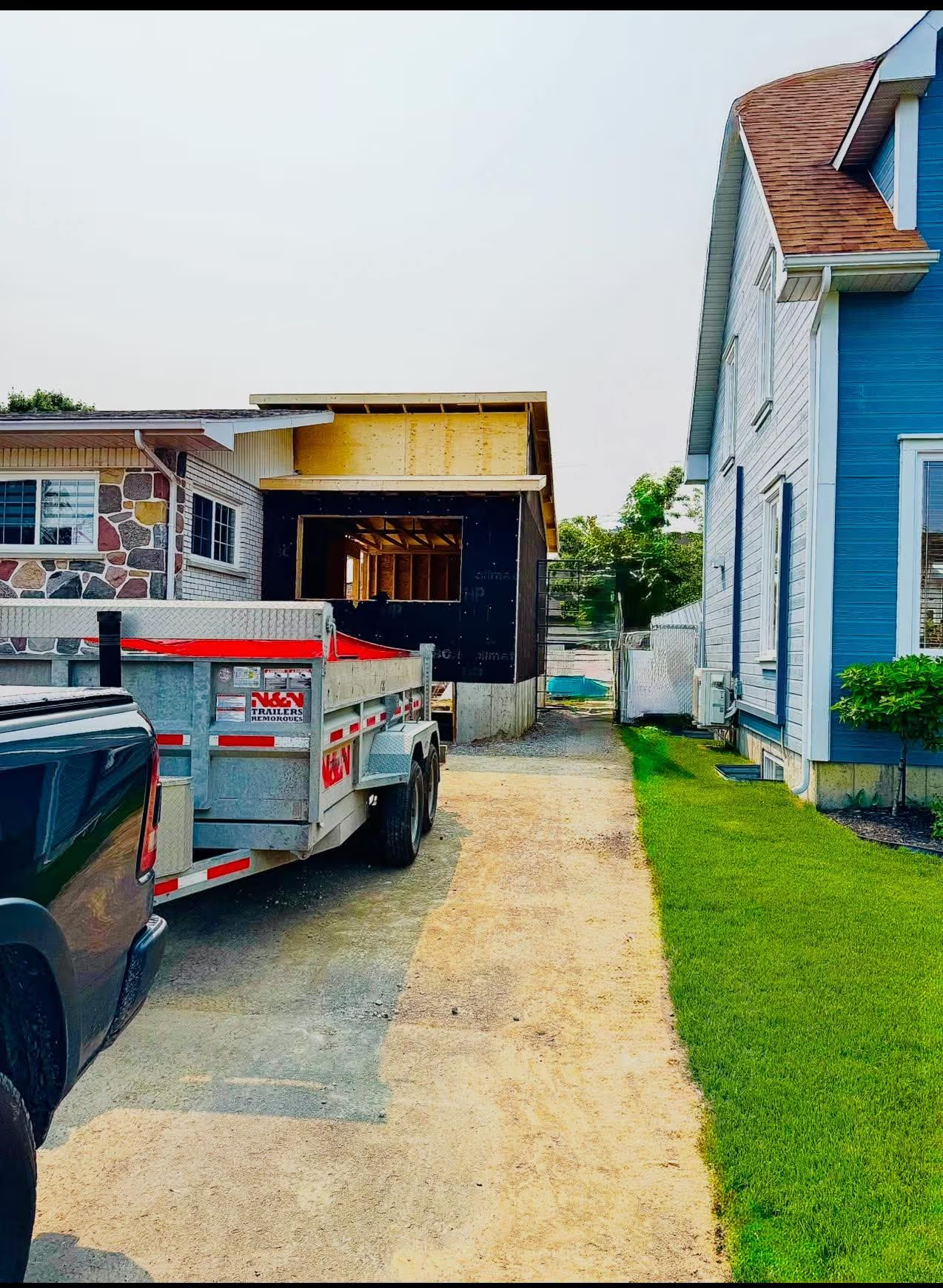
Site access: Montréal laneways are often narrow and lined with Hydro-Québec wires and telecommunications cables. When large heavy machinery cannot be brought in, contractors must use smaller excavation equipment, which extends the duration of the work. In some cases, large telescopic cranes may be needed to lift structures over the roof of the main building, which creates additional costs for road permits and occupation of the public right-of-way.
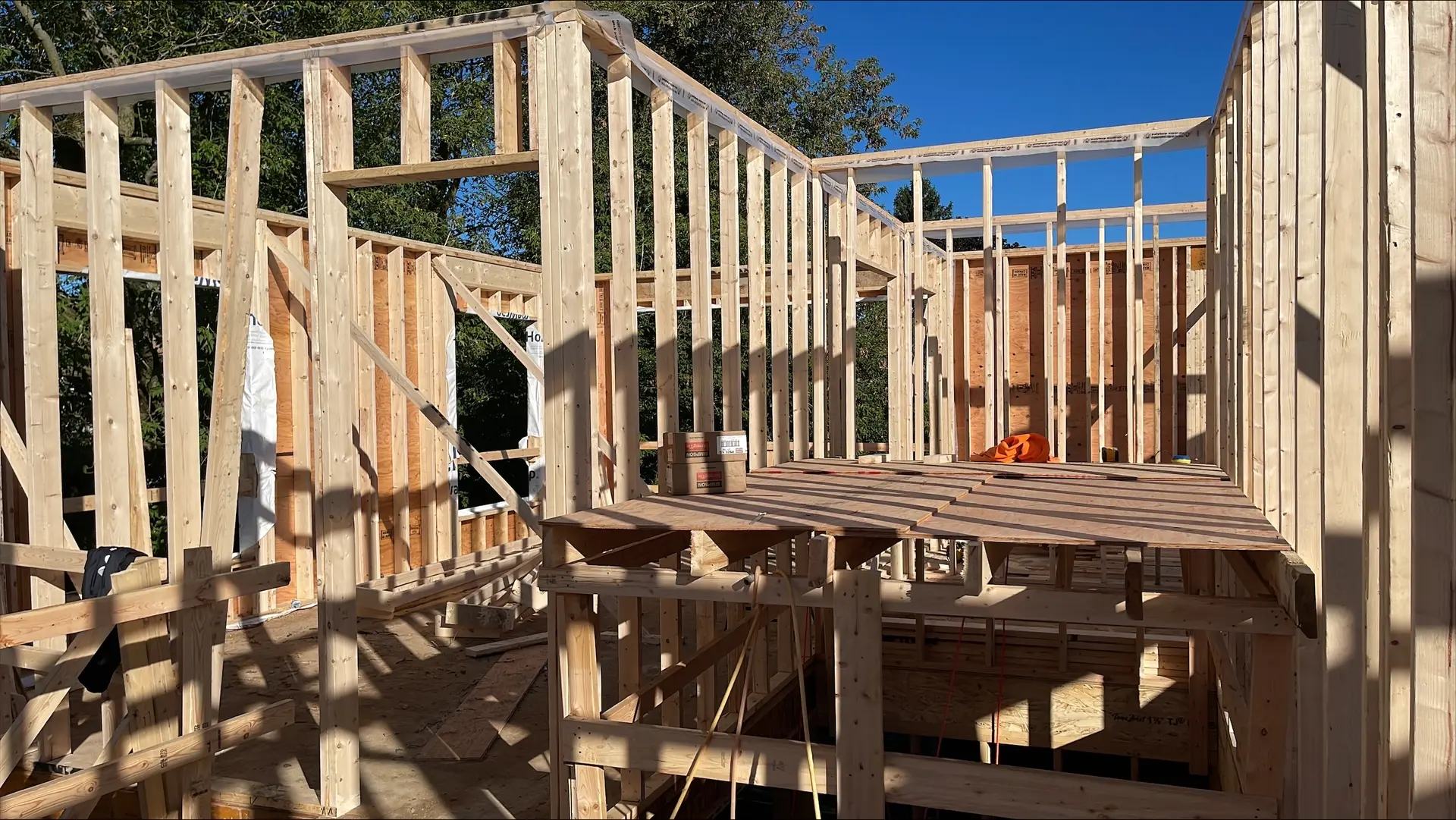
Type of foundation: Depending on soil conditions and the proximity of neighbouring structures, a traditional poured-concrete foundation may be risky or too complex to excavate. Contractors often propose high-performance alternatives, such as steel screw piles combined with an insulated slab-on-grade or raised wood-frame structures. These technologies reduce the impact on the land but require specialized engineering.
Energy efficiency requirements: To ensure comfort and limit energy costs, the project must include a high-performance building envelope, compliant mechanical ventilation, and a heating system adapted to Quebec’s climate, such as a heat pump designed for low temperatures or another solution approved by the project professionals.
To get an accurate and transparent picture based on the exact configuration of your property, the most effective approach is to compare quotes for your project from qualified general contractors actively serving your area.
Summary of the steps for a successful project
Roadmap to a Successful Laneway House Project in Montréal
Feasibility: Visit your borough’s urban planning department to validate the zoning rights for your lot.
Plans and design: Hire an architect or architectural technologist to prepare plans based on zoning, construction requirements, site constraints, and, where applicable, SPAIP criteria.
Approval: Submit your permit application to the borough. If the project is subject to a SPAIP, it must also be reviewed under that process and may be submitted to the CCU before the permit is issued.
Quotes: Shop for your builder by comparing at least three detailed quotes from contractors who hold a valid RBQ licence and the appropriate subclasses for the planned work.
Construction: Closely monitor the work, from careful laneway excavation to final Hydro-Québec and water service connections.
By investing intelligently and in compliance with regulations in a detached accessory dwelling unit, you can actively contribute to Montréal’s positive urban evolution while creating lasting value for your household.
Looking for something else?
Related articles
The latest industry news, interviews, technologies, and resources.
Cynthia Pigeon
•12 Jun 2026
Whether you are planning to build your dream home, complete a major residential addition, or carry out a major renovation to optimize your space, the design plan stage is the foundation of your project’s success. In Quebec, many homeowners, real estate investors, and self-builders ask the same question: How much should you budget for the services of a professional builder?
Cynthia Pigeon
•24 Jun 2026
As housing becomes increasingly scarce and the cost of living continues to rise in Quebec, many homeowners and real estate investors are turning to accessory dwelling units. Whether the goal is to welcome an aging parent, provide a space for a young adult, or generate additional rental income, this type of project can be especially strategic.

Amanda Harvey
•27 Jun 2024
Installing a brand-new toilet in your bathroom isn’t exactly a desirable project. Plumbing aside, this isn’t a job for the faint at heart and takes some time, effort and heavy lifting. However, if you’ve got a spirit for adventure and you’re feeling up for it, this is a DIY job that you can easily take on!
Cynthia Pigeon
•31 Jul 2026
In 2026, the cost of a major energy-efficient renovation to reach a net-zero standard in Canada typically ranges from $100,000 to $200,000 for an existing single-family home. This large-scale project aims to reduce a home’s energy consumption to the point where it produces as much energy as it uses annually. The investment generally includes high-performance insulation, triple-pane windows, a high-efficiency heat pump, and solar panel installation, often supported by federal and provincial incentives.
Editorial Team
•20 May 2025
What wine lover hasn’t dreamed of having their own wine cellar to keep fine bottles within easy reach? To make this dream a reality, several rules must be followed. But what are the key principles that should guide you through this project?