Shower or Bathtub: Making an Informed Decision
By Cynthia Pigeon
Updated on December 5, 2025

A common question among those renovating their bathroom is whether to opt for a bathtub or shower. While the initial focus is often on space constraints, there are other factors that come into play when making the final decision. So, what exactly are these factors? Keep reading to find out!
Get Your Project Started Today
Submit your details and receive three free quotes from trusted contractors.
Bathtub or Shower: Factors to Consider
1) Price of a shower

Source: Canva
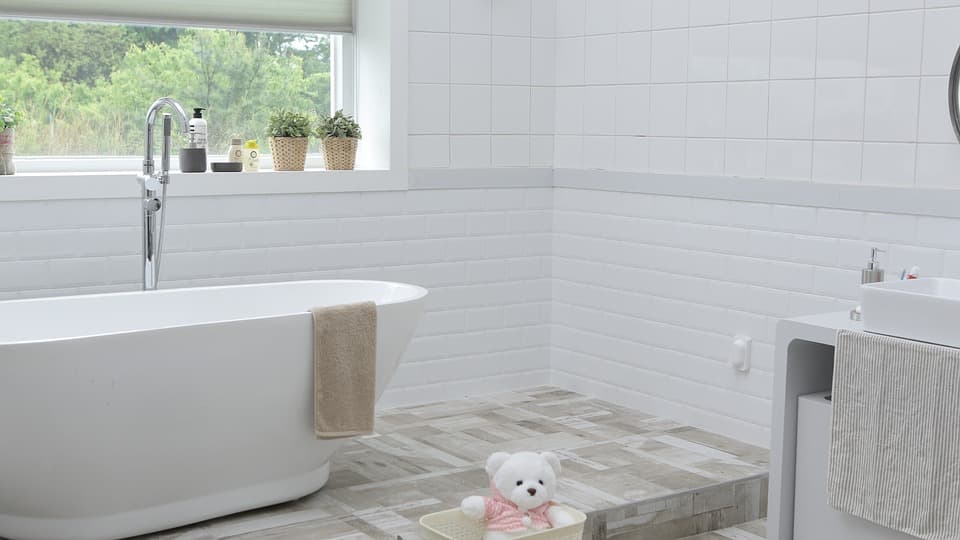
As with any renovation project, budget is always a huge concern, especially so when it comes to a bathroom remodelling project. Usually, the price of a bathtub is deemed to be greater than that of a shower. So, how much are we talking about, here? Well, for a shower, prices can vary anywhere from $300 to $4,800, which attests to the wide selection of models and characteristics available.
Would you prefer to settle for a standard shower stall, or would you rather have a modular, one-piece, or ceramic tile shower? Besides the desired features, keep in mind that the material choice also has a significant impact on the final price point.
What about a bathtub? When purchasing a bathtub, consider that in all likelihood, it’ll cost between $240 (for a basic enamelled steel model) and $6,000 (for a high-end acrylic model). Although the price point is roughly similar to that of a shower, note that a top-of-the-line bathtub is more expensive than an equally good shower.
2) Particular needs of various household members

Source: Canva
Most people are happy to just shower, and don't feel compelled to soak in a bath for any length of time. However, there are other considerations beyond the simple pleasures of taking a bath that may come into play. First off, any parent would know that bathing a young child is much simpler in a bath than in a shower, which is also true when it comes to washing a pet.
Naturally, we can't afford to overlook the specific needs of persons with impaired mobility, especially that of older generations. The majority of this demographic can find it difficult to stand for extended periods of time, which explains why an adapted bathtub may be the best option if you plan on hosting an older family member at your home in the near future.
However, stepping into a bathtub can be quite a gamble. Therefore, it's important to adapt the bathtub accordingly, meaning opting for a model with a lateral walk-in, for example. Is the space too restricted to install a bathtub? In this case, all's not lost! Provided the shower is big enough, you can always install a shower seat to allow anyone with insufficient energy to bathe while comfortably seated.
Looking for insight into the various shower models available on the market? Check out this article. (French only)
3) Added value

Source: Canva
Whether you decide to sell your property now or in a few years, when it comes time to pack up and leave, surely you’ll want a return on the money invested in your bathroom renovation project. To this end, installing a bathtub is a much wiser choice, assuming, of course, that your budget and bathroom dimensions allow for it.
4) What about green living?

Source: Canva
While it may not be the very first thing you think about when choosing whether to install a shower or a bathtub, it's nevertheless an important factor. Interestingly enough, the majority of a household's water consumption occurs in the bathroom (approximately 75%).
Thus, looking for ways to reduce water use in the bathroom will greatly improve your household’s overall water consumption. The question remains: which of these two uses less water, the tub or the shower? On average, a shower uses up to 50 litres of water, while a bathtub uses up to three times that amount, approximately 150 litres.
Additionally, note that water use from a shower can be reduced to 15 litres if you choose to install a low-flow showerhead. Also, for a bathtub, keep in mind that since it requires a large amount of water to fill up, you may have to purchase a bigger water heater to cope with the demand at hand.
Looking for ideas on the different shower sizes available to help you make up your mind? Check out our article: Showers: How to Choose the Right Size.
Looking for something else?
Related articles
The latest industry news, interviews, technologies, and resources.

Editorial Team
•08 Nov 2023
The idea of renovating your house can sometimes spring up at an unexpected moment. Next thing you know, you find yourself browsing the internet looking for inspiration on Pinterest. However, if you're renting your apartment, it could be difficult to start any renovation projects. The final decision will be up to your landlord if you need to make any major changes to your space.
Editorial Team
•08 Nov 2023
Small rooms in the home require ample planning in order to set the right tone. Lighting is an integral part of this process, as excellently designed and placed lighting and fixtures can help a space to really shine.
Editorial Team
•08 Nov 2023
Regardless of the scale or size of a home renovation project, before getting started, it’s common to ask yourself how much you’re actually capable of doing. Of course, you’re going to come with your own set of skills and previous renovation experience and thus, you’ll know how much you can do. But have you ever thought about the legal repercussions of renovation projects?

Editorial Team
•05 Jun 2026
Tiles are crafted with different materials. Having a clear understanding of said materials means choosing aesthetic and hard-wearing wall and floor coverings. Here are 6 of the most used types of tiles, whether indoors or outdoors.
Cynthia Pigeon
•11 May 2026
In 2026, the cost of residential renovation in Canada generally ranges from $10/sq. ft. for minor cosmetic updates to over $250/sq. ft. for major reconstruction projects. For a standard full-home renovation (including kitchen and bathroom), the average budget typically falls between $125 and $175 per square foot. These prices reflect recent increases in labour costs across provinces, as well as continued pressure on construction material prices nationwide.