Building a Rooftop Terrace in Canada: How Much Does It Cost?
By Léa Plourde-Archer
Updated on January 28, 2026
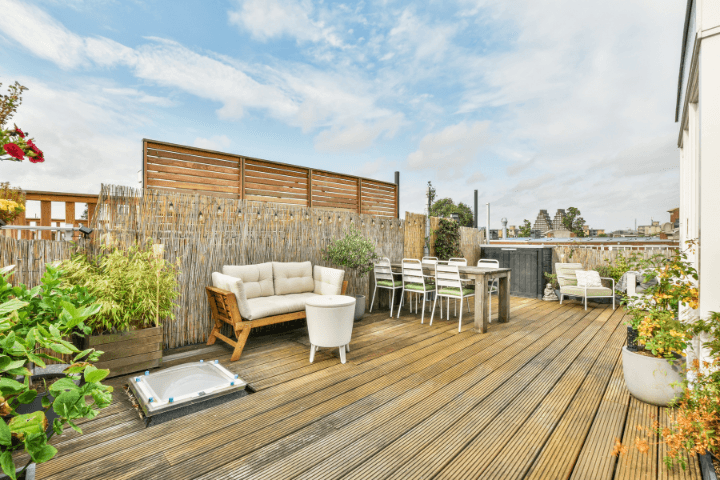
Rooftop terraces are becoming increasingly popular as a beautiful and functional addition to homes. Whether you’re in a bustling city or a quiet countryside, transforming your roof into a liveable outdoor space can elevate your property. But how much does it cost, and what steps should you take before starting?
For many, a rooftop terrace is a dream project, but turning that dream into reality requires careful planning. From understanding local building regulations to calculating your budget, there are plenty of factors to consider. To help, we’ve put together a breakdown of key aspects like materials, labour costs, and permits so you can get a better idea of the investment required.
Factors that affect the price of a rooftop terrace

Source: Canva
First things first: building a rooftop terrace is a major investment and exceedingly expensive. Converting your space into a terrace will run you anywhere between $15,000 and $40,000.
When it comes to breaking down these total costs, many factors go into the budget including the size of the terrace, materials, labour, overhead and so forth. Although initially a large investment, this project adds significant value to your home. Not only does it greatly affect the resale price, but it also adds to the quality of life of yourself and loved ones.
Materials for the rooftop terrace
As mentioned, several things will affect the total price of the renovation project, but the main one is the cost of materials. When it comes to choosing the correct material for your terrace, you’ll encounter different pricing options with some materials being extremely expensive but a necessary investment due to either the size, shape or climate you’re working within.
In other cases, cheaper materials can suffice for these same reasons. In each situation, you’ll have to determine which materials best suit your needs, your property and your current budget.
When choosing materials, start by asking yourself these questions: Would you prefer to pay less for something that isn’t as durable? Would you be ready to pay more for a type of material that weighs less? How do you feel about working with high-end materials? Determine these factors before beginning any construction can help you garner a better idea of how to structure the rest of your budget.
Lumber will offer you the cheapest option, and this includes the different types such as redwood, cedar and yellow pine. On the other hand, you may choose to use composite or vinyl. These materials last much longer than wood and generally do better in outdoor spaces. However, they are often double the cost.
When choosing materials, it’s wise to get costs upfront and make sure overhead has been considered. In almost any construction project, the possibility of needing more material due to an oversight or misstep is more than possible, so don’t factor it out.
Looking to learn more about the different materials that can be used to build a rooftop terrace? Check out our article “Which building materials should be used for a deck?”.
Labour costs and factors
Labour costs are another huge factor when it comes to this renovation project. Elevated prices should be considered for rooftop terrace projects, as you’ll have to hire workers from many different trades: rooftop specialists, masons, plumbers, tile setters and more.
Again, who you hire will be specific to your roof, the materials you choose and the features you’re hoping to include. Also worth mentioning is that we’re talking about working on a roof, everything must be done following the highest quality standard.
If part of the project isn't well done, the flaws may end up affecting the structure and the inside of the house. Since this project should be taken seriously, we recommend hiring a general contractor who will be there to oversee and coordinate from start to finish. Of course, hiring a contractor will be an extra price factor but it can assure that a quality job is complete.
Before you start building the rooftop terrace

Source: Canva
Many things need to be considered before you can take any concrete steps toward building the rooftop terrace of your dreams. First of all, be sure to contact your local city council or do ample research into the building rules that govern your municipality. Every city has its specific laws and regulations for rooftop terraces.
For example, in Montreal, your plans will need to be approved by the city before a transformation permit will be offered. Furthermore, if you live in a row house or a semi-detached home, you’ll have to get your neighbours to agree to the project.
If you'd like more information on the exact steps of this project, check out our article “How to convert your roof into a rooftop terrace”
FAQ
Typically, how big are roof decks (per square foot)?
The avergage rooftop deck is between 150 to 300 square feet. Depending on the size of your home and needs, the deck can get much bigger than that.
Looking for something else?
Related articles
The latest industry news, interviews, technologies, and resources.

Cynthia Pigeon
•08 Nov 2023
When it comes to re-roofing, your main concerns are likely to be preventing future water infiltration and choosing a durable coating.
Editorial Team
•08 Apr 2026
In 2026, the average cost to build a deck or patio in Canada typically ranges from $35 to $130 per square foot, installation included, with higher-end prices usually tied to premium materials such as high-end composite, aluminum, and glass railing systems. For a standard 12 x 12-foot deck (144 sq. ft.), homeowners can generally expect a budget starting at around $5,500 for pressure-treated wood and climbing to $18,000 or more for a premium composite build with glass railings and helical piles. Material choice and foundation type remain two of the biggest factors affecting your final quote.
Editorial Team
•02 Jun 2025
Taking on a home renovation is never easy. From the get-go, we’re only thinking about the result. Just picture that beautiful new tile floor, those gorgeous new windows or a full-on kitchen remodel, complete with green-friendly appliances.

Editorial Team
•19 Mar 2026
Across Canada, we long for warm weather. Balmy months mean a chance to enjoy the great outdoors, and if you’re lucky, that also means enjoying a glass of wine on the comfort of your balcony. If your home has a balcony, you already know that keeping it in shape takes a little bit of effort and elbow grease.

Editorial Team
•02 Dec 2023
Have you ever thought about hiring labourers from foreign countries to offset the labour shortage, acquire new talent, or diversify your team? If so, it could be a great entrepreneurial strategy.