
If you’re walking from one room to another and notice a slant in your floor that falls to the left or right, don’t panic. Although feeling a dip or a sag in your floor might initially bring anxiety, don’t get too bent out of shape about it. Chances are an uneven floor is pointing to a deeper problem, yet although there might not be a quick fix or solution, there are still some methods you can take to deal with the issue.
In some cases, you might want to get in touch with a flooring specialist, in others, you might need to call a contractor who knows a thing or two about foundations. But before contacting anyone, read on for some reasons why it might be uneven as well as a few common solutions.
How to fix an uneven floor

source: unsplash
What it means when your floor slopes
If you’ve ever walked through a fairly old home, chances are you’ve come into contact with a sloping floor. Unfortunately, in older homes, this is a fairly common occurrence. In most cases, the floor may slope a slight inch or two leaving the rest of it fairly even. For rooms where there is a slope in the floor, the issue might be with the house foundation. Issues with your home’s foundation will usually require the help of a foundational expert or a contractor.
Here’s a more detailed explanation of the reason your floor is sloping:
Foundation footer has subsided: Since your floor is generally on an even keel, the fact that it’s slopping in one place likely points to the fact that the foundation has subsided or sunk. Foundational issues are tricky, but there are plenty of companies and entrepreneurs who work to directly combat this problem. Essentially, they will jack up the portion of the house and place new footers underneath. Do bear in mind that this project is expensive, and might cost quite a lot upfront.
Rotted sill: If you don’t already know what the sill is, it’s the wooden part of the house that rests directly on the foundation. The sill sometimes deteriorates or rots due to a buildup of water or an insect infestation such as carpenter ants. You may have some difficulty finding a specialist for this project, as it’s uncommon for those who deal with foundation repairs to deal with the sill of the house. If possible, it may be best to look for a general contractor who has some experience in the field of sills.
If you can’t find someone who has worked with sills previously, find a general contractor that has house jacks or one who can rent them. Do bear in mind that jacking up a house doesn’t happen in one day and is a process, sometimes taking weeks to avoid the drywall, plaster or other structural elements from breaking or cracking.
What it means when your floor sags, dips or hump

source: pixabay
Not to be mistaken for a sloping floor, a dip, sag or hump in a floor is a different issue altogether. How these dips, sags, and humps differ is in the way they appear in your floor. Your floor will be mostly level overall but you may find an area, large or small, accompanied by several dips and sags. In this case, the foundation is not the culprit. Instead, it’s probably an issue with the underflooring including the joists or the beams. These likely require shoring, and we’ll offer some solutions below.
Bridging: This tactic involves laying a new floor over the already existing top-side of the floor. This job usually involves wood, as a plywood subfloor will offer a bridge to any dips or gaps in the existent flooring. Alongside this, you will need levelling compound. Make sure that the floor joists can handle the weight of an addition of a plywood subfloor. It’s recommended that you add a few adjustable joists to strengthen the joists which will help deal with the excess weight.
Sistering: If you’ve noticed saggy parts of the floor, they might just need a little bit of help. This tactic will only be possible if you have access to the basement or space below your saggy flooring. You’ll need to jack up these saggy joists and sister them so that they will straighten. In a nutshell, sistering is the process of joining two boards with bolts and nails, this way the new board is able to support the weak one.
Adding adjustable steel columns: Another quick solution to a sag or dip in your floor is using adjustable columns to prop up the weaker sections. Again, this trick will only work if you have access to the basement of your home, as the steel column will need to be propped up and secured by way of your basement’s floor. If this is possible, secure the top of the column to a floor joist and this will help to solve the problem.
Grinding: This method is only necessary when there a large hump in the floor. This can sometimes happen if you’ve adopted concrete as a flooring material. It also happens in hardwood flooring but is less common. If you find a hump in any type of floor, your best bet is to grind it down. With wood, you can use a sander. With concrete, you’ll need something a bit more heavy duty. We’d recommend consulting a professional depending on how severe of a job.
Get 3 renovation quotes for your flooring renovation project
RenoQuotes.com will put you in contact with 3 reliable contractors for your floor covering renovation project. Fill in the form on our homepage (it only takes a few minutes), and you will receive quotes from trusted professionals.
Dial 1-844 828-1588 to speak with one of our customer service representatives
Looking for something else?
Related articles
The latest industry news, interviews, technologies, and resources.
Editorial Team
•16 Nov 2023
The bedroom, a peaceful, rest and relaxation haven, is, for all intents and purposes, an area that’s particularly cherished. And, the feature that obviously conjures relaxation the most is, without a doubt the bed, which one slumps onto after a workday.
Cynthia Pigeon
•09 Sep 2026
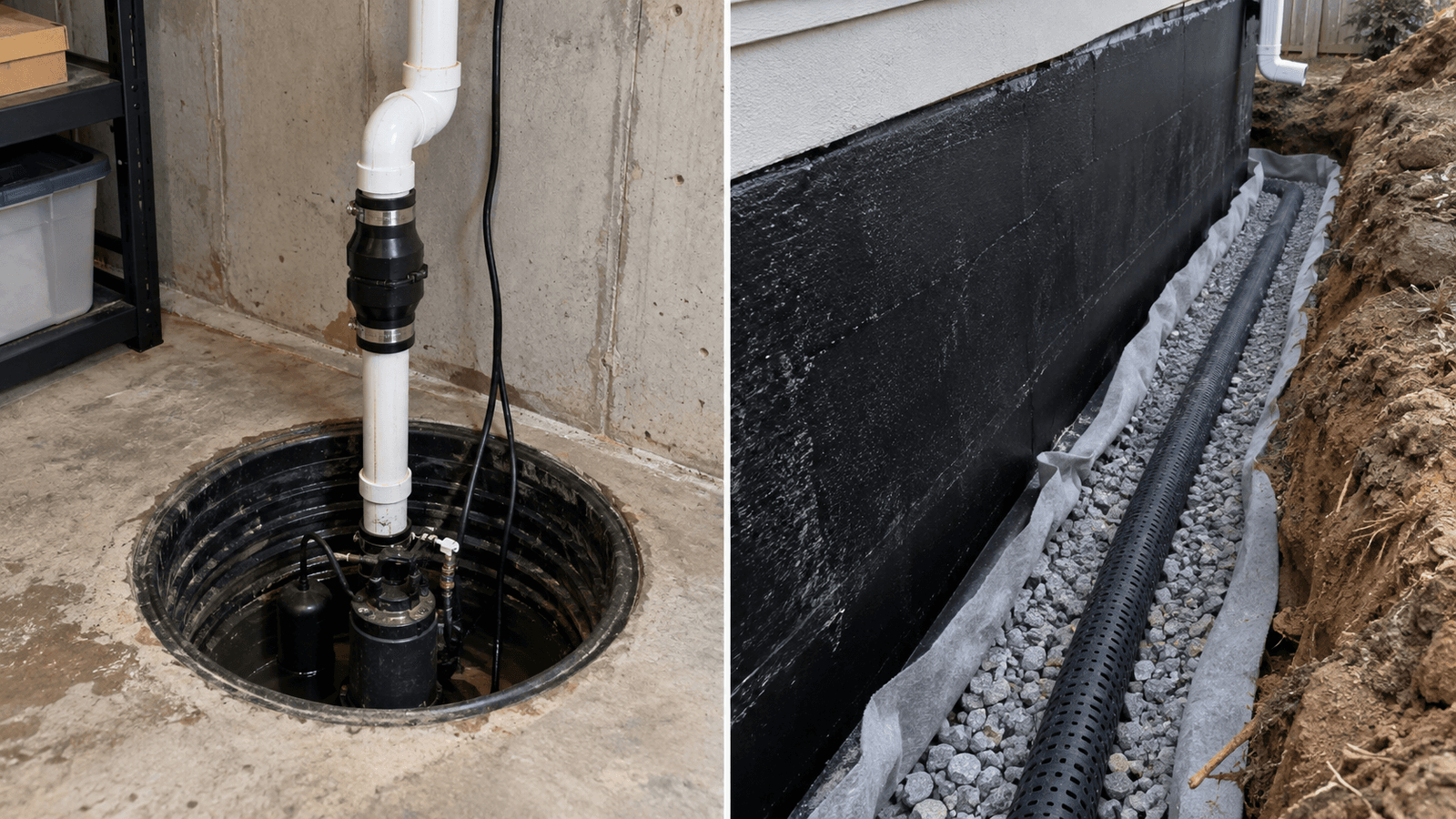
In Quebec, basement water infiltration is the most common type of residential insurance claim. According to the Insurance Bureau of Canada, water damage accounted for 68% of home insurance claims paid in Quebec in 2024. Harsh winters, major spring thaws, and heavy summer rainfall place considerable hydrostatic pressure on the below-grade portions of our homes.
Editorial Team
•11 Nov 2024
Although wood as a material is very durable, it still requires tender love and care to maintain its condition. For this reason, if you have a large amount of wood in your home, it would be important for you to understand how to care for it. More specifically, if the structural elements of your home are made from wood, then it will need regular upkeep in order to stay in shape.
Editorial Team
•08 Nov 2023
Wood siding isn't only a matter of aesthetics. Even though it's been at the forefront of many myths, it still has a lot of advantages there are yet to be known by the general public. Natural wood siding is available in different essences (cedar, spruce, pine, etc.), and it will give a unique touch to your house, chalet or store.
Editorial Team
•21 Jul 2025
The kitchen is a living space where people enjoy spending time with family. This space should be warm, practical, and comfortable. However, it may sometimes need a little refresh to stay current. You might decide to renovate your kitchen to gain more space for meal prep, increase storage, or simply make the space more ergonomic.