
Not only is cleaning your fireplace essential to its proper functionality, but it also contributes to its safe use.
Evidently, one has to take into account the various specificities of the different types of fireplaces. So, here’s a detailed overview of the subject matter!
How to Clean a Wood-Burning Fireplace
Source: Canva
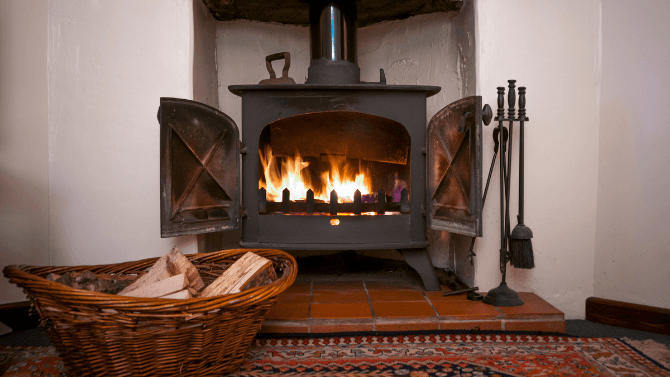
For those with a wood-burning fireplace, note that certain precautionary measures must be met to avoid any risks of fire. Although it’s best to get in touch with a certified chimney sweeper to clean out your chimney during fall, you can also DIY it!
First and foremost, remove any and all combustible deposits, such as creosote. This geologic deposit is most often found along the lining of the conduits and in the chimney. Said substance has a black, crusty, and crumbly texture. Should there be an important build-up, everything can go up in flames.
For educative purposes only: creosote is a substance that’s formed when smoke attempts to seep out through a chimney, but can’t due to cold air. Therefore, it accumulates along the lining of the vent. When the accumulation becomes too significant, that’s the telltale sign that your chimney isn’t sealed or is in a weakened state.
On this matter, note that there are various maintenance methods, some of which require mixing natural products (cream of tartar, vinegar and baking soda), or simply using a product specifically made for this purpose. Inquire with professionals to get more information on that subject.
Does your fireplace need to be renovated?
Fill out our form to receive quotes from certified contractors!
Next, regularly remove the ashes and store them in a metallic container outside the home. Ensure that nothing of combustible nature is already inside the container to avoid lighting a fire outside the house.
Then, you can safely light a fire with loose newspapers or use a fire starter kit. Avoid using tree bark, as it creates black smoke. Dry and raw wood is the best and simplest way to light a fire. Furthermore, it’ll reduce toxic gas emissions in your home.
Also, take care of spotting and repairing any leaks. Should you notice that there’s a layer of soot that is slowly forming on the chimney’s glass door, there’s without a doubt a smoke leak coming from the door. You’ll also need to check the pressure of the screws and the door’s sealing joints.
How to Clean an Electric Fireplace
Source: Canva
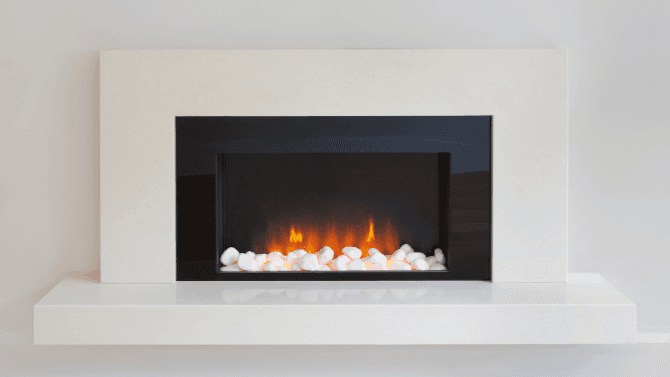
Since this type of fireplace is powered by electricity, it has the distinct advantage of not generating ashes. So, there’s no need to have a chimney, exhaust solutions, or vent installed.
Now, that is why the electric fireplace is said to require little maintenance, which pleases the masses! It’s actually quite interesting to know that this type of fireplace has a built-in thermostat, and that its heating capacity is equal to that of a baseboard heating system.
Gas Fireplace General Maintenance
The gas fireplace also requires little maintenance. When it comes down to it, all you really need to do is change the propane tank. Although it’s also rather essential to clean out the burners from time to time, as well as the door’s glazing. Check whether your vent or the conduit that directs the combustible gas outside is in good, working condition.
Pellet Stove Maintenance
Although the pellet stove requires less maintenance than, say, a wood-burning fireplace, there’s nevertheless still a decent amount of it required.
First off, note that we recommend cleaning your burn pot daily to avoid an ash build-up, which can eventually clog the holes from which combustible air emanates. To do so, get ahold of a HEPA-filtered vacuum cleaner and proceed only once the ashes have completely cooled off. Should the ashes have embedded themselves, use a wire brush to clean them off.
Then, clean the glazing (once it has also cooled off) by using a soft, damp rag, or a product specifically designed for this purpose. Should you choose the latter, apply the product on the rag, and not on the glazing directly. Usually, doing so every couple of days is necessary.
In terms of weekly tasks that can be carried out, the first would be to empty out the ashtray. Secondly, it’s also necessary to remove all accumulated residue from the fireplace’s lining using a vacuum with a brush with soft bristles.
Now, let’s talk about cleaning the screen or any other exterior features. These must be cleaned with a soft, dampened rag every fortnight. If the siding is made of ceramic, you must absolutely wait for the surface to cool off before proceeding with any cleaning steps, and use a product that was specifically designed to remove any stubborn stains.
Lastly, take care to vacuum any residue that might be found in the pellet firebox once a month.
Are you thinking about purchasing a pellet stove? Check out our article on the subject matter! (French only)
Cleaning an Ethanol Fireplace
This last model is rather tricky to clean — it does require special attention. The burners need to be cleaned with water and soap. You can also use a rag and a bit of ethanol to clean the surfaces. Should you disregard maintenance in general, note that a bad smell can ensue.
Want to know more about the costs associated with the many heating apparatuses? Check out our article: Heating Systems: Prices in 2022.
Sotheary Chan
Updated French version: Karine Dutemple
Get 3 quotes for your fireplace maintenance project
RenoQuotes.com can help you get quotes for your fireplace maintenance project. If you submit your project to us, we’ll put you in contact with top-rated contractors. Fill in the form on the homepage (it only takes a few minutes), and you will get estimates from trusted professionals.
Dial 1-844 828-1588 to speak with one of our customer service representatives.
Looking for something else?
Related articles
The latest industry news, interviews, technologies, and resources.
Editorial Team
•08 Nov 2023
Owning a rental apartment is not without challenges to overcome, as it comes with a number of obligations and responsibilities, which aren’t easy to maintain.

Cynthia Pigeon
•25 Aug 2026
Renovating a kitchen, finishing a basement, or replacing a roof can represent a major financial investment. When reviewing a quote, one question often plagues homeowners across Canada: How much should you pay upfront?
Cynthia Pigeon
•29 Sep 2026
In 2026, the total cost to install CanExel siding in Quebec generally ranges from $17 to $23 per square foot, including labour and materials. For the material alone, the price can vary significantly depending on the profile, colour, retailer, and required accessories. It is therefore important to check in-store prices when planning your project. This engineered wood siding remains one of the best value options for withstanding Quebec’s harsh freeze-thaw cycles.
Editorial Team
•02 Jul 2026
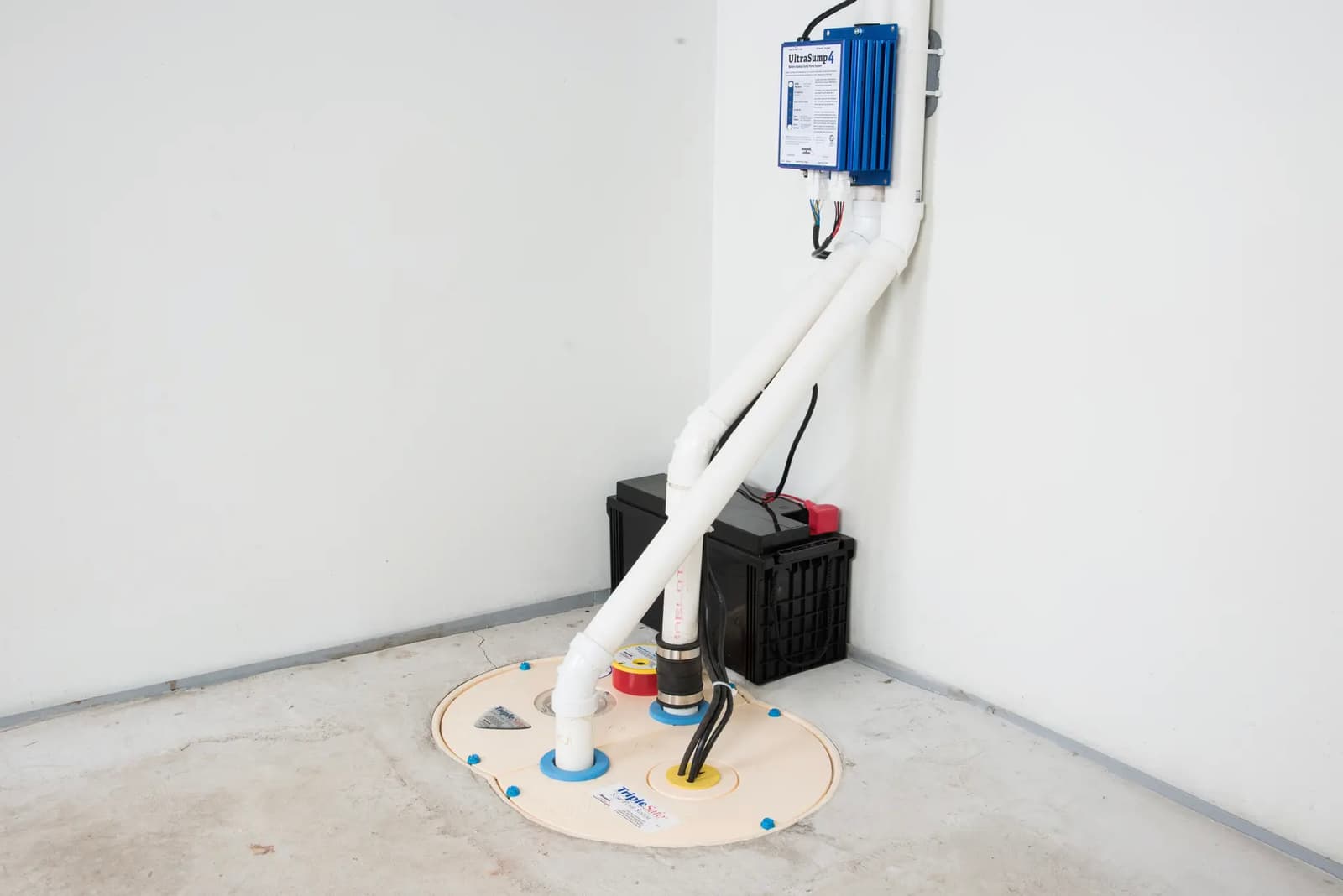
A sump pump is one of the most important flood-prevention devices a Canadian homeowner can have, especially in a home with a basement, crawl space, high water table, or history of water infiltration. Its job is simple: collect excess water in a sump basin and pump it away from the foundation before it can flood the lower level of the house.
Léa Plourde-Archer
•17 Feb 2025
Are you planning on renovating your kitchen? This process can be long and complicated, as it involves several steps as well as a number of factors that can affect the price, the duration of the work and the durability of the materials.