How to Choose Wood Flooring for Humid Areas
By Cynthia Pigeon
Updated on November 8, 2023

Flooring options must adhere to the environment in which they are installed. Since wood typically has a low moisture threshold, wood and moisture are a notoriously bad fit. That being said, there are hardwood flooring options, as well as finishes, that are suitable for even the most humid of areas.
Are hardwood floors and humidity compatible?
Understanding the Relationship Between Humidity and Hardwood Flooring
As you may already know, hardwood is a reliable, natural and sustainable material, but it also reacts strongly to its environment. Although it has a unique composition, its durability depends on the temperature and humidity in a room.
The humidity level in the air is a concern, especially during the winter months, as temperatures in the wintertime require indoor living spaces to be artificially heated, which in turn can affect humidity levels.
Depending on the type of floor, heating solutions differ and have varying effects. Hardwood floors naturally retain between 6 to 8% humidity, but in a room where the relative humidity is too low (usually less than 30%), the hardwood will dry out, causing it to shrink. This accounts for noticeable gaps between the slats.
On the other hand, too much relative humidity leads to buckling floorboards, which causes warping in the long run. However, in this case, the damage is more likely to be caused by water than by the humidity level of a room.
Buckling hardwood floors are a direct result of moisture transfer from the ground seeping into your home, which occurs almost exclusively in basements.
Although not recommended, installing hardwood floors in damp or humid rooms is an option, provided that you take the necessary precautions.
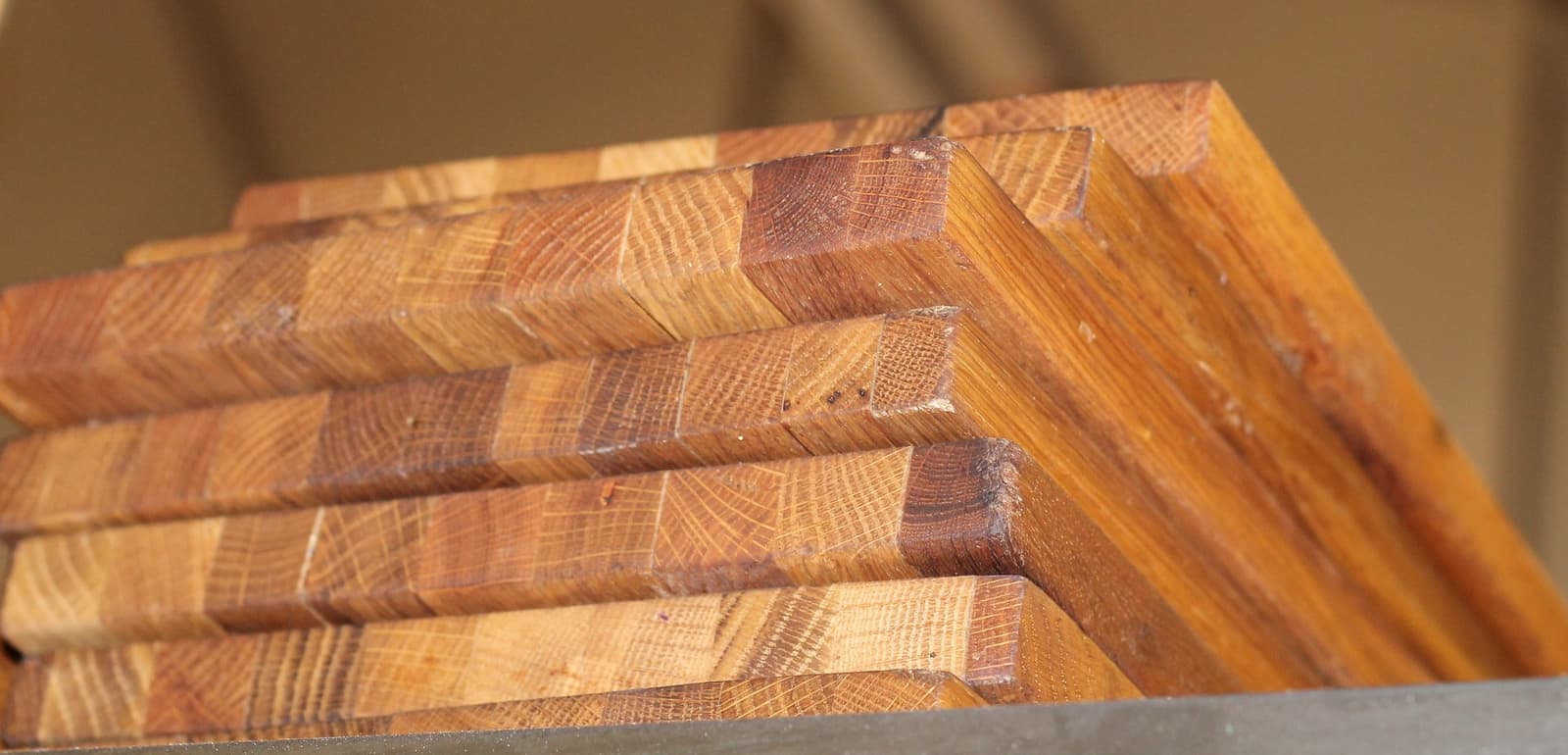
Installing Hardwood Flooring in a Humid Space
Go with torrefied wood
Torrefied hardwood floors will resist considerably well to changes in humidity. Torrefaction is a process by which wood is dried to reduce the risk of rotting in the long run. Torrefied hardwood floors are the perfect choice in humid areas as they will resist considerably well to changes in humidity. White ash, oak or maple are the most commonly used woods in terms of torrefaction. However, ensuring that the ground on which it will be installed is not permanently damp is a must! If needed, have a vapour barrier installed.
Opt for glue down hardwood flooring
There are two installation methods: nailed/stapled or glued to a subfloor. In humid areas, glued down is preferable, as it reduces the risk of gaps between the wood slats, even though the slats will move naturally with time.
Protect your floors
Torrefied wood is definitely the most efficient solution when installing hardwood flooring in a humid space. However, it does have its limitations—it bleaches quite rapidly when exposed to sunlight. When torrefied, wood cells close up making the material more resistant to moisture and mildew, among other things. However, doing so means having to sand the floorboards before applying a protective coating. With this type of wood, it is strongly recommended to proceed with an oil-based coating, which will act as a barrier against humidity.
Choosing an exotic wood
Exotic wood is described as a type of wood that does not naturally grow in one place and is imported from another country, as opposed to the native wood species we are familiar with such as pine and maple. Some exotic woods such as teak, jatoba, or ipe are rot-proof, which means that over time they will not rot nor decay.
Should you want more information regarding hardwood floors, check out our article How to Sand, Repair, and Varnish Your Hardwood Floor.
In a nutshell
Hardwood does not necessarily have to be excluded from all humid areas: you merely have to pay special attention to the wood selection and preferably use a glued installation with an oil-based finish for it to withstand the environment in which it is installed.
Factor in exotic woods or torrefied woods, both of which are proven to withstand moisture.
Taking such precautions does not mean that you should not monitor the humidity level in areas with hardwood flooring from time to time. Steadily, high humidity levels can be potentially harmful to your personal health as it leads to the growth of dust mites, fungi and other airborne moulds.
Are you looking for additional information on sustainable flooring options? Check out our article What’s the Best Type of Wood for Flooring?
Are you looking to get a cost estimate for your flooring project? Try out our cost calculator!
Get 3 renovation quotes for your flooring project
RenoQuotes.com can help you get quotes for your flooring project. By submitting your project, we’ll put you in contact with top-rated contractors. Fill in the form on the homepage (it only takes a few minutes), and you will get estimates from trusted professionals.
Dial 1-844 828-1588 to speak with one of our customer service representatives.
Looking for something else?
Related articles
The latest industry news, interviews, technologies, and resources.

Léa Plourde-Archer
•08 Nov 2023
Installing a hardwood floor can have a huge impact on your house: it can transform a room and increase the value of the building. Timeless and durable, hardwood floors are also popular because they are known for their warmth and beauty.
Karine Dutemple
•08 Nov 2023
Appreciated for its incomparable beauty and elegance, white marble is a material that is suitable both for bathrooms and kitchens, used as a surface on a kitchen island, as a countertop or as flooring.
Editorial Team
•11 Mar 2026
A pool heat pump is economical and particularly effective if installed properly.

Cynthia Pigeon
•18 Aug 2026
Starting a residential renovation project represents a major financial and personal investment. Whether you are remodelling a kitchen, finishing a basement, or replacing a roof to withstand harsh Canadian winters, the work should be completed according to accepted industry standards. Unfortunately, some projects can turn into nightmares: unfinished work, job abandonment, structural errors, or unjustified delays.
Cynthia Pigeon
•08 Nov 2023
Pergola. This word, with a slight Italian intonation, is rather reminiscent of bright, sunny summer days, no? The pergola is actually the perfect in-between betwixt an exterior shade and a sunroom. It’s the ideal space to lay out whilst still being protected from the sun or adverse weather conditions.