How Much Does a Concrete Kitchen Countertop Cost in Quebec?
By Cynthia Pigeon
Updated on July 8, 2026
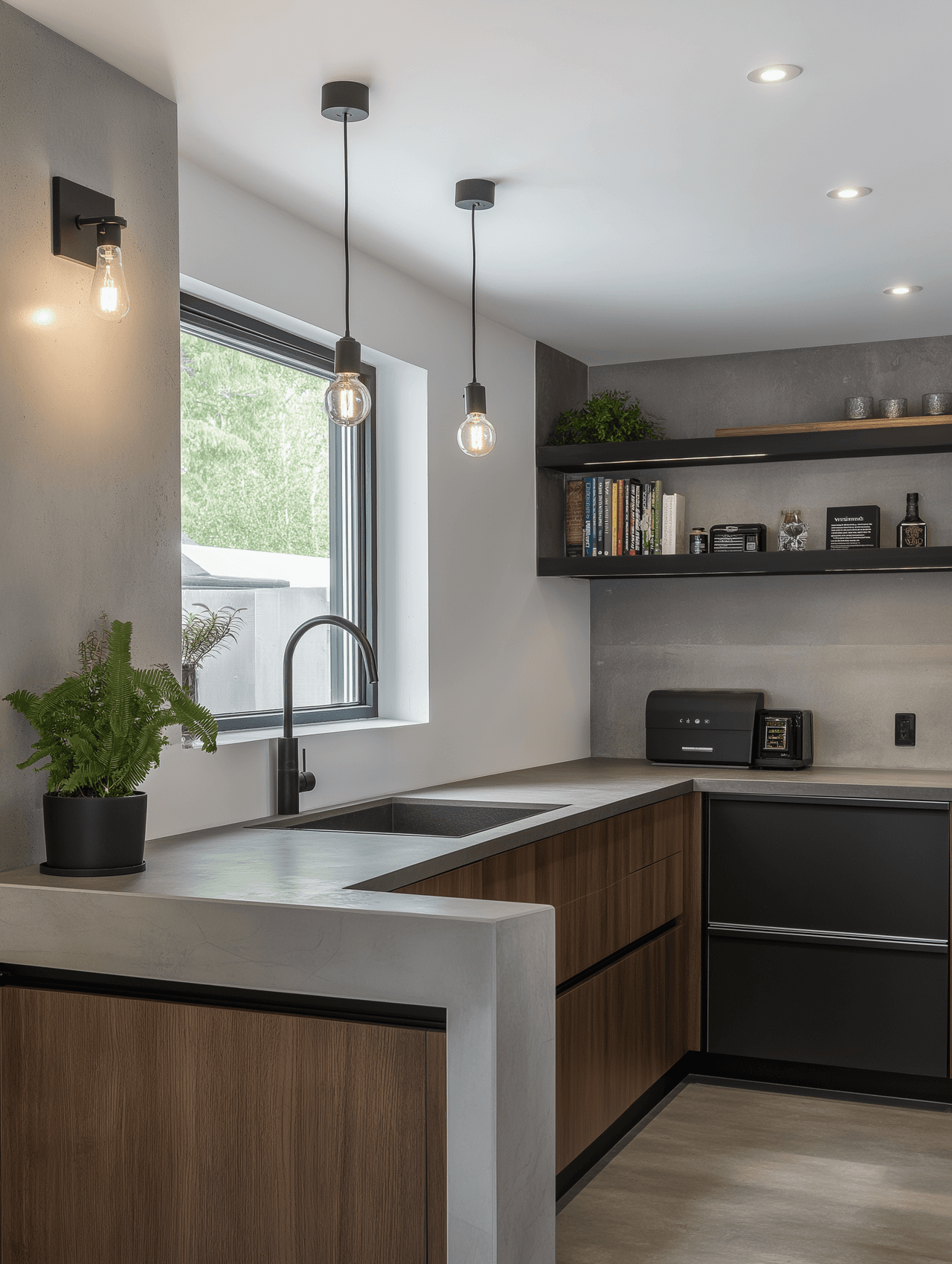
As part of a high-end kitchen renovation, the choice of materials defines not only the architectural style of your space but also the long-term value of your property. While traditional surfaces such as laminate or ceramic are increasingly giving way to noble materials, poured concrete has become a preferred choice among designers and bold homeowners in Quebec. Valued for its mineral look, raw appearance, and sculptural malleability, it makes it possible to create unique pieces that cannot be replicated with natural quarry stone.
However, planning a project with this material requires a clear understanding of its real pricing structure. Contrary to the common belief that concrete is an inexpensive material used for sidewalks or foundations, architectural concrete intended for residential use requires highly specialized expertise. For a custom concrete kitchen countertop made by a Quebec manufacturer, you should expect a budget ranging from $100 to $200 CAD per square foot, installation included.
For a standard-size residential kitchen in the Montréal area, which generally has about 45 square feet of countertop surface, the total investment will therefore range from $4,500 to $9,000 CAD. This places concrete directly in the category of premium materials. This cost reflects the time required to build workshop moulds, pour the material with precision, control the curing process, and complete meticulous hand-polishing work.
Price per Square Foot of a Concrete Countertop in 2026
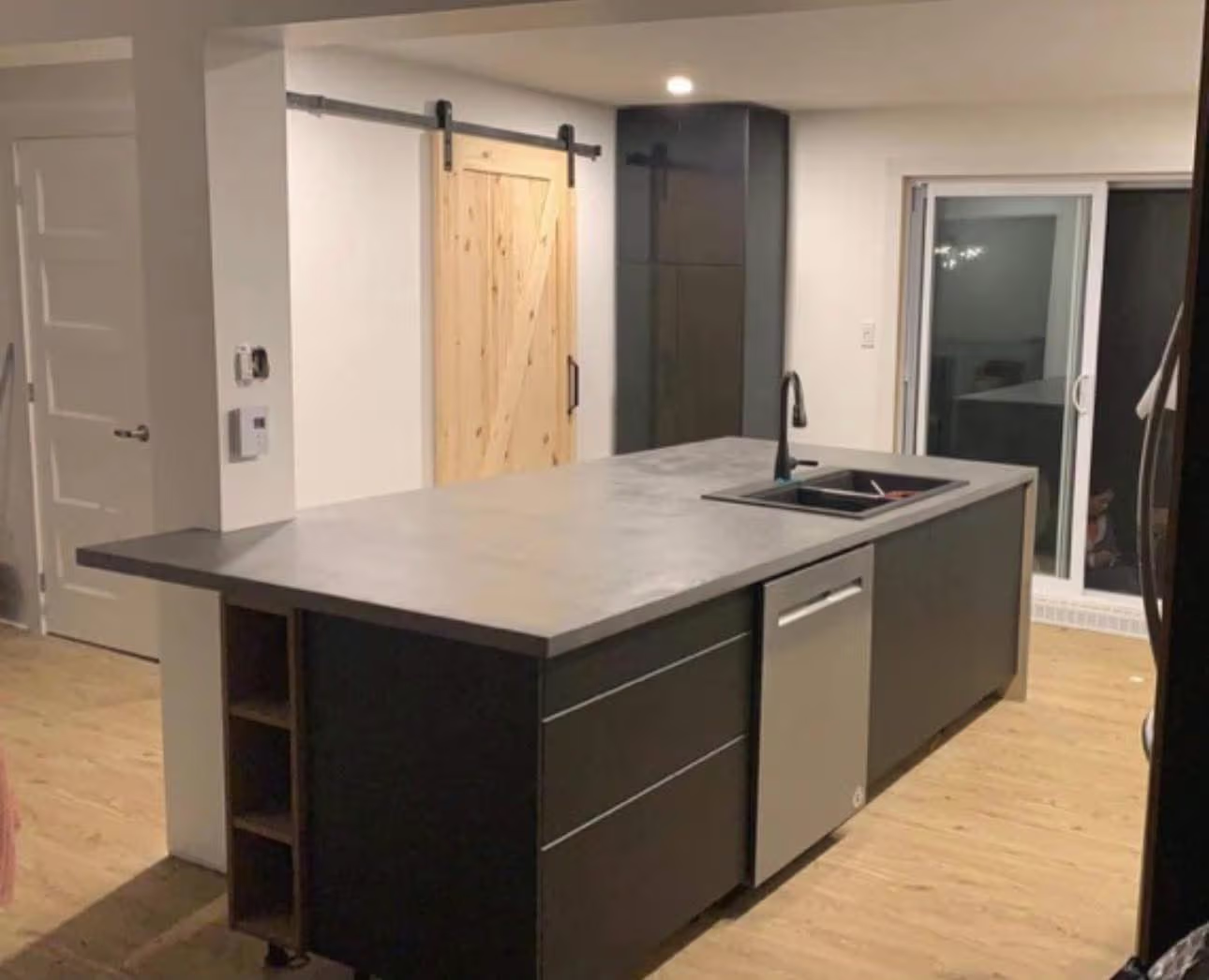
Source: Construction FSM inc.
In 2026, Quebec’s home renovation market shows clear maturity when it comes to the use of interior concrete. Techniques have evolved, particularly through the use of ultra-high-performance concrete (UHPC) reinforced with glass fibres, which makes it possible to reduce overall thickness while maximizing structural resistance.
Base pricing generally falls into three main configurations on the market:
Standard thickness, 1.5 inches: Expect to pay between $100 and $130 CAD per square foot. This is the classic thickness that suits most contemporary kitchen cabinets without requiring major reinforcements.
Massive thickness, 2 inches and more: Plan for between $130 and $170 CAD per square foot. This option creates a strong visual impact, ideal for a monolithic-style island or an open-concept kitchen.
Complex designs and architectural pieces: Prices rise to between $170 and $200+ CAD per square foot. This category includes countertops with waterfall edges, customized surface textures, or non-standard geometric configurations.
One crucial element not to forget when planning your renovation budget is government taxes. Prices provided by manufacturers and professional estimators are always listed before taxes. You must add the goods and services tax (GST of 5%) as well as the Quebec sales tax (QST of 9.975%). For example, for a countertop project billed at $6,000 CAD, applicable taxes will add $898.50 CAD, bringing the final investment to $6,898.50 CAD. Make sure to include this tax reality to avoid any surprise at the end of the project.
Factors That Affect Manufacturing Costs
The price per square foot is never fixed because every architectural concrete project is a custom-made commission. Several technical variables in the workshop directly influence the number of labour hours and the quantity of raw materials required.
First, mould complexity represents the largest share of manufacturing costs. Since concrete is poured in a liquid state, every asymmetrical angle, every cooktop cutout, and every plumbing opening requires the creation of wood or silicone formwork with millimetre-level precision. If your kitchen in Montréal is located in an older triplex in the Plateau or Rosemont, where walls are rarely perfectly square, the contractor will need to spend many hours adapting the mould to fit the irregularities of the room. Integrating a sink directly into the body of the countertop or adding a grooved drainboard also requires complex formwork, which increases the final cost.
Second, aggregates and colour pigments affect the cost of inputs. Traditional grey concrete is the most affordable, but if you are looking for a pure white finish, the manufacturer will need to use high-quality white Portland cement, which is significantly more expensive. In addition, the insertion of decorative aggregates, such as quartz chips, recycled mirror fragments, semi-precious stones, or pieces of local marble, will change the material cost.
Finally, the surface treatment and concrete sealer play a decisive role. A trowelled finish requires excellent craftsmanship, while a diamond-polished finish requires long wet-sanding sessions to expose the aggregates evenly. Once the surface is prepared, applying a professional-grade concrete sealer, either penetrating or film-forming and based on polyurethane or epoxy, is essential. This product protects the surface against ambient moisture and common stains in Quebec kitchens, such as cranberry juice, red wine, or maple syrup.
Installation Cost: Why Hire a Certified Professional?
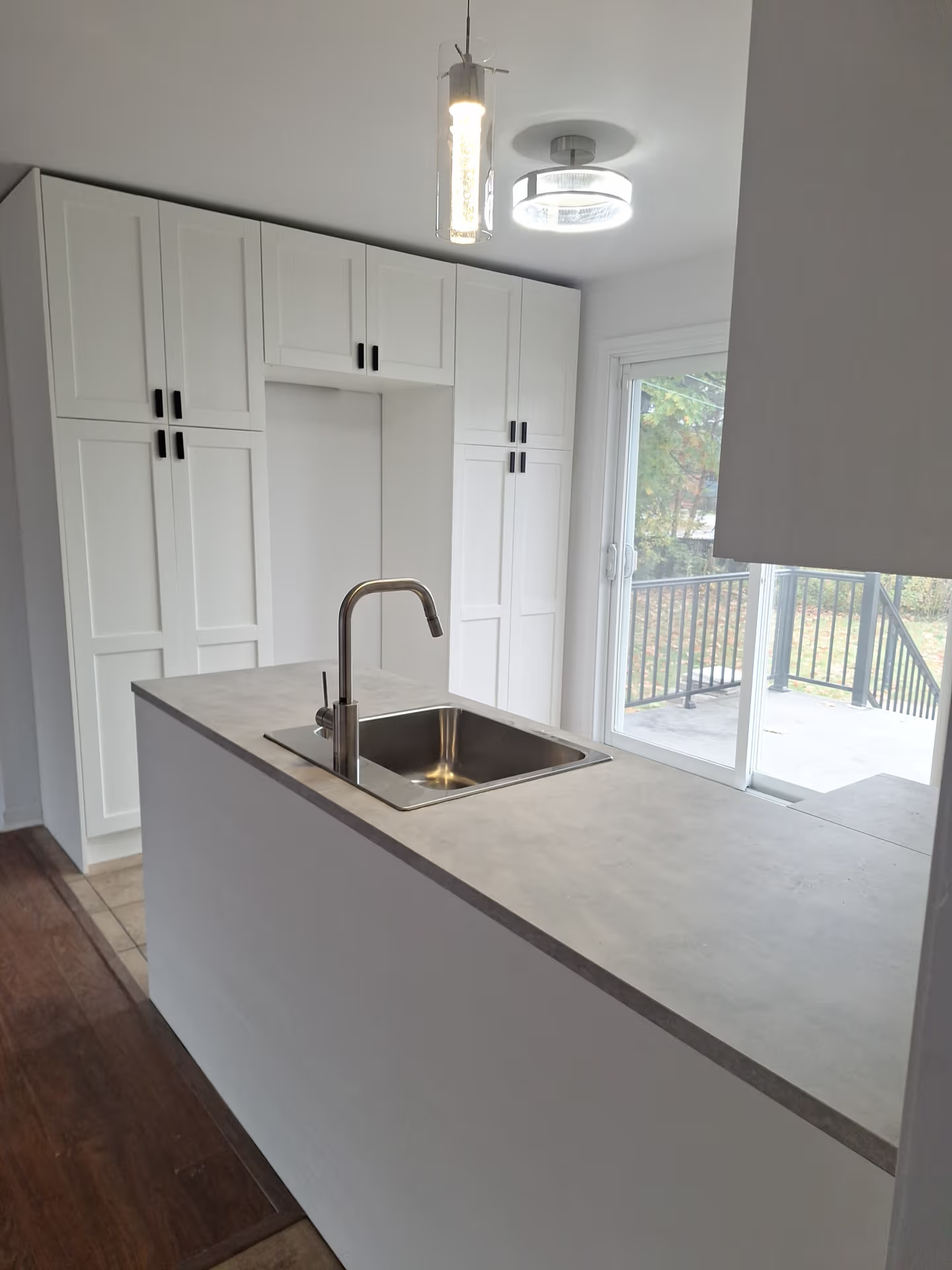
Source: Bastaco inc.
Installing a concrete countertop should not be improvised and should never be entrusted to an amateur handyman. The first argument in favour of professional installation is the exceptional weight of the material. A standard concrete slab with a thickness of 2 inches weighs about 25 pounds per square foot. For a kitchen island measuring 6 feet by 3 feet, or 18 square feet, the total weight of the piece exceeds 430 pounds.
Such a mass requires careful assessment by qualified labour before delivery even takes place. The installer must validate two essential elements:
Capacity of the kitchen cabinets: Melamine or wood boxes must be perfectly level and reinforced with sturdy interior cleats to support the long-term load without sagging.
Solidity of the floor structure: In older homes or cottages around Montréal, an engineer or general contractor may sometimes need to inspect the floor joists to make sure they can tolerate this fixed load concentrated in the centre of the room.
In addition, handling a rigid unit of this size involves a high risk of cracking if it is moved without the proper tools, such as industrial suction cups and transport rails. Quebec’s climate also creates major challenges: our homes undergo significant temperature and humidity variations between our harsh, dry winters and our heavy, humid summers. These variations cause house structures to move. An experienced installer will know how to position discreet expansion joints, such as flexible joints along the walls, and use specific elastomeric adhesives so the countertop can adapt to building movement without cracking.
RBQ Standards for Your Kitchen Work
In Quebec, consumer protection in construction is strictly regulated by law. To have a fixed kitchen countertop installed in your home, the company or installer you hire must hold a valid licence from the Régie du bâtiment du Québec (RBQ). More specifically, installation work generally falls under subclass 12.0, Contractor for prefabricated cabinets and countertops, or is handled by a general contractor holding a class 1 licence. Note that a manufacturer-installer may sometimes operate under different subclasses or as a specialized supplier.
Requiring this licence before signing your contract gives you essential legal protections:
Licence security: In the event of defective work, premature cracks caused by poor installation, or abandoned work, you have access to a financial recourse through the Régie du bâtiment du Québec (RBQ) compensation fund.
Technical compliance: A licensed contractor is required to comply with good trade practices and the requirements of the Quebec Construction Code.
Professional insurance: If damage is caused to your plumbing or floors during the delivery of the heavy slab, the contractor’s civil liability insurance will cover the repair costs.
Do not put your property at risk to save a few dollars by paying an unqualified worker. Always take the time to verify your manufacturer’s licence number in the RBQ public register before paying an initial deposit.
Price Comparison: Concrete vs Quartz and Granite in Quebec
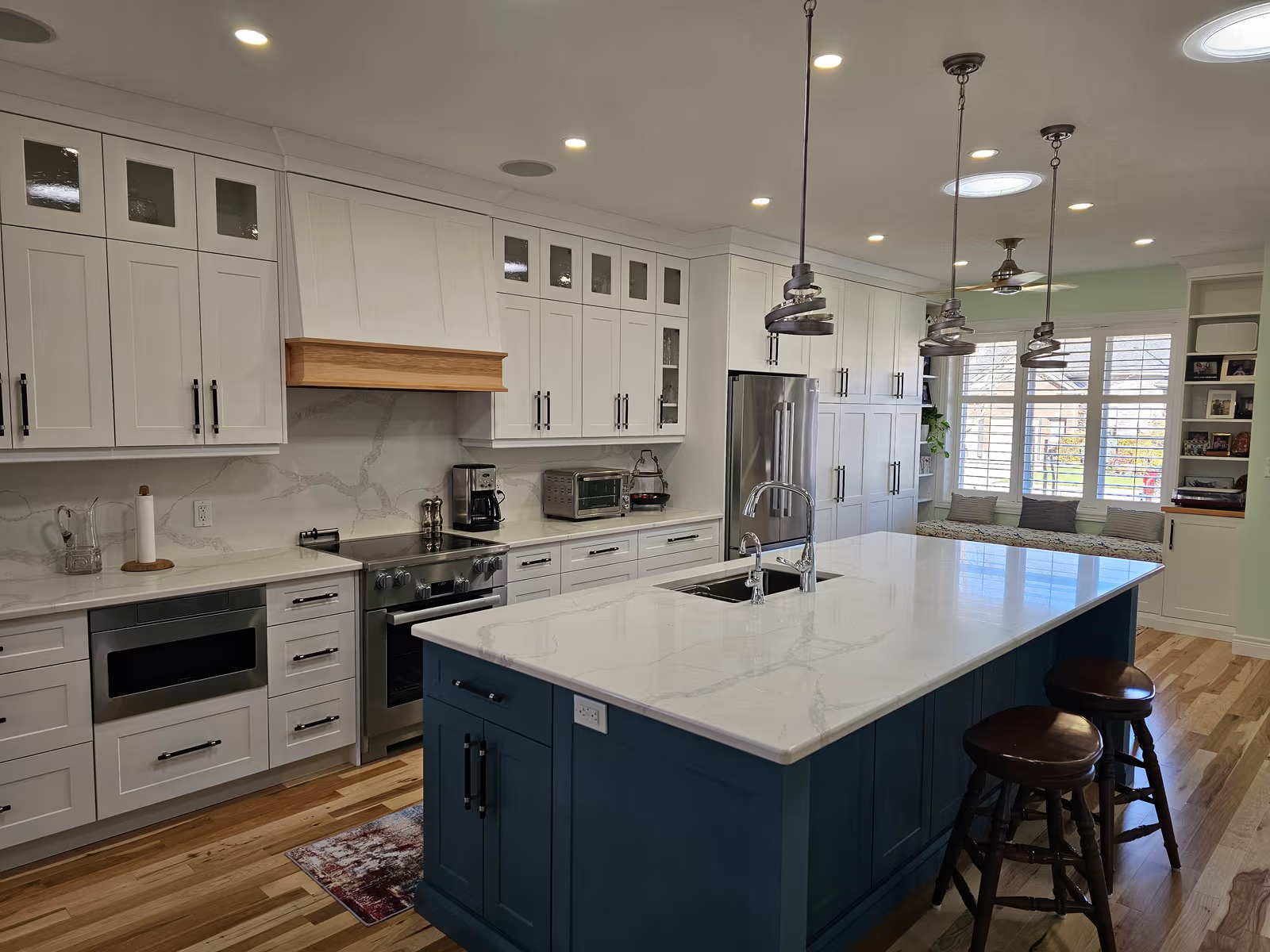
Source: Solid Rock Construction LTD.
When shopping around for architectural concrete, it is useful to compare its cost and characteristics with two other major players in the high-end market: quartz and granite.
The table below summarizes Quebec market data for 2026 to help guide your budgeting decisions:
Countertop Material | Average Price per Square Foot, Installation Included | Level of Customization | Maintenance and Sealing | Durability and Mechanical Behaviour |
Architectural concrete | $100 to $200 CAD | Absolute, 100% custom: unlimited choice of colours, shapes, textures, and cast-in integrations. | Requires a concrete-appropriate sealer. Maintenance frequency varies depending on the type of sealer, use, and exposure to stains or acidic products. | Excellent solidity. Develops a unique patina over the years. Sensitive to acids if not sealed. |
Quartz | $75 to $150 CAD | Limited: fixed patterns and colours determined by manufacturers’ catalogues. | Very low. Artificial non-porous surface that does not require any sealer. | Very high resistance to impacts and stains, but sensitive to hot pans, with risk of thermal shock. |
Granite | $50 to $190 CAD | Natural: unique depending on the stone slab selected in store, but standard straight or curved cuts. | Moderate. Requires the application of a protective sealer about once a year. | Very durable and highly heat-resistant, but it is still preferable to use a trivet to avoid the risk of thermal shock, cracking, or sealer damage. |
Although quartz has a slightly lower average kitchen countertop cost in its entry-level ranges, it offers a uniform industrial surface that can sometimes lack depth and exclusivity. Granite, on the other hand, offers the nobility of natural stone but cannot provide the fluid, continuous look of concrete, which helps avoid visible seams in the middle of a large kitchen island.
Choosing concrete means accepting that your countertop will live and evolve. Like a solid wood countertop or Carrara marble, concrete develops a subtle patina over the years, reflecting the family moments shared around it, which is precisely what makes it so appealing to lovers of authentic design.
How to Get an Accurate Quote in Montréal and the Surrounding Areas

Source: Menuiserie CJV
Have you chosen architectural concrete to enhance the design of your kitchen? To bring your vision to life while staying within your budget, it is essential to plan your estimate requests methodically. Specialized manufacturers in the Greater Montréal area, including the North Shore and South Shore, need precise information to provide a realistic price.
Here is how to optimize your shopping process:
Create a dimensioned sketch: Measure the length and width of your current work surfaces in inches or linear feet. Calculate the total area in square feet to establish your base budget.
Specify the cutout configuration: Determine in advance whether you plan to install a built-in cooktop, an undermount kitchen sink, or whether you want to include the design of a monolithic concrete countertop with a sink carved directly into the mass.
Analyze logistical access: If you live on the third floor of a building without an elevator in downtown Montréal, mention this from the start. Access constraints influence the labour cost for the safe delivery of heavy pieces.
Determine the work schedule: Ideally, the manufacturer’s final laser measurements should be taken once the cabinet boxes are permanently anchored to the floor and wall. Plan for a workshop manufacturing lead time that generally varies from 3 to 5 weeks between measurement and final installation.
To obtain a free estimate and compare proposals from certified contractors in your area, you can use professional matchmaking platforms. This will allow you to evaluate the overall budget to remodel a kitchen transparently and choose the manufacturer whose creative approach and technical skills best match the scope of your residential project.
Looking for something else?
Related articles
The latest industry news, interviews, technologies, and resources.
Karine Dutemple
•11 May 2026
Whether you're messy or on the contrary, ultra-organized, you'll agree that a tidy pantry is very convenient on a daily basis! We go to the pantry several times a day to pick up snacks, ingredients and to store groceries.
Cynthia Pigeon
•08 Nov 2023
When a kitchen is too small to meet a household's needs, it quickly becomes a nuisance. And, since most people spend several hours a day in their kitchen, the lack of space is definitely felt on a daily basis. Therefore, a bigger kitchen is a recurring item on many homeowners' wish lists.

Christine Simard
•08 Nov 2023
Over the past two years, we have often mentioned the phenomenon that is biophilic design but never really delved into the depths of this trend. With people growing more and more conscious of the need for a more sustainable future, the architecture and design world soon picked up on those issues and are now working around the inclusion of these principles in their practices.
Editorial Team
•08 Nov 2023
Are your melamine cabinets starting to wear out and you’re inclined on giving them a little sprucing instead of swapping them out for new ones? In most cases, if the surface isn’t too damaged, you can definitely consider a coat of paint to give them a much-needed face-lift.
Editorial Team
•08 Nov 2023
Owning a rental apartment is not without challenges to overcome, as it comes with a number of obligations and responsibilities, which aren’t easy to maintain.