10 Stunning Countertop Materials That Are Not Marble
By Christine Simard
Updated on January 10, 2025

There are endless options when choosing a kitchen countertop, but marble is a very sought-after material in the design industry. It’s ever-present on our minds when renovating a kitchen due to its chic, timeless, and versatile appeal. However, some might find its minimalistic look too common, overdone maybe, when designing a new kitchen.
Hence, we decided to put together 10 different countertop design ideas that aren’t marble!
10 Marble Alternative Countertop Materials
1. Butcher block countertops
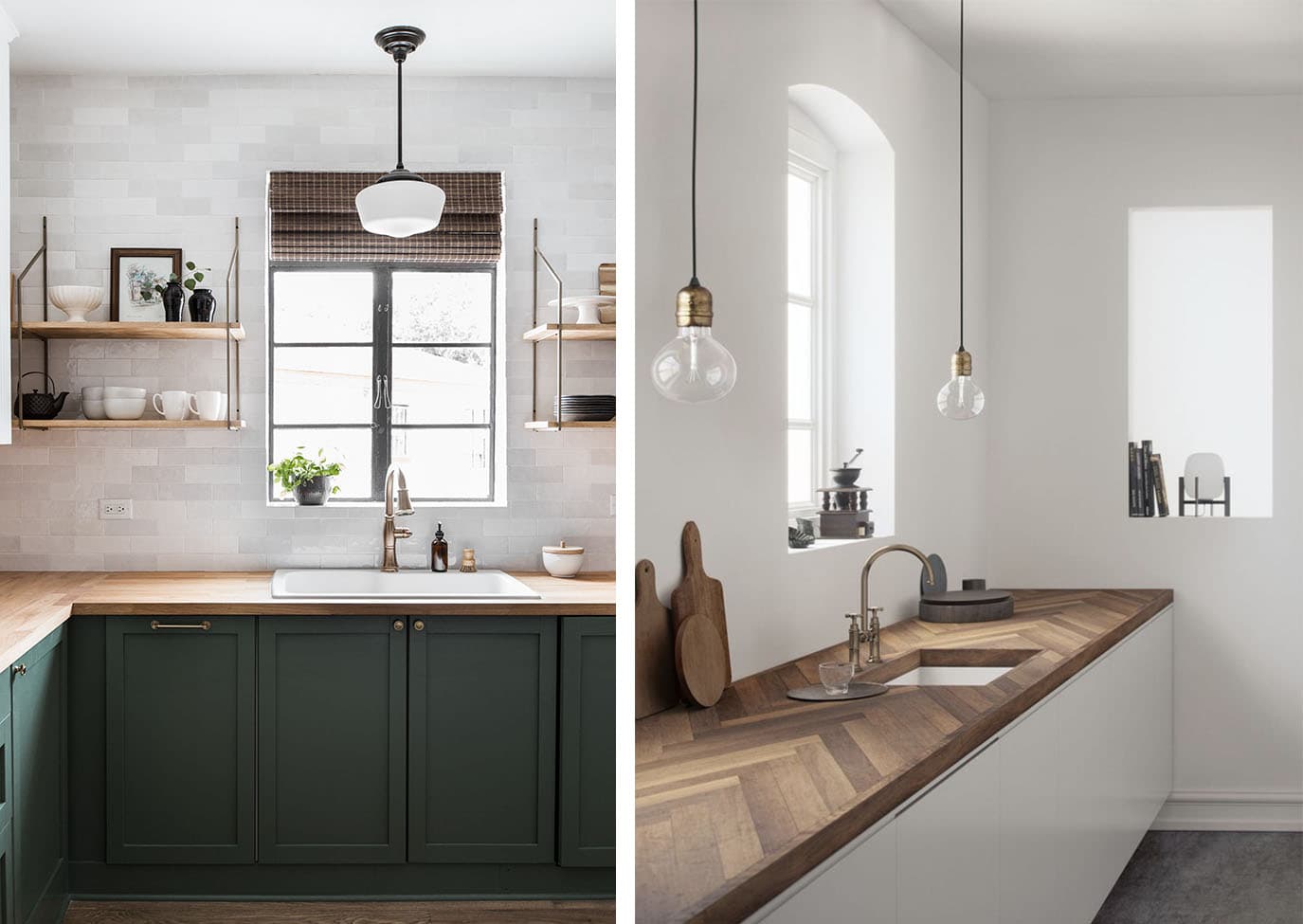
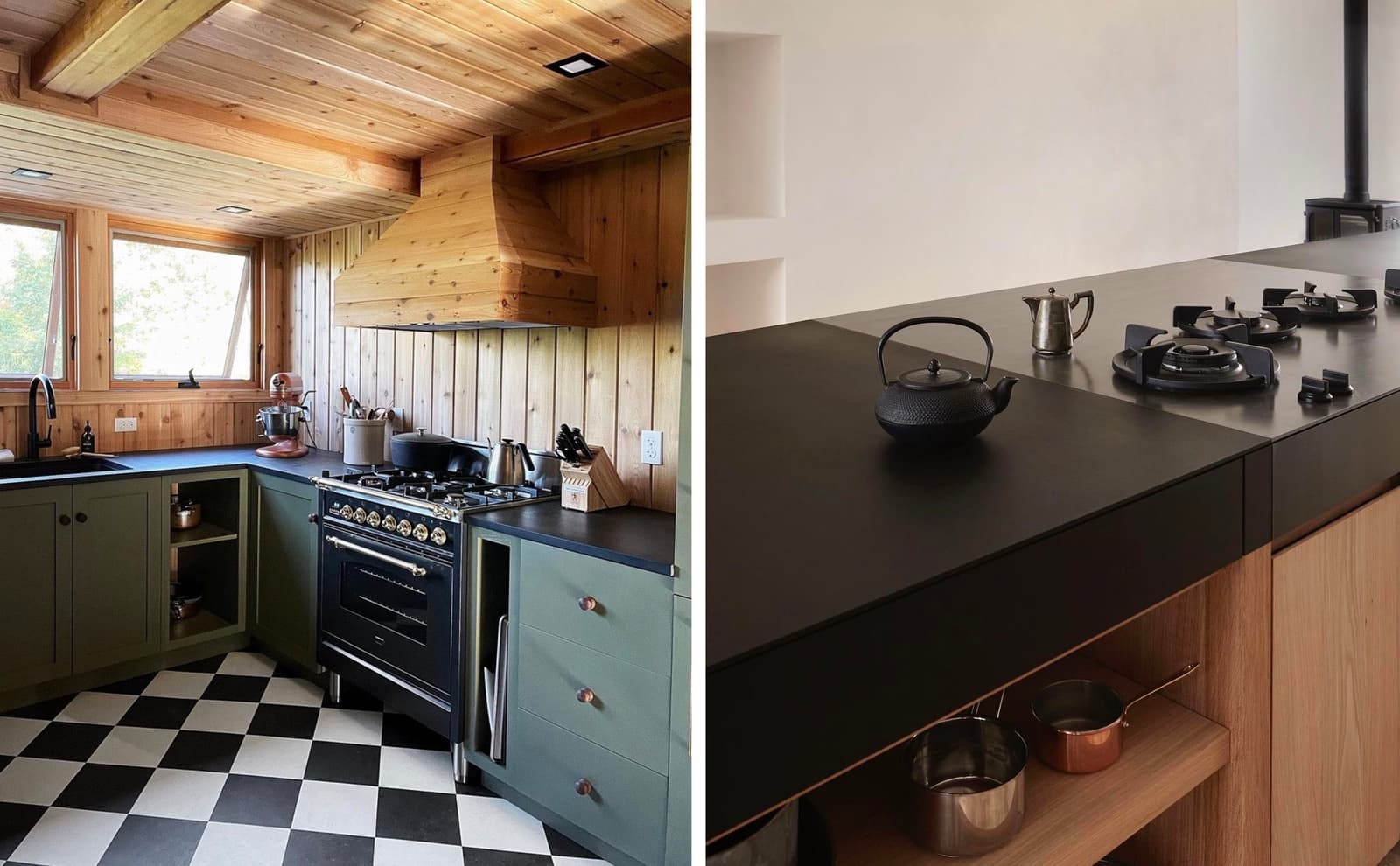
One of my favourites! Butcher block countertops are modern and versatile; not too heavy on the eye, allowing you to choose between a darker or lighter wood, as well as different wood grains.
Source: Jenna Sue Design & Kinfolk Home
2. Concrete countertops
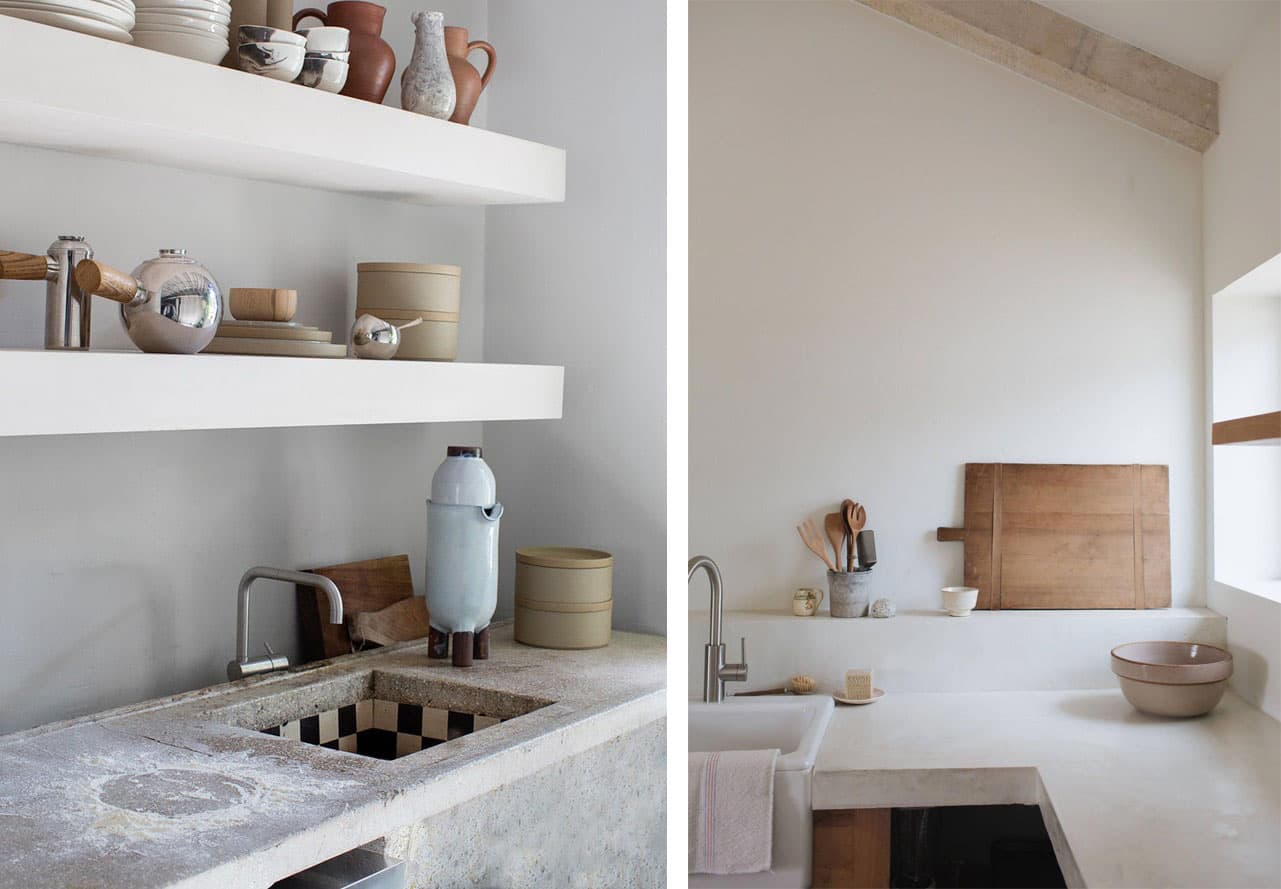
Contrary to popular belief, concrete isn’t only for luxury kitchen designs. Not only is it scratch-resistant, but this type of design also pairs well with rustic decor accents, creating a charming, farmhouse look.
The only downside is that once it cracks, repairing the surface is quite a feat.
Source: Domino & Kate Zimmerman Turpine
3. Soapstone countertops
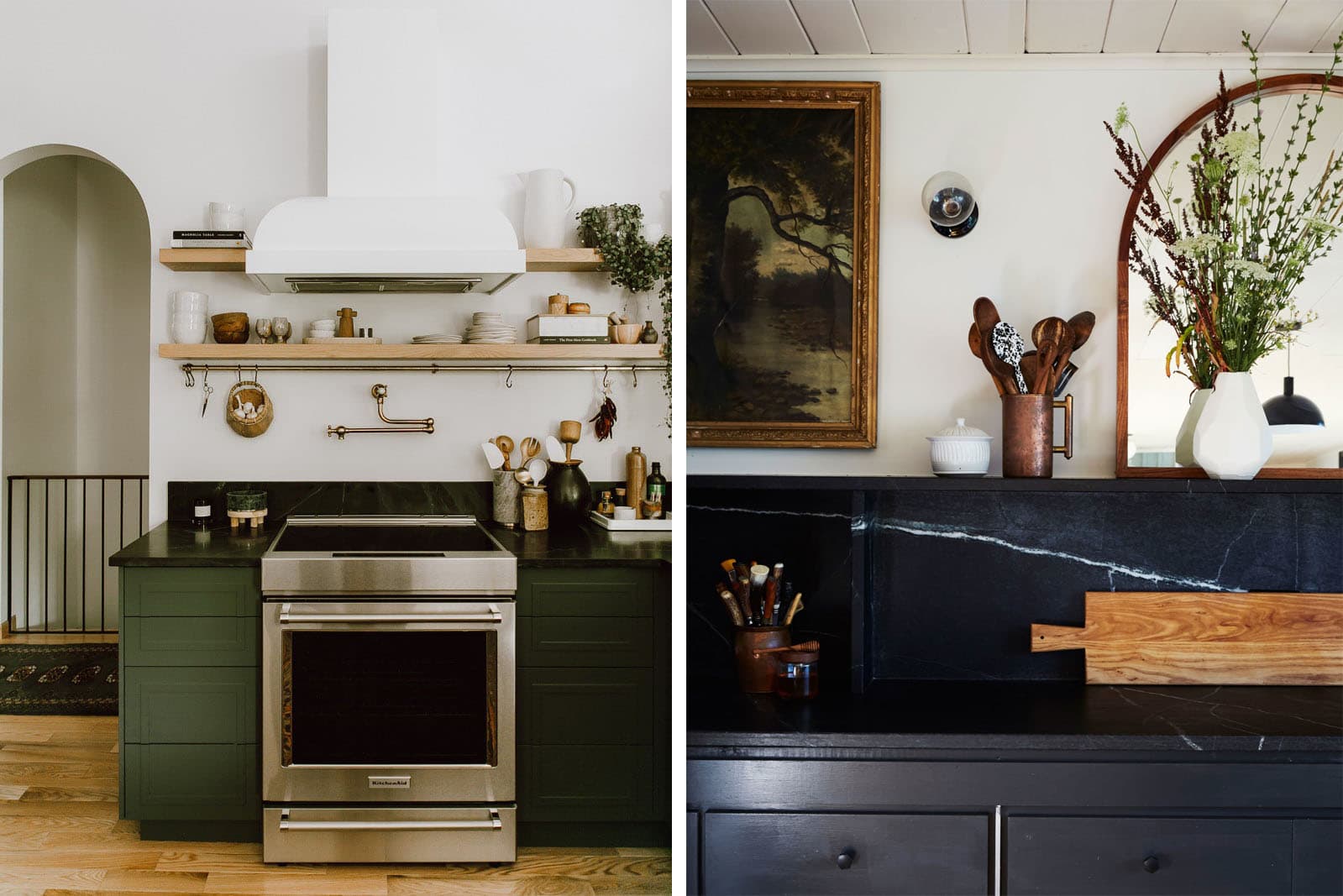
Soapstone is on the pricier side, making homeowners on a budget take a step at first glance, but note splurging on this material has its benefits in the long run. Low maintenance and non-porous, it only needs to be oiled regularly.
This natural stone’s rich and dark colouring, combined with a white veining is reminiscent of marble, making it the perfect alternative.
Source: Domino & Megan Pflug Designs
4. Stainless steel countertops
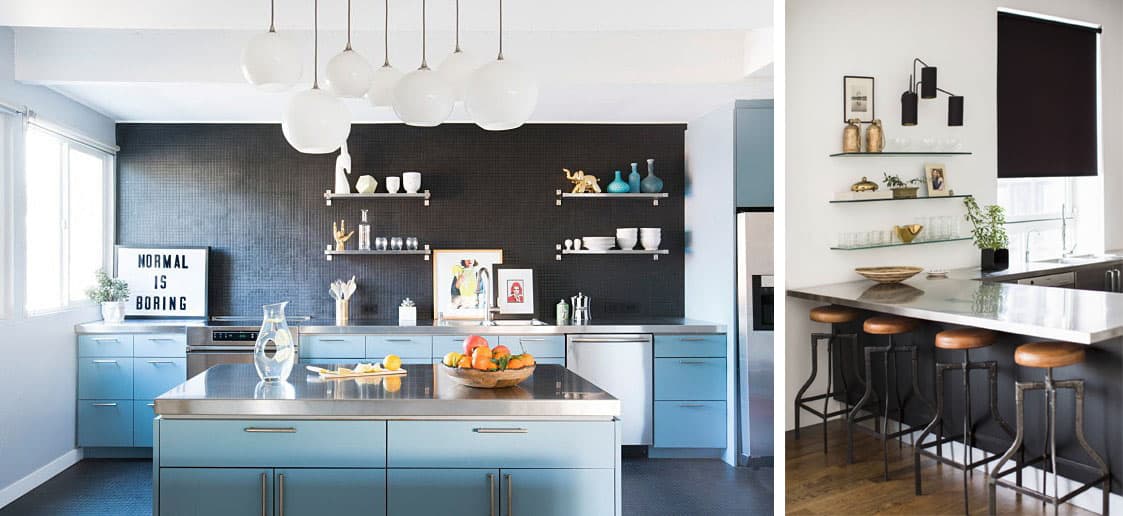
There's a reason why this material is often found in restaurant and commercial kitchens—it’s nearly indestructible! Moreover, it makes for an especially durable surface. However, lower-quality steel is prone to scuff marks and scratches.
Its metallic, glossy look meshes perfectly with appliances, turning your kitchen into a sleek, professional-looking setting.
Source: Domino & Nate Berkus
5. Ceramic tile countertops
This makes for a unique, whimsy twist to traditional countertop materials! With a variety of colours retailed, you can easily pair or offset your worktop with your backsplash's colour scheme, making for a fun contrast between the two!
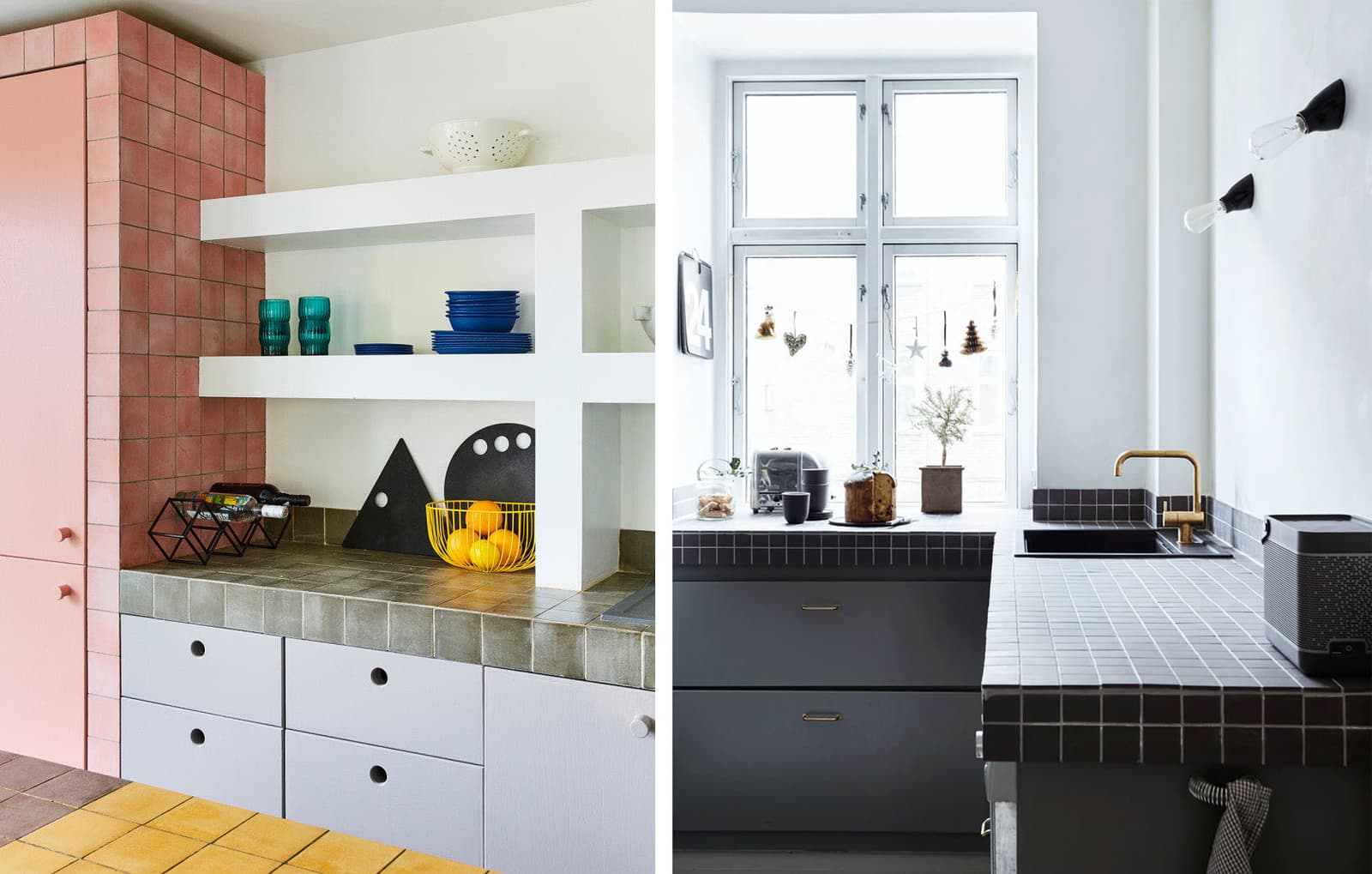
Source: Domino & Mainlifestyle
6. Terrazzo countertops
This is another fun one! Terrazzo makes for a versatile look that can easily blend with your kitchen’s colour palette.
Depending on the retailer, the ceramic chips embedded in the stone can vary from pastel to monochrome, making it easy to incorporate into your decor despite its contrasting design.
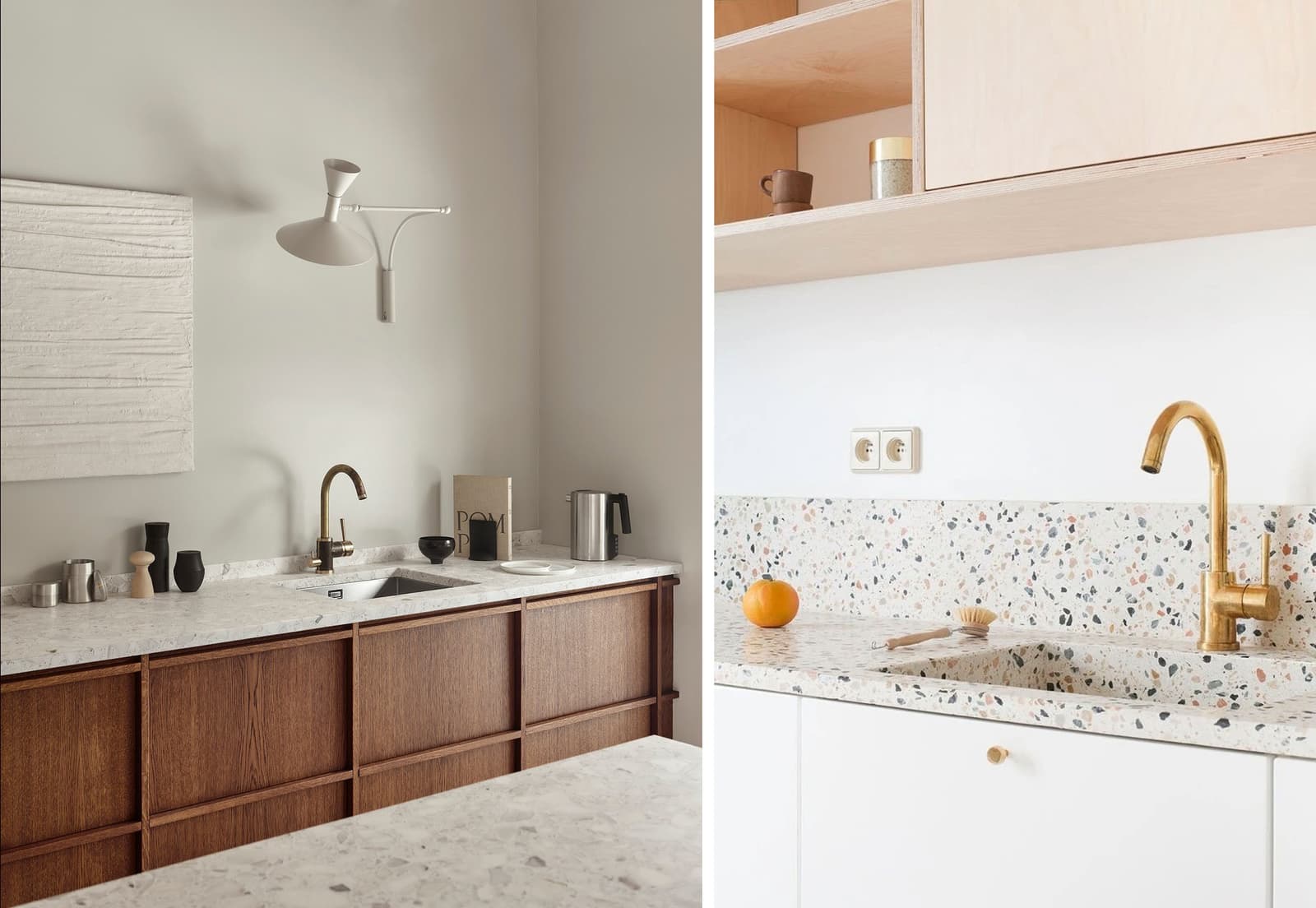
Source: Nordiska Kok Kitchens & Dyke and Dean
7. Laminate or painted plywood countertops
Over the years, we’ve started noticing this trend of showcasing raw-looking plywood slabs with untouched edges, with a painted or laminated top. While uncomplicated, it makes for the perfect option for those on a tight budget looking to transform their kitchen counter into something unique and elegant.
Most kitchens featuring this minimalist approach were paired with hardwareless cabinets, showing off an even more raw-looking side of plywood, fitting with the countertop.
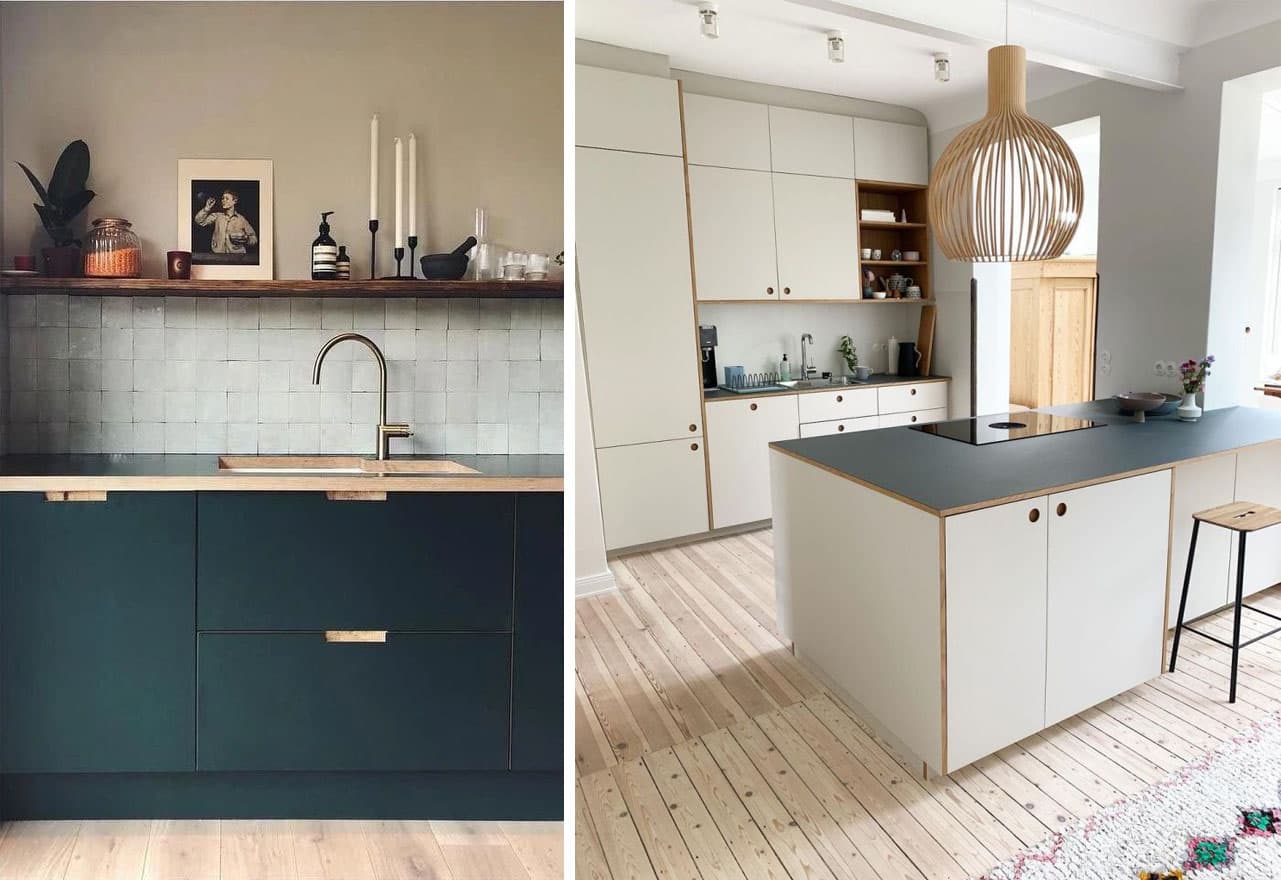
Source: Remodelista & Dyke and Dean
8. Recycled plastic or glass countertops
This one is truly genius! On the left, you have a plastic countertop, and on the right, you have one made of glass, giving a terrazzo-inspired pattern as mentioned above, but with a twist. Leave your guests open-mouthed and at a loss for words with these two one-of-a-kind options, ideal for colourful results.
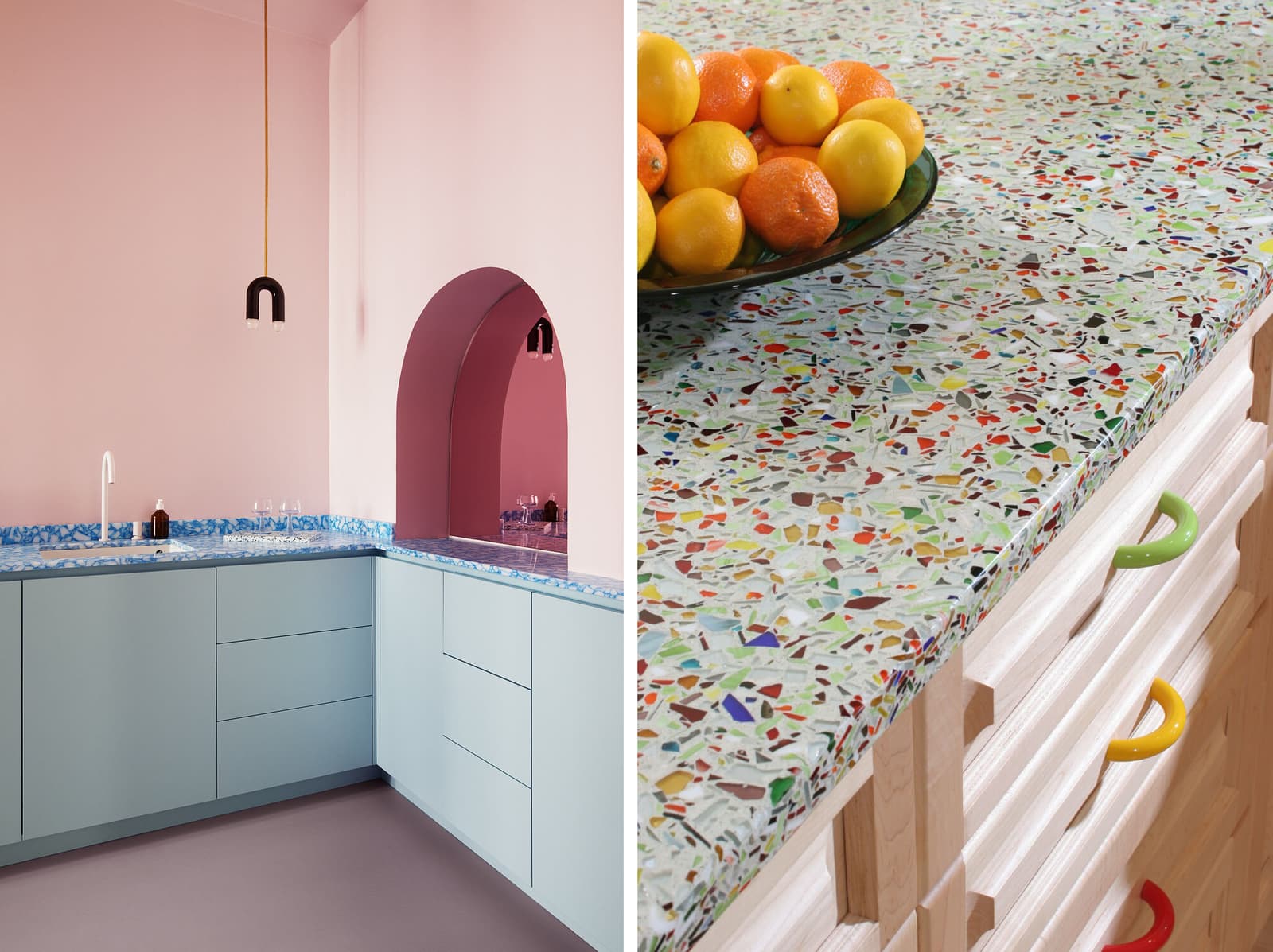
Source: Jaell und Tofta & Vetrazzo
9. Recycled paper countertops
Feast your eyes on recycled paper countertops! Manufactured following a specific process, which includes mixing ingredients, compressing, and baking, recycled paper countertops come out as a solid yet smooth slab, perfect for all kitchen types.
This option is affordable, eco-friendly, and available in an array of colours. Curious? Check out products designed by PaperStone or Richlite to have a better idea of what you’re in for!
Source: Richlite
10. Solid surface countertops (Corian®)
This material alternative is as convincing as can be—it can mimic any natural stone or sought-after material for a countertop renovation project. This non-porous option is rather advantageous due to its low-maintenance aesthetic and waterproof characteristic.
While Corian is a band name (most will say “PaperStone” when referring to recycled paper countertops), it’s used to designate the material in itself. Once again, this material is the perfect in-between for those who are hoping to recreate a stone-look kitchen countertop on a budget.
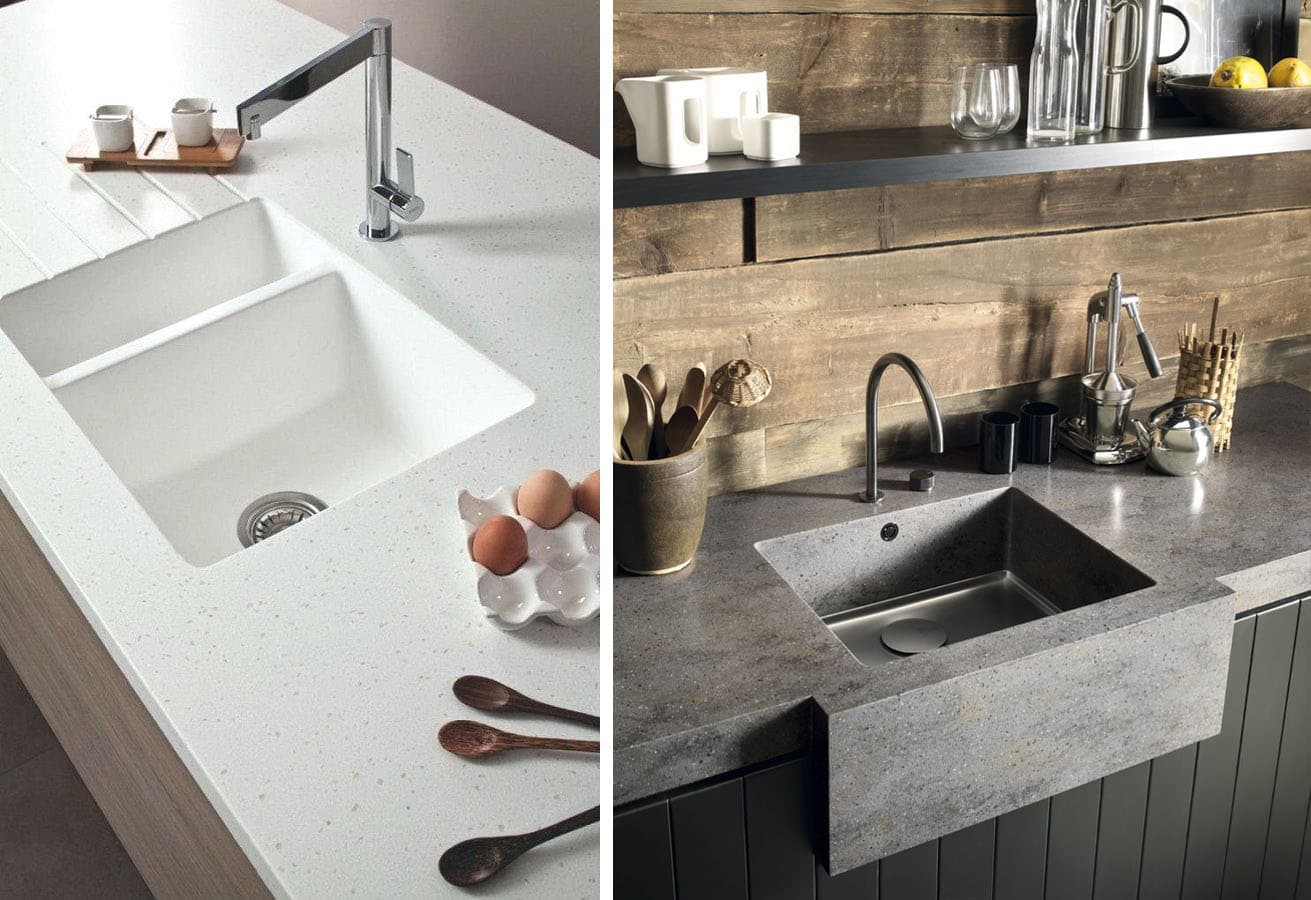
Source: Pinterest & Architizer
For more information about countertop materials and price points, check out our kitchen countertop cost guide.
Looking for something else?
Related articles
The latest industry news, interviews, technologies, and resources.
Editorial Team
•19 Dec 2024
For those who live in cities, having a large backyard often proves challenging. Unless you come across the perfect spot, you may very well have to deal with a property that offers a small garden space.
Editorial Team
•05 Dec 2025
A space for gatherings and lively conversation, the kitchen has always been considered the heart of any dwelling. Since cooking is a time-consuming calling—and for that reason alone—it’s without a doubt why this particular part of a home has witnessed the most amount of change throughout the years.
Editorial Team
•01 Apr 2026
Over the last few years, several types of paint have been banned due to the risks they pose to exposed professionals and dwellers alike. Today, numerous manufacturers affirm that their products are safe and reliable, even eco-friendly, further validated by specific logos featured on their labels. However, the composition of certain types of paint is far from reassuring.

Editorial Team
•26 Apr 2024
Foul smells, poorly draining water, loud and strange pipe noises, overflowing content… Septic tanks rely on a system that’s more susceptible to damage than a municipal sewer network, so you have to be mindful of how waste is disposed of and pay special attention to the slightest warning sign that there might be an issue with the system.
Editorial Team
•31 Mar 2025
Are you considering elastomeric membrane roofing for your flat roof, but unsure about its benefits and potential drawbacks? In this article, we answer important questions like: What are the costs and lifespan of elastomeric membrane roofing? How does it compare to other materials, and how is it installed?