
Delighted to see that your small tree has finally grown? As gorgeous as it is, with its branches throwing caution to the wind, your tree roughly swaying in all directions may not be as safe as you believe.
Do the branches of your tree mean danger or do they just make it look shaggy? It’s high time to consider these questions and prune your tree. To work safely and efficiently, read on!
What’s pruning and why is it necessary?
Source: Canva
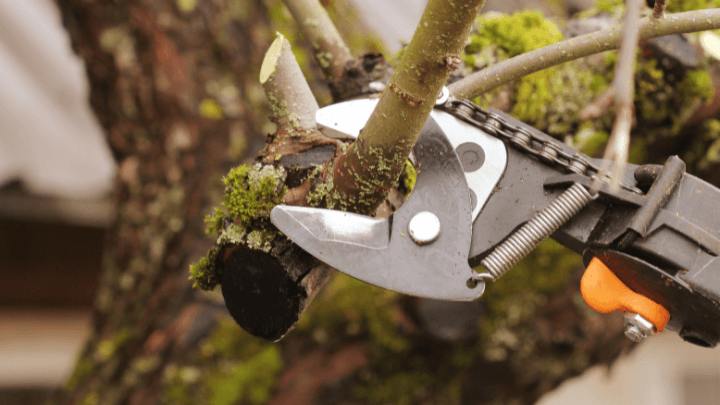
In short, pruning refers to trimming away loose branches. This trim is aimed at getting rid of branches that are harmful for one reason or another. Let's start by mentioning the first branches to be cut should be the broken ones. Since they continue to absorb nutrients, trimming these transfers nutrients to viable branches.
Plus, a damaged branch is a gateway for both fungi and insects. By cutting it away and allowing it to heal, you can avoid the development of an infection that can be fatal in the long term.
If you find areas of your tree to be quite dense, these should also be pruned. This is because too much branch density prevents air circulation, and this tends to create the proliferation of insects as well as the growth of fungi. Therefore, if there are too many branches, the situation will need to be dealt with.
In a completely different vein, know that trimming tree branches can also be carried out for purely aesthetic purposes. If you’re particularly concerned with your tree’s appearance, trim any small branches that make it look sloppy. Finally, some branches should be trimmed for safety reasons. For example, to prevent them from touching the roof, electrical wires or simply to prevent them from falling during unpredictable weather.
The rules for tree pruning
As mentioned, trimming a tree needs to be done by following several rules, as this allows the tree to heal properly. First, let's emphasize that it’s important to minimize the amount you trim. The more a tree is pruned, the more it’s weakened and therefore, at risk of falling prey to fungi and insects. As a guide, pruning should never exceed 25% of the branches.
Also, keep in mind that you should never prune more than a third of the green branches. If you bend this rule, your tree will be unable to photosynthesize well enough to grow in both height and in diameter.
Next, remember that pruning should only be done once per season to allow your tree time to recover. Finally, we should note that the best option is to trim branches before they reach a 3cm diameter, as this will allow them to heal quickly. Early pruning is the best way to respect the growth of the tree.
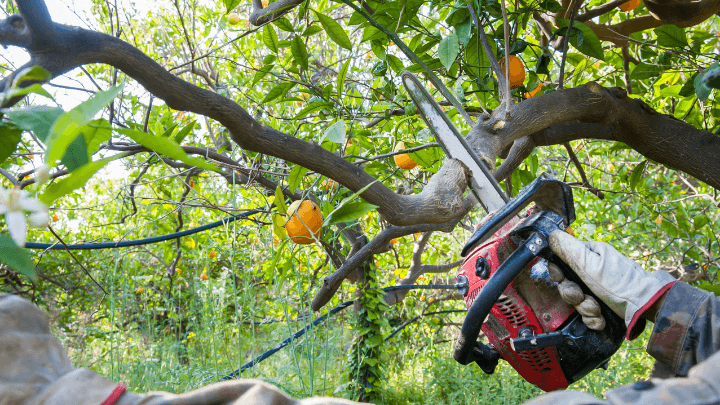
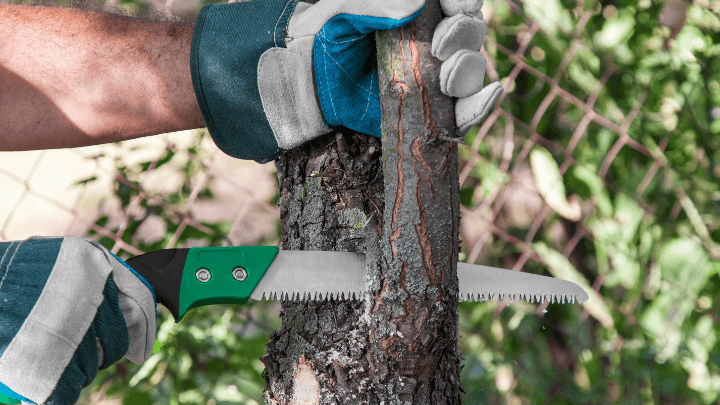
For proper pruning, be sure to use a saw if the branch diameter is greater than 25 millimetres. Otherwise, curved pruners or shears are appropriate. Before you begin, make sure your tools have been recently sharpened.
When to prune your tree
Source: Canva
It’s possible to prune your trees throughout the year, unless they’re producing edible flowers and fruit or if the work you’re taking on involves trimming over 20% of the tree’s surface area. In this case, it’s better to wait for the dormant growth period, and this would be either winter or at the very beginning of spring.
Obviously, the extreme cold of early winter months like January and February can greatly complicate executing this work. Not only will it be cold, but wind, ice and accumulated snow can be a significant stress and potential safety threat.
However, whenever possible, it’s also preferable to avoid pruning during the period of sap build-up (which occurs towards the end of winter and marks the restart of a tree's metabolising process) This is when a tree leaves its dormant state and thus, it’s particularly important for its growth.
What about those with an apple tree? Prune your trees in early spring to make sure there’s enough sap inside to ensure an excellent apple harvest.
How to prune a tree?
Source: Canva
Here’s where we should underline the difficulty posed by pruning a tree: the trim must be carried out as close as possible to a regeneration zone (this is the zone containing dormant buds). Otherwise, the tip of the branch (the snag) will dry out, and this will make healing impossible.
In fact, a dry branch creates an opening through which insects can enter. Over time, degradation of the tree’s interior can eventually lead to death. If you accidentally trim too close to the trunk, you’ll only widen the wound, which interferes with the natural healing process.
Finally, don't forget to say that it’s absolutely necessary to remove any damaged bark with a wood chisel, sanding the surface of the wound.
Do you have the consent of your neighbours?
If the branches of a neighbour's tree encroach on your property, it’s crucial to ask their permission before starting to trim away, even if the work is urgent. What if your neighbour doesn't give you permission? You’ll likely have to prove in court that the branches you want to remove do indeed pose a danger or constitute a nuisance.
Be sure to send your request in the form of a formal notice so that you can prove your neighbours been informed of your desire to carry out the pruning work.
Caution
Before even thinking about pruning your trees yourself, you should know that if the branches you need to trim are less than three meters from electrical wires, only your hydro company or a professional pruner can carry out this work.
Get quotes for your exterior renovation or landscaping project
RenoQuotes.com can help you get quotes for your exterior renovation project. If you submit your project to us, we’ll put you in contact with top-rated contractors. Fill in the form on the homepage (it only takes a few minutes), and you will receive quotes from companies that are specialized in home renovations.
Dial 1-844 828-1588 to speak with one of our customer service representatives.
Looking for something else?
Related articles
The latest industry news, interviews, technologies, and resources.
Editorial Team
•17 Apr 2024
Are you planning on building a deck in your backyard, but aren’t sure which type of foundation to install? Your patience has been rewarded! Have you ever thought of piles? It’s a cost-effective, eco-friendly, and simple solution, one that’s been developed by a Quebec-based company that’s also a global market leader.

Karine Dutemple
•08 Nov 2023
The exterior of a home has much more than an aesthetic function. Although its impact on the appearance of a property and its façade is considerable, other factors come into play when replacing it. Indeed, it is essential to choose a siding that also has soundproofing and insulating properties.
Editorial Team
•30 May 2025
Are you looking to build a retaining wall on your property, but do not really know where to start? RenoQuotes.com has all the information you will need to adequately build a retaining wall.
Cynthia Pigeon
•14 Nov 2024
It seems like cold weather is always around the corner, so there is literally no need to highlight the importance of avoiding cold drafts wafting through your house. Since it causes both discomfort and significant increases in your heating bill, avoid this issue at all costs! Check out these helpful tips and tricks.

Karine Dutemple
•08 Nov 2023
Although materials like ceramic, wood, porcelain or natural stone are still going strong, the arrival of new ones on the market could easily create new competition for them.