Turnkey Basement Renovation in Montréal: 2026 Costs & Guide
By Cynthia Pigeon
Updated on September 29, 2026
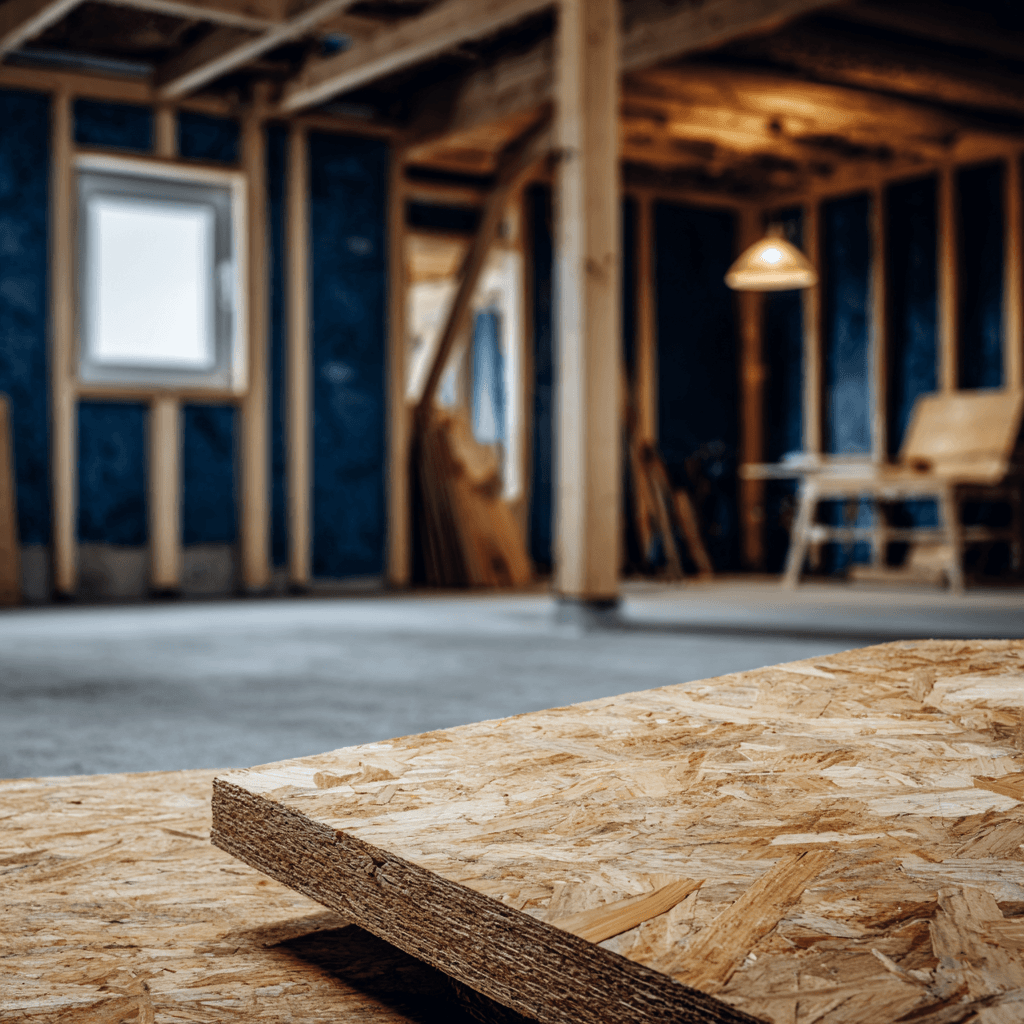
How much does a turnkey basement renovation cost in Montréal in 2026? Depending on the level of finishing, expect to pay $60 to $ 125+ per square foot. For a 1,000-square-foot basement, a complete renovation with standard finishes can cost between $65,000 and $95,000. Explore renovation costs based on square footage, the work involved, and the unique characteristics of Montreal homes and multiplexes.
In homes and plexes in neighbourhoods such as Rosemont–La Petite-Patrie, Plateau-Mont-Royal, Ahuntsic, or Notre-Dame-de-Grâce, costs can quickly increase when the project reveals older foundations, moisture issues, plumbing that needs to be relocated, or limited ceiling height.
For many Montréal homeowners, however, the basement represents a lot of untapped potential. Whether you need to accommodate a growing family, create a home office for remote work, or build a separate apartment, maximizing this space allows you to gain valuable square footage without expanding the home.
However, coordinating the plumber, electrician, drywall finisher, carpenter, and various inspections yourself can quickly become complicated. This is precisely where a turnkey basement renovation service in Montréal makes sense: a general contractor takes care of coordinating the project, from the initial plan through to the finishing work.
How Much Should You Budget for a Basement Renovation in Montréal in 2026?
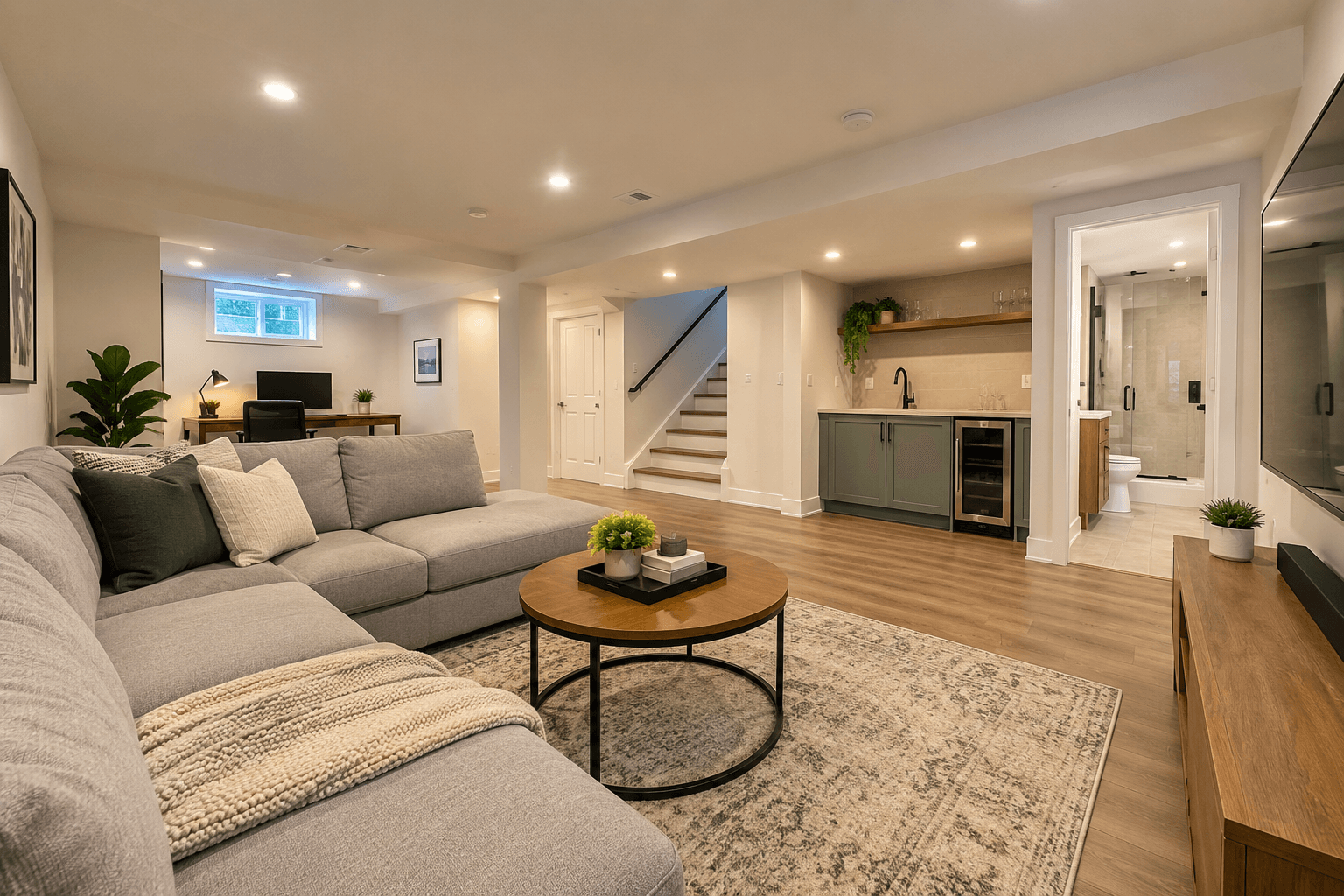
Source: RenoQuotes
The cost of a basement renovation in Montréal depends primarily on the square footage, level of finishing, and condition of the building. Here are some estimates to help you plan your renovation budget in 2026:
Type of Project | Estimated Budget |
Basic finishing | $60–$75/sq. ft. |
Standard finishing | $80–$95/sq. ft. |
High-end finishing | $100–$125+/sq. ft. |
500-sq.-ft. basement | $35,000–$50,000 |
1,000-sq.-ft. basement | $65,000–$95,000 |
Adding a full bathroom | $15,000–$25,000 |
These figures are indicative estimates. In Montréal neighbourhoods with older buildings, drainage, foundation, or plumbing work can significantly increase the overall renovation budget.
To determine the actual cost of your project, compare quotes from contractors specializing in basement renovations in Montréal.
Example Budget for a 1,000 sq. ft. Montréal Basement
For a 1,000 sq. ft. basement that includes a family room, bedroom, office, and full bathroom, a homeowner could budget about $65,000 to $95,000 for a standard finish.
However, the budget can exceed $100,000 if the project includes:
Bathroom with new plumbing beneath the slab
Extensive soundproofing work
Custom cabinets or storage
Structural modifications
Repairs to moisture or foundation issues
Excavation or underpinning work
High-end materials and finishes
In Montréal, the age of the building is particularly important. Before comparing only the final price of each quote, make sure you clearly understand what is included in each one: demolition, insulation, plumbing, electrical work, permits, materials, finishing, and subcontractor management.
What Is a Turnkey Basement Renovation Service?
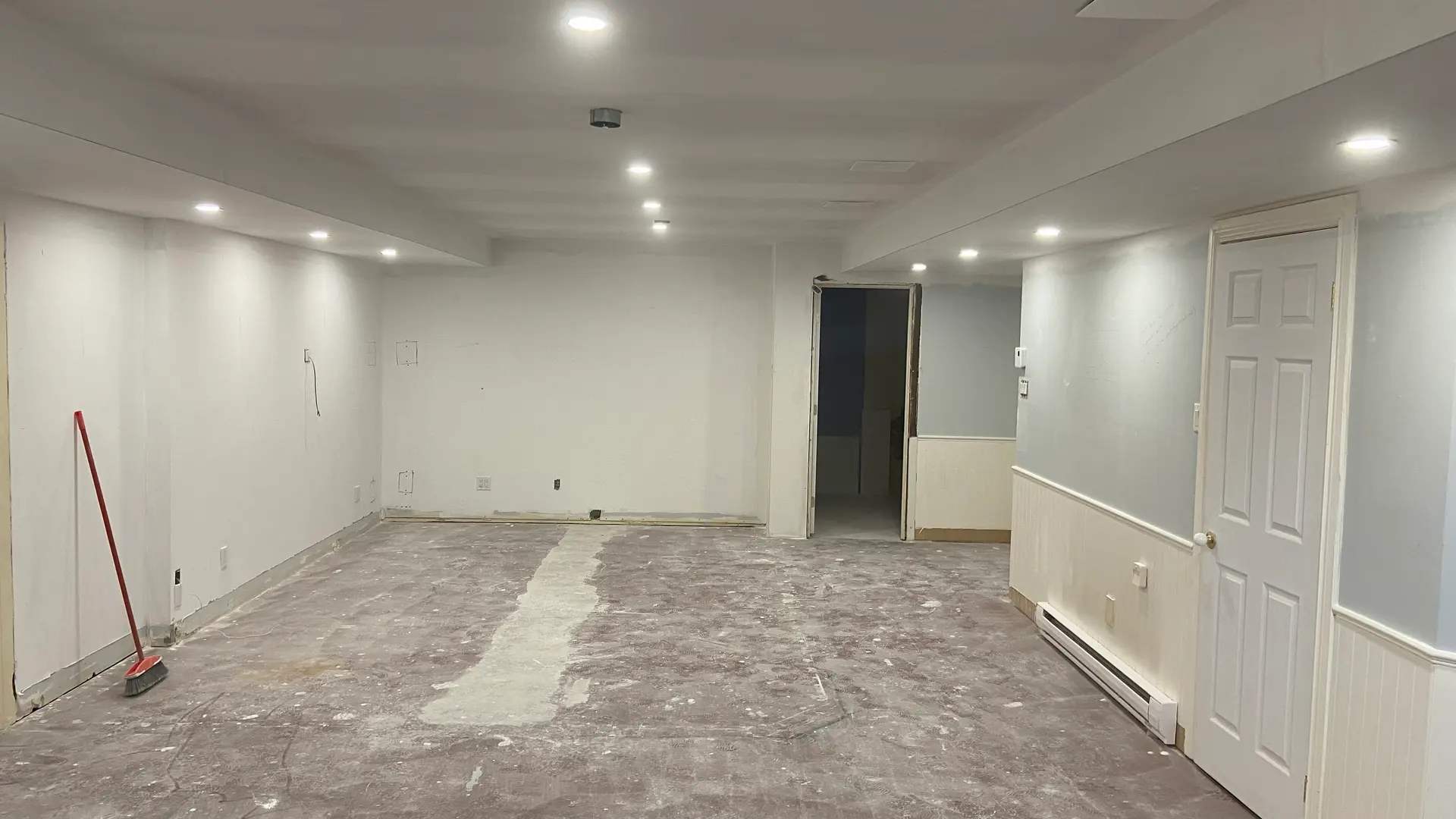
Source: Réhabitation Inc.
The concept of “turnkey” is based on a simple premise: the contractor takes charge of the entire project, from the first layout sketch to the final cleanup before delivery. You do not have to coordinate the different trades or spend your weekends shopping for materials at hardware stores.
A complete turnkey service generally includes the following steps:
Design and architecture: Measurements, 2D/3D plan design, and architectural optimization of the living space.
Administrative management: Handling transformation permit applications with your Montréal borough.
Site preparation: Safe demolition of existing structures, excavation if needed, and treatment of underlying structural issues, such as foundation cracks or defective drains.
Structural and mechanical work: Complete thermal insulation, room division, and installation of mechanical systems, including electrical, plumbing, and ventilation.
Finishing: Installation of drywall panels, taping and joint finishing, painting, flooring installation, and finish carpentry.
By working with a specialized renovation contractor, you generally sign a global contract that specifies the price, schedule, inclusions, and exclusions, which helps limit unpleasant surprises.
The Benefits of Turnkey Renovation for Your Montréal Property
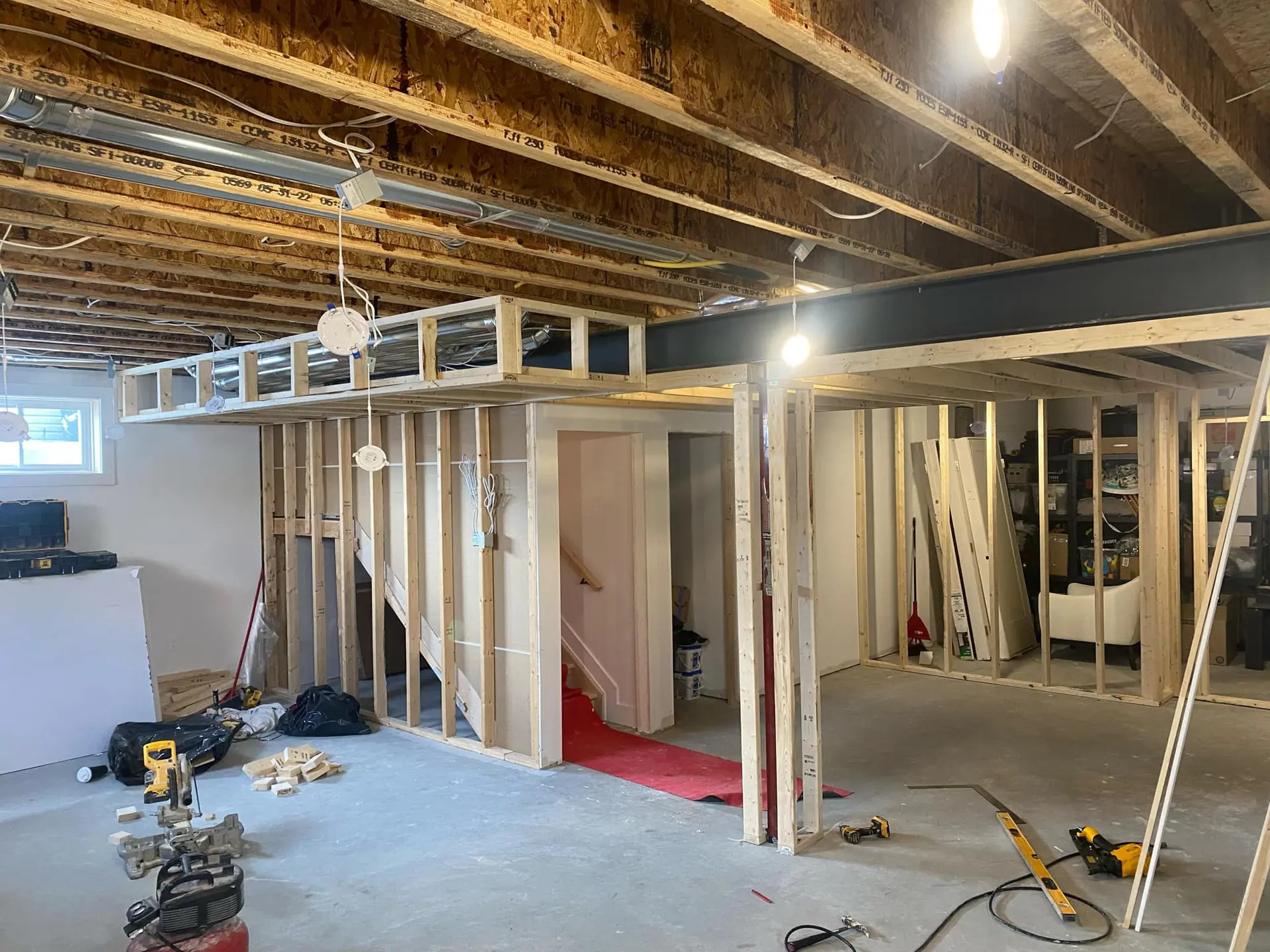
Source: Rénovation Taillon inc
A Single Point of Contact for Simpler Management
The main advantage of turnkey renovation is having one clear point of contact. Your general contractor coordinates the construction site and remains your main contact for project follow-up. If a problem occurs with the electrical or plumbing work, you do not have to look for the responsible party between two subcontractors: the general contractor coordinates their teams to correct the situation.
More Structured Budget and Schedule Management
When you manage the work yourself, delays from one trade affect all the others. A plumbing delay can push back the drywall installer, which then delays the painter. With a turnkey formula, task sequencing is planned in a more structured way. In addition, a well-detailed turnkey contract helps better frame costs, inclusions, exclusions, and possible unexpected issues. To get a clearer idea of overall costs before starting, it is also recommended to estimate your project costs using online evaluation tools adapted to the Quebec market.
A Significant Increase in Resale Value
Finishing a basement is one of the most profitable residential investments in Quebec. Some estimates attribute a potential return of about 50% to 75% to basement finishing, depending on the market, quality of the work, and characteristics of the property. In a competitive market like Greater Montréal, a fully finished, bright basement that complies with regulatory standards can be a major selling point that helps distinguish your property from other duplexes or single-family homes in the area.
Key Steps for a Successful Basement Renovation
Source: Rénovation construction sj
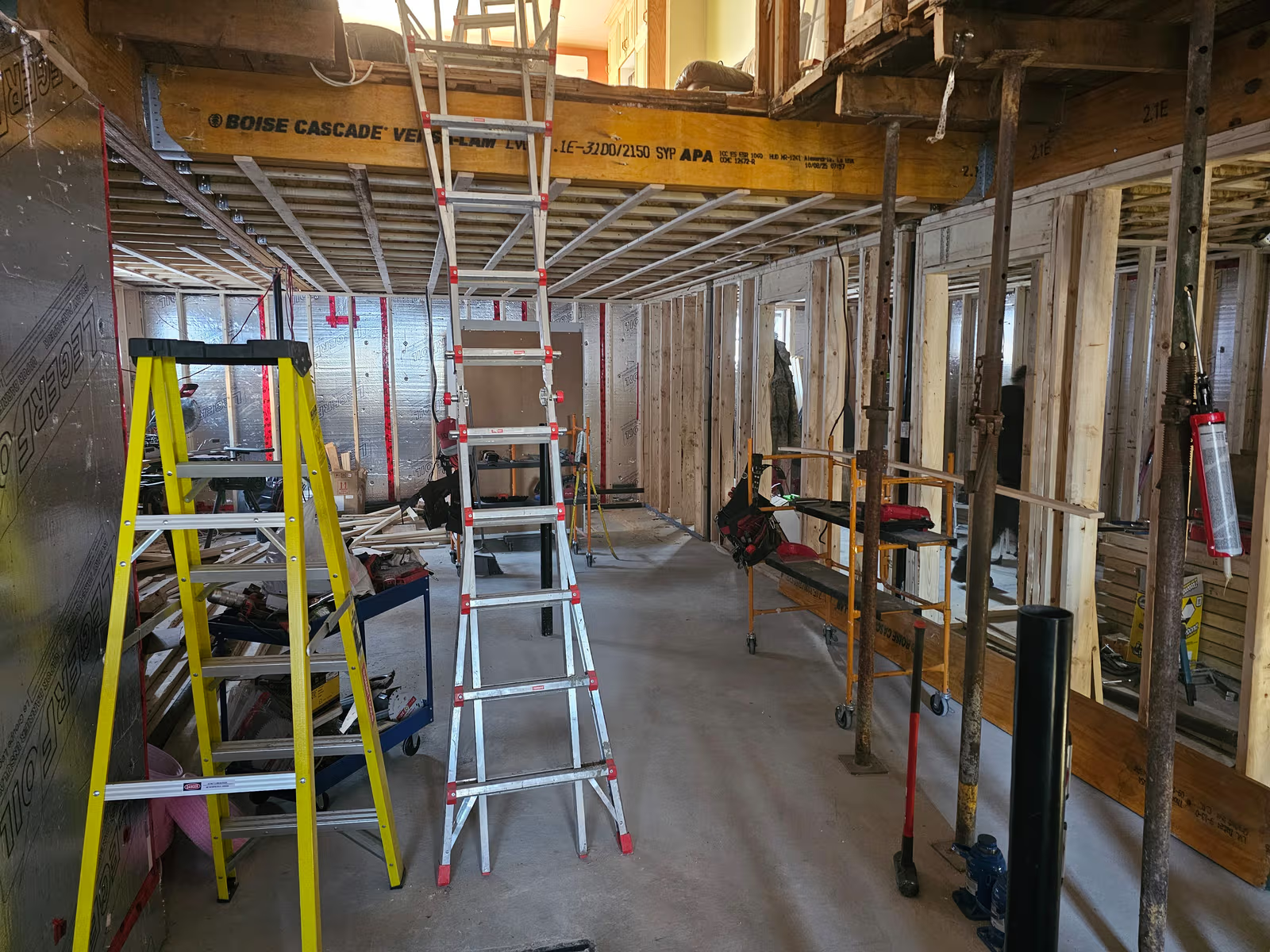
To transform a dark and damp basement into a warm, functional living space, the contractor follows a strict process. Each step should be checked to support the durability of the work.
1. Planning and Layout Design
Everything starts with an analysis of your needs. Do you want a full bathroom, a guest bedroom, or a home theatre? The contractor draws up plans while accounting for unavoidable structural obstacles, such as support columns, ventilation ducts, and the water heater.
2. Waterproofing and Foundation Inspection
Before closing the walls, it is essential to check the waterproofing of concrete or rubble-stone foundations, which are common in older Montréal homes. When an infiltration or drainage problem is detected, polyurethane injection into cracks, inspection of the French drain, or other corrective measures may become essential before closing the walls.
3. Insulation and Thermal Sealing
The basement is directly exposed to Quebec’s harsh climate and the coolness of the ground. Spray foam insulation is an option often used in basements, particularly because of its insulating value per inch and its ability to limit air leaks when properly applied. Integrated into a well-designed assembly, it can also help reduce condensation and certain moisture transfers.
4. Building Systems: Electrical, Plumbing, and Ventilation
This is when specialized subcontractors step in under the supervision of the general contractor. Electrical wiring is run, drain pipes for the future bathroom are installed in the concrete slab, which may sometimes require breaking the slab, and the ventilation system or electric baseboard heaters are installed in accordance with applicable codes and requirements.
5. Drywall Installation and Taping
Once the plumbing and electrical inspections are complete, the team installs drywall panels. Moisture-resistant panels are often used in certain sensitive areas, such as the bathroom or laundry room, depending on the intended use and applicable requirements. Three-step drywall taping and joint finishing help create smooth surfaces ready for painting.
6. Finishing and Flooring Choices
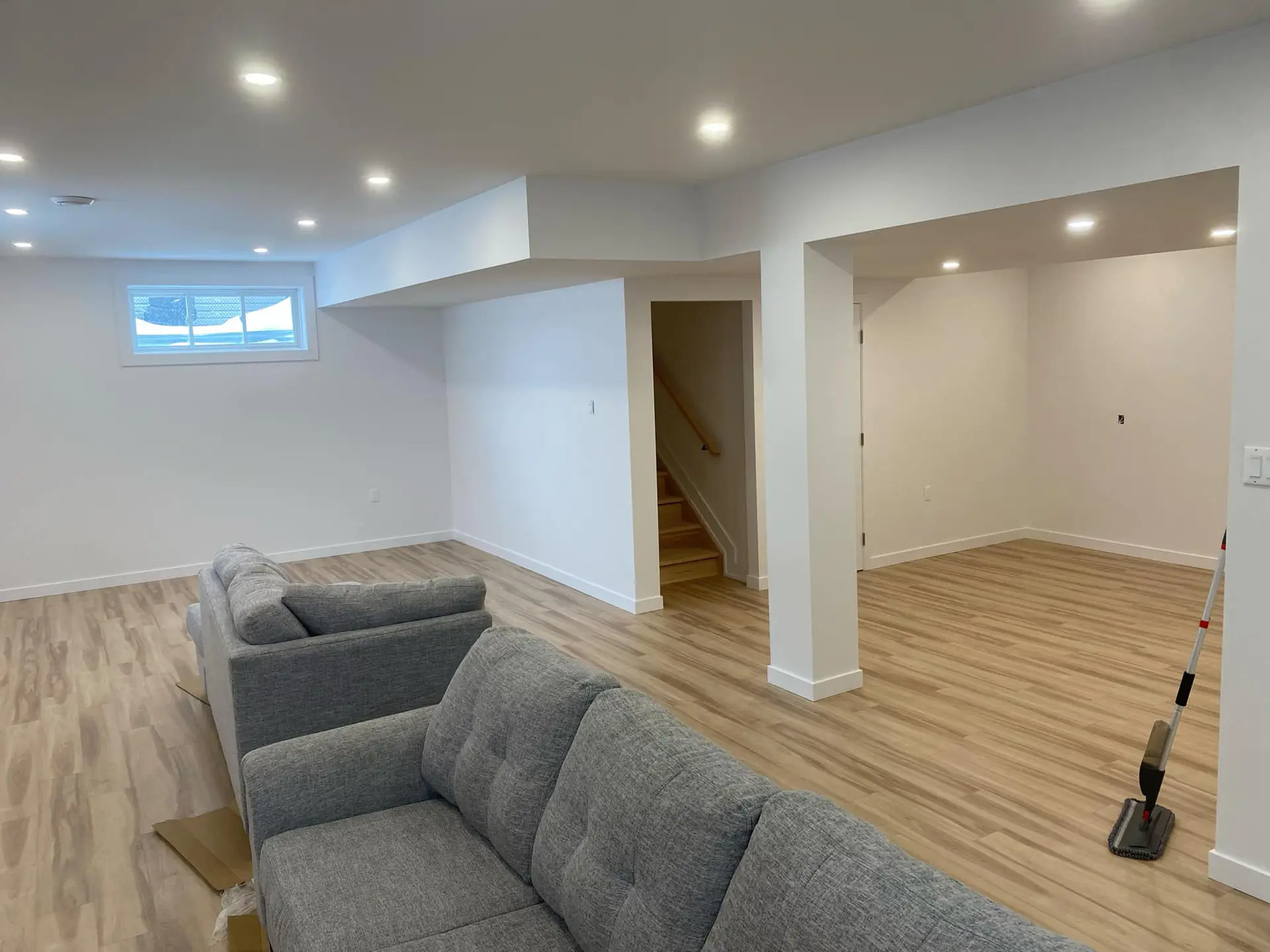
This final step brings the project to life. It includes flooring installation, with engineered vinyl flooring or ceramic tile strongly recommended for their resistance to residual moisture from concrete, as well as the installation of mouldings, interior doors, and light fixtures. Recessed LED lights are often used to maximize the impression of ceiling height.
Basement Renovation in Montréal: Key Points to Watch
Source: Rénovation Taillon inc
Montréal buildings have historical and geological characteristics that can create strict constraints during basement renovation projects.
Managing Moisture and Freeze-Thaw Cycles
In several parts of the Montréal region, clay soils can retain water and react to freeze-thaw cycles. Without proper waterproofing and continuous thermal insulation, the relative humidity in the basement can rise quickly in summer, causing musty odours and potential respiratory health concerns for occupants.
Quebec Construction Code Requirements
Basement renovation should not be improvised. It must meet the specific criteria of the Quebec Construction Code to ensure occupant safety.
Minimum ceiling height: For a room to be considered habitable, ceiling height must meet the applicable requirements, often around 2.1 m for certain habitable rooms, with rules and tolerances that may vary depending on the building and borough. If your basement is too low, which is common in homes built before 1950, excavation and underpinning work may need to be considered, significantly changing the project budget.
Egress windows, or emergency exit windows: If you plan to create a bedroom in the basement, the law requires at least one window that opens from the inside without tools or keys, provides a minimum opening of 0.35 m², or 3.8 sq. ft., and has no dimension less than 380 mm. This allows for quick evacuation in case of fire.
Municipal Permits and Borough Regulations
Each borough in the metropolitan area has its own urban planning regulations. Whether you live in Ville-Marie, Rosemont-La Petite-Patrie, or Westmount, a transformation permit may be required when you modify the room layout, structure, floor area, or certain building elements. Rules vary depending on the borough and the nature of the work. According to the City of Montréal, undertaking work without the required permit can result in fines, delays, and, in some cases, the obligation to correct or bring certain elements into compliance. An experienced general contractor will submit compliant plans to obtain approval from municipal inspectors before the first hammer strike.
How to Choose the Right General Contractor in Montréal
Source: Construction RCG
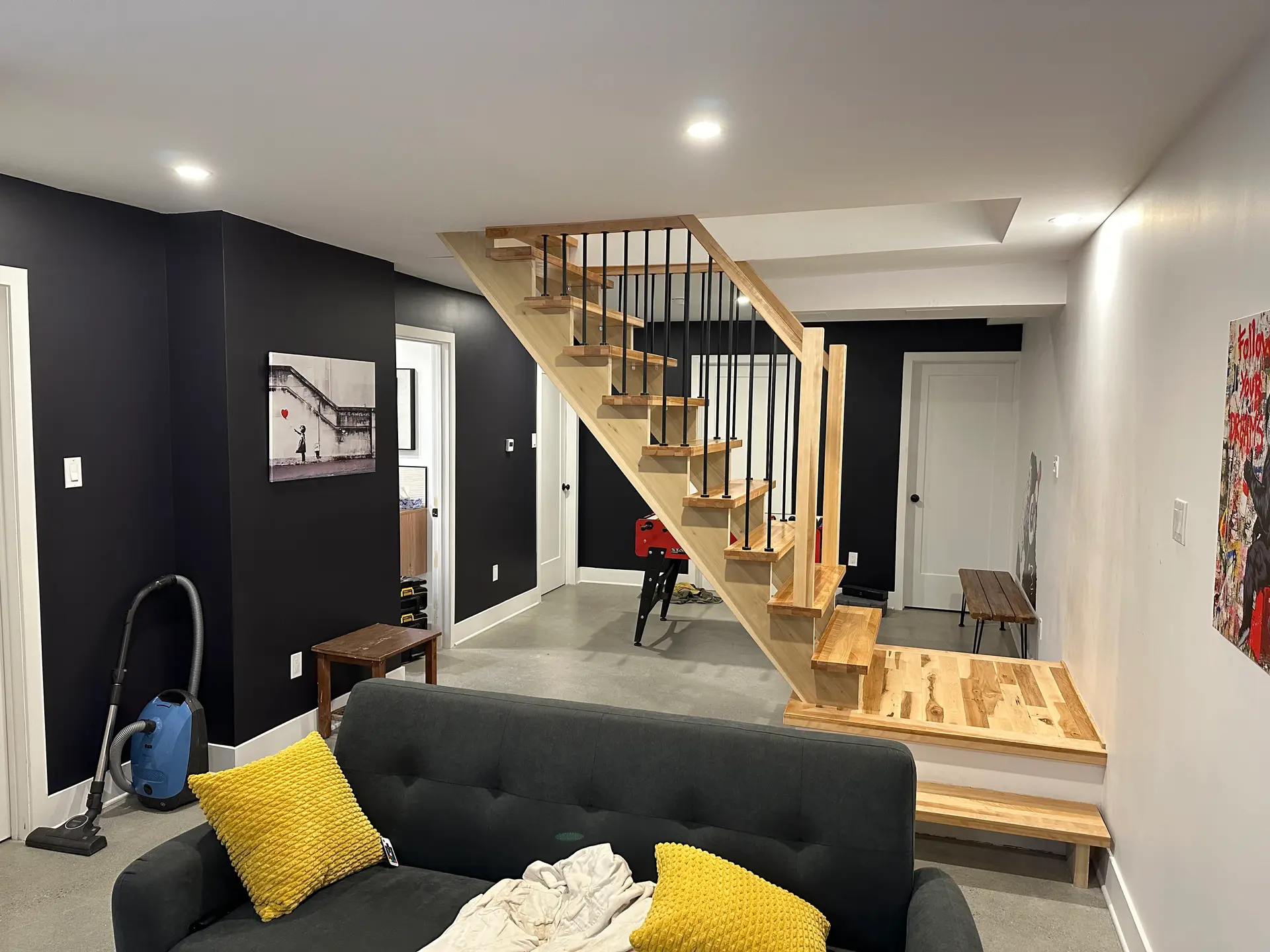
The success of your turnkey project depends heavily on the professional skills and reliability of the company you choose. Here are the essential criteria to check during your search:
Selection Criterion | Importance | What to Check |
RBQ licence | To verify | Active licence and appropriate subclasses depending on the nature of the work, for example 1.2 or 1.3 for certain general projects |
Liability insurance | Critical | Minimum coverage of $2 million to protect your property in case of damage |
Local references | High | Ask for examples of basements completed in Montréal in the same type of building |
Written warranties | High | Clear clauses about fixed pricing and delivery timelines |
Checking the legitimacy of your contractor is easier thanks to public tools. Before signing any contract, you should systematically consult the RBQ licence holder registry to verify that the company’s licence is active, corresponds to the planned work, and does not include any relevant restrictions. Also, make sure the company has strong knowledge of permit applications in your borough to avoid the project being stalled by an unexpected municipal inspection.
By using a structured network, you save time and can more easily compare qualified contractors who hold the licences required by the Régie du bâtiment du Québec, when applicable. You can use specialized services to find and compare general contractors in Montréal who have already gone through a solvency and reputation verification process.
Get a Free Quote for Your Basement Renovation
Are you ready to transform your basement into an inviting and functional space? Whether your property is located in Rosemont, Ahuntsic, Verdun, NDG, the Plateau, or elsewhere in Greater Montréal, start by comparing prices and the scope of the proposed work.
With a turnkey renovation, one contractor manages the entire project from start to finish, so you don’t have to coordinate each trade yourself. To better assess your budget, use the RenoQuotes platform to get quotes tailored to your basement renovation in Montréal and compare contractors who are a good fit for your project.
Looking for something else?
Related articles
The latest industry news, interviews, technologies, and resources.
Editorial Team
•08 Nov 2023
Nowadays, we are so used to having access to electricity at all times that when a problem occurs, we’re caught off guard. Many homeowners are reluctant to touch their electrical set-up, which is a good instinct to have, especially due to the fact that electrical work is regulated and in some places illegal to carry out without the proper certifications (Quebec included).
Cynthia Pigeon
•24 Sep 2026
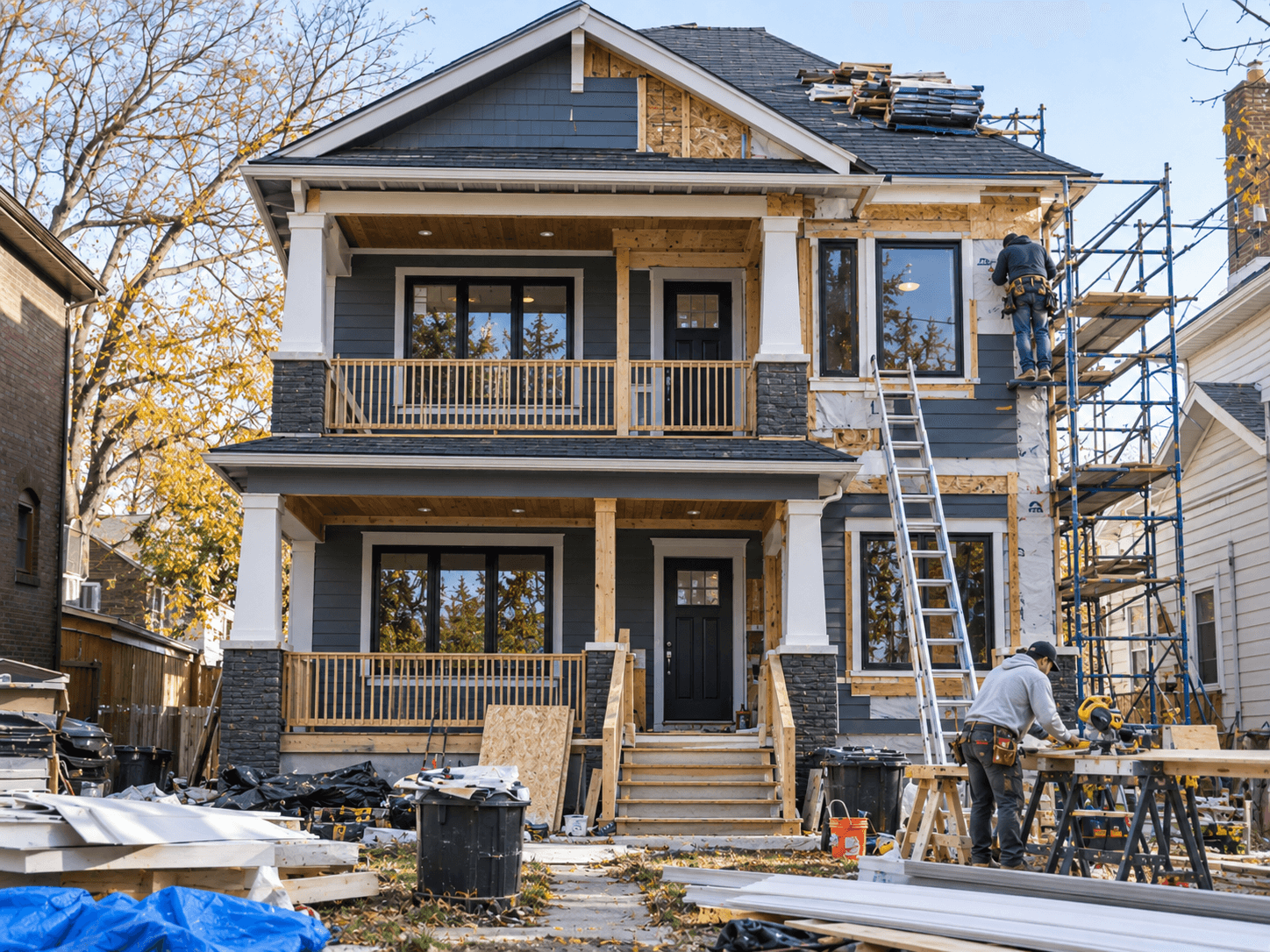
Owning a duplex or triplex in Canada, whether in Toronto, Montréal, Vancouver, Calgary, or Halifax, can be a valuable real estate investment. Many of these residential rental properties were built decades ago. Over time, harsh Canadian winters, repeated freeze-thaw cycles, moisture exposure, and aging construction materials can create significant renovation needs, particularly when a building has not been properly maintained.
Editorial Team
•26 May 2025
Although we all look forward to the warmer weather, few are those who enjoy sweating inside their hot homes or apartments. And that's why many purchase an air conditioner or heat pump.
Editorial Team
•05 Dec 2023
Storage space for some, unfinished room for others, yet thanks to its size the basement is a part of the house brimming with possibilities. Whether you’re ready to invest or get inventive, there is no limit to your comfort. Make your basement transformation a reality without having to quash your creativity.

Amanda Harvey
•08 Nov 2023
Running a business has its advantages and disadvantages. Regardless if you own an office, a storefront or a restaurant, there are plenty of aspects to take care of and consider when it comes to looking after a commercial space. Maybe the structure needs updating or repair or the building's plumbing or electricity is outdated. Therefore, you could be contemplating taking on a renovation. However, there are specific laws that designate what can and can’t be done to commercial properties, and this generally includes a permit application.