Minimalist-Designed Space - What Is There to Know?
By Amanda Harvey
Updated on January 11, 2025
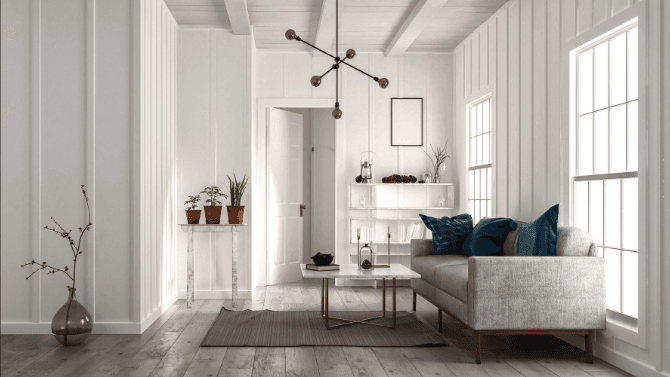
A minimalist look makes for the ultimate style choice for urban-modern homeowners who perceive clutter as a distraction. The minimalist lifestyle philosophy embraces a simplistic aesthetic, paired with well-designed rooms that feature only useful items and a limited amount of furniture.
How can you go about designing a space that calms and frees your mind yet is still functional? If you’re looking to embrace this concept and transform your indoor space, our guide will help you master the art of minimalism with the purpose of creating a harmonious living space.
What Is a Minimalist-Designed Space?

Source: Canva
Decor: Single-Minded Focus on Visual Appeal
When attempting to embrace a minimalist lifestyle, one of the primary principles is sorting and discarding. Creating a minimalist space is a step-by-step process, one that typically begins with editing your space as is, and selecting furniture and accessories based on form and function. Work one room at a time—start by removing a few items, give it a few days, and revisit it with fresh eyes. Ask yourself, what’s not essential?
As for items you keep going back to, questioning, chances are, you don’t really need them. Edit and eliminate everything you don’t need or love. A minimalist home doesn't necessarily have to be monochromatic or feature white walls only.
Rooms can feature pops of colour here and there, as long as they aren't overwhelming or weighing down the space. Before decluttering, make a mood board where you can group all the colours and textures you like while keeping simplicity at the forefront of your mind
Simplicity First, from Living Room to Bedroom
Source: Canva
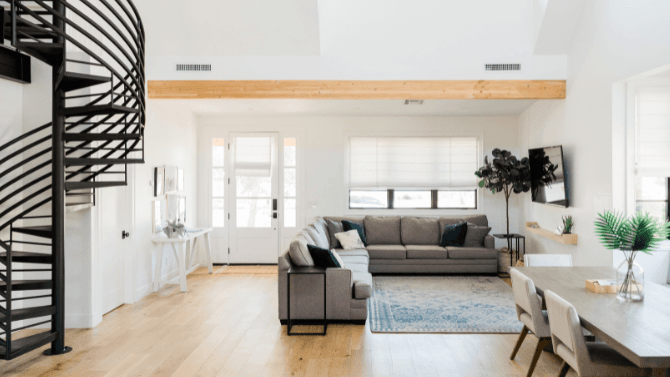
As you might have guessed, minimalism is all about necessities only; the fewer furniture pieces the better. When you’re thinking about what furniture you could get rid of, remember to choose without sacrificing comfort and quality of life. Aside from furniture, your floors should be completely bare.
Once you’ve narrowed it down to essential furniture only, donate or store away all unnecessary furniture, that way, you won’t be tempted to bring them back into your decor. If you’ve kept some, store them out of sight.
In a minimalist-designed space, furniture should be limited to a few essential pieces. For example, in the living room, having a couch, coffee table, lamps, and a television set or entertainment centre suffice. Make sure you’re not overly stimulated or overwhelmed by items featured in every room.
Opt for neutral, solid, and subdued colour schemes for walls and furniture. If a room features subdued colours, consider using a bright accent shade to give the room a sprinkle of life, like a single red chair in an otherwise monochromatic space.
Keep Your Living Spaces Clean and Uncluttered
Avoid cluttering flat surfaces and tables with trinkets or decorative items. Keep such areas clear, minus one or two statement pieces—stacks of books, papers, or magazines are a definite no-no in a minimalist home. Instead, consider clean-lined vases with just a few fresh flowers alongside one family photo.
Avoid cluttering your wall space; keep it simple with one tasteful painting or art piece as a focal point, contrasting a relatively bare space. Avoid using heavy prints or fabrics for your curtains and window treatments. If you plan on hanging curtains, consider solid-coloured or streamlined fabrics, monochromatic blinds work well too.
In any case, don’t over-embellish your home with decor. Keep it to a few subtle yet eye-catching decorative pieces that will stun both occupants and guests alike.
Looking to buy blinds?
We recommend Quebec-based company Hey Blinds Canada: custom-made blinds, sought-after products, but above all else, the best warranties for a stress-free purchase.
Quality Over Quantity
Create a minimalist home by focusing your time and effort in one room at a time, refining your methods with every fresh start. When furnishing rooms, choose items that are high-quality and beautifully made. Items and furnishings should be chosen with care, with a special focus on pure and simple features.
A minimalist home doesn’t mean choosing specific decorative items, but about giving those items room to speak for themselves. Having a designated spot for each item will help you keep clutter at bay. When furnishing rooms, practice restraint. As mentioned, minimalism is a process, and you shouldn’t get overwhelmed if you need a bit more time to turn your home into a setting that mirrors your new calm and refined lifestyle.
How to Recreate a Minimalist Look at Home
Source: Canva
Repainting to Prioritize Solid Colours
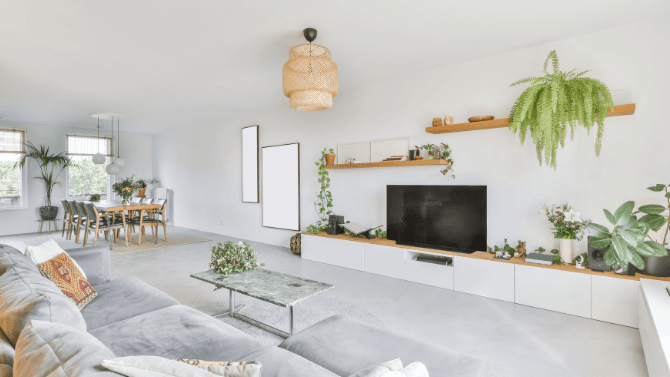
Minimalism is often associated with white and neutral shades. However, you can always work with other colours, such as darker shades and even bright hues like royal blue or terracotta orange. To recreate a minimalist-designed space, it’s important to select solid colours with a smooth and even finish. Check out this article to learn more about hiring the right house painter.
Get Storage Suited to the Room in Question
If you’re in the process of embracing a minimalist lifestyle, you’ll likely want to get rid of a lot of belongings that no longer serve you a purpose. As for what’s left, make sure you have enough storage space to fit everything, and make sure your storage fits with your interior decor. Consider working with an interior designer to find solutions that are tailored to your needs. You can also hire a carpenter who can build custom storage units.
Remove Cumbersome Architectural Features
This might sound counterproductive, but if you want to fully embrace a minimalist way of living, consider removing or replacing certain architectural features. What first comes to mind are trims, moulding, or chunky window frames, which can be especially bold. If you want to create a very seamless look, one characterized by straight lines, replace your current trimming and window frames with plain and subtle ones.
Looking for something else?
Related articles
The latest industry news, interviews, technologies, and resources.
Équipe éditoriale
•24 Sep 2024
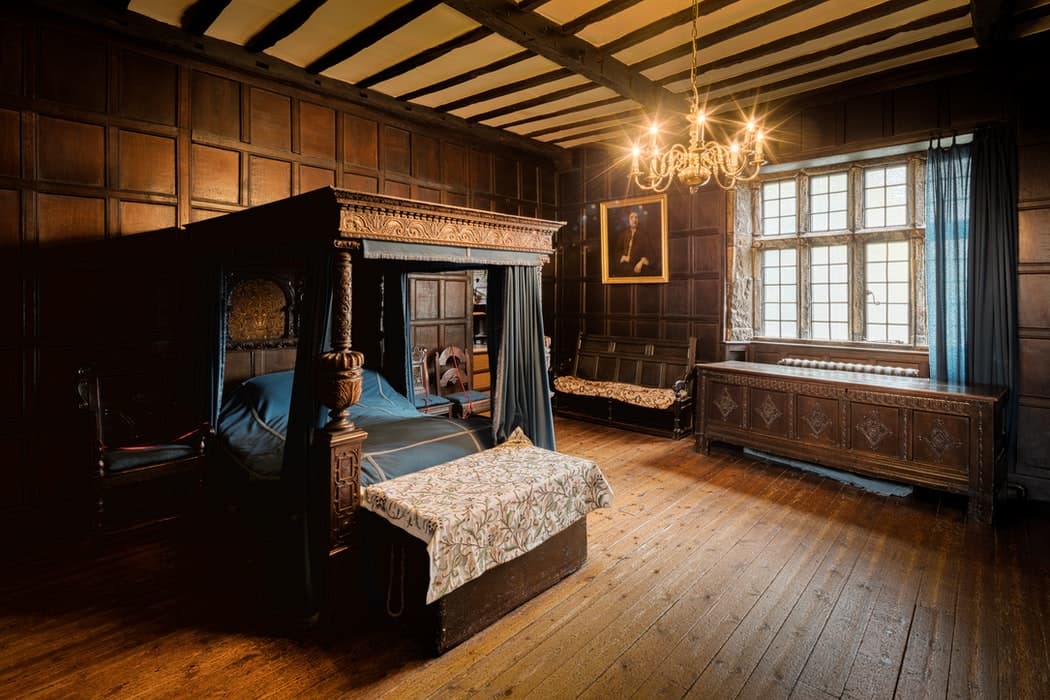
Do you appreciate old houses and their unique charm? If you're about to buy one or renovate the one you're currently living in, here are some ideas to inspire you!
Editorial Team
•08 Nov 2023
Reducing energy costs is one of the most important factors when choosing home insulation, as the right insulation can reduce energy bills drastically.
Editorial Team
•12 Aug 2025
While a kitchen renovation is often a top-ranking priority, as it can breathe new life into your space, such a project often comes with a hefty price tag. Also, it may be difficult to design the space when you don’t have much square footage to work with, such as is the case in a studio apartment or small house. Nonetheless, when your home has little storage space, optimizing every available nook and cranny becomes all the more important. Hence, kitchen islands are more than practical, especially in kitchens with a restricted amount of space.

Amanda Harvey
•13 Aug 2025
The arrival of spring often brings its share of cleaning tasks, such as cleaning windows, for example. Both long and tedious, the process of cleaning window after window can be a moment of pure boredom that is hard to get through, even with good background music playing.

Editorial Team
•08 Nov 2023
In Montréal alone, it’s estimated that approximately 300,000 residents are affected by a high level of lead in their water, in particular, due to the pipe connecting their home to the city’s water system. In 2007, the City of Montréal, therefore, committed to changing all of its lead water pipes in the public sector, totalling around 48,000 by 2030, recently investing about $557 million to accelerate the project.