How to Choose the Right Bathroom Plumbing Fixtures
By Editorial Team
Updated on December 5, 2025
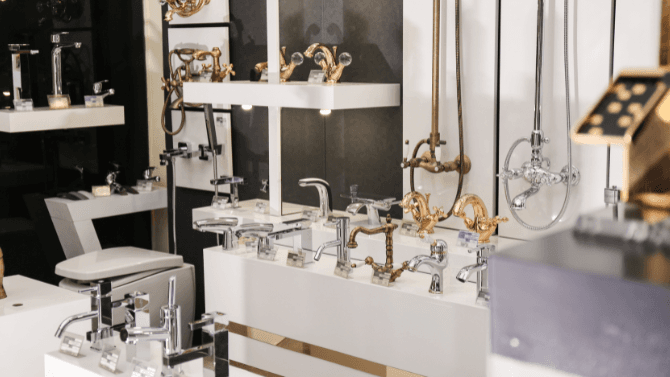
If your bathroom's overall style is edging toward drab prematurely, then it is no wonder that the thought of renovating it has crossed your mind now and again.
Naturally, such a large-scale project entails new plumbing fixtures. Considering the many options available on the market, where do you start when deciding on the ideal style to create the perfect setting?
Get Your Project Started Today
Submit your details and receive three free quotes from trusted contractors.
With this question in mind, here is an overview of useful criteria to help you select the perfect plumbing fixtures for your bathroom renovation project.
Choosing Plumbing Fixtures: 4 Key Points
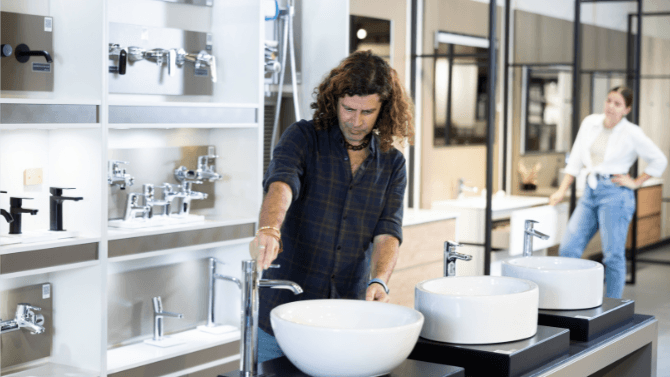
Source: Canva
1) Determine who will use the items daily
Before you start shopping, this is an important question to consider. Keep in mind the presence of young children in the home and their individual needs. Some plumbing fixtures may require more effort to use given their elevated placement, such as drop-in sinks, which sit atop the countertop.
Likewise, some faucets are not designed for your toddler's frail wrists or increase the likelihood of damage. On the other hand, some faucets have thermostatic mixers for the shower and sink, which offer essential safety features for your children, including temperature control and reduced pressure.
For those who have a loved one with reduced mobility, it is equally important to consider their specific needs, especially when it comes to navigating through the bathroom with ease. For example, a wall-hung sink significantly reduces the amount of floor space needed to accommodate a bench or wheelchair.
Choosing a wall-mounted toilet is also beneficial for people living with a disability. Besides being practical and easy to clean, these units are ideal when it comes to creating a sleek, trendy, and modern design, which means you will not have to trade in aesthetics.
Looking for more information on making your bathroom wheelchair accessible? Check out our article all about it! (Available in French only.)
2) Fixture design & aesthetic
Naturally, after considering your family's needs, the next logical step is to plan the overall desired style. When planning to purchase a toilet, sink, or faucet, it can be equally satisfying to shop around for a seamless and stylish design that matches your vision and expectations, which is no different than any other room in your home. Nowadays, there is an endless variety of colours, materials, shapes, and sizes of plumbing fixtures on the market.
Are you looking for a more modern look? If so, a black or silver faucet, along with a vanity with sharp angles or curved lines, can turn your vision into a reality.
Are you more retro or considering something that is more in line with a classic style? Then a traditional white vessel sink with vintage gold faucets will add a dash of grace and a pinch of flair to this quintessential design. For an industrial look, go for unfinished materials, dark pipes, or even bold elements such as a rectangular double sink.
3) Water consumption
A lot of people struggle with water consumption, both environmentally and financially. If this sounds familiar, there is a wide selection of water-saving fixtures from which to choose. As we mentioned in our article on smart toilets, these units use as little as 0.6 gallons of water per flush, which is one gallon less than a standard toilet.
The same goes for showerheads and faucets; the difference between a regular model and an energy-efficient or smart one is, once again, substantial. A standard showerhead uses an average of 9.5 litres of water, as opposed to the 6.6 litres required for a low-flow model.
Are you concerned about decreased comfort as a result of a low-flow showerhead? Since this is the main problem with "cheaper" models, it might be worthwhile to buy a slightly more pricey showerhead to avoid this problem. According to EcoHome's website, it only takes four months to get a return on your investment, which is a good option for those who want to save money in the long run.
What about faucets? Eco-friendly models use about 5.7 litres of water per minute, whereas standard models use 12 to 20 litres per minute. Should you prefer not to change the entire sink or plumbing, there are equally sensible and cost-effective options, such as water- and energy-efficient fixtures to pair with your existing installations.
Most of these fixtures are easy to use, sturdy, and self-cleaning. Hydro-Quebec even offers certified kits and, depending on the time of year, you can register for energy-saving promotional offers.
4) What is your budget?
No surprise here, but you will have to consider your budget! As we stressed in the above paragraph, you have to factor in the savings associated with purchasing products that are more expensive at the time, but very cost-effective in the long run.
Another way to maximize the return on your purchase is to carefully assess the product’s quality. For example, a hefty, solid metal faucet will be more durable, as will a ceramic valve versus a rubber one, which wears out fast. So, if your budget allows for it, definitely opt for these products.
If you are working with a tight budget, consider this money-saving idea: dual-handle faucet kits. By purchasing the same make as your faucet, these renovation kits, available at major retailers, allow you to change your faucets without altering the plumbing in the wall and thus save a lot of money.
Naturally, it is always worth it to peruse regularly the various flyers from different stores and retailers to benefit from the best prices possible.
Looking for something else?
Related articles
The latest industry news, interviews, technologies, and resources.

Editorial Team
•02 Jul 2024
Floor drains found in basements, garages, and other areas of your home are a crucial part of water management. A clean floor drain is a must to prevent foul odours and obstructions and maintain proper drainage. This guide will detail how to clean a floor drain, what techniques to use to spot and unclog an obstructed drain, and how to regularly maintain your drainage system to ensure its proper functioning. Check out our practical tips and tricks for the best maintenance practices.
Léa Plourde-Archer
•23 Oct 2024
Are you thinking about renovating your bathroom? This process can be long and complicated, as it involves several steps, as well as a number of factors that can affect the price, the duration of the work and the durability of the materials.
Editorial Team
•21 Jul 2025
Cardboard-backed gypsum boards quickly became a staple in construction due to their ease of use. However, their most well-known downside remains a certain fragility and lack of impact resistance. Fortunately, there are many products available to repair damaged surfaces with a flawless finish.
Editorial Team
•08 Nov 2023
During wintertime, it’s only natural to feel a bit of a chill. But what happens if you’re already inside your home and can’t shake that frigid feeling? If your heating system is blowing cold air, or if one room feels oddly chilly, then you could have a problem! To have a constant flow of comfortable air, it is important to have your heating system checked roughly once a year for issues, making sure everything is in good working order.

Editorial Team
•29 Nov 2023
The changing seasons often inspire a sense of renewal in your home. And guess what? The bedroom is almost always the favourite room to overhaul. However, designing said room will largely depend on its dimensions, the size of the furniture, and that of the windows.