
With the swimming season around the corner, the only thing you’re probably awaiting is taking that first refreshing dip into a nice, clean pool. But first, you have to open it, which isn't a fun thing to do. Fear not, as this article will guide you through the swiftest and simplest method to open your pool!
How to Open an Above- or In-Ground Pool

Source: Canva
Regardless of whether your pool is above- or in-ground, the initial steps for opening it remain basically the same. The key is to ensure you have the appropriate equipment for your specific system.
Below, you'll find a list of the materials typically needed to open a pool:
Plumber’s tape
Pool silicone lubricant
Wrench
Garden hose
Leaf skimmer
Cleaner
Tongue and groove pliers
Pool brush
Test kits or strips
Safety goggles
Gloves
Pool Starter Kit
A pool starter kit contains the tools and products necessary to prepare your pool for use following the winter months. Generally, it includes:
Cleaning and disinfecting products, like chlorine;
Water treatment products;
And required items such as pipes, filters, and robotic pool cleaners.
There’s a wide range of products, readily available at hardware and department stores. Prices range from $15 to $50. Before purchasing, check the volume of litres treated per container. Certain brands offer distinct starter kits tailored to above- or in-ground pools. Keep in mind that opening an in-ground pool generally requires a larger quantity of products compared to opening an above-ground pool.
How to Start an Above-Ground Pool
Source: Canva
To open your above-ground pool properly, you'll need to follow a set of precise steps:
Step 1: Start by cleaning it
The initial step toward successfully opening your pool is cleaning.
Twenty-four hours prior to opening your pool, start by removing any leaves or debris floating on the pool’s winter cover, then remove it. Take this opportunity to thoroughly clean and dry the pool cover before storing it until next winter.
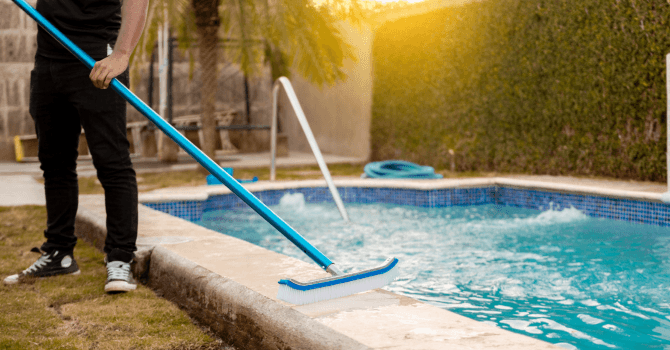
Clean the bottom of your pool with a pool brush or pole. You can also pour in a pool degreaser to facilitate the cleaning process.
Step 2: Plug in the pool filter and other equipment
This next step consists of plugging in your pool’s filter system. Before turning on the filter, make sure it’s correctly fitted. Also, verify that all other equipment (skimmers, nozzles, lighting, pumps and filters) is properly connected and in good condition. Make sure that all connections are firmly secured.
Step 3: Vacuum
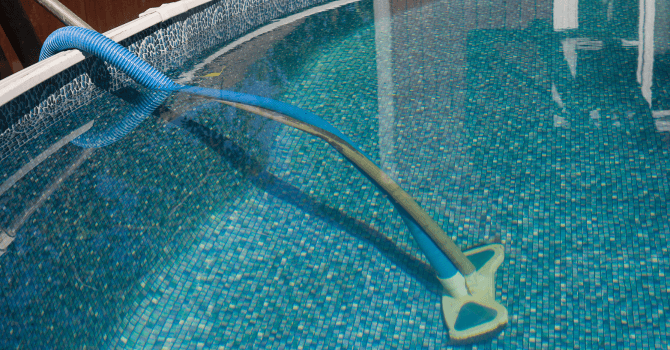
After plugging in all equipment and ensuring their proper functioning, set the pool filter to “Waste” and clean the bottom of the pool with a pool vacuum. Also, clean the filter’s skimmer basket to maximize debris extraction. For more effective cleaning, run the pool for about 5 hours.
Step 4: Analyze pool water
To prevent potential skin irritation or diseases, it’s best to analyze and treat the pool water. You can either take a sample of the water to a pool professional or use a DIY water test kit to monitor the water’s total alkalinity, pH, and calcium hardness. In the event of a problem, ask a specialist for the right products.
And there you have it! Your pool should be good to go! Now you take that well-deserved first dip.
What products should you use first to perform a pool shock treatment?
A pool shock treatment is an essential step in purifying your pool's water. It effectively eliminates microbes and algae, restoring the water to a healthy and pristine state.
Start by slightly increasing the water level compared to normal, while simultaneously pouring a degreaser straight into the water.
Allow it to take effect for a minimum of 24 hours, meanwhile, you can clean the area surrounding your pool.
Run the filter system and set it to "Waste" mode. Empty and refit the basket several times to remove any residual dirt.
Increase the pool water level once again and backwash your pool.
Use the products found in your starter kit and backwash your pool once more.
We strongly recommend that you run your pump, uninterrupted, for at least 24 hours to have crystal-clear water.
When Is the Right Time to Open an In-Ground Pool?
Source: Canva
The general recommendation is to open an in-ground pool after the ice melts, typically around mid-April. However, the specific timing may vary based on your geographical location.
Note that algae growth typically occurs as the water’s temperature rises. CAA-Quebec recommends opening a pool prior to water temperatures reaching 21°C.
Thus, it’s best to open it as soon as possible to mitigate algae growth. If the algae start lining your pool, it will render the cleaning process much more difficult.
Moreover, this will help limit the amount of pollen vacuumed by the filter system.
Another benefit of opening your pool sooner rather than later is that it'll allow you to look over its general condition and repair any equipment that may have been damaged during the winter months. You'll then be able to enjoy your pool, worry-free, all summer long.
Pool Opening Tips
Here are a few useful tips to successfully open your pool:
If this is your first time opening your pool, it’s best to have the company that installed it perform the work. A pool professional will carry out a complete inspection to spot any potential anomalies before the warranty period expires.
Regularly maintain your pool to ensure that it’s in tip-top shape throughout the summer months as it’ll ensure quality water and an extended service life.
Remember to change the sand in your filter every 4 years.
Get 3 quotes for your backyard pool project
RenoQuotes.com can help you get quotes for your pool project. If you submit your project, we’ll put you in contact with top-rated contractors. Fill in the form on the homepage (it only takes a few minutes) and receive quotes from companies that are specialized in home renovations.
Dial 1-844 828-1588 to speak with one of our customer service representatives.
Looking for something else?
Related articles
The latest industry news, interviews, technologies, and resources.

Cynthia Pigeon
•05 Dec 2025
The fenestra cochleae, more commonly known as a round window, has quite a distinctive flair, which adds a certain uniqueness to your home. However, its installation requires a certain dexterity and presents some particularities that should be considered before undertaking such a project.

Editorial Team
•08 Nov 2023
Outdoor columns on the facade of your home add an element of originality and allure. Whether used for your landscaping, porch or walkways, incorporating columns into your design can have a lasting appeal. However, since these columns are outdoors, they are exposed to various forms of weather damage. Therefore, it’s important to know how to care for your outdoor columns.

Editorial Team
•11 Mar 2026
Are you looking to increase the space available in your yard, or simply for health and safety reasons, need to remove a tree? Note that once said tree is cut down, its stump will remain rooted, and you should really consider having it removed.

Editorial Team
•08 Nov 2023
Is a new floor on your to-do list for future renovation projects? A hickory hardwood floor may be the perfect choice for your next project!

Cynthia Pigeon
•08 Nov 2023
Flooring options must adhere to the environment in which they are installed. Since wood typically has a low moisture threshold, wood and moisture are a notoriously bad fit. That being said, there are hardwood flooring options, as well as finishes, that are suitable for even the most humid of areas.